
Plant Library · Herbs
🌿 How to Grow Dill
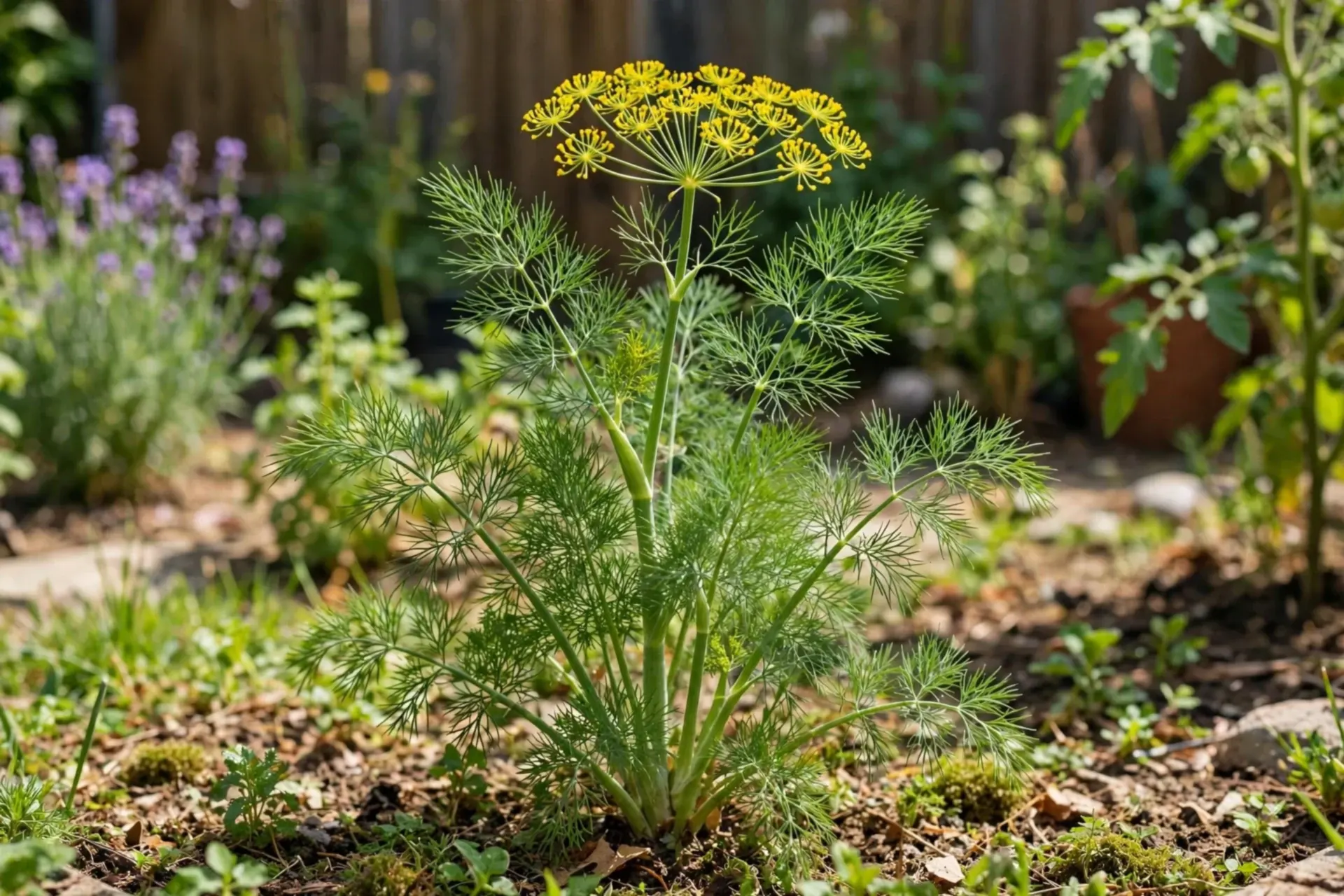
Direct sow — it dislikes transplanting. Let a few plants go to seed for pickling and next year. Dill is best direct sown around your last frost date, right where it will grow — it dislikes being transplanted, and letting a few plants go to seed gives you next year's patch for free.
Grow Dill with us — step by step
Everything for this plant is written step by step below — what to do, and exactly when. Read it through first if you like: you can grow it entirely on your own with that guide. Or start with us here — tell us your planting day and we lay out your personal schedule on this page, every next step on its own day, counted from your planting date. No guessing, no forgetting.
Step 1 — today: Sow your Dill seeds today: 1/4 in deep, spaced 12 in apart, in full sun. Water the row in well and keep it moist while seeds sprout.
Dill at a glance
Sow outdoors: at last frost
Spacing: 12 in · Seed depth: 1/4 in
Sun: Full sun
Water: Regular
Harvest: 60–70 days
Timing counts from your average last spring frost — get your own dates in the Planting Calendar. Guidance follows standard extension-service practice for Canada and the US.
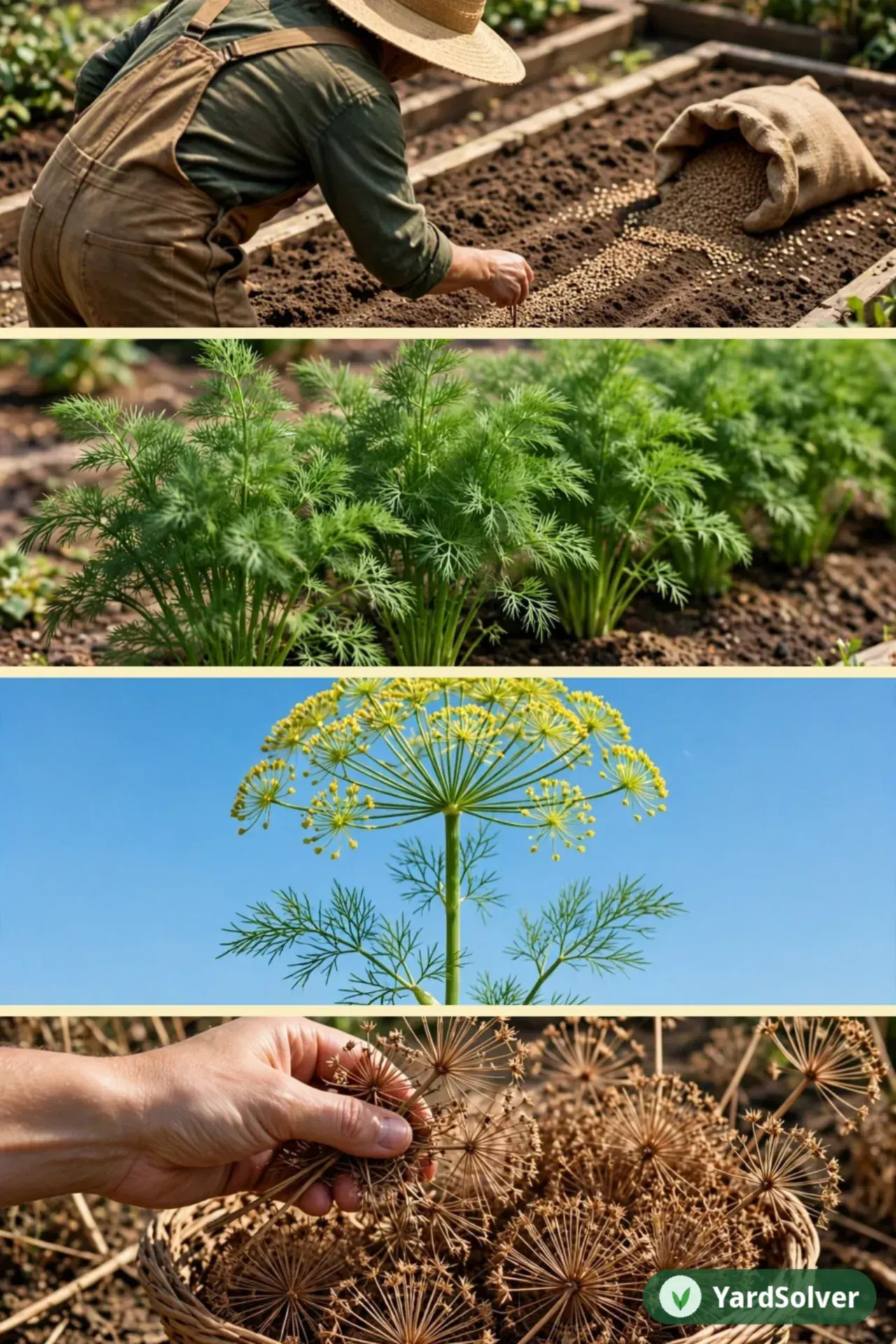
How to plant and grow dill, step by step
Step 1 — Time it right
Sow outdoors: at last frost. All dates count from your average last spring frost — the Planting Calendar turns them into real dates for your garden. Dill is best direct sown around your last frost date, right where it will grow — it dislikes being transplanted, and letting a few plants go to seed gives you next year's patch for free.
Step 2 — Prepare the spot
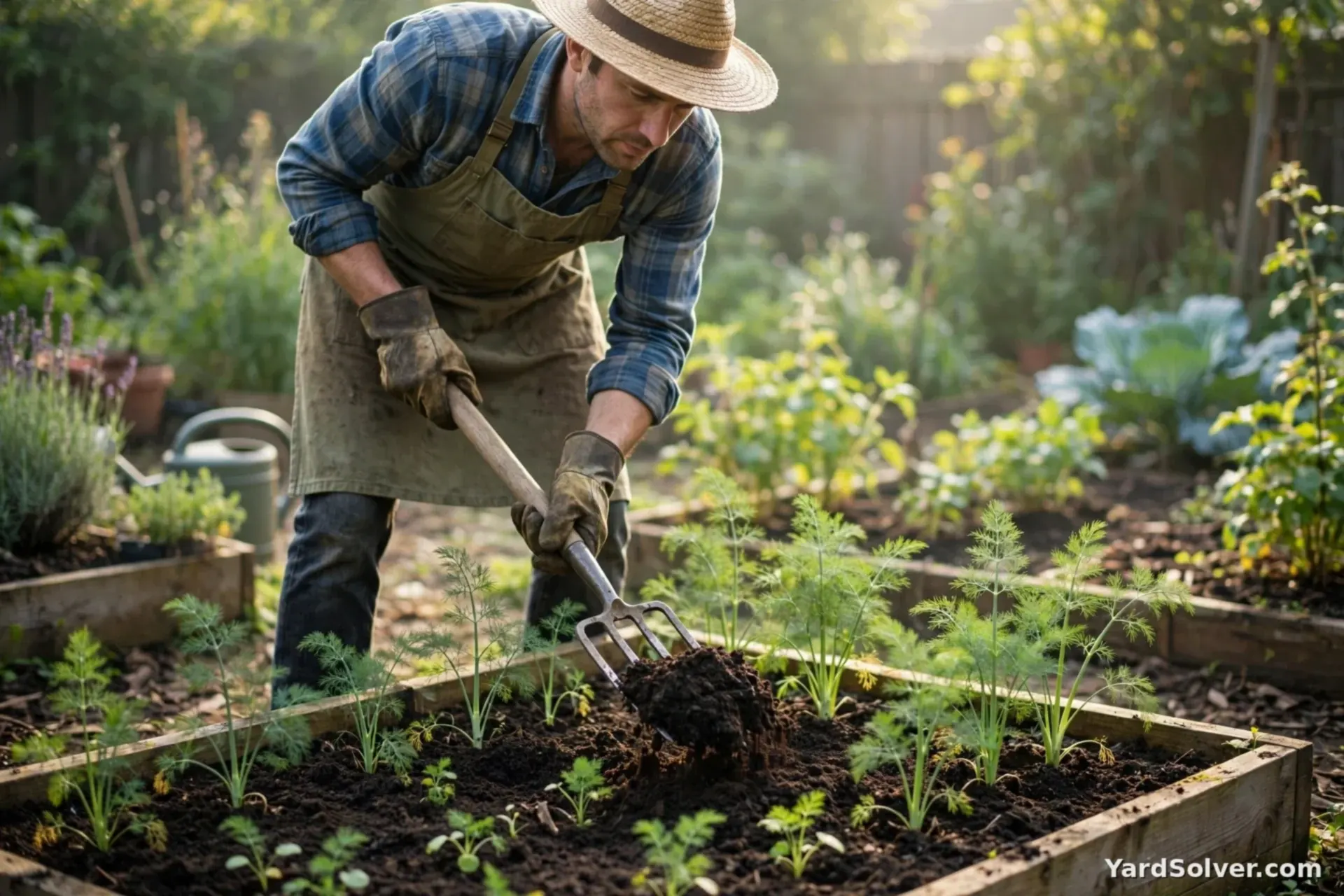
Sun: Full sun. Moist, compost-rich soil in a spot with morning sun. Soft herbs grow fast and are picked often, so keep the water coming. Work out how much you need with the Garden Mix Calculator or the Raised Bed Soil Calculator.
Step 3 — Sow and plant out
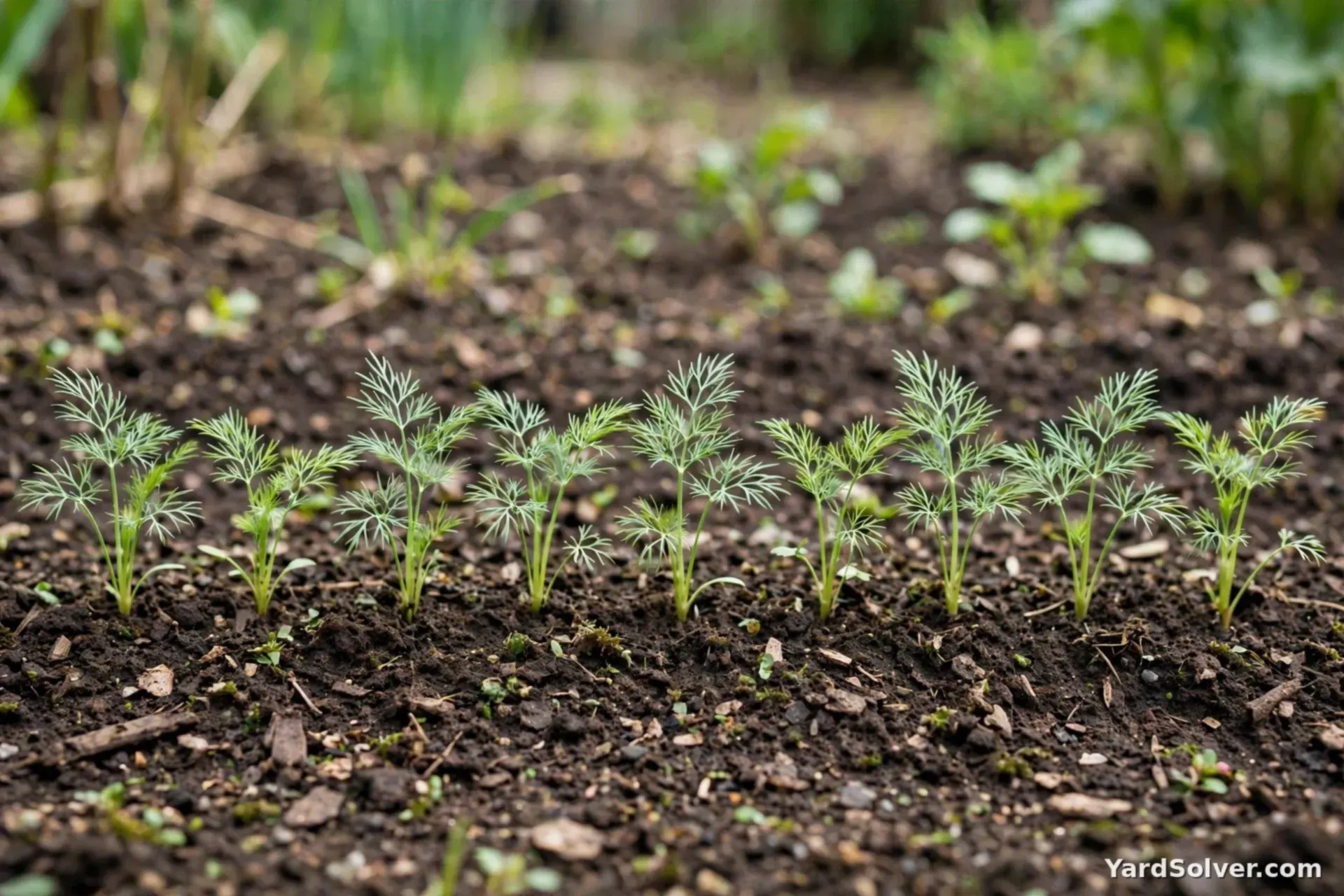
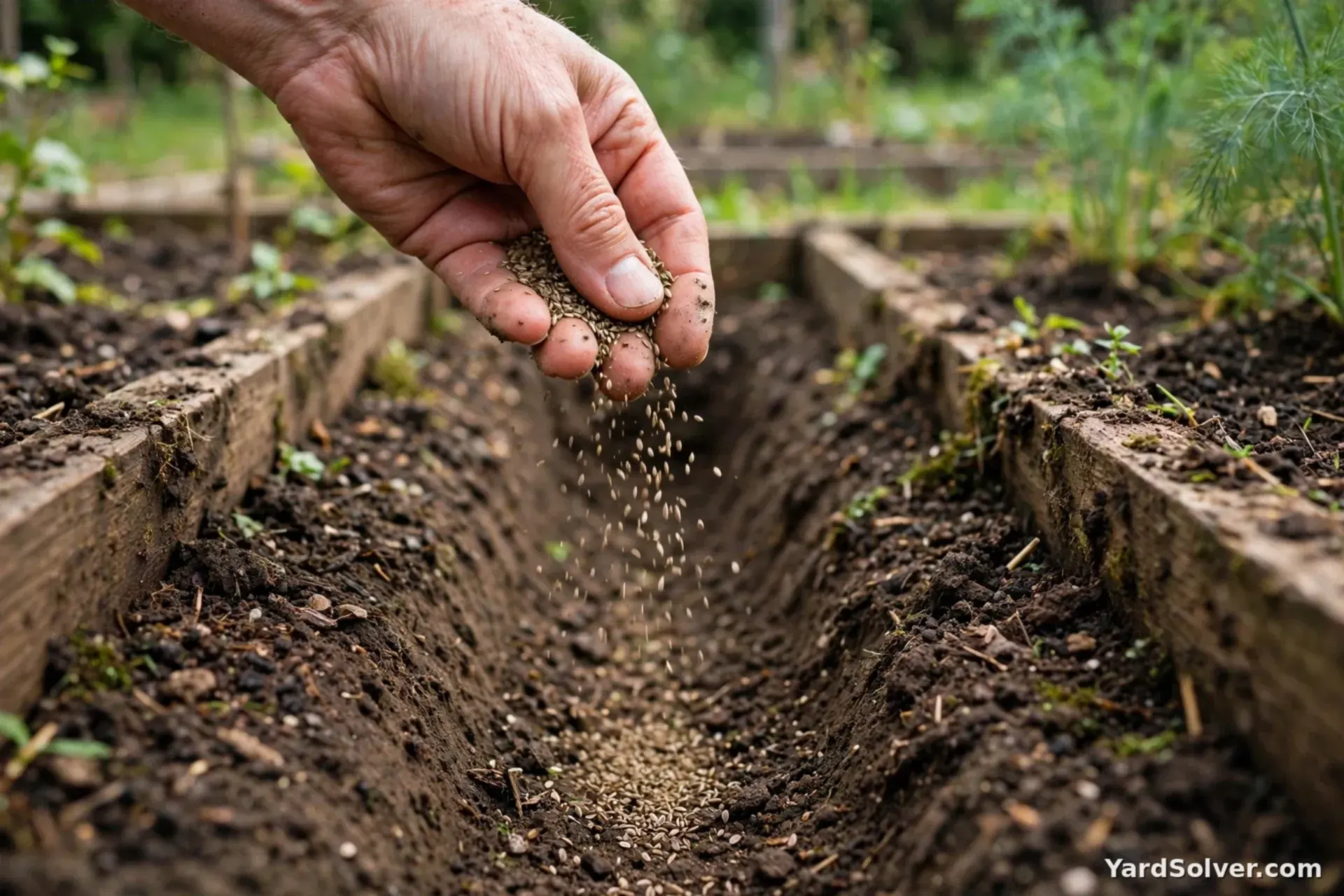
Sow directly where they will grow, at last frost, 1/4 in deep and 12 in apart (thin seedlings to that spacing once they are up). The Seed Calculator works out how much seed a bed needs.
Step 4 — Water and feed
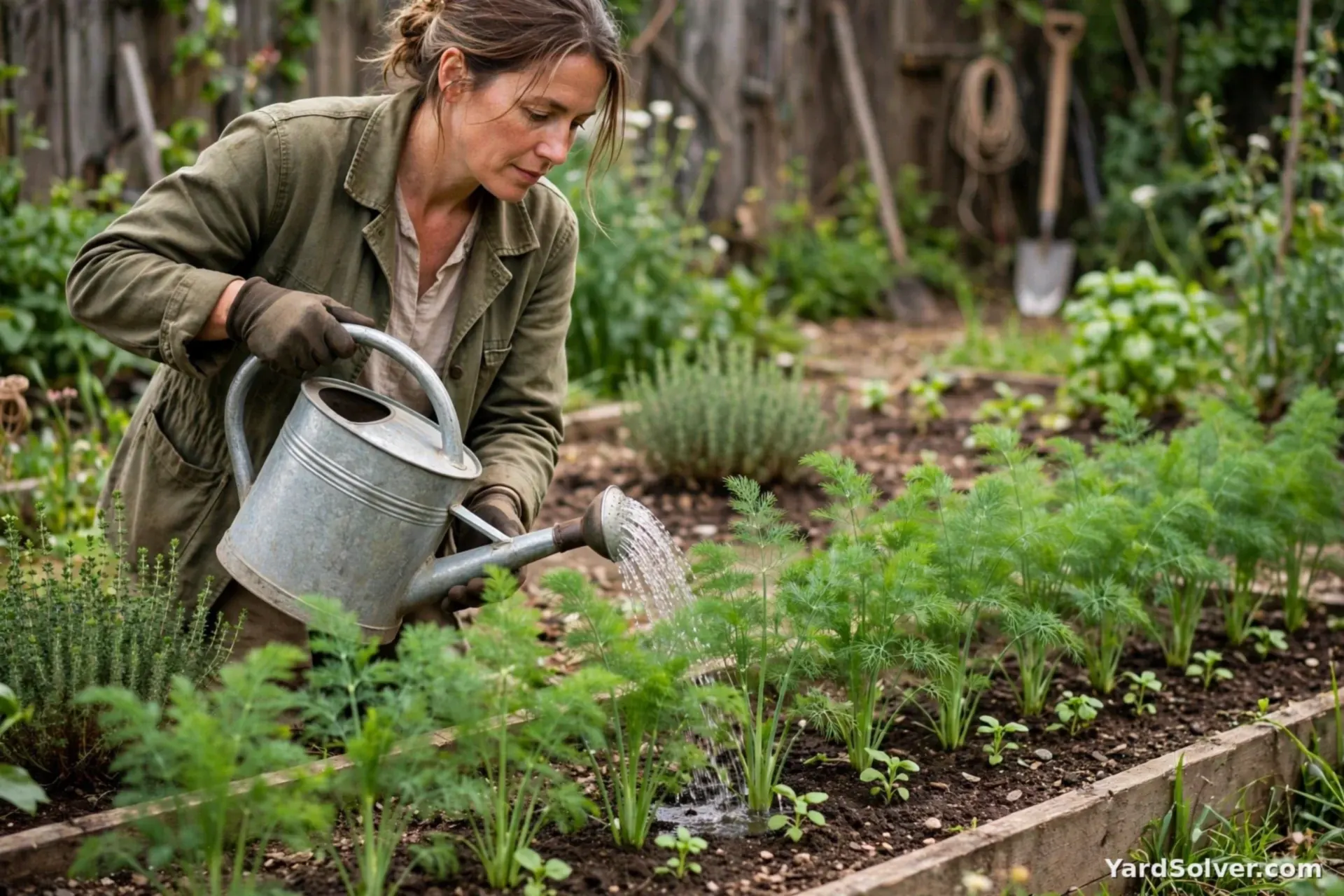
Water: Regular. The Fertilizer Calculator turns a bed size into the right amount.
Step 5 — Care and the problems to watch for
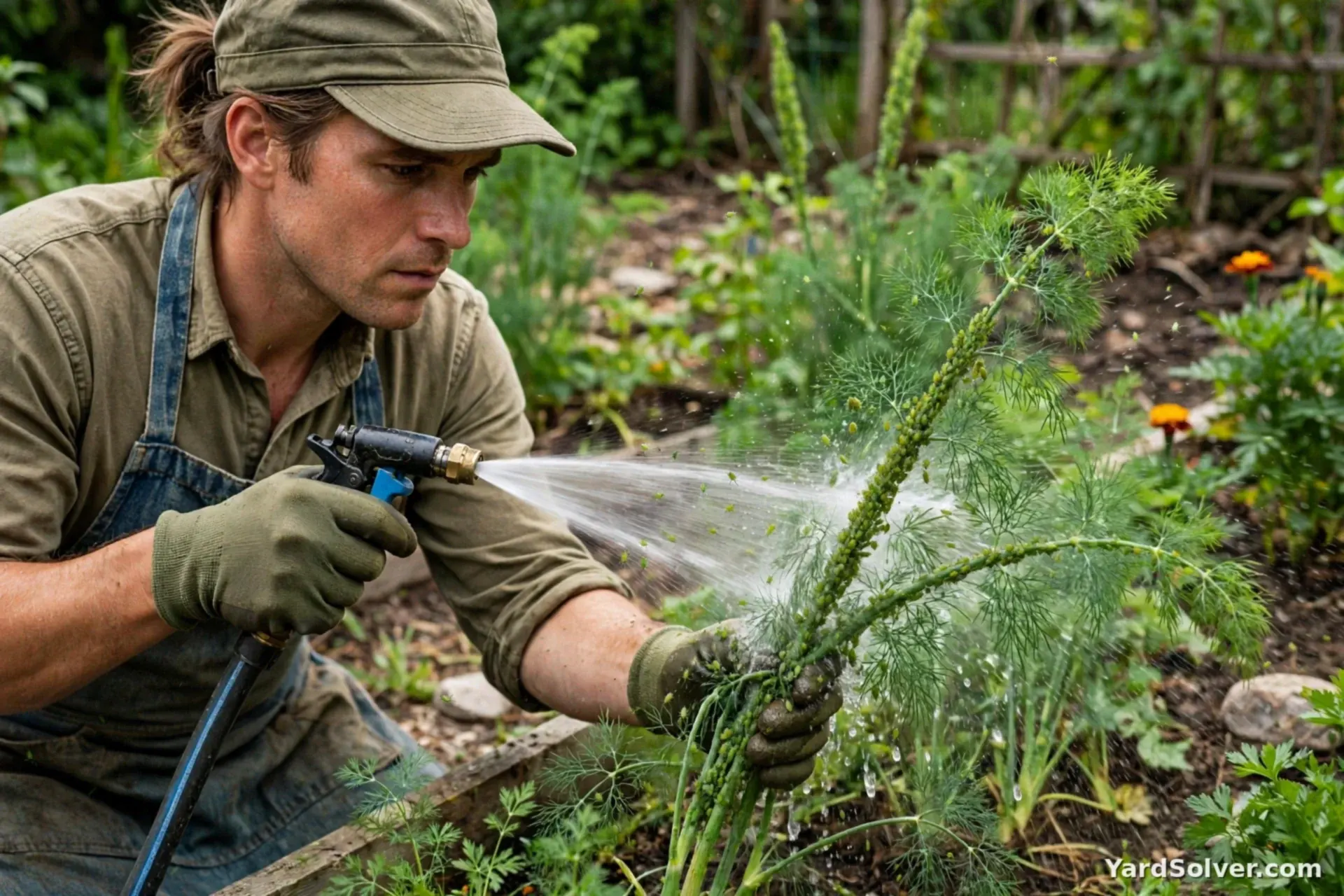
- Aphids — rinse off with a jet of water.
- Swallowtail caterpillars — dill is their host plant; most gardeners share a few leaves.
- Self-seeding everywhere — snip seed heads if you do not want volunteers.
Take care: Dill is in the carrot family, so people who react to carrots or celery sometimes react to dill too. Handling large amounts of dill in strong sun can irritate sensitive skin — wash hands after a big harvest.
Step 6 — Harvest
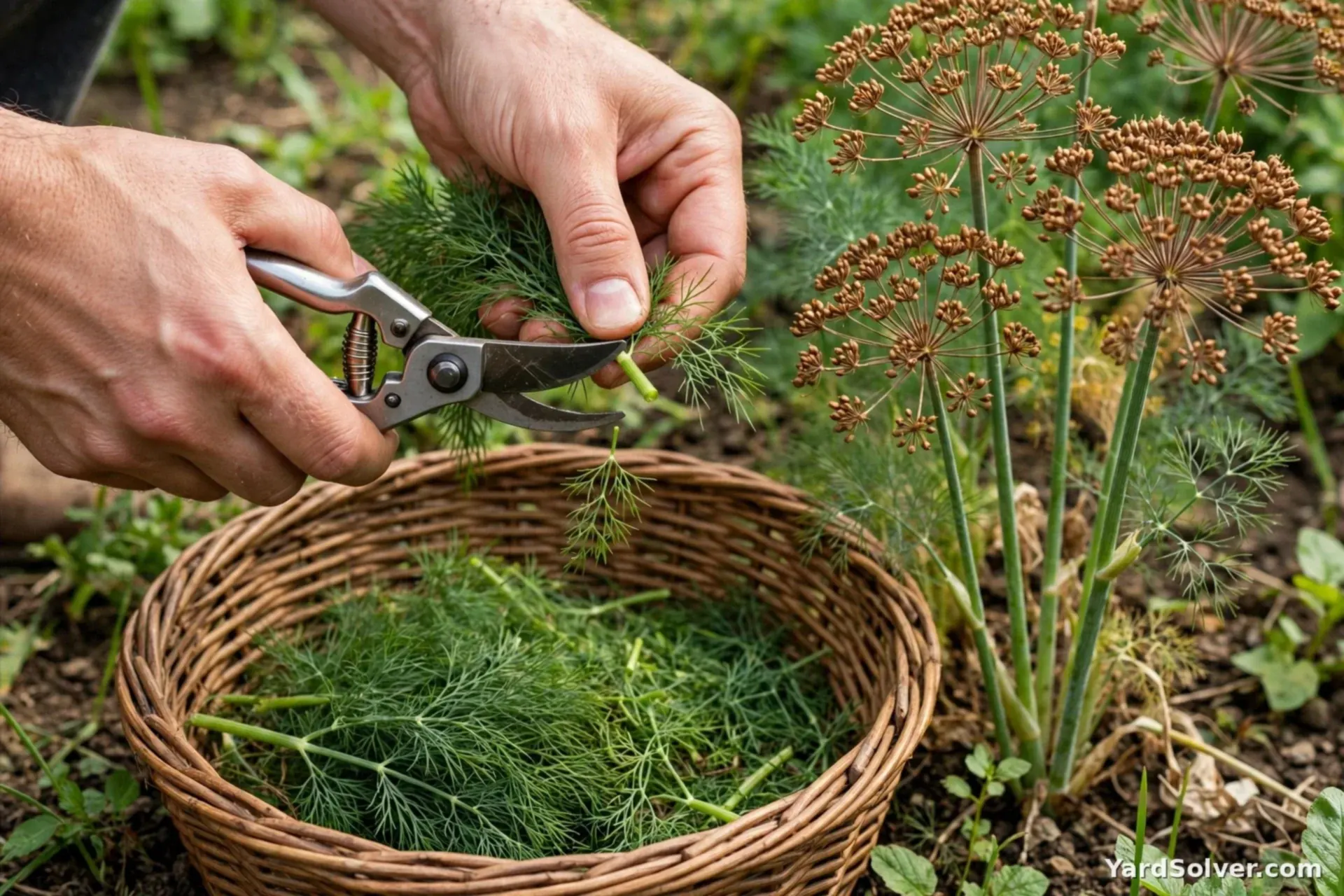
Ready in: 60–70 days. Harvest runs from about day 60 to 70 — cut leafy fronds as needed, and leave a few heads to ripen seed for pickling.
📅 Your personal Dill schedule
Counted from your planting day — not a generic calendar. Day 0 is the day the seed went in the ground or the young plant went out.
Varieties worth growing
| Variety | Colour | Why gardeners like it |
|---|---|---|
| Bouquet | Green | The standard pickling dill, with early, heavy seed heads |
| Mammoth | Green | Tall plants with big flower umbrellas for pickling and seed |
| Fernleaf | Dark green | A compact dwarf type made for pots and small gardens |
| Dukat | Green | A leafy type bred for lots of foliage before it flowers |
Good for you — and take care
Benefits
- Provides vitamin C for the immune system
- A source of vitamin A for an herb
- The seeds provide calcium and iron in spice amounts
- Feathery leaves add fresh flavour with almost no calories
- Provides small amounts of manganese
Take care
- Dill is in the carrot family, so people who react to carrots or celery sometimes react to dill too
- Handling large amounts of dill in strong sun can irritate sensitive skin — wash hands after a big harvest
A little history — and one good fact
Dill comes from the Mediterranean and western Asia, where it has flavoured food for thousands of years. Its name is linked to an old Norse word meaning 'to soothe'. Cooks in northern and eastern Europe made it famous with new potatoes, fish and pickled cucumbers.
Fun fact: One dill plant left to drop its seed can start next year's whole patch by itself.
Keep going
Guides: Grow Herbs Indoors in Winter · Companion Planting Basics · When to Start Seeds Indoors
Calculators: Plant Spacing Calculator · Seed Calculator · Garden Mix Calculator
More herbs: Basil · Cilantro · Parsley · Fennel
← Back to the Plant Library · Get your personal planting dates
Questions people ask
When do I plant dill?
Count from your average last spring frost: sow outdoors at last frost. Dill is best direct sown around your last frost date, right where it will grow — it dislikes being transplanted, and letting a few plants go to seed gives you next year's patch for free.
How far apart do I space dill?
Space plants 12 in apart, with seed sown 1/4 in deep. Sun: full sun.
When is dill ready to harvest?
60–70 days. Direct sow — it dislikes transplanting. Let a few plants go to seed for pickling and next year.