
Guides · Fruit & berries · Published November 3, 2026
How to Grow Strawberries
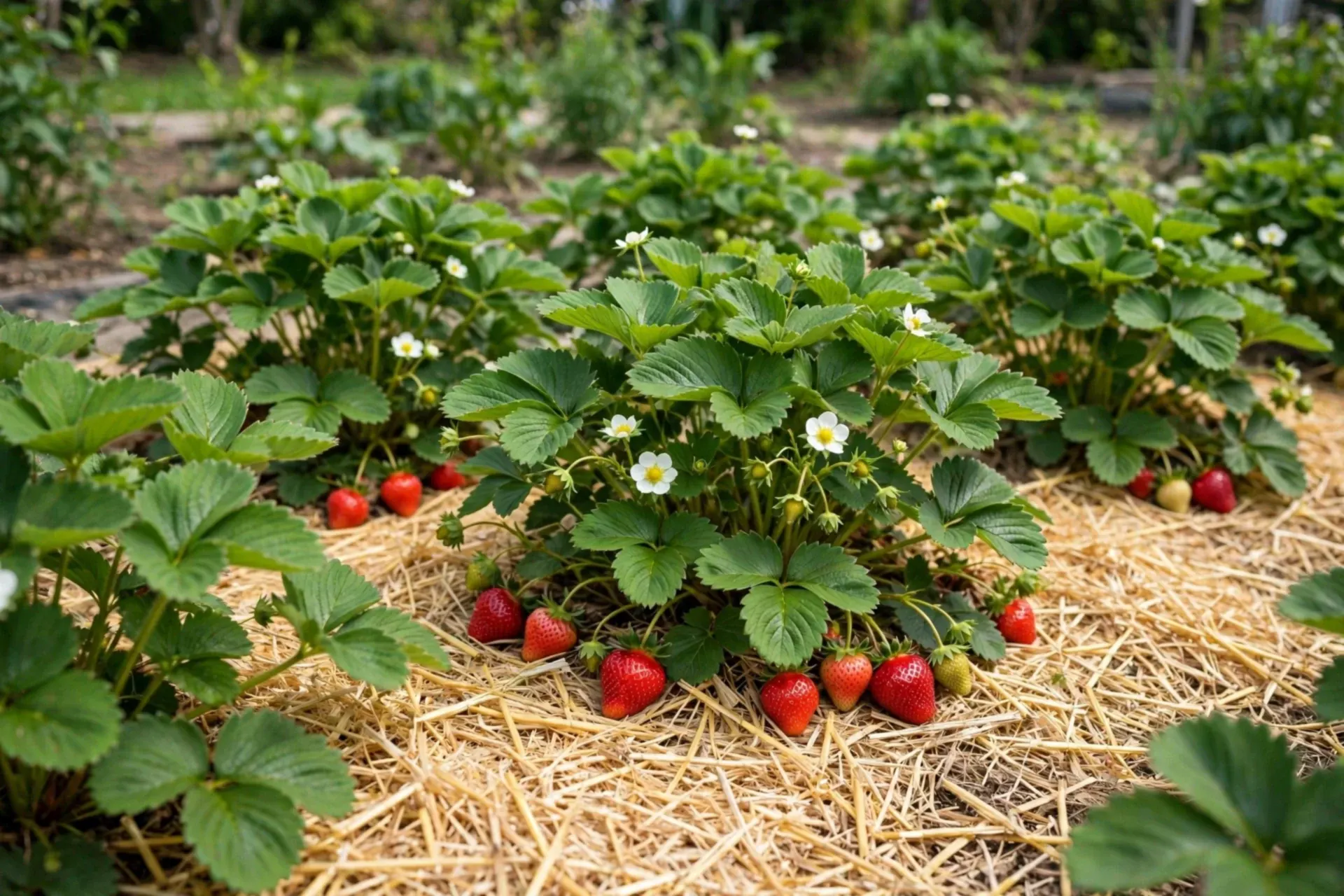
A strawberry bed is a small act of faith: plant it once, tend it lightly, and it pays you back for three or four years. Most failures come from just two things — buying a type that doesn't match how you eat, and planting the crown a half-inch too deep or too shallow. This guide covers beds and rows; if your garden is pots on a patio, start with How to Grow Strawberries in Pots and come back for the runner and winter rules, which apply everywhere. The at-a-glance dates and spacing live on the Strawberry plant page.
The three strawberry types, in plain words
- June-bearing: one big harvest in early summer — two to three weeks of bowls-full. The jam and freezer type, and the heaviest cropper per plant. Makes the most runners
- Everbearing: two smaller crops — early summer, then again from late summer into fall. Less glut, longer season
- Day-neutral: small, steady picking all season whenever the weather is mild, pausing in real heat. The fresh-eating and container type
- All types: fruit best in their first three or so productive years — plan to renew the bed rather than nurse an old one forever
Step 1 — Pick your type and prepare the bed
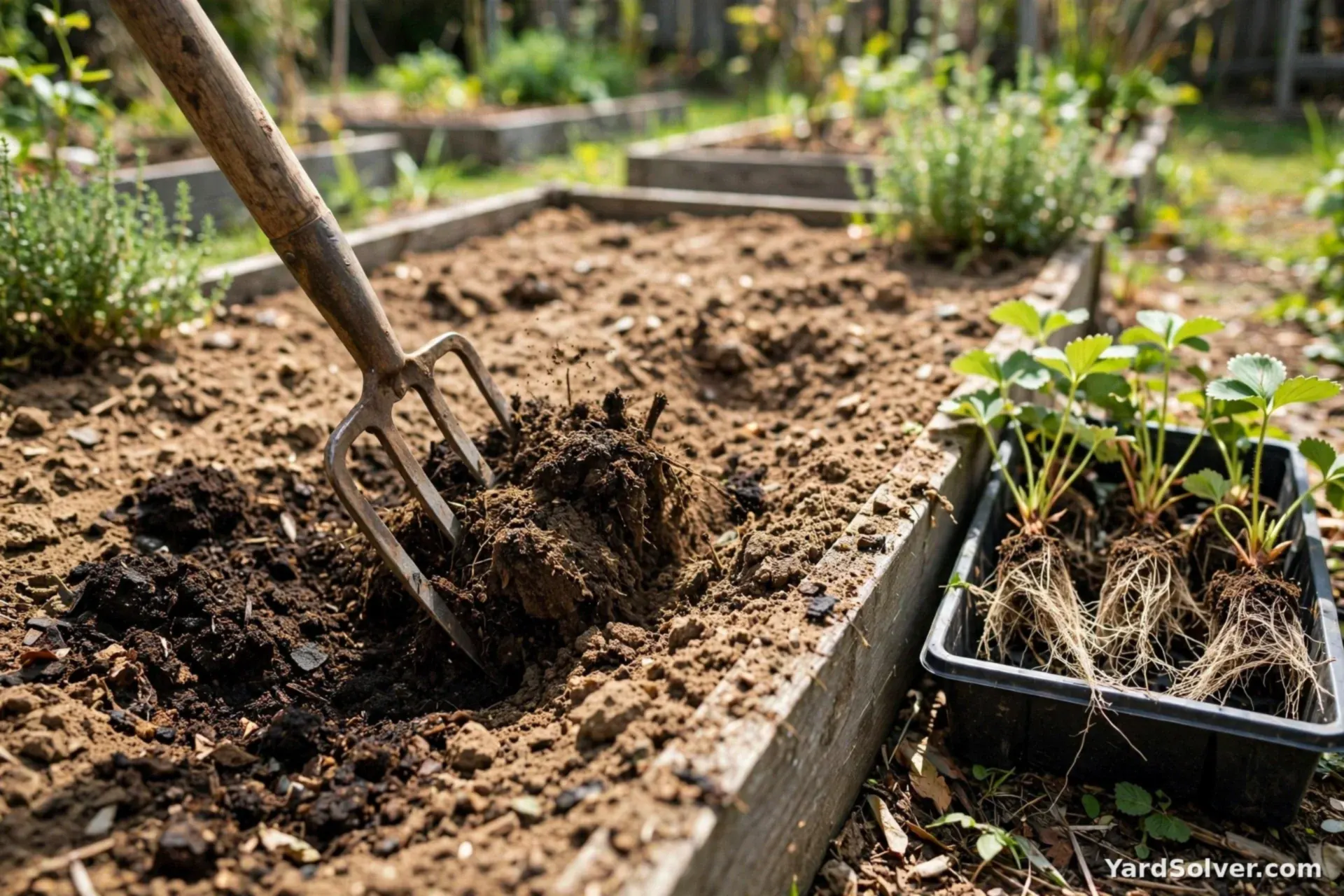
Decide by appetite: a household that makes jam wants June-bearers; one that grazes wants day-neutrals. Strawberries demand full sun and — above all — drainage: crowns sitting in winter-wet soil rot, so pick your sunniest, freest-draining spot, or mound the row up a few inches. They also want a spot where strawberries, tomatoes, peppers or potatoes have not grown recently, since those share soil diseases. Prepare the bed as in How to Prepare Garden Soil in Spring: clear every perennial weed root now (weeding inside a strawberry bed later is miserable), and work in compost — a couple of inches across the bed. Set plants 12–18 inches (30–45 cm) apart in rows 2–3 feet apart for June-bearers, which will fill in with runners; day-neutrals stay tidier and can sit closer. Your planting dates are on the Planting Calendar.
Step 2 — Plant crowns at exactly the right depth
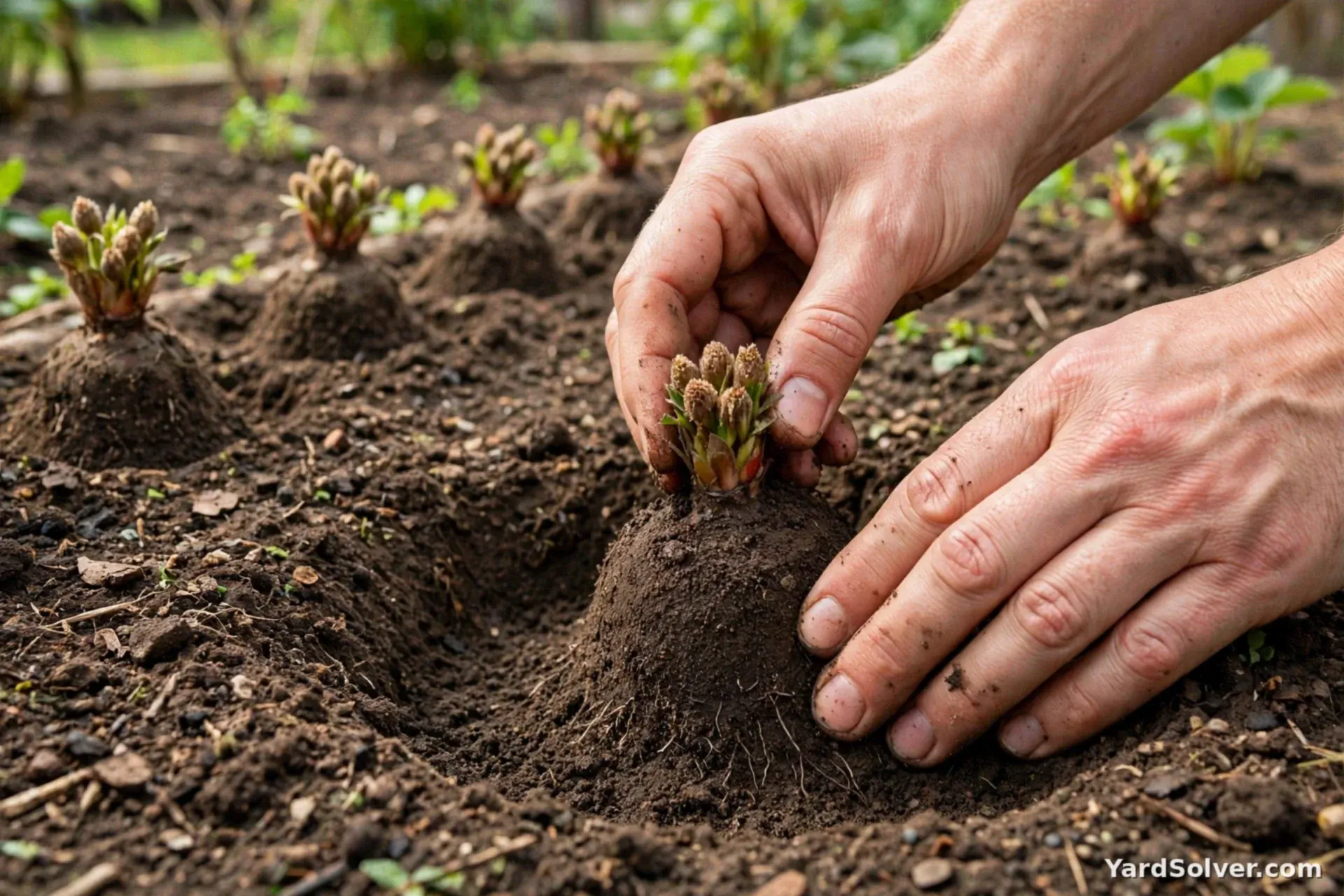
Strawberries usually arrive as bare-root crowns — a knobbly centre with a beard of roots. Soak them briefly, spread the roots downward in a hole wide enough that they are not bunched or bent upward, and set the plant so the crown sits exactly at soil level: every root buried, no part of the crown under soil. This half-inch decides the plant's life — buried crowns rot, perched crowns dry out. Firm the soil, water deeply, and keep the bed evenly moist for the first few weeks. For June-bearers planted in spring, pinch off the flowers that appear in the first weeks: it feels cruel, and it is how the plant builds the crown and root strength that makes next summer's big harvest. Day-neutrals can fruit lightly in their first year — remove flowers only until the plants are established, roughly the first month or two.
Step 3 — Manage runners on purpose
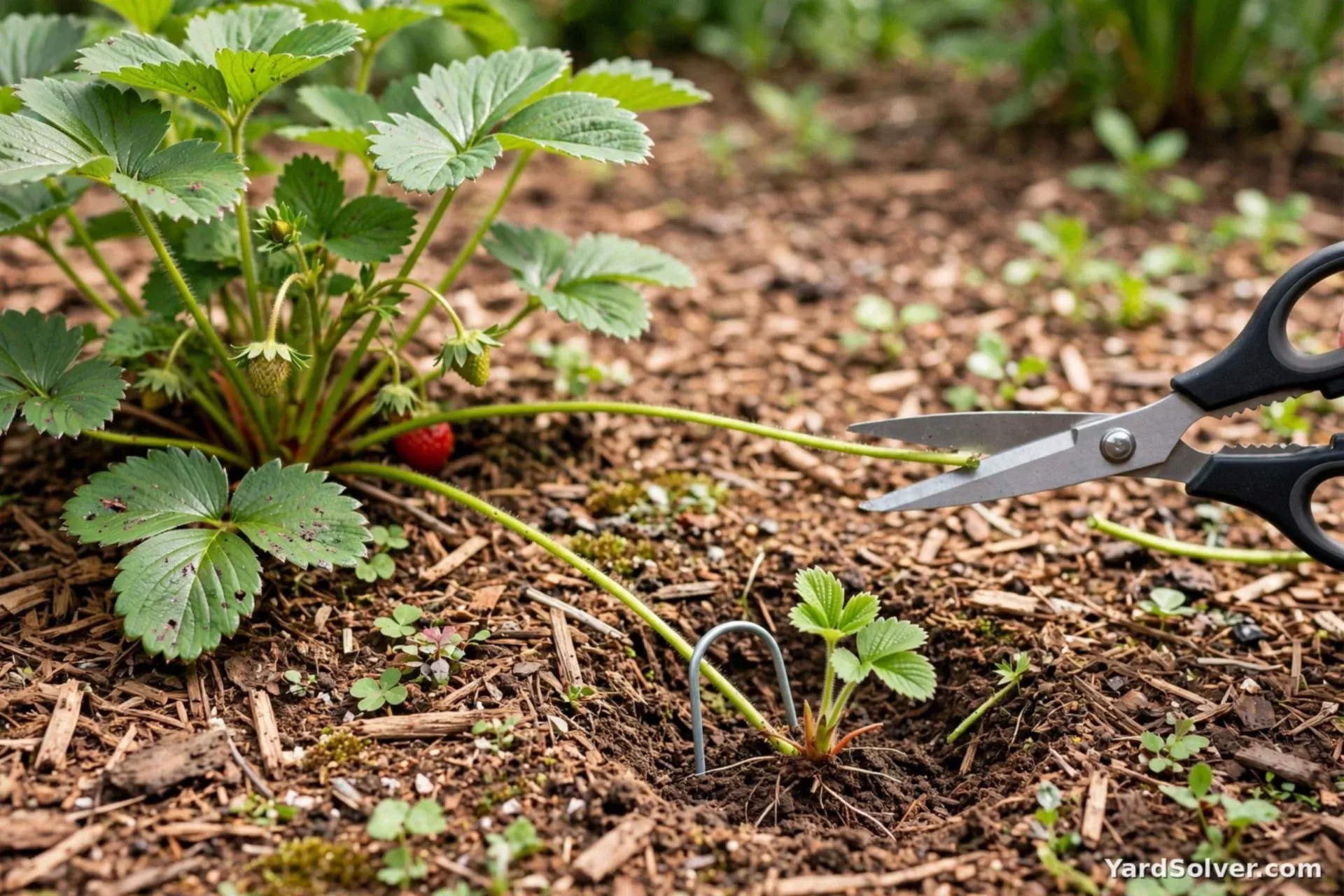
Runners are the long stems mother plants send out to root baby plants where they land. They are both the bed's renewal system and its main problem. Every runner a plant keeps costs it fruiting energy, and a bed left entirely to itself becomes a crowded thicket of small berries within two seasons. The middle way: let each healthy plant root two or three well-spaced runners — peg the baby plantlet down with a bent wire or stone until it roots, then it can be left in place to fill a gap or lifted to start a new bed. Snip off everything beyond that as it appears. Day-neutral and everbearing types make few runners and mostly skip this whole dance. Aim for mother plants standing roughly a hand's width apart once the bed settles.
Step 4 — Mulch, water, and beat the birds to it
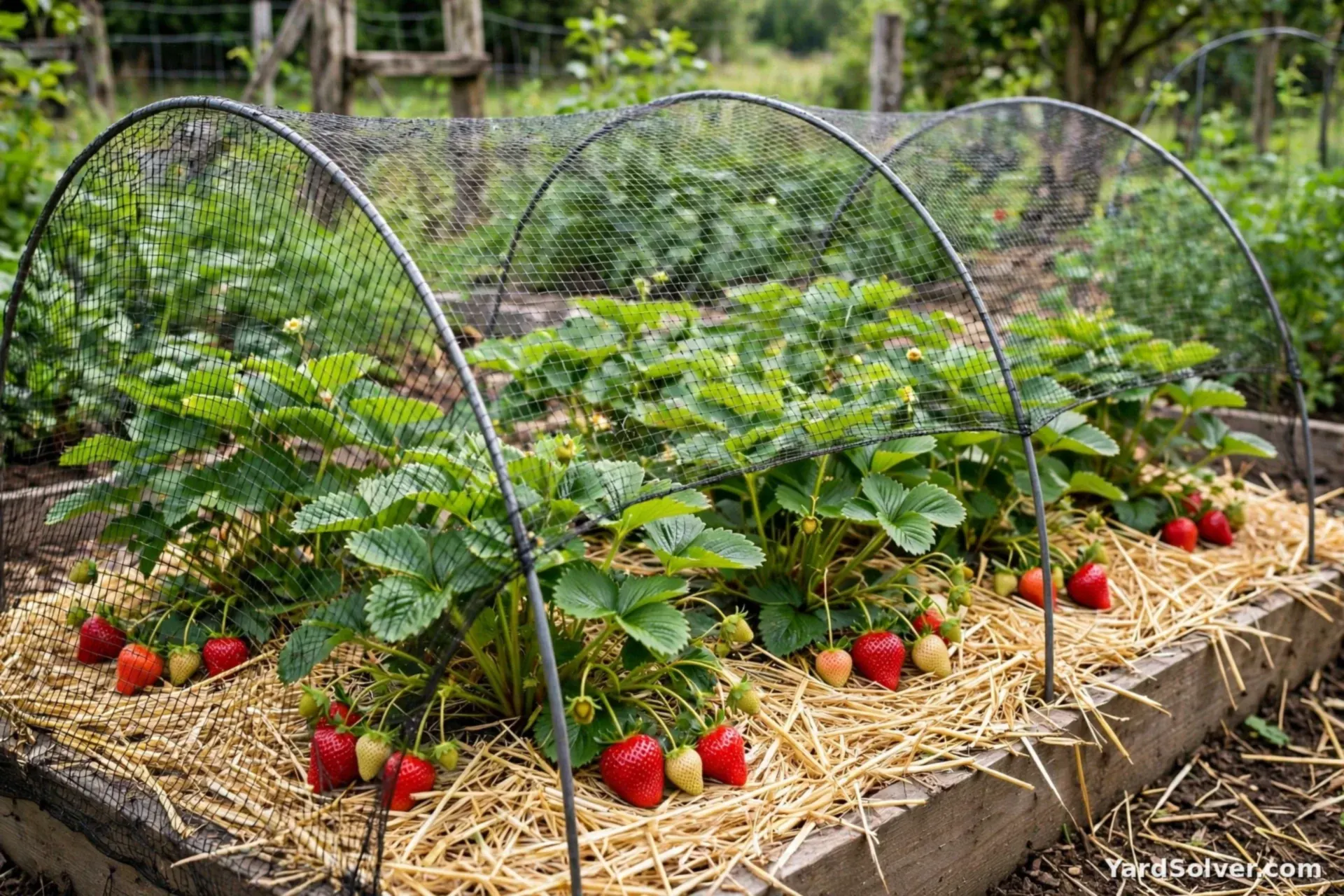
When fruit starts to swell, tuck clean straw under the trusses — berries resting on bare wet soil rot and pick up grit, and the straw cushion is the traditional fix. Keep watering through fruiting: berries are mostly water, and a dry spell at swelling time means small, seedy fruit. Water at the base, in the morning. Birds will find your ripening berries the day you do, so net the bed at the first blush of colour — draped loosely over hoops or canes, pulled taut and pegged at the edges. Loose, sagging netting traps birds and hedgehogs; a tight net you check daily protects both the fruit and the wildlife. Slugs are the other thief of ripe fruit: the straw helps, and the rest of the defence is in the slug guide. Pick ripe berries every day or two in the season, with the cap and a short stem, in the cool of the morning.
Step 5 — Winter protection and renewing the bed
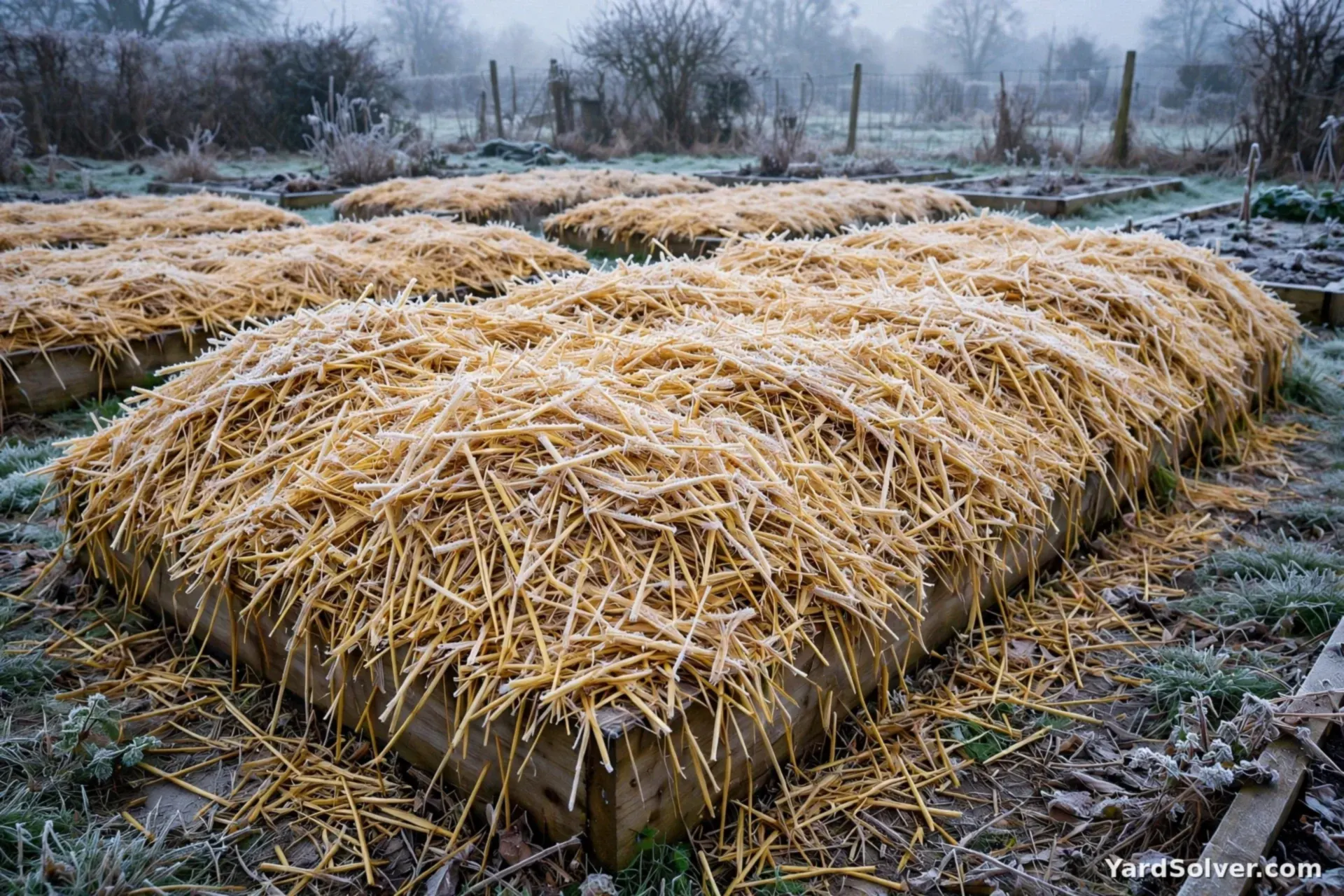
Strawberry plants are hardy, but their crowns suffer from freeze-thaw heaving in cold winters. Once the ground has cooled properly — after a few hard frosts, not before — cover the bed with 4–6 inches of loose straw, as part of putting the garden to bed. Pull it back gradually in spring as growth starts, moving it between the plants as the fruiting mulch. For June-bearers, add one more job right after harvest finishes: renovation. Trim or mow the leaves (without cutting into crowns), thin crowded plants, weed thoroughly, scratch in a light feed or compost dressing, and water. That single session resets the bed for another strong year. Even the best-kept bed declines after three or four productive years — berries shrink and disease builds — so start a fresh bed from the old one's best runners in a new spot, and let the old ground rest from strawberries for a few years.
Keep going
The at-a-glance version, with your personal dates: Strawberry — Plant Library.
Growing in containers instead: How to Grow Strawberries in Pots · Winter routine: Putting Your Garden to Bed.
Questions people ask
What is the difference between June-bearing, everbearing and day-neutral strawberries?
June-bearers give one large harvest over two to three weeks in early summer. Everbearers give two smaller crops, one in early summer and one from late summer into fall. Day-neutrals pick steadily in small amounts all season. For jars and freezing choose June-bearing; for fresh eating over months choose day-neutral.
How deep do I plant strawberry crowns?
Exactly at soil level: every root buried and fanned downward, with the crown — the knobbly centre where the leaves emerge — sitting right at the surface. Planted too deep, the crown rots; too shallow, the roots dry out. It is the one measurement that decides whether the plant lives.
Why are my strawberries small?
Usually crowding. A bed left to keep every runner becomes a thicket of competing plants and the fruit shrinks. Thin runners so mother plants stand roughly a hand's width apart, renovate the bed after harvest, and plan to renew the planting every three to four years.
Comments & ratings
No comments yet.
Be the first to share your experience.