
Guides · Soil · Published October 31, 2026
How to Prepare Garden Soil in Spring
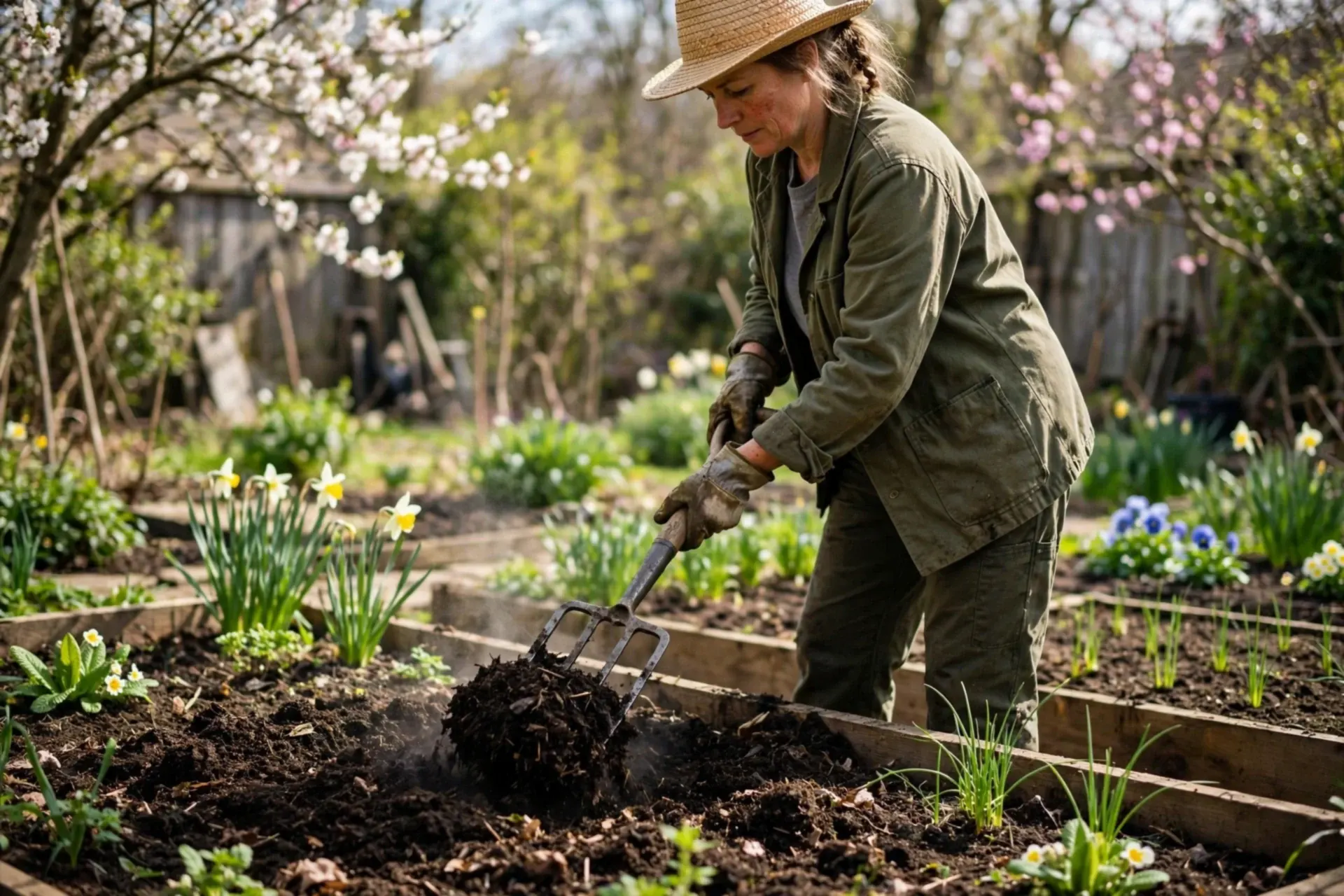
Everything you harvest this year is decided in the next hour of work. Spring soil prep is not complicated — wait until the soil is ready, feed it properly, disturb it as little as it needs — but each step has a wrong way that costs the whole season. Here is the right order.
Step 0 — The readiness test (do not skip this)
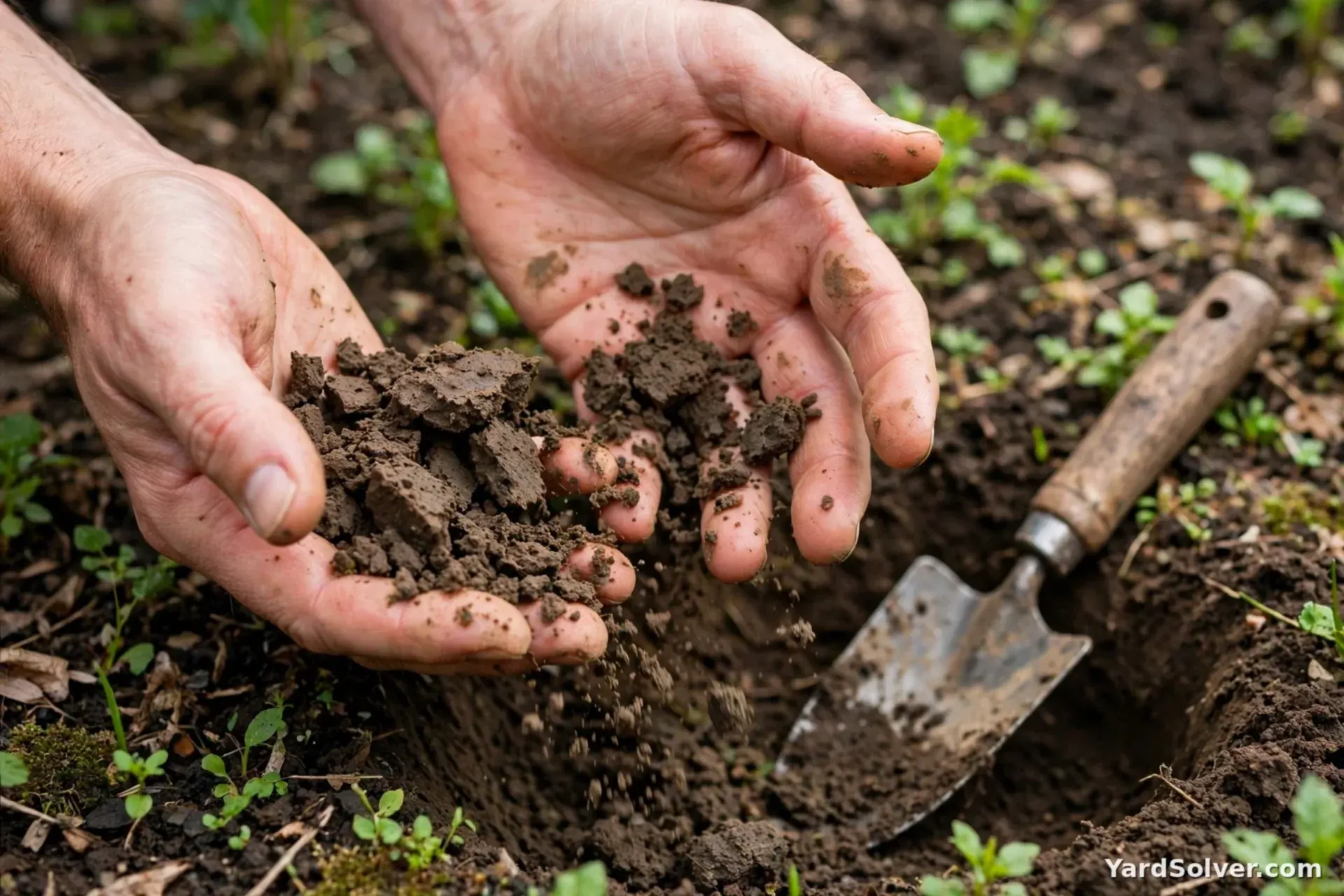
- Dig down about 6 inches and squeeze a handful of soil
- Sticky ball or dripping water = too wet. Working wet soil compacts it into hard clods that roots fight all season — wait a few more days
- Crumbles loosely = ready. Proceed
- A second sign: soil that no longer sticks to your boots in sheets is soil you can walk and work
Step 1 — Clear the bed
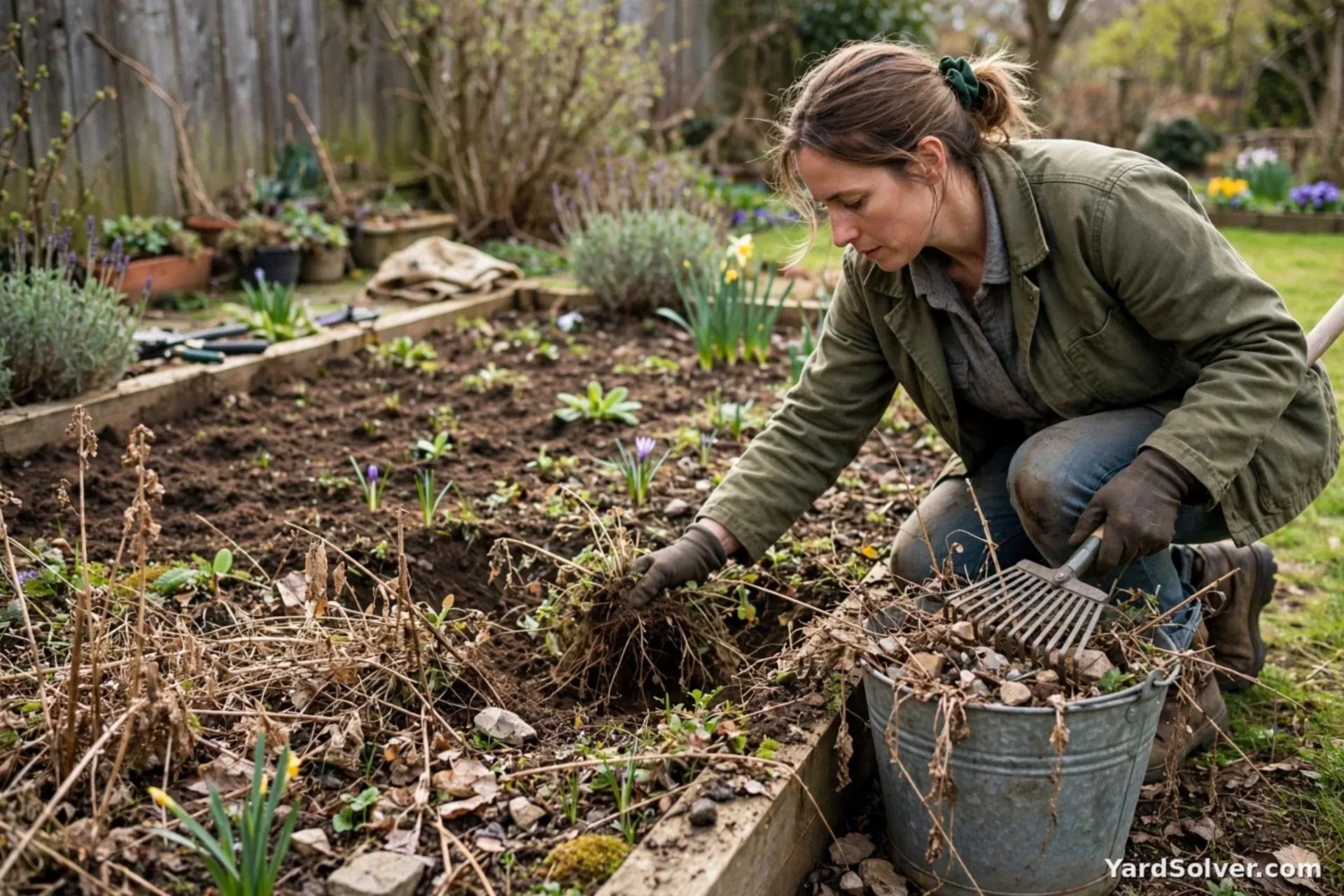
Pull winter weeds before they seed, remove dead annuals you left standing (anything diseased goes in the bin, not the compost — see Putting Your Garden to Bed), and rake off stones and debris. If you sowed a living cover over winter, cut it down now and leave the roots in the soil.
Step 2 — Add compost: 1–2 inches, every spring
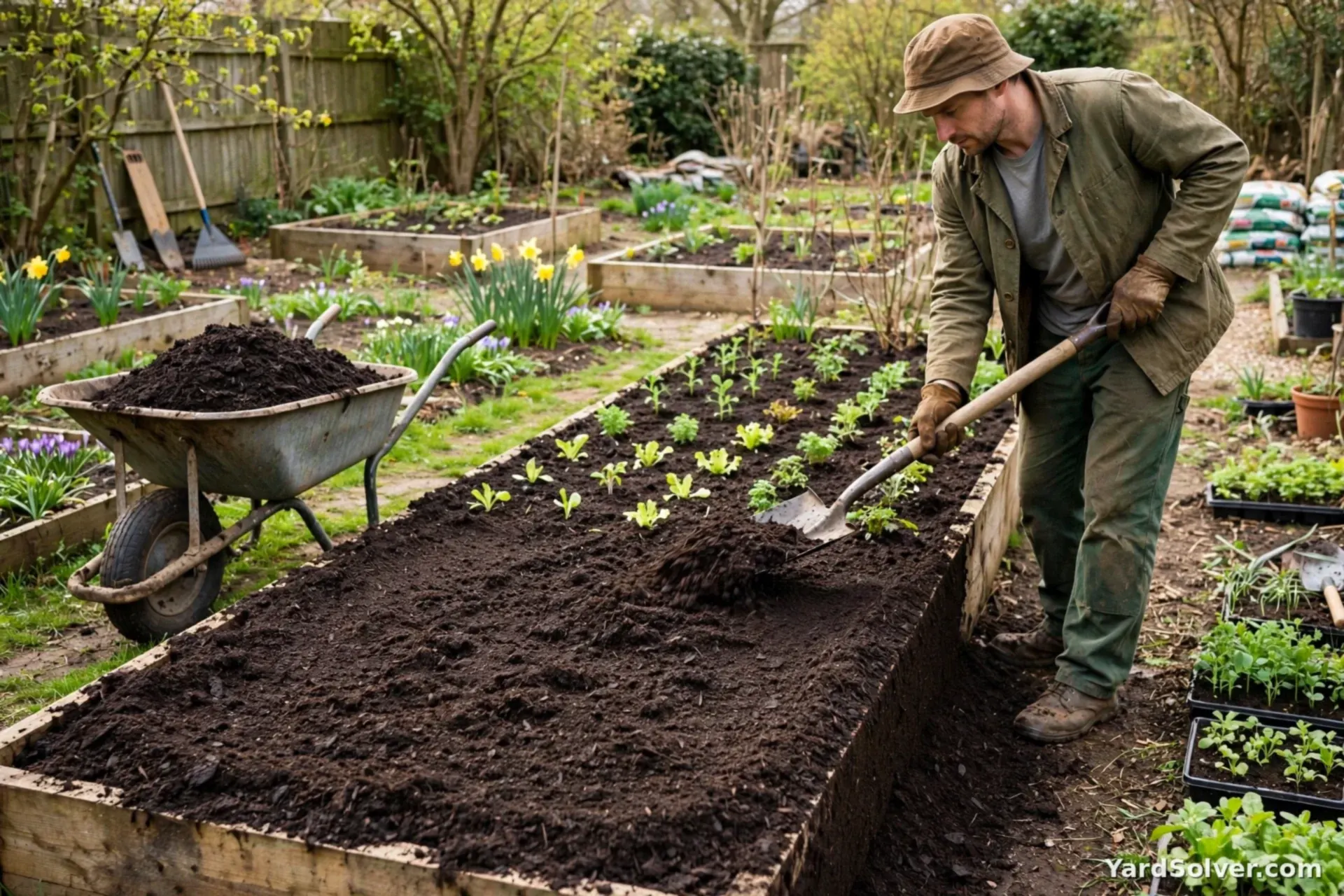
Spread 1–2 inches of finished compost over the whole bed. For an 8 × 4 bed that is about 3–5 cubic feet — get exact numbers for your beds from the Compost Calculator, and bag counts for fresh ground from the Topsoil Calculator. Compost is the one amendment that helps every soil type: it feeds clay and sand alike, holds water, and wakes up soil life. Your own pile's spring output works perfectly — this is where winter composting pays you back.
Step 3 — Loosen gently; dig only if you must
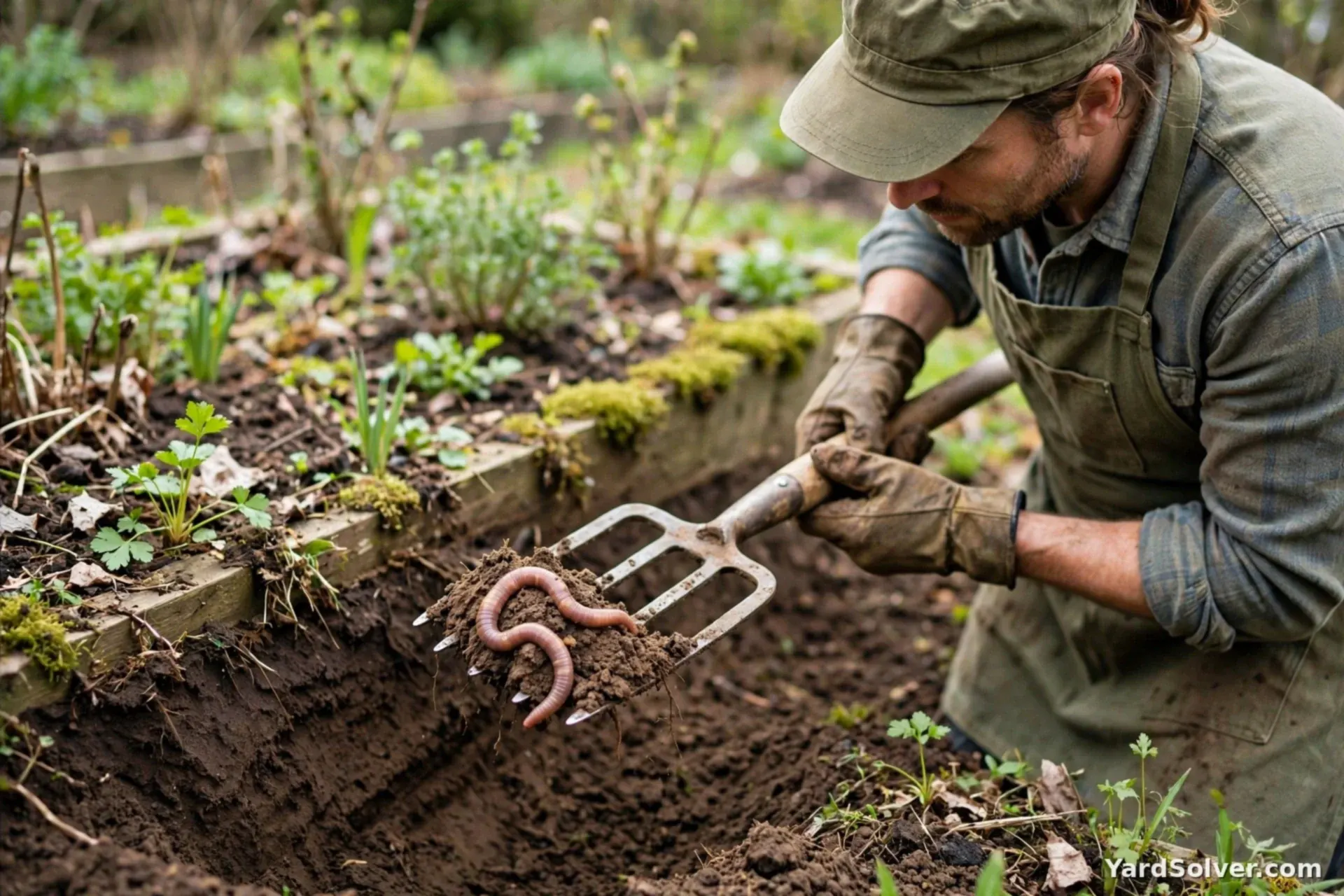
Fork the compost into the top 4–6 inches, or — for established beds — simply leave it on top and let planting holes and worms mix it (the no-dig way). Reserve deep digging and tilling for breaking new ground or rescuing truly compacted soil. Every unnecessary pass of the tiller chops soil structure and surfaces a fresh crop of weed seeds. One exception deserves its own warning: if a bed stays sticky and brick-like even when workable, you may be on heavy clay, which has its own rules and its own timeline — see How to Fix Clay Soil before reaching for sand or gypsum, the two famous shortcuts that make clay worse.
Step 4 — Feed by the numbers if you use fertiliser
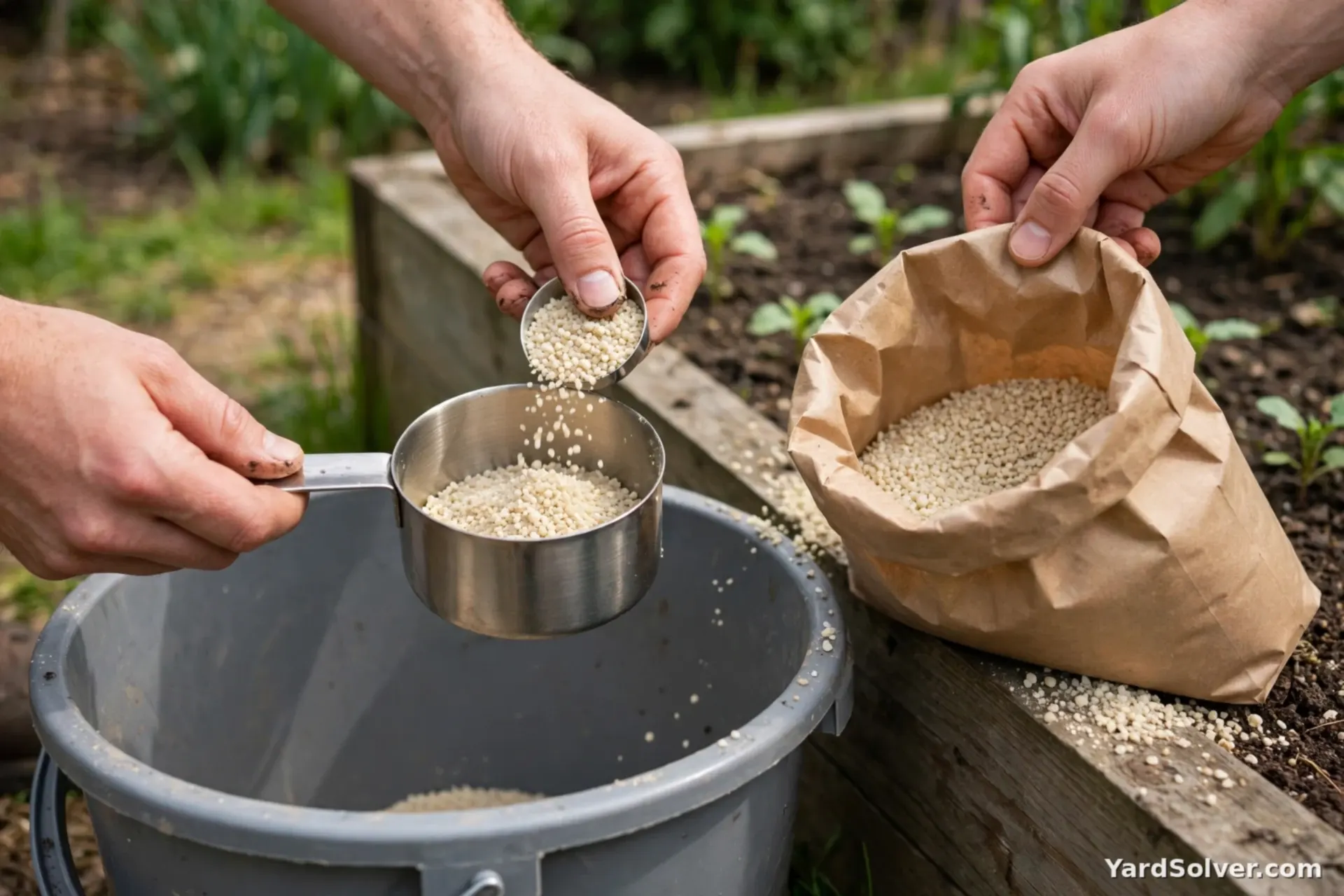
Compost alone grows good gardens. If you also use a general fertiliser, apply it by measurement, not by handful-and-hope: the Fertilizer Calculator turns your bed's area and the bag's own coverage into the exact amount. More is not better — excess nitrogen grows leaves at the expense of fruit and washes into waterways.
Step 5 — Rake level, then let it rest a few days
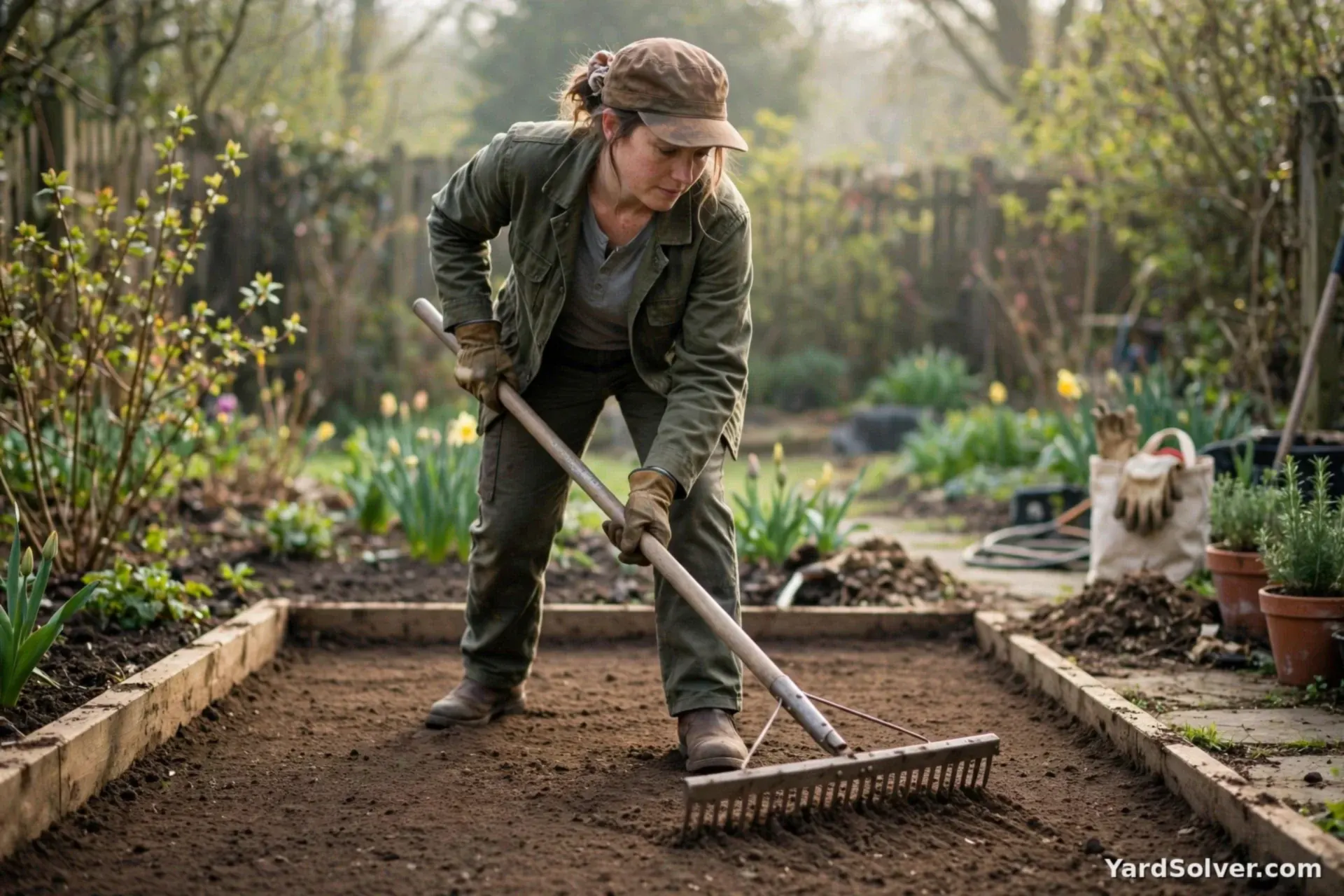
Rake the surface level and fine where seeds will go, firmer where transplants will go. If you can, prep a few days before planting: the soil settles, worms redistribute the compost, and early weed seeds that sprout can be hoed off in minutes — the "stale seedbed" trick that quietly cuts your weeding all season. Planting dates come from the Planting Calendar; raised-bed specifics are in Raised Bed Gardening for Beginners.
Spring Soil Preparation Checklist
The whole job on one list — tick each step off in order, and do not let a later step jump the queue (spreading compost on untested, too-wet soil wastes both the compost and the afternoon):
- ☐ Run the readiness test first: squeeze a handful from 6 inches down — crumbles loosely means go, sticky ball means wait a few days
- ☐ Clear the bed: winter weeds out before they seed, dead annuals removed, diseased material in the bin (never the compost), stones and debris raked off
- ☐ Test the soil every few years: a lab test for pH and nutrients tells you whether lime, sulfur or a specific feed is needed at all — how to test your garden soil covers sampling; if the result comes back too acidic, how to raise soil pH gives the lime rates by soil type
- ☐ Cut down any winter cover crop and leave its roots in the soil to rot in place
- ☐ Spread 1–2 inches of finished compost over the whole bed — the universal amendment, no test needed
- ☐ Loosen gently: fork compost into the top 4–6 inches, or top-dress and let worms mix it; deep digging only for new or badly compacted ground (heavy clay follows the clay soil method instead)
- ☐ Feed by the numbers if you use fertiliser: measure for your bed's area rather than handful-and-hope
- ☐ Rake level — fine where seed will go, firmer where transplants will go
- ☐ Rest the bed a few days if you can, then hoe off the first flush of sprouted weeds before planting
Keep going
The season plan: Companion Planting Basics · When to Start Seeds Indoors.
Questions people ask
How much compost each spring?
A layer 1–2 inches deep over the bed — roughly 3–5 cubic feet on an 8 × 4 bed. New or poor soil takes the deeper end in its first years.
Should I till every spring?
Usually not. Loosen the top few inches and add compost on top; reserve deep tilling for new ground or rescue work. Repeated tilling breaks structure and raises weed seeds.
How do I know the soil is ready?
The squeeze test: a handful from 6 inches down should crumble, not form a sticky ball. Working wet soil compacts it for the whole season.
Comments & ratings
No comments yet.
Be the first to share your experience.