
Guides · Fall and winter · Published November 10, 2026
Overwintering Geraniums: 3 Ways, Including Bare-Root
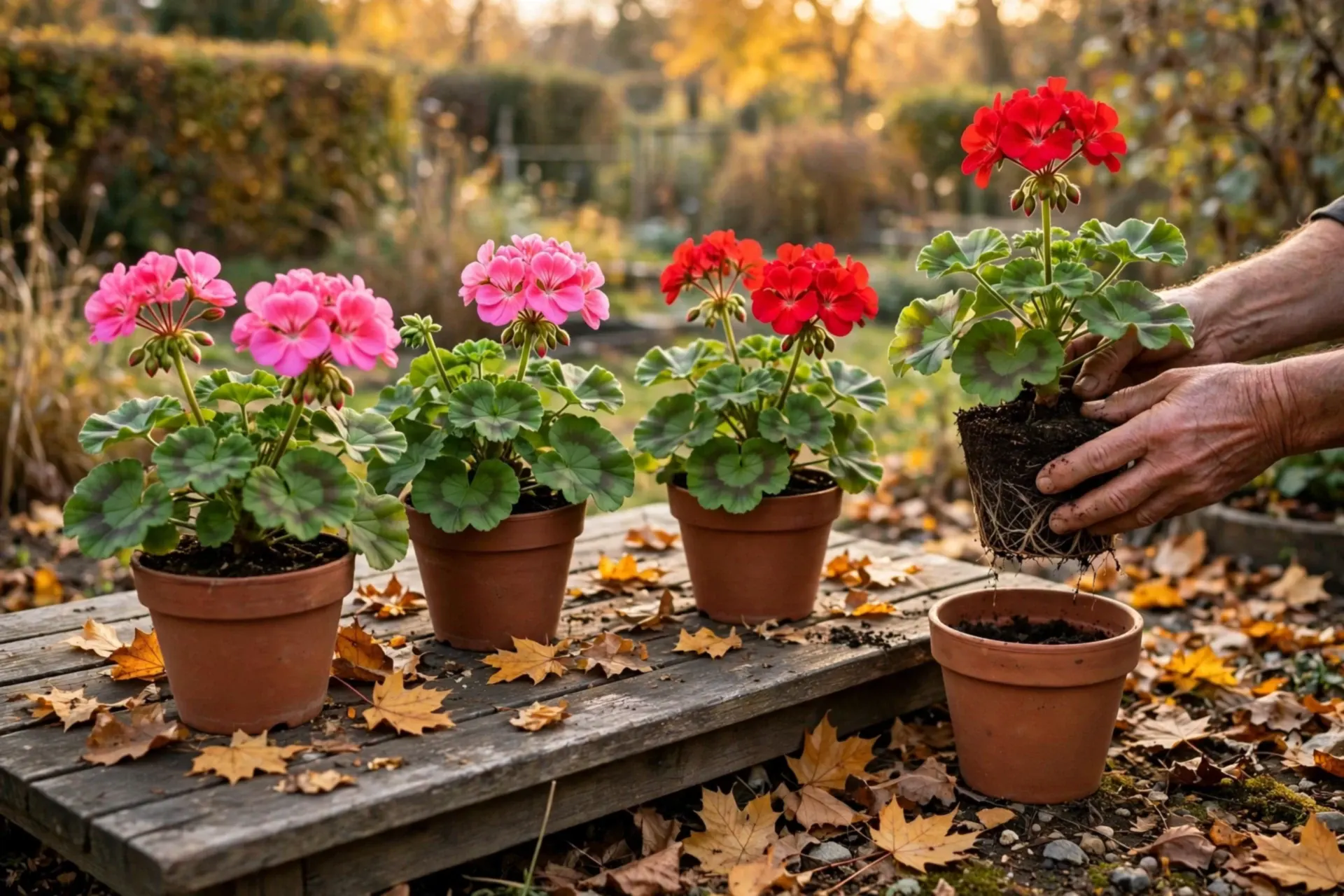
First, the honest part: the "geraniums" in your pots and window boxes are really pelargoniums — tender perennials from South Africa. They are not annuals, and they do not want to die in October. Frost kills them because nothing carries them through it, and carrying them through is easy once you pick a method that fits your space. A bright windowsill, a box of cuttings, or a shelf of paper bags in a cold basement will all do it. Here are the three ways, with the strange-but-true bare-root method last.
The three ways, honestly compared
| Method | Space it takes | Winter care | Best for |
|---|---|---|---|
| Keep them potted and growing | A bright windowsill per plant | Water when the top inch is dry; turn pots weekly | A few favourite plants; flowers off and on all winter |
| Take cuttings | One tray on a sill | Water lightly; pot up as they root | Many plants from a few mothers; the cheapest way to multiply |
| Bare-root in paper bags | A box in a cold, dark spot | One check a month, a root soak if shrivelling | A whole bed's worth, with no windowsill to spare |
Whichever way you choose, the deadline is the same: plants come in before a hard freeze, while stems are still green and firm — ideally as nights settle into the mid 40s. The timing joins the rest of your autumn work in the Garden Planner.
Step 1 — Lift them before the freeze
Dig bed plants up with a fork, keeping the crown and main roots whole, or tip pot plants out of their containers. Pick the healthy ones with thick, firm stems — soft or blackened stems store badly and are not worth the shelf space. Shake the soil off the roots, and check every plant over for aphids and whitefly before it comes anywhere near the house. One infested plant in a warm room becomes a winter of pest patrol. A single night's frost warning is a different job — How to Protect Plants From Frost covers the evening cover-up; this lift is for the whole winter.
Step 2 — Way one: keep them potted and growing
Pot lifted plants into fresh mix, in pots only a little bigger than the root ball, and cut the tops back by about a third. Set them in the brightest window you have — they want six hours of light or more — in a cool room if you can manage it: 55 to 65°F suits them far better than a hot living room, where they stretch pale and weak. Water only when the top inch of mix is dry; soggy roots are the number one winter killer of potted geraniums. Pinch straggly tips as they appear and the plant stays bushy instead of chasing the glass.
Step 3 — Way two: bag them bare-root
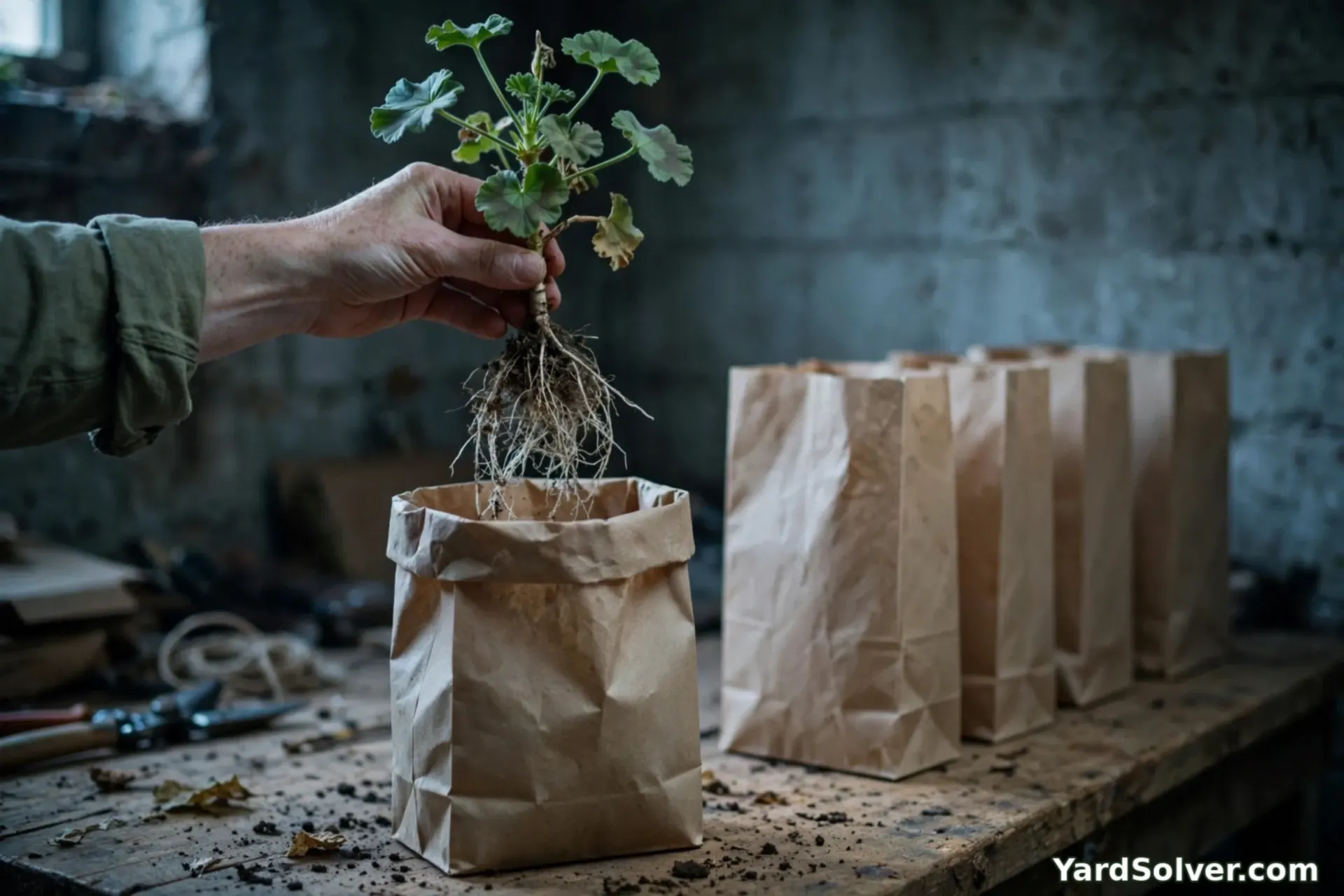
This is the method grandparents used, and it works because pelargonium stems are water tanks. Shake the roots almost bare, pull off the flowers, buds and most of the leaves — they would only rot in storage — and trim the stems back to 6 to 8 inches. Let the plants air-dry in the shade for a day. Then slip each one into its own plain paper bag, or hang it upside down, and store the bags somewhere cool, dark and dry at 45 to 55°F: a basement, a cold closet, an attached garage that never freezes. Paper, never plastic — paper breathes, plastic traps damp and grows mold. The plants will look dead by January. Leafless and shrivelled is normal; they are asleep, not gone.
Step 4 — The monthly check
Once a month, open the bags and look each plant over. Firm stems, even wrinkled ones, are fine. If the roots and stems look badly shrivelled, soak the roots in water for an hour or two, let the plant dry off, and bag it again. Soft or moldy stems are a different story: that plant is finished, and it comes out before the rot reaches its neighbours. Potted plants get the same monthly once-over — a quick turn, a check of the leaf undersides, and water only if the mix is dry. Cuttings, if you took them, want the same light as the potted plants and a drink when their mix dries.
Step 5 — Pot them up and wake them in spring
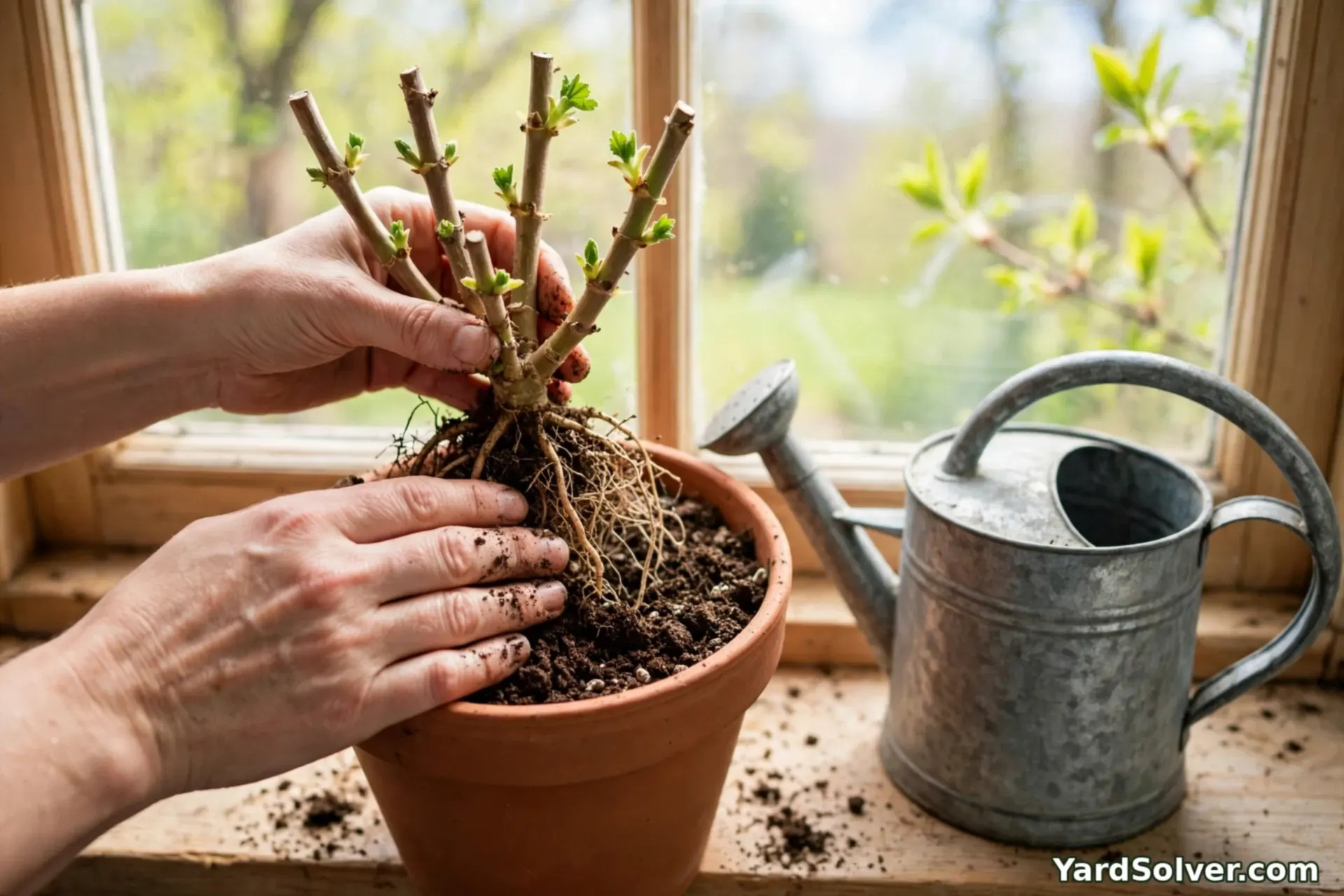
About six to eight weeks before your last frost, bring the bags into the light. Soak the roots for a few hours, cut stems back to firm green wood — around 4 to 6 inches — and pot each plant in fresh mix, watered in well and set on your sunniest sill. Then be patient: two to four quiet weeks before new leaves is normal while the roots wake first. Once the frosts have passed, harden the plants off over a week before they go back outside for the summer. The tender-annual family keeps the same rhythm — Petunia and Marigold are started fresh from seed each year, but a geranium you carried through is a year ahead of both, and usually bushier than anything you can buy.
Keep going
The one-night version of this job: How to Protect Plants From Frost — covers, timing and the morning after.
Another tender plant worth the same effort: How to Overwinter Pepper Plants.
Questions people ask
Will bare-root geraniums in paper bags really live?
Most of them do. Pelargoniums store water and energy in their thick stems, so they can rest cool, dark and dry for months. Expect to lose some — a warm storage spot dries stems out completely. Saving most of the row, and getting plants that come back bushier than new ones, is a good and honest result.
Are these true geraniums?
No — and it matters. The bedding and pot plants sold as geraniums are pelargoniums, tender plants from South Africa that frost kills. True hardy geraniums (cranesbills) are perennials that stay in the ground all winter and need none of this. This guide is about the pelargoniums in your pots and baskets.
When is it too late to bring geraniums in?
Once a hard freeze has frozen the stems solid, the plant is done. Work ahead of that: lift plants while they are still green and firm, ideally as nights settle into the mid 40s. A light frost that nips the leaves is recoverable — blackened, mushy stems are not.
Why did my stored geraniums shrivel up?
The storage spot was too warm or too dry, most likely both. Bare-root plants want 45 to 55°F; a heated room pulls the moisture out of the stems. The monthly root soak is the rescue — an hour in water, then dry them before they go back. If a stem is soft or moldy rather than just wrinkled, that plant is gone: bin it so it does not spread rot to its neighbours.
Comments & ratings
No comments yet.
Be the first to share your experience.