
Guides · Weather protection · Published October 31, 2026
How to Protect Plants From Frost
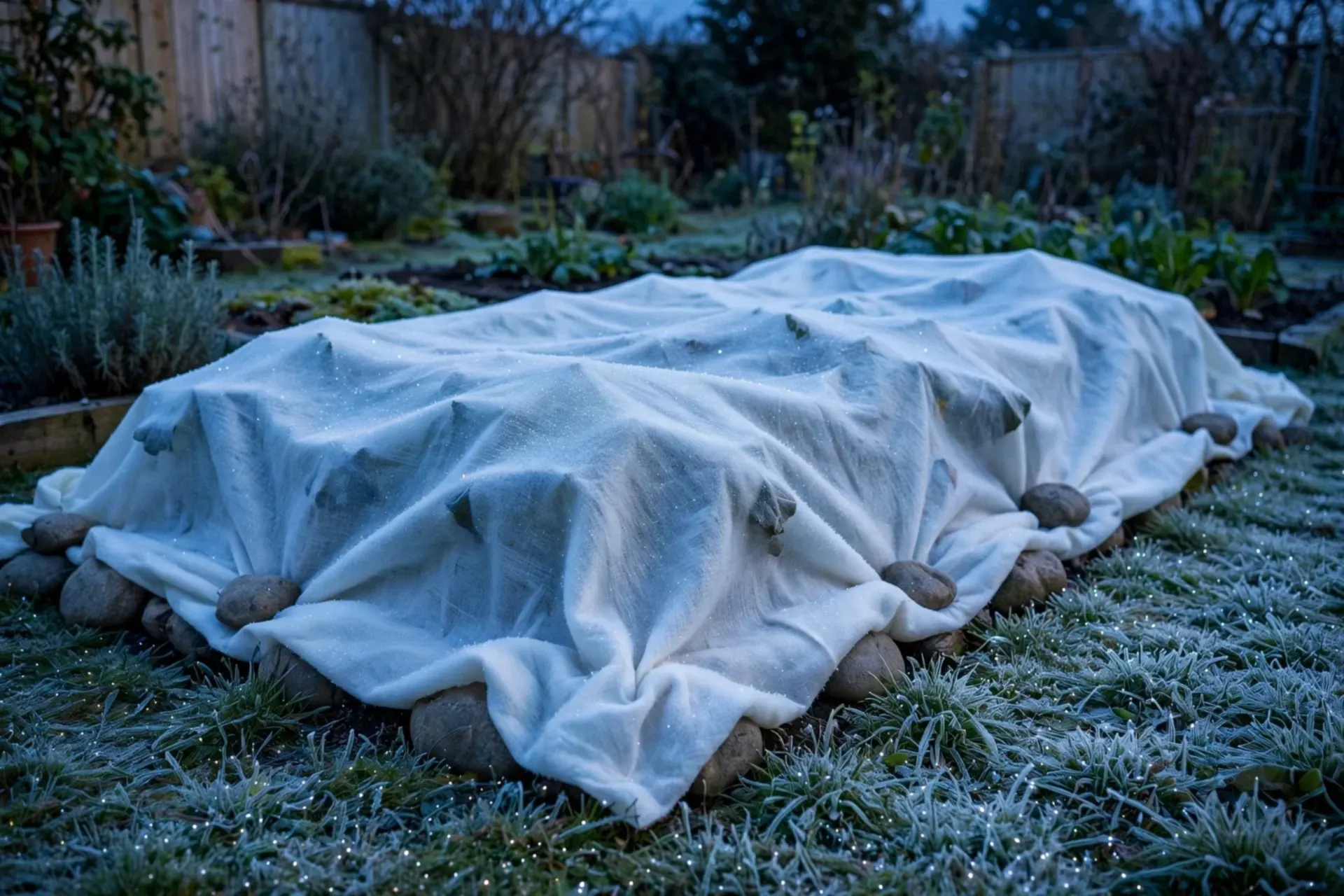
One clear, calm night can finish tomatoes, peppers and basil that took all summer to grow. The good news: frost protection is simple, cheap, and mostly about timing. Here is the routine that saves plants — know your frost dates first on the Planting Calendar.
Know your enemy: two kinds of cold night
- Light frost — around 36–32°F (2 to 0°C): kills tender annuals (basil, impatiens), damages tomato and pepper foliage
- Hard freeze — 28°F (-2°C) and below: ends the season for almost everything tender, splits stems and ruins fruit
Frost settles worst on clear, windless nights, when the ground radiates its heat to a cold sky — a forecast of 36°F (2°C) on such a night deserves covers.
Step 1 — Decide what actually needs saving
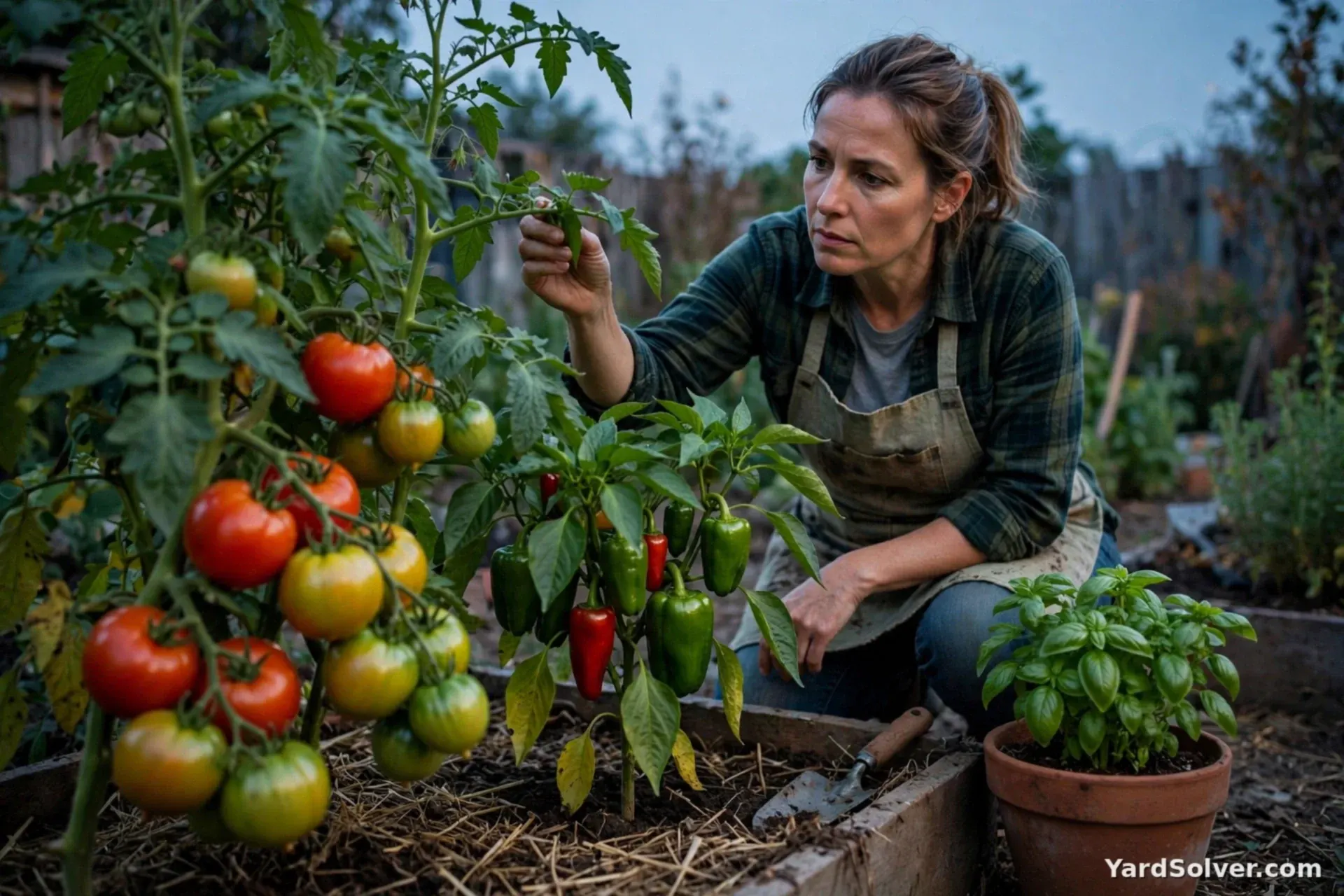
Cover: tomatoes and peppers with fruit still ripening, basil and tender herbs, late beans and squash you are still picking, and any potted plant you plan to overwinter. Skip: hardy greens (kale, spinach, carrots sweeten in frost), finished crops, and anything already diseased — protect effort where it pays.
Step 2 — Water the soil in the afternoon
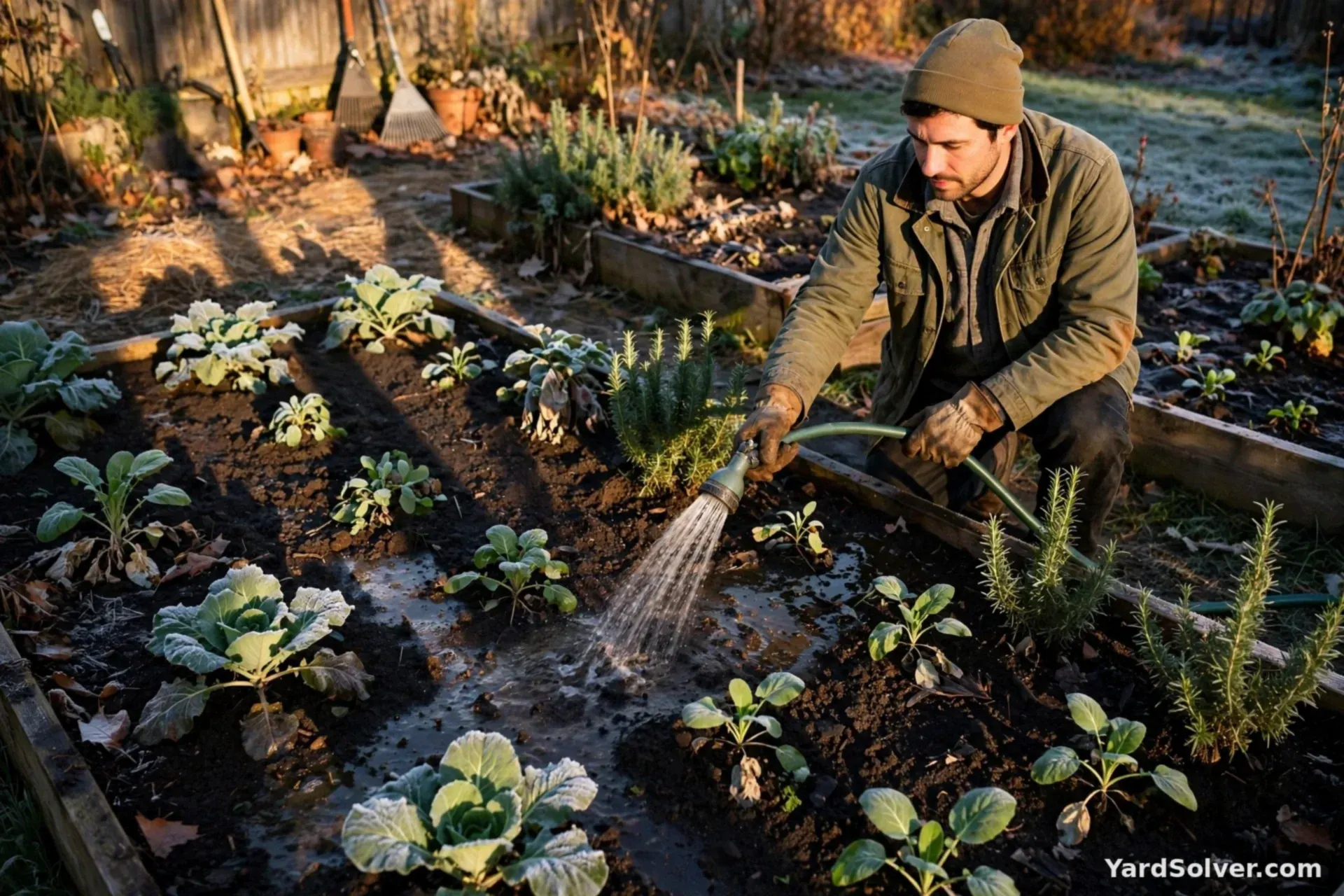
Moist soil holds more heat than dry soil and releases it slowly overnight, warming the air right around your plants. A good watering a few hours before a frost night is genuine protection, not folklore.
Step 3 — Cover before sunset, all the way to the ground
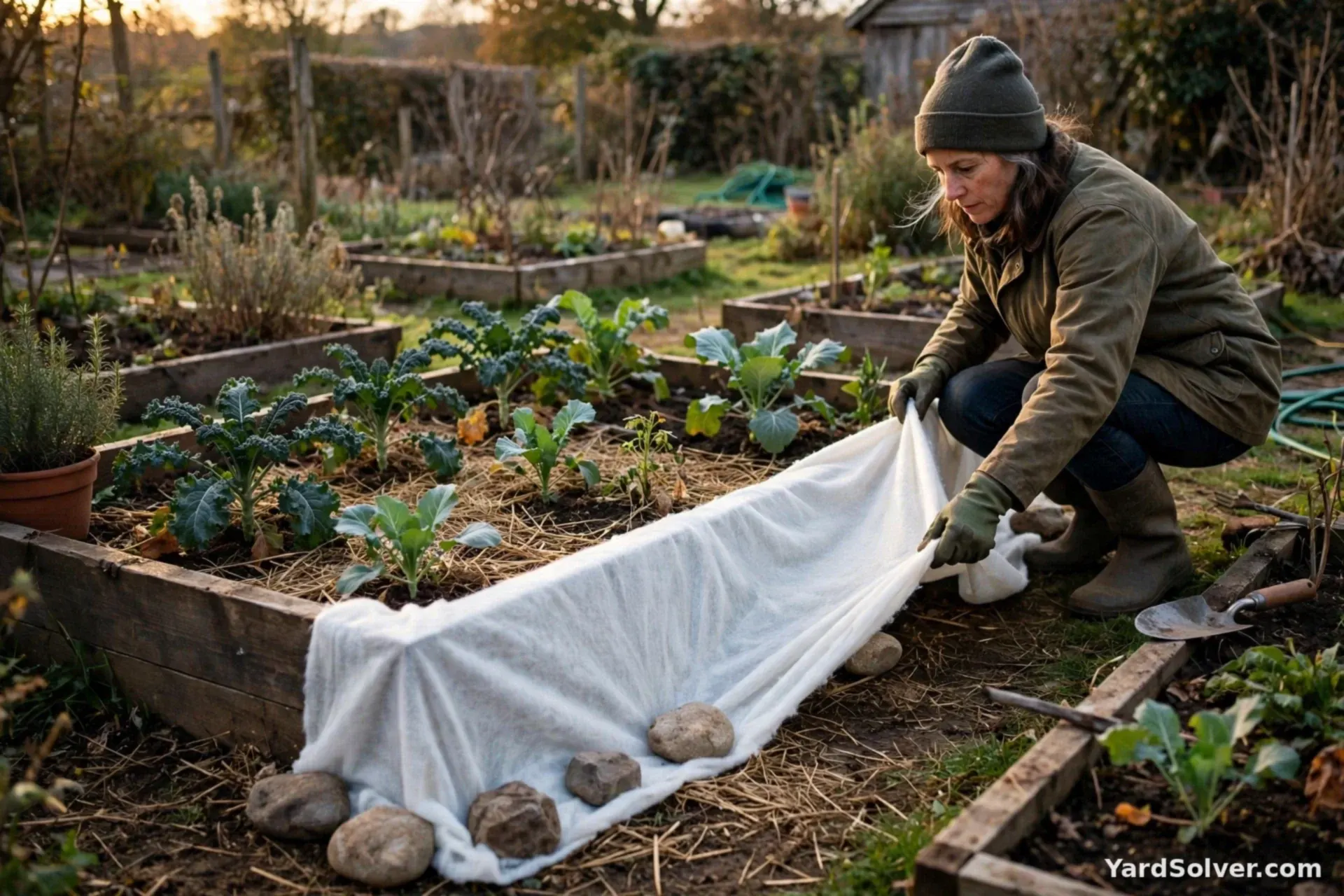
Use garden fleece (row cover), old bedsheets, blankets or towels. The rules that make covers work:
- Drape to the ground and weight the edges — you are trapping the soil's heat, not just shielding leaves
- Fabric, not bare plastic — plastic touching foliage conducts cold onto the leaf; if plastic is all you have, hold it off the plant on stakes
- On before sunset, while the soil still holds the day's warmth
- Buckets, pots or cloches work for single plants — same ground-sealing idea
Step 4 — Move pots to shelter
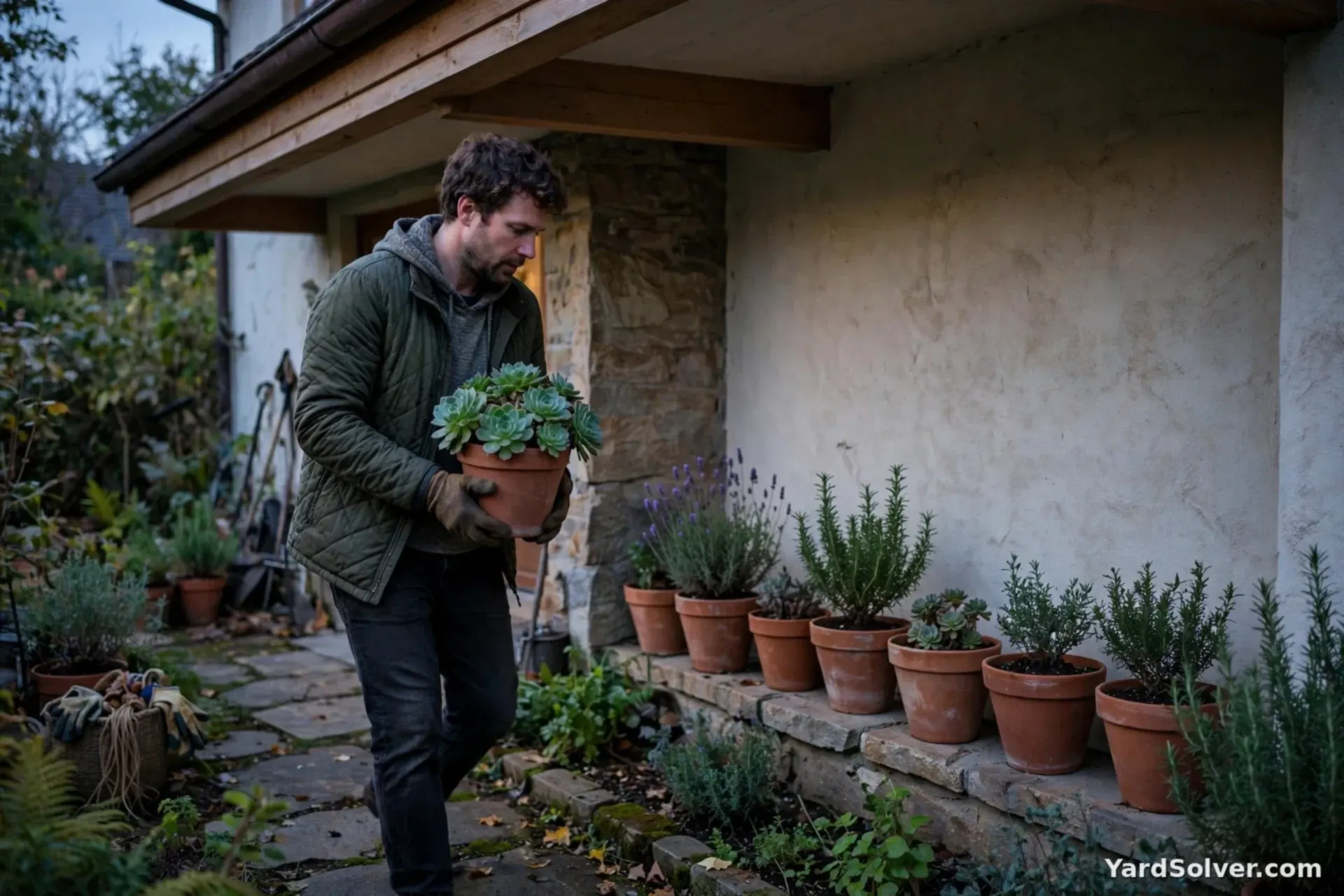
Container plants are the most vulnerable of all — their roots are above ground in cold air. Group pots against a house wall, under an eave, or into the garage for the night. Tender keepers (citrus, herbs you want to save) simply come indoors before the first frost and stay in.
Step 5 — Uncover in the morning
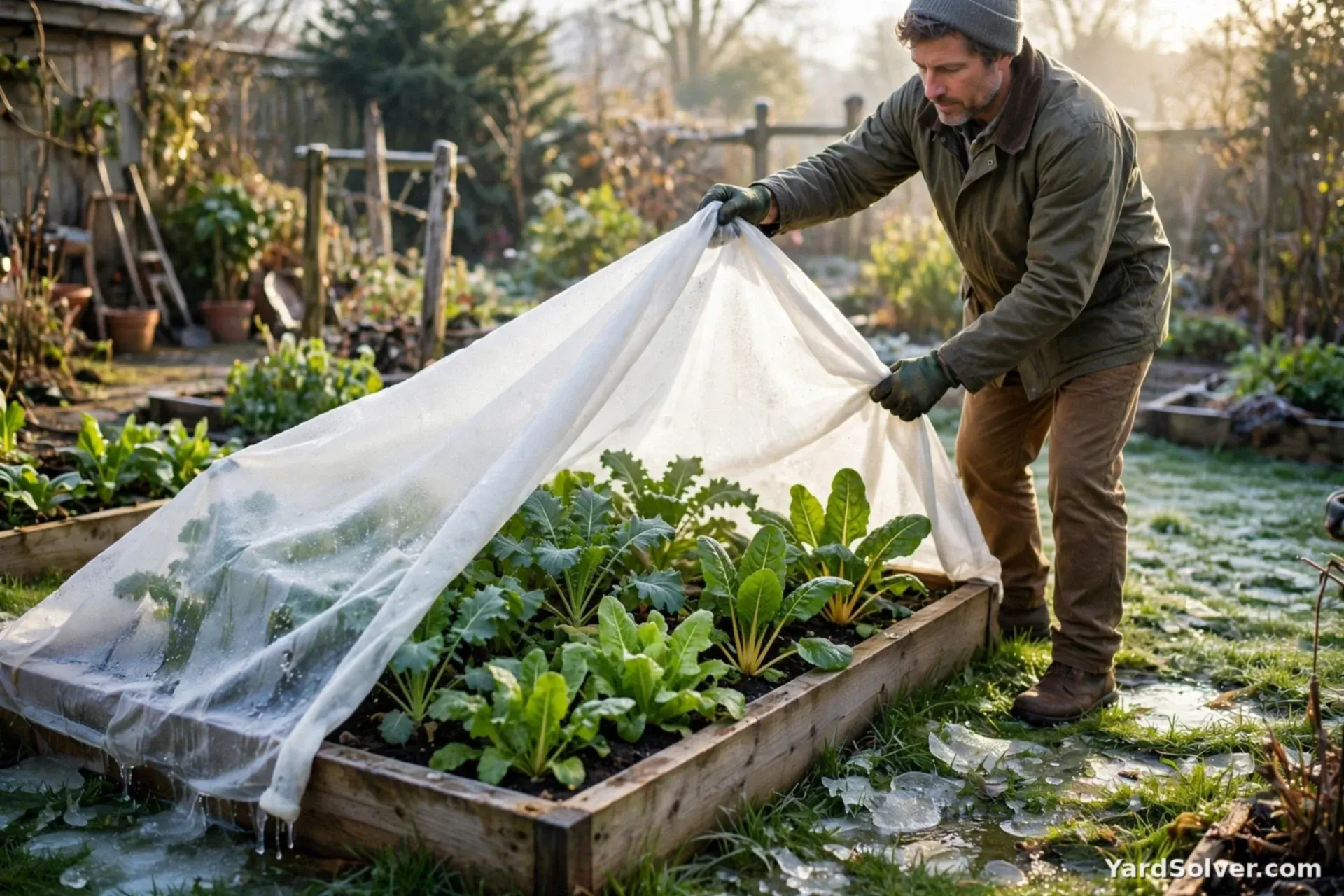
Once the sun is up and temperatures pass freezing, take covers off. Left on under a sunny sky they cook the plant and block its light. Frost protection is a nightly routine: on at dusk, off at morning, repeated while the cold snap lasts.
Step 6 — For perennials, protect the roots
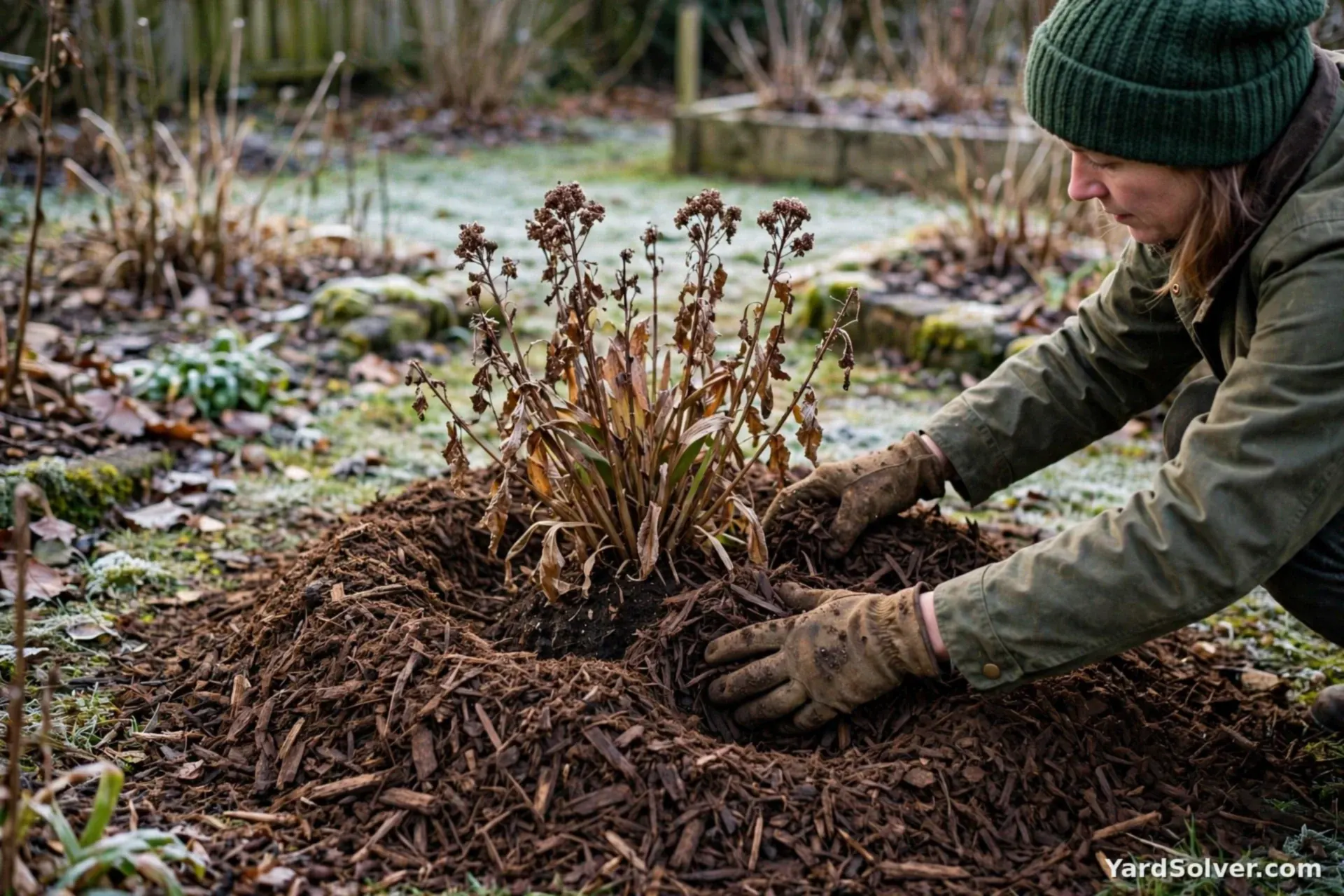
Borderline-hardy perennials and new plantings survive winter at the roots, not the leaves: a 3–4 inch mulch blanket after the first frosts keeps soil temperatures steadier. Amounts from the Mulch Calculator. More of the full routine is in Putting Your Garden to Bed.
Keep going
Related: Putting Your Garden to Bed · How to Plant Garlic in Fall · your dates on the Planting Calendar · Build a Low Tunnel.
Questions people ask
Can I use plastic sheeting?
Only if it does not touch the leaves — plastic conducts the cold straight onto foliage and can make damage worse. Hold it off the plant with stakes, or use fabric, fleece or an old bedsheet instead.
At what temperature should I worry?
Cover tender plants whenever a clear, calm night is forecast near 36°F (2°C) or below — frost can settle on leaves even when the air a few feet up reads a little above freezing. Basil is the most delicate common herb: it sulks below 50°F (10°C) and is damaged near 40°F (4°C).
Should covers come off in the morning?
Yes, once temperatures climb back above freezing — covers left on into a sunny day can overheat the plant and block the light it needs. On before sunset, off after sunrise.
Comments & ratings
No comments yet.
Be the first to share your experience.