
Plant Library · Flowers
🌸 How to Grow Petunia
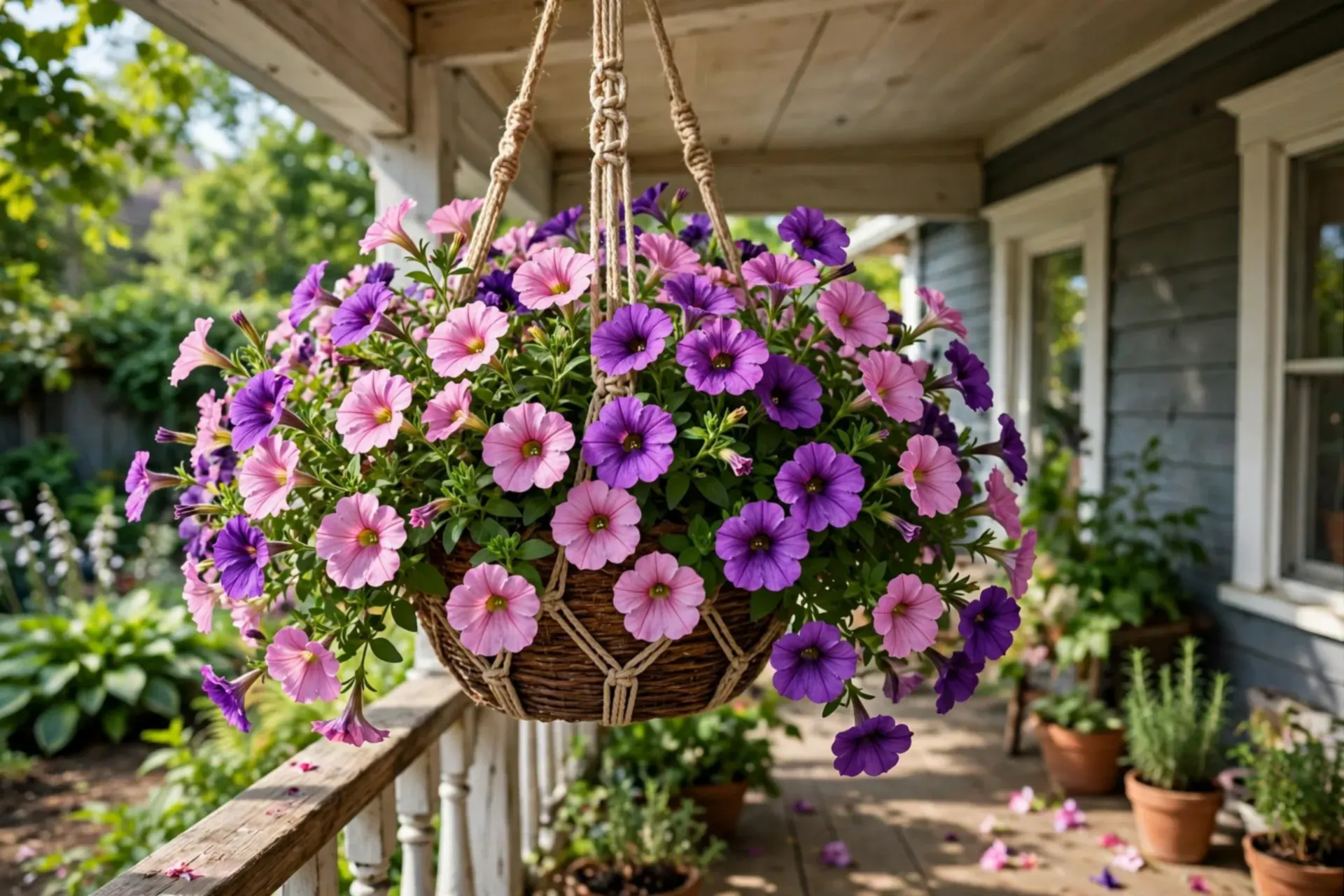
Tiny seed, sown on the surface — start early, be patient. Petunias are the basket and bedding workhorses of summer: the dust-like seed needs light to sprout and a full 10 weeks indoors, but the plants that follow flower without pause from early summer until frost — in beds, pots and hanging baskets — as long as they are fed weekly and never allowed to dry out completely.
Grow Petunia with us — step by step
Everything for this plant is written step by step below — what to do, and exactly when. Read it through first if you like: you can grow it entirely on your own with that guide. Or start with us here — tell us your planting day and we lay out your personal schedule on this page, every next step on its own day, counted from your planting date. No guessing, no forgetting.
Step 1 — today: Plant out your young Petunia plants today (hardened off first), spaced 10–12 in apart in beds, baskets or pots, and water them in gently. Starting from seed instead? Surface-sow now — the seed needs light to sprout — and allow a full 10 weeks to reach flowering size.
Petunia at a glance
Sow indoors: 10 weeks before last frost
Move outside: 2 weeks after last frost
Spacing: 10–12 in · Seed depth: 0 — surface; needs light to sprout
Sun: Full sun
Water: Regular — baskets and pots daily in heat
Harvest: Flowers from about 70–90 days after sowing, all summer long
Timing counts from your average last spring frost — get your own dates in the Planting Calendar. Guidance follows standard extension-service practice for Canada and the US.
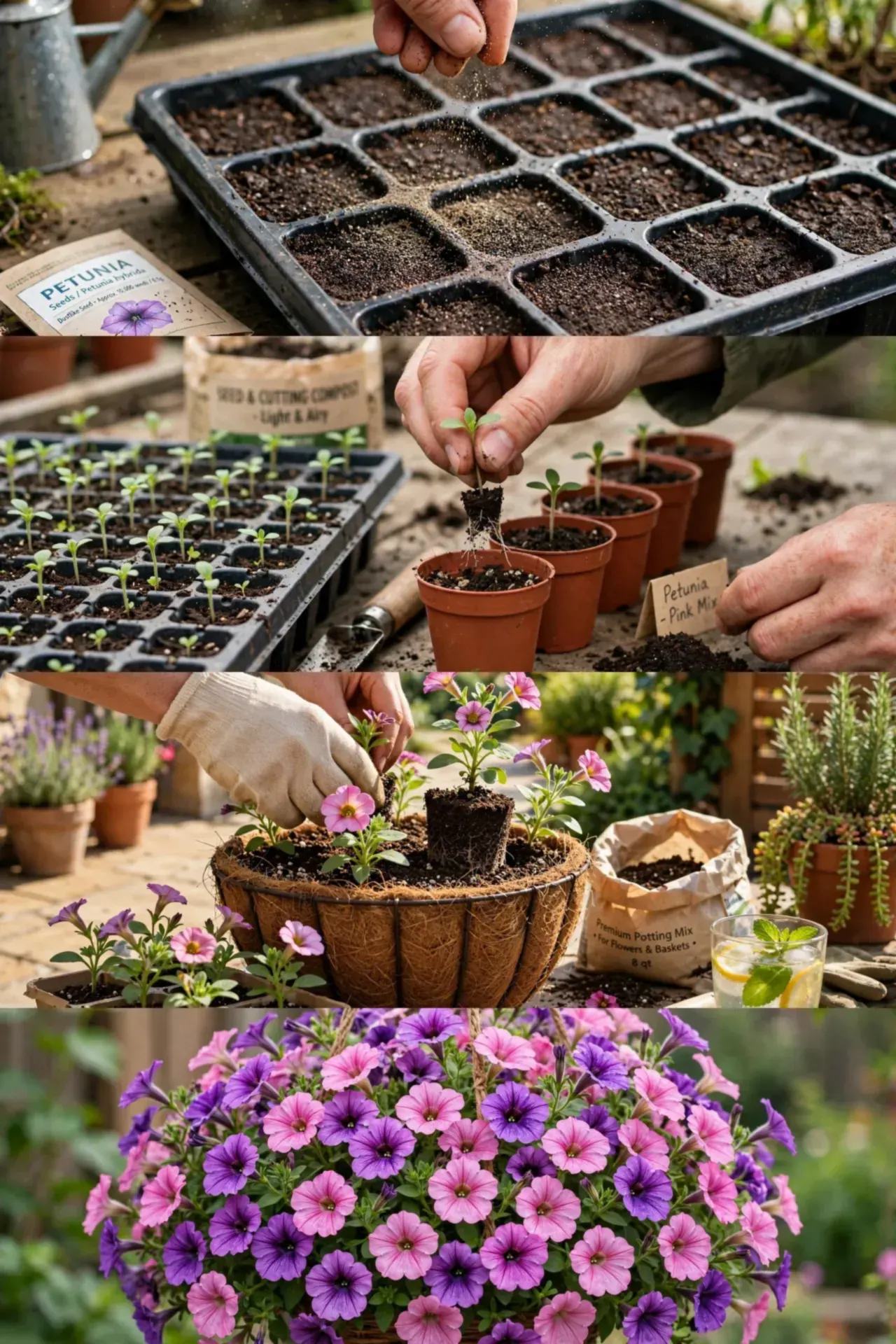
How to plant and grow petunia, step by step
Step 1 — Time it right
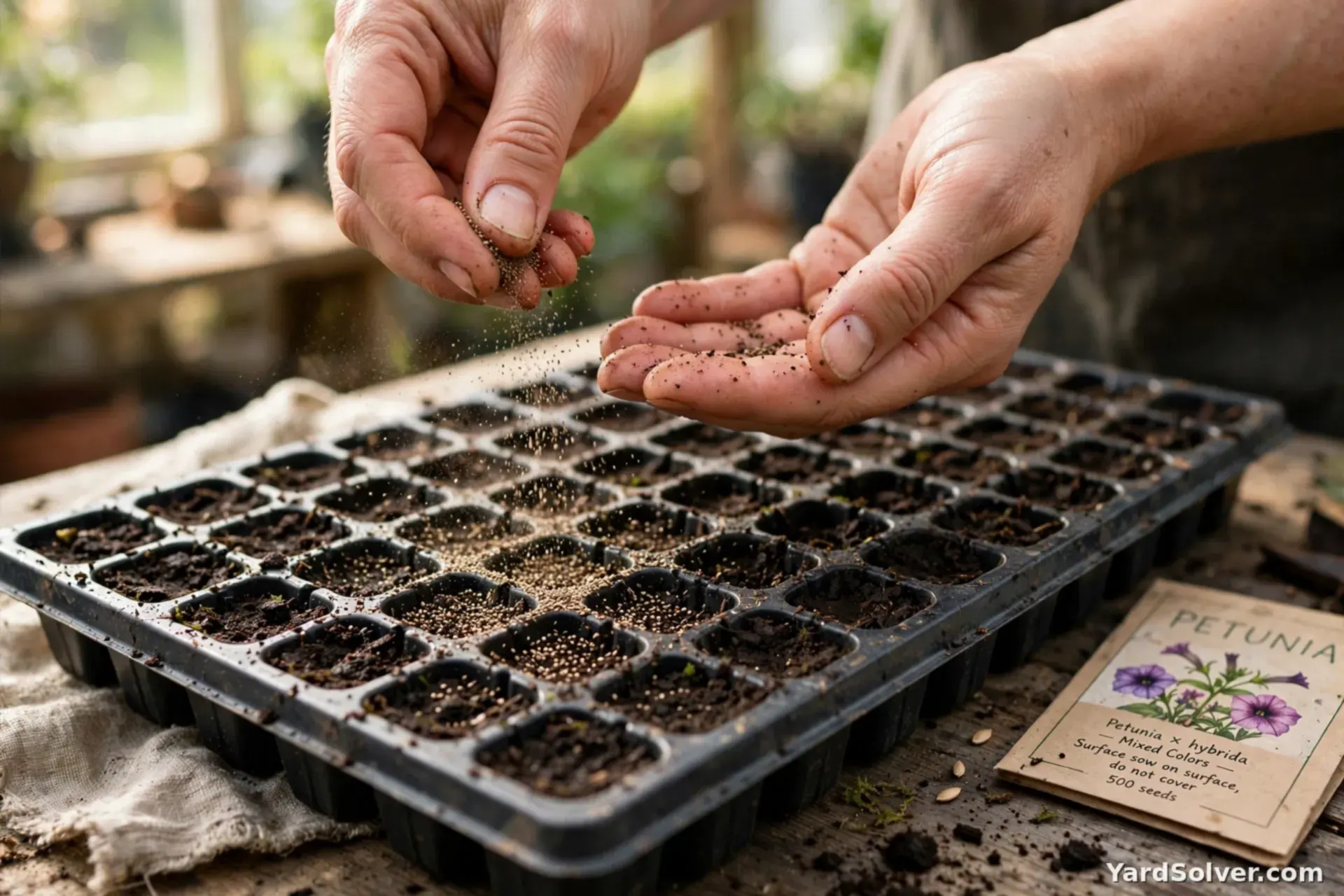
Sow indoors: 10 weeks before last frost; Move outside: 2 weeks after last frost. All dates count from your average last spring frost — the Planting Calendar turns them into real dates for your garden. Petunia seed is dust-fine and needs light to germinate, so sow it on the surface a full 10 weeks before last frost — pelleted seed, one seed per tiny clay ball, makes the job far easier — and be patient: seedlings stay small for weeks before they suddenly take off.
Step 2 — Prepare the spot
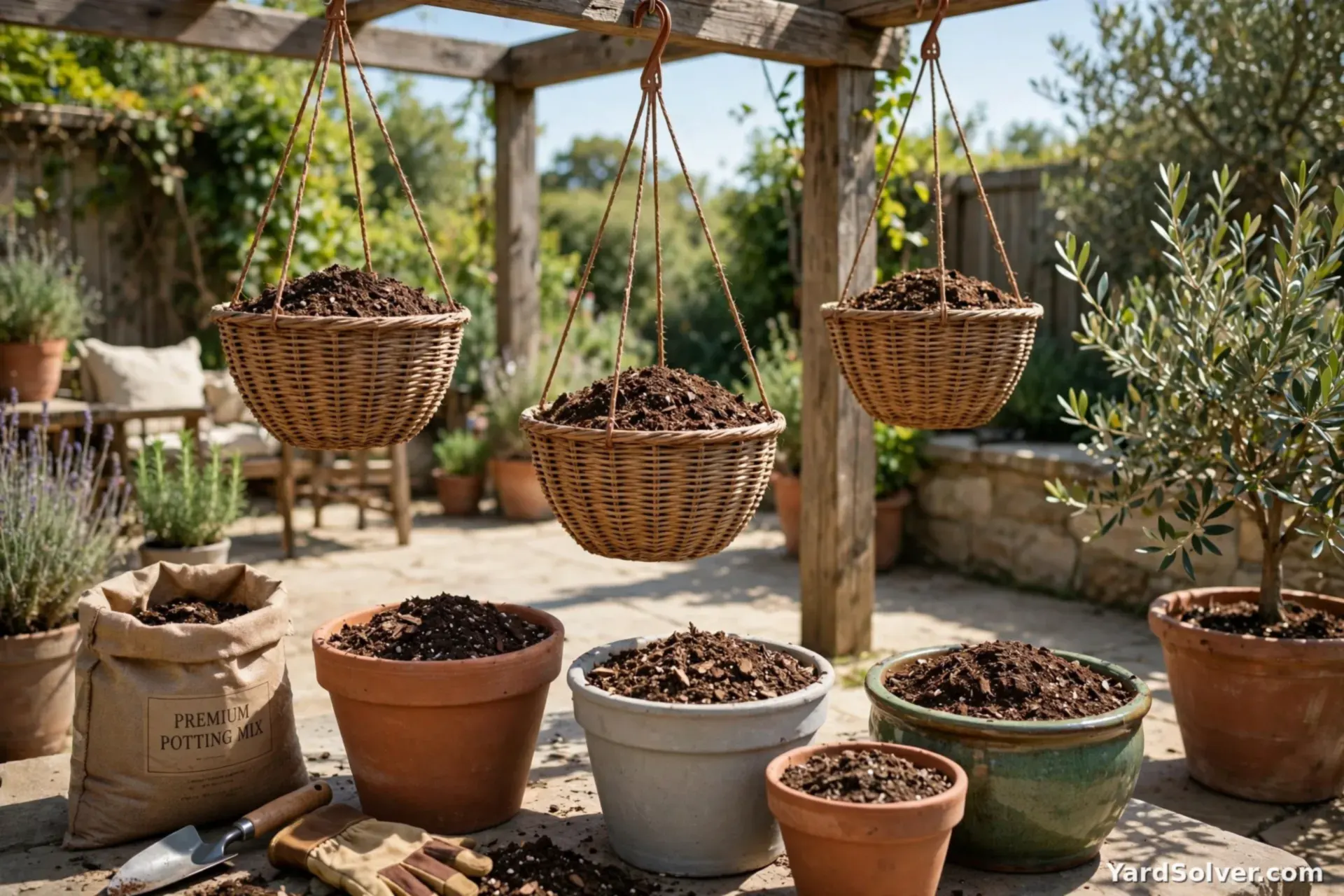
Sun: Full sun. For baskets and pots, use a free-draining potting mix — petunias sulk in cold, soggy compost; for beds, ordinary soil with a little compost forked in is enough. Work out bed amounts with the Garden Mix Calculator or the Raised Bed Soil Calculator.
Step 3 — Sow and plant out
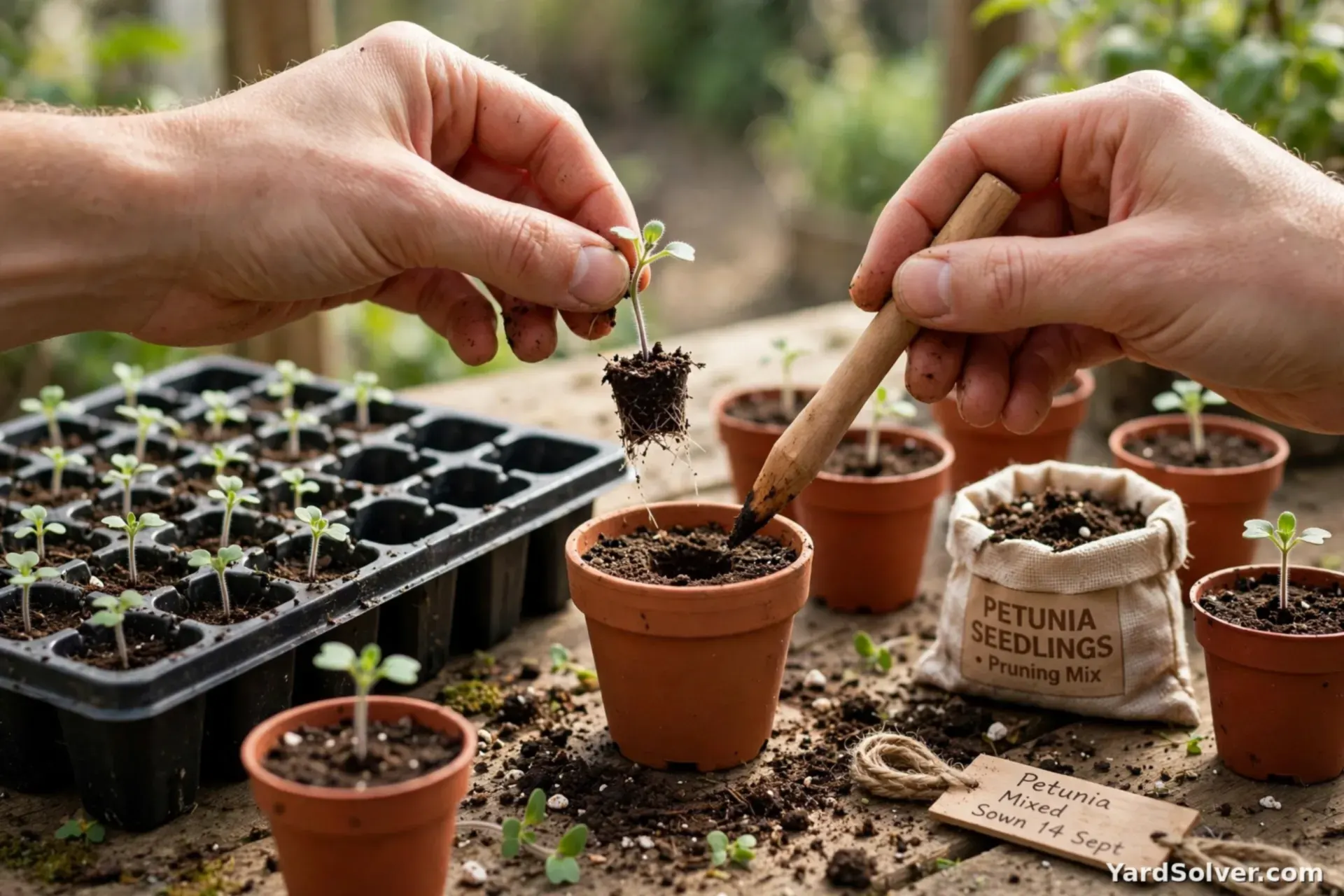
Sow on the surface of moist mix and do not cover the seed — it needs light to sprout. Seedlings are tiny for the first weeks; prick them out into their own pots once true leaves appear, grow them on in the brightest light you have, then harden them off (see How to Harden Off Seedlings) and plant out 2 weeks after last frost, spaced 10–12 in apart. The Plant Spacing Calculator turns that spacing into plants-per-bed.
Step 4 — Water and feed
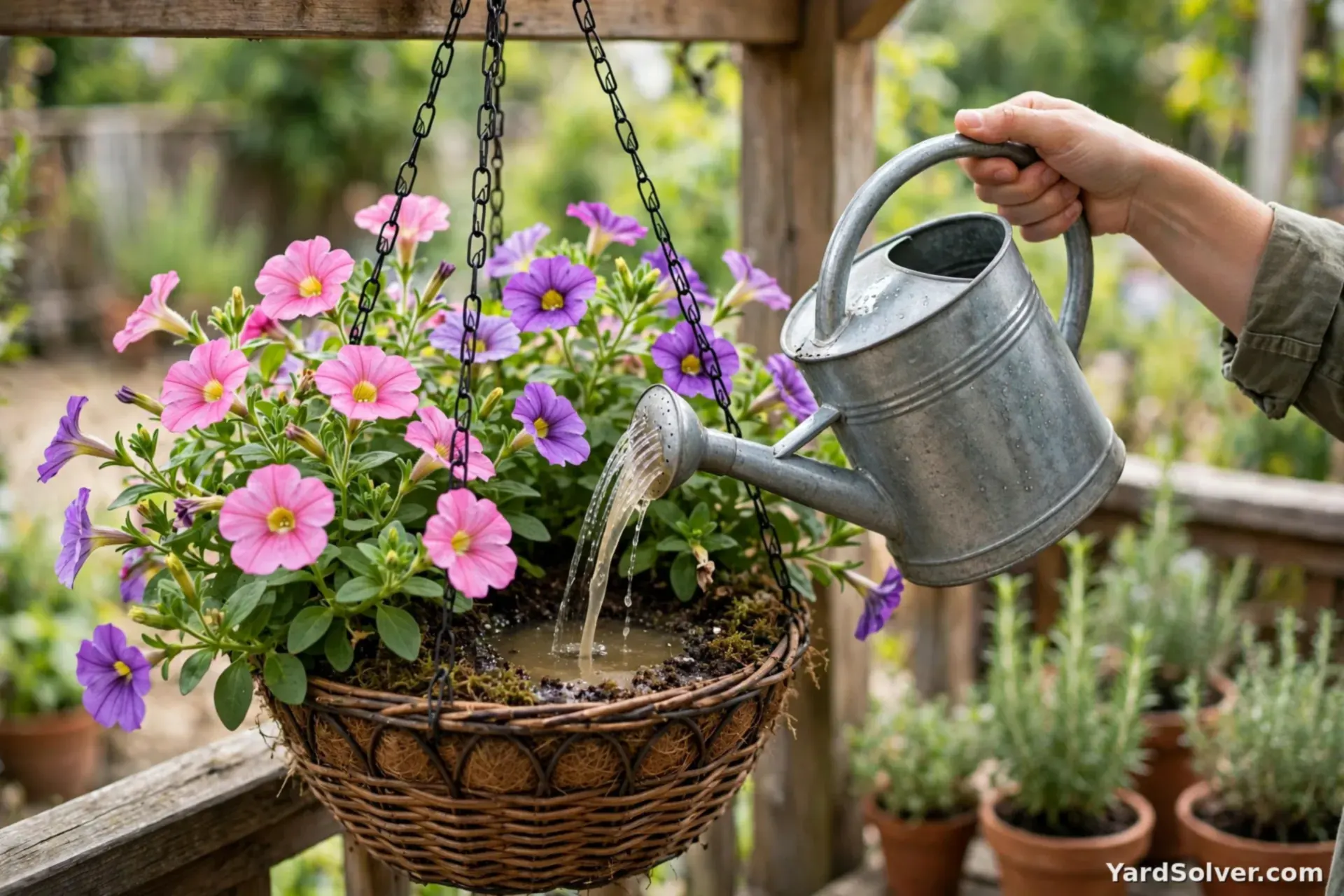
Water: Regular — baskets and pots daily in heat. Petunias are hungry plants: a liquid feed every week is what keeps a basket flowering instead of stalling by midsummer. The Fertilizer Calculator turns a bed size into the right amount.
Step 5 — Care and the problems to watch for
- Budworm — small caterpillars chew buds and petals and leave dark droppings; pick them off at dusk and remove damaged buds.
- Aphids — sticky clusters on new growth; blast them off with water.
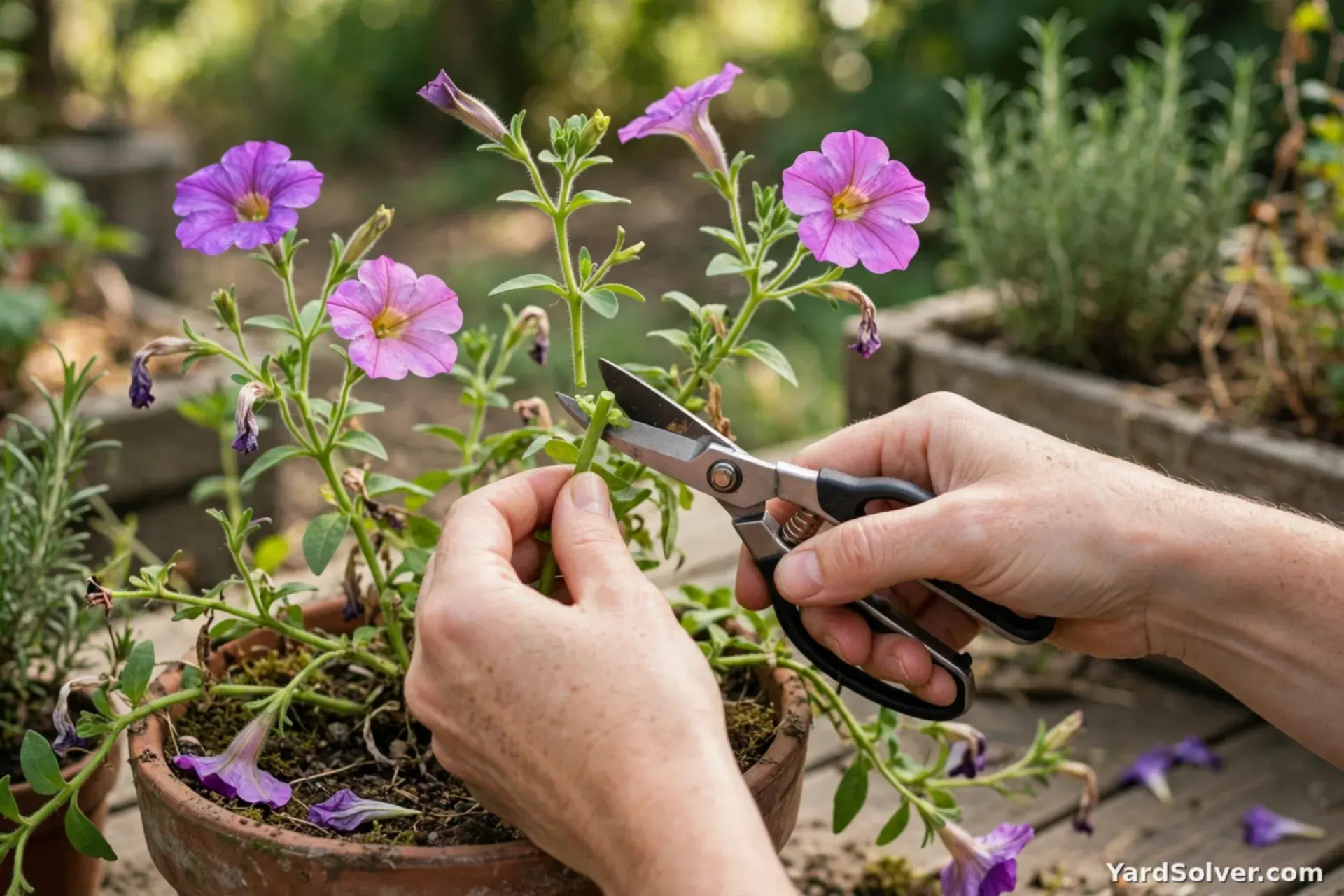
- Leggy midsummer slump — long bare stems with flowers only at the tips; shear the plant back by about a third, feed it, and it reflowers in roughly two weeks.
Take care: Petunias are ornamentals in the nightshade family — grown for flowers, not food. The slightly sticky feel of the leaves is natural, not a pest.
Step 6 — Harvest
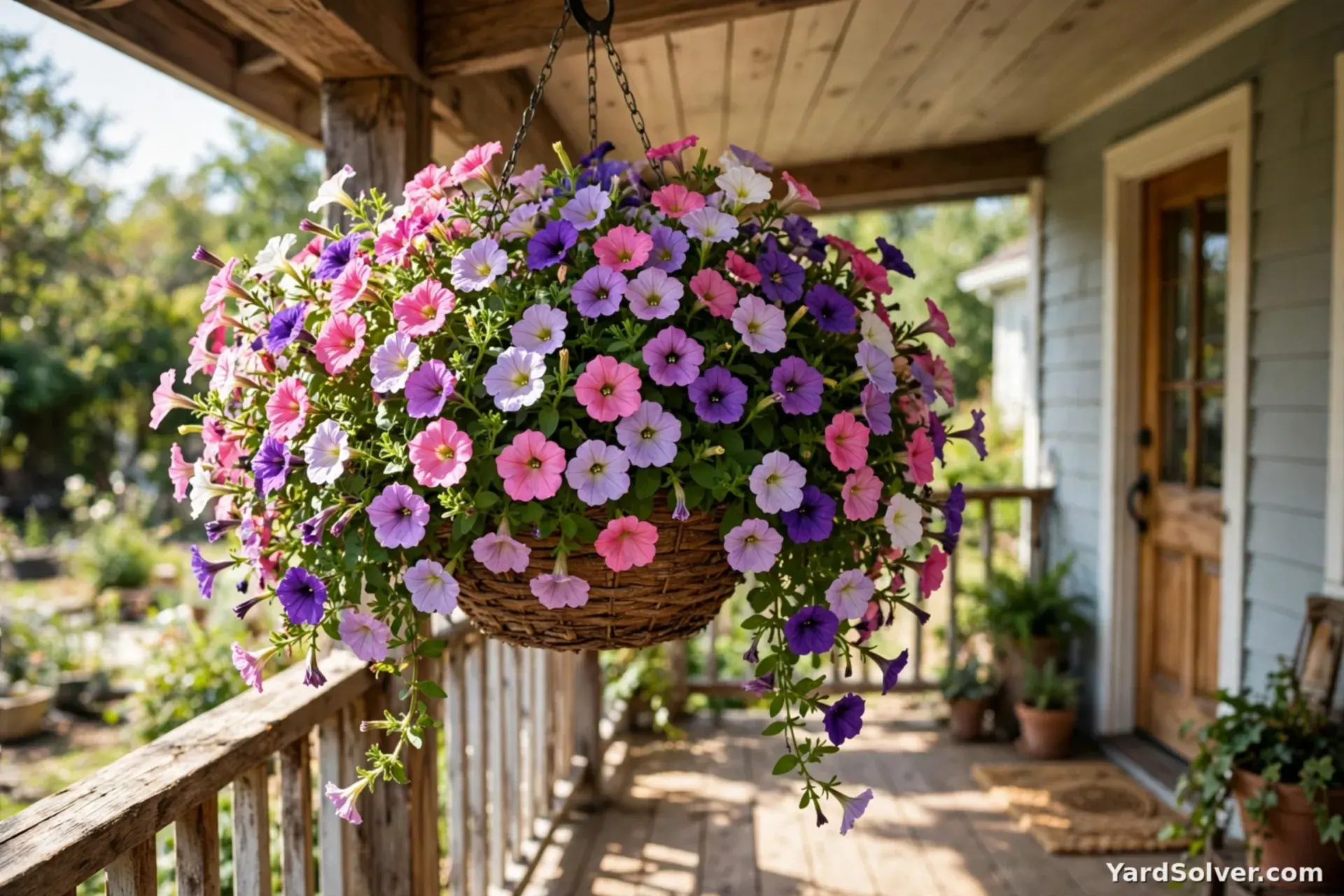
Ready in: Flowers from about 70–90 days after sowing, all summer long. There is no harvest to pick — the harvest is the show itself. Deadhead old-fashioned types as the blooms fade, or choose self-cleaning types like Wave and Supertunia and skip the job entirely.
Problems, pests & diseases — diagnosis and fixes
- Buds and petals chewed, with dark droppings on the leaves: budworm (tobacco budworm), a small caterpillar that feeds inside buds. Fix: pick caterpillars off at dusk, remove ruined buds, and check new growth weekly — they are worst in warm weather.
- Leaves yellow with green veins, plants in baskets losing vigour: iron chlorosis — petunias are prone to it as the mix in containers turns less acidic over the season. Fix: feed with a liquid feed formulated for petunias and other acid-loving basket plants, or add chelated iron as the label directs.
- Sticky clusters of insects on new growth, leaves puckering: aphids. Fix: blast off with water and repeat — see How to Get Rid of Aphids.
- Plants collapse in a soggy basket, stems soft at the base: root rot from mix that never dries. Fix: let the basket dry properly between waterings, check the drainage holes are clear, and remove collapsed plants before it spreads.
- Grey fuzzy mould on fading flowers in wet weather: botrytis, which moves from dead blooms into healthy growth. Fix: deadhead promptly, space plants for air, and water at the base, not over the flowers.
- Long bare stems, flowers only at the ends, by midsummer: the classic petunia slump — not a disease. Fix: shear back by about a third, feed, water well, and expect a fresh flush in about two weeks.
📅 Your personal Petunia schedule
Counted from your planting day — not a generic calendar. Day 0 is the day the seed went in the ground or the young plant went out.
Varieties worth growing
| Variety | Colour | Why gardeners like it |
|---|---|---|
| Wave | Pink, purple, rose and white | The spreading groundcover petunia — one plant carpets about 3 feet and fills the biggest baskets |
| Supertunia | Mixed colours, including patterned blooms | Extra-vigorous and self-cleaning — the premium basket choice, with no deadheading |
| Grandiflora types | Mixed colours | The biggest single blooms — best under cover, as rain batters the flowers |
| Multiflora types | Mixed colours | Smaller flowers in greater numbers, and they shrug off wet weather better |
| 'Night Sky' | Deep purple speckled with white | Each bloom splashed with white stars — no two flowers exactly alike |
Good for you — and take care
Benefits
- Flowers non-stop from early summer to frost — the longest show for the space
- Made for baskets, window boxes and pots, trailing where little else will
- Lightly fragrant, especially in the evening
- Hummingbirds and hawk-moths visit the open trumpets
- Colours for every scheme, from white through pink to near-black
Take care
- Ornamental only — a nightshade relative, not an edible flower
- Baskets dry out fast — a missed day in a heatwave can finish them, so water daily in heat
- Old-fashioned types need regular deadheading — choose self-cleaning types if you cannot keep up
A little history — and one good fact
Petunias come from South America, where their Guarani name, petun, was also the word for tobacco — a close relative. Seed reached Europe in the 1820s, and almost everything in gardens today descends from crosses of two wild species, one white and one purple, bred ever since for bigger flowers and longer trails.
Fun fact: Petunia seed is so fine that a single gram holds around 10,000 seeds — which is why pelleted seed, one seed coated in a little clay ball, was invented to make sowing it possible.
Keep going
Guides: Earliest Seeds to Start Indoors · How to Harden Off Seedlings · How to Get Rid of Aphids
Calculators: Plant Spacing Calculator · Seed Calculator · Fertilizer Calculator
More flowers: Nasturtium · Sweet Pea · Dahlia
← Back to the Plant Library · Get your personal planting dates
Questions people ask
When do I plant petunia?
Count from your average last spring frost: sow indoors 10 weeks before last frost; move outside 2 weeks after last frost. Petunias are warm-season annuals from dust-like seed that needs light to germinate: start indoors a full 10 weeks before the last frost, plant out after it, and expect flowers from about 70 to 90 days after sowing, all summer long.
How far apart do I space petunia?
Space plants 10–12 in apart, with seed sown on the surface — do not cover it, it needs light to sprout. Sun: full sun.
When does petunia flower?
Flowers from about 70–90 days after sowing, all summer long. Tiny seed, sown on the surface — start early, be patient.