
Guides · Raised beds · Published November 1, 2026
How to Refresh Raised Bed Soil in Spring
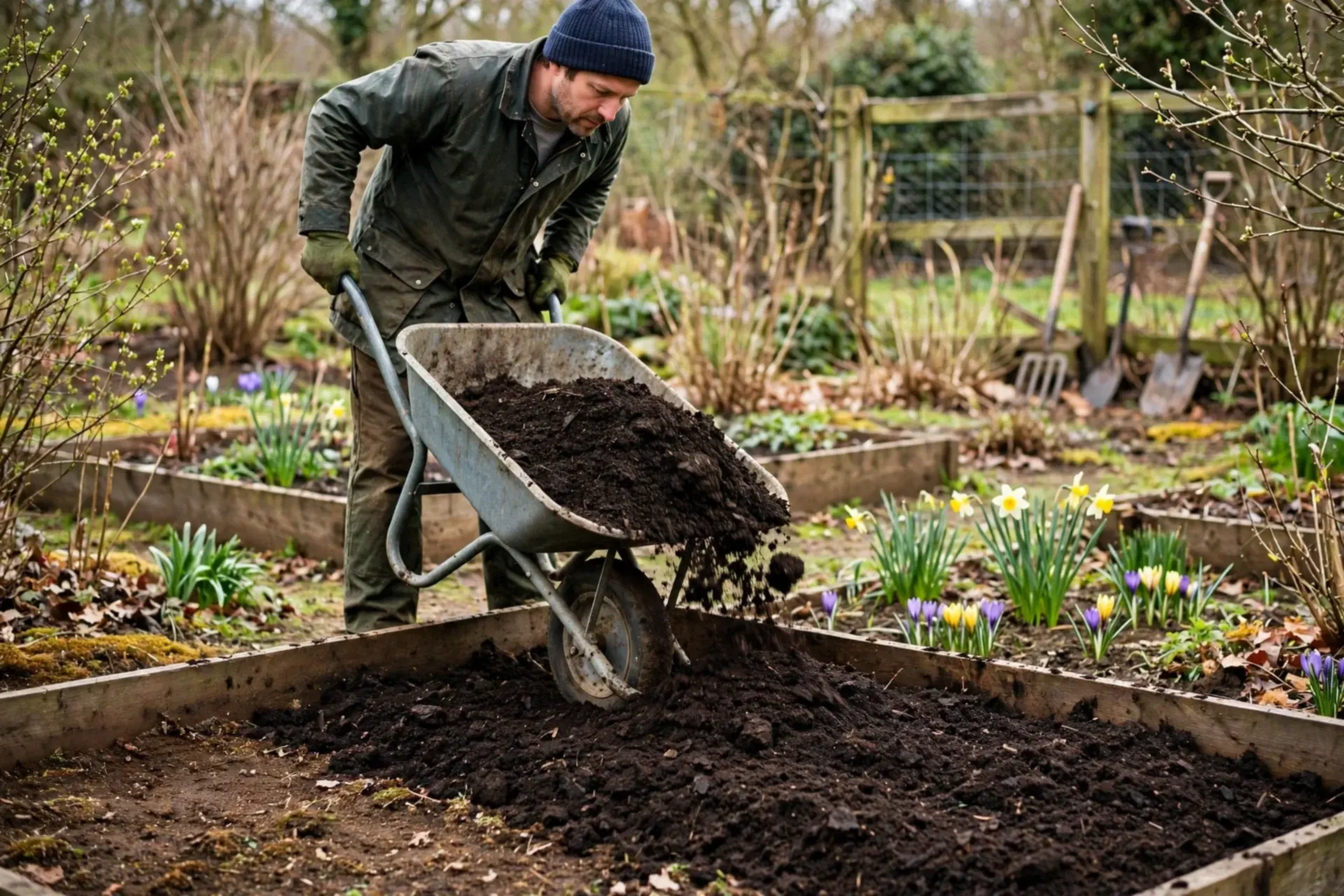
Every spring the same quiet surprise: the raised bed that was full to the brim last year has sunk by several centimetres, and last year's crops looked a little hungrier than the year before. Both are the soil doing its job — organic matter is constantly eaten, settled and carried away, and a bed is a box that shows the loss honestly. The refresh is a half-hour job once a year, and this guide gives you the amounts, not just the idea.
What the refresh has to accomplish
- Restore the lost height — a typical bed drops 2–5 cm (1–2 inches) a year as organic matter breaks down
- Replace spent organic matter — the fraction that fed soil life and held water and nutrients all season
- Loosen without destroying — winter compaction eased, soil structure and worm channels kept
- Rebalance food — last year's heavy feeders (tomatoes, squash, corn) took more than they left
Step 1 — Clear and inspect the bed
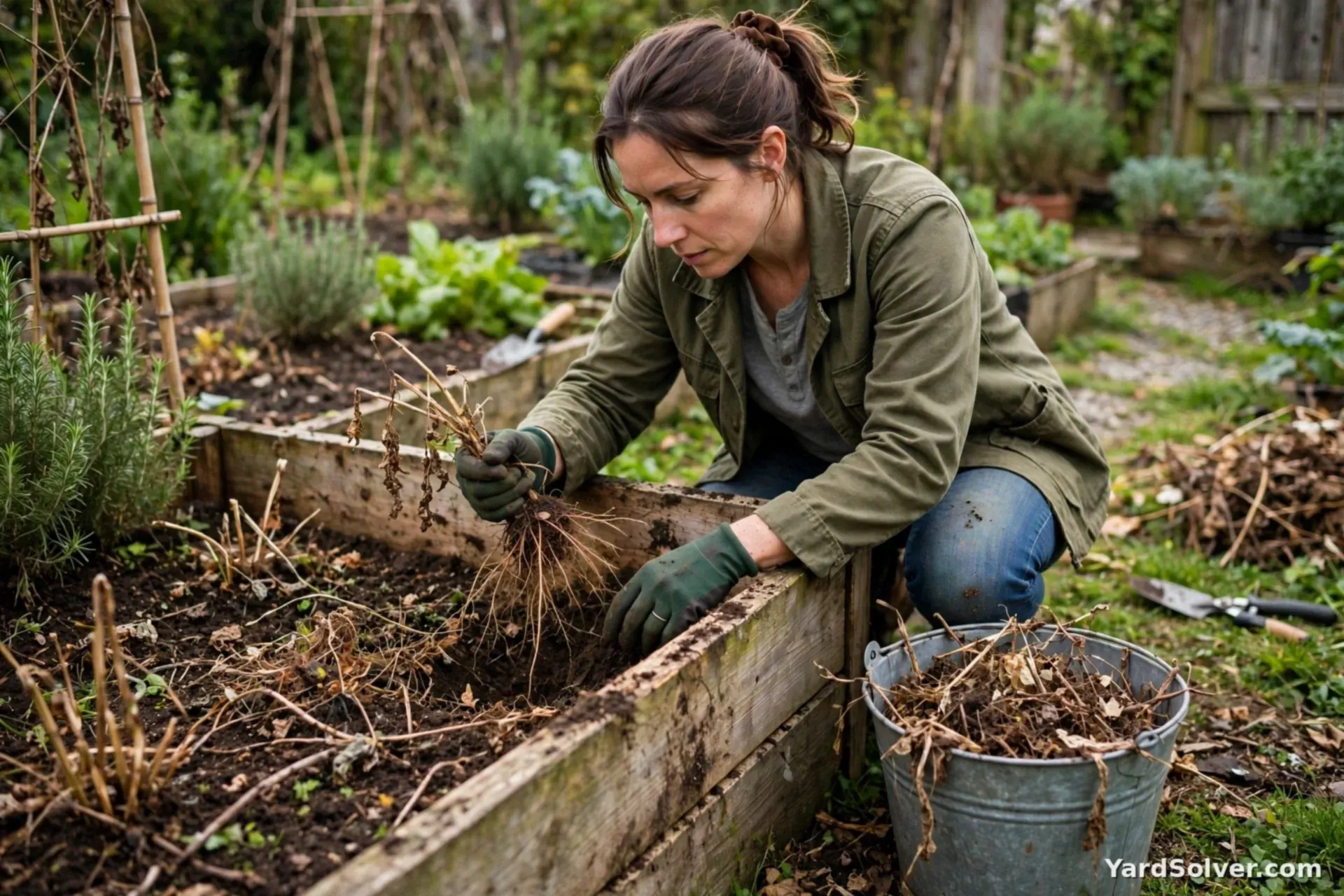
Pull out last year's roots, stems and any perennial weeds properly (roots and all), and check the bed itself while it is empty: boards sound, corners tight, soil not slumping out anywhere. Note which crops grew here — the refresh and the rotation plan are one decision; heavy feeders should not follow heavy feeders into the same tired soil if you can help it.
Step 2 — Measure the drop and calculate the top-up
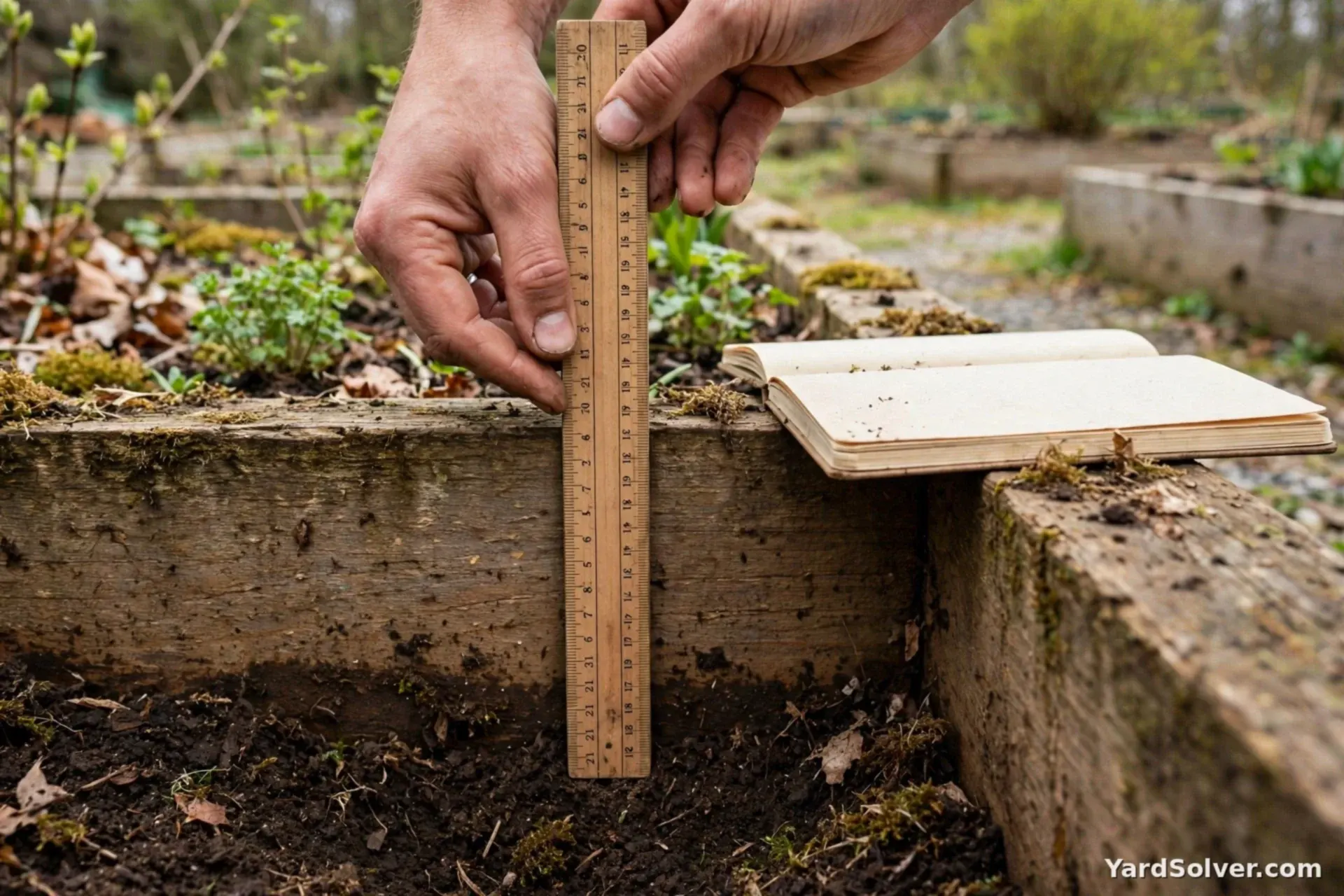
Measure from the soil surface to the brim in a few places and average it: that depth across the whole bed is your top-up volume. For a standard 4 × 8 ft bed dropped 2 inches, the maths is 32 sq ft × 2 in ≈ 5.3 cubic feet — about 6 Canadian 25 L bags or 4 US 1.5 cu ft bags of mix. For any other size or depth, the Raised-Bed Soil Calculator does it instantly and gives bulk-yard equivalents too.
Step 3 — Loosen the old soil, do not turn it

Push a garden fork into the existing soil across the bed and rock it to crack the compaction, without flipping the layers over. Deep turning buries the biologically rich top layer and brings up tired subsoil; loosening keeps the soil's structure and worm highways while restoring the air spaces roots need. Pull out any big root mats you meet as you go.
Step 4 — Top up with the right mix
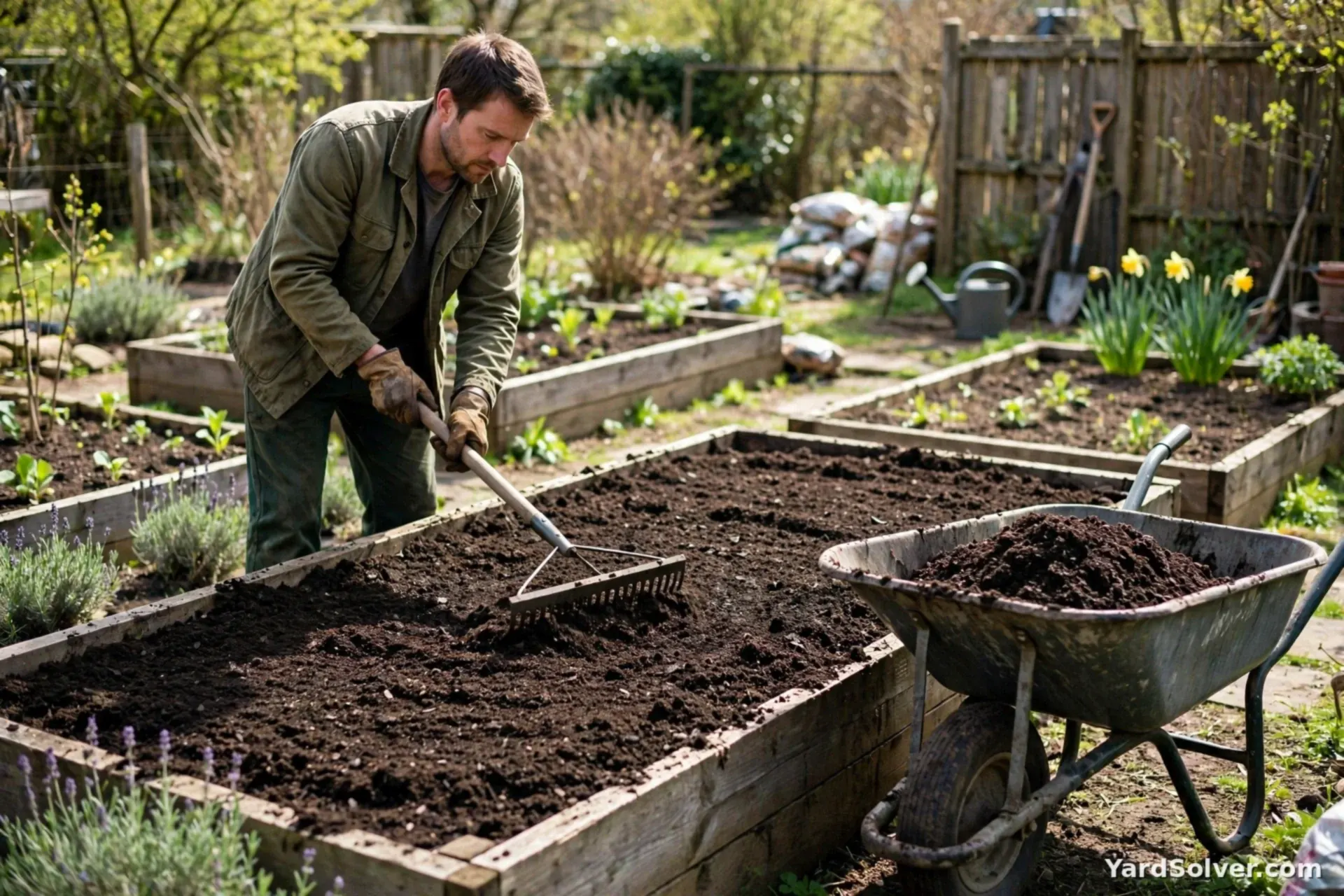
For a simple refresh, a 4–5 cm layer of pure compost spread over the top and lightly forked in does most of the work (amounts via the Compost Calculator). For a bigger top-up or a bed that has sunk badly, use a soil mix in the proven proportions — roughly 60% decent topsoil, 30% compost, 10% coarse aerating material — and if the bed has been cropped hard for years, bulk topsoil amounts come from the Topsoil Calculator. Finish slightly proud of level: it settles.
Step 5 — Feed, test on a cycle, and mulch after planting

A soil test every two or three years tells you whether the bed needs a measured fertilizer correction or just the compost it is getting — and where one is needed, the Fertilizer Calculator doses it by bed size instead of handfuls. Write down what you added and when, on the bed's own little record. Then plant, and only once seedlings are up and growing, mulch the surface — fresh planting into deep loose mix settles young roots best bare for the first weeks.
Keep going
New to raised beds? Start with Raised Bed Gardening for Beginners and How to Build a Raised Bed. The general spring routine is in How to Prepare Garden Soil in Spring.
Questions people ask
Do I need to replace all the soil in a raised bed every few years?
No — full replacement is almost never necessary and is the expensive way to solve a topping-up problem. Beds need their lost organic matter restored annually and compaction loosened; the mineral soil underneath remains perfectly good. Replace soil only after serious contamination or a stubborn soil-borne disease problem.
Can I refresh a bed with just compost?
For a normal year's drop of an inch or two, yes — a compost layer forked lightly in is the standard refresh and feeds soil life as it restores height. For a bed that has sunk several inches or was filled with poor soil to begin with, a topsoil-compost mix restores volume more economically, with compost as the rich fraction.
When exactly should the refresh happen?
In spring, a few weeks before planting, once the soil is workable and not frozen or waterlogged — or in autumn right after clearing, which spreads the work and lets the bed settle over winter. Either is fine; pick the one that matches your garden's calendar and stick to it yearly.
Comments & ratings
No comments yet.
Be the first to share your experience.