
Guides · Raised beds · Published November 10, 2026
Hugelkultur Raised Beds: Fill a Bed for Half the Soil
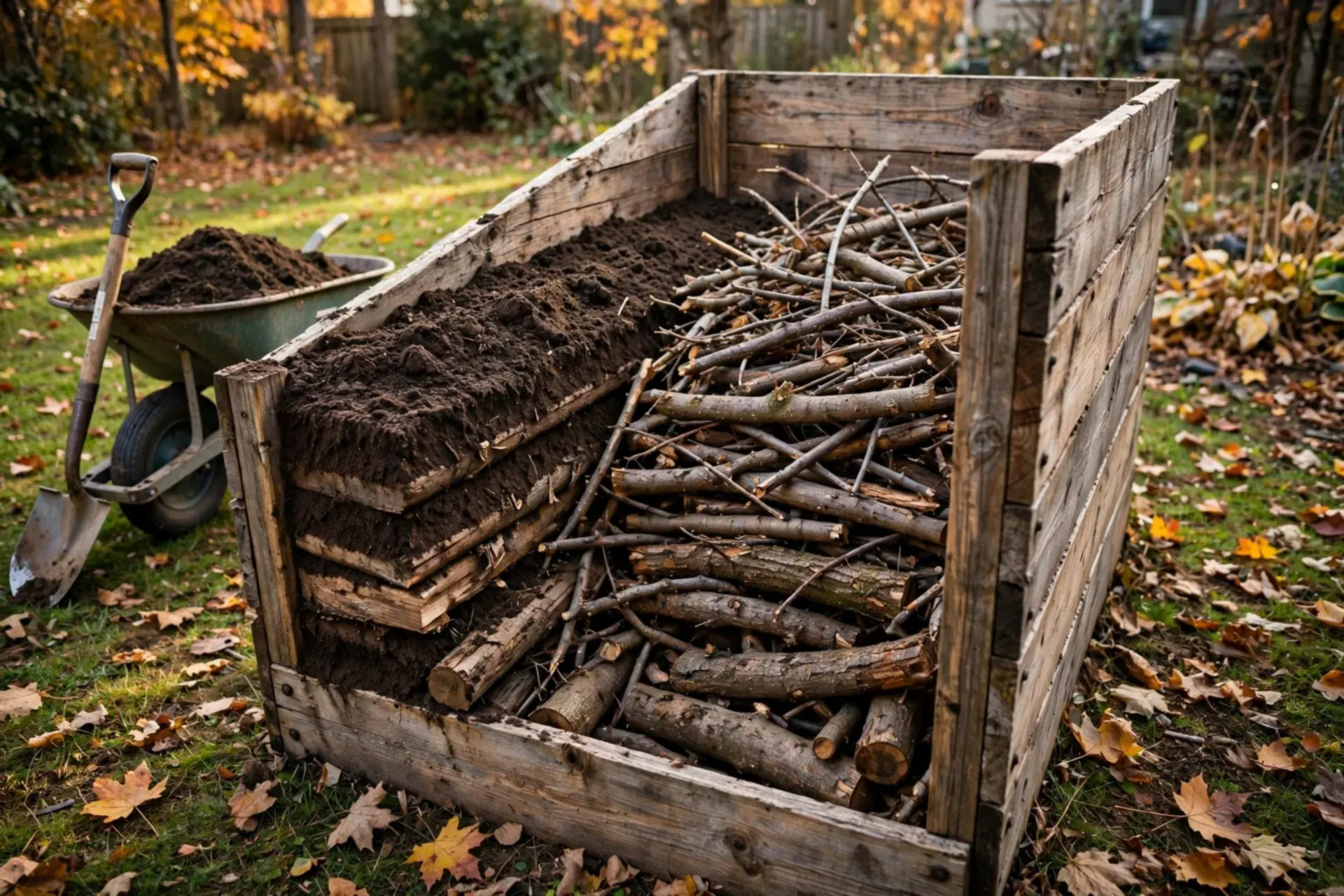
Filling a deep raised bed with bagged soil is the part of the project nobody budgets for. An 8 × 4 bed, 2 feet deep, swallows 64 cubic feet of mix — that is real money before a single seed goes in. Hugelkultur is the old German fix: fill the bottom half with logs and branches instead, and only buy soil for the top half. The wood is not wasted space. As it rots down over the years it works like a sponge, holding water after rain and handing it back slowly, and the bed gets better instead of tired. Here is how to layer one properly.
The layers, bottom to top
| Layer | How deep | What it does |
|---|---|---|
| Logs — the biggest you have, bark on | 8–10 in | The sponge. Holds water for years and rots down slowest |
| Branches and twigs | 3–4 in | Packs the gaps between logs so soil cannot sift down |
| Leaves, grass clippings, garden scraps | 2–3 in | Feeds the microbes that start the wood breaking down |
| Compost or aged manure | About 2 in | Brings the nitrogen and the living microbes |
| Soil mix | Top 8–10 in | The layer your plants actually grow in for the first years |
Heap the layers a little proud of the rim. The bed settles as the soft layers compress — a few inches in the first season is normal, and you top up with compost each year anyway.
Step 1 — Pick the right wood (and the right bed)
Hugelkultur needs depth: a bed 18–24 inches deep. In a shallow bed the wood leaves too little soil for roots, and you get the drawbacks with none of the gain. If your bed is still on the drawing board, the frame itself is covered in How to Build a Raised Bed — build it two boards taller than you first planned and this page pays for the difference.
Good wood: oak, maple, apple and other fruit wood, birch, poplar — most hardwood and softwood logs are fine, and wood that has already sat on the ground a year is better than fresh-cut because it starts rotting sooner and drinks water straight away. Three things never go in: black walnut (its juglone poisons tomatoes, peppers and many more), treated or painted wood, and — safe but pointless — cedar or black locust, which rot so slowly they are just expensive filler. One honest warning: fallen wood can bring termites with it in some regions, so keep a hugelkultur bed a few feet from the house walls, not against them.
Step 2 — Lay the log layer tight
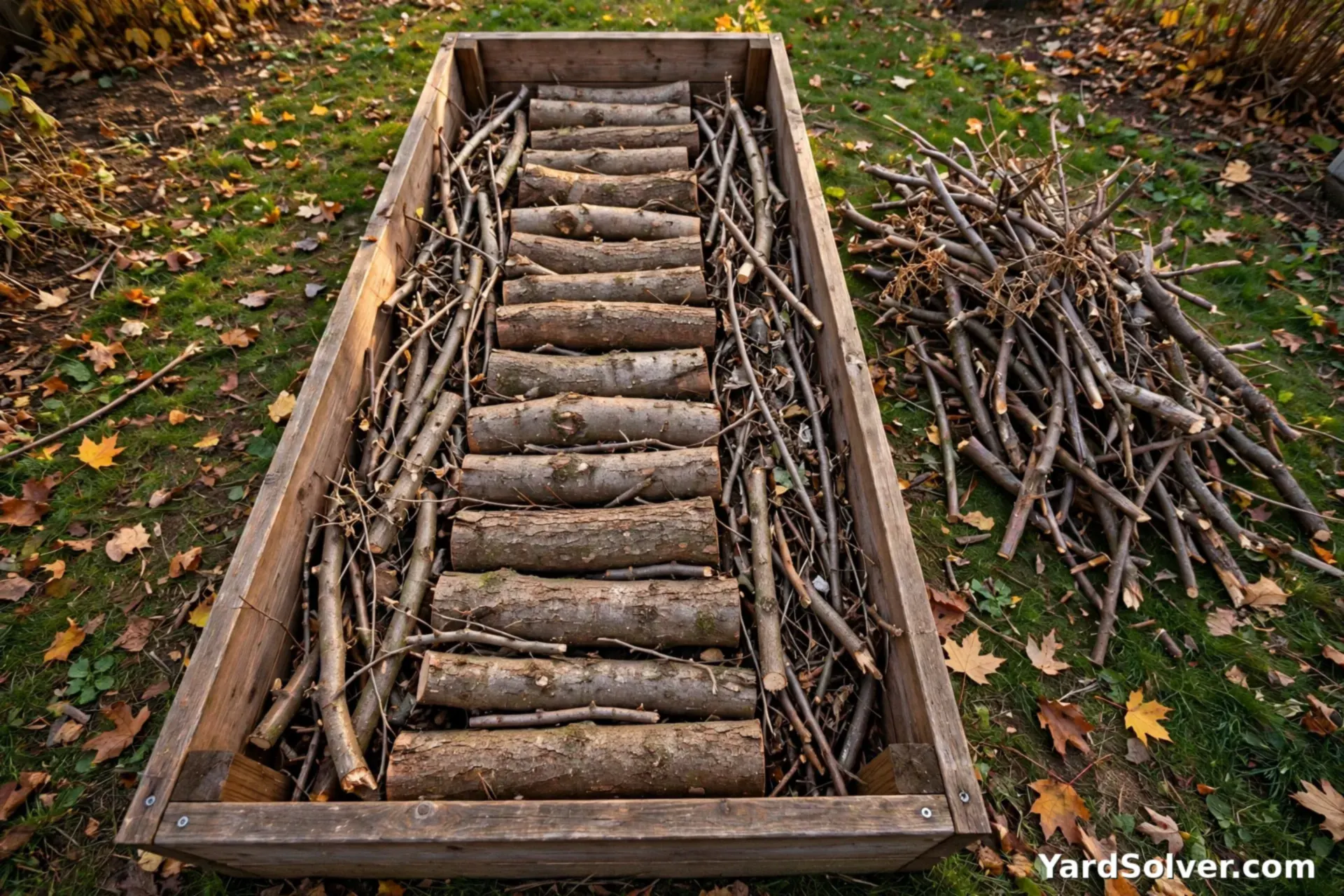
Lay cardboard over the base first if grass or weeds are underneath — same as a normal bed. Then put the biggest logs in, side by side, the full length of the bed. Pack them tight: every air pocket you leave is a pocket the soil above will sink into later. Stuff branches and twigs into every gap until the layer feels solid to stand on. Aim for the wood to fill roughly the bottom third to half of the bed, and no more — the soil on top is where your plants live. Then water the wood well. Dry buried wood steals moisture from the soil above it for months; soaked wood starts life as a reservoir instead.
Step 3 — Add the green layer (this is the step people skip)
Over the wood goes everything soft and nitrogen-rich you have: leaves, grass clippings, pulled weeds that have not gone to seed, kitchen scraps, a barrow of compost or aged manure. This layer matters more than it looks. Fresh wood is almost all carbon, and the microbes that rot it need nitrogen to do the job. If they cannot find it in this layer, they borrow it from the soil above — and your first-year plants go pale and hungry. Give the microbes their own supply here and the problem mostly never happens. Tamp the whole thing down with your boots as you go.
Step 4 — Cap with soil, and run the real numbers
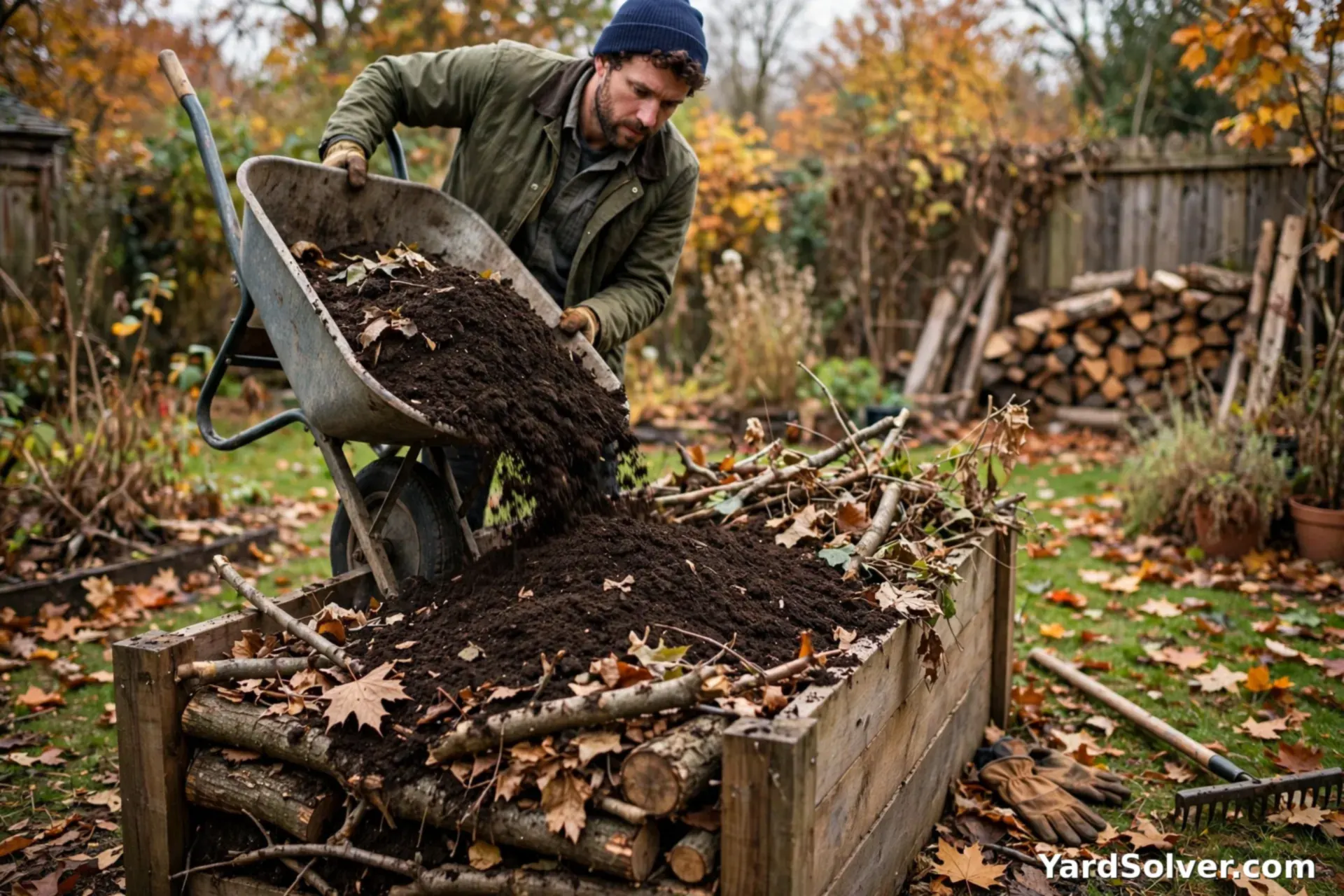
Finish with 8–10 inches of soil mix over the whole bed. Now the maths that makes this worth doing. A standard 8 × 4 bed filled 24 inches deep takes 64 cubic feet of soil — about 43 bags at 1.5 cubic feet each. Built this way, you buy soil for the top 10 inches only: roughly 27 cubic feet, about 18 bags. Half the soil bill, give or take a bag. Run your own bed size through the Raised Bed Soil Calculator twice — once at full depth, once at just your soil-cap depth — and the difference is your saving. Mixing your own instead of buying bags? The Garden Mix Calculator works out the topsoil, compost and peat or coir for any volume.
Step 5 — Water it deep, plant, and mind year one
Water the finished bed long and slow, let it settle for a few days, and top up any dips before planting. In the first season, plant as normal but keep an eye on leaf colour: pale, slow greens are the nitrogen borrow showing, and a feed settles it — doses live in the Fertilizer Calculator. Water a bit more than usual in year one while the wood is still drinking. From year two the story flips: the logs hold water like a sponge, the bed needs watering less often than your plain beds, and the slow rot keeps handing nutrients back. Expect to top up with an inch or two of compost each spring as the bed settles — that is the whole maintenance bill. Add the top-up and the first planting to your Garden Planner so next spring's jobs are already written down.
Keep going
Building the frame first? How to Build a Raised Bed has the board list and the corner method — just build it deeper.
Already have beds that need refreshing rather than refilling? How to Refresh Raised Bed Soil covers the top-up routine.
Questions people ask
Can I use hugelkultur in a shallow 12-inch bed?
Not really. The wood layer needs room and the roots still need 8–10 inches of soil above it, so hugelkultur only makes sense in beds 18 inches deep or more. In a shallow bed, fill with soil mix as normal — a thin layer of twigs at the very bottom for drainage is fine, but that is all.
What wood should I avoid in a hugelkultur bed?
Black walnut is the hard no — it makes juglone, which poisons tomatoes, peppers, potatoes and many other plants. Never use treated, painted or creosoted wood. Cedar and black locust are safe but rot so slowly they give you almost none of the sponge benefit, so they are poor value as fill.
Will the rotting wood steal nitrogen from my plants?
A little, in the first year, and mostly down at the wood layer rather than up where roots feed. The fix is built into the layering: a good layer of compost, aged manure or grass clippings between the wood and the soil gives the microbes their own nitrogen to work with. From the second year on, the bed usually needs less feeding, not more.
Comments & ratings
No comments yet.
Be the first to share your experience.