
Guides · Fall and winter · Published November 10, 2026
Bringing a Lemon Tree Indoors for Winter, Step by Step
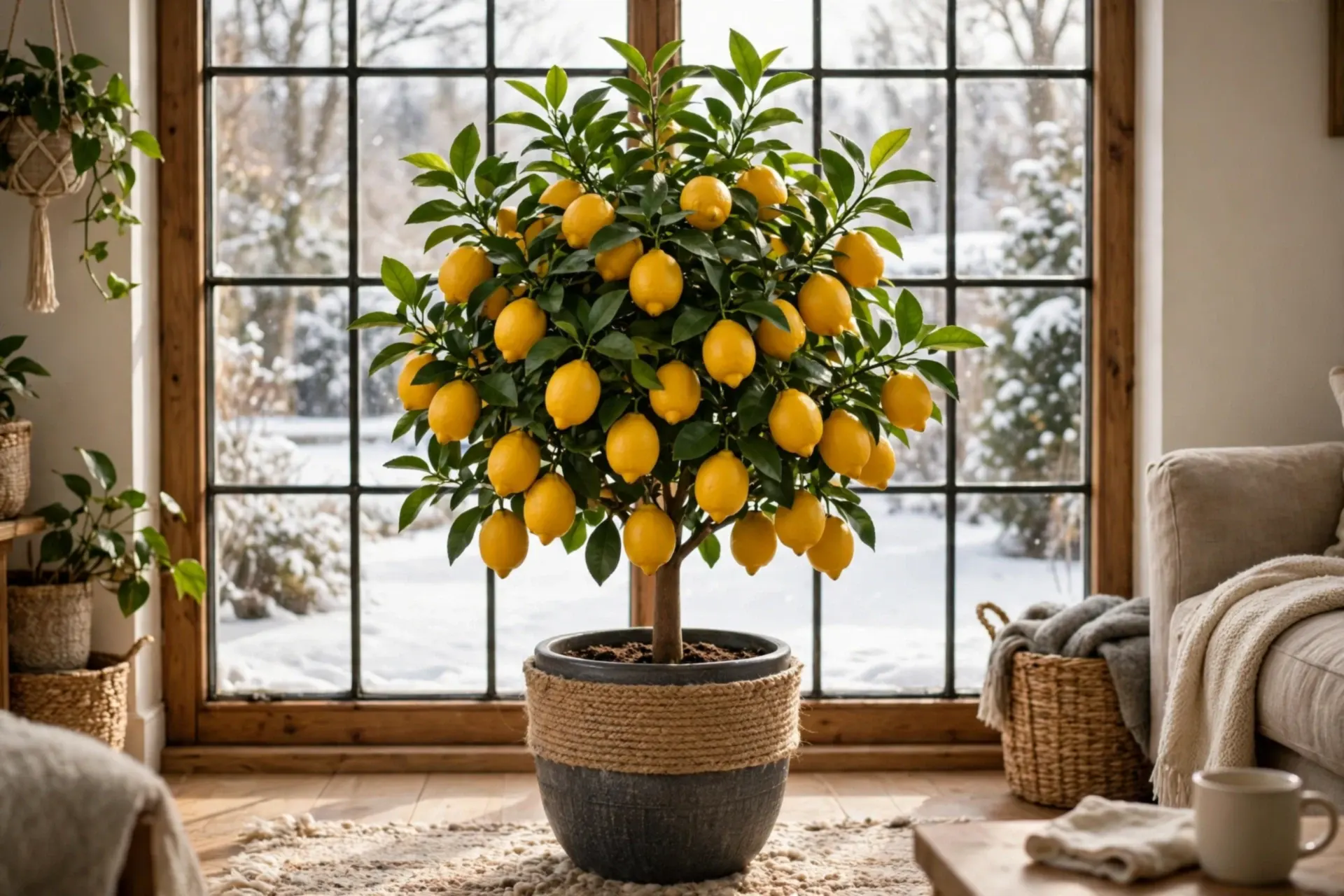
A lemon tree in a pot cannot sit out a northern winter. The tree itself is only part of the problem — the roots in a pot chill far faster than roots in the ground, and citrus takes real damage below freezing. So every fall the tree comes inside, and every fall the same thing happens to thousands of owners: within a month, it is dropping leaves on the floor. Most of that drop is avoidable. It comes from three things — hitchhiking pests, a sudden change of light, and kind, frequent watering. Here is the move done properly, in order.
Two winter homes, compared
| Setup | Temperature | Light | Watering |
|---|---|---|---|
| Cool bright room, sunroom or unheated greenhouse | 40–50°F | Brightest window you have | Sparingly — about twice a month |
| Heated living room | Up to 65°F, never warmer | South or west window, 6–8 hrs if you can | About weekly, only when the top dries |
The cool room wins when you have one: the tree rests properly, pests stay slow, and leaf drop is least. The living room works too — it just needs more watching. The full growing profile of the tree itself is on the Lemon Tree plant page.
Step 1 — Wash it and check it like quarantine

While the tree is still outside, give it a firm shower with the hose — tops and undersides of the leaves, along the stems, into the leaf joints. Then look closely: scale insects sit like tiny brown bumps along stems and leaf veins, spider mites leave fine webbing and speckled leaves, and aphids cluster on soft new growth. Anything you find, treat now, outside, where it is easy. Warm, dry, still indoor air is exactly what these pests want, and a tree that carries them in becomes a winter-long battle — the full indoor pest picture is in Winter Houseplant Pests. Scrub the outside of the pot too, and clear fallen leaves off the mix.
Step 2 — Watch the nights, not the calendar
The trigger is a number, not a month: bring the tree in when nighttime temperatures start dropping below about 50°F, and always before the first frost. Below 50°F is where extension guidance puts the start of leaf loss from cold, and below freezing is where real damage begins. If you garden where October nights are already in the 40s, that is your moving week, whatever the date says. A tree that gets a few chilly nights is fine; a tree that gets one frozen night in a pot may not be.
Step 3 — Ease it into the light change
The biggest shock of the move is not temperature, it is light: full summer sun one day, a living-room corner the next. For the last week outside, park the tree in a sheltered, shadier spot — a porch, or against the house wall — so the drop in light comes in two steps instead of one. Then set it in its winter place and turn it a quarter every week or so, so all sides get their share of the window. Some leaf drop after the move is still normal. A tree shedding every leaf is telling you the change was too sudden, the room is too warm and dry, or the pot is sitting wet.
Step 4 — Give it the brightest, coolest spot you have
Citrus wants as much light as your house can give: a south- or west-facing window with 6 to 8 hours of direct sun is the target. Cool does the tree good — a bright room at 40 to 50°F is the classic citrus winter, and anything under 65°F is workable. Keep the pot away from heating vents and radiators: hot dry air is the fastest route to mites and dropped leaves. If your windows are small or your winter is grey, a modest grow light a foot above the canopy for a few hours a day is money well spent. A pebble tray of water under the pot lifts the humidity a little; a room humidifier does it properly.
Step 5 — Water by the soil, and expect a sulk
More indoor citrus is killed by kindness than by neglect. In winter the tree barely grows and the mix dries slowly, so water only when the top couple of inches feel dry — push a finger in to the second knuckle. That might be weekly in a warm room, or twice a month in a cool one. When you do water, water fully, let it drain, and empty the saucer. And stop feeding entirely until spring. If leaves still drop in the first month — and some usually do — hold your nerve: check the mix is not wet, check for mites, and wait. The other potted tree on the same schedule is the Fig Tree, though figs take the easier road of sleeping leafless in the dark. Your Lemon Tree page carries the year-round feeding and pruning plan for when growth restarts.
Keep going
The pests that ride in with it: Winter Houseplant Pests — scale, mites and fungus gnats, and how to stop each one.
The tree's full year-round plan: Lemon Tree in the Plant Library.
Questions people ask
Why is my lemon tree dropping leaves indoors?
Usually the shock of the move: the tree goes from full sun and moving air to dim, warm, still air in one day, and sheds leaves to match. Overwatering runs a close second — roots sitting wet in a cool room rot quietly. Ease the move over a week, keep the tree cool and bright, water only when the top couple of inches are dry, and most trees settle and hold the leaves that remain.
When exactly should I bring my lemon tree inside?
When nights start dropping below about 50°F, and always before the first frost. Citrus is damaged below freezing, and a potted root ball chills much faster than ground soil. Waiting for a frost warning is waiting too long — the cool nights in the 40s are the signal, not the emergency.
Does a lemon tree need a grow light indoors?
A south- or west-facing window giving 6 to 8 hours of direct sun is often enough to carry the tree through winter in a resting state. In northern homes with short, grey days, a simple grow light run for a few hours a day makes a real difference — trees under one hold their leaves and are ready to bloom in spring instead of recovering.
Should I fertilize my lemon tree in winter?
No. The tree is resting and barely growing, so feed sits unused in the mix and builds up salts. Stop feeding when the tree comes in, and start again when new growth shows in spring. Winter care is light, cool air and careful watering — that is all.
Comments & ratings
No comments yet.
Be the first to share your experience.