
Plant Library · Fruit & Melons
🍋 How to Grow Lemon Tree
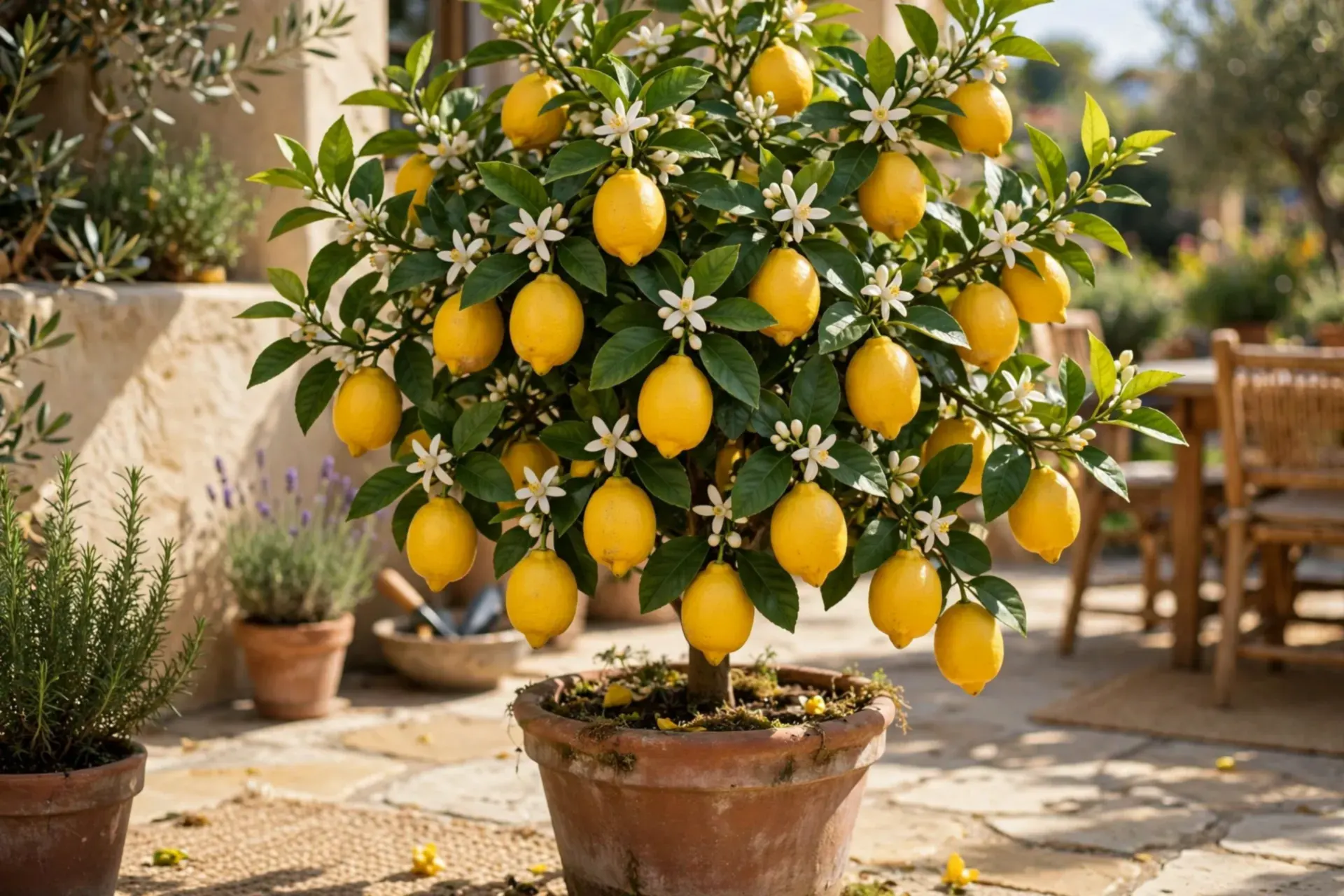
In most of Canada and the northern US, a lemon tree lives in a pot. Outdoors in the ground is for zones 9–11; everywhere else a potted tree summers in full sun on the patio and winters in your brightest room — and a grafted ‘Meyer’ in a big pot will still give you real lemons, blossom perfume included.
Grow Lemon Tree with us — step by step
Everything for this plant is written step by step below — what to do, and exactly when. Read it through first if you like: you can grow it entirely on your own with that guide. Or start with us here — tell us your planting day and we lay out your personal schedule on this page, every next step on its own day, counted from your planting date. No guessing, no forgetting.
Step 1 — today: Plant your Lemon Tree today at the same depth it was in its pot, with the graft union above the soil, into a big pot of gritty citrus mix, and water it in well. In zones 9–11 it can go in the ground instead, in your sunniest, most sheltered spot.
Lemon Tree at a glance
Spacing: — (large pot) or 144–192 in apart in the ground · Planting depth: Same depth as in its pot, graft above soil
Sun: Full sun — the brightest spot you have
Water: Regular and even; feed with citrus food in the growing season
Harvest: Fruit ripens 6–9 months after flowering; potted trees crop from year 2–3
Timing counts from your average last spring frost — get your own dates in the Planting Calendar. Guidance follows standard extension-service practice for Canada and the US.
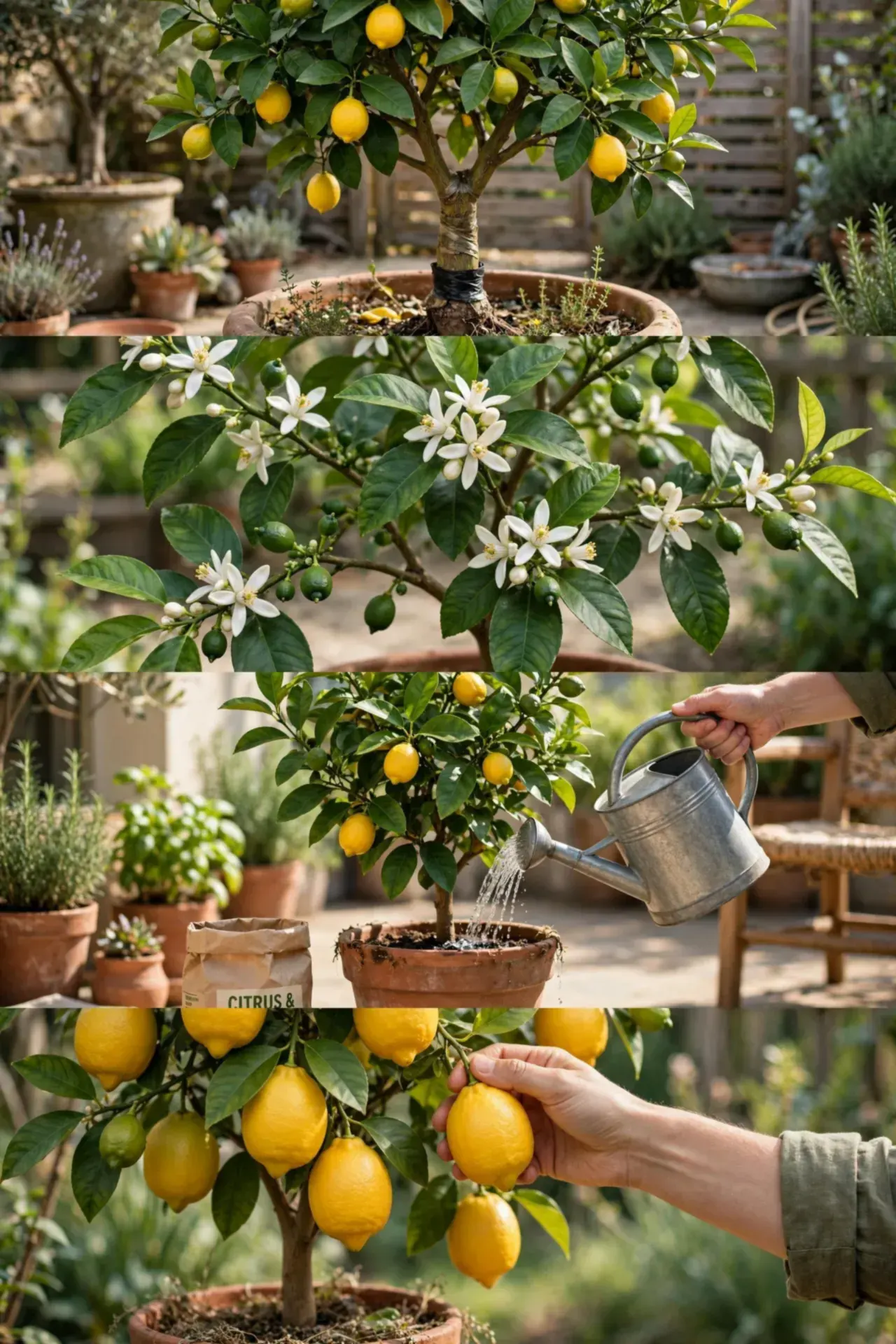
How to plant and grow lemon tree, step by step
Step 1 — Choose a grafted tree
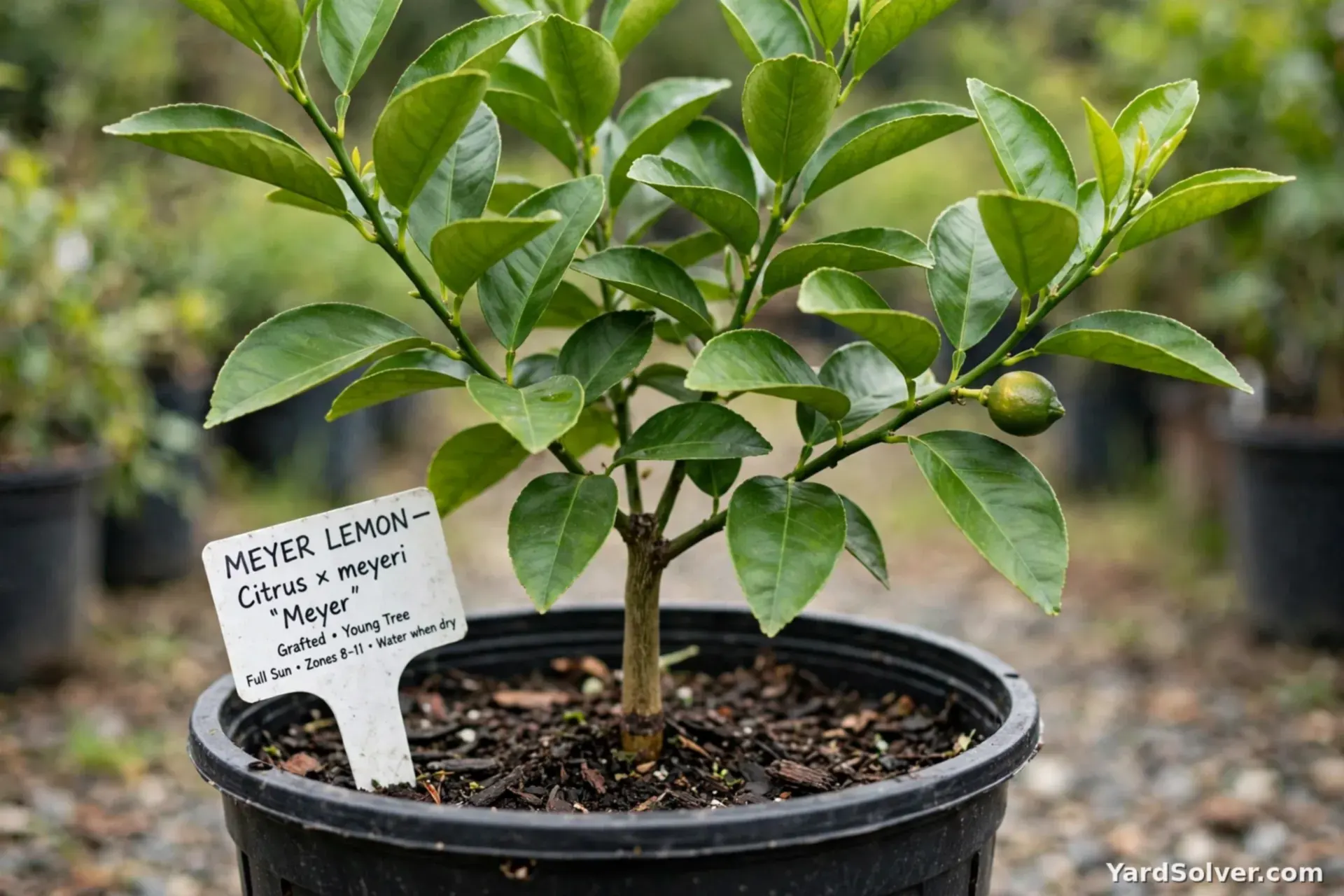
Buy a grafted tree: a known variety joined onto a rootstock chosen for pots and disease resistance. For a pot, that variety is usually ‘Meyer’ — sweeter than a true lemon, compact, and willing to fruit young and indoors. Outdoors in the ground is for zones 9–11; in colder places the tree lives in a pot that summers outside and winters in bright light. A tree grown from a pip is a slow ornament, not a lemon plan — it may take a decade and fruit poorly.
Step 2 — Prepare the spot — big pot, gritty mix
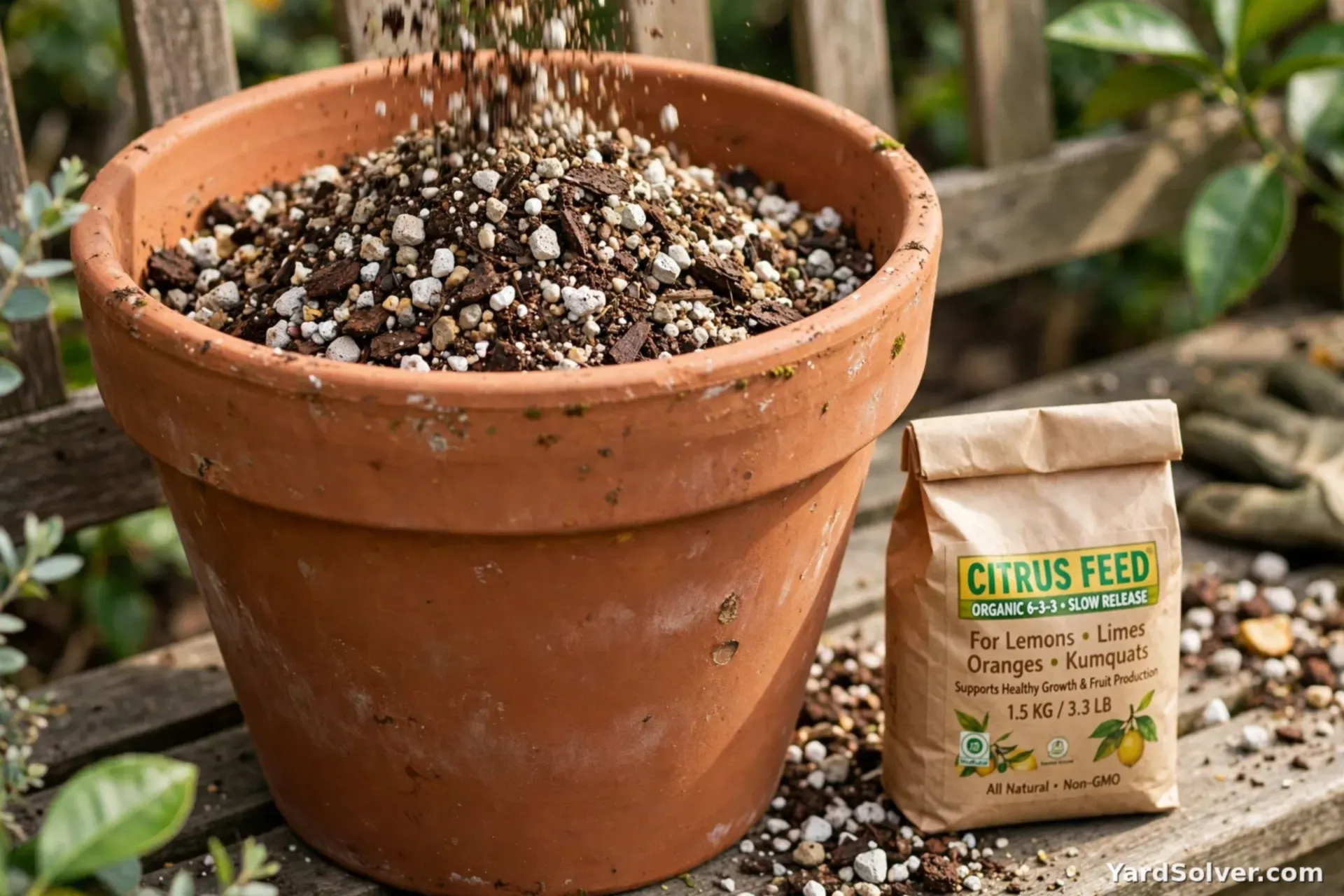
Citrus roots sulk in dense, soggy mix, so pot into a gritty citrus or free-draining mix — potting mix with extra bark and perlite works — in the largest pot you can move, with drainage holes. In the ground, choose the sunniest, most sheltered spot you have and space trees 144–192 in apart. Either way the rule for light is the same: full sun — the brightest spot you have. A lemon in dim light is a green ornament that drops its fruit.
Step 3 — Plant it
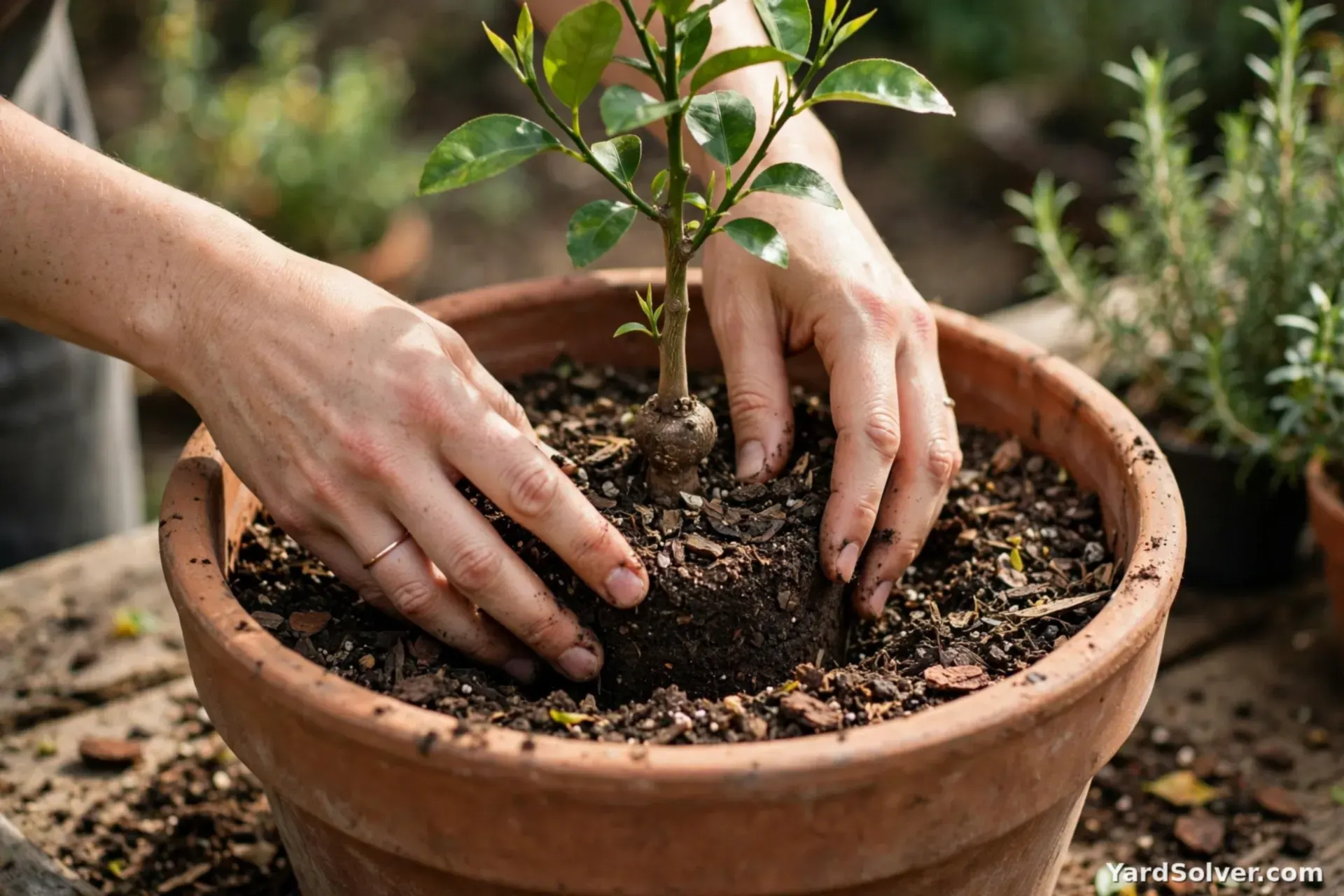
Set the tree at the same depth it grew in its nursery pot, with the graft union above the soil — burying the graft invites the variety to root for itself and defeats the rootstock. Firm the mix around the root ball, water deeply once to settle it, and keep any mulch off the trunk. Then give the tree a week or two to adjust before its first feed: planting day is stressful enough without a fertilizer chaser.
Step 4 — Water and feed
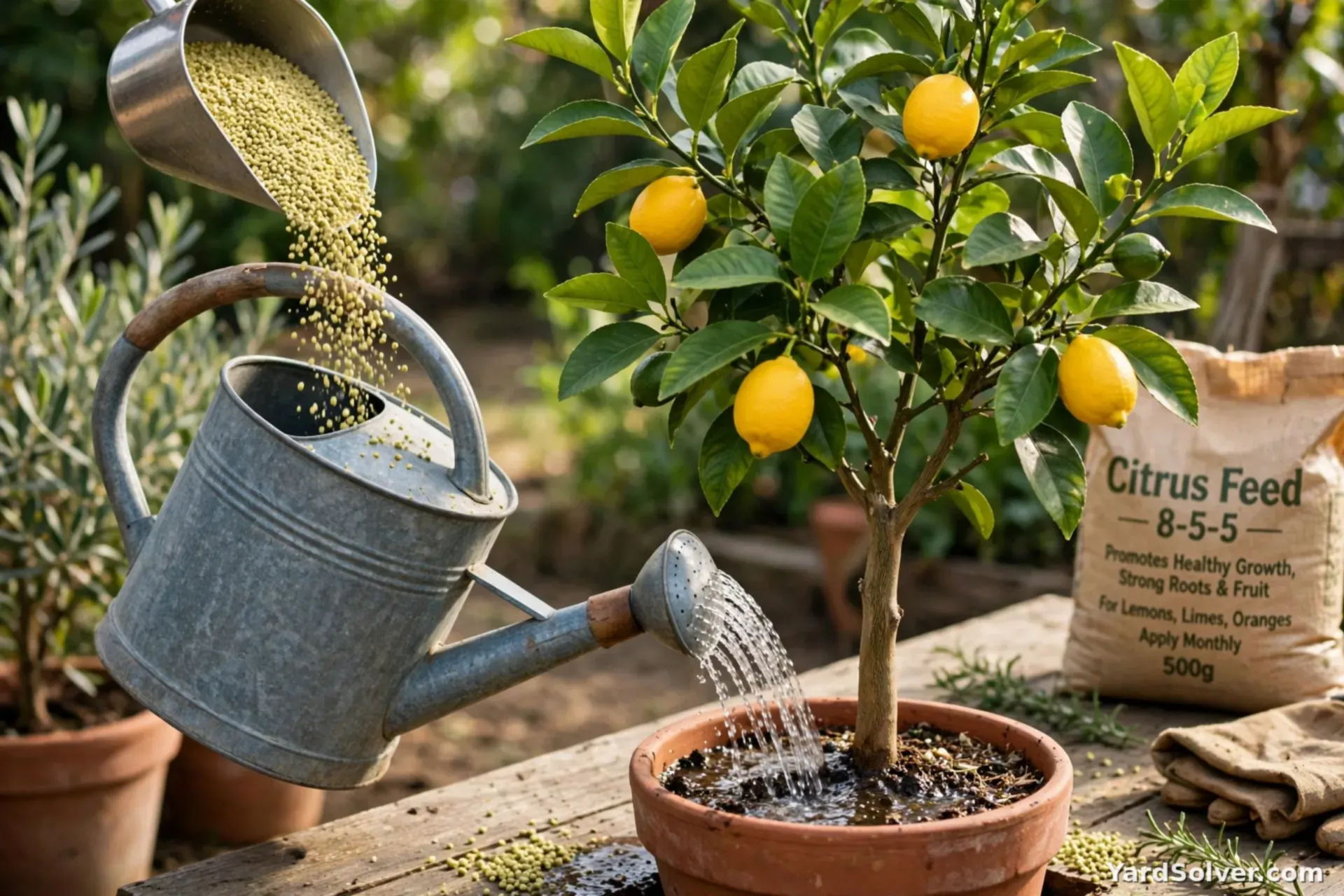
Water: regular and even; feed with citrus food in the growing season. Citrus are hungry plants: feed with a citrus food through spring and summer at the label rate — the Fertilizer Calculator keeps amounts honest — and rest the tree in winter. Pale yellow leaves with green veins usually mean the tree wants feed or iron, not more water; the diagnosis section below separates the yellows. Water when the top couple of inches have dried, then thoroughly, and empty the saucer.
Step 5 — Care and problems
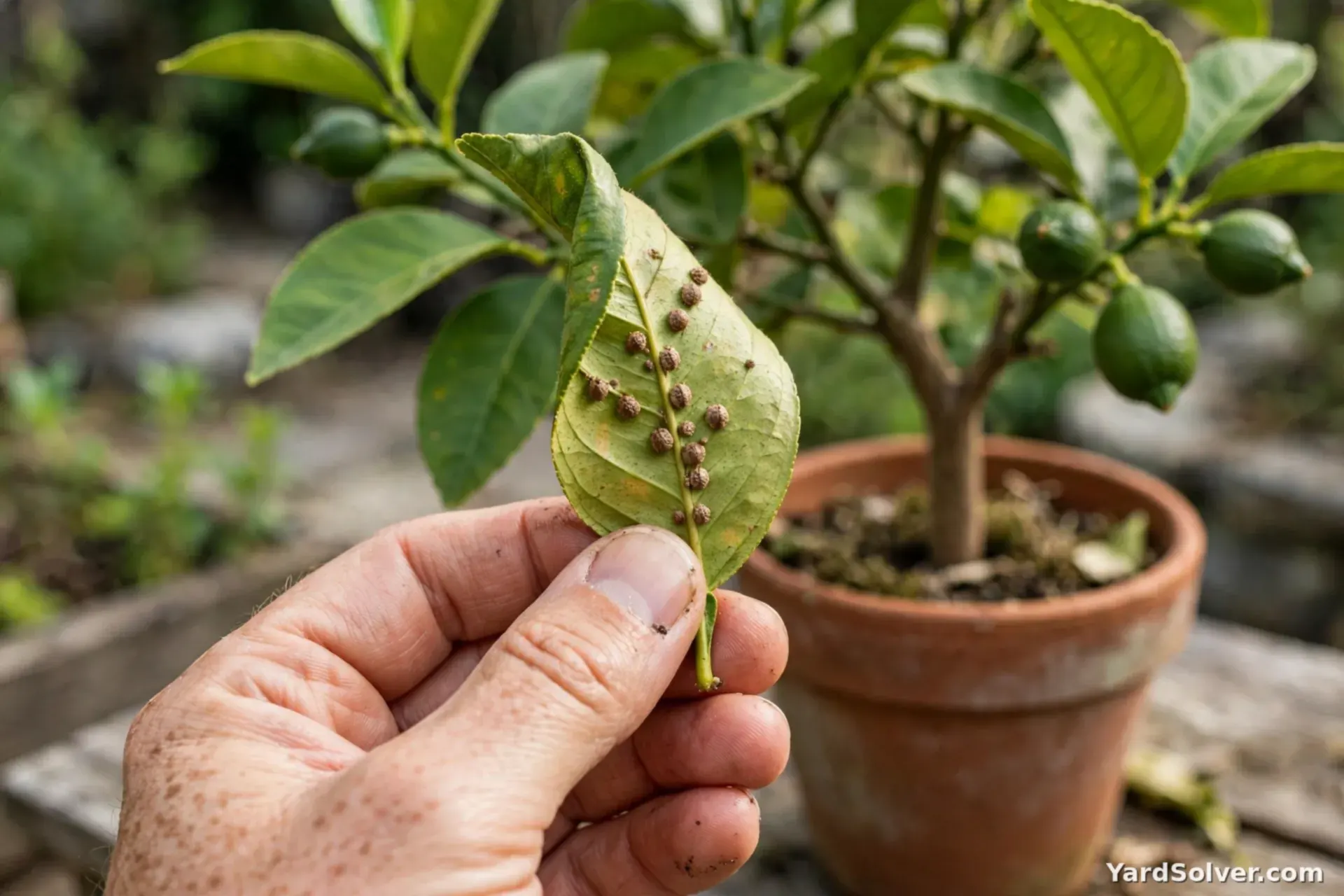
A potted lemon’s regular troubles are small and catchable. Scale — brown bumps on stems and leaf undersides — builds up quietly indoors; wipe it off whenever you spot it. Spider mites thrive in dry indoor winter air; a shower for the tree and higher humidity keep them down. And expect some leaf drop when the tree moves indoors in autumn: it is adjusting to lower light, not dying — hold back on water while it settles and new growth follows.
- Scale — brown bumps and sticky leaves; wipe off with a damp cloth or alcohol-dab.
- Spider mites — fine webbing and stippled leaves in dry indoor air; shower the tree.
- Leaf drop after the move indoors — normal adjustment; bright, cool spot and a light hand with water.
Take care: a potted lemon left outside on a frosty night can be killed in one night — of every date on this page, the autumn move indoors is the one that really matters.
Step 6 — Harvest
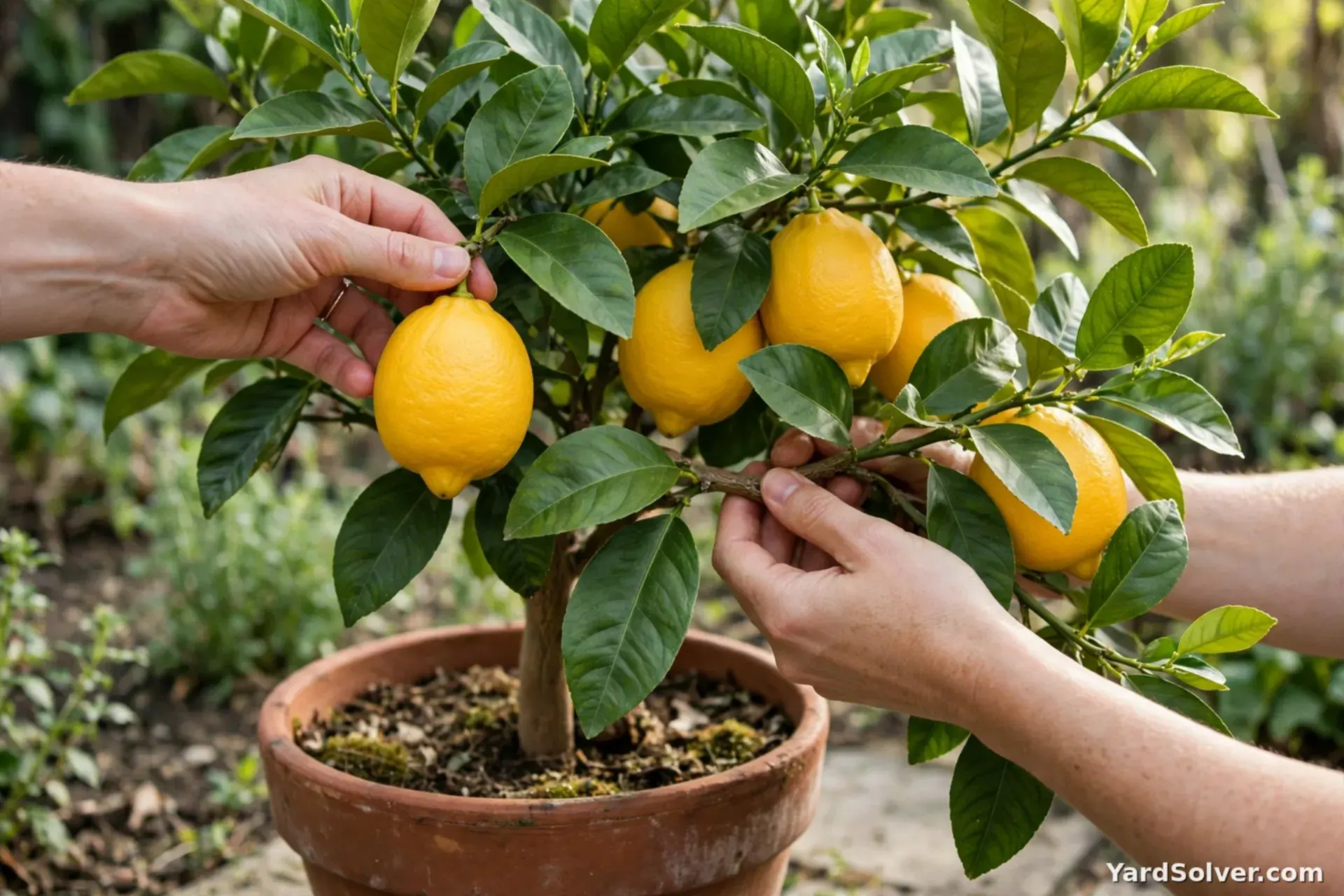
Ready in: fruit ripens 6–9 months after flowering; potted trees crop from year 2–3. A lemon flowers, sets tiny green fruit, and then takes the better part of a year to size up and colour — patience is the crop. Pick when the fruit is fully yellow and slightly soft to a gentle squeeze; lemons picked green colour up off the tree but never develop their best flavour, so tree-ripened is worth the wait. A happy potted ‘Meyer’ flowers in flushes and can carry blossom and ripe fruit at the same time.
Problems, pests & diseases — diagnosis and fixes
- Small brown or grey bumps fixed along stems and leaf undersides, leaves sticky, sooty black film: scale insects, the classic indoor citrus pest. Fix: scrape and wipe bumps off with a damp cloth or rubbing-alcohol dab, check weekly for a month, and wash the tree — scale spreads slowly but never leaves on its own.
- Fine webbing in leaf joints, leaves stippled pale and dusty, worst in winter indoors: spider mites in dry heated air. Fix: shower the whole tree firmly (undersides too), raise humidity around it, and repeat weekly until the stippling stops spreading.
- Leaves tunnelled with silvery, squiggly trails, new leaves twisted: citrus leaf miner — a tiny moth larva tunnelling inside new leaves. Fix: mostly cosmetic on a mature tree; pinch off badly mined new growth, avoid heavy feeding flushes in late summer when miners peak, and let the tree outgrow it.
- Yellow leaves with green veins (or yellow between veins all over): chlorosis — iron or magnesium shortage, common in pots and hard-water areas. Fix: feed with a citrus food (it carries the trace elements), add Epsom salts for magnesium per label if needed, and avoid soggy mix, which locks nutrients away from roots.
- Wilting in wet mix, leaves dropping, roots dark and soft: root rot from chronically wet, dense mix. Fix: unpot, cut roots back to firm white tissue, repot into fresh gritty mix with drainage, and water once lightly — then let the top dry between waterings.
- A shower of green leaves right after the tree moves indoors (or after a cold night by a window): shock from a sudden change in light, temperature or draughts. Fix: no panic and no extra water — settle the tree in your brightest, coolest, draught-free spot and it re-leafs as it adjusts; move it gradually next time.
📅 Your personal Lemon Tree schedule
Lemon tree care is seasonal — feed with citrus food through spring and summer, water steadily, and give the tree a bright, cool winter rest indoors. The dated checks below cover settling in, a feed-and-scale check, and the move indoors before cold nights.
Varieties worth growing
| Variety | Colour | Why gardeners like it |
|---|---|---|
| Meyer | Deep yellow | Sweeter and less sharp — a lemon × mandarin cross, and the best lemon for pots |
| Eureka | Bright yellow | The classic supermarket lemon, cropping mainly in winter and spring |
| Lisbon | Bright yellow | Very like Eureka but hardier, thornier and heavier-cropping in heat |
| Ponderosa | Yellow | Huge, thick-skinned fruit on a small tree — a novelty that earns its pot |
| Variegated Pink | Pink-striped | Green-and-cream leaves, striped fruit and pink flesh — grown as much for looks as for juice |
Good for you — and take care
Benefits
- Lemons are a rich source of vitamin C
- The juice and zest flavour food and drinks for very few calories
- Blossom is intensely fragrant — a potted tree perfumes a room when it flowers
- An evergreen, glossy patio tree that earns its space all year, fruit or not
- Fruit stores on the tree for weeks, so you pick as you need it
Take care
- Many lemon varieties carry real thorns — handle and prune with gloves
- Leaves are mildly toxic to pets in quantity; keep heavy prunings away from dogs and cats
- Never let a potted lemon freeze — bring it in before cold nights, not after them
A little history — and one good fact
Lemons most likely arose in north-east India, northern Myanmar or China as a cross involving the citron, and travelled west with Arab traders into the Mediterranean world around a thousand years ago. From there Spanish and Portuguese sailors carried them to the Americas, and by the 1800s California and Arizona had made them an industry. The pot grower’s favourite is younger still: the ‘Meyer’ arrived from China only in 1908.
Fun fact: The ‘Meyer’ lemon is not a true lemon at all — it is a lemon × mandarin cross from China, brought to the US by agricultural explorer Frank Meyer in 1908, which is why it tastes sweeter and rounder than a shop lemon.
Keep going
Guides: How to Get Rid of Aphids · How to Get Rid of Powdery Mildew · Companion Planting Chart · Lemon Tree Indoors for Winter
Calculators: Plant Spacing Calculator · Mulch Calculator · Fertilizer Calculator
More fruit & melons: Avocado · Fig Tree · Blackberry · Orange Tree · Lime Tree
← Back to the Plant Library · Get your personal planting dates
Quick answers
How to grow lemon trees
Start with a grafted tree — ‘Meyer’ is the reliable choice for pots — and plant it at the same depth it grew in its nursery pot, graft union above the soil, in a big pot of gritty, free-draining citrus mix. Give it full sun, the brightest spot you have. In zones 9–11 it can live in the ground; everywhere else it summers outside and winters indoors in bright light.
How to care for lemon trees
Water regularly and evenly, letting the top couple of inches dry between waterings, and feed with a citrus food through spring and summer. Check leaf undersides for scale and shower the tree if spider mites appear in dry indoor air. Bring a potted tree indoors before cold nights arrive — one frosty night outside can kill it.
When to plant lemon trees
Plant a lemon tree in spring, so it has the whole growing season to settle in before winter. Set it at the same depth as its nursery pot, with the graft union above the soil, and water it in well. Give the tree a week or two to adjust before its first feed.
Questions people ask
When do I plant a lemon tree?
Plant in spring. Outdoors in the ground only works in zones 9–11; in most of Canada and the northern US, a lemon tree lives in a pot that summers outside and winters indoors in bright light.
How far apart do I space lemon trees?
In the ground, space trees 144–192 in apart. In a pot, one tree to a large pot, planted at the same depth it was in its nursery pot with the graft union above the soil. Sun: full sun — the brightest spot you have.
When does a lemon tree fruit?
Fruit ripens 6–9 months after flowering; potted trees crop from year 2–3. Pick lemons fully yellow and slightly soft — they are at their best tree-ripened.