
Plant Library · Fruit & Melons
🌳 How to Grow Fig Tree
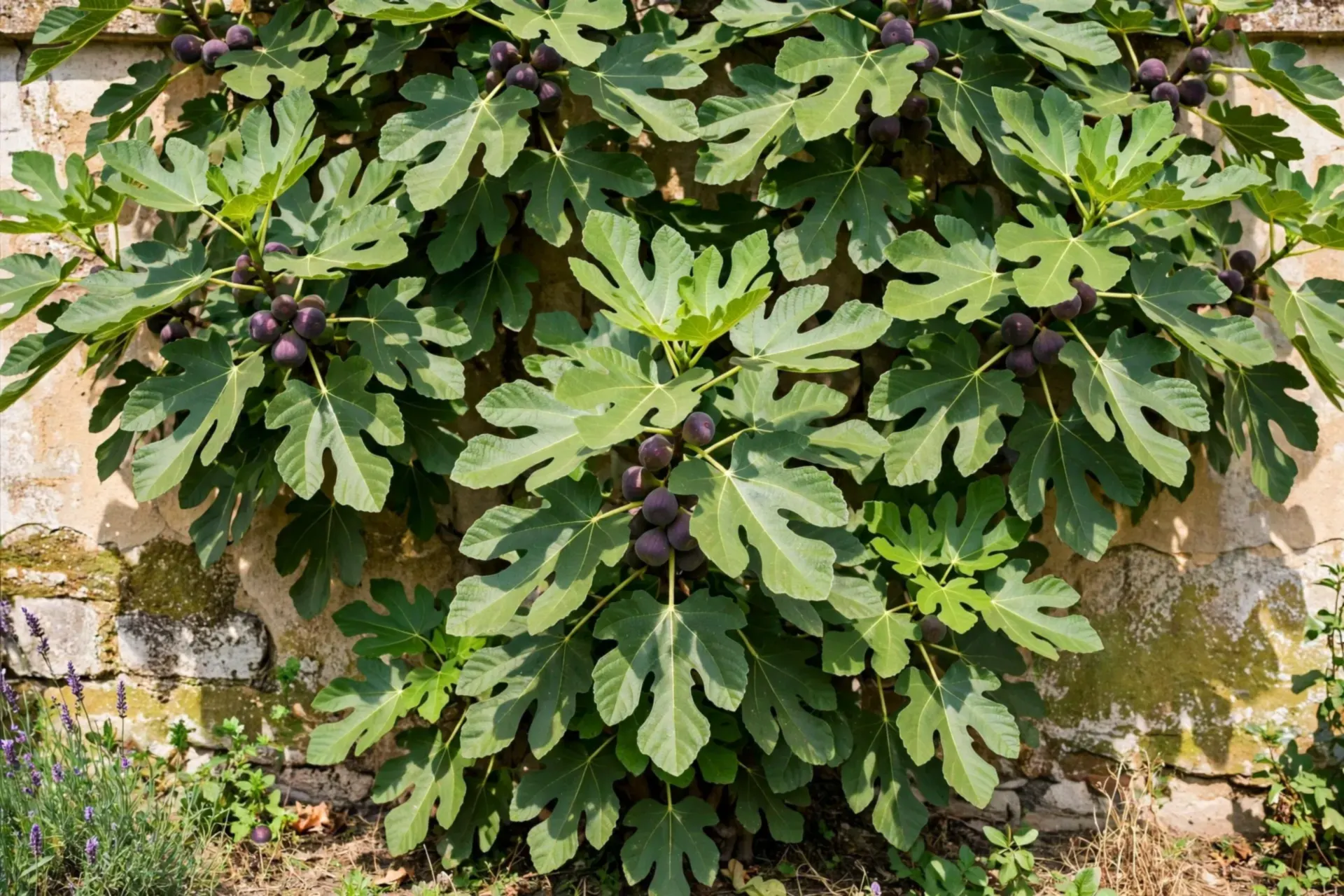
Hardier than it looks — ‘Chicago Hardy’ survives zone 6 winters with protection. Figs are standard in zones 7–11, but with a hardy variety, a sunny wall or a big pot, gardeners well outside the fig belt pick ripe figs every late summer — a fruit that has to be eaten ripe, because shop figs are picked unripe by necessity.
Grow Fig Tree with us — step by step
Everything for this plant is written step by step below — what to do, and exactly when. Read it through first if you like: you can grow it entirely on your own with that guide. Or start with us here — tell us your planting day and we lay out your personal schedule on this page, every next step on its own day, counted from your planting date. No guessing, no forgetting.
Step 1 — today: Plant your Fig Tree today at the same depth it was in its pot, spaced 120–240 in apart in the ground — or into the largest pot you have for a patio — and water it in well. A sunny wall at its back is the best seat in the garden for a fig.
Fig Tree at a glance
Spacing: 120–240 in apart in the ground; a large pot suits patios · Planting depth: Same depth as in its pot
Sun: Full sun
Water: Regular while establishing; deep and sparse later
Harvest: Main crop in late summer from year 2–3; some varieties give an early breba crop
Timing counts from your average last spring frost — get your own dates in the Planting Calendar. Guidance follows standard extension-service practice for Canada and the US.
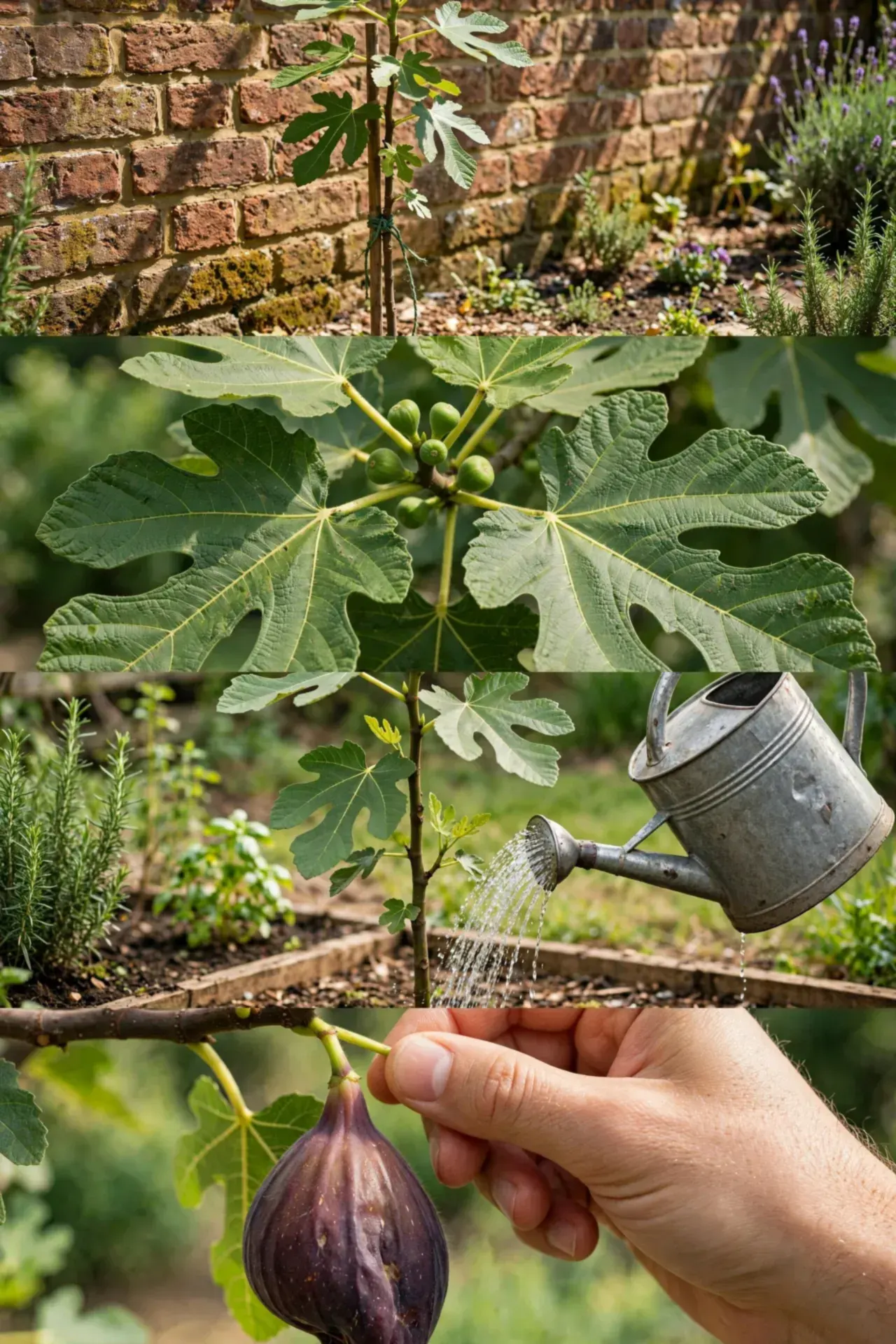
How to plant and grow fig tree, step by step
Step 1 — Plant in spring, after frost
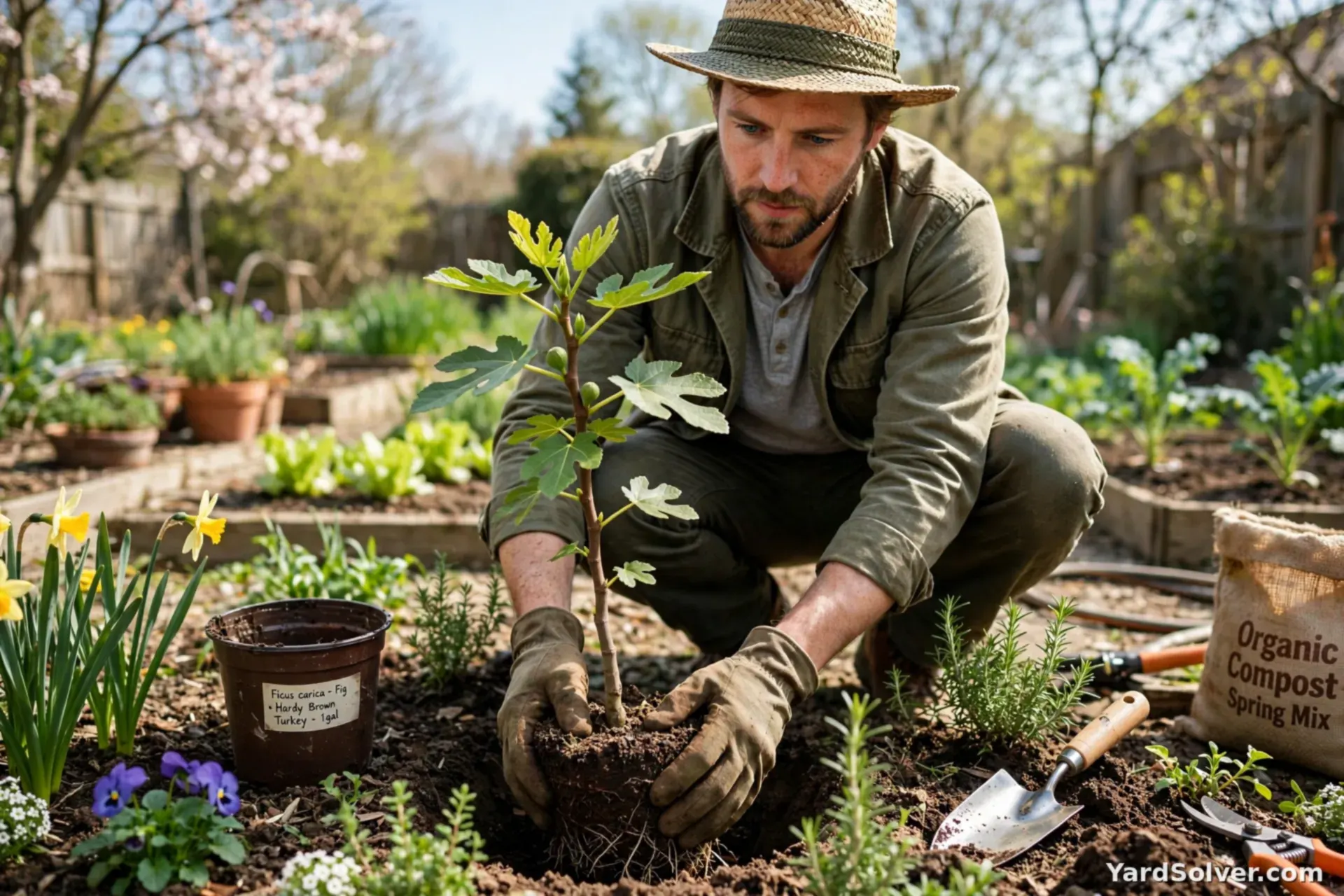
Plant in spring, after the last frost, so the young tree roots deeply before its first winter — that first winter is the test everything else prepares for. Figs grow outdoors in zones 7–11; in zone 6, plant a hardy variety such as ‘Chicago Hardy’ and plan on winter protection (Step 5), or grow the tree in a pot that winters under cover. Colder than that, a pot is the honest answer — and a very good one, because figs fruit happily in pots.
Step 2 — Prepare the spot — the sunniest wall
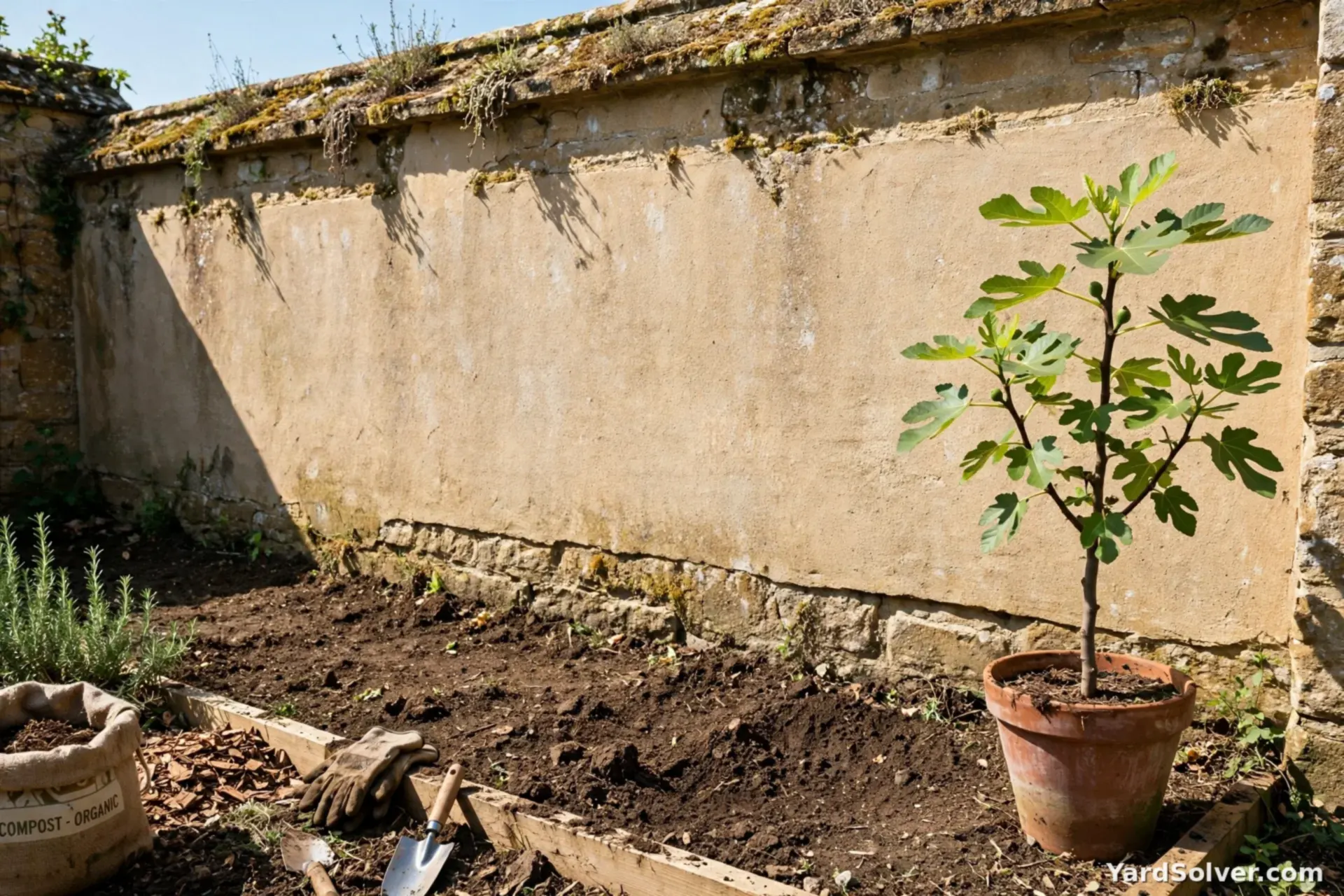
Give a fig the sunniest, most sheltered spot you own — ideally the foot of a sun-facing wall, whose stored heat ripens fruit and shelters branches. Figs are not fussy about soil and actually fruit better with their roots a little restricted, which is why they thrive in pots and in a planting pit lined with slabs in rich ground. In the open, space trees 120–240 in apart — a fig becomes a wide, handsome tree. The Plant Spacing Calculator helps place it among its neighbours.
Step 3 — Plant it
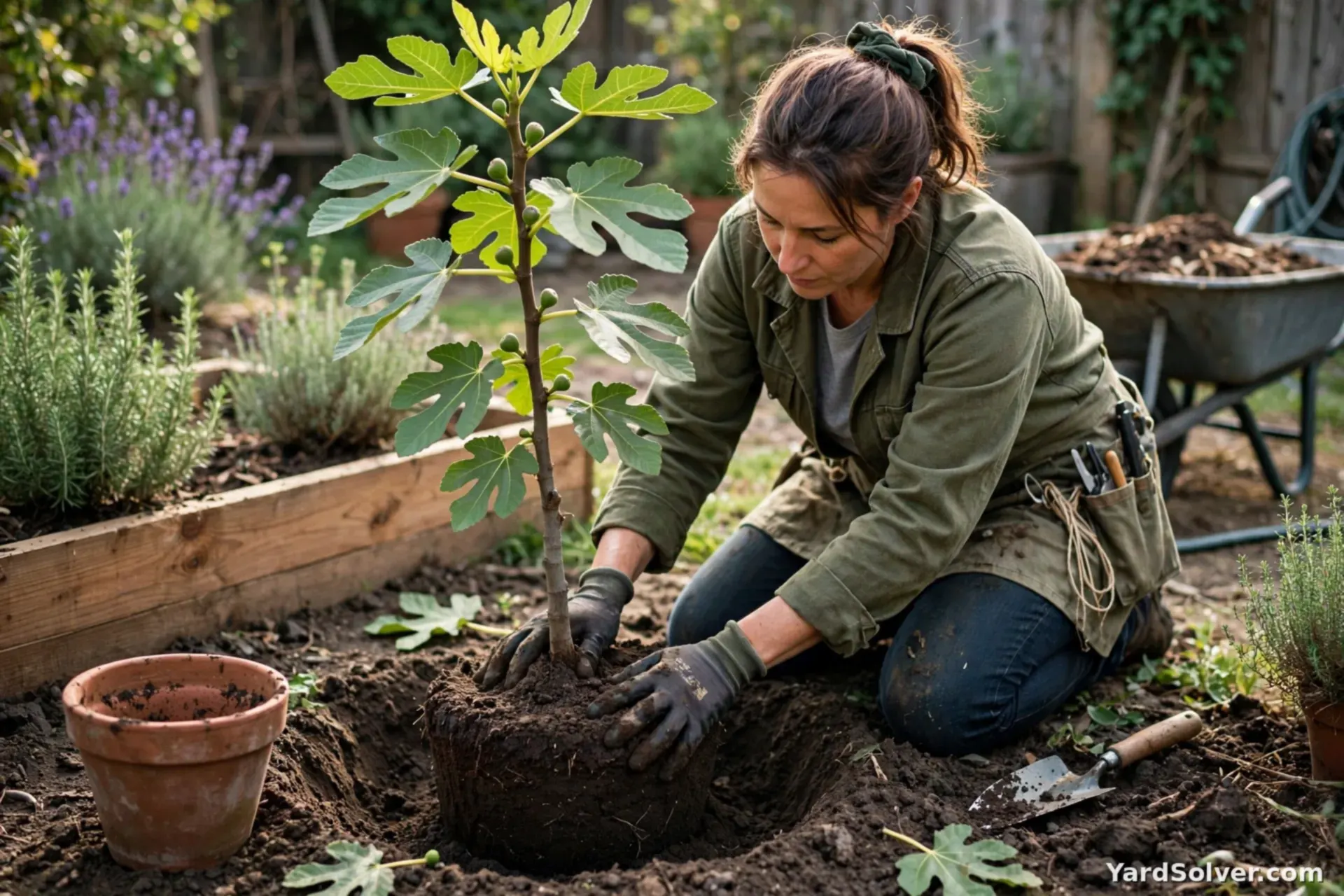
Set the tree at the same depth it grew in its pot, firm the soil around the root ball, and water deeply to settle it. In cold zones, planting an inch or two deeper is a common insurance trick — if the top is killed by a hard winter, buds below ground survive to regrow the tree. Mulch the root zone, keeping mulch off the trunk, with the amount from the Mulch Calculator. A newly planted fig needs nothing richer than this: kindness, to a fig, mostly means leaving it alone in the sun.
Step 4 — Water and feed — a light hand
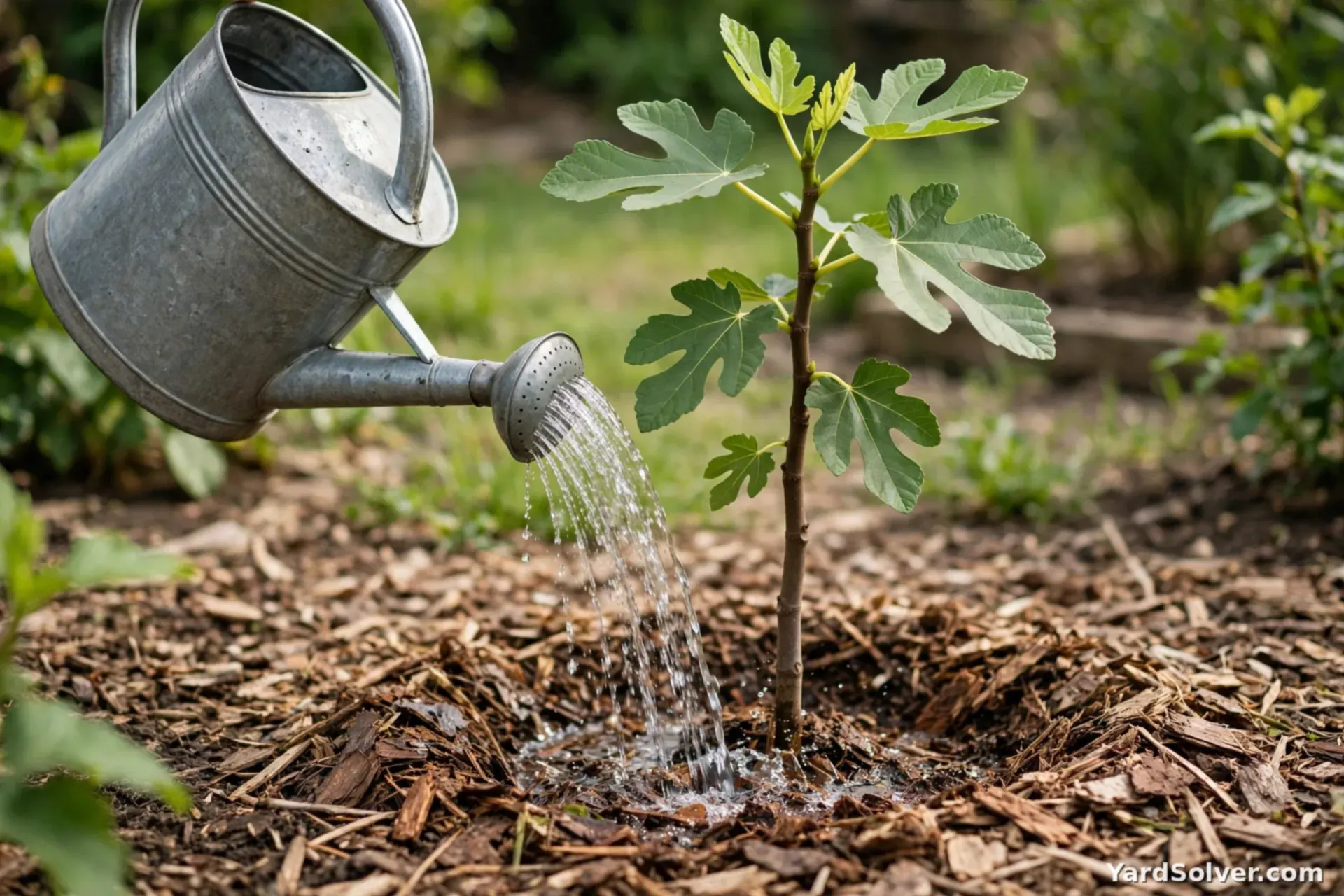
Water: regular while establishing; deep and sparse later. A first-year fig should not dry out, but an established tree wants a long drink only in real dry spells — constant wet feet and rich feeding both push leaf at the expense of fruit. Feed lightly in spring, if at all; on decent soil many figs need no fertilizer, and the Fertilizer Calculator is there to keep a light hand measured rather than guessed. Potted figs are the exception — a pot dries fast, so water potted trees regularly through summer.
Step 5 — Care and problems
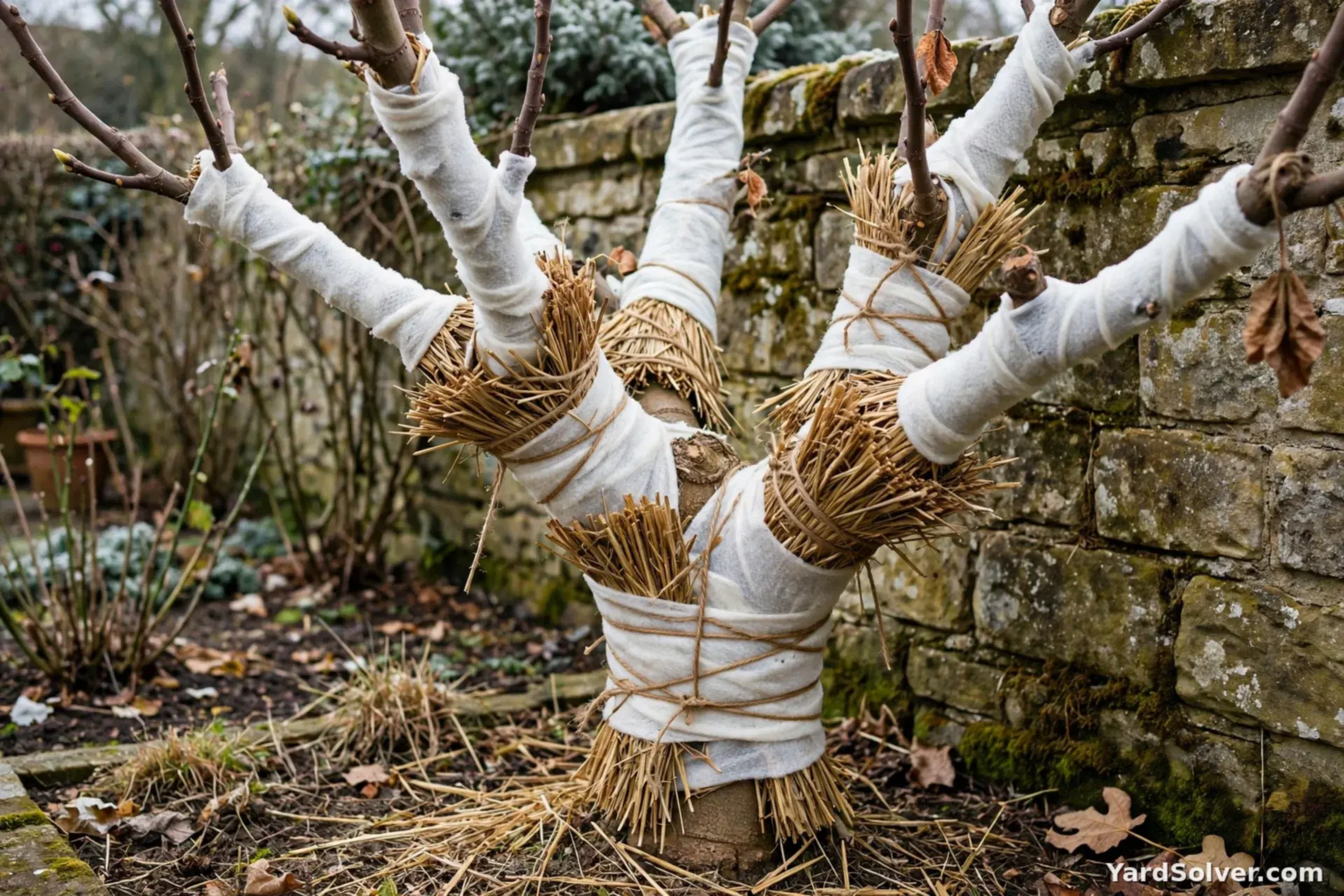
In cold zones the big job is winter protection: after leaf fall, tie the branches gently together, wrap the tree in breathable material, and mound mulch over the roots — or bend and bury a young tree in a trench where that is the local custom. Potted figs simply move to a cool, frost-free shed or garage. Expect some winter dieback in hard years: protected roots usually regrow the tree, and varieties like ‘Chicago Hardy’ fruit on that new growth the same summer.
- Winter dieback — tips and branches killed by hard frost; prune to live wood in spring and let the roots regrow the tree.
- Birds and squirrels — they take ripe figs the morning they soften; net the tree as fruit ripens.
- Fig rust — orange-brown spots under leaves in warm, humid zones; clear fallen leaves and improve airflow.
Take care: fig sap is milky and irritates skin — wear gloves when pruning or picking in quantity, and wash sap off your skin promptly.
Step 6 — Harvest
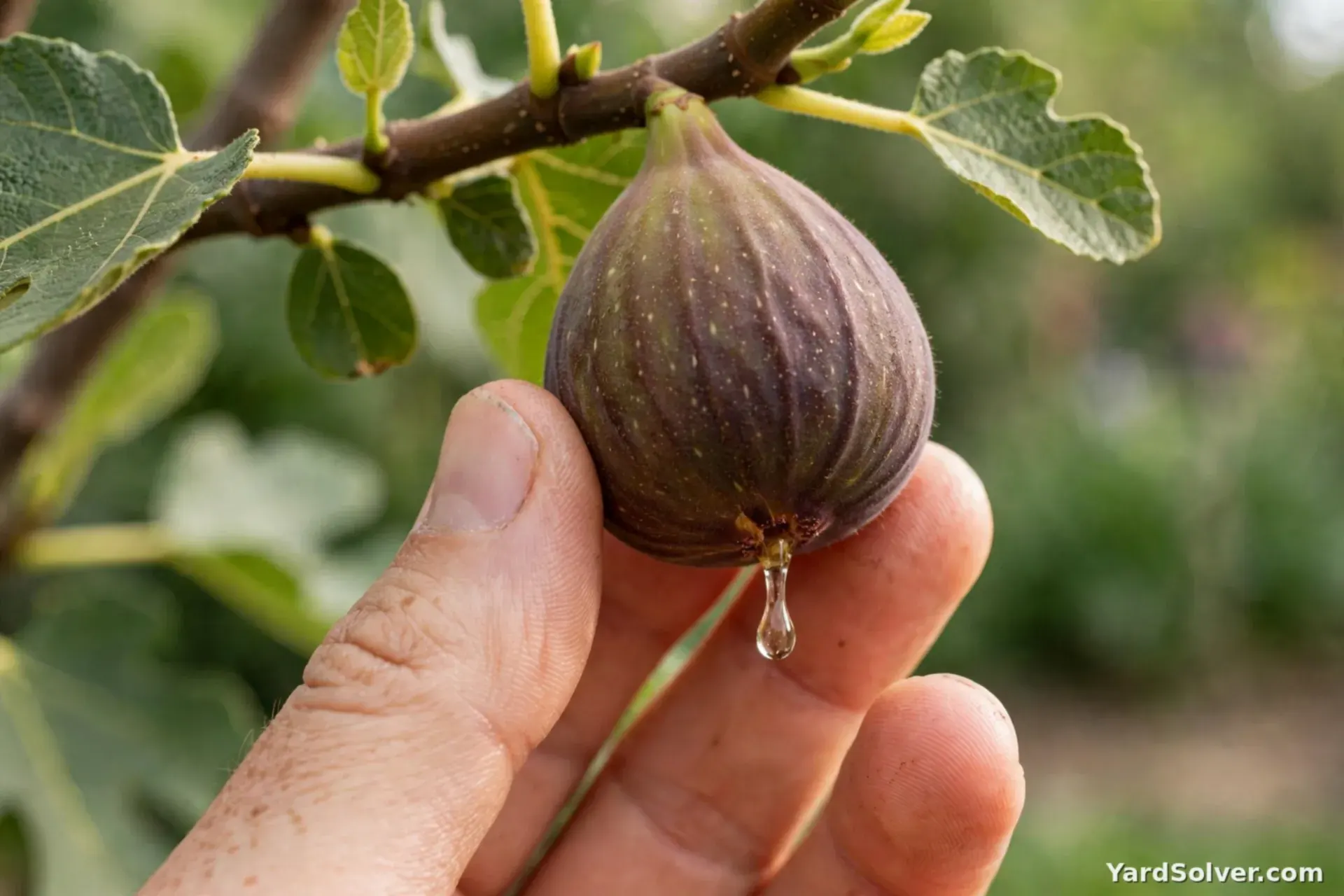
Ready in: the main crop ripens in late summer, from year 2–3; some varieties also give an early breba crop on last year’s wood. A fig is ripe when it is fully soft, hangs drooping from its stem, and shows a drop of nectar at the eye (the small hole at the base). Pick it that day — figs do not ripen properly off the tree, which is exactly why a home-grown fig tastes like a different fruit from a shop fig. Handle gently; ripe figs bruise if you look at them firmly.
Problems, pests & diseases — diagnosis and fixes
- Branches dead at the tips in spring, tree slow to leaf out: winter dieback — normal in cold zones after hard frosts. Fix: wait until growth starts, prune back to live wood, and protect better next winter (wrap, mulch mound, or move the pot under cover); hardy varieties fruit on the regrowth.
- Orange-brown raised spots on leaf undersides, leaves yellowing and dropping in humid summers: fig rust, common in warm humid zones. Fix: pick up and bin fallen leaves, prune for airflow, water at the base — rust weakens a tree over seasons rather than killing it outright.
- Ripe figs pecked, hollowed or gone by morning: birds and squirrels. Fix: net the tree as the first figs soften, and pick ripe fruit daily — a fig left hanging overnight is a donation.
- Nearly ripe figs dropping while still hard: unripe fruit drop from water stress (drought or a sudden deluge) or a young tree shedding a crop it cannot carry. Fix: keep water even in dry spells, mulch the root zone, and be patient — drop lessens as the tree matures.
- Fruit souring on the tree, fermenting smell, small beetles in the eye of the fig: souring, spread by fig beetles in warm zones entering wide-open-eyed varieties. Fix: pick ripe fruit promptly, clean up fallen figs, and favour closed-eye varieties such as ‘Celeste’ where souring is a yearly problem.
- Slow growth, wilting in heat, roots with small round knots on sandy soils: root-knot nematodes. Fix: grow in a pot with fresh mix where nematodes are known, mulch heavily, and keep the tree well watered — vigorous trees tolerate a light burden.
📅 Your personal Fig Tree schedule
Fig care is seasonal — light feeding and steady water while establishing, then a deep-and-sparse rhythm, and winter protection where winters are cold. The dated checks below cover settling in, a dry-spell check, and the winter-protection reminder.
Varieties worth growing
| Variety | Colour | Why gardeners like it |
|---|---|---|
| Chicago Hardy | Dark purple-brown | The cold-climate champion — it can die back in a hard winter and still fruit on the regrowth |
| Brown Turkey | Brown-purple | Reliable and widely grown, with a good main crop and sometimes a breba crop too |
| Celeste | Light brown-violet | The ‘sugar fig’ — small, very sweet fruit and a closed eye that resists souring |
| Violette de Bordeaux | Deep purple-black | A small tree with rich, berry-like flavour — a favourite for pots |
| Desert King | Green-yellow | The breba specialist for cool summers — its early crop ripens where main crops cannot |
Good for you — and take care
Benefits
- Fresh figs provide fibre, which supports good digestion
- A source of potassium, with some calcium and magnesium
- A tree-ripened fig needs no sweetening, cooking or travelling — it is eaten where it grew
- Large, handsome foliage makes the tree an ornamental even out of fruiting season
- Surplus figs dry well, keeping the harvest for winter
Take care
- Milky fig sap irritates skin — wear gloves when pruning and wash sap off promptly
- Unripe figs are not for eating — pick only fruit that is fully soft
- In cold zones the tree needs its winter protection every year; one unprotected hard winter can take the top growth
A little history — and one good fact
The fig is among the oldest fruits humans have farmed — fig remains found in the Jordan Valley date to around 9000 BCE, which may make it one of the very first cultivated plants of all, older than farmed wheat in the same region. From the eastern Mediterranean it travelled everywhere ships and missions went: to Greece and Rome, along trade routes into Asia, and with Spanish missions into California, where ‘Mission’ figs still bear the name.
Fun fact: The fig ‘fruit’ is an inside-out flower — a hollow ball (a syconium) lined with hundreds of tiny flowers, pollinated in its homeland by a tiny specialist wasp that enters through the eye. Common garden figs are the convenient exception: they set fruit with no wasp and no pollination at all.
Keep going
Guides: Drought-Tolerant Plants · Companion Planting Chart · How to Get Rid of Powdery Mildew · How to Overwinter a Fig Tree
Calculators: Plant Spacing Calculator · Mulch Calculator · Fertilizer Calculator
More fruit & melons: Lemon Tree · Avocado · Blackberry · Apple Tree · Persimmon Tree
← Back to the Plant Library · Get your personal planting dates
Questions people ask
When do I plant a fig tree?
Plant in spring, after the last frost, so the tree has a full season to root before its first winter. Figs grow outdoors in zones 7–11; in zone 6, choose a hardy variety like ‘Chicago Hardy’ and protect it in winter, or grow it in a pot.
How far apart do I space fig trees?
Space in-ground trees 120–240 in apart, planted at the same depth they were in the pot. A large pot also suits a fig well — its roots like the constraint. Sun: full sun.
When does a fig tree fruit?
Main crop in late summer from year 2–3; some varieties give an early breba crop on last year’s wood. Pick figs fully soft and drooping, with a drop of nectar at the eye — they do not ripen properly off the tree.