
Guides · Lawn care · Published November 10, 2026
Moss in Your Lawn: Causes and the Permanent Fix
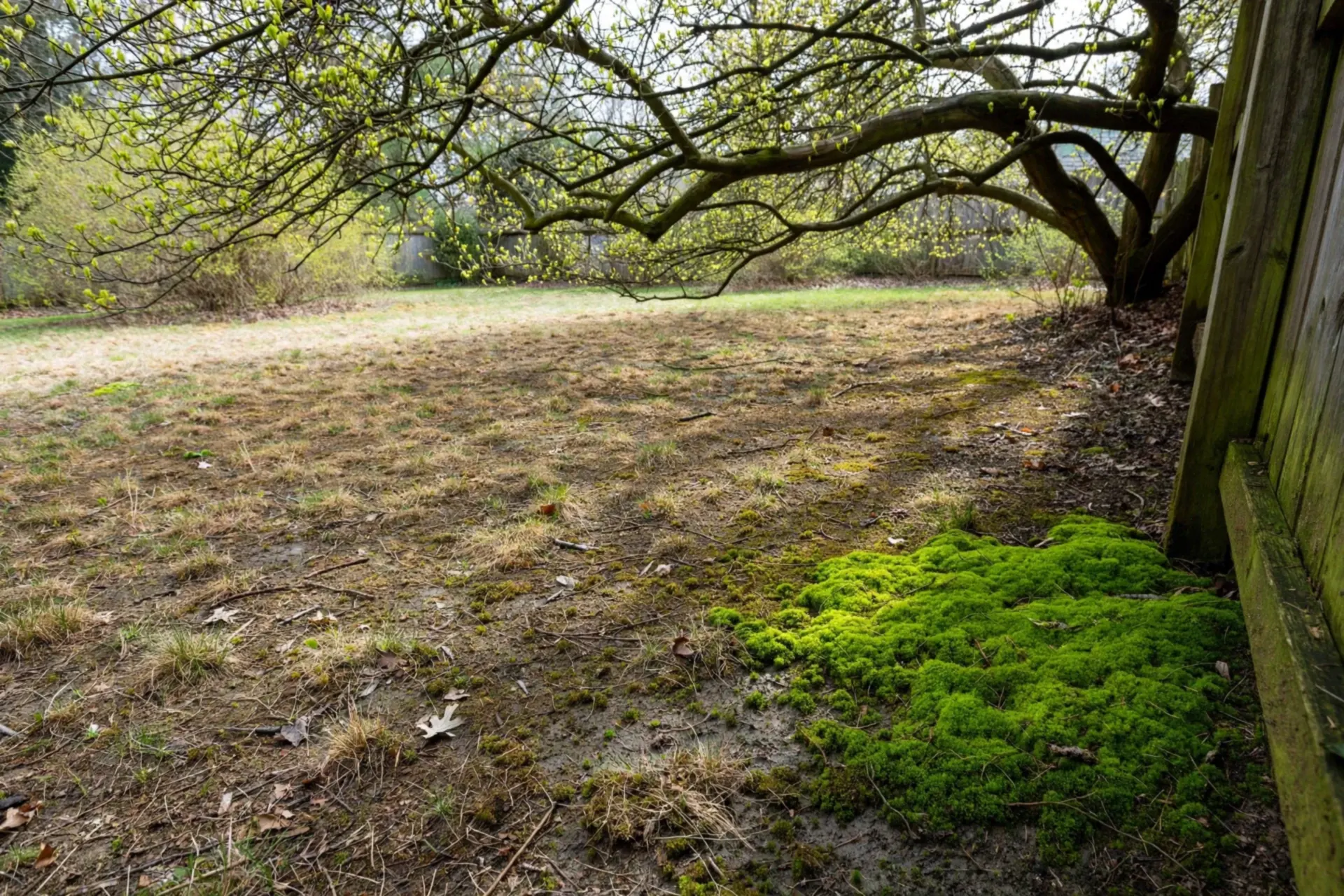
Here is the thing nobody selling moss killer will tell you: moss does not attack a lawn. It moves into ground the grass has already given up. Moss has no real roots, eats almost nothing, and happily grows where grass starves — in shade, in wet packed soil, in sour ground. Kill the moss without changing any of that, and you have simply cleared a space for the next patch of moss. The permanent fix is a diagnosis, then a sequence: read the patch, test the soil, clear the moss out, fix the cause, and put thick grass back in its place. Here it is, step by step.
Read the patch first: the cause table
| Cause | How to check | The fix |
|---|---|---|
| Shade | Under about 4 hours of direct sun a day | Thin or lift branches; overseed with shade grass (fine fescue) |
| Compaction | A screwdriver or pipe will not push 4–6 inches into the soil | Core aerate the area |
| Poor drainage | The patch stays wet long after the rest dries | Aerate; fill low spots; a French drain for the worst corners |
| Low pH | Only a soil test can say | Lime at the rate the test recommends |
| Thin, hungry grass | Bare soil showing between plants | Overseed and feed on the test's numbers |
Most mossy corners have two or three of these at once — the classic is the shady, compacted strip along a fence. Work down the list, not on just the first one you find.
Step 1 — Test the soil before you buy anything
Moss grows happily across a wide range of pH, so guessing helps nobody. A proper test tells you whether the ground really is too acidic for grass — most lawn grasses want pH 6.0 to 6.5 — and exactly how much lime, if any, will fix it. A lab test also reports the nutrient picture, because hungry, thin grass is an open door to moss. The full method — sampling properly and reading the report in the right order — is in How to Test Your Garden Soil. If the test does call for lime, the Lime Calculator turns the recommendation into bags for your lawn size, and fall or early spring are both good times to spread it; lime works over months, not days.
Step 2 — Kill it and rake it out
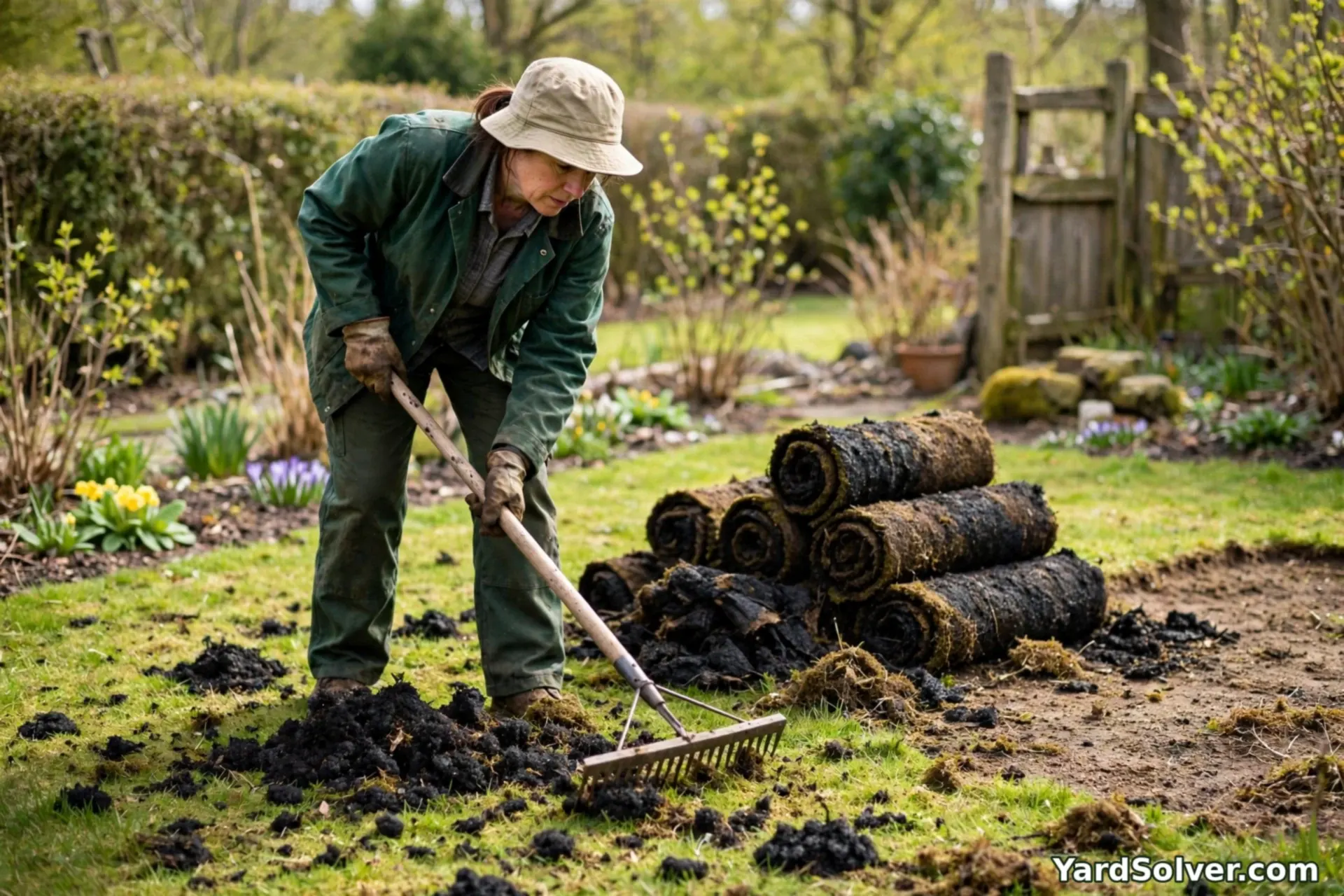
The standard moss killer is an iron product — ferrous sulfate — sold as granules or spray. Put it on when the moss is actively growing in cool, moist weather, and the moss blackens within hours to a couple of days; grass shrugs it off, though it will stain concrete and paving, so keep it on the lawn. Soap-based sprays (potassium salts of fatty acids) do the same job more gently. Once the moss has clearly browned, rake or dethatch it out — moss roots are shallow threads, and thick patches peel away almost like a rug. On a big lawn, a rented power rake does in an hour what a hand rake does in a weekend. What you are left with is bare soil, which is exactly the point: do not leave it bare for long.
Step 3 — Loosen and dry the ground
If the screwdriver test in the table failed, the ground is packed too tight for grass roots, and it will hold water at the surface where moss loves it. Core aeration is the fix: it pulls small plugs out of the soil, letting air in and water down. The method and timing are covered in How to Aerate Your Lawn; do the mossy area and a margin around it, not just the patch itself. Fill any real dips with a thin topdressing of soil and compost rather than one deep layer. A corner that stays wet because water flows to it and stops — a downspout outlet, a low end of the yard — needs that water given somewhere else to go; small grading fixes help, and the worst cases earn a French drain.
Step 4 — Win back the light, or change the plan
Grass needs sun the way moss does not. Where a tree or fence keeps the patch under about 4 hours of direct light, grass will always struggle and moss will always be waiting. The honest fixes, in order: lift the tree's canopy by removing the lowest branches, thin the crown so light filters through, and cut back shrubs on the sunny side. If the spot is still deep shade after that, stop fighting it — plant a shade groundcover there, or mulch it as a bed edge. A corner given up gracefully looks better than a corner lost to moss every single spring.
Step 5 — Overseed the bare ground thick
Bare soil is an invitation, and grass seed is the answer that has to arrive before the moss spores do. Overseed the cleared area while it is still fresh, choosing the seed for the place: a shade mix built on fine fescues for the dim corners, your normal lawn mix in the open. Work the rate out with the Seed Calculator and follow the timing and moisture rules in How to Overseed Your Lawn — seed that touches soil and stays damp is seed that grows. Feed the new grass on the soil test's numbers, and mow a little higher in the recovering area, around 3 inches, so the young grass shades its own soil. Thick grass is the only moss control that never needs reapplying.
Keep going
Start where every fix starts: How to Test Your Garden Soil — sampling, the lab report, and what the numbers mean.
Finish with the step that keeps moss out: How to Overseed Your Lawn.
Questions people ask
Does lime kill moss?
No. Lime does not kill moss, and anyone who sells it that way is guessing. What lime does, on soil a test shows is too acidic, is lift the pH into the range where grass grows strongly — and strong grass is what keeps moss out. Lime without a soil test is a shot in the dark; moss grows across a wide range of pH.
Why does moss keep coming back every year?
Because the conditions that let it in are still there. Moss killers and raking clear the patch, but if the corner stays shady, wet and compacted with thin grass, moss reclaims it within a season or two. The lasting fix is the boring one: more light, looser and drier soil, a pH the grass likes, and thick overseeded turf filling every gap.
What grass seed works in the shady spots where moss grows?
Fine fescues are the shade answer for cool-season lawns — they grow in as little as about 4 hours of sun where bluegrass fails. If a spot gets less light than that, no grass will hold it honestly: thin the branches above it, or give the corner to a shade groundcover or mulch and stop fighting.
When is the best time to fix a mossy lawn?
Late winter into early spring, when the moss is easy to see and cool-season grass is about to grow hard, is the prime window: kill and rake the moss out, aerate, lime if the test says so, and overseed straight away. A second window opens in early fall, the other natural overseeding season.
Comments & ratings
No comments yet.
Be the first to share your experience.