
Guides · Raised Bed Layouts · Published November 8, 2026
Raised Bed Garden Layout: How Many Vegetables Can You Grow?
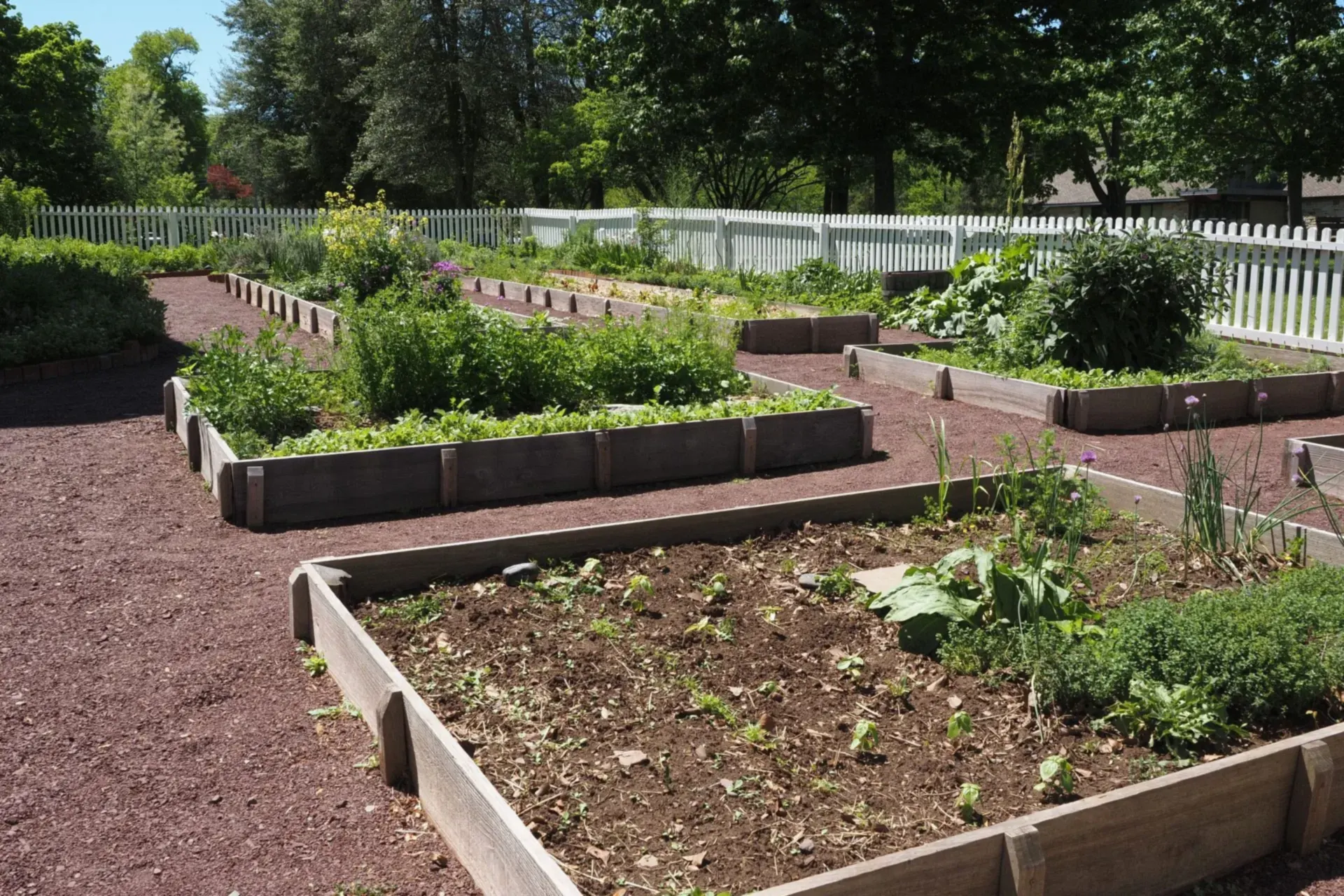
A good raised bed garden layout is decided before a single plant goes in: which crops, how many of each, and what stands where. This page gives you three complete, ready-to-copy plans — a 4×8 family bed holding 146 plants, a 4×4 salad-and-salsa bed with 81, and a 2×8 trellis bed with 90 — each laid out in one-foot squares with the exact count for every crop. Two rules run through all three plans. First, tall and trellised crops stand on the north side, so their shade falls behind the bed rather than across it. Second, every plant gets the space its spacing demands — the counts come straight from our Vegetable Plant Spacing Chart, which is worth reading alongside the plans. North is at the top of every diagram. Filling a new bed to plant these into? Work out the soil first with How Much Soil for a Raised Bed — then lay out your own version of any plan in the Garden Planner before you buy a single seedling.
The three plans at a glance
- 4×8 ft (32 squares): the family bed — 146 plants, 13 crops, trellis along the north edge
- 4×4 ft (16 squares): salad and salsa — 81 plants built around 2 tomatoes and 4 peppers
- 2×8 ft (16 squares): the fence-line bed — 90 plants, climbers down the middle trellis
- Every plan: tall crops north, short crops south, fast crops tucked where they finish before the slow ones spread
Plan 1 — The 4×8 raised bed layout (146 plants)
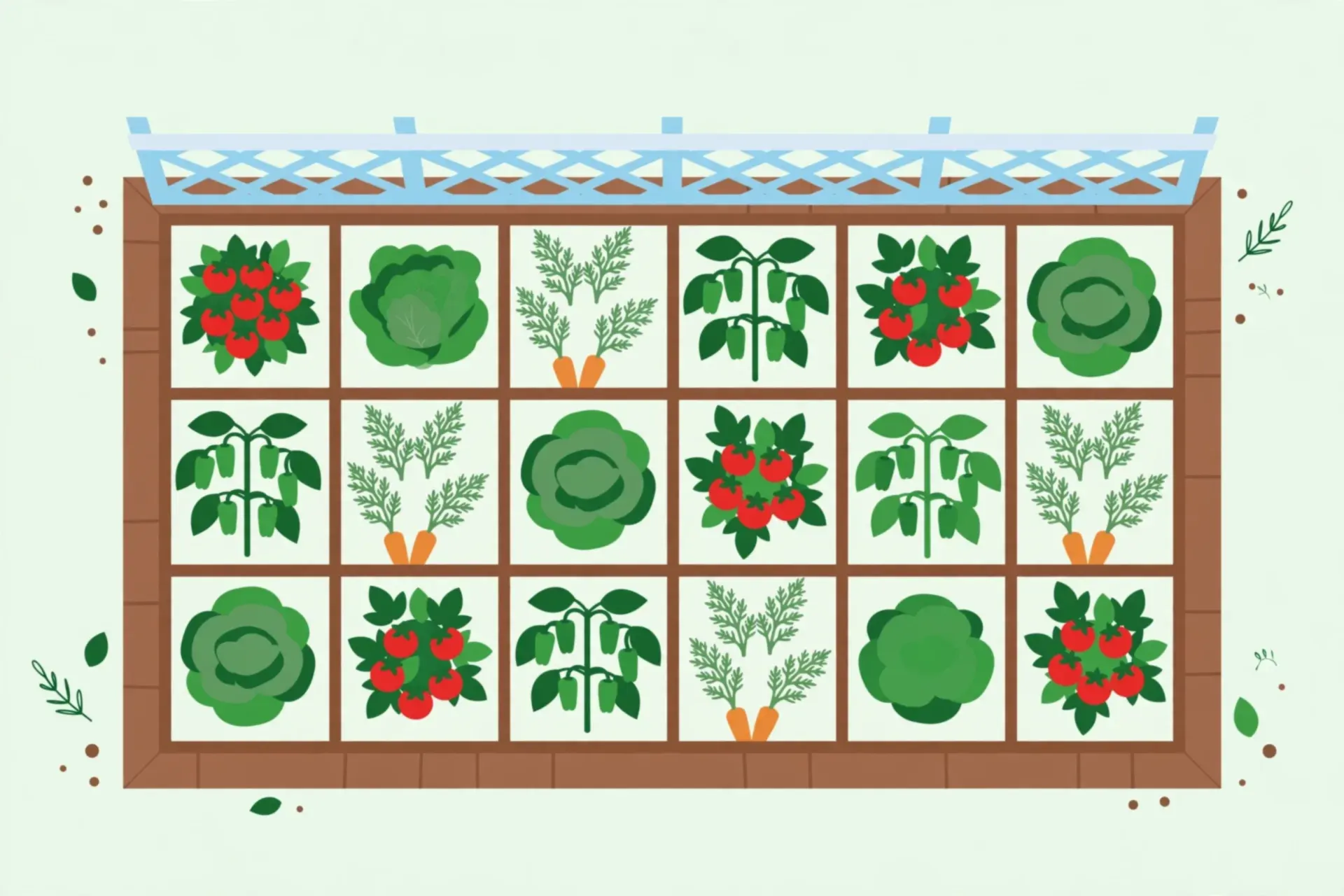
The 4×8 is the standard bed for a reason: big enough to feed a household salads and sides all summer, small enough to reach the middle from either side. Read the plan row by row, north to south. North row (trellis): 2 tomatoes at the west end, then 4 squares of trellised cucumbers (2 plants per square = 8), then 2 peppers at the east end where the trellis runs out. Second row: 2 more peppers, 1 eggplant, 1 basil, then 4 squares of leaf lettuce (4 per square = 16). Third row: 2 squares of bush beans (9 per square = 18), 2 of Swiss chard (4 per square = 8), then a square each of carrots (16), beets (9) and 2 squares of spinach (9 per square = 18). South row: 2 more squares of leaf lettuce (8), a square of radishes (16), a square of onions (9), 1 basil and 2 squares of kale (1 each), and a final square of spinach (9). Total: 146 plants — 2 tomatoes, 8 cucumbers, 4 peppers, 1 eggplant, 2 basil, 24 lettuce, 18 bush beans, 8 chard, 16 carrots, 9 beets, 27 spinach, 16 radishes, 9 onions and 2 kale.
Why it works: the tomatoes anchor the shady end and climb, the cucumbers use vertical air instead of floor space, and the fast crops (radishes are out in about a month) vacate squares the peppers and eggplant will want by midsummer. One crop is deliberately missing: zucchini. A single plant needs a 3×3 ft block to itself, so it gets the corner of another bed or a big pot — see the spacing chart for why forcing it in here would cost more than it yields. Check any square's spacing in the Plant Spacing Calculator, which counts plants for your exact bed and spacing.
Plan 2 — The 4×4 raised bed layout (81 plants)
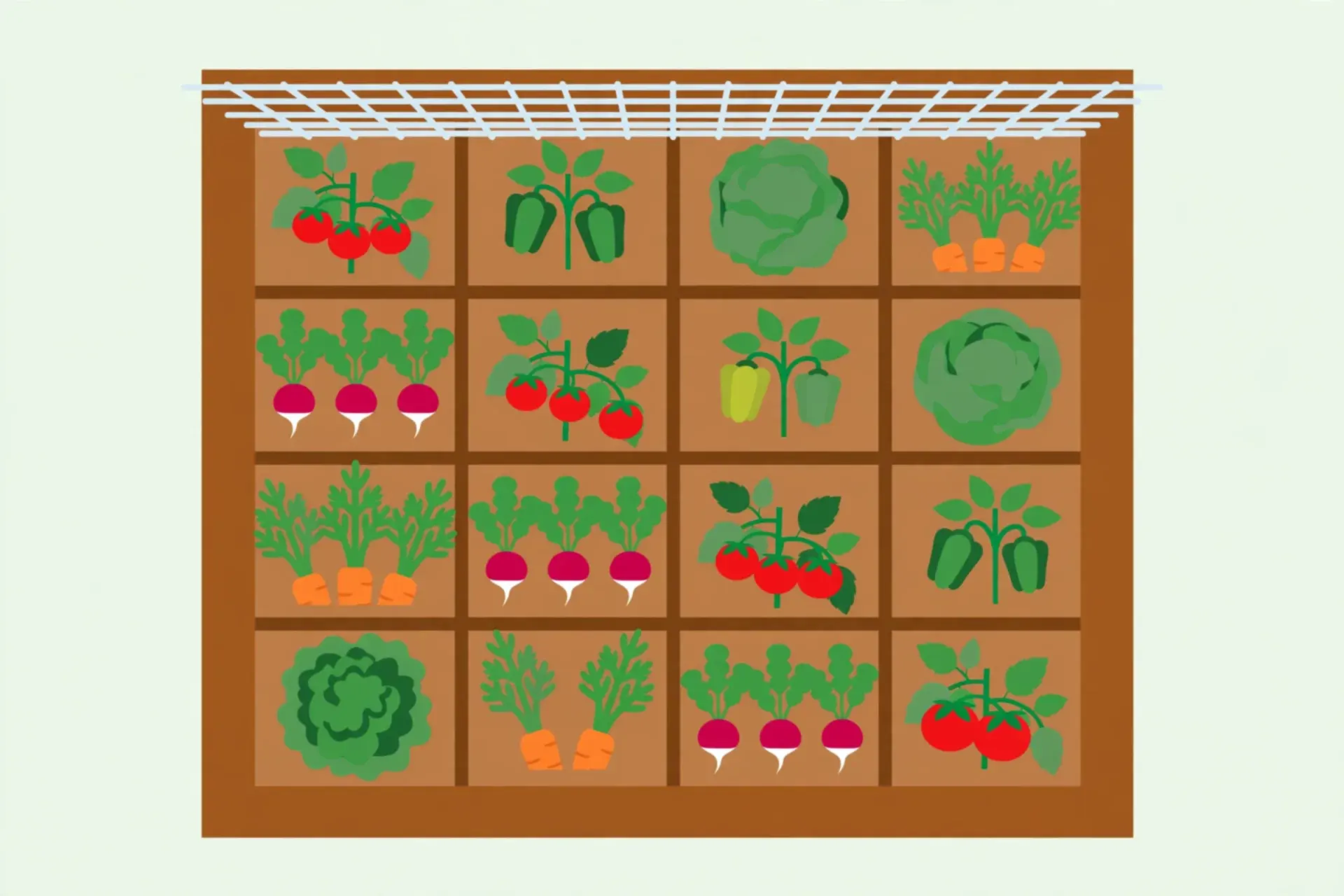
The 4×4 suits a patio corner or a first bed, and this version is built as two gardens in one. North row: 2 tomatoes, a square of trellised cucumbers (2 plants), and 1 pepper. Second row: 3 more peppers (4 in total — enough for fresh eating and a salsa habit), 1 basil at the tomatoes' feet, and a square of leaf lettuce (4). Third row: 2 more squares of lettuce (8), a square of carrots (16) and a square of radishes (16) in front where they are easy to grab. South row: a square of spinach (9), a square of onions (9), a square of beets (9) and 1 kale for cut-and-come-again leaves. Total: 81 plants — 2 tomatoes, 2 cucumbers, 4 peppers, 1 basil, 12 lettuce, 16 carrots, 16 radishes, 9 spinach, 9 onions, 9 beets and 1 kale. The basil beside the tomatoes is the plan's one piece of folklore-free companionship: they simply want the same water and warmth, and the basil stays low enough never to shade the row — the fuller logic is in Companion Planting Basics.
Plan 3 — The 2×8 raised bed layout (90 plants)
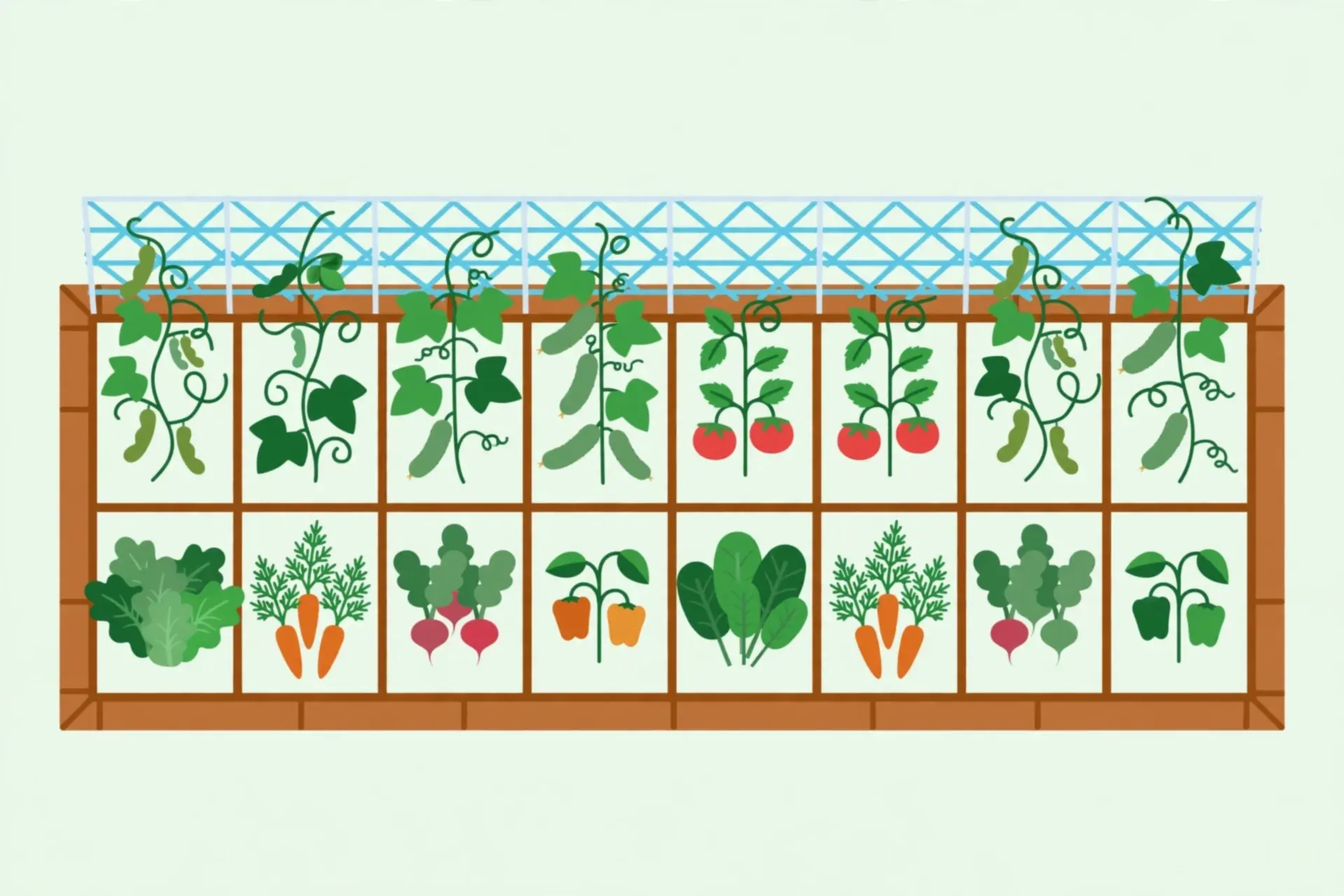
The 2×8 is the fence-line and side-yard bed — too narrow to waste a row on paths, and you can reach every inch of it from the front. Run its long side north–south where you can, so both rows take turns in the sun; put the trellis along the back (north or east) edge. Back row, all climbers: 2 squares of pole beans (8 per square = 16), 2 of trellised cucumbers (2 per square = 4), 2 tomatoes, and 2 squares of peas (8 per square = 16) at the far end. Front row, all quick and low: 2 squares of leaf lettuce (4 per square = 8), a square of spinach (9), a square of carrots (16), a square of radishes (16), 1 basil, and 2 peppers at the sunny end. Total: 90 plants — 16 pole beans, 4 cucumbers, 2 tomatoes, 16 peas, 8 lettuce, 9 spinach, 16 carrots, 16 radishes, 1 basil and 2 peppers. Nothing in the front row ever grows tall enough to fight the trellis, and everything in it can be harvested without reaching through a vine.
Two rules that make any layout work
Height goes north. In the northern hemisphere the midday sun is in the southern sky, so a tall crop on the north edge throws its shadow onto the path behind the bed, while the same crop on the south edge shades everything behind it for half the day. Order every bed the same way: trellis and tall crops at the back (tomatoes, pole beans, peas, cucumbers), mid-height crops in the middle (peppers, bush beans, chard), and the short, sun-hungry crops at the front (lettuce, radishes, carrots, spinach). A 2×8 that must run east–west is the one exception — there, the trellis still goes on the north long side, exactly as in Plan 3.
Plan the second planting too. A layout is a season, not a snapshot. Radishes finish in about 30 days and their square takes a fresh sowing of lettuce; spinach bolts when the heat arrives and its square becomes bush beans; peas come out in early summer just as the cucumbers want the trellis room. Sow a new square of lettuce every couple of weeks rather than all at once and it never arrives in a single glut. When each crop goes in depends on your frost dates — the Planting Calendar turns the plan into dates for your area, and each crop's own page (start with Cucumbers and Lettuce) carries its sowing depth and timing.
Keep going
Build any of these plans — and change every crop in them — in the Garden Planner: drag the squares around until the bed matches your family's eating, not ours.
Before planting day, fill the bed using How Much Soil for a Raised Bed and check every gap against the Vegetable Plant Spacing Chart. New to raised beds entirely? Raised Bed Gardening for Beginners is the place to start.
Questions people ask
How many tomato plants can I put in a 4×8 raised bed?
Two, planted square-foot style and trained up a trellis, is the comfortable number in a shared bed — each gets a full square foot plus room to climb. Four is possible if the bed is mostly tomatoes and you prune to one or two stems, but in a mixed bed two healthy plants will out-produce four crowded ones.
What should I plant on the north side of a raised bed?
The tall crops: tomatoes, pole beans, peas and trellised cucumbers. In the northern hemisphere the sun travels through the southern sky, so height on the north edge casts its shadow behind the bed instead of across it. Short crops — lettuce, radishes, carrots — belong on the sunny south side.
Can I change the crops in these layout plans?
Yes — swap like for like. Any crop can be replaced by another with the same spacing and height: peppers for eggplant, chard for kale, bush beans for spinach once the weather warms. Keep the two rules that make the plans work: tall and trellised crops on the north side, and every plant given the square footage its spacing requires.
When do I plant each part of the bed?
In waves, by frost tolerance. Hardy crops — peas, spinach, lettuce, radishes, carrots, onions — go in weeks before the last frost. Tender crops — tomatoes, peppers, cucumbers, beans — wait until after it. Your exact dates depend on where you live; a planting calendar keyed to your frost dates turns the plan into a schedule.
Comments & ratings
No comments yet.
Be the first to share your experience.