
Guides · Plant Spacing · Published November 8, 2026
Vegetable Plant Spacing Chart: How Far Apart to Plant Vegetables
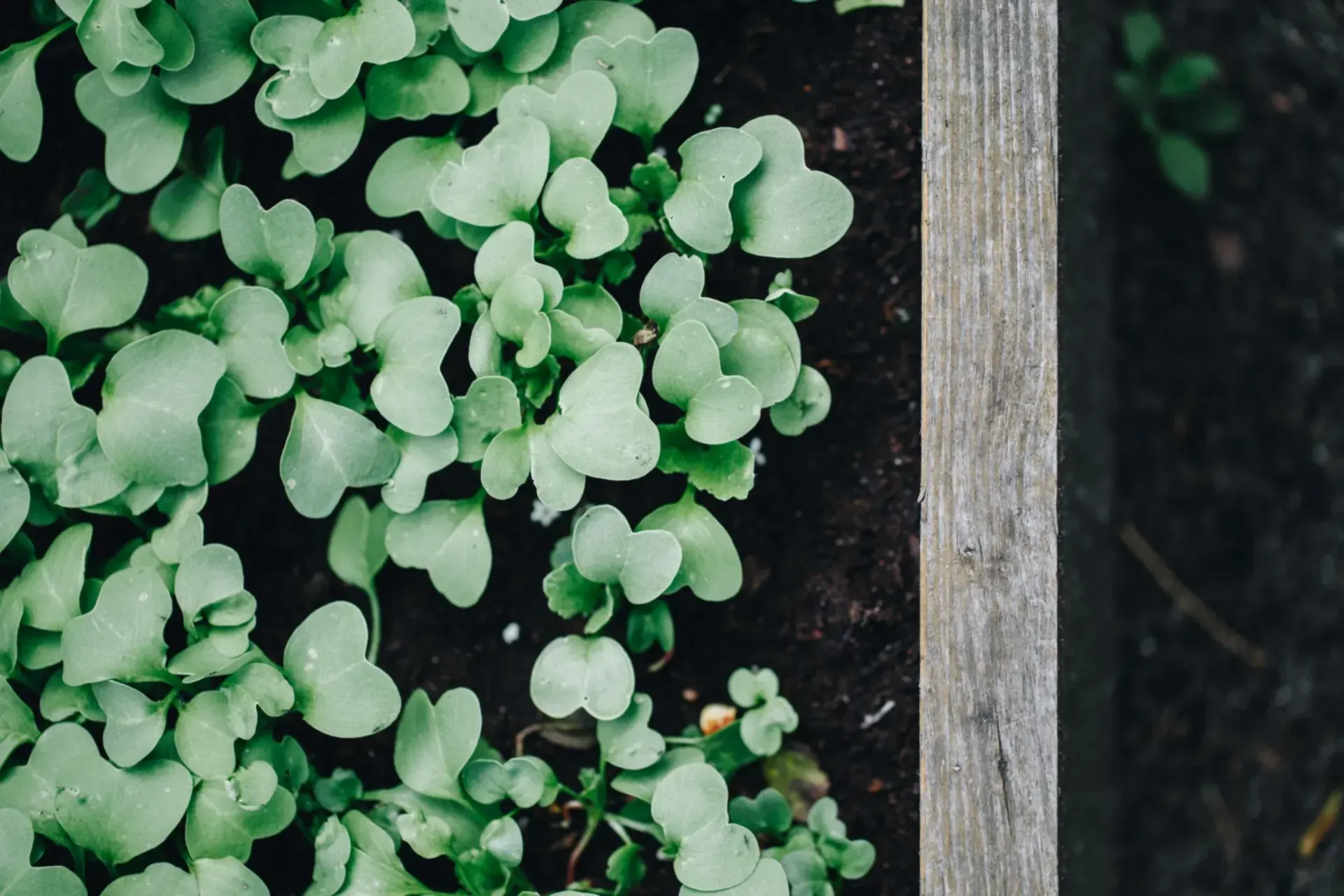
This vegetable plant spacing chart answers the question every gardener asks with a seedling in one hand and a trowel in the other: how far apart do these actually go? Below are the standard spacings for 24 common vegetables — the distance between plants in the row, the distance between rows, and the plants-per-square-foot figure if you garden in beds the intensive way. One honest note before the numbers: spacing is a range, not a law. Varieties differ (a cherry tomato is not a beefsteak), methods differ (a trellis changes everything), and rich, well-watered soil forgives closer planting than tired soil does. Use the chart as the reliable middle of the road, and lean to the wide end whenever you are unsure — a plant can use extra room, but it cannot use room it never got. For the one-crop deep dive, the Tomato plant page shows how spacing interacts with pruning and support for the garden's most argued-over crop.
The five spacings people ask about most
- Tomatoes: 18–24 in apart, rows 36–48 in — 1 per square foot, trained up
- Peppers: 18 in apart, rows 24–36 in — 1 per square foot
- Cucumbers: 12 in apart on a trellis — 2 per square foot grown upward
- Carrots: thin to 2–3 in apart — 16 per square foot
- Lettuce: leaf types 6 in (4 per square foot); head types 12 in (1 per square foot)
Turn spacing into a plant count — the plant spacing calculator
A chart tells you the gap; the Plant Spacing Calculator tells you the consequence: give it your bed's length and width and the spacing you chose, and it counts exactly how many plants fit — in straight rows or in staggered rows, which fit roughly 15% more plants at the same spacing. It is the fastest way to know how many seedlings to buy or start, with a printable list for the nursery run.
Step 1 — Read the chart the right way: in-row vs between rows
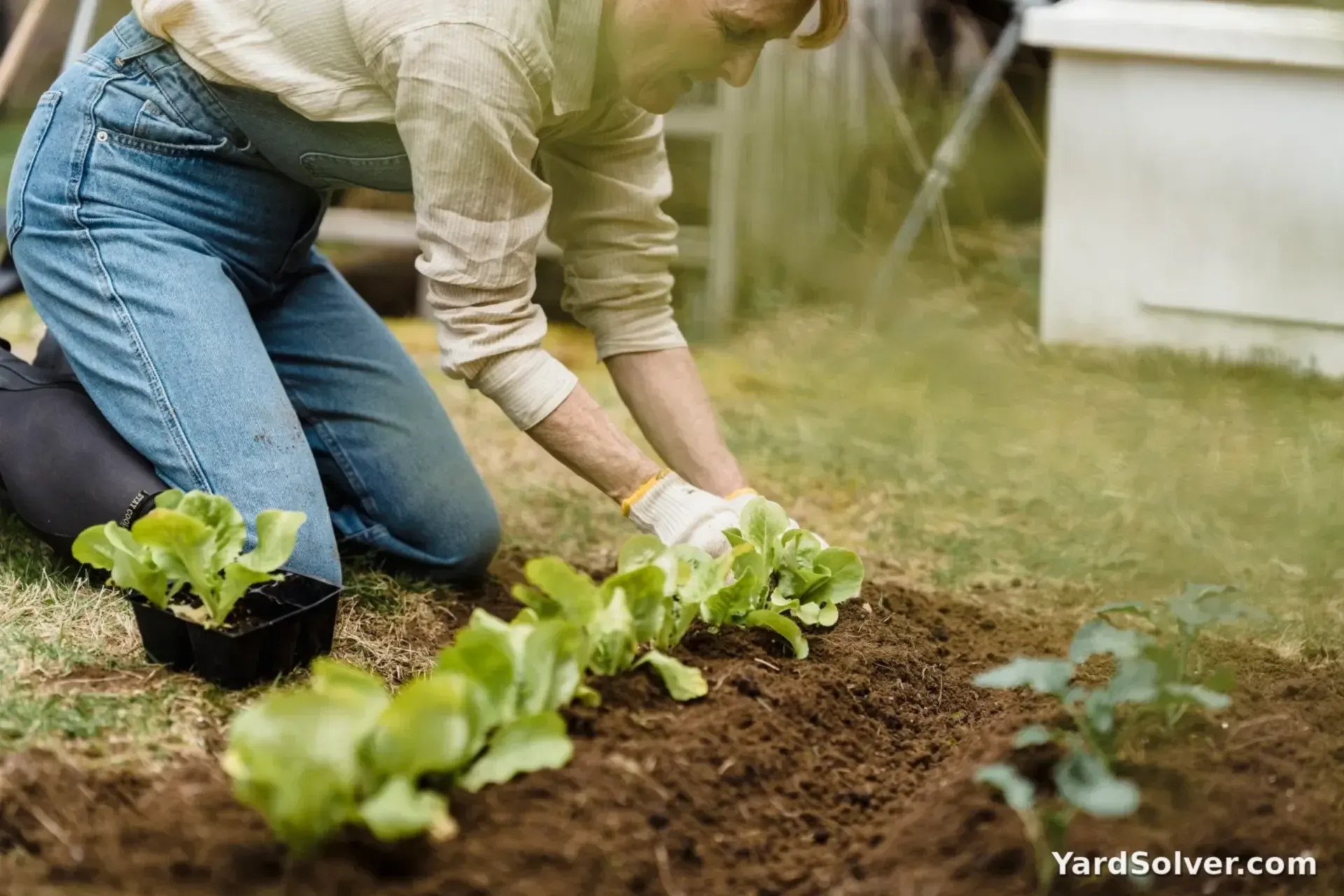
Every crop has two numbers. In-row spacing is the distance from one plant to the next along the row — this is the one the plant itself cares about, because it sets how much light, water and root room each plant gets. Between-row spacing is wider, and it is mostly for you and for the air: room to walk, hoe and harvest, and a corridor that lets foliage dry after rain. Planting in a raised bed instead of open rows? You can drop the wide row spacing and use the in-row figure in both directions — that grid is the basis of the square-foot column, covered in Step 2. Whichever layout you use, measure from stem to stem, not from leaf edge to leaf edge: a seedling looks lost at its correct spacing in April and exactly right in July.
The vegetable plant spacing chart
| Vegetable | In-row spacing | Between rows | Per square foot* | Thinning & notes |
|---|---|---|---|---|
| Tomatoes | 18–24 in | 36–48 in | 1 | Stake or trellis to hold 1 per sq ft; bush (determinate) types need the full 24 in |
| Peppers | 18 in | 24–36 in | 1 | No thinning — transplant at final spacing |
| Eggplant | 18–24 in | 24–36 in | 1 | Transplant at final spacing; take the wide end in hot climates |
| Cucumbers | 12 in on a trellis | 36–48 in | 2 | Left to sprawl, allow 36–48 in between plants instead; thin to one seedling per spot |
| Zucchini & summer squash | 24–36 in | 36–48 in | 1 per 9 sq ft | One plant fills a 3×3 ft square by midsummer — never crowd a second one in |
| Broccoli | 18 in | 24–36 in | 1 | Transplant at final spacing; side shoots follow the main head |
| Cauliflower | 18–24 in | 24–36 in | 1 | Needs the wide end of the range for full-size heads |
| Cabbage | 12–18 in | 24–36 in | 1 | Early varieties at 12 in; late storage types at 18 in |
| Kale | 12–18 in | 18–36 in | 1 | Pick the outer leaves and one plant keeps producing for months |
| Lettuce, head | 12 in | 12–18 in | 1 | Thin seedlings early or the heads stay small and loose |
| Lettuce, leaf | 6 in | 12–18 in | 4 | Cut-and-come-again: thin by harvesting the outer leaves |
| Spinach | 4–6 in | 12–18 in | 9 | Thin to final spacing when plants are about 2 in tall; eat the thinnings |
| Swiss chard | 6–12 in | 18–24 in | 4 | Thin to 6 in for steady picking, 12 in for the largest leaves |
| Carrots | 2–3 in | 12–18 in | 16 | Thin twice: to 1 in when the tops are 2 in tall, then to the final spacing |
| Beets | 3–4 in | 12–18 in | 9 | Each knobbly "seed" sprouts several plants — thinning is not optional |
| Radishes | 1–2 in | 6–12 in | 16 | Thin within days of sprouting; crowded radishes grow tops, not roots |
| Onions | 4–6 in | 12–18 in | 9 | Use thinnings as green onions; the closer end gives smaller bulbs |
| Garlic | 6 in | 12–18 in | 4 | Plant cloves pointy end up in fall; no thinning |
| Bush beans | 4–6 in | 18–30 in | 9 | Direct sow at final spacing; no thinning needed |
| Pole beans | 4–6 in | 36 in | 8 | Sow around the poles or along the trellis; no thinning |
| Peas | 2–3 in | 18–36 in | 8 | Sow thickly along a trellis and barely thin — the plants hold each other up |
| Corn | 12 in | 30–36 in | 4 | Always plant in blocks, never a single row, so wind pollination works |
| Basil | 12 in | 12–18 in | 1 | Pinch the growing tips to make plants bush out; small-leaf types fit 4 per sq ft |
| Potatoes | 12 in | 30–36 in | 1 | Hill up as the stems grow; in deep square-foot boxes, 4 per sq ft is the classic dense planting |
*Plants per square foot follows the square-foot gardening method: rich soil, steady water, and plants trained or pruned as noted. In ordinary soil, use the in-row and row columns instead.
Step 2 — Planting by the square foot in raised beds
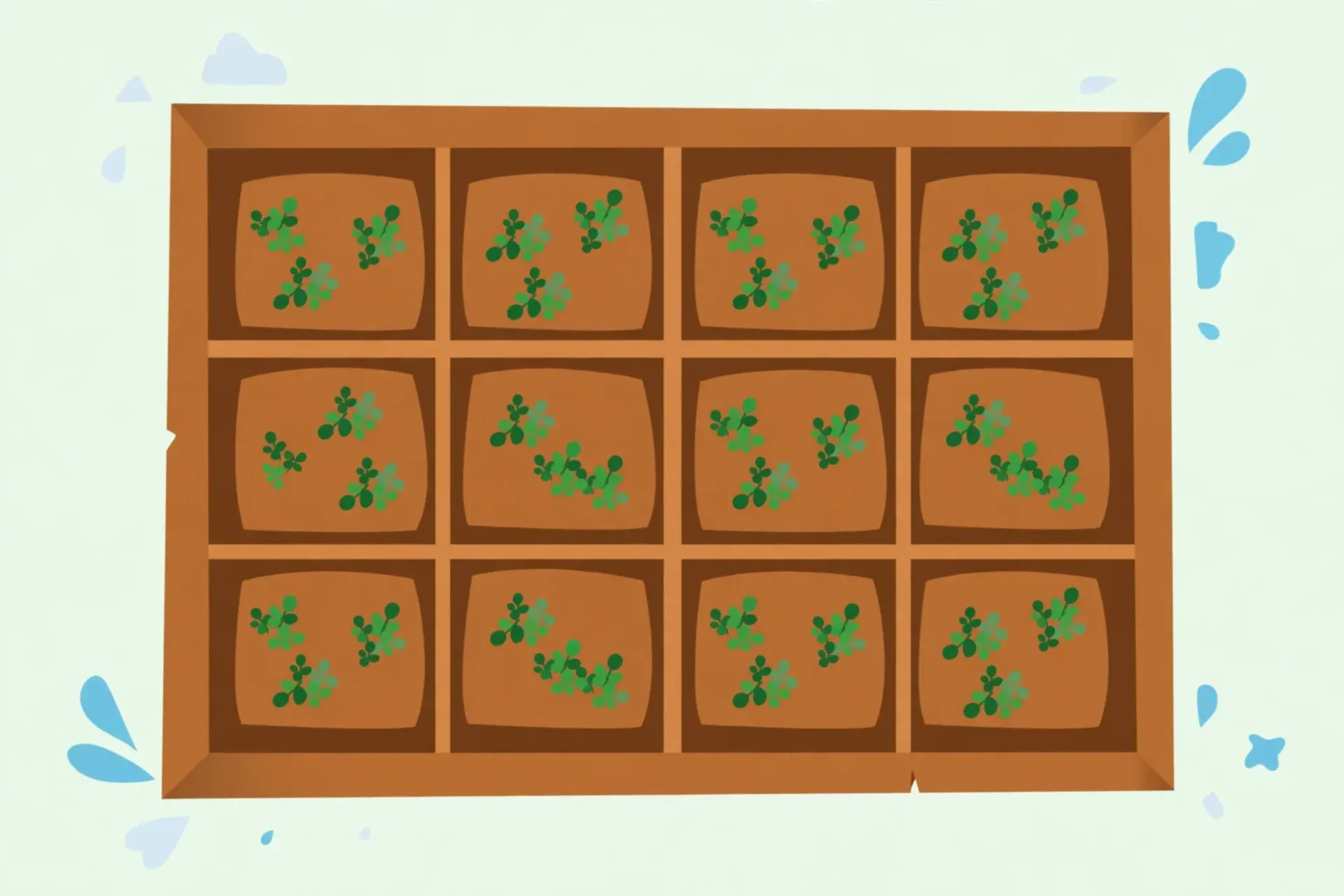
In a raised bed there are no walking rows, so spacing becomes a grid. Divide the bed into 1-foot squares — lath strips or string make it visible — and give each crop the number of squares the chart's last column implies: 1 square per tomato or pepper, 4 leaf lettuces in a square, 9 spinach, 16 carrots. The counts look startlingly dense next to row gardening, and planted in rich bed soil with reliable watering, they work — that density is the whole point of the method, and it is also why bed soil quality matters more than bed size. See the grid fully planted in our Raised Bed Garden Layout guide, which maps a complete 4×8, 4×4 and 2×8 bed square by square. If you are planning the bed from scratch, How to Plan a Vegetable Garden covers where beds, paths and sun fit together before a single plant is spaced.
Step 3 — Thin seedlings to the chart, on time
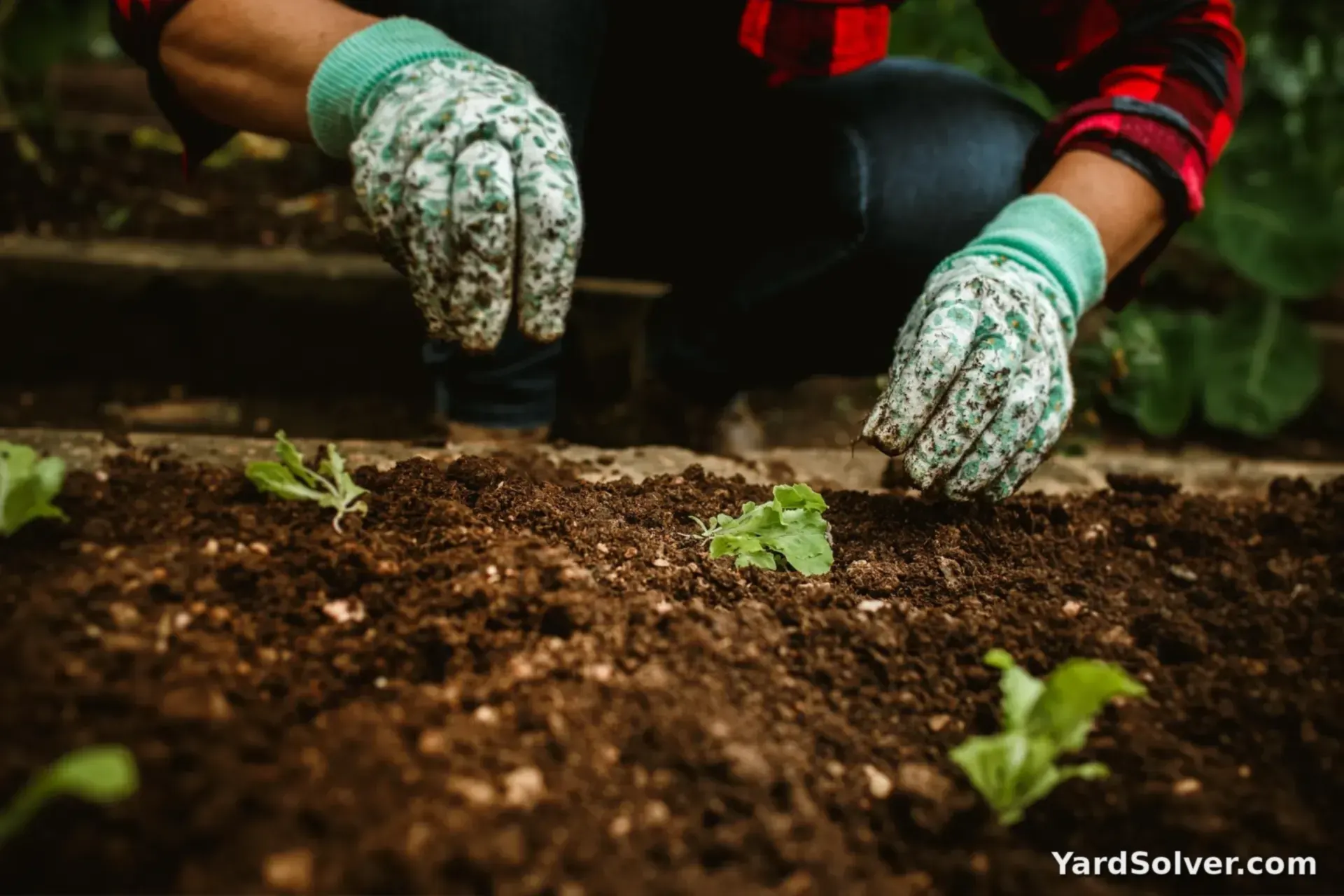
Transplants arrive at their final spacing, but direct-sown crops only get there if you thin them — the step gardeners skip because it feels wasteful, and the step that decides whether carrots fork into pebbles or grow into carrots. Three rules cover most of it. Thin early: seedlings compete from the day they sprout, so thin at the size the chart's notes give, not when the row looks crowded. Snip, don't pull, where roots intertwine — carrots and beets tangle underground, and pulling one can drag its keeper out too; scissors at soil level leave the survivor undisturbed. Thin in stages for root crops: carrots go to 1 inch first, then to their final 2–3 inches once you can see which are strongest — and the second thinning is often the first baby carrots of the year. Almost everything thinned from a salad row (lettuce, spinach, beet greens, green onions) is edible, which softens the ruthlessness considerably. Crop-by-crop sowing and thinning detail lives on each plant page — Carrots are the classic case study.
What goes wrong when spacing is off
Too close, and the failures compound quietly: roots split the water and feed, leaves shade leaves, and the still, damp air inside a crowded canopy is where fungal disease moves in — the harvest arrives small and late even when the plants look lush. Too far apart wastes the bed in the opposite way: bare soil dries out and invites weeds into every gap, and low crops like lettuce lose the shade of their neighbours that keeps them sweet in summer heat. The chart's ranges exist because both errors are real. When in doubt on a first season with a new crop, plant half the row at the tight end and half at the wide end — one season of your own garden's evidence is worth more than any chart, including this one.
Keep going
Put the chart to work in a whole bed: Raised Bed Garden Layout gives complete planting plans with exact counts for 4×8, 4×4 and 2×8 beds.
Decide what grows next to what with Companion Planting Basics, count plants for any bed size in the Plant Spacing Calculator, and arrange the season in the Garden Planner.
Questions people ask
How far apart should tomato plants be?
Plant tomatoes 18–24 inches apart in the row, with 3–4 feet between rows. A staked or trellised indeterminate tomato, pruned to one or two stems, does well at 18 inches; a bushy determinate type needs the full 24 inches. In a square-foot bed, give each tomato a full square foot of its own and train it upward.
What happens if vegetables are planted too close together?
Crowded plants compete for light, water and nutrients, so everything grows slower and yields less. The bigger problem is air: foliage that never dries after rain or watering is where fungal diseases start. Leafy crops forgive crowding for a while, but fruiting crops — tomatoes, peppers, squash — pay for it in small, late harvests.
Can I plant closer than the chart says?
Yes, with conditions. Intensive methods like square-foot gardening plant at the dense end of every range — that is exactly what the plants-per-square-foot column shows. It works because the soil is rich, water is steady and plants are fed and pruned on schedule. In ordinary garden soil with casual watering, the wider row spacings are the safer choice.
How many plants fit in a 4×8 raised bed?
A 4×8 bed holds 32 square feet, so the answer depends entirely on the mix: planted square-foot style it can carry 2 tomatoes, 8 cucumbers on a trellis, 4 peppers, 24 lettuce and over 100 small plants like carrots, spinach and radishes across a season. Our raised bed layout guide gives three complete bed plans with exact counts for every crop.
Comments & ratings
No comments yet.
Be the first to share your experience.