
Guides · Vegetable gardening · Published November 15, 2026
Shade Cloth for the Vegetable Garden: 30%, 50% or 70% — and How to Put It Up
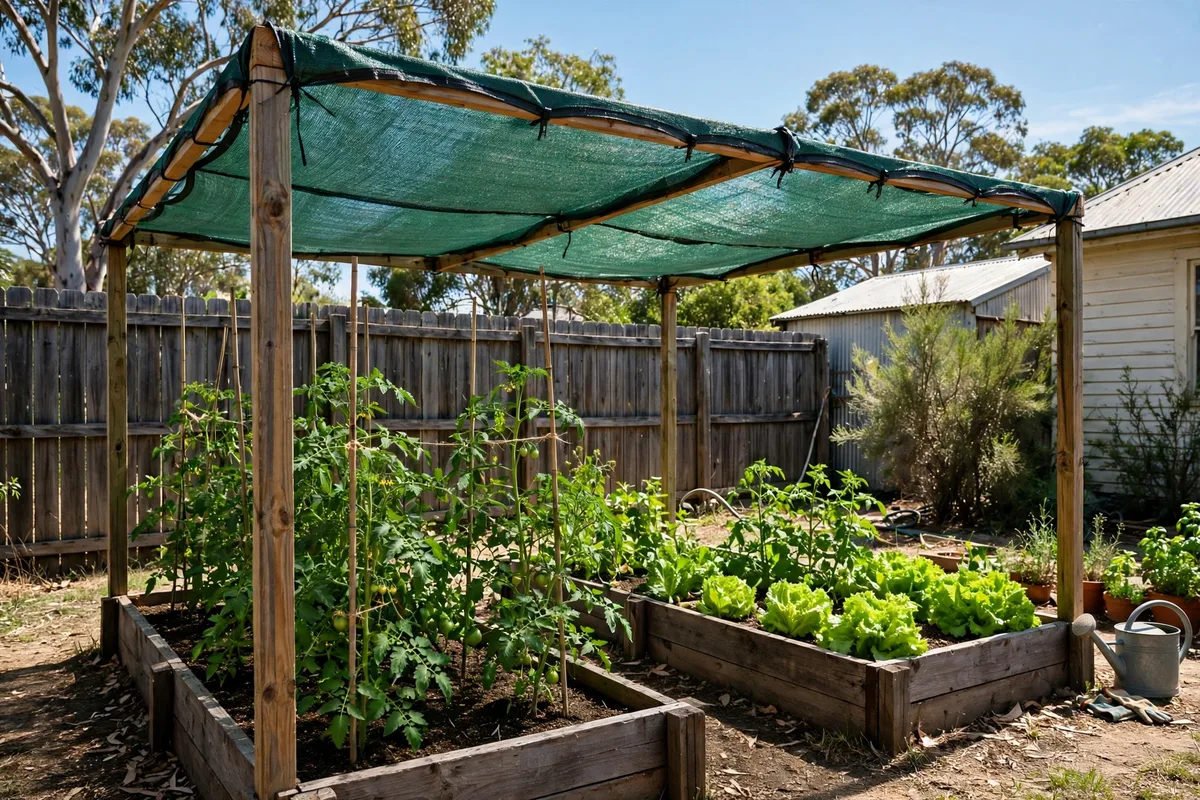
There is a week in every hot summer when the vegetable garden stops growing and starts merely surviving: tomatoes drop their blossoms unpollinated, lettuce turns bitter and bolts, peppers scald on their sunny side, and transplants wilt faster than you can water them. Growers in hot climates solved this long ago with the cheapest climate control ever sold — a knitted net that simply removes a measured slice of the sun. Choosing shade cloth for a vegetable garden is really choosing that slice: the percentage on the label is the share of light the cloth blocks, and matching it to the crop is the difference between rescue and a second problem. This guide gives the percentages by crop, the latitude rule for picking your default, and the installation details that make it work.
Step 1 — Read the heat signs before you buy anything
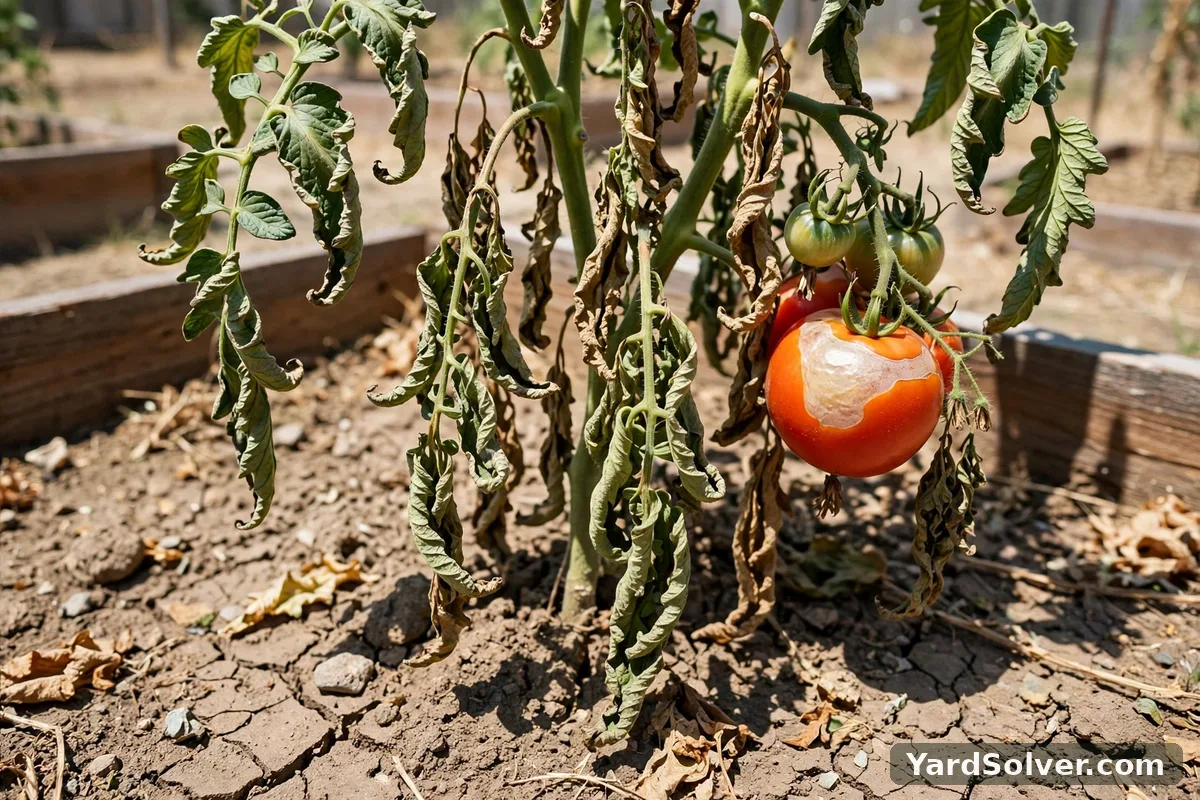
Plants announce heat stress clearly once you know the script. Leaves wilt at midday but recover by morning — the early warning. Then come the expensive symptoms: tomato and pepper blossoms dropping without setting fruit (pollen fails in sustained heat above about 32 °C / 90 °F), pale sunscald patches on exposed fruit, lettuce and other greens turning bitter and shooting to seed, and seedlings damping or scorching at the soil line. If your beds show two or more of these in a heat spell, shade will pay for itself in saved crop this season. Measure the light first if you are unsure how much sun the bed actually gets: the Sun & Shadow Calculator models the hours, and a bed already shaded part-day by a fence may need a lighter cloth than a fully exposed one.
Step 2 — Pick the percentage by crop, then adjust by latitude
| Shade cloth | Best for | Where it fits |
|---|---|---|
| 30% | Tomatoes, peppers, cucumbers, melons — the sun-lovers that only need the edge taken off | Northern gardens, coastal heat, first-time users |
| 50% | The all-rounder: most vegetables, mixed beds, herbs, young transplants | The default for hot inland and southern gardens; the Australian summer standard |
| 70% | Lettuce and leafy greens, seedlings, shade-preferring crops in extreme heat | Desert and tropical heat, Perth-style summers, polytunnels in heatwaves |
The latitude rule used by commercial growers is a good sanity check: around 30% north of the 40th parallel, 50% south of it, and 70% reserved for greens, seedlings and genuinely fierce climates. Australian readers heading into summer: 50% is the national all-round answer for vegetables, with 70% earning its place over lettuce and seedlings in the west and north — Australian growers report bed temperatures dropping 5–10 °C under cloth, which is the difference between bolting and harvesting. UK and European readers, honestly: shade cloth is a heatwave and polytunnel tool for you, not a season-long default — a fortnight of 30% during a hot spell is usually the whole job.
Crop pages on this site carry each plant's own heat behaviour — the blossom-drop thresholds on the tomato page, sunscald on the pepper page, and bolting on the lettuce page — so check your problem crop there before settling the percentage.
Step 3 — Put it up: air gap, tension, and the edges matter
Shade cloth works by interception, not insulation, and it needs airflow beneath it: hang it on hoops, a simple timber frame or wires so it floats 30–60 cm above the crop rather than lying on the leaves, where it would transfer heat straight onto the foliage and rub in wind. Over raised beds, PVC or metal hoops with snap clamps are the standard five-minute structure; over rows, a sloped single pitch sheds wind better than a flat sail. Pull the cloth taut — a flapping cloth shreds its own edges and batters plants — and fix it with proper clips or battens, not cable ties through the knit, which tear out. Leave the sides open: the goal is shaded light with moving air, not a tent. Most cloth is UV-stabilised and lasts several seasons if it comes down, dries, and stores out of the sun over winter.
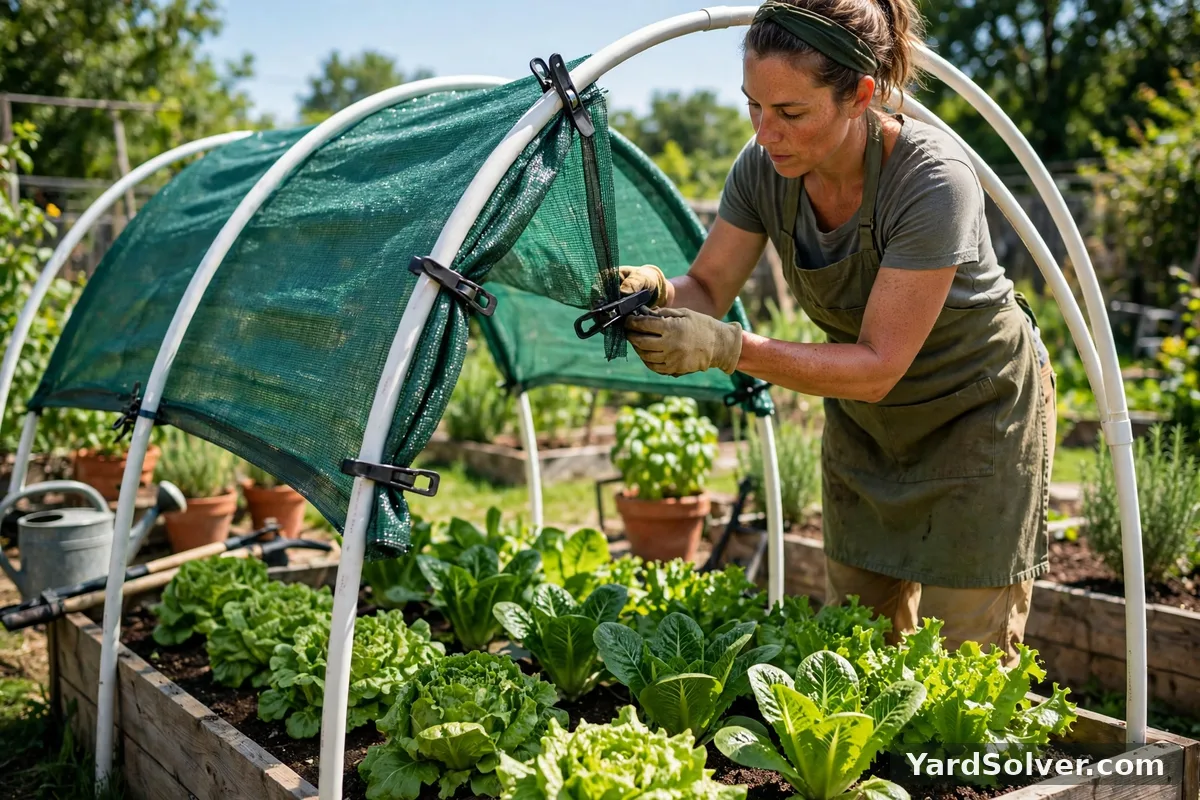
One honest caution: shade delays as well as protects. Fruiting crops under too-heavy cloth ripen late and yield less, so if a heatwave breaks, roll the cloth back — build the mounting so that removing it is a two-minute job, because in a changeable climate you will do it several times a season.
Step 4 — Shade is one half of heat management
Cloth cuts light; the other half is water and soil cover. Mulch the beds (the comparison in our mulch guide is linked below) so the moisture you add stays, water deeply in the early morning so plants meet the heat hydrated, and accept the seasonal truth our lettuce bolting guide explains: for cool-season greens in a hot month, shade plus succession sowing beats any single rescue. In Australia, treat shade cloth as standard summer infrastructure — up in November, down in March — rather than an emergency purchase made while the crop is already failing.
Keep going
Heat rarely travels alone — the same beds usually need their mulch renewed before summer. Mulch Types Compared matches materials to jobs, and the depth half of the answer is in How Deep Should Mulch Be.
Timing summer crops is a calendar job: the Planting Calendar for your region shows which crops still have time to mature if a heat-damaged planting has to be replaced.
Questions people ask
What percentage shade cloth is best for tomatoes?
30% in most climates — tomatoes are sun-lovers that only need the midday edge removed to stop blossom drop and sunscald. In desert or tropical heat, 40–50% is justified; heavier cloth delays ripening and cuts yield.
Does shade cloth really lower temperature?
Yes — growers in hot Australian conditions report bed temperatures 5–10 °C lower under 50% cloth, mainly because the cloth intercepts radiant heat before it reaches leaves and soil while still passing diffused light for growth.
Can I leave shade cloth on all season?
In consistently hot climates, yes — that is standard practice in much of Australia. In changeable northern climates, build the mount so the cloth comes off in minutes: fruiting crops under unnecessary shade ripen late and yield less once the heat breaks.
Comments & ratings
No comments yet.
Be the first to share your experience.