
Plant Library · Vegetables
🍅 How to Grow Tomato
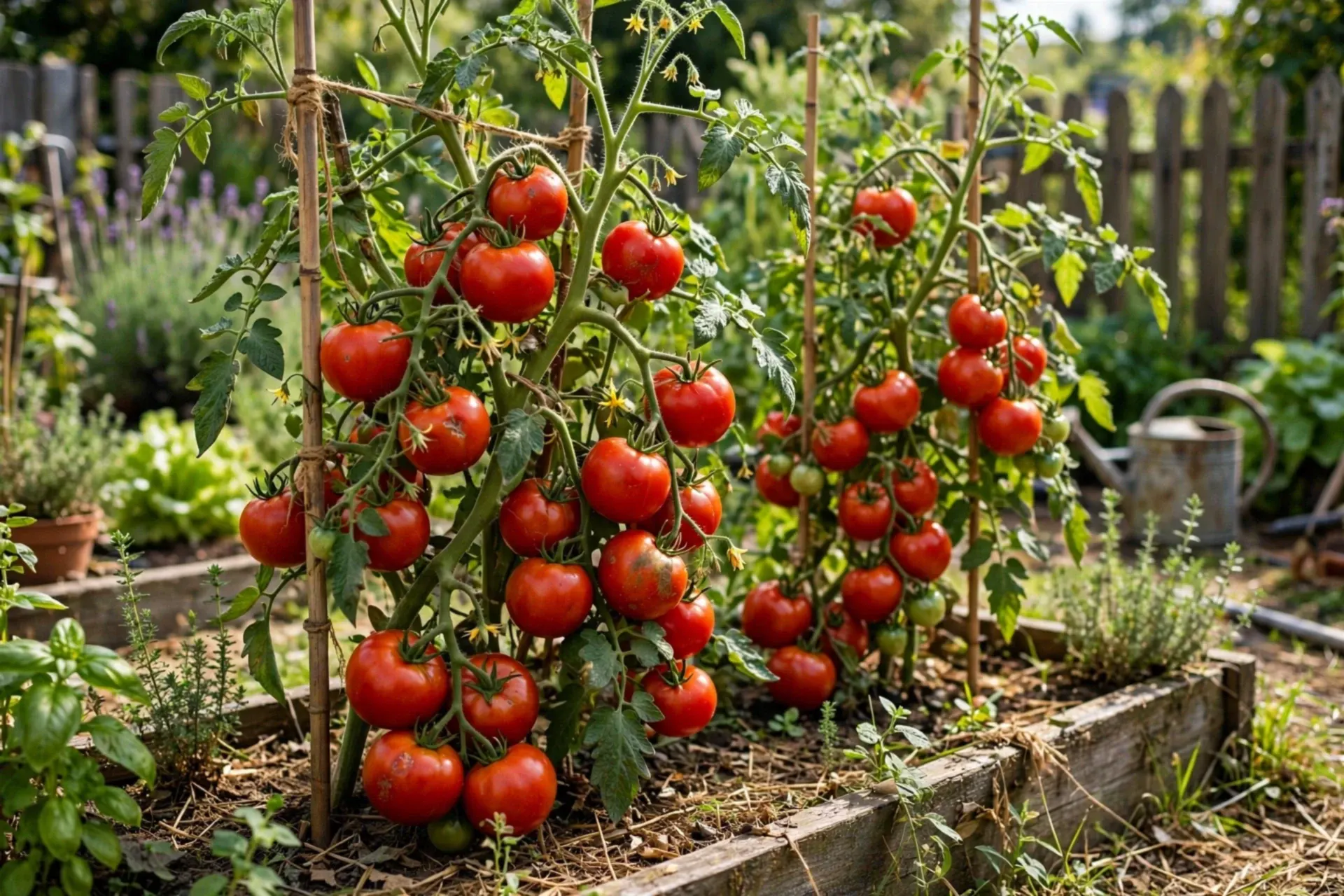
Loves warmth — the safer outdoor date matters most for tomatoes. Tomatoes are a warm-season crop: start seeds indoors about 7 weeks before your last frost and move plants outside a couple of weeks after the last frost, once the soil and nights are warm.
Grow Tomato with us — step by step
Everything for this plant is written step by step below — what to do, and exactly when. Read it through first if you like: you can grow it entirely on your own with that guide. Or start with us here — tell us your planting day and we lay out your personal schedule on this page, every next step on its own day, counted from your planting date. No guessing, no forgetting.
Step 1 — today: Plant out your young Tomato plants today (hardened off first), spaced 24–36 in apart, and water them in deeply. Starting from seed instead? Sow indoors now, 1/4 in deep, and this same schedule counts from transplant day.
Tomato at a glance
Sow indoors: 7 weeks before last frost
Move outside: 2 weeks after last frost
Spacing: 24–36 in · Seed depth: 1/4 in
Sun: Full sun
Water: Deep and regular; keep leaves dry
Harvest: 60–85 days after transplant
Timing counts from your average last spring frost — get your own dates in the Planting Calendar. Guidance follows standard extension-service practice for Canada and the US.
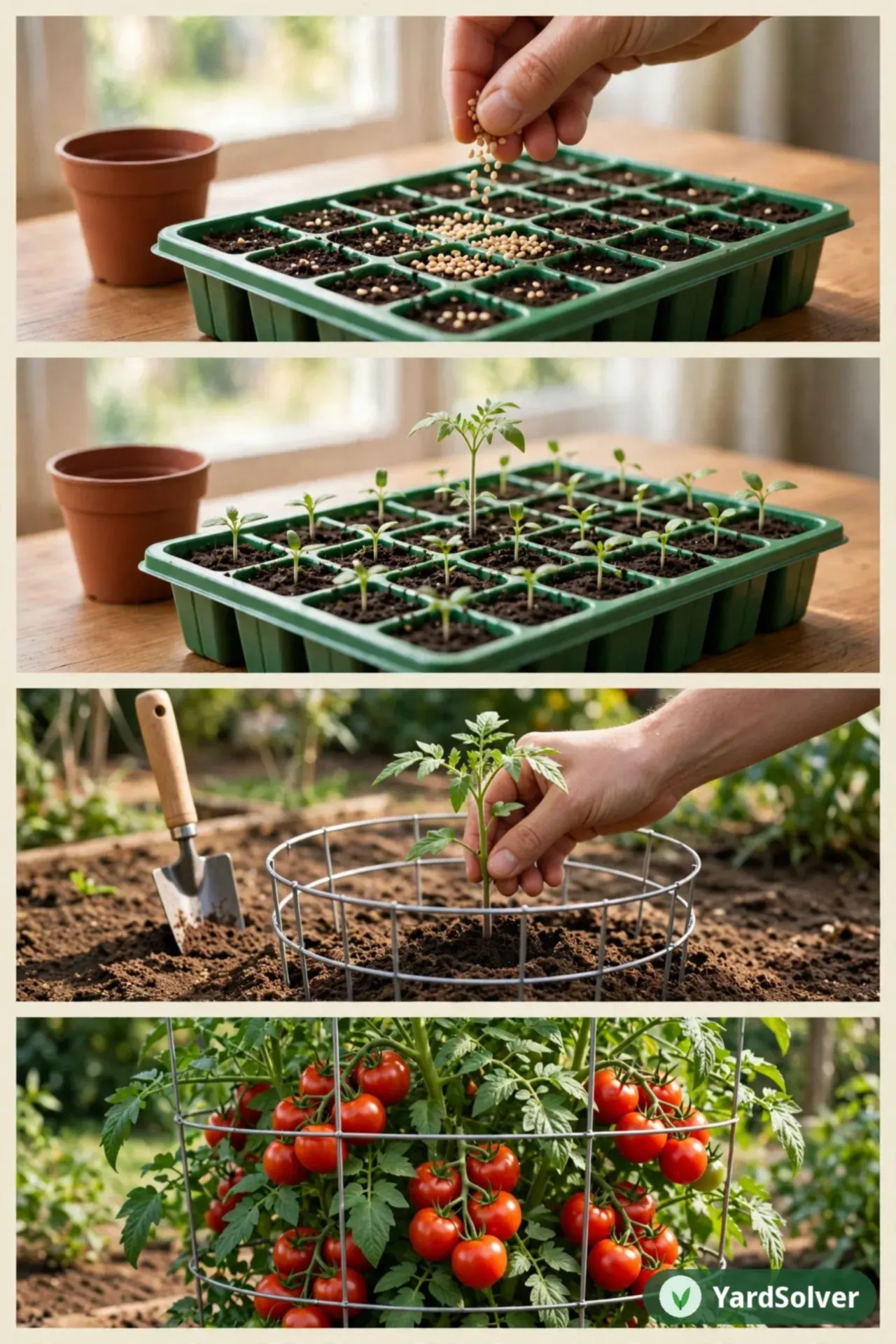
How to plant and grow tomato, step by step
Step 1 — Time it right
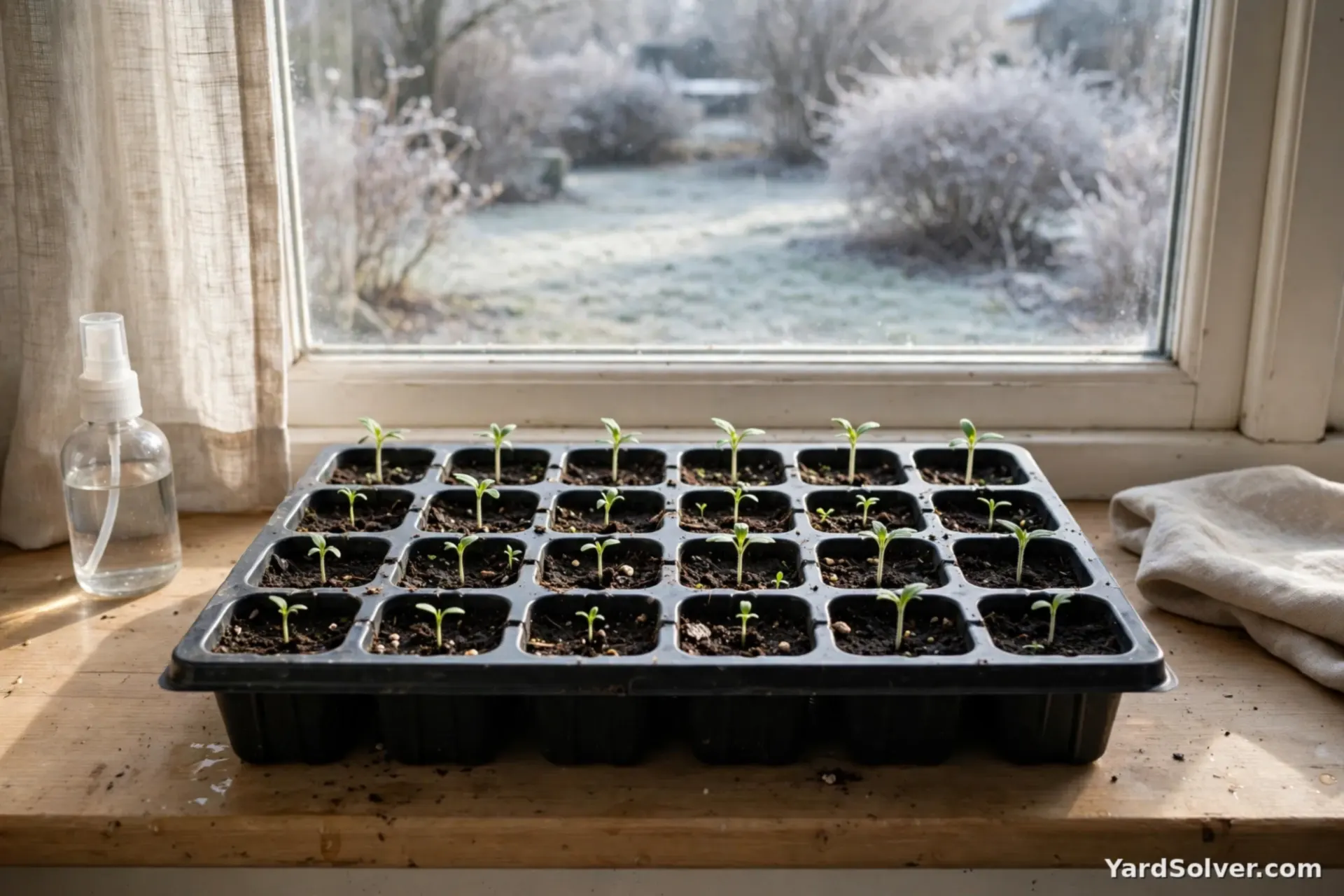
Sow indoors: 7 weeks before last frost; Move outside: 2 weeks after last frost. All dates count from your average last spring frost — the Planting Calendar turns them into real dates for your garden. Tomatoes are a warm-season crop: start seeds indoors about 7 weeks before your last frost and move plants outside a couple of weeks after the last frost, once the soil and nights are warm.
Step 2 — Prepare the spot
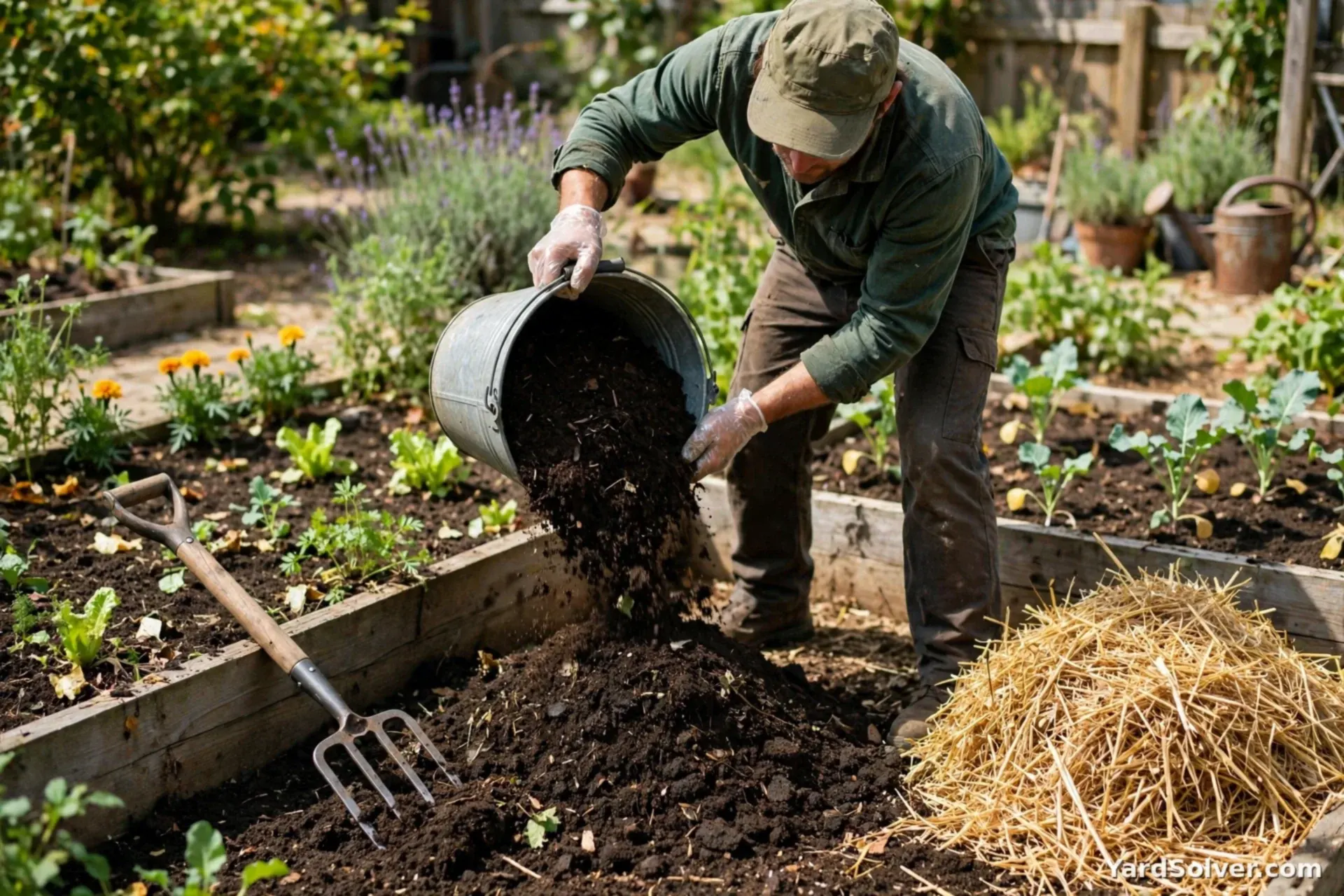
Sun: Full sun. Rich soil with compost worked in before planting, and a mulch on top once plants are growing. For these hungry, thirsty crops, steady moisture matters more than anything else. Work out how much you need with the Garden Mix Calculator or the Raised Bed Soil Calculator.
Step 3 — Sow and plant out
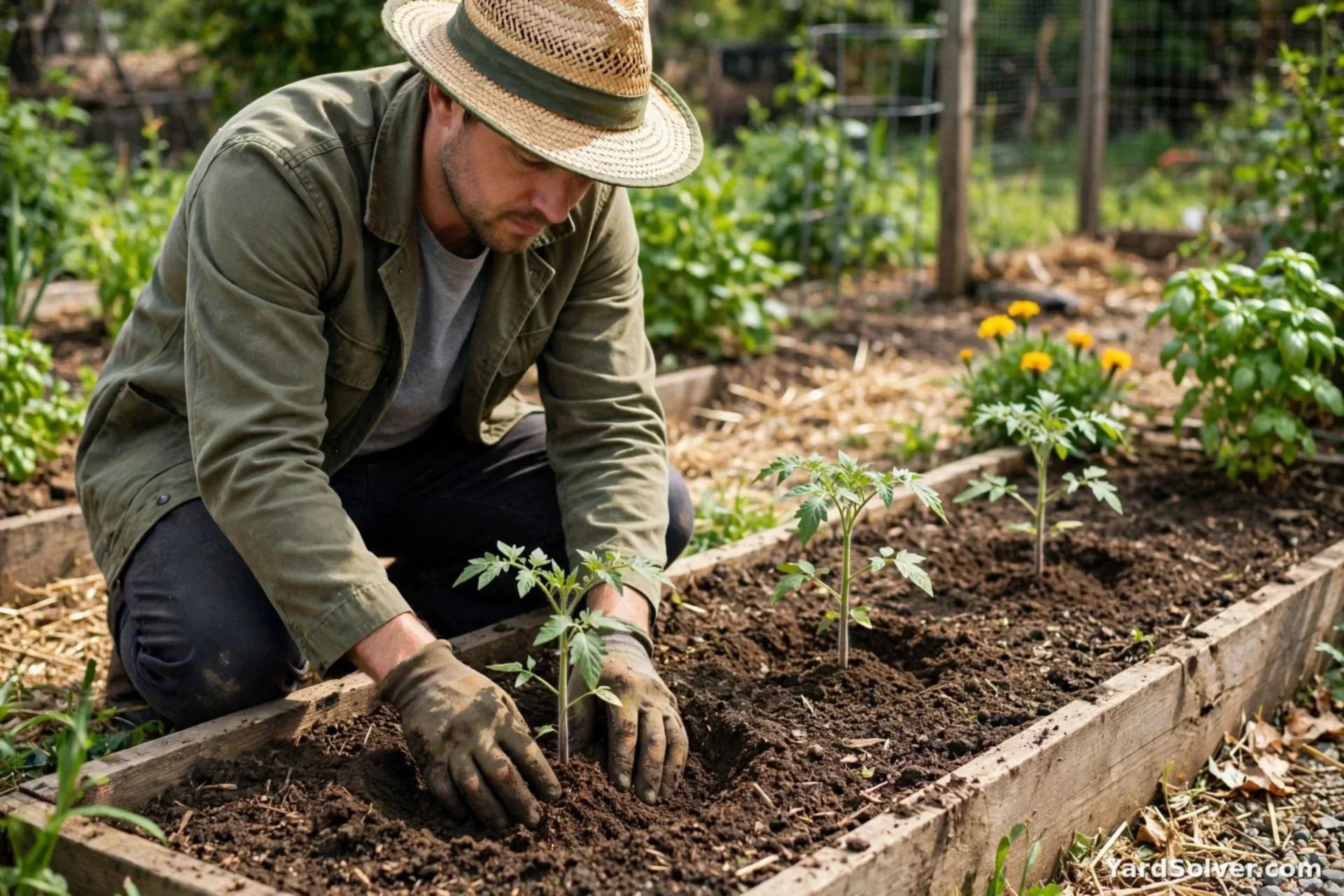
Start seed indoors 7 weeks before last frost, sowing 1/4 in deep. Grow seedlings on in strong light, then harden them off over 7–10 days (see How to Harden Off Seedlings) and move them outside 2 weeks after last frost, spaced 24–36 in apart. The Plant Spacing Calculator turns that spacing into plants-per-bed.
Step 4 — Water and feed
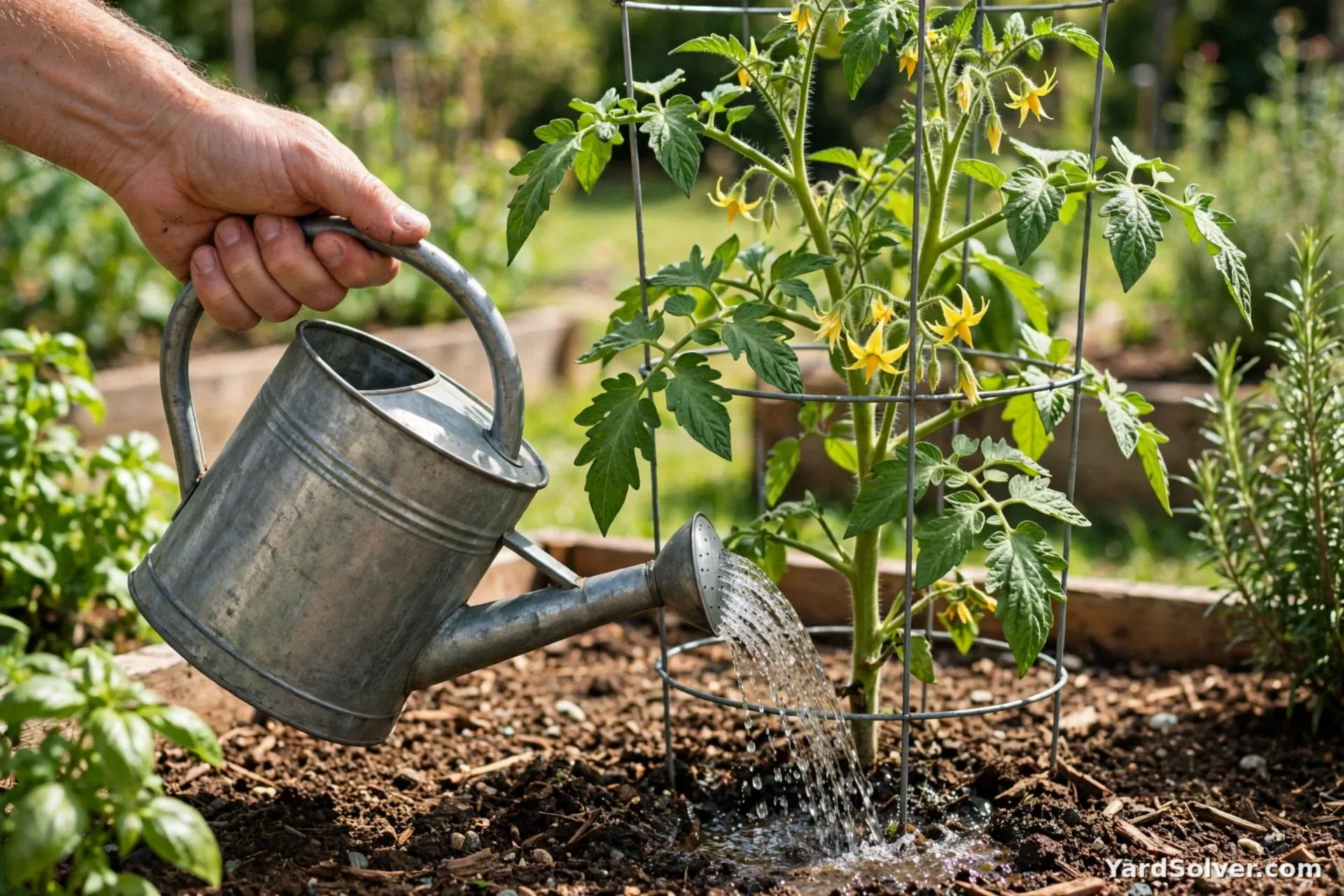
Water: Deep and regular; keep leaves dry. First feed: around day 21 — Feed with a balanced tomato fertilizer when the first flowers appear, and check the cage or stake is in place. The Fertilizer Calculator turns a bed size into the right amount.
Step 5 — Care and the problems to watch for
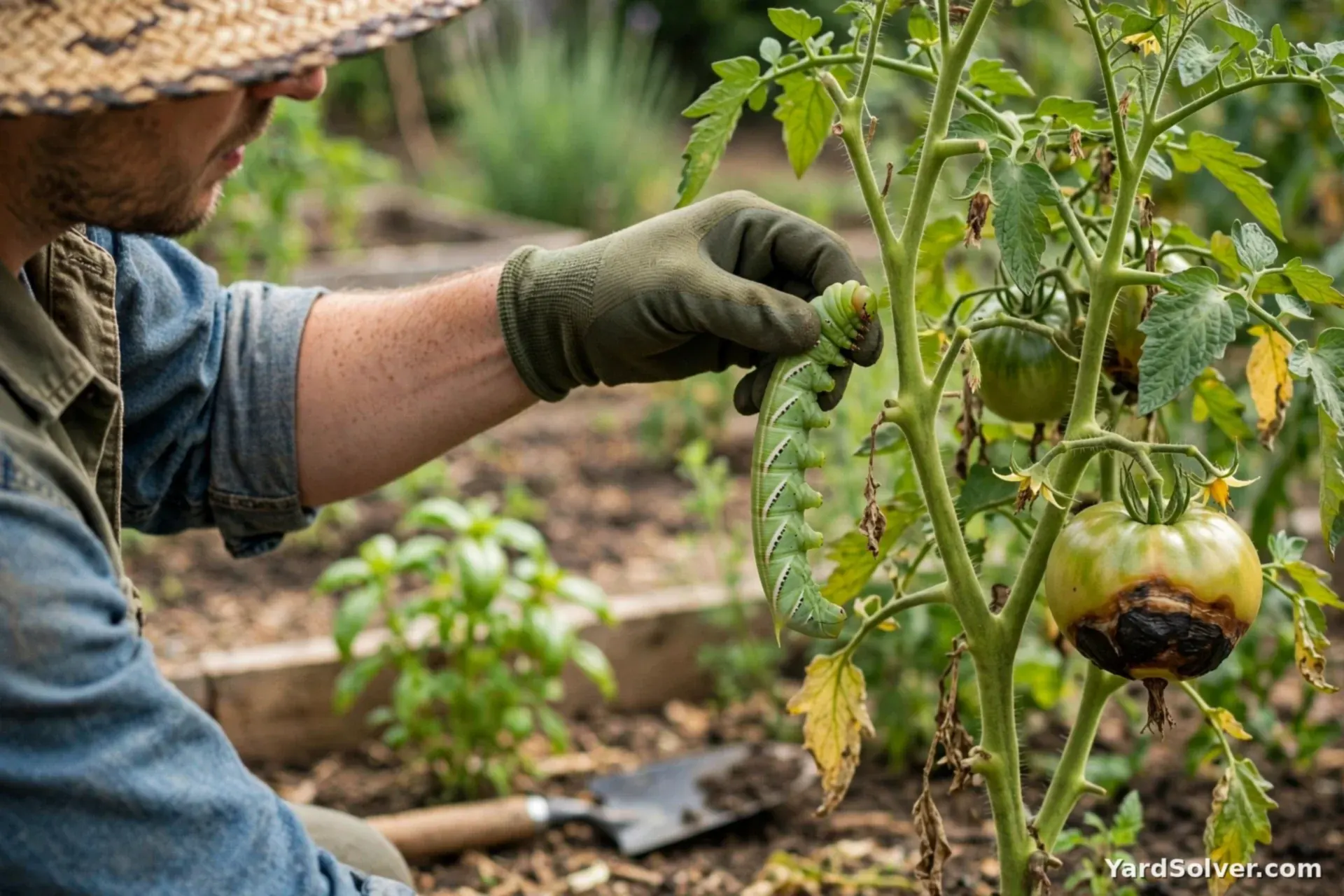
- Blossom end rot — dark sunken patches on the fruit bottom; comes from uneven watering, so keep moisture steady and mulch.
- Hornworms — big green caterpillars that strip leaves overnight; pick them off by hand.
- Early blight — yellowing lower leaves with dark spots; water at the base and leave space for air.
Take care: Some people find the acid in tomatoes triggers heartburn or reflux. Tomatoes are in the nightshade family, and some people who are sensitive to nightshades choose to limit them. The leaves and stems are not edible — only the fruit is eaten.
Step 6 — Harvest
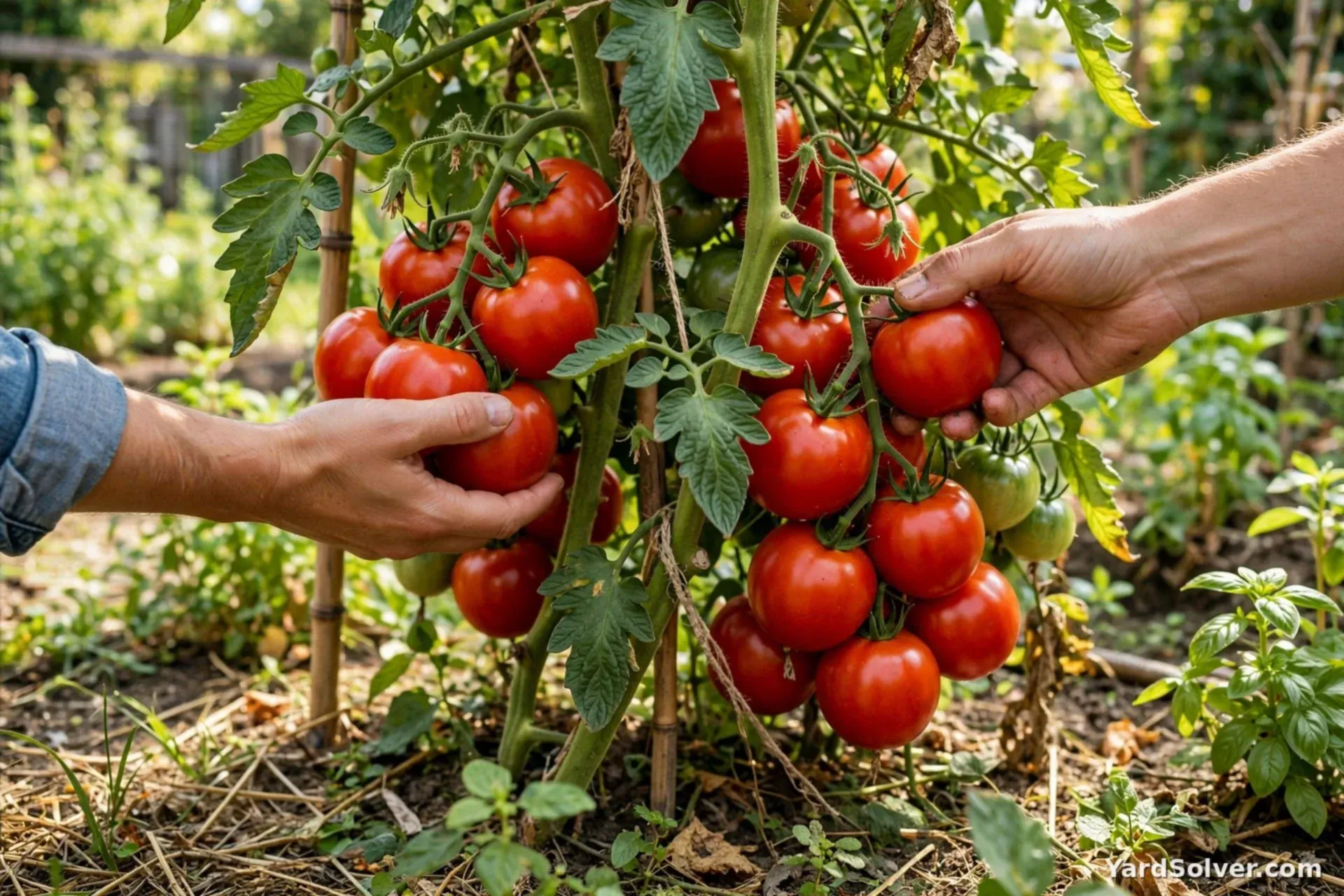
Ready in: 60–85 days after transplant. Harvest runs from about day 60 to 85 after transplant — pick fruit as it colours up.
📅 Your personal Tomato schedule
Counted from your planting day — not a generic calendar. Day 0 is the day the seed went in the ground or the young plant went out.
Varieties worth growing
| Variety | Colour | Why gardeners like it |
|---|---|---|
| Roma | Red | Plum-shaped and meaty with few seeds — the classic choice for sauces and paste |
| Beefsteak | Red | Very large fruit made for slicing onto sandwiches and burgers |
| Sungold | Orange | A cherry tomato famous for being extra sweet, almost like candy |
| Brandywine | Pink-red | A slow heirloom with big, rich-flavoured fruit — worth the wait |
| Early Girl | Red | Medium-sized and early, a good pick where summers are short |
Good for you — and take care
Benefits
- Rich in vitamin C, which supports the immune system
- A good source of lycopene, the red pigment that gives ripe tomatoes their colour
- Provides vitamin K and potassium
- High water content helps you stay hydrated
- Low in calories and provides some fibre
Take care
- Some people find the acid in tomatoes triggers heartburn or reflux
- Tomatoes are in the nightshade family, and some people who are sensitive to nightshades choose to limit them
- The leaves and stems are not edible — only the fruit is eaten
A little history — and one good fact
Tomatoes come from the mountains of western South America, where small wild tomatoes still grow today. They were grown in Mexico long before Spanish explorers carried them to Europe in the 1500s, and from there they slowly spread around the world. For many years some Europeans grew them only as pretty garden plants, wrongly fearing the fruit was poisonous, before the tomato became the kitchen favourite it is now.
Fun fact: Botanically, a tomato is a fruit — a berry, in fact — even though cooks treat it as a vegetable.
Keep going
Guides: How to Start Tomato Seeds Indoors · Why Are My Seedlings Leggy? · How to Harden Off Seedlings
Calculators: Plant Spacing Calculator · Seed Calculator · Fertilizer Calculator · Garden Mix Calculator
More vegetables: Pepper · Cucumber · Zucchini
← Back to the Plant Library · Get your personal planting dates
Questions people ask
When do I plant tomato?
Count from your average last spring frost: sow indoors 7 weeks before last frost; move outside 2 weeks after last frost. Tomatoes are a warm-season crop: start seeds indoors about 7 weeks before your last frost and move plants outside a couple of weeks after the last frost, once the soil and nights are warm.
How far apart do I space tomato?
Space plants 24–36 in apart, with seed sown 1/4 in deep. Sun: full sun.
When is tomato ready to harvest?
60–85 days after transplant. Loves warmth — the safer outdoor date matters most for tomatoes.