
Guides · Winter storage · Published October 31, 2026
How to Store Dahlia Tubers Over Winter
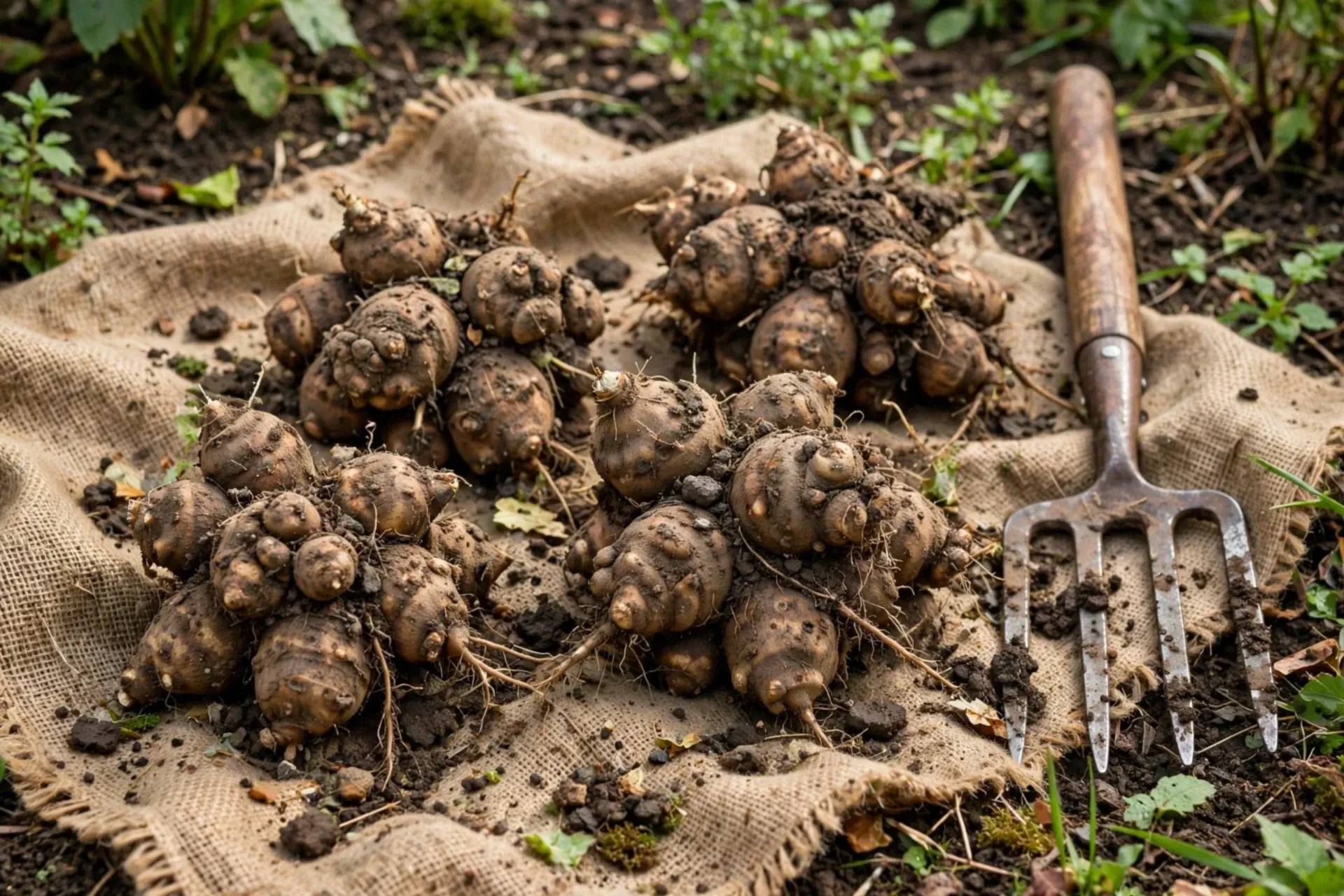
Dahlias give you mountains of flowers — but their tubers cannot survive frozen ground. The autumn ritual of digging and storing them takes an afternoon and pays for itself every spring: stored tubers mean free, bigger plants. The same method works for cannas and gladiolus.
Step 1 — Wait for the first frost to blacken the foliage
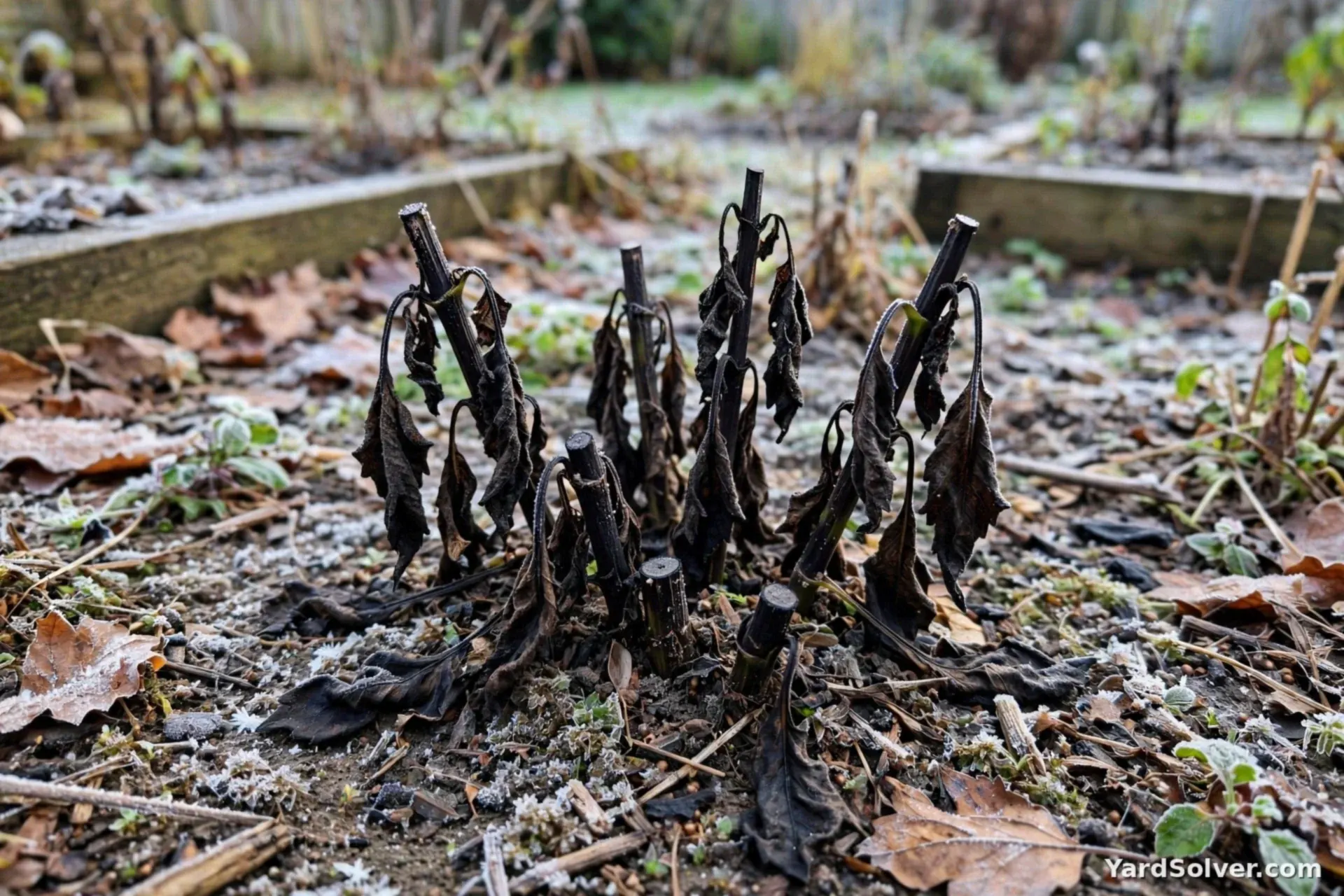
That ugly blackened top is the signal: the plant has pushed its last energy down into the tubers. Cut the stems down to about 4–6 inches, leaving a handle. If no frost has come by late fall, dig anyway before the ground freezes.
Step 2 — Lift gently with a fork
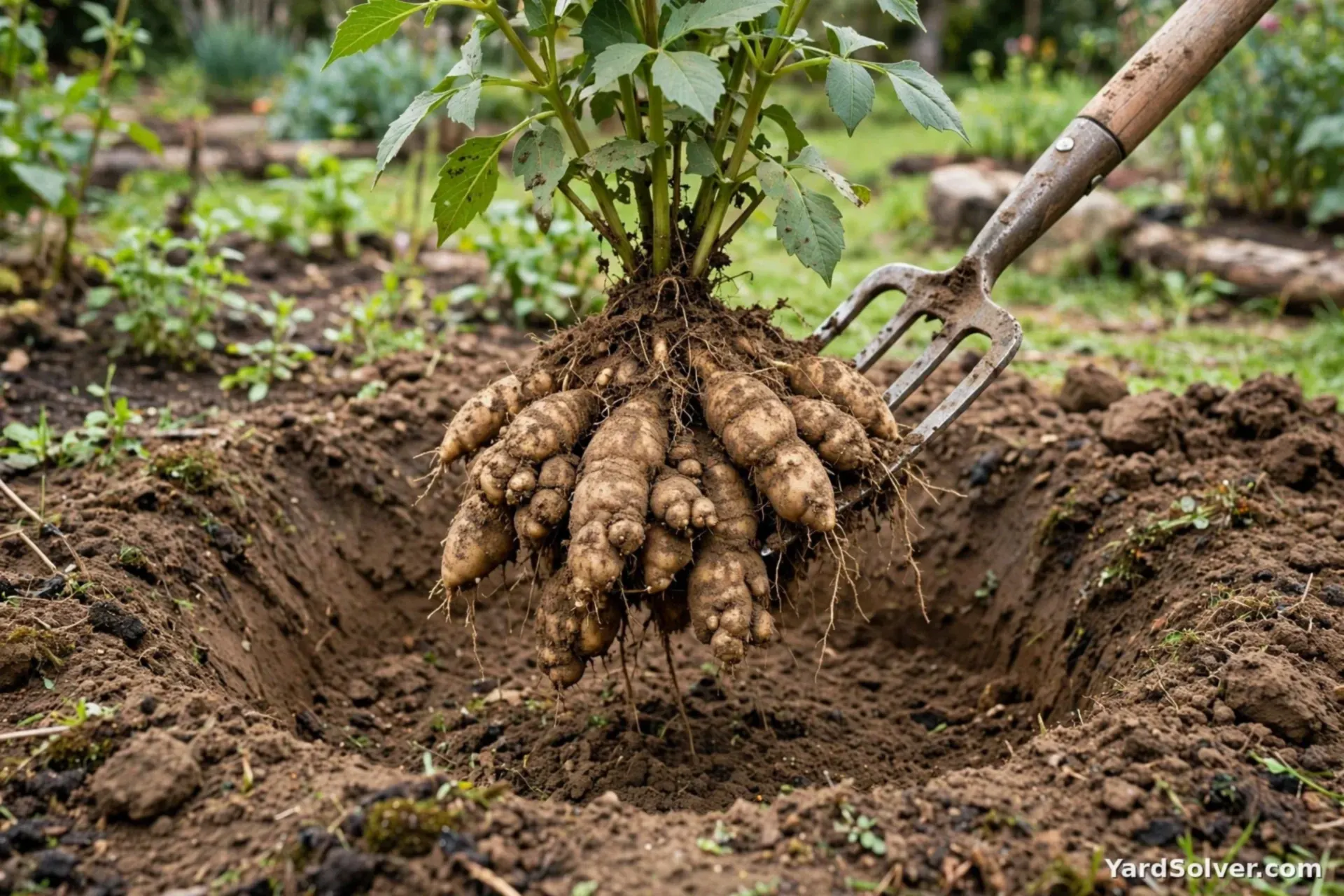
Loosen the soil in a wide circle and lift the whole clump — dahlia tubers snap easily, and a broken neck is a dead tuber. Shake off the loose soil.
Step 3 — Label right now, not later
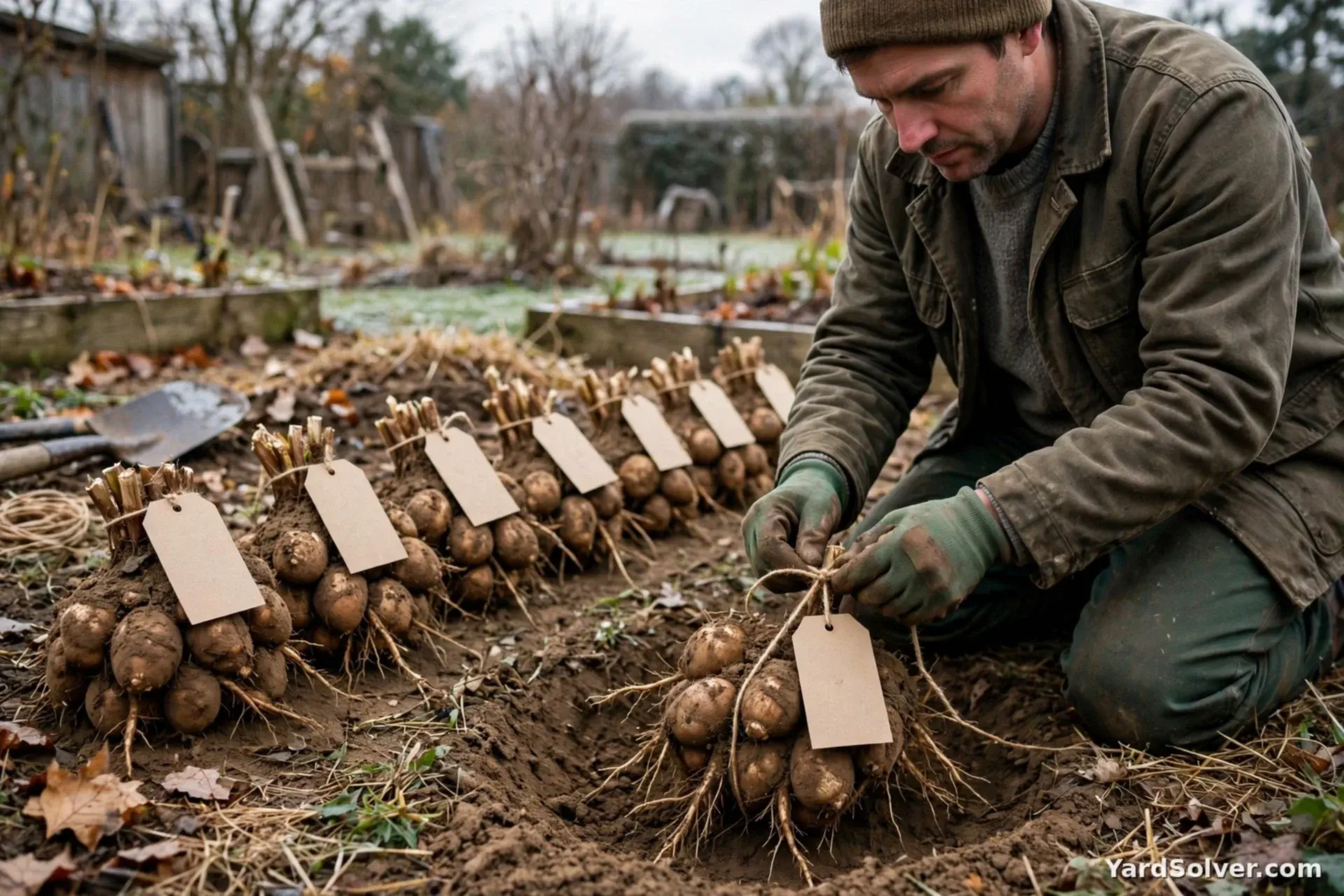
Every clump looks identical by January. Tie a name tag to each clump the day you dig it. Future-you, staring at six brown clumps in March, will be deeply grateful.
Step 4 — Dry and clean
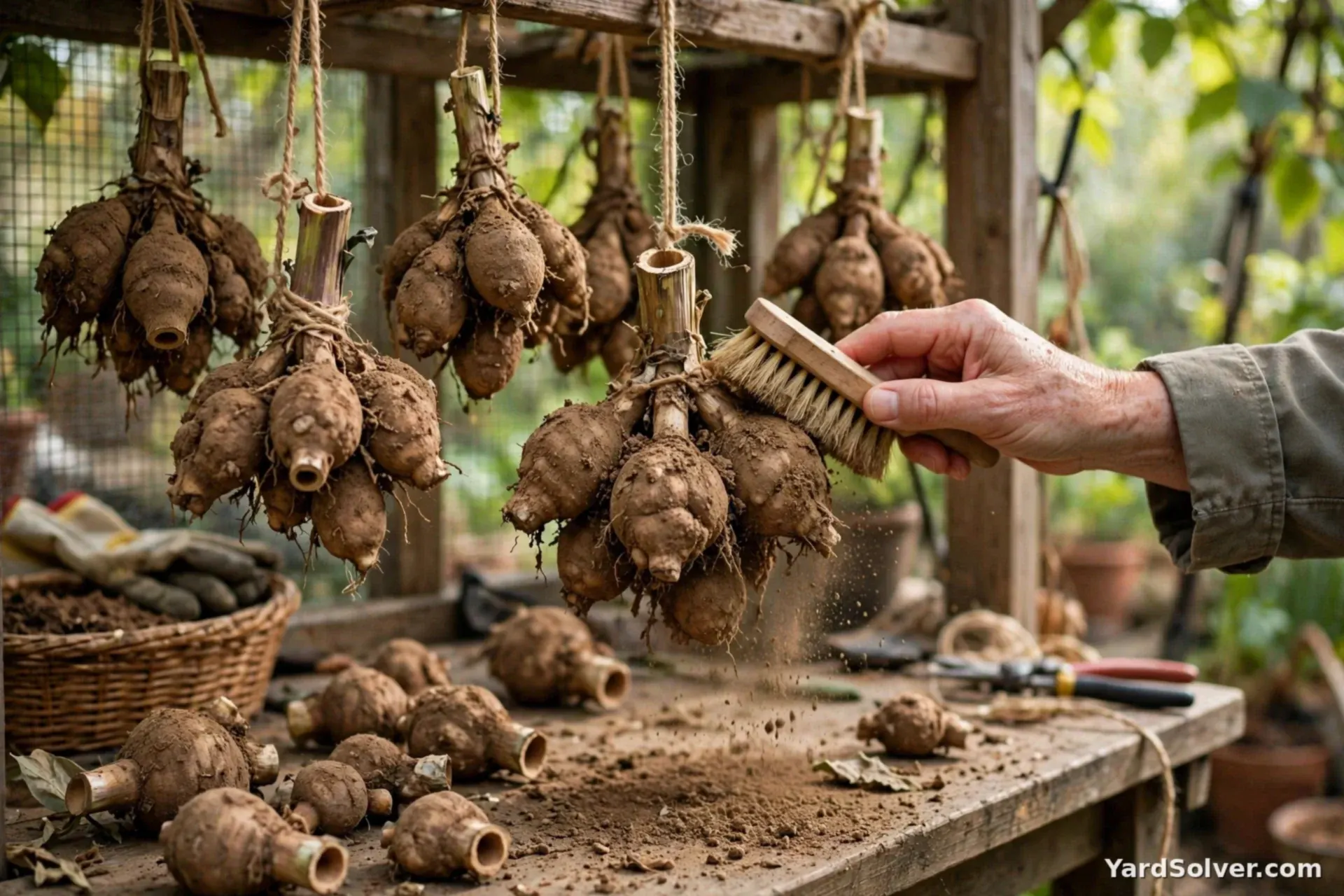
Let clumps dry upside down in a shady, airy spot for a day so moisture drains from the hollow stems. Then brush the soil off gently. (You can rinse them, but they must dry completely afterward — trapped moisture is rot's invitation.)
Step 5 — Pack them in a barely-damp medium
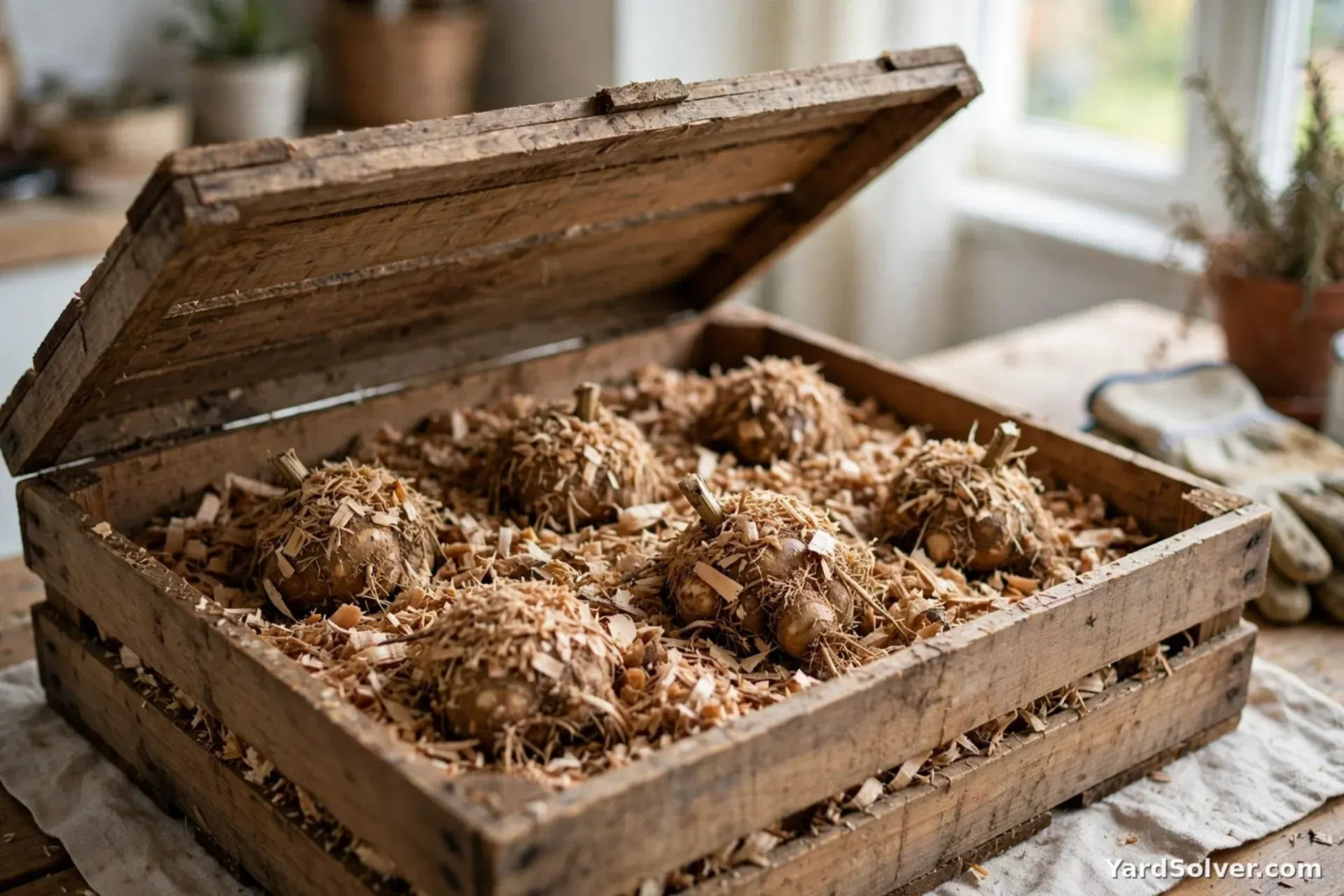
Set clumps in a box or crate with peat, vermiculite, wood shavings or shredded newspaper, barely damp — like a wrung-out sponge. Cover the tubers, keep clumps from pressing hard against each other, and leave the lid ajar for air.
Step 6 — Store cool and dark: 40–50°F (4–10°C)
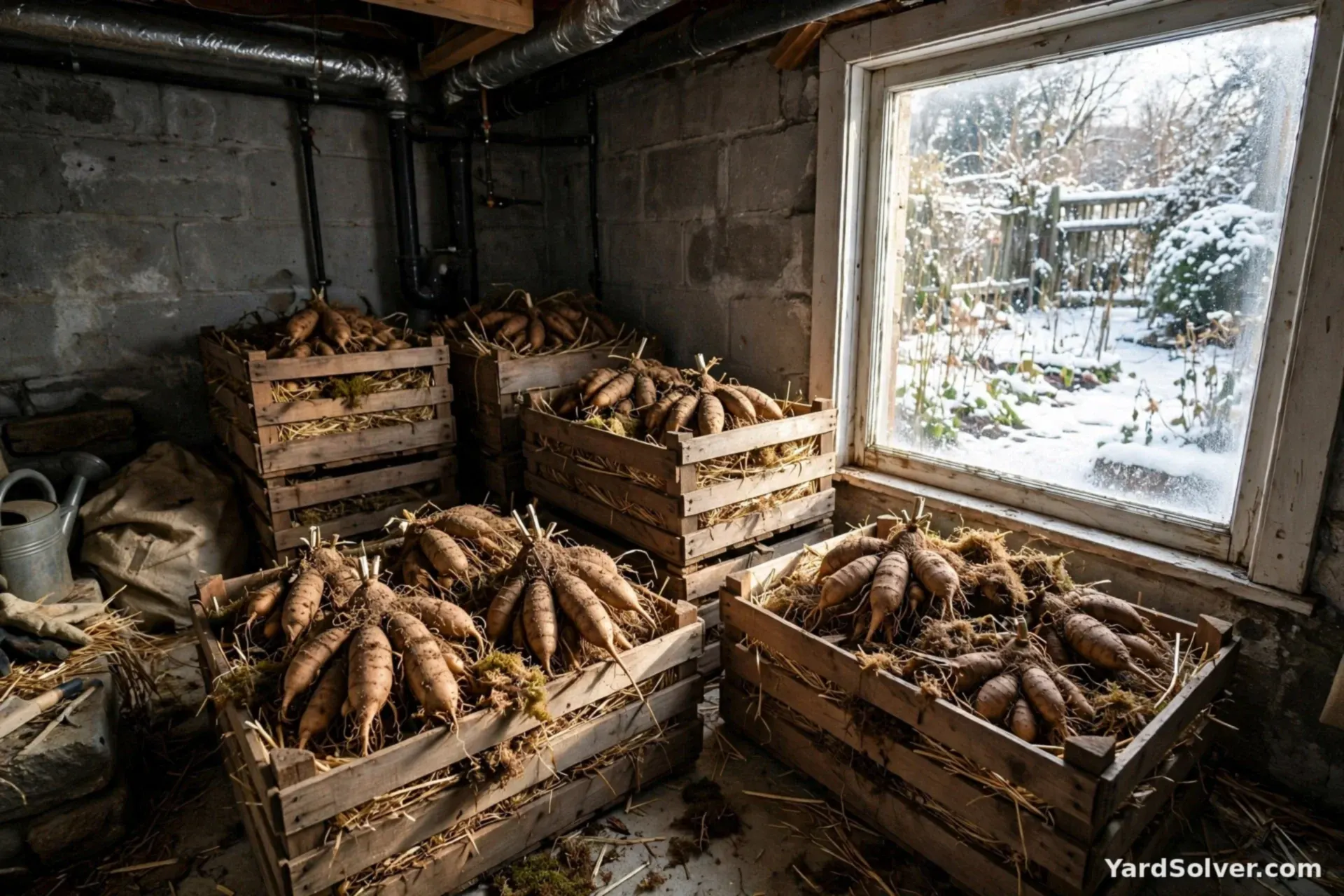
An unheated basement corner, cold cellar or insulated garage is the target zone. Too warm and they sprout early or dry out; freezing kills them outright. Avoid storing beside ripening fruit — the ethylene gas encourages sprouting.
Step 7 — Check monthly, divide in spring
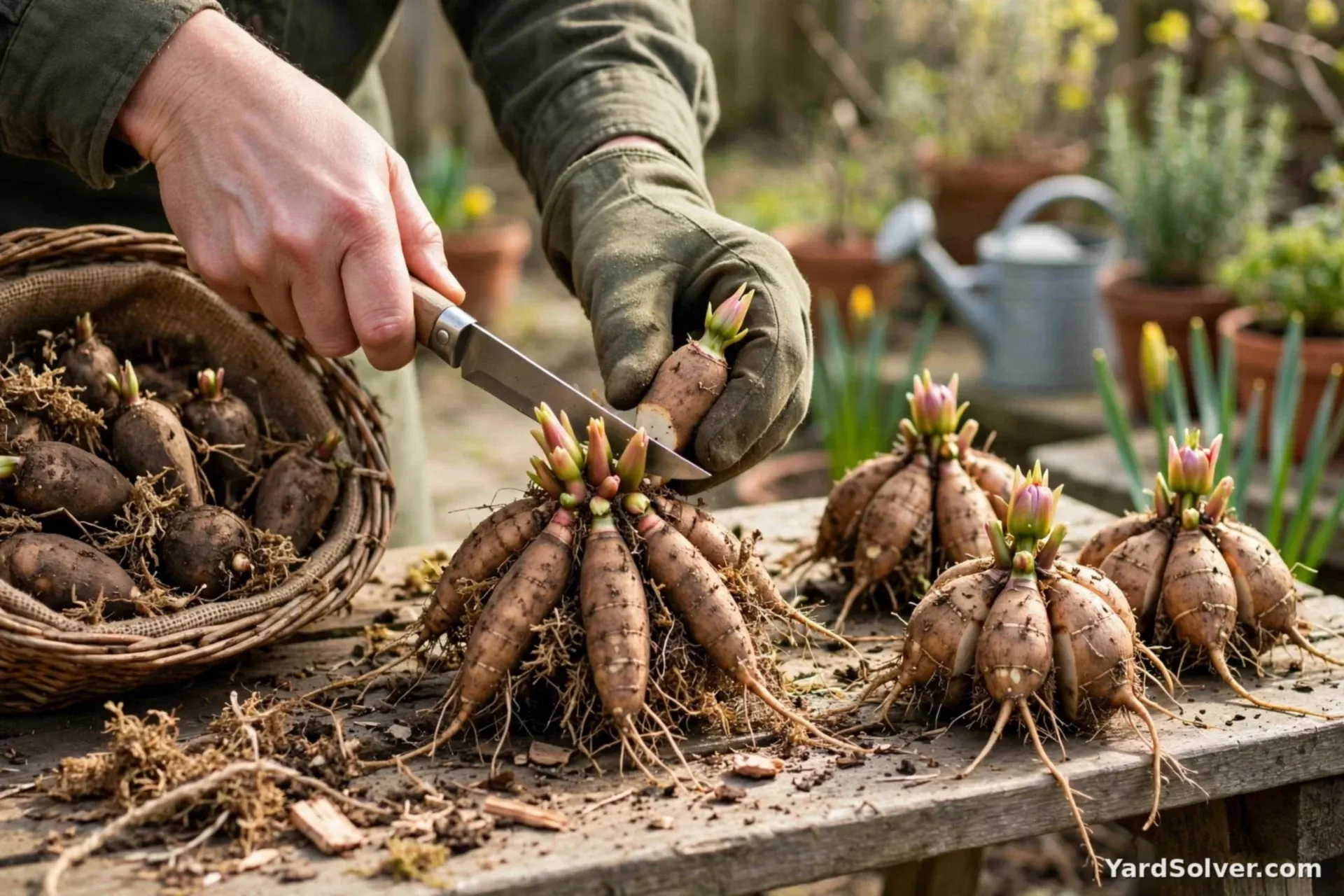
Once a month: mist lightly if tubers are shrivelling, cut away anything soft or rotten before it spreads. Divide in spring when the eyes show at the crown — each piece needs crown, eye and tuber. Timing for replanting is on the Planting Calendar.
Keep going
Part of the full fall routine: Putting Your Garden to Bed · How to Protect Plants From Frost · Winterize Garden Tools.
Questions people ask
Can dahlias stay in the ground over winter?
Only where the ground never freezes hard (roughly zone 8 and warmer), under thick mulch. In Canada and most of the US the tubers freeze and rot — digging is the reliable route.
My stored tubers look shrivelled. Dead?
Usually not — shrivelling means too dry. Move them into slightly damp packing and mist lightly. A tuber is dead when it is mushy, black or smells rotten, not when it is wrinkled.
When do I divide them?
In spring, when the growing eyes are visible as small bumps at the crown. Each division needs crown, eye and at least one healthy tuber.
Comments & ratings
No comments yet.
Be the first to share your experience.