
Guides · Yard Projects · Published November 13, 2026
Tree Stump Removal Cost: Per-Inch Grinding Prices, Full Removal and the DIY Rental Break-Even
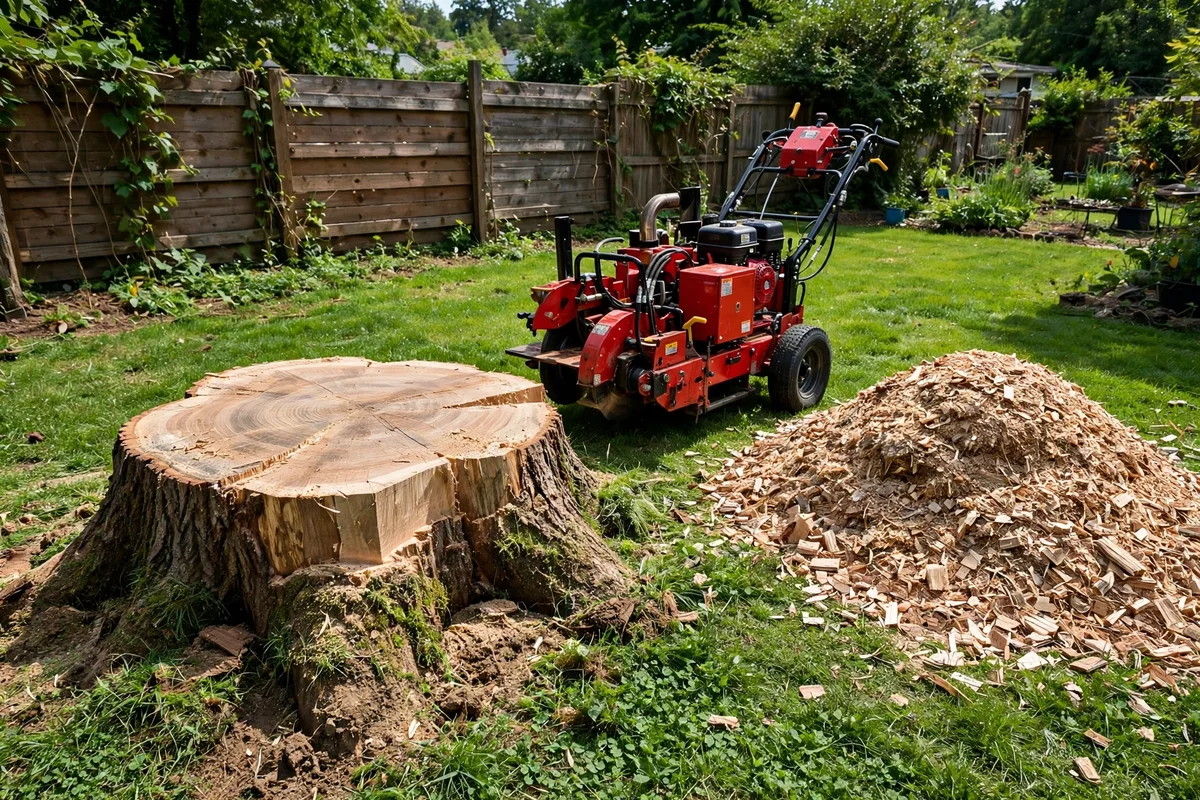
Tree stump removal cost looks simple in the quotes — "$3 an inch" sounds almost free — until the invoice lands and a 14-inch stump that should cost $42 costs $150. Both numbers are honest; they are just answers to different questions. Contractors price grinding at roughly $2 to $5 per inch of stump diameter, but nearly every company also charges a minimum of $100 to $150 to unload the machine at all, and for most backyard stumps the minimum is the bigger number. This page does the maths the quote sheets do not: what you actually pay at every diameter, what full removal adds, why a row of stumps costs far less per stump than one lonely stump, and the exact point where renting a grinder for a day beats hiring the job out.
The short answers
- Professional grinding: $2–$5 per inch, $100–$150 minimum — most single stumps land between $125 and $400
- The minimum wins until a stump passes roughly 25–36 inches, depending on the per-inch rate
- Full removal (stump + major roots dug out): about $300–$1,000+ per stump
- Extra stumps on the same visit: typically $30–$60 each — the cheapest stumps you will ever remove
- DIY rental: $150–$300 a day; renting beats hiring from about the second stump in one day
Tree stump removal cost by diameter: the per-inch chart with the minimum applied
Measure first, and measure the way the contractor does: the widest point of the stump at ground level, root flare included — not the tidy trunk diameter higher up. Then read the chart honestly. Each cell is the per-inch maths after the typical $125 minimum is applied, because that is the number that will be on your quote:
| Stump diameter | At $2/inch you pay | At $3.50/inch you pay | At $5/inch you pay |
|---|---|---|---|
| 8 inches | $125 (minimum) | $125 (minimum) | $125 (minimum) |
| 12 inches | $125 (minimum) | $125 (minimum) | $125 (minimum) |
| 18 inches | $125 (minimum) | $125 (minimum) | $125 (minimum) |
| 24 inches | $125 (minimum) | $125 (minimum) | $125 (minimum) |
| 30 inches | $125 (minimum) | $125 (minimum) | $150 |
| 36 inches | $125 (minimum) | $126 | $180 |
| 48 inches | $125 (minimum) | $168 | $240 |
Read the chart the way it deserves to be read: for the ordinary run of backyard stumps — the 12- to 24-inch remains of a garden tree, like the apple tree that finally came down — per-inch rates are nearly decoration. You are buying a visit, not inches. That flips the negotiation: the question that matters is not "what is your per-inch rate?" but "what is your minimum, and what do extra stumps cost while you are here?" Rates vary by region and by wood — hardwood stumps (oak, maple, walnut) commonly add $50–$150 for the extra machine wear, deep grinding to 18–20 inches adds roughly $2.50 per inch, and hauling the grindings away runs $50–$200 or $2–$4 per inch if you do not keep them.
Grinding vs full removal vs doing it yourself
"Removal" on most quotes means grinding: the machine chews the stump 8–12 inches below ground and the roots stay to rot quietly. Full removal — stump and major roots dug or winched out — is a different, bigger job that only really matters if you are building or replanting a tree in the exact same hole.
| Method | Typical cost | Time | What you are left with |
|---|---|---|---|
| Professional grinding | $125–$400 per stump | Under an hour per stump | A mound of grindings; roots rot in place over years |
| Full removal (dig/pull out) | $300–$1,000+ per stump | Half a day or more | A real hole to fill; nothing left to sprout or sink |
| DIY grinder rental | $150–$300 per day, plus fuel and delivery | A day for several stumps | Same result as pro grinding, your labour |
| Drill, nitrogen and patience (rot it) | $10–$30 in materials | 6 months to 3 years | A slowly softening stump; keep it moist and fed with nitrogen |
| Burning out | Almost nothing | A long, watched day | Only where legal and sensible — many municipalities ban it; roots can smoulder |
The rental line deserves its own maths, because it is where tree stump removal cost quietly halves. Hiring five 18-inch stumps one at a time, on five visits, costs about 5 × $125 = $625 in minimums alone. The same five stumps on one visit: the first at the $125 minimum and four extras at a typical $45 each is about $305. Renting a grinder for a day at, say, $225 all-in and doing all five yourself: $225, and the machine does not care whether there are five stumps or nine. Rule of thumb: one stump, hire it; two or more stumps you can reach in a day, price the rental — and if neighbours have stumps too, a shared rental day is the cheapest stump any of you will ever remove.
The costs that arrive after the stump is gone
Budget for the epilogue, because every ground stump leaves one. A 24-inch stump ground a foot deep produces roughly 5 cubic feet of loose grindings — a small hill. Three honest options: rake the chips into paths and beds as mulch (run the numbers with the Mulch Calculator; fresh stump chips are fine on paths and around established shrubs, kept off vegetable beds until they have aged), pay the $50–$200 haul-away, or barrow them to a compost corner where they count as a very slow brown — the greens-to-browns chart shows where chips sit on that scale. Under the mound is a shallow crater that settles further as the buried roots rot, so overfill it slightly with topsoil rather than levelling it perfectly on day one.
Then the patch itself. A lawn repair over a ground stump fails in a predictable way — the grass yellows in a stump-shaped circle because the rotting roots below are tying up nitrogen — so feed the patch a little extra, sow at the overseeding rate from the Seed Calculator, and time the sowing with our grass seed germination guide so you know whether bare dirt at day ten is patience or a problem. Planning a bed over the spot instead? Put it on paper in the Garden Planner — and keep new tree planting a few feet away from the old root zone, where the soil will keep settling for a season or two.
Keep going
Filling the hole and reseeding: the Topsoil Calculator sizes the fill, the Seed Calculator sizes the seed, and How to Overseed Your Lawn walks the patch repair end to end.
Replacing the tree itself? The plant library's tree and shrub pages — starting with Apple Tree — give honest mature sizes, so the next stump is a problem for a much later decade.
Questions people ask
How much does it cost to remove a tree stump?
For professional grinding, most homeowners pay between $125 and $400 per stump. The pricing is usually $2 to $5 per inch of diameter, but a $100 to $150 minimum charge applies, and the minimum is what most ordinary stumps — anything up to about 24 inches at mid-range rates — actually cost. Full removal with the roots dug out runs $300 to $1,000 or more.
Why did my 12-inch stump cost $150 if the rate is $3 an inch?
Because of the minimum service charge. Twelve inches at $3 is $36 of grinding, but the company still has to drive to you, unload a heavy machine and set up — the $100 to $150 minimum covers the visit itself. This is also why extra stumps on the same visit are so much cheaper: the visit is already paid for.
Is it cheaper to rent a stump grinder or hire someone?
For one stump, hire — a rental day at $150 to $300 plus fuel and delivery rarely beats a $125 minimum-charge visit. From two stumps upward the rental usually wins, and by four or five stumps in one day it wins by hundreds of dollars, provided the stumps are accessible and you are comfortable running the machine.
Do multiple stumps cost less per stump?
Yes, substantially. After the first stump at full price, additional stumps on the same visit typically cost $30 to $60 each, because travel and setup are already covered. Five medium stumps on one visit commonly cost about half of what five separate visits would.
What happens to the hole and the wood chips after grinding?
You get a mound of loose grindings — about 5 cubic feet from a 24-inch stump — over a shallow depression. Keep the chips as path or shrub mulch, compost them slowly as a brown ingredient, or pay $50 to $200 to have them hauled. Fill the depression with topsoil, mounded slightly high, because the buried roots keep rotting and the spot settles for a season or more.
Comments & ratings
No comments yet.
Be the first to share your experience.