
Guides · Lawn & Seeding · Published November 13, 2026
How Long Does Grass Seed Take to Germinate? Times by Type and the Reseed-or-Wait Checkpoints
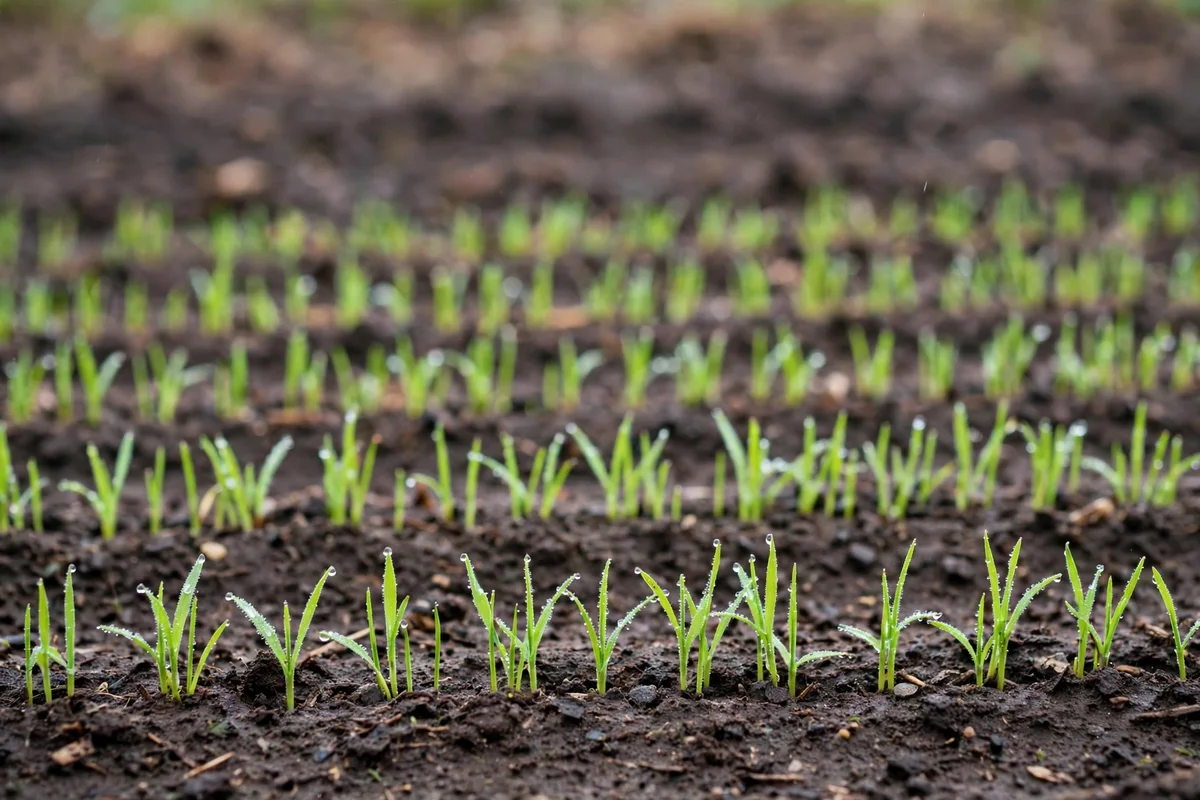
Every autumn, thousands of gardeners stare at bare dirt for ten days, decide the seed failed, and sow again — over seed that was quietly three days from sprouting. The question how long does grass seed take to germinate has no single answer because the range is enormous: perennial ryegrass shows green in 5 to 10 days, while Kentucky bluegrass legitimately takes 14 to 30. Sow bluegrass, watch it with ryegrass expectations, and you will "fix" a lawn that was never broken — or worse, give up watering a week before it emerges. This page gives the germination window for each common grass, the soil temperature that actually starts the clock, and the part no other chart gives you: dated checkpoints for your species, so on any given morning you can tell whether to keep waiting or to reseed.
The short answers
- Fastest: perennial ryegrass, 5–10 days — the sprinter in most seed mixes
- Middle: tall fescue 7–12 days, fine fescues 7–14 days
- Slowest: Kentucky bluegrass 14–30 days — two to four weeks of bare dirt is normal
- Warm-season: Bermuda 10–30 days, zoysia 14–21, buffalo 14–30, centipede 14–28
- The clock runs on soil temperature: cool-season seed starts at about 50°F soil, warm-season at about 65°F
How long does grass seed take to germinate, by grass type
These are the extension-standard windows (the University of California's turf programme publishes the same figures most seed companies borrow), assuming seed sown in season, in contact with soil, and kept moist. The soil-temperature column is the part to act on: seed in cold ground does not germinate slowly — it waits, and the waiting days do not count toward the window.
| Grass type | Days to germinate | Soil temperature needed | Type |
|---|---|---|---|
| Perennial ryegrass | 5–10 | 50–65°F | Cool-season |
| Tall fescue | 7–12 | 50–65°F | Cool-season |
| Fine fescues (creeping red, chewings, hard) | 7–14 | 50–65°F | Cool-season |
| Kentucky bluegrass | 14–30 | 50–65°F | Cool-season |
| Bermuda grass | 10–30 | 65–80°F | Warm-season |
| Zoysia grass | 14–21 | 65–80°F | Warm-season |
| Buffalo grass | 14–30 | 65–80°F | Warm-season |
| Centipede grass | 14–28 | 65–80°F | Warm-season |
| Bahia grass | 14–30+ | 65–80°F | Warm-season |
One mixture warning before the checkpoints: most lawn seed is a blend, and blends sprout in sequence. The ryegrass in a bluegrass mix greens up in week one and nurses the patch visually while the bluegrass — the grass you actually bought the bag for — is still two weeks underground. Judging a blend by its first green is judging a relay team by its first runner. Whatever you sow, the amount matters as much as the timing: the Seed Calculator gives new-lawn and overseeding rates per thousand square feet so the checkpoints below are judging coverage, not starvation.
The checkpoints: what you should see, and when to act
Count days from when the soil reached the right temperature band and stayed there — a cheap soil thermometer (or a kitchen probe) pushed 2 inches down in the morning tells you when the clock genuinely started. Then grade your patch against its own species:
| Checkpoint | Ryegrass & fescues (fast) | Kentucky bluegrass & Bermuda (slow) |
|---|---|---|
| Day 7 | First green threads should be showing. Nothing at all? Check moisture and seed contact today. | Nothing visible is normal. Confirm the seedbed is still moist and the seed is still there. |
| Day 14 | A visible green haze across the patch. Bare stripes mean missed strips — mark them for a touch-up pass. | First sprouts may just be appearing, often in the sunniest spots first. Keep watering; do not judge yet. |
| Day 21 | Thin but real coverage. Gaps bigger than a dinner plate will not fill from fescue alone — overseed those spots at half rate. | Sprouting should be well under way. Large silent areas with dry, surface-sitting seed are failures — reseed those areas only. |
| Day 30 | Established enough for a first gentle mow at the highest setting once blades pass 3 inches. | The window closes. Anything still bare after 30 warm, moist days is not coming: reseed or, in deep shade, rethink grass entirely. |
The decision rule underneath the table: reseed areas, not lawns. Seed that is moist, buried a quarter-inch or less, and inside its window deserves patience; seed you can still see sitting dry on the surface at the end of the window has told you its answer. And if the same shady corner fails twice, believe it — that is a planting bed asking to happen, and a creeping thyme or shade planting will outperform a third sowing.
Why grass seed "fails": the four real causes
It dried out once. A seed that has swollen and cracked its coat, then dried hard, is dead — which is why the watering rule for seedbeds is the opposite of the lawn rule: light drinks (5–10 minutes) two or three times a day to keep the top half-inch constantly moist, then a switch to the deep schedule in How Long to Run Sprinklers for 1 Inch of Water once the grass is up. It was buried. Grass seed planted deeper than about ¼ inch starves before it reaches light; seed should be pressed into contact with soil, not planted like beans. It washed or blew. Bare arcs downhill of a slope after a storm are the signature — reseed those, with a light straw or compost dusting to hold them. It was never alive. Old bags lose germination every year in storage; the paper-towel test in Are Old Seeds Still Good? takes ten days and settles any bag's honesty before it costs you a season. Sowing into autumn's cooling soil on purpose is a legitimate strategy of its own — dormant seeding — and a full renovation follows the sequence in How to Overseed Your Lawn.
Keep going
The lawn repair set: How to Overseed Your Lawn for the full renovation sequence, How Long to Run Sprinklers for 1 Inch of Water for the watering schedule once it is up, and Are Old Seeds Still Good? before you blame — or trust — a leftover bag.
Patch left by a removed tree? Tree Stump Removal Cost covers the stump itself, including why grass over a ground stump yellows in a perfect circle and how to feed it through.
Questions people ask
How long does grass seed take to germinate?
Between 5 and 30 days, set mostly by species: perennial ryegrass in 5–10 days, tall fescue in 7–12, fine fescues in 7–14, Kentucky bluegrass in 14–30, and warm-season grasses like Bermuda in 10–30. The window only starts counting once the soil is warm enough — about 50°F for cool-season seed and 65°F for warm-season — and the seed stays moist.
Why is my grass seed not germinating after 2 weeks?
Check your species before you panic: at two weeks, ryegrass and fescue should be up, but Kentucky bluegrass and Bermuda are legitimately still underground. If a fast species is silent at day 14, the usual causes are a seedbed that dried out once, seed buried deeper than a quarter inch, seed washed away, or soil still below the temperature band — each has a checkpoint action in the table on this page.
What is the fastest germinating grass seed?
Perennial ryegrass, at 5 to 10 days in the right soil temperature — which is exactly why it is blended into slower mixes as a nurse grass: it greens the patch, holds the soil and shelters the slow bluegrass or fescue still germinating beneath it. Annual ryegrass is marginally faster still but dies with the season.
How often should I water new grass seed?
Little and often until it sprouts: 5 to 10 minutes, two or three times a day, keeping the top half-inch of soil constantly moist without puddling. A seed that starts germinating and then dries out dies, so consistency beats volume. Once the grass is an inch tall, taper toward the normal deep-and-infrequent lawn schedule.
When should I give up and reseed?
At the end of your species' full window — day 30 for the slow grasses — provided the soil was in the temperature band and the seedbed stayed moist. Reseed only the areas that failed, at the normal rate for the bare patch, and fix the cause first: contact, depth, moisture or dead seed. Whole-lawn reseeds over half-alive lawns waste seed and crowd the seedlings that did make it.
Comments & ratings
No comments yet.
Be the first to share your experience.