
Guides · Plant problems · Published November 1, 2026
What Is Eating My Plant Leaves? (Holes in Leaves, Identified)
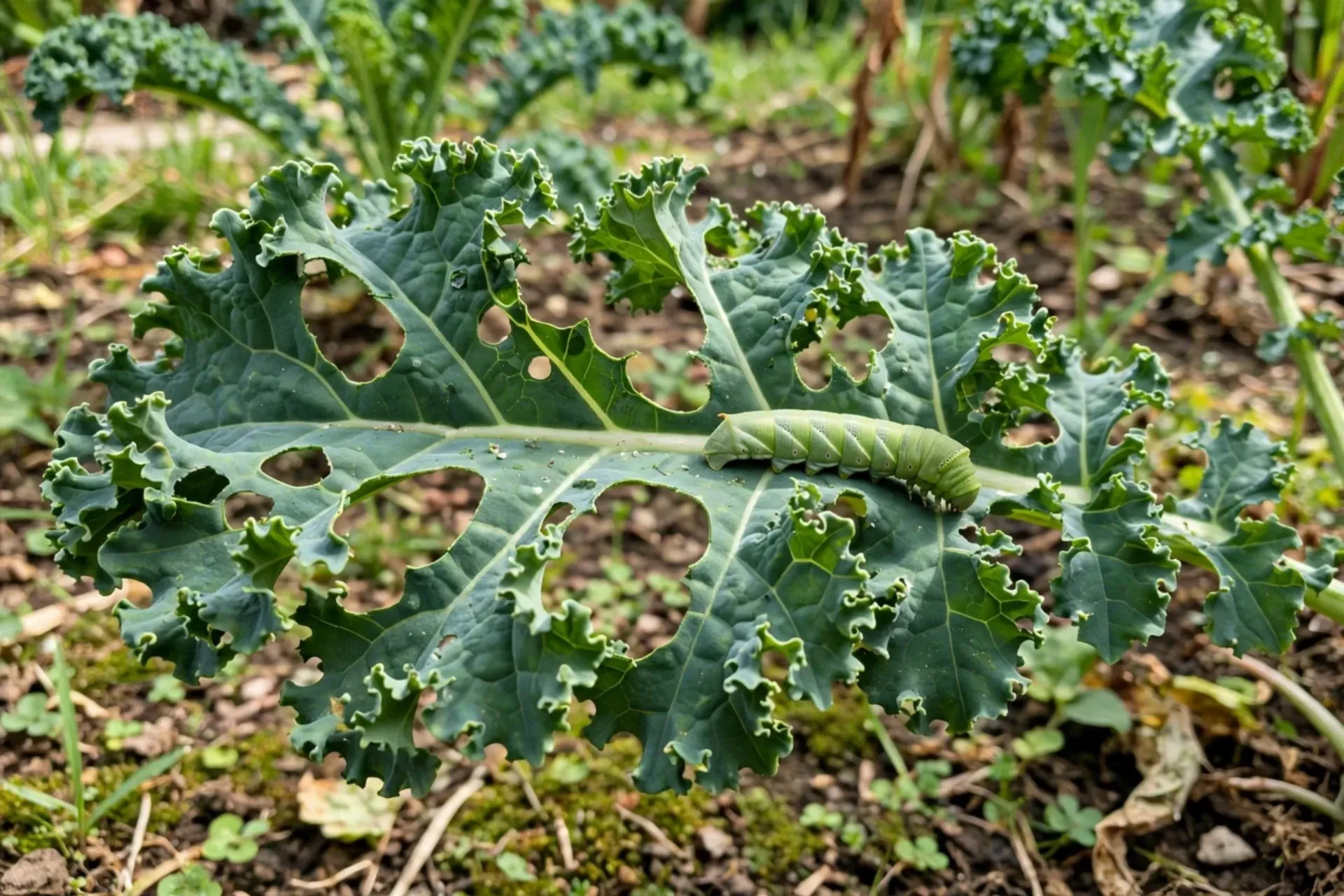
You find the damage every morning — holes, notches, whole seedlings beheaded — and never the culprit. That is because most leaf-eaters feed at night and hide by day. The good news is that each one signs its work: the pattern of damage, plus any droppings or trails, identifies the offender far more reliably than a lucky sighting. Identify first, and the fix becomes small and specific instead of a spray-and-pray.
The damage fingerprint chart
- Big irregular holes + silvery slime trails on leaves or soil → slugs and snails (see the slug guide)
- Round holes in cabbages and other brassicas + small green droppings pellets on the leaf → cabbage white caterpillars
- Leaves stripped to a lacy skeleton of veins in hot weeks → beetles such as Japanese or Colorado potato beetles
- Tiny 'shotgun' holes across leaves of seedlings and brassicas → flea beetles, flea-sized and jumping
- Seedlings cut cleanly at the base and left lying → cutworms, curled in the soil by day
- Neat notches nibbled from leaf edges, worse low down → earwigs or adult weevils feeding at night
- Leaves rolled, webbed or tied together → a caterpillar living inside the roll
Step 1 — Run the night patrol (the single most useful habit)

Go out an hour after dark with a torch and look at the damaged plants, undersides included. Slugs, snails, earwigs, cutworms and most beetles are caught in the act, and one patrol settles what a week of morning guessing cannot. What you find decides everything below — and often the patrol is the treatment, because night-feeding pests can be picked off as you go.
Step 2 — Read the daytime evidence properly
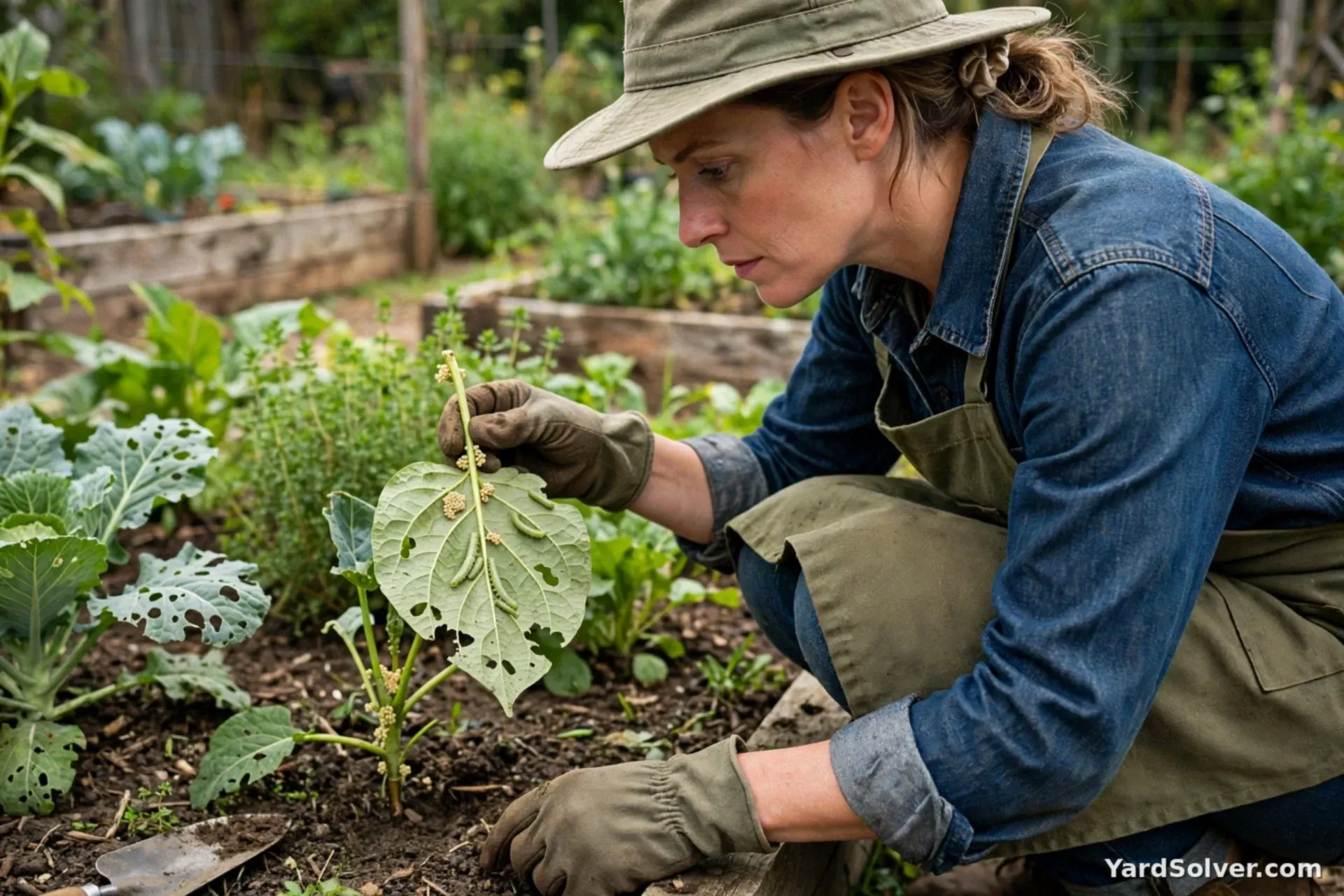
By day, check three things: leaf undersides (caterpillars, beetle eggs and clusters hide there), the soil surface at the plant's base (cutworms curl up in the top centimetre of soil; slug trails start there), and the droppings — green pellets mean caterpillars, black specks are often beetle frass. Old damage does not move; mark a damaged leaf with a twist-tie and check whether the holes grow over two days before treating history.
Step 3 — Apply the matched, minimal fix

Caterpillars: pick off by hand, or cover the crop with fine insect mesh so butterflies cannot lay. Beetles: hand-pick into soapy water in the cool of morning when they are sluggish, mesh works here too. Flea beetles: mesh over seedlings until plants are big enough to shrug them off. Cutworms: a simple cardboard or foil collar around each seedling stem stops them, and digging one finger's depth around a cut seedling usually finds the culprit. Slugs have their own full plan in How to Stop Slugs and Snails Eating Your Plants.
Step 4 — Protect the next round: mesh, timing and predators
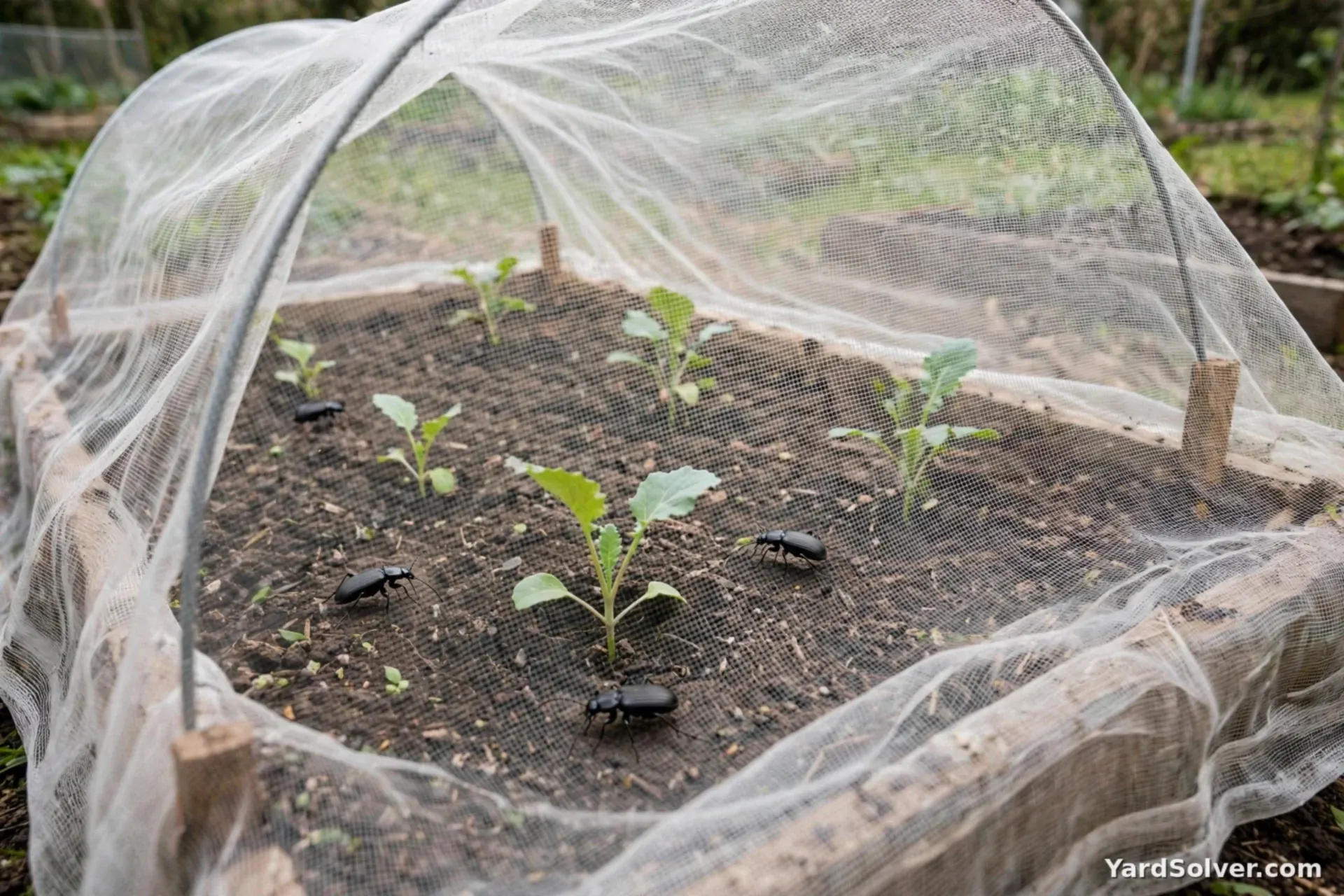
Most leaf-eaters are seasonal and predictable. Fine insect mesh laid over brassicas and salads from planting day prevents the commonest damage entirely, and it excludes without chemicals. Ground beetles, frogs, birds and hedgehogs patrol for free if the garden offers cover and is not blanketed in insecticide — which is the practical argument against the next step's temptation.
The spray warning (why identification comes first)
A broad-spectrum insecticide sprayed at mystery holes kills almost nothing that is hiding by day, but does kill the predators and parasitoid wasps quietly controlling your pests — outbreaks often get worse two weeks after such a spray. If the pattern suggests disease instead (spots, rings, mould rather than chewing), no insecticide helps at all. Identify, then treat the identified thing.
Keep going
The two full plans: How to Stop Slugs and Snails · How to Get Rid of Aphids on Plants. Prevention by design is in Companion Planting Basics, and each plant's toughness is noted in the Plant Library.
Questions people ask
Why do I never see anything eating my plants?
Because most leaf-eaters feed at night and hide in soil, mulch or leaf undersides by day. Go out with a torch an hour after dark and the mystery usually solves itself in one visit — that patrol is the fastest diagnostic tool in gardening.
Should I spray an insecticide just in case?
No. Sprayed blind, insecticide mostly misses night-feeding pests hiding by day, while killing the predators and tiny parasitoid wasps that were controlling them — damage commonly worsens a fortnight later. Identify the culprit from the damage pattern, then use the matched, minimal fix.
How much leaf damage can a healthy plant tolerate?
More than gardeners fear. A vigorous established plant can lose a noticeable share of leaf — a fifth or more, spread out — and still crop well; the emergencies are seedlings eaten to the stem and repeated total defoliation. Protect the young and the repeatedly attacked, and do not panic over a few honest holes.
Comments & ratings
No comments yet.
Be the first to share your experience.