
Guides · Plant problems · Published November 1, 2026
How to Get Rid of Aphids on Plants
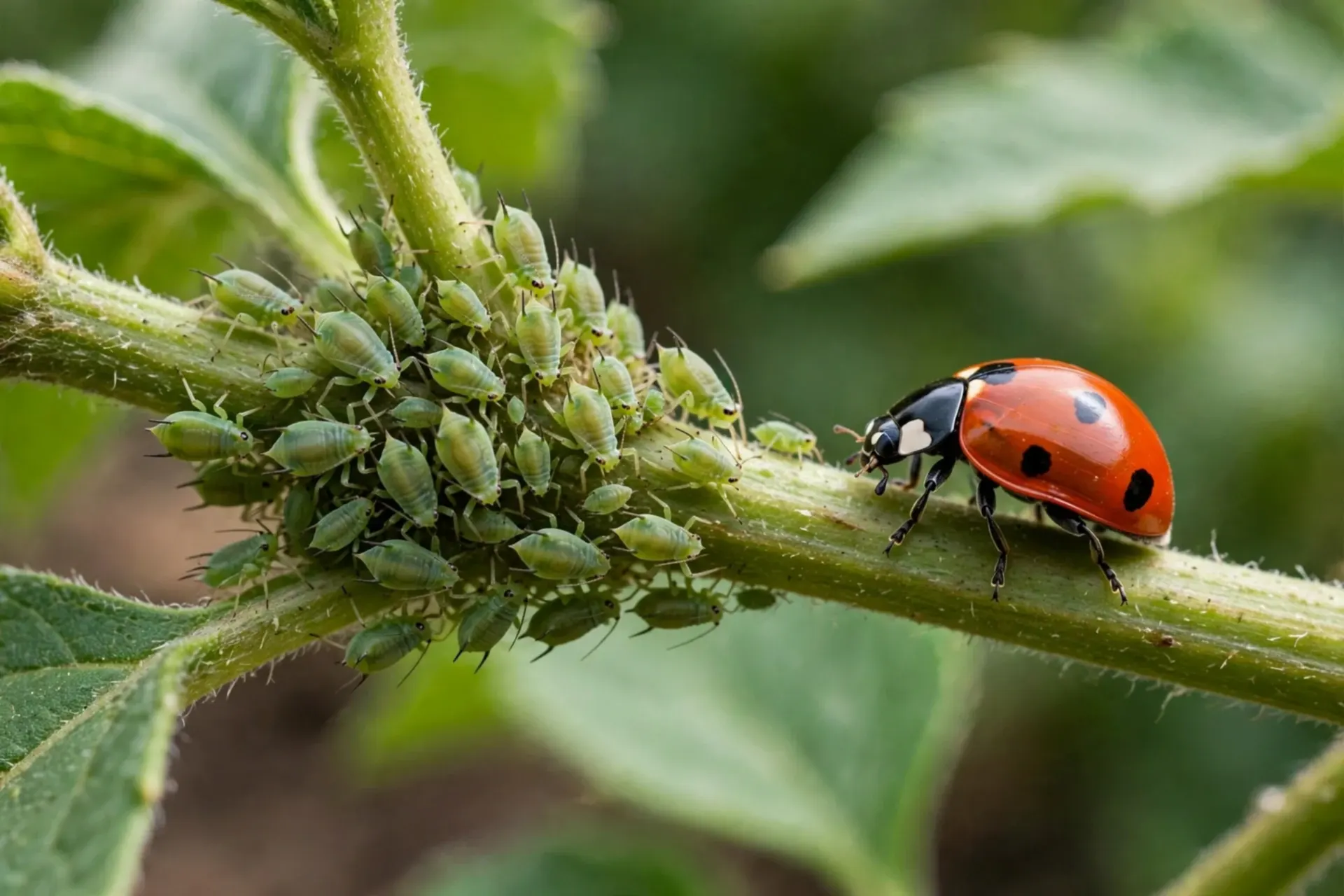
Small, soft, pear-shaped insects — green, black, pink or woolly white — packed onto shoot tips, buds and the undersides of leaves: those are aphids, the most common garden pest there is. They multiply faster than almost anything else in the garden, so the time to act is when you first see a cluster, not when the plant is dripping with them. This is the ladder of control, from gentlest to strongest — most gardens never need the top rungs.
Signs you have aphids (not something else)
- Clusters of small soft insects on the softest new growth and under leaves
- Sticky leaves and a shiny coating (their sugary waste, called honeydew), sometimes with black sooty mould growing on it
- Curling, yellowing, distorted new leaves and stunted tips
- Ants running up and down the plant — they farm aphids for that honeydew and chase off predators
Step 1 — Blast them off with water
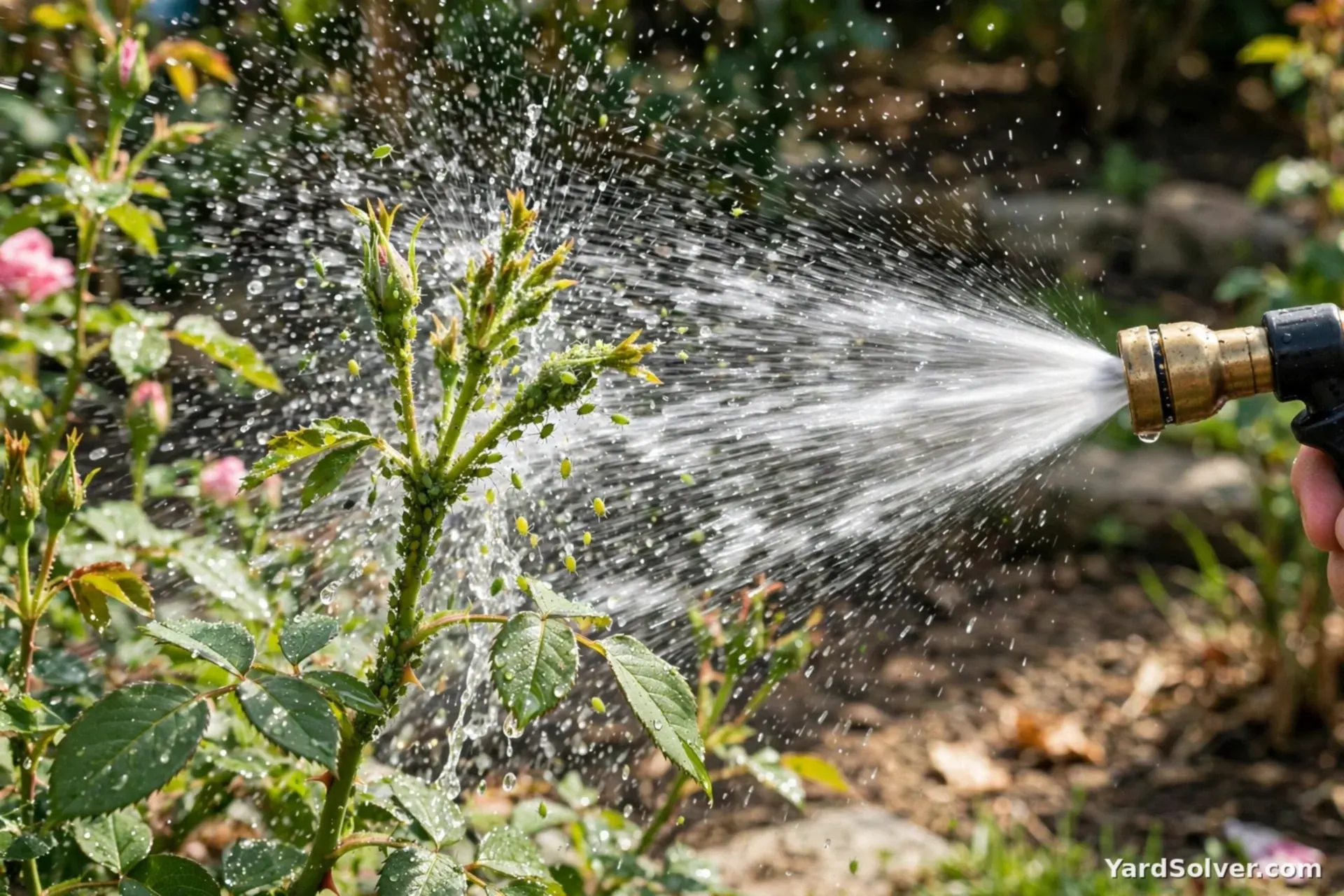
Aphids are feeble clingers. A strong jet of water from the hose, aimed at the clusters every few days, knocks them to the ground where most never make it back. It is free, instant, harmless to the plant and to beneficial insects — and for a light outbreak on sturdy plants like roses and brassicas, it is genuinely all you need. Support floppy stems with one hand while you spray with the other.
Step 2 — Prune out the worst colonies
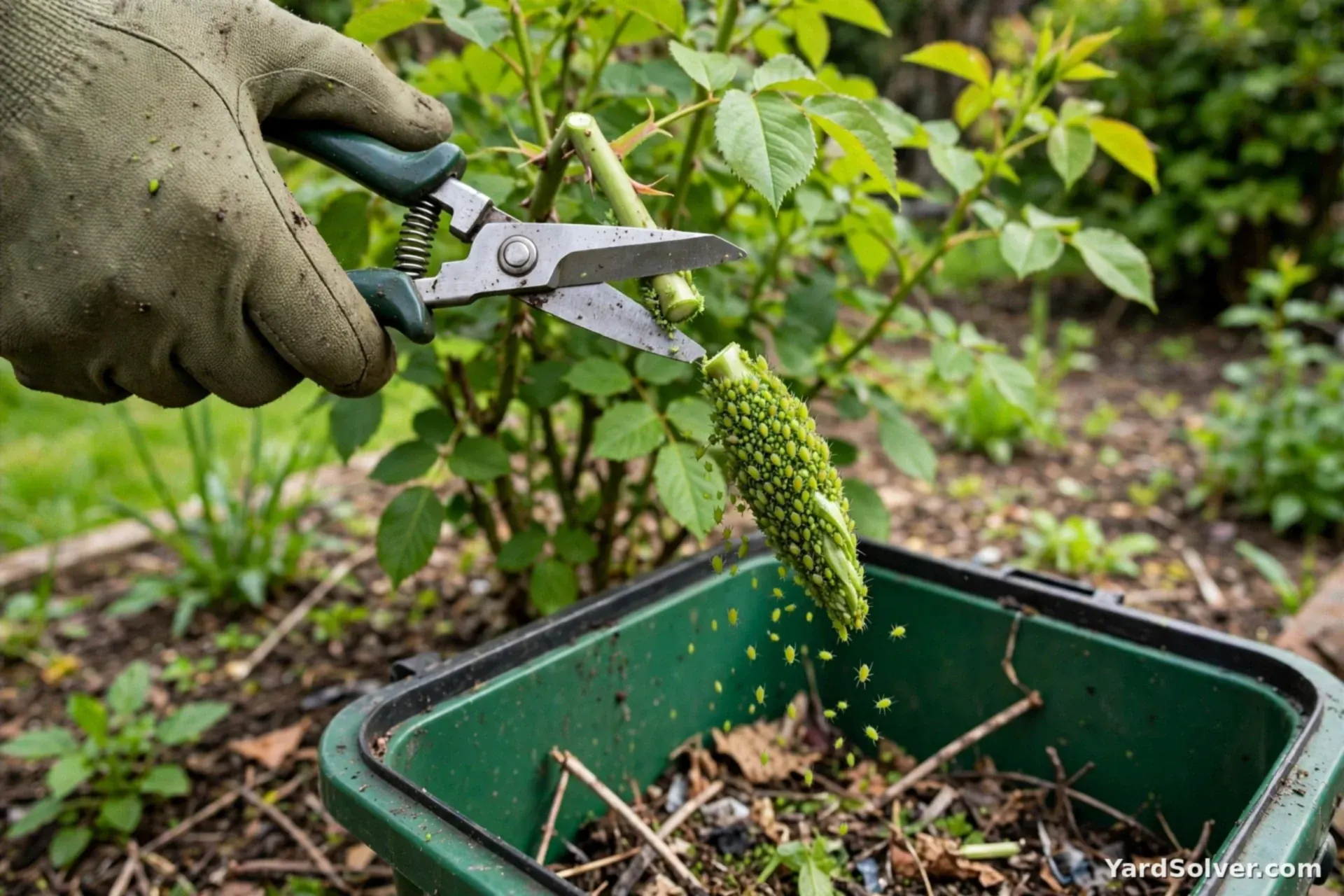
Aphids concentrate on a few soft tips. If one shoot is carpeted while the rest of the plant is nearly clean, snip that shoot off and bin it — you remove most of the population in one cut. The same goes for a badly curled, infested leaf cluster on vegetables.
Step 3 — Soap or oil spray, used properly
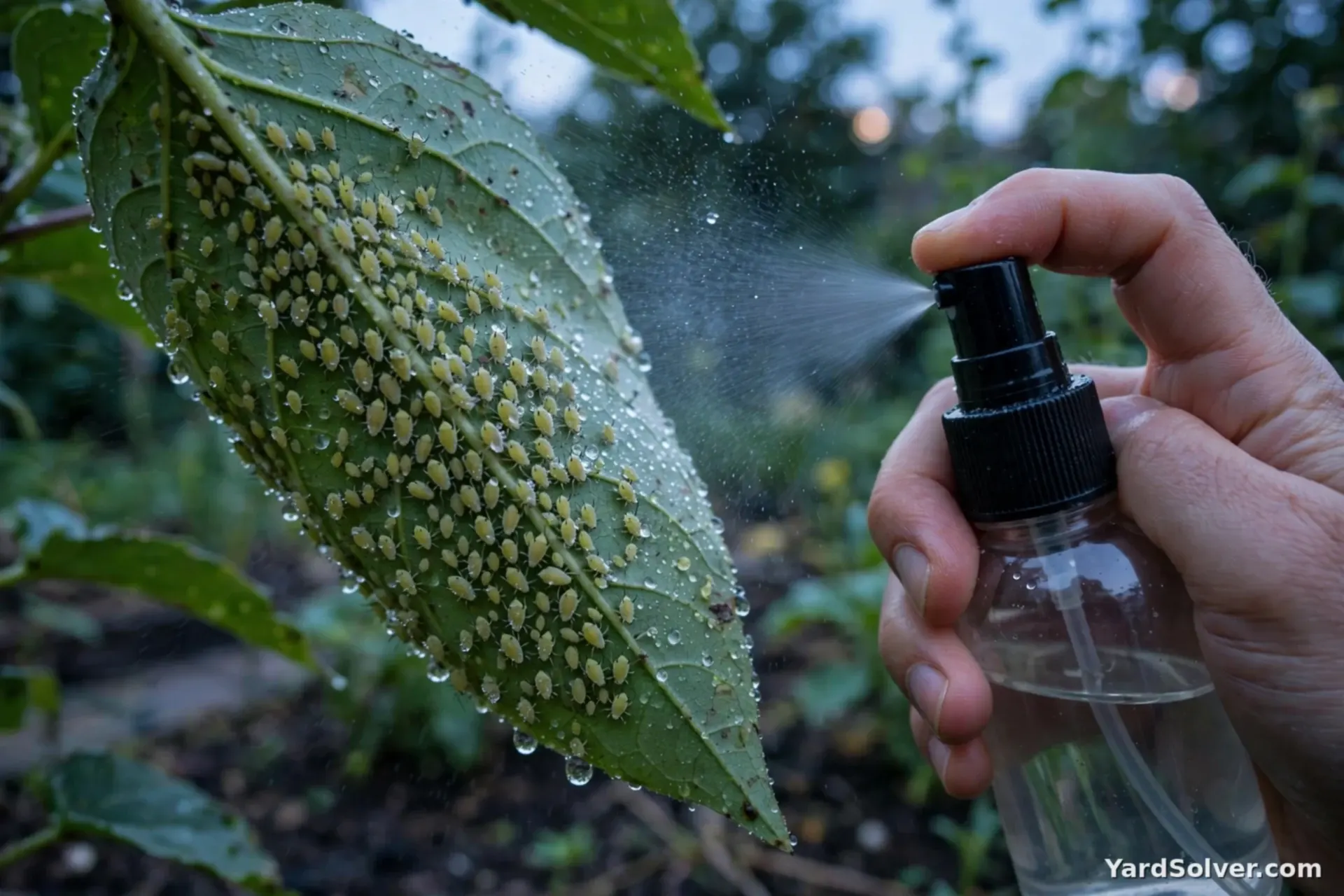
For outbreaks water cannot shift, spray insecticidal soap (or a fine horticultural oil) so it contacts the aphids — these work on touch, not by poison, so coverage of undersides matters more than quantity. Spray in the cool of the evening to protect leaves and visiting bees, test on a leaf first if the plant is tender, and repeat every few days for two weeks: the sprays do not kill eggs, and a new generation hatches fast. Household dish detergent is the risky cousin of insecticidal soap — it can scorch foliage — so the purpose-made product is worth it.
Step 4 — Let the predators finish the job
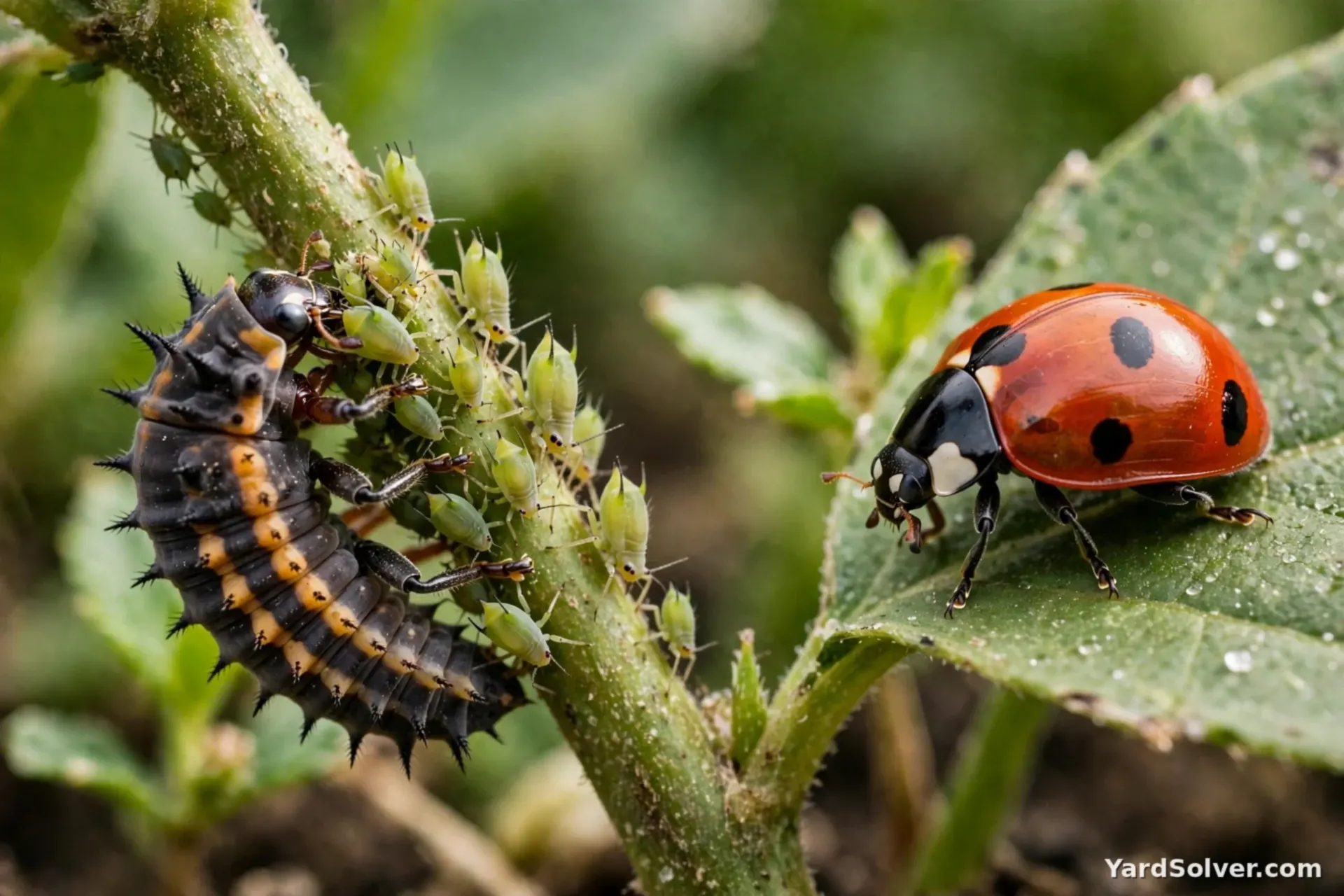
Ladybugs and their larvae, lacewing larvae and hoverfly larvae eat aphids in serious numbers, and they find outbreaks on their own — a few days after aphids appear, help usually arrives, if broad-spectrum insecticides have not cleared the garden of them first. That is the practical reason to stay on the gentle rungs of this ladder: every harsh spray resets your free pest-control service to zero. Flowering herbs and companion planting keep those predators resident in your garden between outbreaks.
Step 5 — Stop feeding the problem
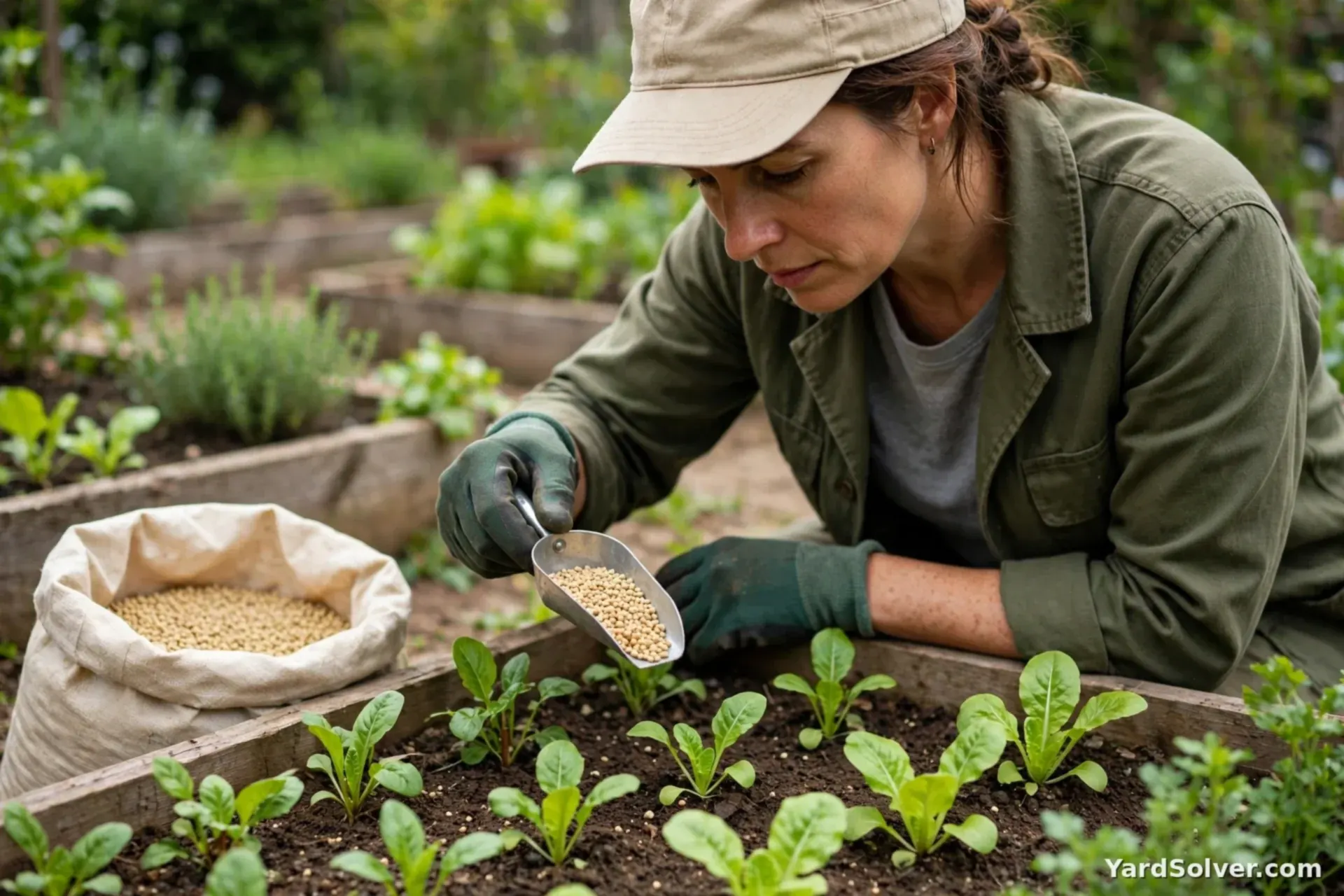
The commonest cause of repeated aphid explosions is kindness: soft, sappy, nitrogen-pushed growth is aphid candy. Feed at label rates rather than by enthusiasm — the Fertilizer Calculator sizes the dose to your actual bed area — and check young growth weekly so the next colony meets the water jet while it is still small. Indoors and in greenhouses, also meet the other small-fly problem honestly sorted in How to Get Rid of Fungus Gnats — different insect, different fix.
Keep going
More problem-solving: What Is Eating My Plant Leaves? · Companion Planting Basics. Your plants' profiles and weak points are in the Plant Library.
Mixing the soap spray? Work out the exact amount for your sprayer in the Garden Mix Calculator.
Questions people ask
Does dish soap kill aphids?
Soap kills aphids on contact, yes — but ordinary dish detergent can strip leaf coatings and scorch foliage. Purpose-made insecticidal soap is the safer version of the same idea.
Why are ants all over the infested plant?
Ants farm aphids for their sweet honeydew and protect them from predators in return. Remove the aphids and the sticky honeydew, and the partnership collapses.
Will aphids kill my plant?
Established plants usually survive, checked and distorted. Seedlings can be killed outright — and aphids also spread plant viruses, so early action is worth it.
Comments & ratings
No comments yet.
Be the first to share your experience.