
Guides · Plant problems · Published November 1, 2026
Why Are My Carrots Forked and Stunted?
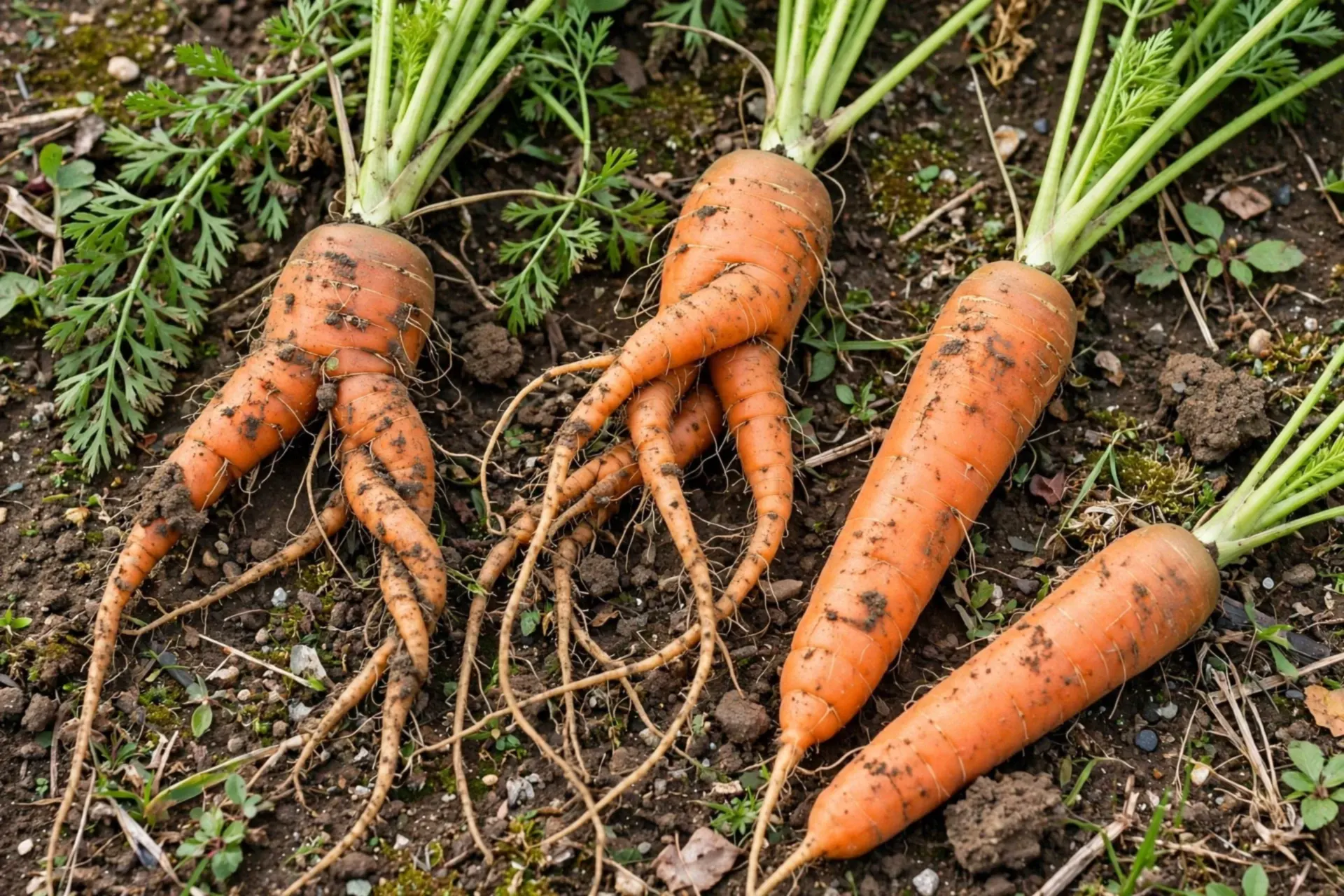
Digging carrots is gardening's lucky dip, and some years the bag comes up full of octopuses. A forked carrot is not diseased or mutating — it is a diary. The taproot forks at the exact moment its growing tip met an obstacle or an insult in the soil: a stone, a lump of fresh manure, a clod of clay, even the damage of being transplanted. Read this harvest correctly and next year's bed can be fixed almost completely.
The usual causes, in order of how often they are guilty
- Stones and clods — the root tip hits an obstruction and splits around it; stony and lumpy soil forks the most roots
- Fresh manure or rich lumps — carrots famously fork reaching into fresh manure or unrotted compost pockets; this season's manure is next season's carrots
- Heavy, compacted soil — in clay the tip struggles, stunts and deforms; the whole crop comes up short and twisted
- Transplanting — carrots sown in modules and moved almost always fork; that first taproot must never be disturbed
- Late or skipped thinning — crowded roots twist around each other and none sizes up
- Hairy, knobbly, stunted roots with fine root hairs everywhere — possible nematodes; that one needs local confirmation (Step 5)
Step 1 — Judge this harvest fairly (and eat it)
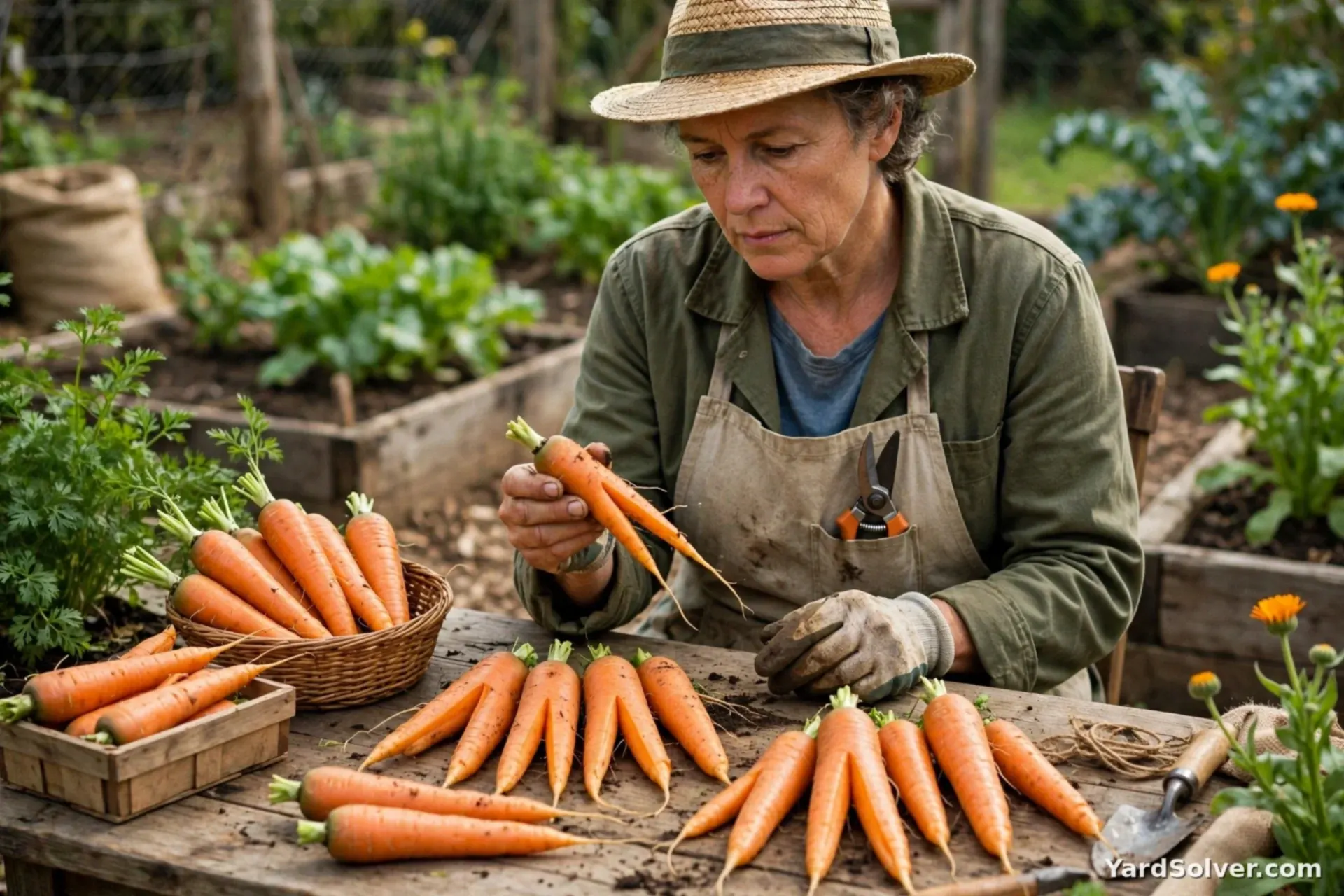
Forked carrots are completely edible — the same carrot, in a funnier shape. Wash, peel and cook them as normal; they store just like straight ones once trimmed. So this year's crop is a lesson, not a loss, and the lesson is read from the shapes: many forks at similar depths points at stones or clods at that layer; short stunted twists points at compaction or clay.
Step 2 — Prepare the next bed deep and clean
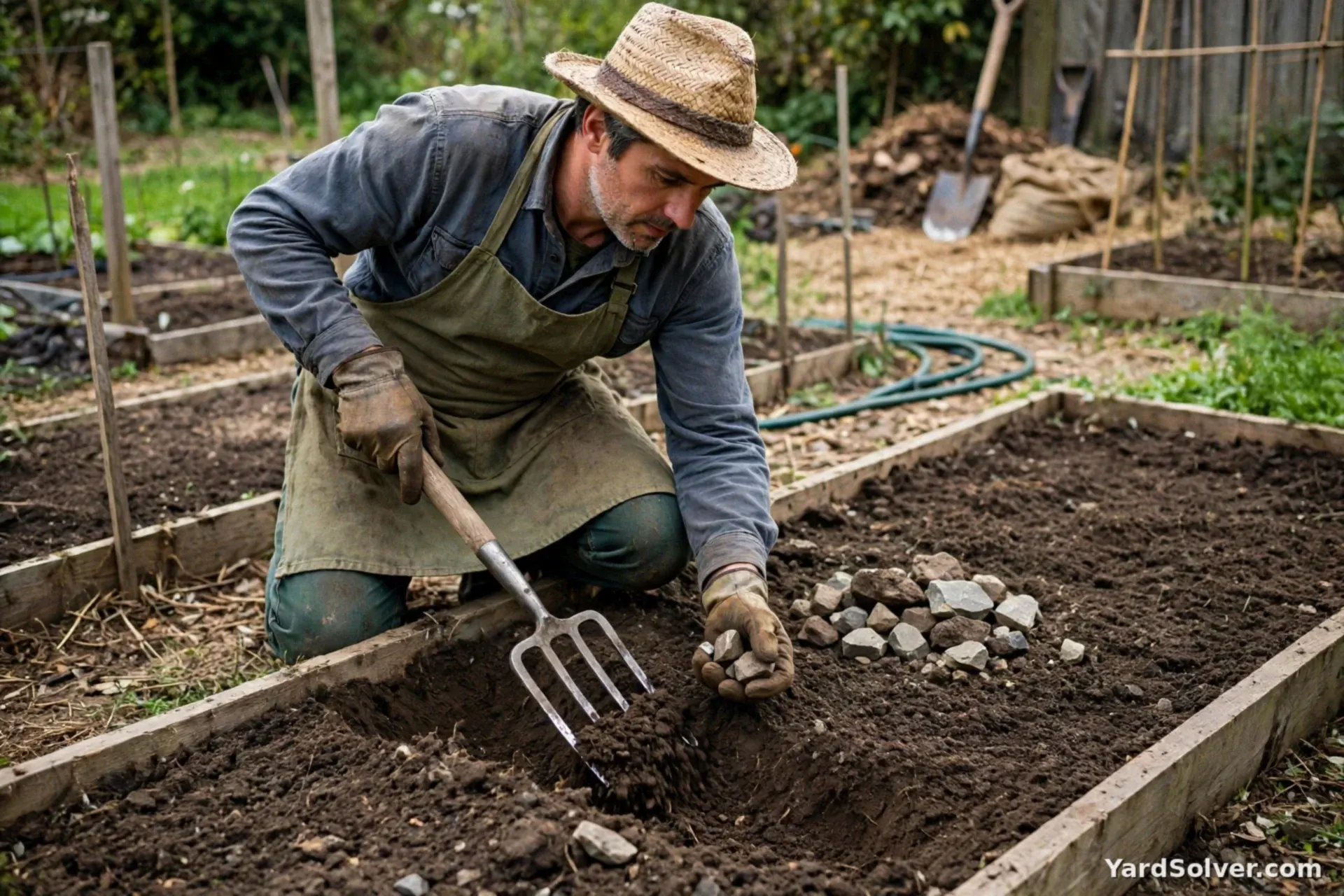
Before the next sowing, fork the bed over a full spit deep (about 30 cm / 12 inches), and actually remove the stones and hard clods you turn up rather than burying them again. Work in well-rotted compost only — never fresh manure in a carrot bed's season. The full bed-day routine is in How to Prepare Garden Soil in Spring, with compost amounts from the Compost Calculator.
Step 3 — If your soil is heavy, change the venue or the variety
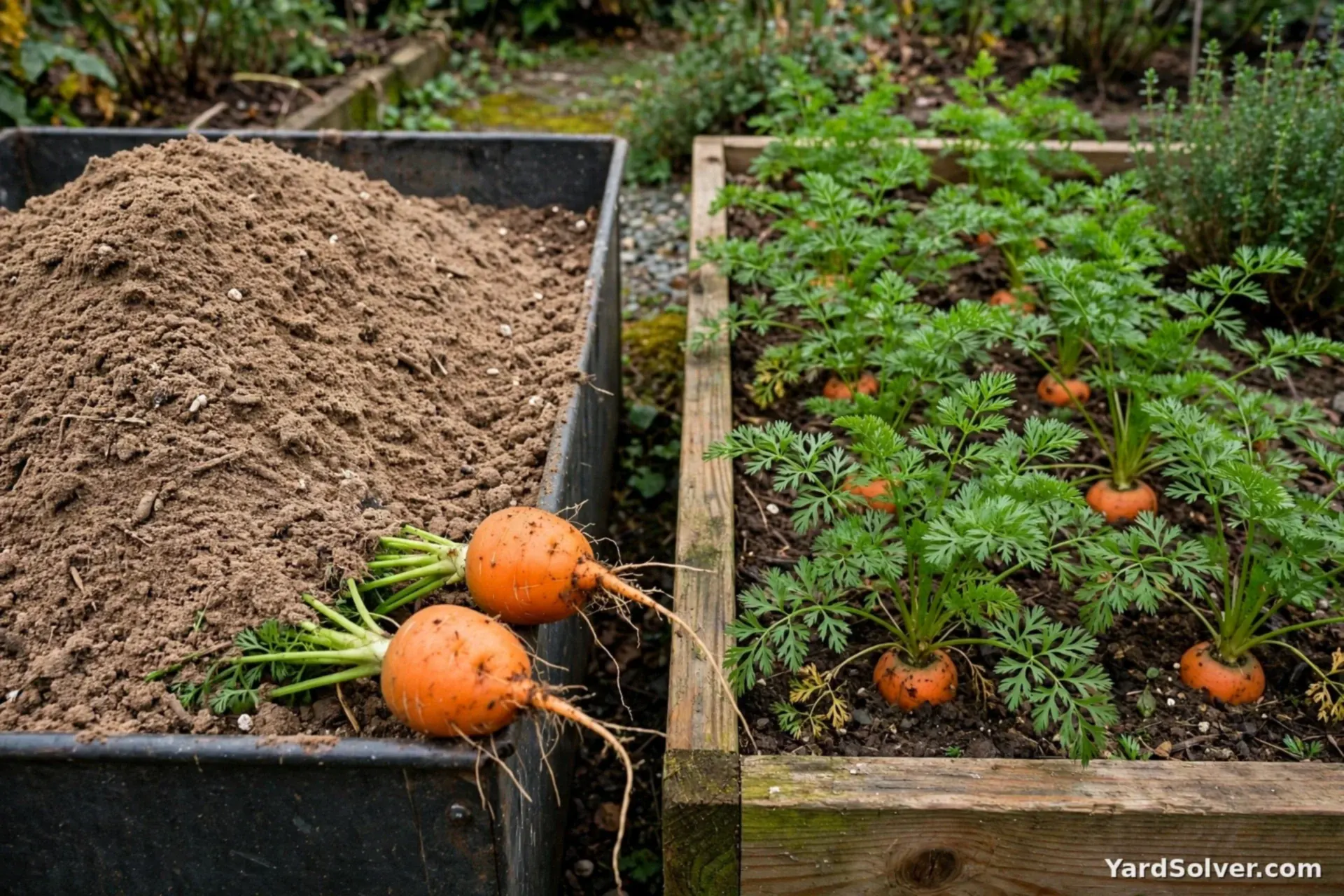
Two honest escapes from clay: grow in a raised bed or deep container of loosened, sieved soil mix (top-up amounts via the Raised-Bed Soil Calculator), or switch to short, round or stump-rooted varieties that were bred for heavy ground and make their shape in the top few inches. Long imperator types in raw clay is the one combination that never works, however carefully you garden.
Step 4 — Sow direct and thin early, twice
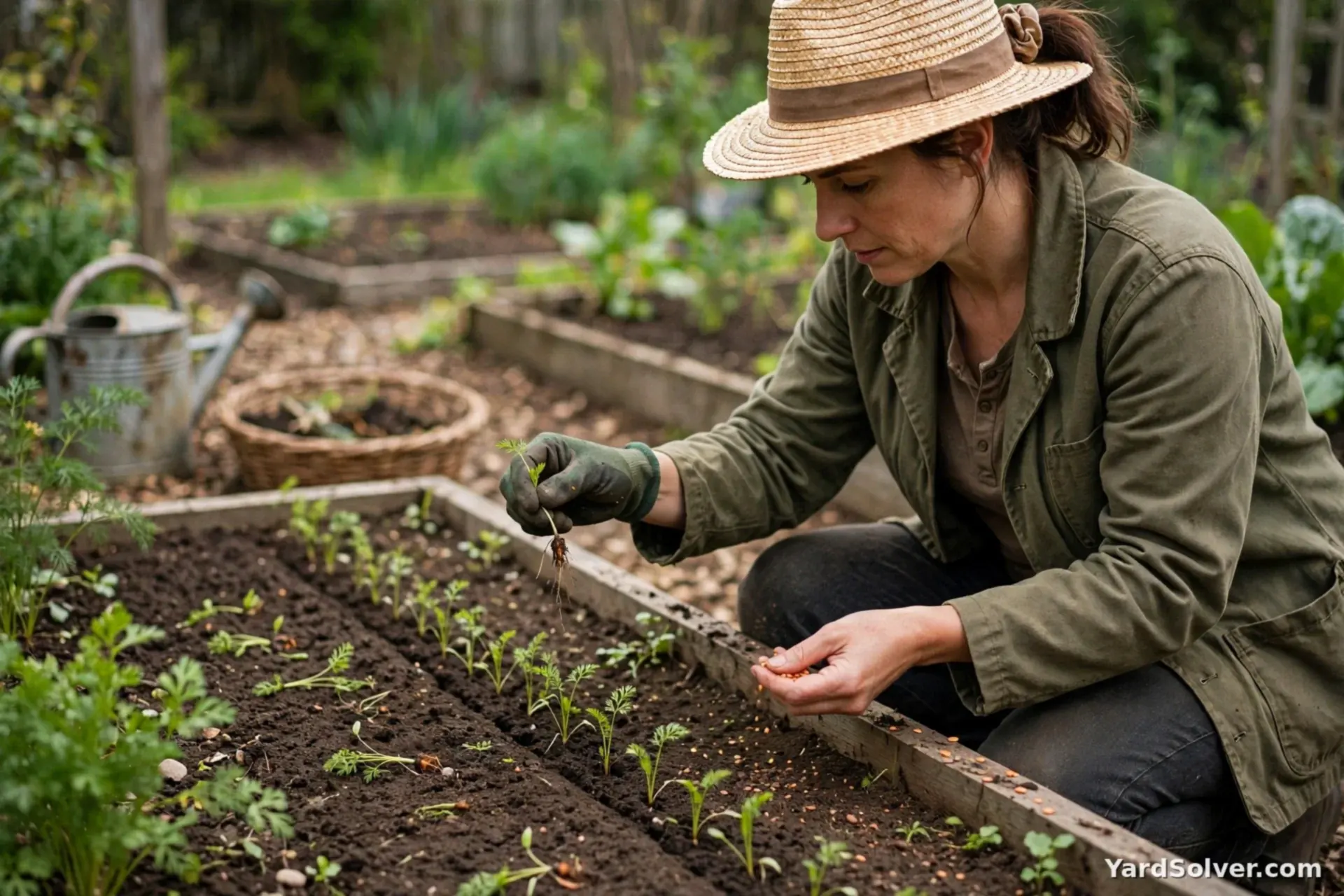
Sow carrots directly where they will grow — no transplanting, ever. Thin in two passes: first to about 2 cm apart when seedlings are small, then to final spacing (roughly 4–5 cm for maincrop) a few weeks later; spacing for a whole bed is worked out in the Plant Spacing Calculator. Keep the row evenly moist during germination — the old trick of a plank or hessian strip over the row until sprouts show genuinely helps — because dry-crusted soil both delays sprouting and deforms young roots.
Step 5 — The one cause to get confirmed locally
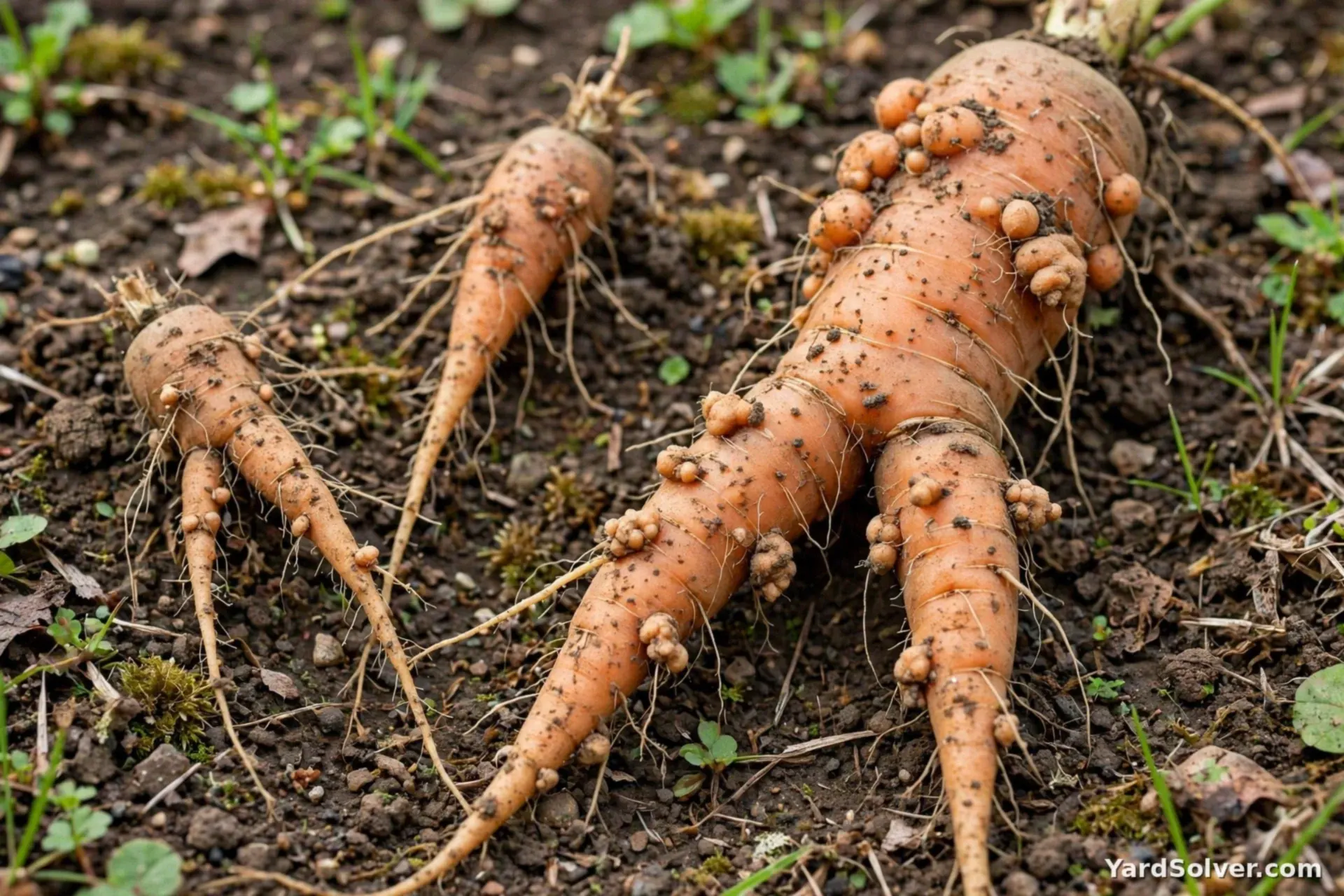
If roots are not just forked but hairy, bearded and knobbly with stunted tops, root-knot or other nematodes are a possibility — and that genuinely cannot be confirmed from a photograph or a description. Take a sample root and soil to your local extension office or garden clinic. Nematode management is a longer game of rotation and resistant varieties, and guessing at it wastes seasons.
Keep going
Bed preparation partners: How to Refresh Raised Bed Soil in Spring · How to Test Your Garden Soil. Carrot spacing, depth and timing are in the Plant Library.
Questions people ask
Are forked carrots safe to eat?
Completely. Forking is a shape caused by the root tip meeting an obstruction or disturbance in the soil — it changes nothing about safety or flavour. Wash and peel them as usual; the small legs cook a little faster than the main root, which is the only practical difference.
Does manure really cause forked carrots?
Fresh manure does, yes — it is one of the best-documented causes. The root tip forks as it grows into or away from concentrated fresh manure and lumpy, unrotted material. Well-rotted compost is fine, and the classic rotation is carrots following a crop that was manured the previous season.
How deep does the loose soil need to be?
At minimum the length of the variety you grow — about 30 cm (12 inches) of stone-free, loosened soil for maincrop carrots, less for short types. If your ground cannot give that depth, a raised bed or deep container of sieved mix is the reliable workaround.
Comments & ratings
No comments yet.
Be the first to share your experience.