
Guides · Seedling problems · Published November 1, 2026
Why Are My Seedlings Dying? (Damping Off, Explained)
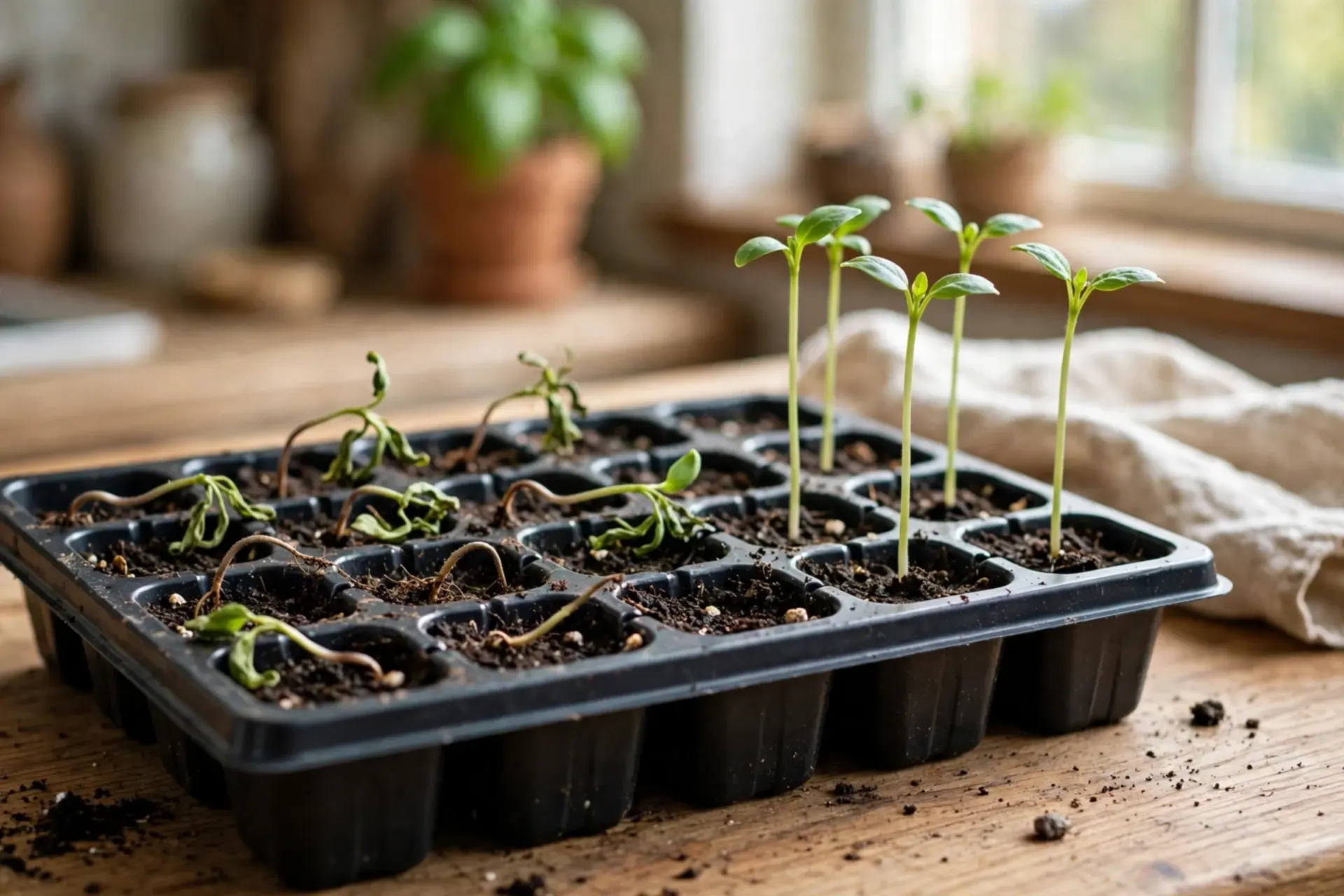
Yesterday the tray looked perfect. Today half the seedlings have toppled over, their stems pinched thin and brown right at the soil line, as if cut with invisible scissors. That is damping off — a group of soil fungi that attack seedlings in their first two weeks, and it moves through a warm, wet, still-air tray in days. Fallen seedlings cannot be rescued, but the survivors often can, and the next tray can be made almost immune.
Signs it is damping off (not thirst or light)
- Seedlings fall over with a thin, water-soaked, pinched stem exactly at soil level — the signature sign
- Seeds rot before sprouting, leaving mysterious gaps in the tray (the same fungi, striking earlier)
- White or grey fuzzy growth spreads over the mix surface in still, humid air
- Whole patches fail within a day or two while seedlings across the room stay healthy — it spreads through shared water and mix
- Stems stay upright but seedlings stall and yellow in some root-rot cases — less common, same wet-mix cause
Step 1 — Accept the hard truth about the fallen ones
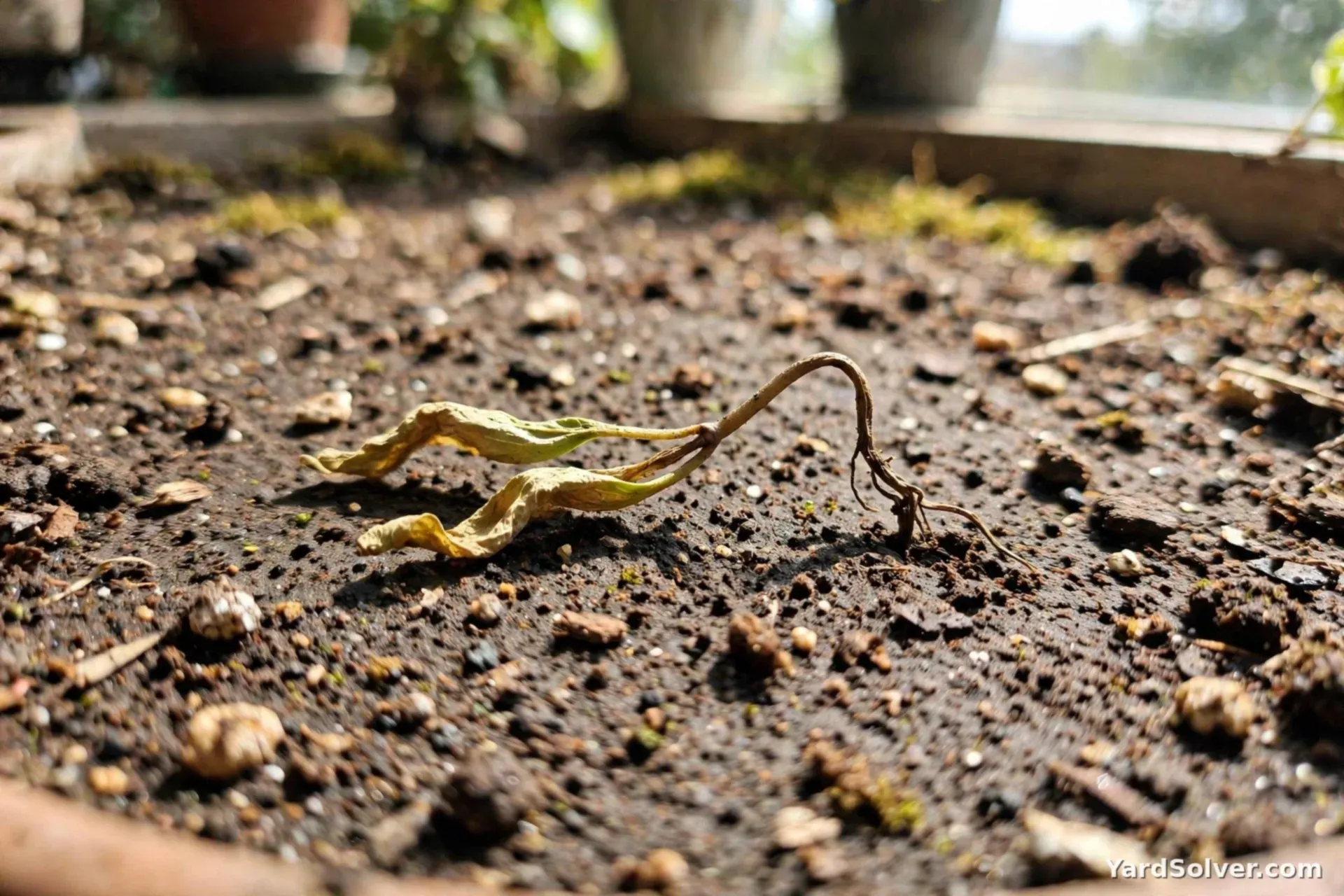
A seedling lying flat with a pinched stem is already dead at the stem — it cannot reconnect, and no spray, tea or tonic will save it. Pinch out the casualties and bin them (never compost them), because leaving them feeds the fungi that are threatening the rest. This feels brutal with a tray you have nursed for two weeks, but the survivors are the crop now.
Step 2 — Change the air and water for the survivors, today
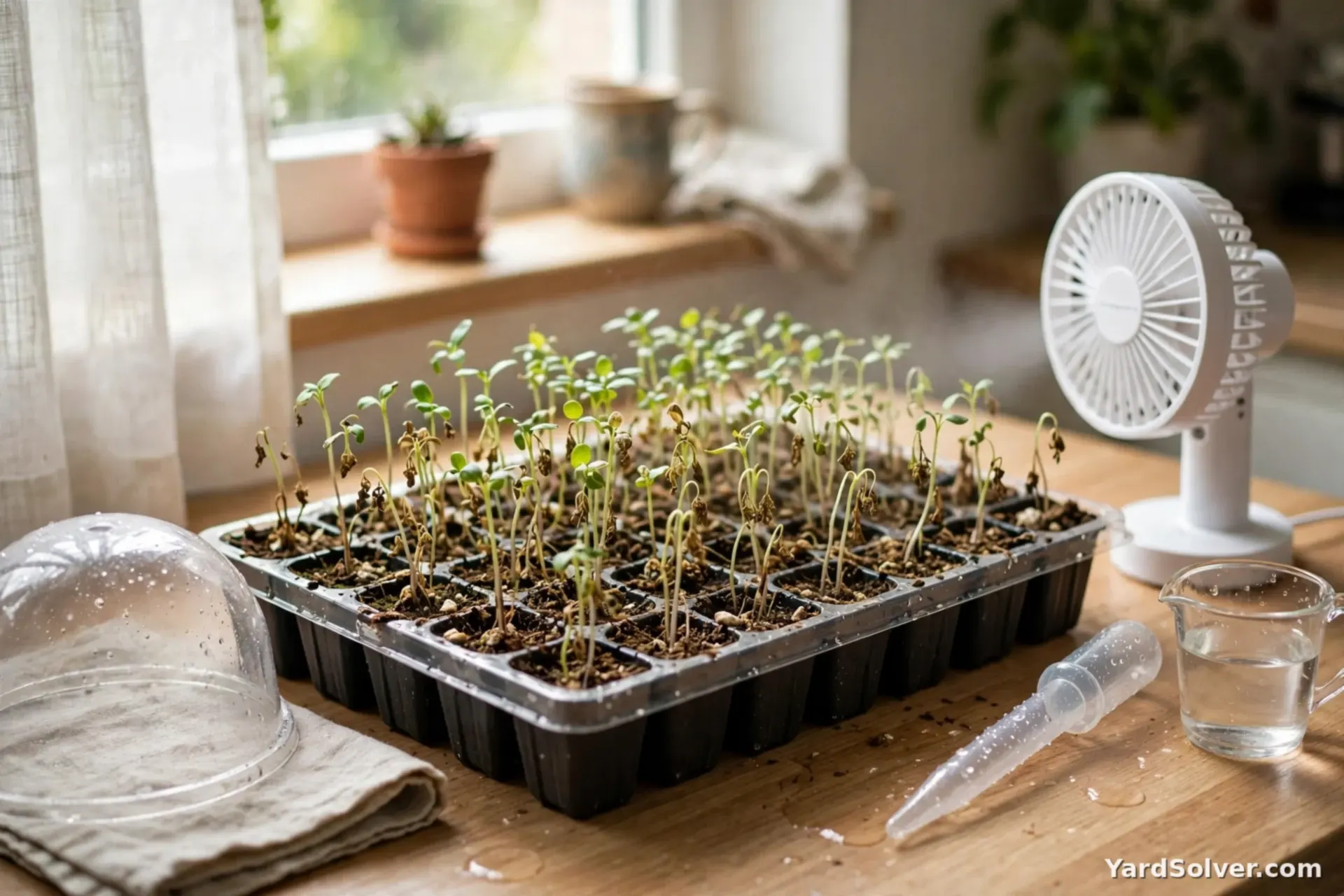
Damping off needs still, saturated air and soggy mix. Take the humidity dome off permanently once seeds have sprouted, set a small fan nearby so the air over the tray moves gently, and stop watering from above — set the tray in a shallow dish of water for ten minutes so the mix drinks from below and the surface (and stems) stay drier. Thin crowded cells to one seedling so air reaches every stem. Survivors in the early stages often pull through once conditions flip.
Step 3 — If you re-sow, start surgically clean
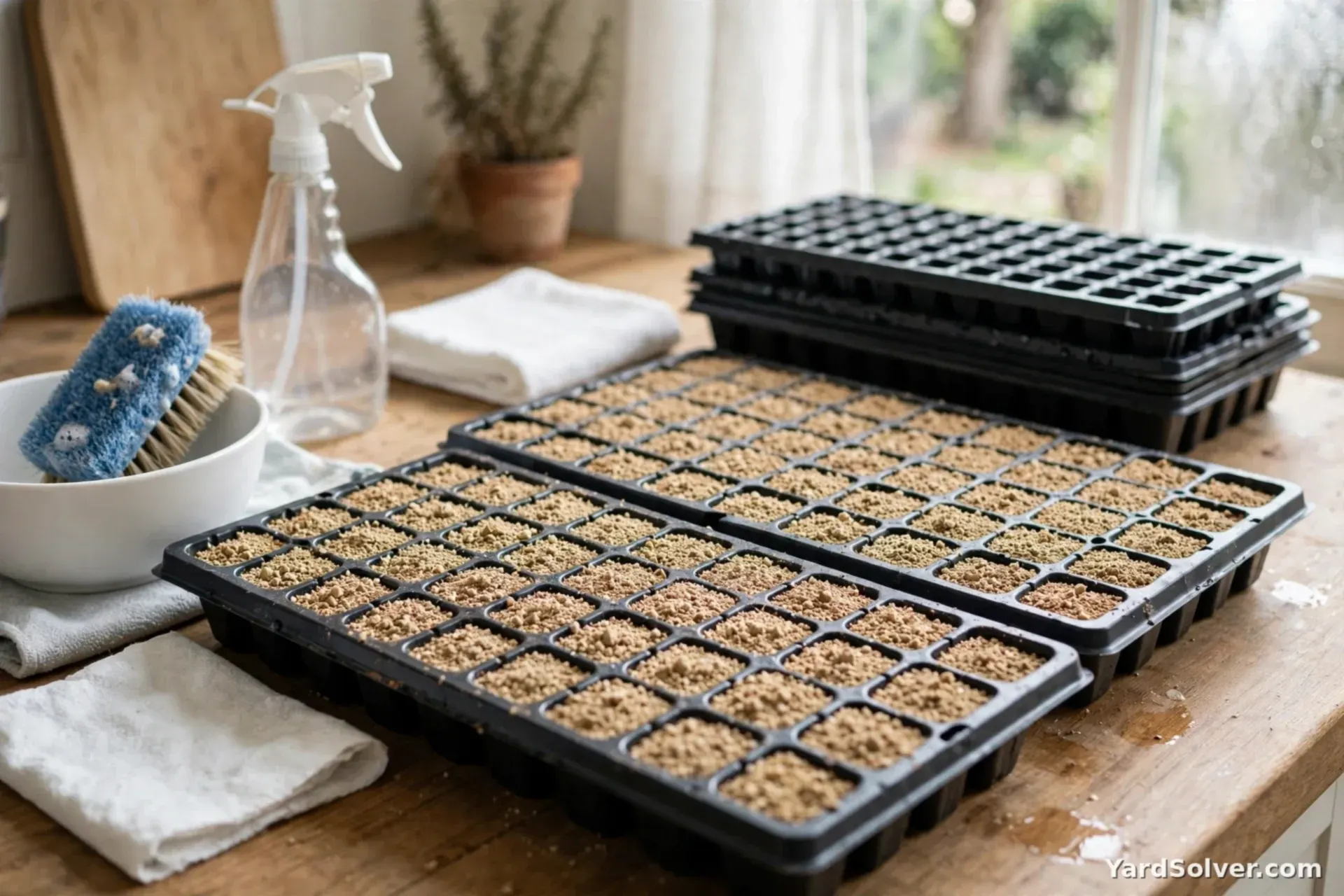
Scrub trays, cells and pots in hot soapy water and let them dry before refilling — the fungi live in old mix residue. Fill with fresh seed-starting mix, never last year's opened bag and never garden soil, which carries the fungi by default. Sow at the depth on the packet (too deep means a longer, weaker climb through the danger zone), firm lightly, and water just until moist — soaked mix is the disease's favourite home.
Step 4 — Grow them tougher from day one
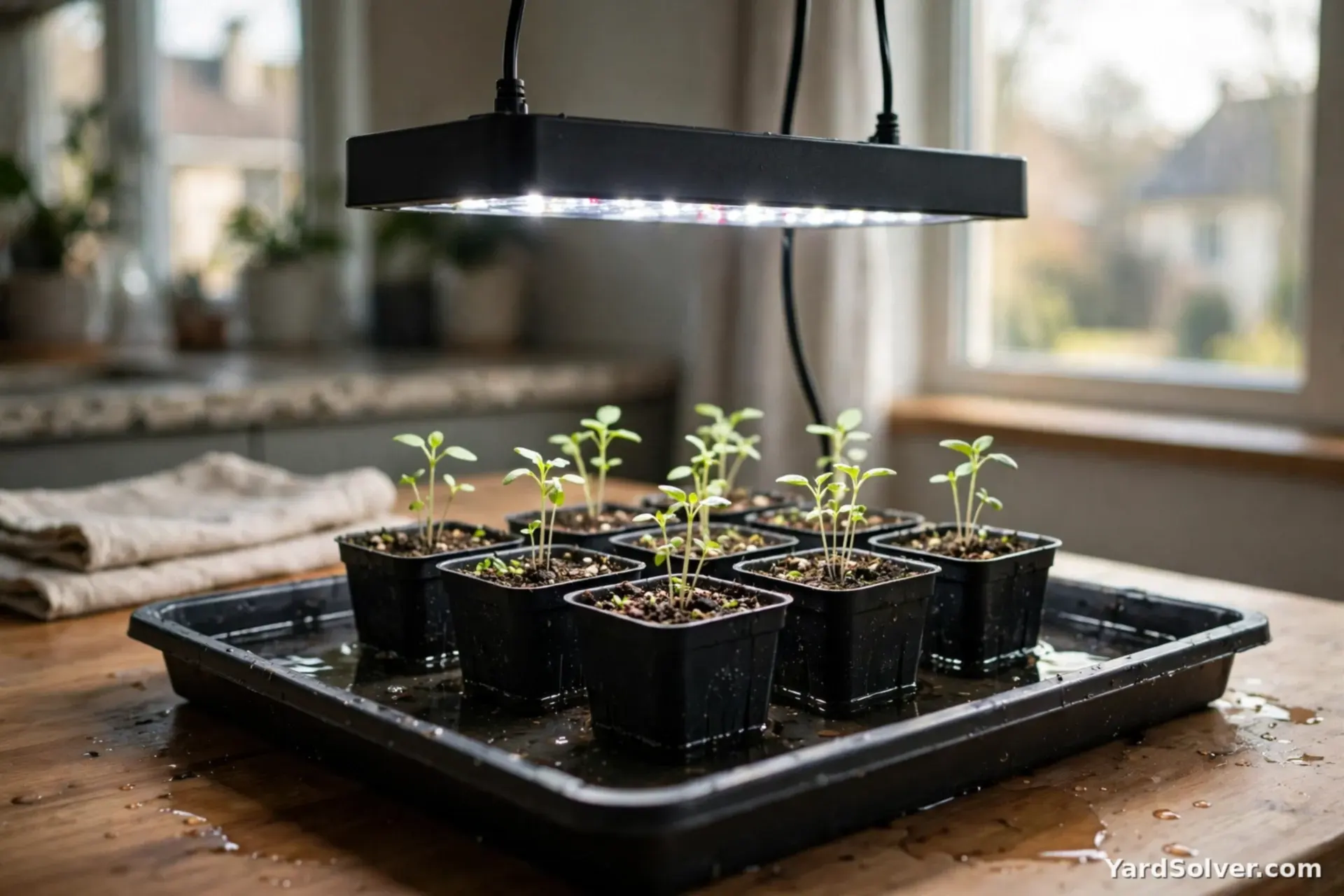
Light and air are the real fungicides. Put seedlings under a close light immediately (the weak, stretched stems of leggy seedlings damp off first), keep the room ordinary-cool once they are up, and water in the morning so surfaces dry during the day. Bottom-water as routine and let the surface dry slightly between waterings — that thin dry skin on the mix is hostile territory for the fungi.
The honest note on home remedies
Cinnamon dusted on the surface and chamomile tea waterings are widely recommended, and both are harmless — but the evidence for them is thin and mixed. What reliably works in extension trials and commercial nurseries is unglamorous: clean trays, fresh mix, moving air, restrained watering. Spend your effort there and treat the spice rack as a bonus, not a plan.
Keep going
Build the full routine: When to Start Seeds Indoors · Why Are My Seedlings Leggy?. The other tray pest of winter is covered in How to Get Rid of Fungus Gnats, and the Seed Calculator works out how much seed a tray or bed actually needs.
Questions people ask
Can seedlings recover from damping off?
A seedling that has already toppled with a pinched stem cannot recover — the stem is destroyed. Seedlings still standing in the same tray often can be saved if you change conditions immediately: dome off, air moving, watering from below, and the mix allowed to dry slightly at the surface.
Why did one tray die and the identical tray next to it survive?
Usually water and air, not luck. The dying tray was likely kept wetter, stayed under its dome longer, sat in stiller air, or was filled from a different (older or garden-soil) mix. Damping-off fungi are nearly everywhere; the conditions decide whether they get their chance.
Is the white fuzz on my soil surface damping off?
Not necessarily. A soft white mould growing on the mix surface itself is usually a harmless fungus feeding on the mix, common in damp trays. Damping off shows at the seedling's stem base — pinched, brown, water-soaked — and the seedling falls. Treat the fuzz as a warning sign that conditions are too wet and still, and fix those.
Comments & ratings
No comments yet.
Be the first to share your experience.