
Guides · Plant problems · Published November 1, 2026
How to Get Rid of Fungus Gnats
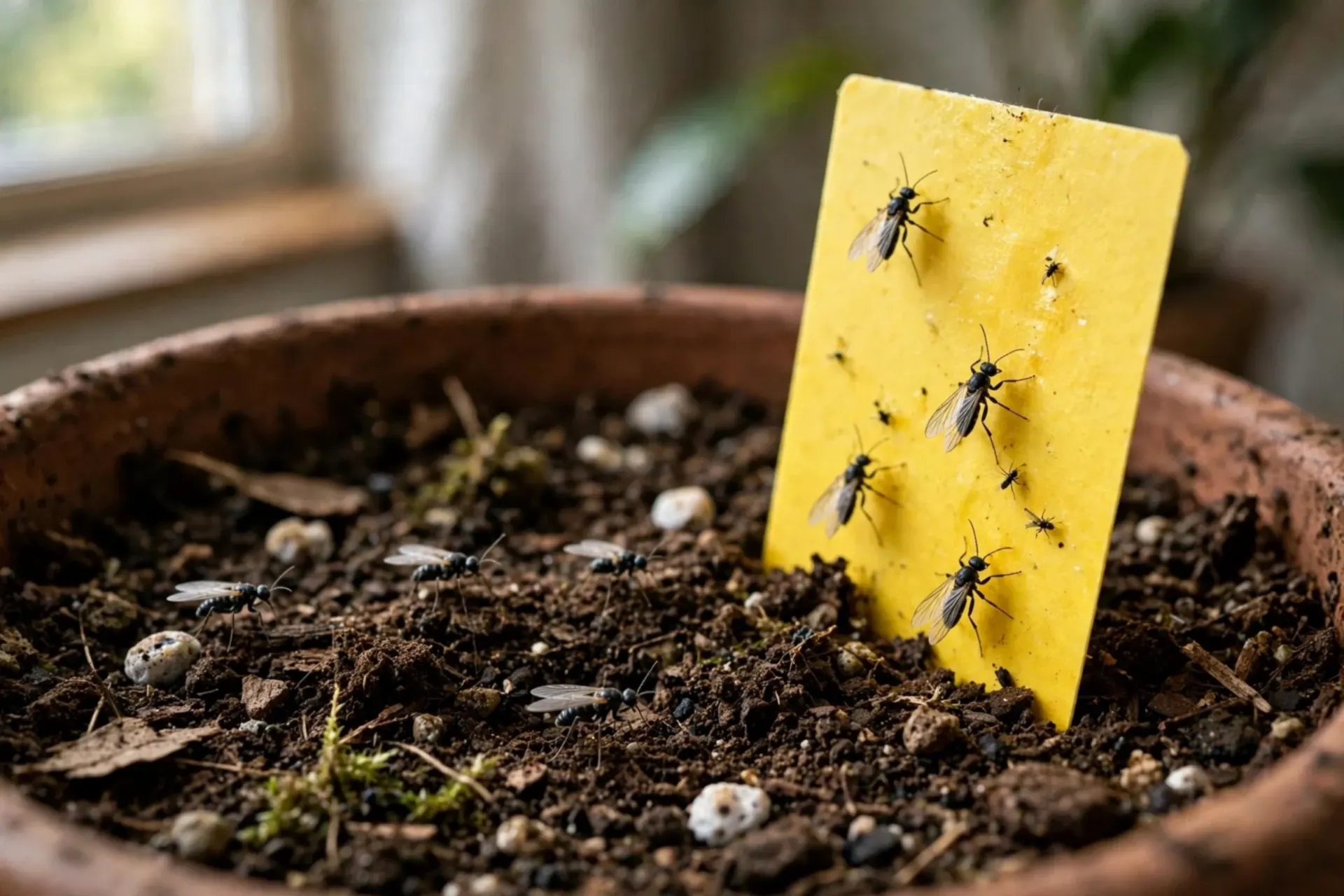
Tiny black flies that drift up when you tap a pot, walk across the soil, and gather at windows: fungus gnats, the number-one indoor gardening pest. The flying adults are mostly a nuisance — the real issue is underground, where their larvae feed in constantly wet potting mix and nibble the root hairs of seedlings and young plants. Killing only the flies never works. Breaking the life cycle does, in about three weeks.
Signs it is fungus gnats (not fruit flies)
- Flies live on the pots — walking on the mix surface and rising when the pot is tapped; fruit flies haunt the fruit bowl and drains instead
- They are small and dark, about 2–3 mm, weak fliers that stay near the plant rather than the room
- The mix never dries out — gnats are a symptom of permanently wet surface soil
- Seedlings stall or topple in infested trays, as larvae damage their tiny root systems (a partner-in-crime of damping off)
Step 1 — Dry the surface: starve the nursery
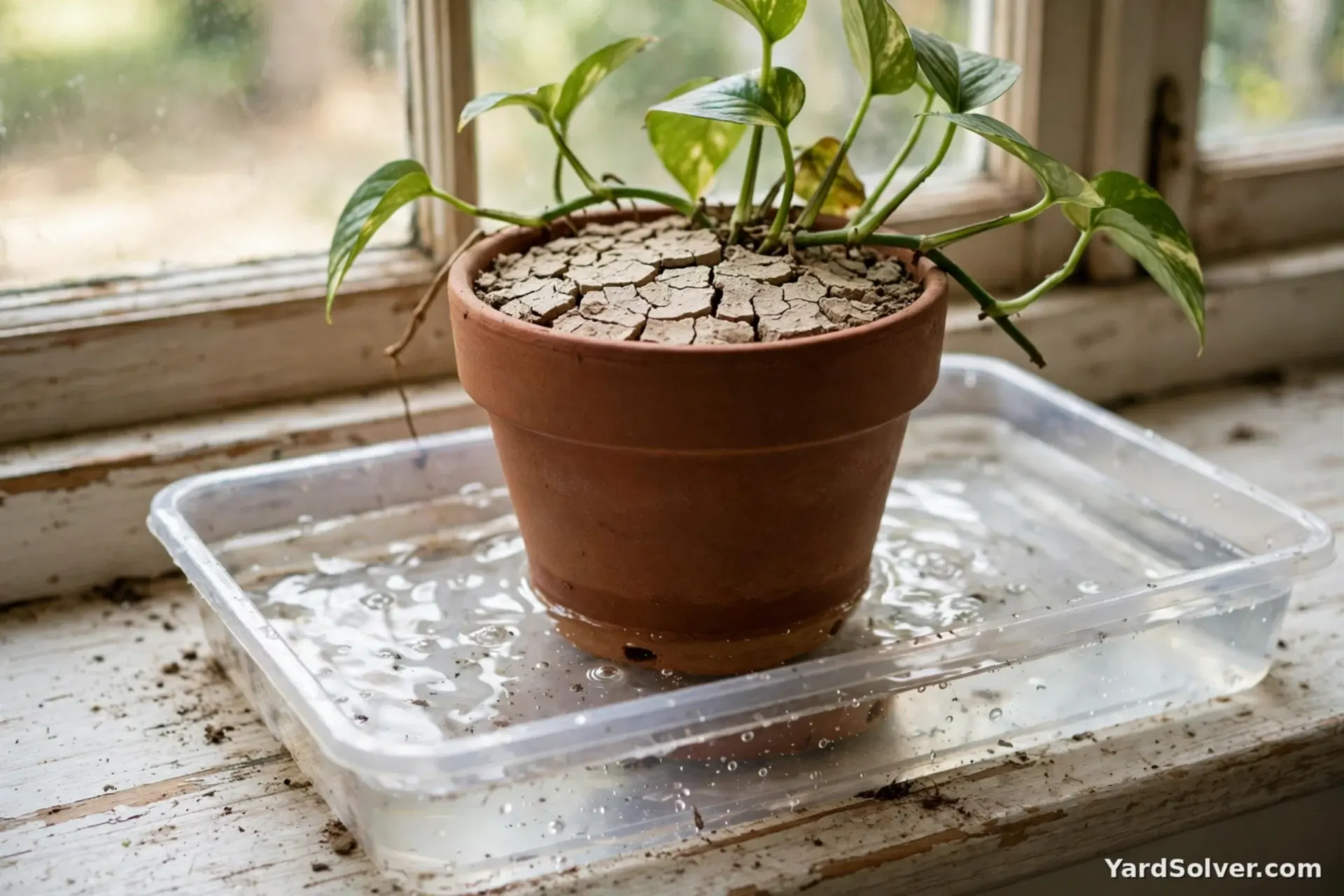
Female gnats lay eggs in moist surface mix, and larvae need that damp layer. Let the top 2–3 cm of mix dry out between waterings — most houseplants prefer this rhythm anyway — and water established plants from the bottom where the pot allows it, so the surface stays drier while roots drink below. Empty saucers after watering; a plant standing in water is a gnat hotel. This single change does more than any spray.
Step 2 — Trap the adults so they cannot reseed
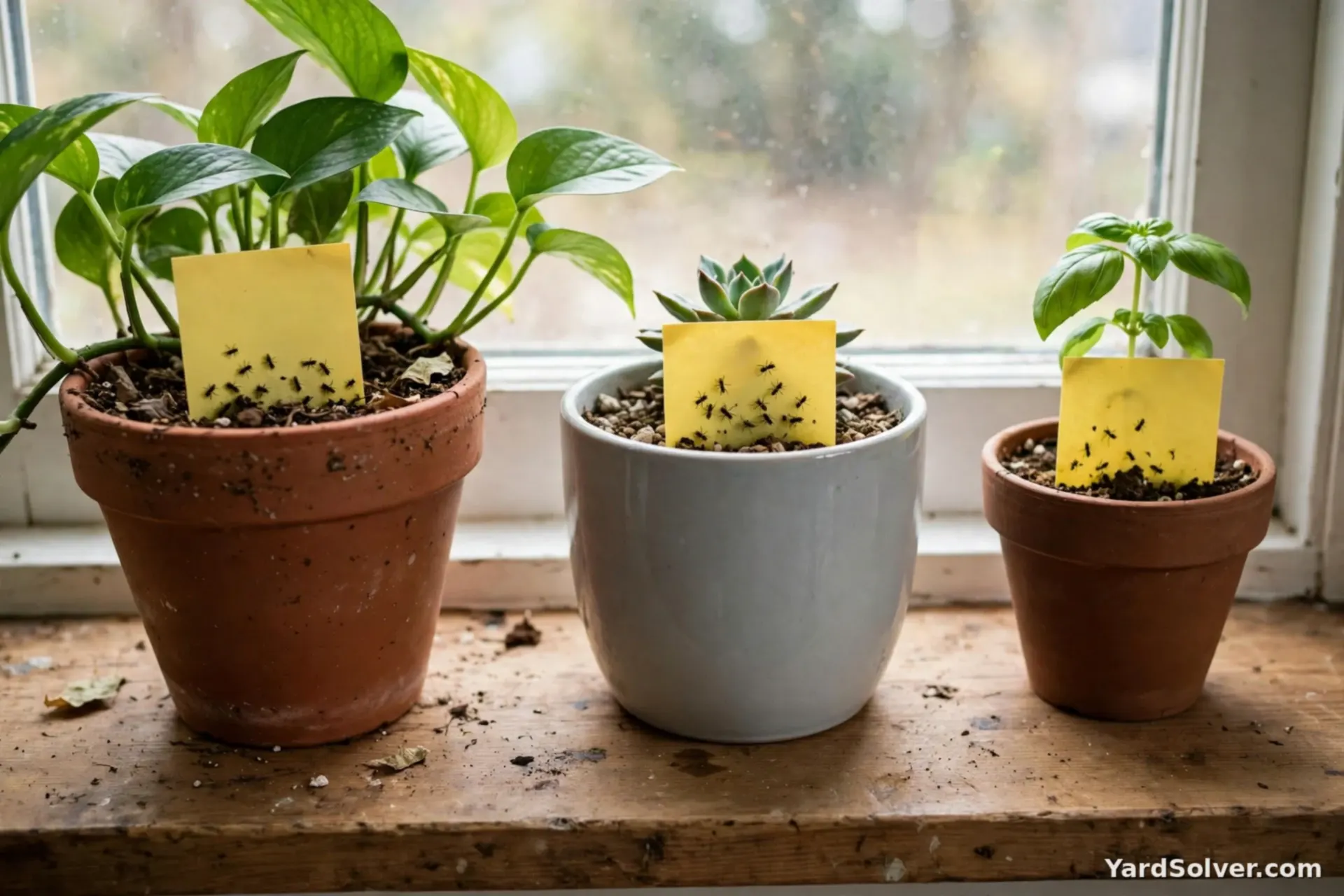
Push yellow sticky traps into the pots at soil level. They will catch depressing numbers at first — that is the point: every trapped adult is hundreds of eggs unlaid. Traps alone will not finish an infestation (the larvae are untouched), which is why people conclude they 'don't work'; paired with Steps 1 and 3, they are how you watch the population actually fall week by week.
Step 3 — Treat the mix: Bti in the watering can
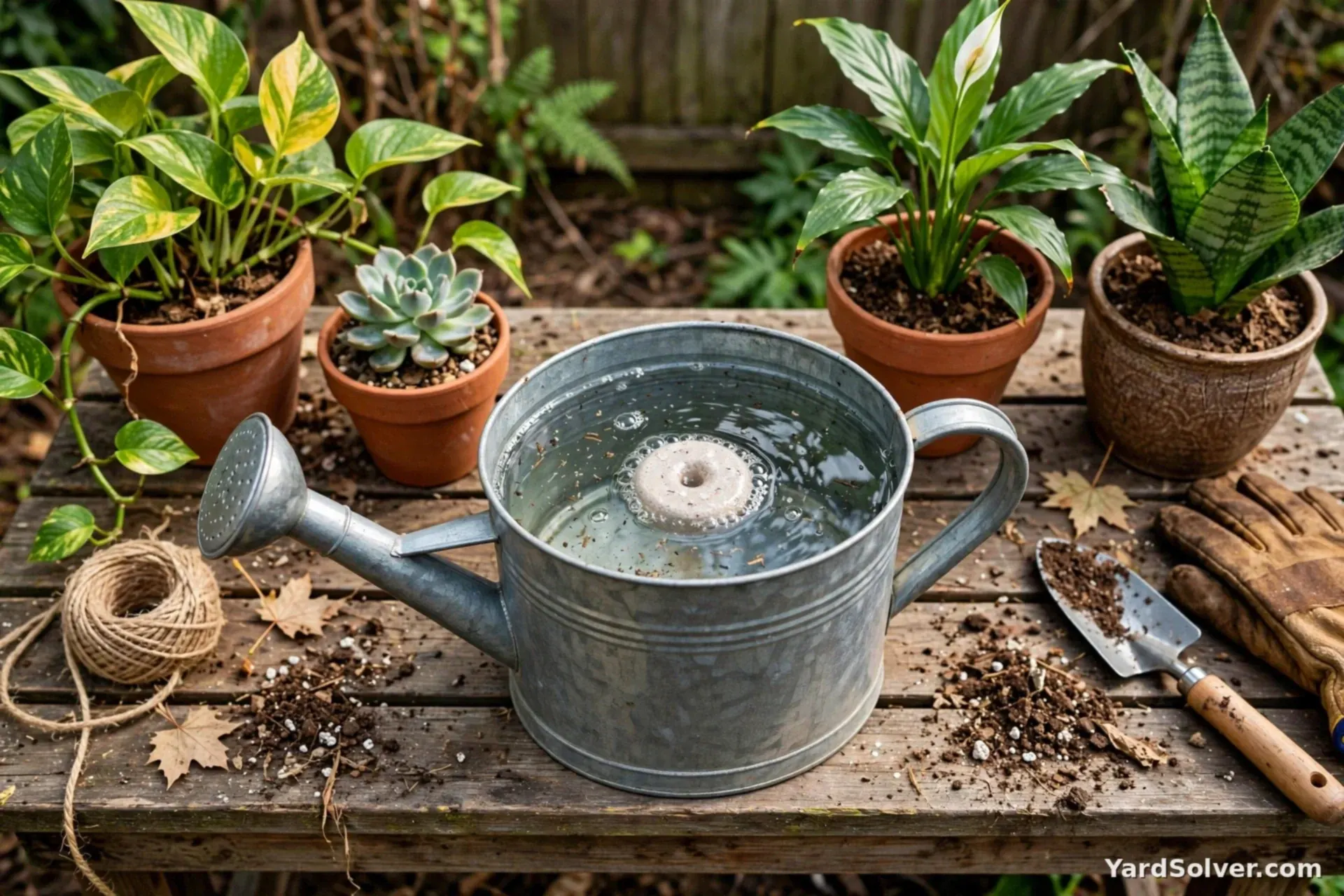
The targeted treatment is Bti — Bacillus thuringiensis israelensis, a natural bacterium sold for mosquito control as dunks, bits or granules. Soak the product in your watering water as its label directs, and water the plants with it: gnat larvae eat the Bti and die, while plants, pets, people and other insects are unaffected. Repeat with every watering for at least three weeks to catch each new hatching — the life cycle is roughly a month, so one treatment never covers it. Work out treatment quantities for your can in the Garden Mix Calculator.
Step 4 — Block and quarantine
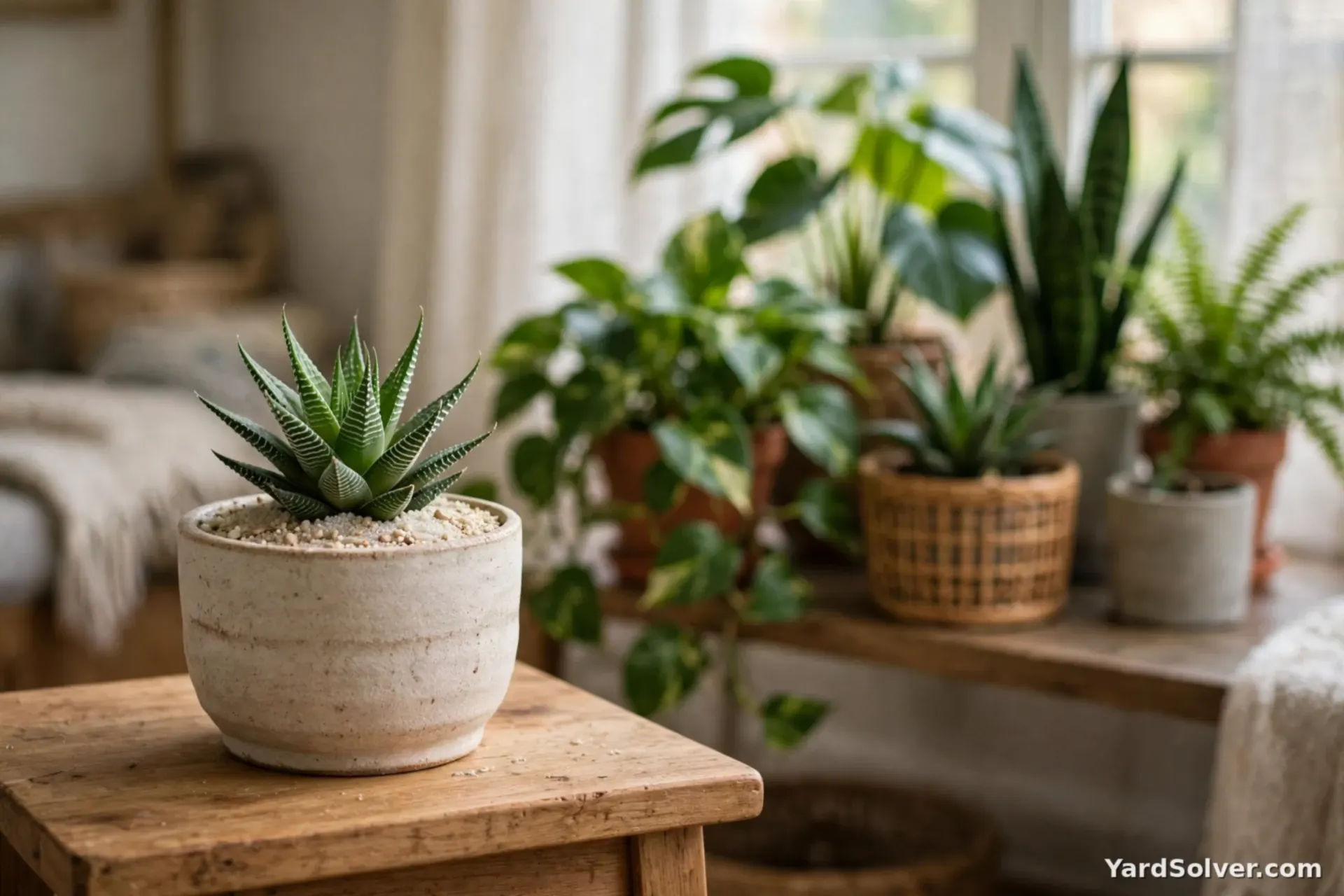
A 1 cm top-dressing of coarse sand or fine grit on the mix surface dries fast, deters egg-laying, and makes the dry-down of Step 1 easier to keep. Quarantine new plants for a week or two and tap-test them before they join the collection — most infestations arrive as passengers. For a plant that is truly overrun and declining, repotting into fresh mix (shaking the old mix off the roots, binning it outside) is the honest reset.
Step 5 — Protect the seed trays
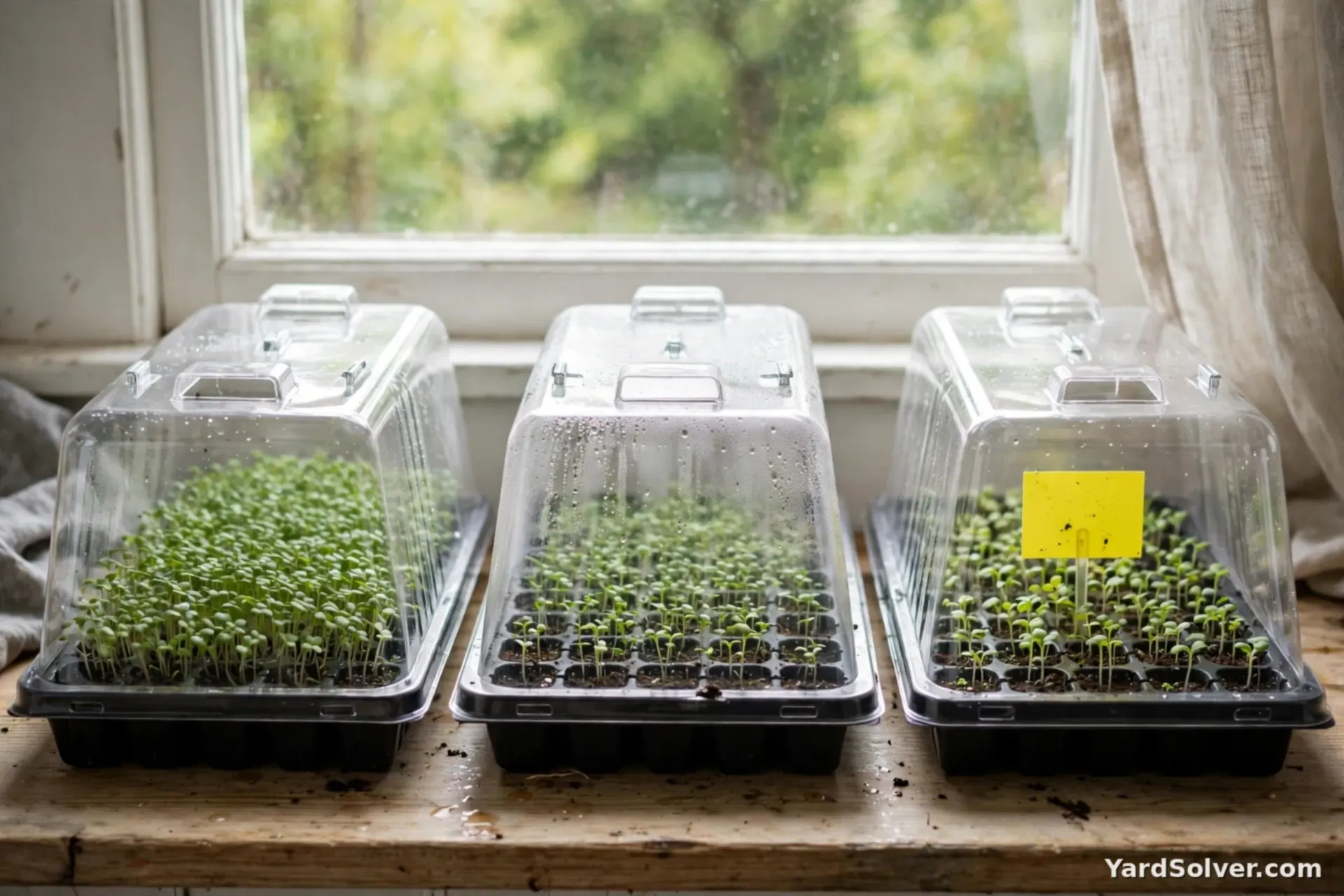
Seedlings are the gnats' most vulnerable victims, and seed trays are kept moist by necessity. Cover fresh trays with a vented lid until germination, water from below, let the surface dry slightly between waterings, and keep a sticky trap standing in every tray from day one. If seedlings start falling, read Why Are My Seedlings Dying? — in wet trays the two problems usually arrive together.
Keep going
Indoor growing, sorted: How to Grow Herbs Indoors in Winter · How to Grow Microgreens Indoors. The other common indoor pest gets the full ladder in How to Get Rid of Aphids on Plants.
Questions people ask
Are fungus gnats harmful to people or pets?
No — they do not bite, sting or spread disease to people or pets, and the Bti used against their larvae is a target-specific bacterium considered safe around both. The harm is to plants, and mainly to seedlings and plants already weakened by overwatering.
How long until they are actually gone?
Plan on three to four weeks of the full routine. Adults live about a week and eggs and larvae are already in the mix at several ages, so numbers fall steadily rather than stopping overnight. If the sticky traps are not clearly quieter by week three, somewhere there is a permanently wet pot still breeding them.
Do vinegar traps work on fungus gnats?
Not really — vinegar traps are built for fruit flies, which breed in fermenting fruit and drains. Fungus gnats are only weakly drawn to them. Yellow sticky traps at soil level are the right trap, because they intercept the gnats exactly where they live and lay.
Comments & ratings
No comments yet.
Be the first to share your experience.