
Guides · Plant problems · Published November 9, 2026
Why Is My Aloe Vera Turning Yellow? 7 Causes Matched to the Fix
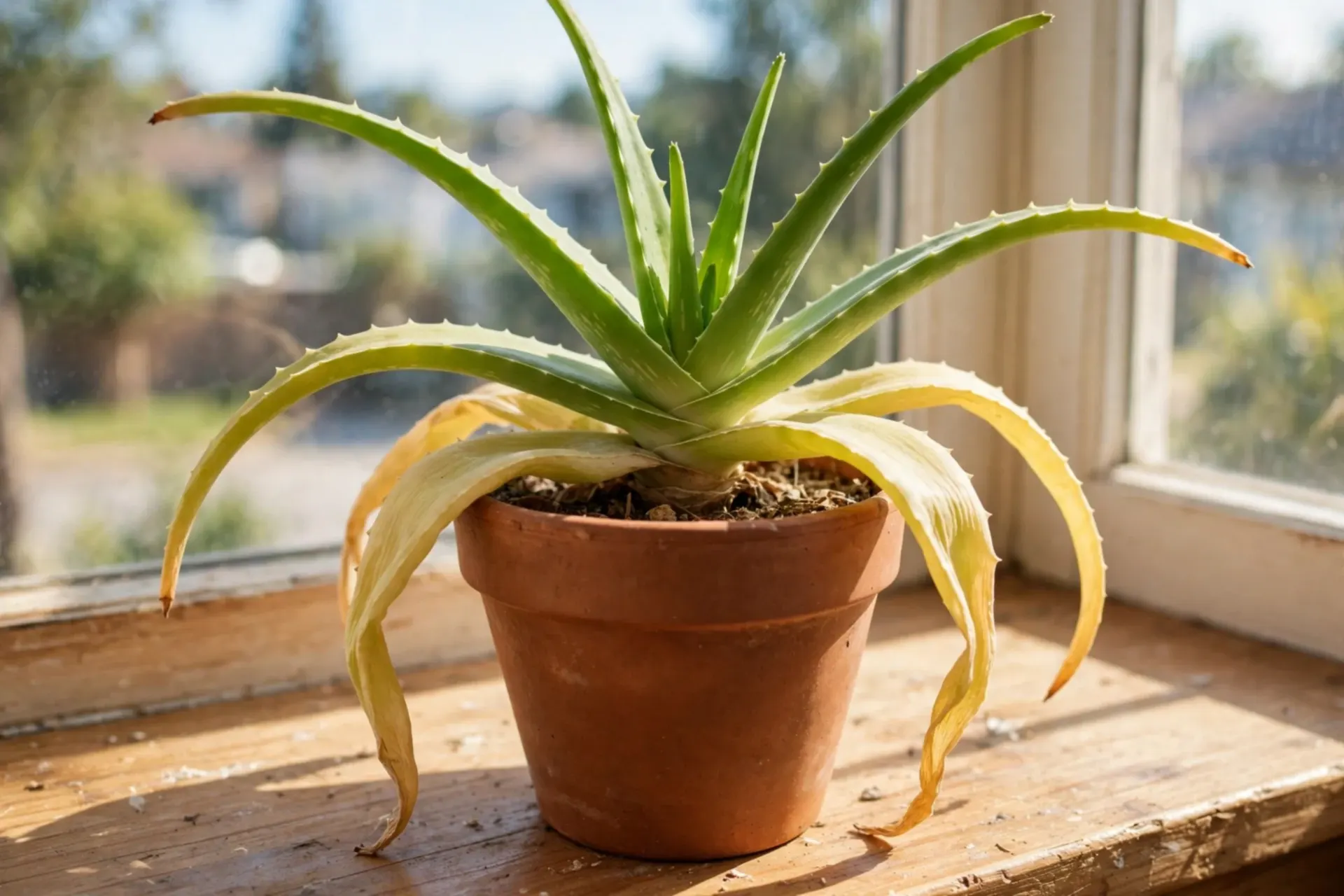
A yellow aloe is not one problem — it is at least seven, and two of them demand opposite treatments. Water a thirsty aloe and it recovers in days; water a rotting one and you finish it. The plant itself tells you which it is, if you read where the yellow sits and how it feels before you reach for the watering can. This guide works through the diagnosis first, then each cause with its fix — building on the plant's normal care in the Aloe Vera growing guide and its plant page, so the three pages work as one cluster.
🎬 Watch: Read the Plant Before You Water
Prefer to watch it happen? In this short animated story, Dan shows Lily how to read her yellowing aloe before reaching for the watering can.
Read the plant first: where is the yellow?
| Pattern | Feel | Cause |
|---|---|---|
| Bottom leaves yellow first, spreading upward | Soft, translucent, mushy at the base | Overwatering / root rot — Cause 1 |
| Whole plant yellowing, leaves thin and curling inward | Dry, papery, leaves feel hollow | Underwatering — Cause 2 |
| Pale white or tan patches on the sun-facing side | Dry and bleached, like parchment | Sun scorch — Cause 3 |
| Pale yellow-green all over, growth stretched | Firm but weak, leaves thin | Light starvation — Cause 4 |
| Sudden yellowing and collapse after a cold night | Watery, translucent, then mushy | Cold damage — Cause 5 |
| One old bottom leaf yellow, everything else healthy | Drying out from the tip | Old age — not a problem; remove it |
| Orange-brown raised spots, mostly underneath leaves | Rough, rusty patches | Aloe rust / pests — Causes 6–7 |
Cause 1 — Overwatering and root rot (the usual suspect)
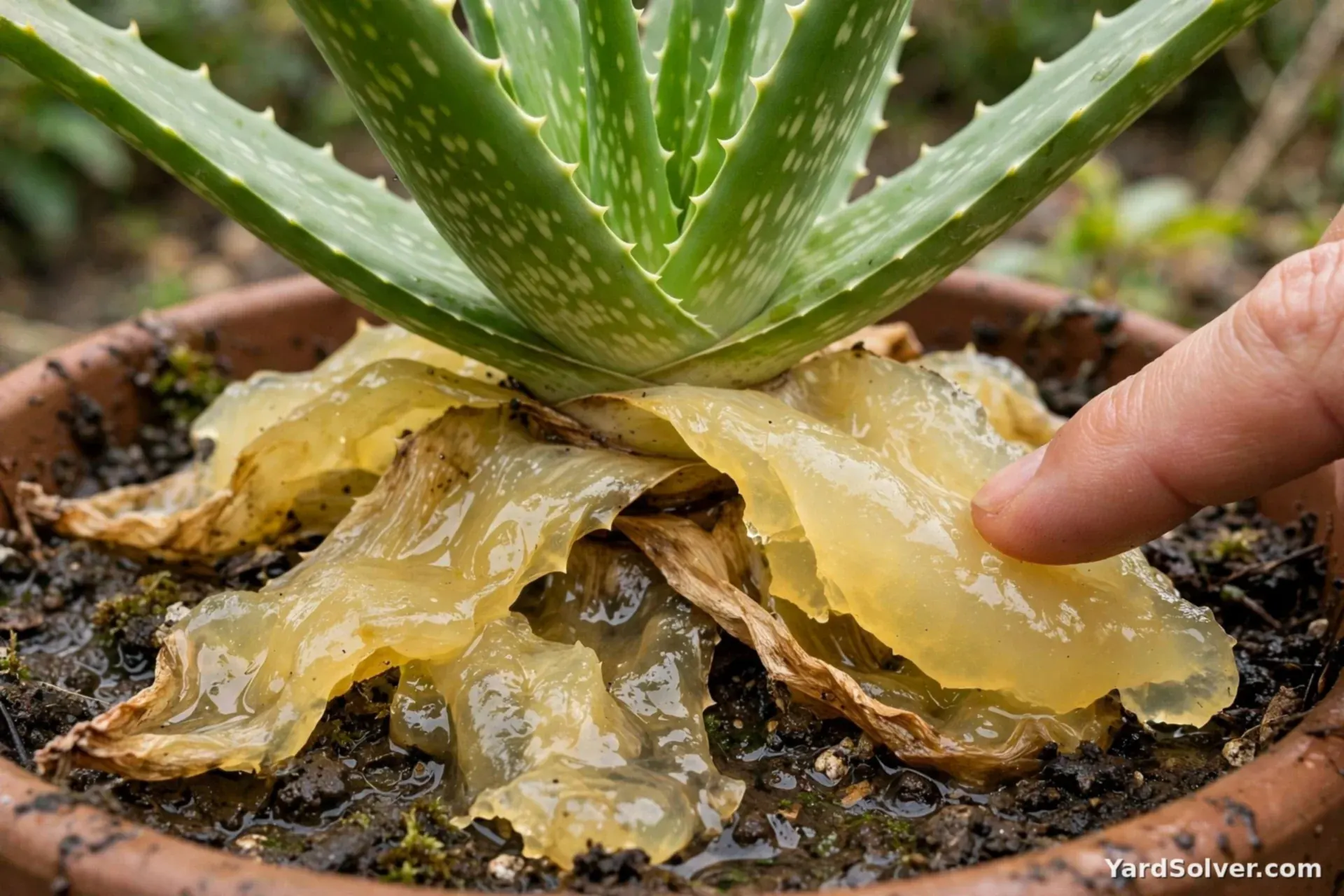
Extension services name overwatering as the cause in the great majority of aloe problems, and the signature is unmistakable once you have seen it: the lowest leaves yellow first, turning translucent and soft as their stored water turns against them, and the stem base begins to rot in soil that never dries. The fix: stop watering immediately. If the mix is wet, unpot the plant, shake off the wet soil, and cut away any black or mushy roots and leaves back to firm tissue. Let the plant sit bare-root in the air for 2–3 days to dry — an aloe out of soil for three days is in far less danger than an aloe in wet soil for three days. Then repot by Step 3 below and hold water for a full week. The general protocol is in Overwatered Plant Rescue; aloe's version is simply slower and drier, because the plant is built for exactly that.
Cause 2 — Underwatering (the look-alike with the opposite fix)
A genuinely thirsty aloe also yellows — but it feels different. The leaves grow thin and hollow as the plant drinks its own reserves, their edges curl inward to save water, and the colour fades to a dry yellow-green rather than turning translucent. The mix, when you check, is dry all the way through and may have pulled away from the pot. The fix: one deep watering — soak it until water runs from the drainage holes, let it drain, and the leaves plump back over the following days. Yellowed leaf tips do not re-green, but the plant stops the slide immediately. Confusing Cause 2 with Cause 1 is the classic aloe tragedy: if in doubt, touch the leaves (soft = rot, dry and thin = thirst) and check the mix before you pour anything.
Cause 3 — Sun scorch
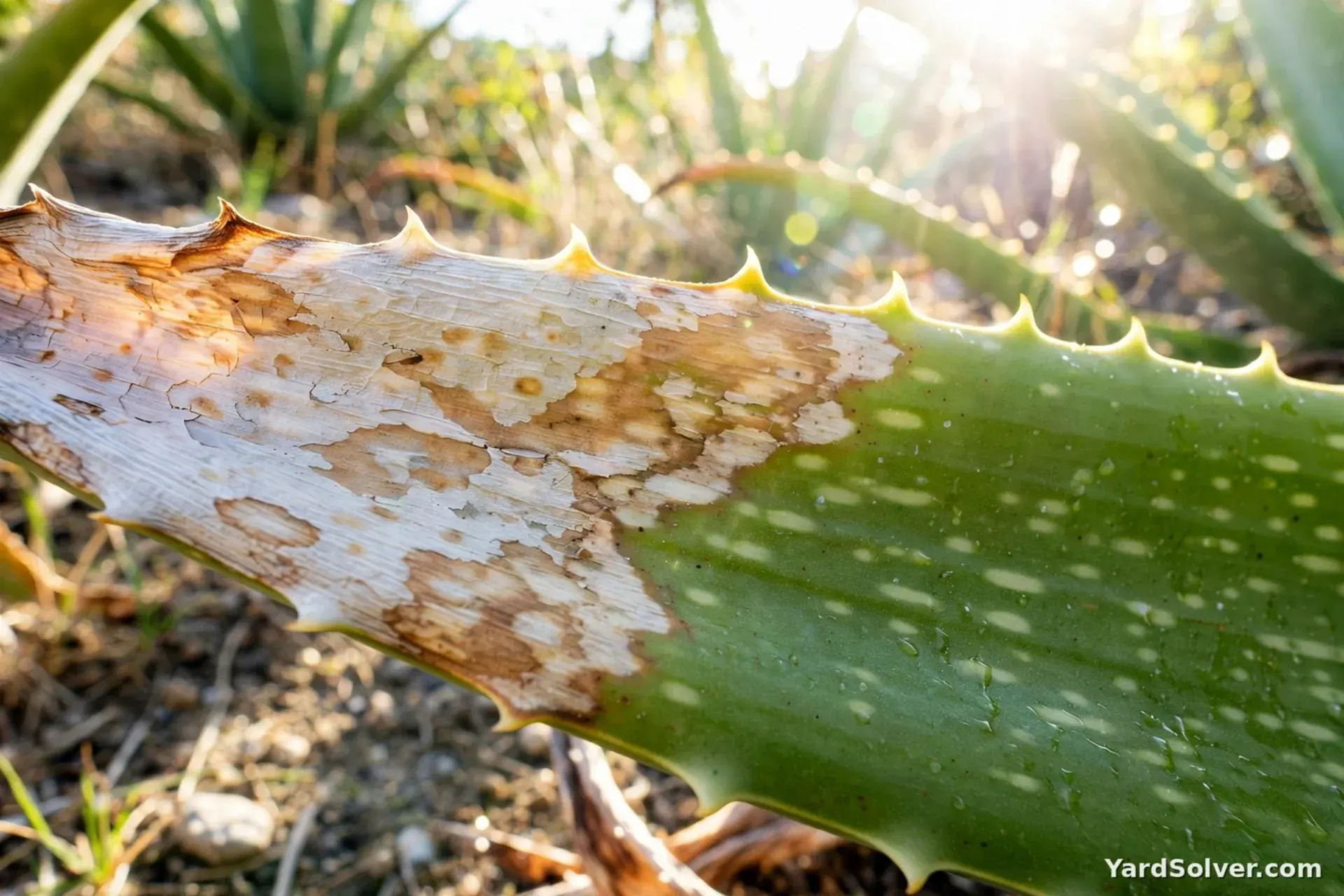
Aloe loves sun — once it is used to it. A plant moved from a dim room straight onto a scorching sill, or brought outdoors in spring without a gradual introduction, burns: patches bleach white, then tan, on the sun-facing side, and feel dry like parchment. Scorched tissue does not recover, but the plant does. The fix: move it to bright indirect light, leave the bleached leaves (they still photosynthesise around the damage), and re-introduce direct sun gradually — an hour or two more each day over a couple of weeks. New growth will come in hardened and green.
Causes 4 and 5 — Cold, and light starvation
Cold damage strikes fast: after a night against frosty glass or outdoors in a cold snap, leaves turn watery and translucent, yellow, and then collapse. Fix: move the plant somewhere warm, cut away tissue that goes fully soft, and wait — a warm rhizome-and-heart often survives even when outer leaves are lost. Aloe is a warmth plant; keep it above about 10°C. Light starvation is the slow opposite: pale yellow-green all over, leaves thinner and more upright-stretched than they should be, growth crawling. Fix: brighter light, increased gradually (see Cause 3 — a starved plant scorches easily), and patience; the colour deepens on new growth first. Both causes are really placement problems, which is why the Aloe Vera plant page leads with the spot before anything else.
Causes 6 and 7 — Aloe rust, and pests
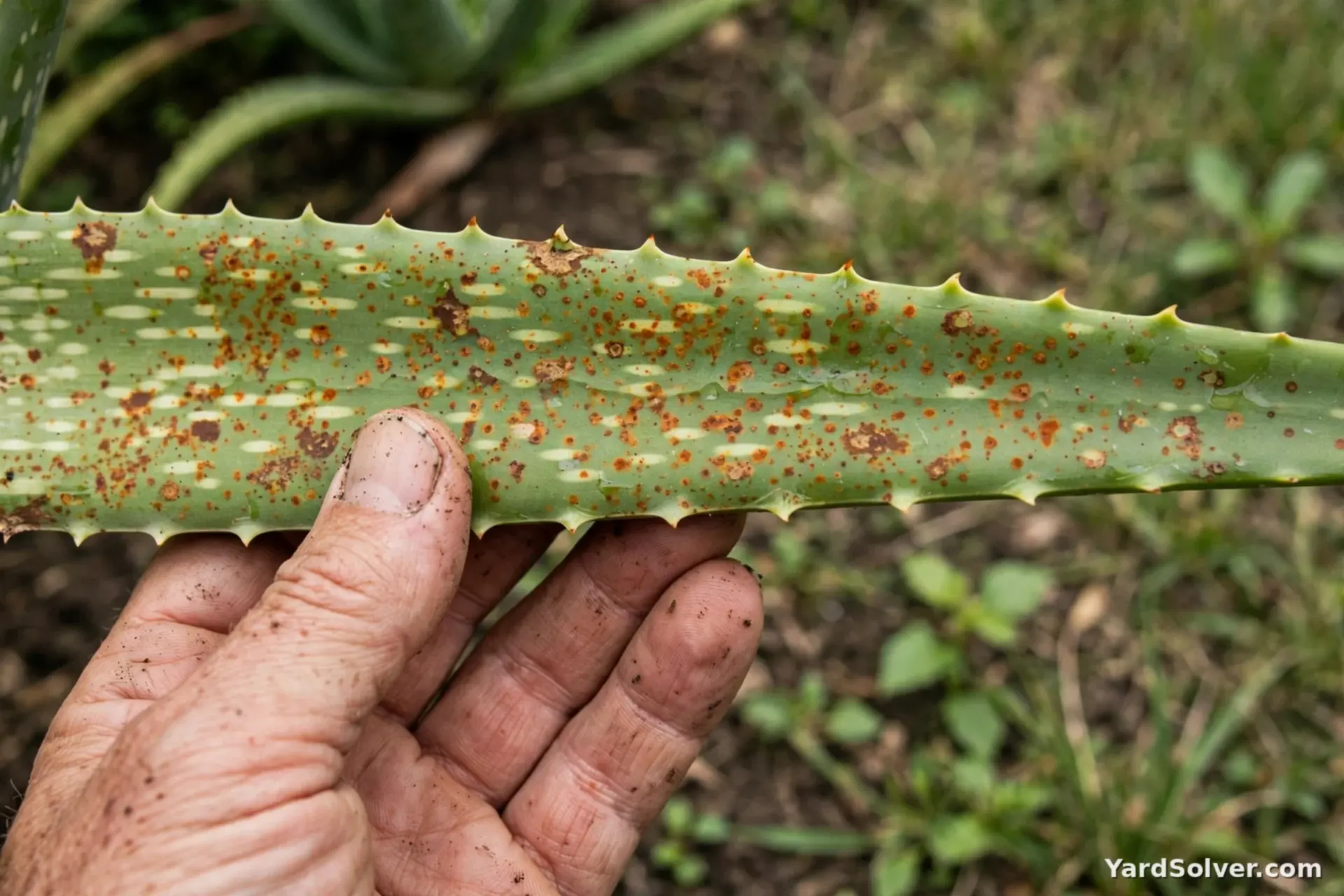
Aloe rust shows as orange-brown spots, often starting on the undersides of leaves, in plants kept wet and crowded. Fix: remove badly spotted leaves, water only at the base, space the plant for air, and stop any misting; rust spreads by spores in water splash, so dry foliage starves it. Pests — mealybugs in the leaf axils and scale along the leaves — yellow an aloe slowly by drinking from it. Fix: alcohol-dab every cluster or bump, wipe the leaves, and inspect weekly; a plant weakened by pests often shows the yellowing before the pest is noticed, so look closely at the leaf bases whenever colour fades.
Step 3 — Repot into gritty mix, then reset the watering
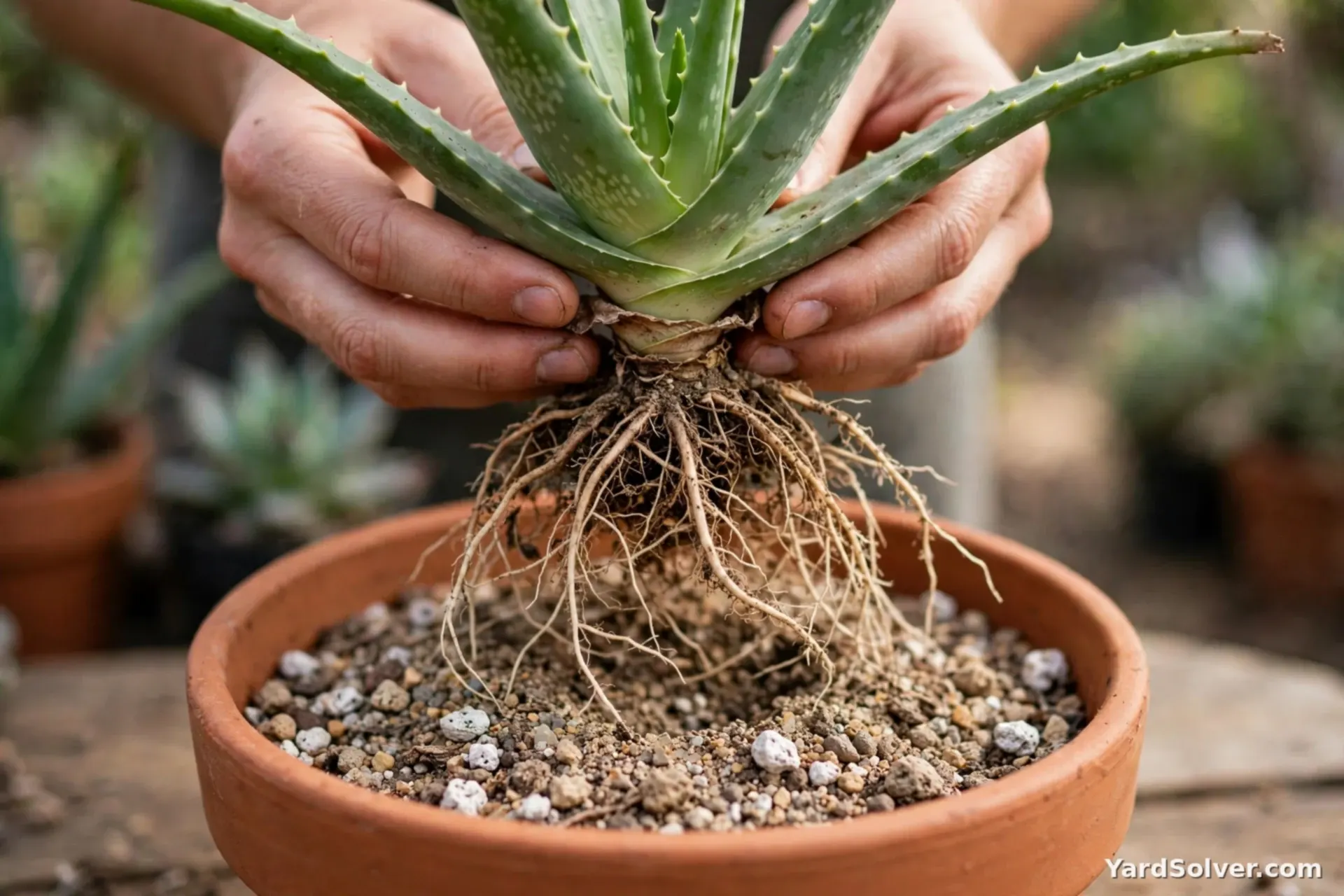
For any aloe coming back from rot — and for one that has simply lived too long in dense, tired mix — repot into a gritty succulent mix: ordinary potting mix cut with roughly half coarse sand, perlite or fine grit, in a pot with drainage holes only slightly larger than the root ball. Set the plant so the leaf bases sit just above the mix surface (buried leaf bases rot), firm it in, and then wait a week before the first watering. From there, run the watering reset below and the yellowing should be a story the plant tells about its past, not its future.
The watering reset: soak-and-dry, by season
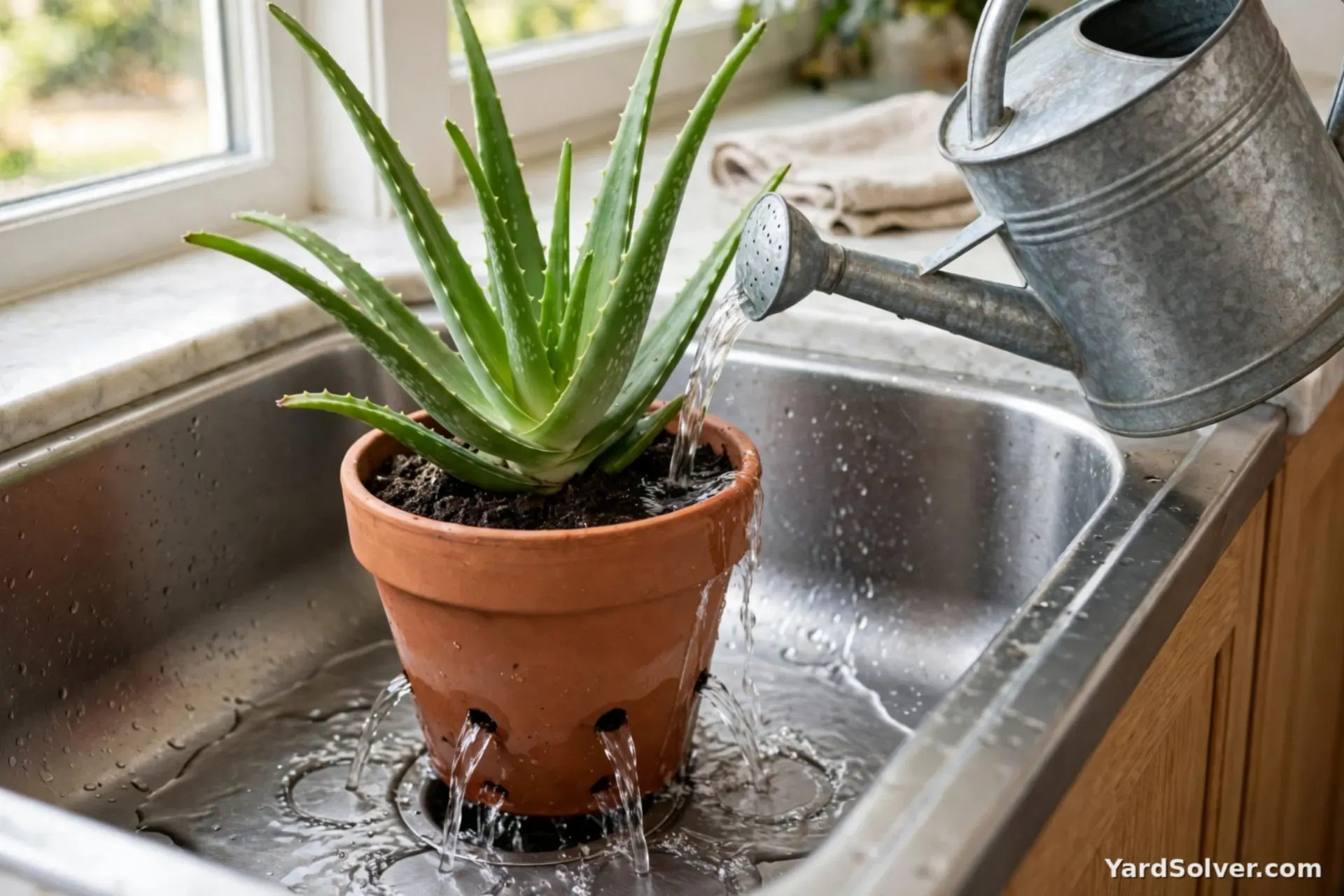
- Soak: water deeply at the soil line (not over the leaves) until it runs from the drainage holes; then empty any saucer.
- Dry: wait until the mix is dry all the way through — check with a finger or a wooden skewer to the bottom of the pot.
- Intervals that follow from it: roughly every 3 weeks in the growing season indoors, every 4–6 weeks or more in winter; small terracotta pots dry sooner, large plastic pots later.
- Never: little-and-often sips, water sitting in the leaf crown, or a pot standing in its own runoff.
Keep going
The full growing routine: How to Grow Aloe Vera · the one-screen version: Aloe Vera — Plant Library.
The general rescue for any overwatered houseplant: Overwatered Plant Rescue.
Same symptom, other famous unkillable: Why Is My Snake Plant Dying?
🌱 Stay with us — we'll remind you
The fix only counts if you check back: is new green growth coming from the centre in a few weeks? Start your aloe with us and its page keeps the schedule with you:
- Open the Aloe Vera page and press "Start Aloe Vera with me": Aloe Vera — Plant Library.
- Step 1 — set your start date. Tell the page the day you applied the fix — repotted into gritty mix, cut the soft leaves, reset the watering. Your plant and its start date are saved on this device straight away.
- Step 2 — take your schedule home. The page turns that date into your personal care schedule and keeps it in front of you, prompting the follow-up check and keeping the soak-and-dry rhythm honest.
- Step 3 — add your email to be first in line. Email reminders switch on with the new YardSolver accounts; the email you save with your plant today is first in line, and from your start date the reminders follow your plant's own schedule.
Free, and no account is needed today. Your email is for your plant reminders only — one purpose, and every message carries an easy stop.
Questions people ask
Why is my aloe vera turning yellow?
Usually overwatering — soft yellow leaves starting at the bottom. Thirst yellows dry and thin, sun bleaches patches, cold collapses tissue overnight, and rust spots it orange-brown. Where the yellow sits is the diagnosis.
Can a yellow aloe leaf turn green again?
Usually not. Recovery looks like fresh green growth from the centre once the cause is fixed. Remove soft or fully yellow leaves; firm, partly yellow ones can stay.
How often should I water aloe vera?
Soak-and-dry: drench, drain, then wait for the mix to dry through — roughly every 3 weeks in the growing season, 4–6 weeks or more in winter indoors.
Should I cut yellow leaves off my aloe vera?
Cut the soft, mushy or fully yellow ones at the base with a clean knife. Firm, partly yellow leaves can stay while you fix the cause.
Comments & ratings
No comments yet.
Be the first to share your experience.