
Guides · Plant problems · Published November 9, 2026
Why Is My Snake Plant Dying? Mushy Leaves, Root Rot & the Rescue That Works
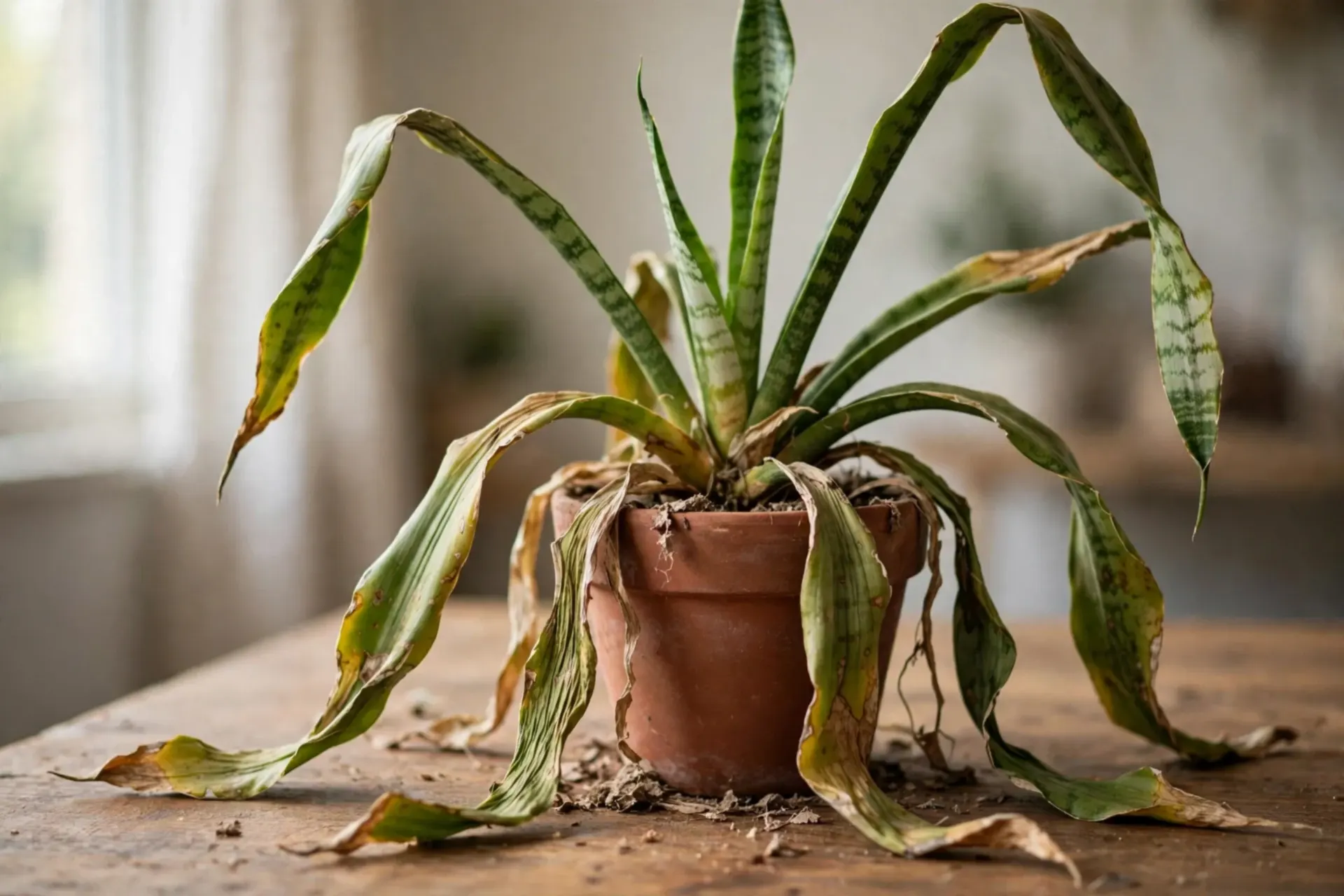
The plant they call unkillable is dying — and the cruel part is that it is almost never dying of neglect. Snake plants die of kindness: water given too often, in soil that never dries, until the roots and base quietly rot away under leaves that still look green. The good news is that a snake plant carries its own rescue kit — thick water-storing leaves and a tough rhizome — and if any firm tissue remains, the protocol on this page can save it. Start with the 30-second diagnosis, because the wrong rescue (usually: more water) finishes more of these plants than the rot does. The general version for other houseplants is Overwatered Plant Rescue; this page is the snake-plant-specific operation.
🎬 Watch: The Rescue That Works
Prefer to watch it happen? In this short animated story, Dan runs the diagnosis on Lily's toppled plant and carries out the rescue step by step.
The 30-second diagnosis
| What you see | Likely cause | First move |
|---|---|---|
| Leaves soft and mushy at the base; plant wobbles or topples; sour smell at the soil | Root and base rot from overwatering | Unpot today — rescue below |
| One or two oldest bottom leaves yellowing, rest of plant firm and upright | Usually the same rot starting — or simple old age | Check the base: firm = old age, remove the leaf; soft = rescue |
| Leaves wrinkled, curling inward, pulling away from the pot edge; plant firm | Genuine thirst — the rare case | One deep watering, then back to the normal rhythm |
| Pale, floppy, stretched leaves; plant leaning to the light | Chronic low light | Move gradually to brighter light; no surgery needed |
| Bleached, papery patches after a move to a sunny sill or a cold night by the glass | Sun scorch or cold damage | Move back from the glass; damaged patches stay, new growth will be clean |
| White cottony fluff in the leaf joints; sticky leaves | Mealybugs | Alcohol-dab every cluster, weekly for a month |
Step 1 — Unpot it today and look
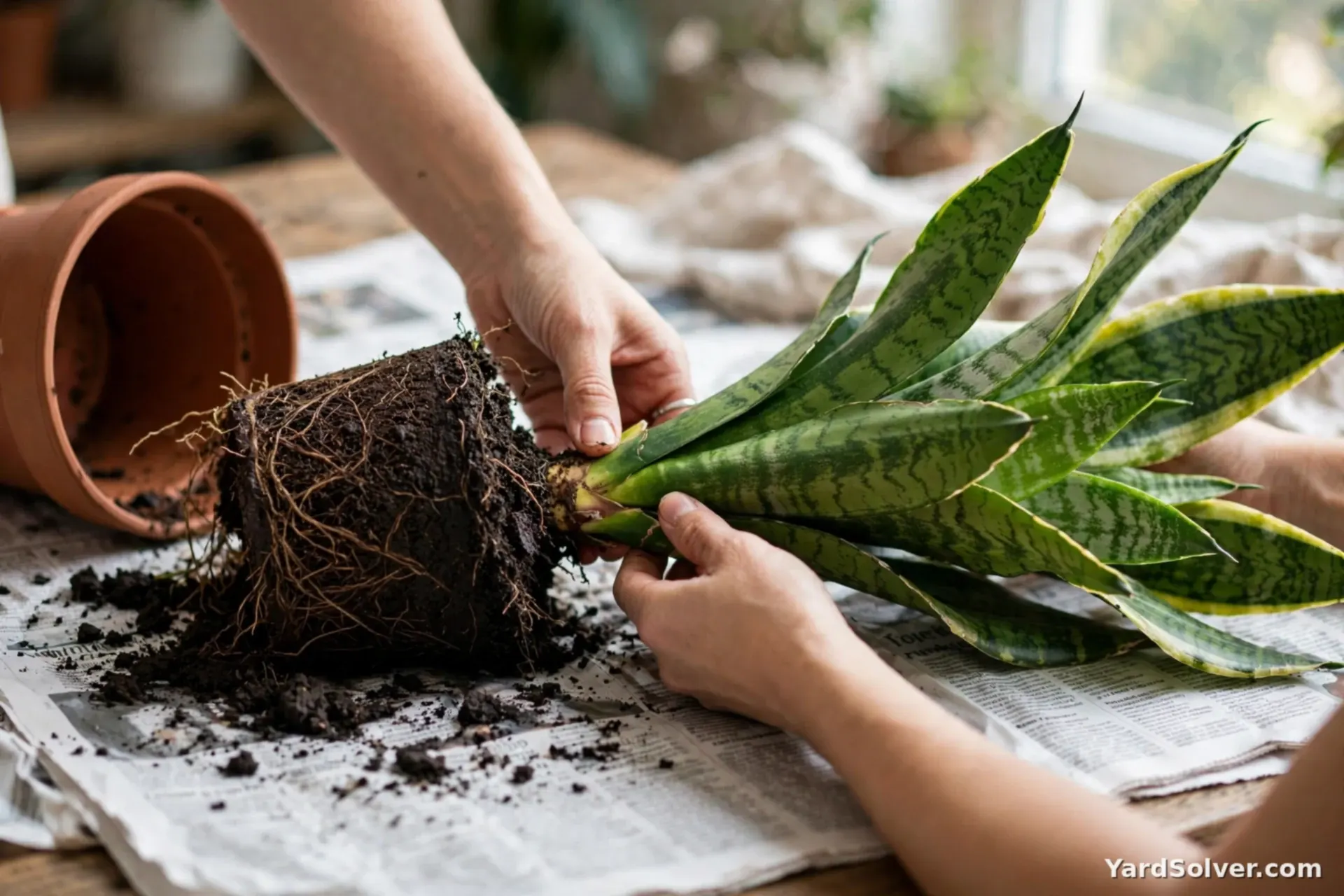
Rot spreads through wet tissue day by day, so the rescue starts the day you suspect it — not after another hopeful watering. Slide the plant out of its pot over newspaper, shake and crumble the mix away from the roots and the pale rhizome, and rinse if you cannot see. You are looking for the line between living and dead tissue, and it is unmistakable: healthy roots and rhizome are firm and white to pale orange; rotted ones are brown or black, translucent, and collapse to mush or string between your fingers. A sour, swampy smell confirms what your fingers already know.
Step 2 — Cut back to firm tissue, without mercy
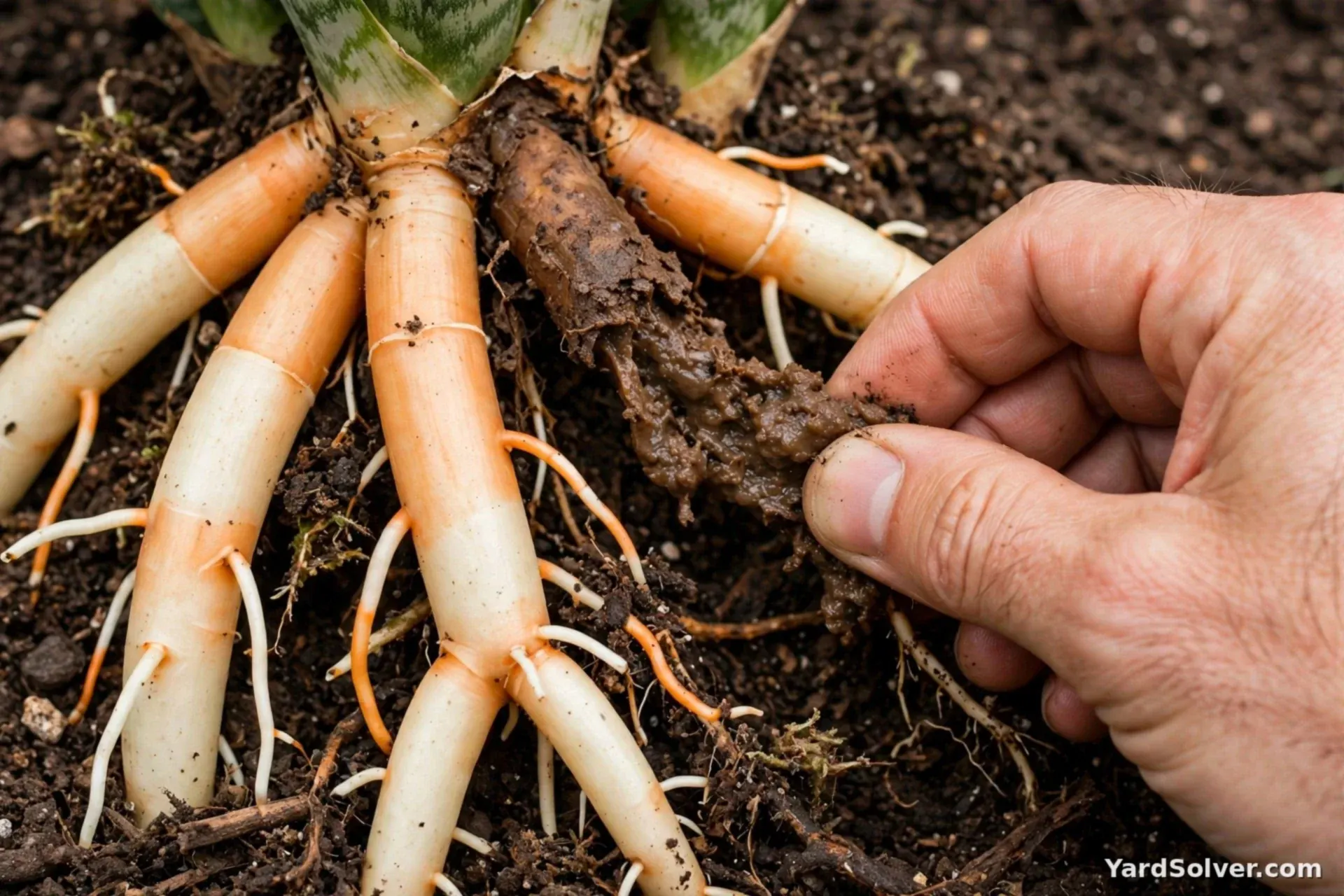
With a clean, sharp knife or shears, cut away every rotted root and every leaf that is soft at its base, cutting back until the cut surface is firm and pale all the way through — no brown streak in the middle. Half-measures fail: rot left in the plant simply continues in the new pot. Wipe the blade with rubbing alcohol between cuts so you are not carrying the rot into healthy tissue. Leaves that are firm but cosmetically damaged can stay; leaves that are soft anywhere along their base cannot. What you are saving is the rhizome and whatever firm leaves remain attached to it.
Step 3 — Do the surgery on the leaves, too
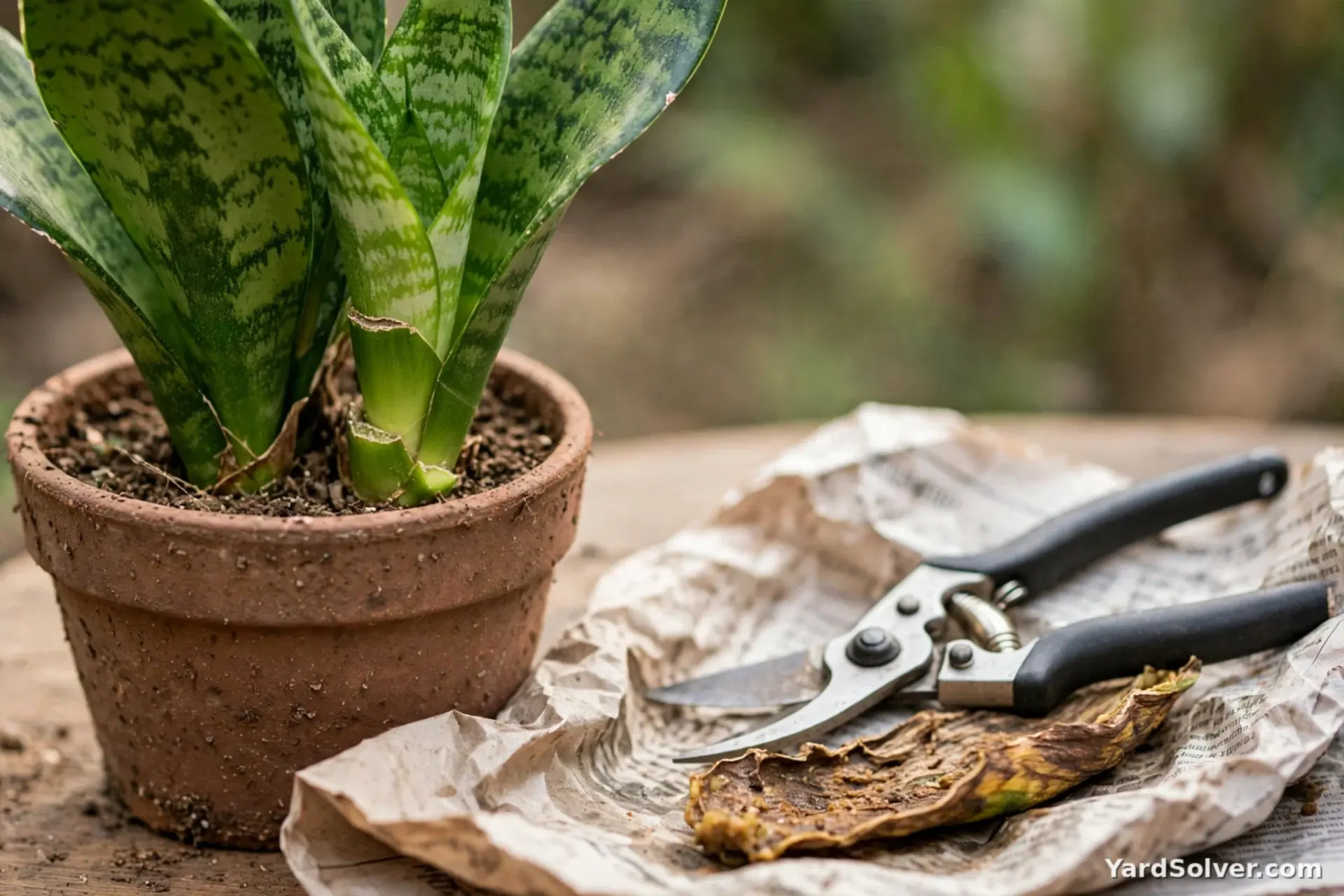
Squeeze each leaf gently at its base. Firm leaves stay. A leaf that yields like a ripe avocado at the bottom is rotting upward from the base and must come off at the rhizome, however green its top looks — that green is borrowed time. If a tall leaf is firm at the base but has a soft patch partway up, cut the leaf off just below the patch; the stump will callus and the plant carries on (the cut-off healthy top, incidentally, can be rooted as a cutting — see How to Propagate Snake Plants). Work clean, and keep the removed material out of the compost and away from other houseplants.
Step 4 — Let the cuts callus for 24–48 hours
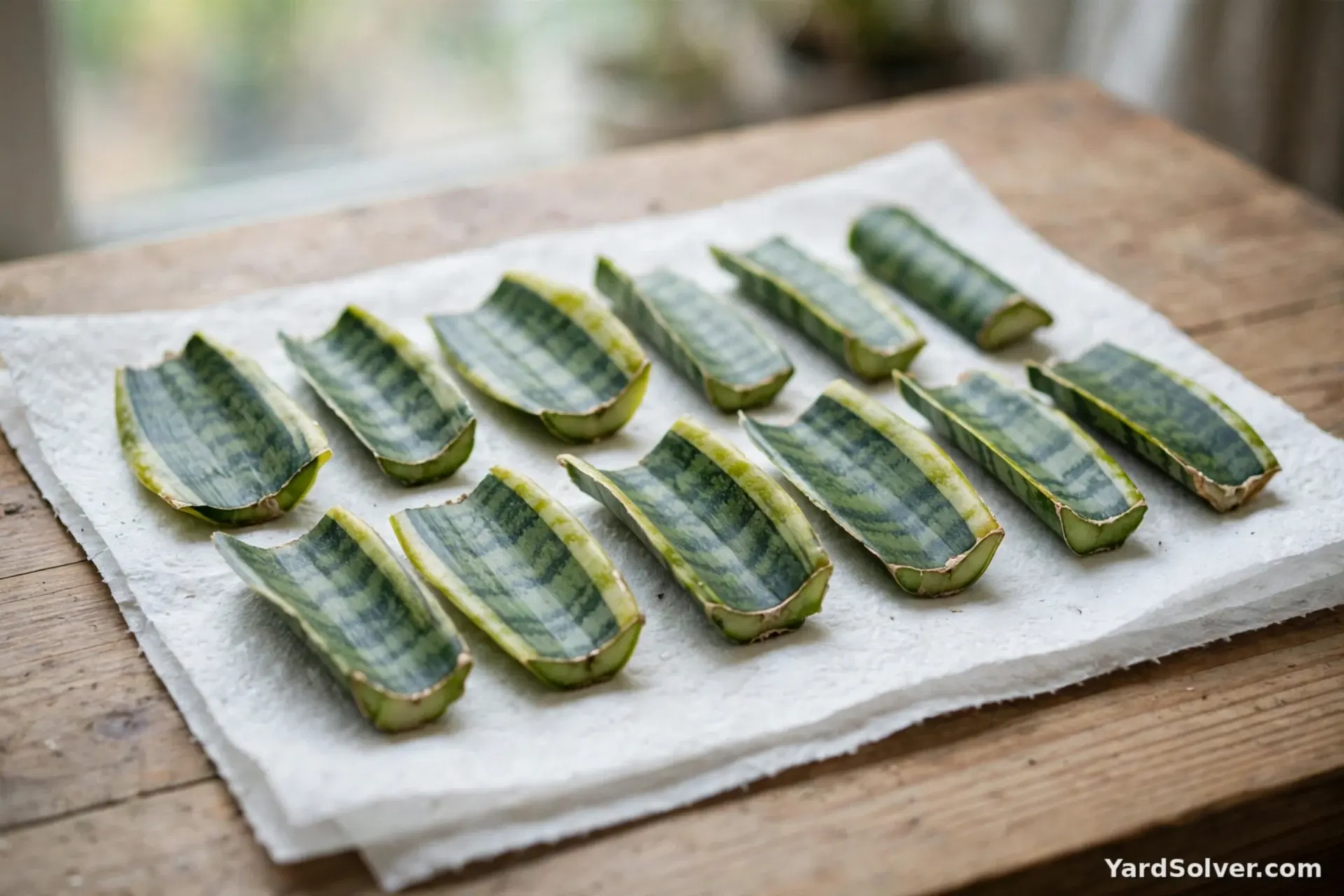
Lay the rescued plant and any saved leaf cuttings on dry paper or newspaper, out of direct sun, for 24–48 hours. The cut surfaces dry, pale and seal over — a callus — and a sealed cut resists the soil fungi that an open wound invites straight back in. This is the step impatience ruins: the plant holds weeks of water in its leaves and is in no danger at all from two dry days, while repotting wet cuts into mix is how the whole cycle restarts.
Step 5 — Repot into dry mix, then no water for 7–10 days
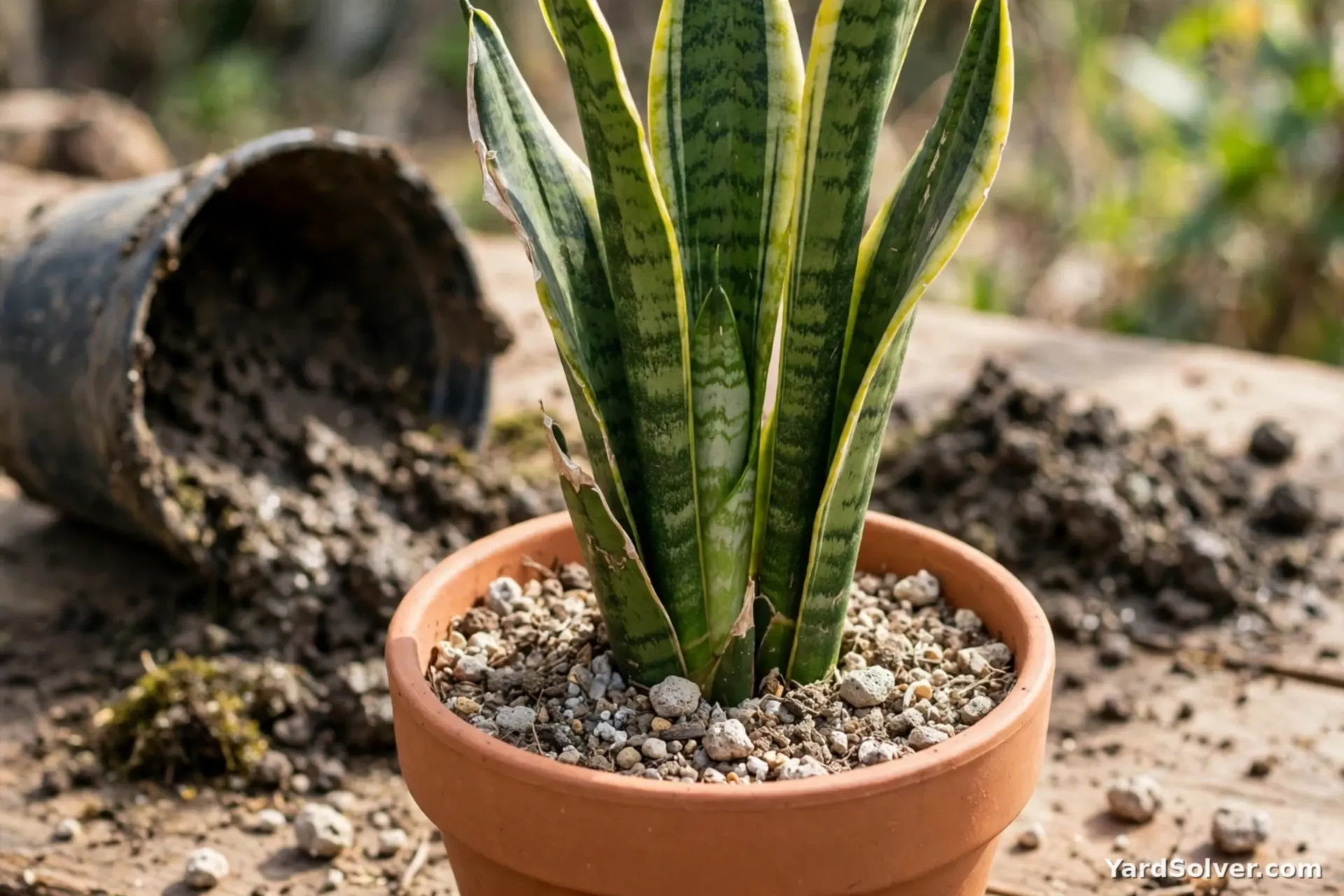
Repot into a clean pot with drainage holes (wash the old pot with hot soapy water, or use a fresh one) and fresh, dry, gritty mix — never the old mix, which is full of the rot you just removed. Set the rhizome at the same depth as before, firm the mix around it, and put the plant in bright indirect light. Then the hardest instruction on this page: do not water for 7–10 days. The plant is sealing wounds and pushing new root tips; water now feeds the fungi, not the plant. After the wait, give one modest watering and return to the schedule in How Often to Water a Snake Plant — which is the prevention half of this rescue, and why the rescued plant's page in the Plant Library runs on rhythm instead of dates.
Problems, pests & diseases — the other causes, diagnosed
Not every decline is rot. Once the base checks out firm, work through these:
- Cold damage: leaves turn pale, watery and translucent in patches after nights against cold glass or in a frosty room; the damage appears fast and the tissue later collapses. Fix: move the plant away from the window in winter; cut away tissue that goes soft; the plant grows out of it if the rhizome stayed warm.
- Low light: new leaves narrow, pale and floppy, old leaves lean and eventually fold. Fix: brighter light, moved gradually over a week or two to avoid scorch; flopped leaves rarely re-stiffen, but new growth will stand properly.
- Mealybugs: white cottony fluff in the crown and leaf joints, sticky residue, slow decline. Fix: alcohol-dabbing, weekly, deep into the crown — they are a common hidden reason a plant "just fades".
- Spider mites: fine webbing and a dusty, speckled look on the leaves in warm dry rooms. Fix: thorough showering and leaf-wiping, repeated — humidity and water are what they hate.
- Fungal leaf spot: brown-black spots with yellow halos spreading on leaves that are regularly wet. Fix: remove the worst leaves, water only at the base, and give the plant air.
When it is too late for the plant — but not for its leaves
If the entire base and rhizome have gone soft, the plant itself is finished — say so honestly and do not keep watering a corpse. But any leaf that is still firm along its whole length can start again: cut it into sections, callus them, and root them by the leaf-cutting method in How to Propagate Snake Plants. One honest caveat from that guide: if the dying plant was a yellow-edged variety, its leaf-grown children will be plain green. The genetics retire with the parent; the plant, in a sense, lives on.
Keep going
Prevention, in one schedule: How Often to Water a Snake Plant.
The plant's own page: Snake Plant — Plant Library · the general rescue: Overwatered Plant Rescue.
Restarting from a leaf: How to Propagate Snake Plants · repotting a healthy one: How to Repot a Snake Plant.
🌱 Stay with us — we'll remind you
A rescue has two easy-to-miss moments: the first watering after 7–10 dry days, and the check a few weeks later. Start your snake plant with us and its page keeps the schedule with you:
- Open the Snake Plant page and press "Start Snake Plant with me": Snake Plant — Plant Library.
- Step 1 — set your start date. Tell the page the day you did the rescue — cut back, callused and repotted dry. Your plant and its start date are saved on this device straight away.
- Step 2 — take your schedule home. The page turns that date into your personal care schedule and keeps it in front of you, so the first watering day and the follow-up checks never slip past.
- Step 3 — add your email to be first in line. Email reminders switch on with the new YardSolver accounts; the email you save with your plant today is first in line, and from your start date the reminders follow your plant's own schedule.
Free, and no account is needed today. Your email is for your plant reminders only — one purpose, and every message carries an easy stop.
Questions people ask
Can a snake plant recover from root rot?
Yes, if any firm tissue remains: cut away everything soft, callus the cuts 24–48 hours, repot into dry gritty mix and wait 7–10 days before watering. If the whole base is soft, restart from a firm leaf cutting instead.
Why are my snake plant leaves mushy?
The tissue has rotted from inside, almost always from soil that stayed wet too long. A merely thirsty snake plant wrinkles but stays firm — mushy means rot, and rotted tissue has to be cut away.
Why is my snake plant falling over?
Usually because rot has eaten the roots and base that anchored it. Check the base: soft means rot and the rescue above; firm means it is probably light-starved and needs a brighter spot.
Should I water a snake plant after repotting it during a rescue?
No — wait 7–10 days. Fresh cuts in wet soil are how the rot restarts, and the leaves hold plenty of water to bridge the gap.
Comments & ratings
No comments yet.
Be the first to share your experience.