
Guides · Aloe Vera · Published November 8, 2026
How to Grow Aloe Vera: The Complete Beginner's Guide
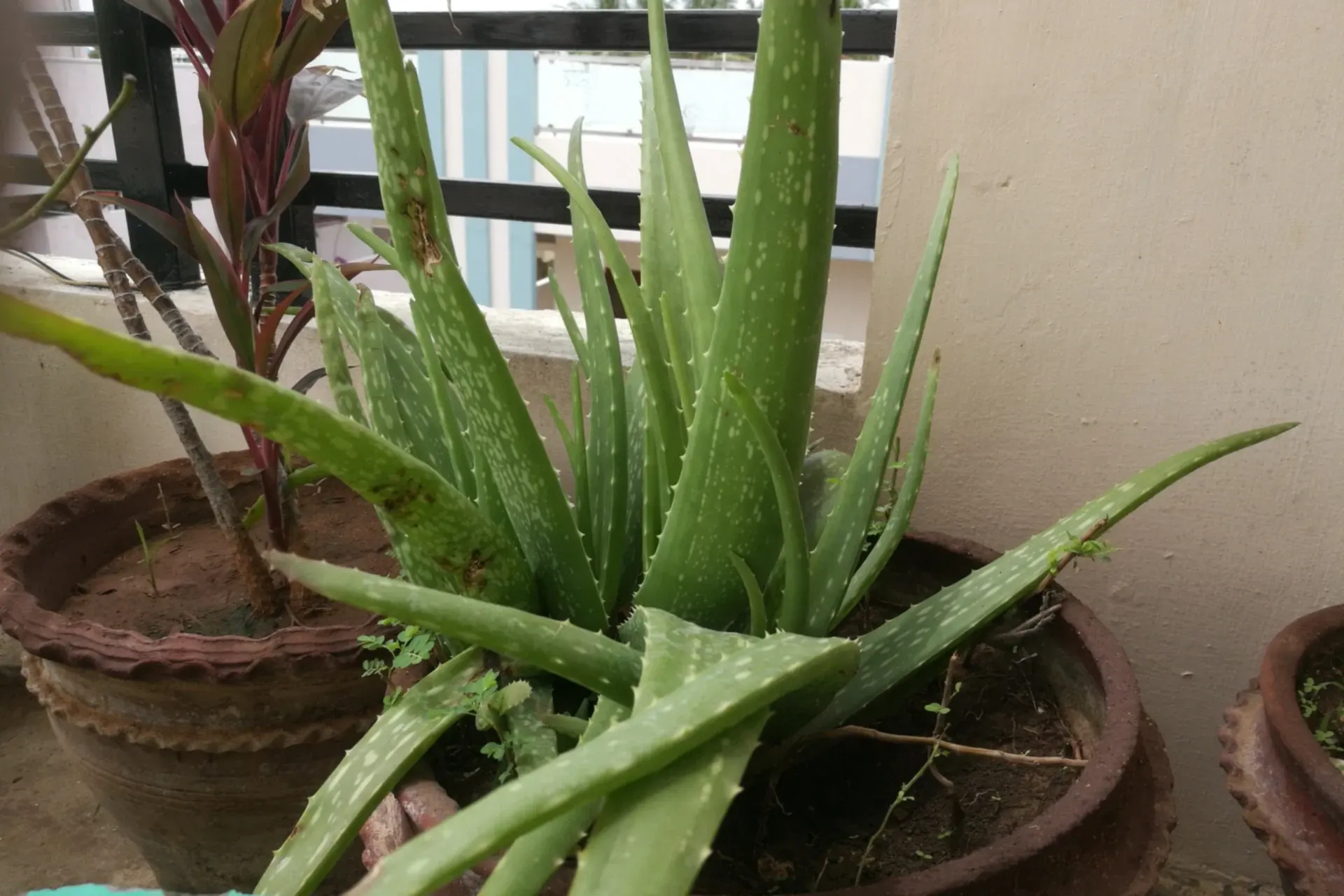
Aloe vera has a reputation as the plant you cannot kill — and a quiet record of being killed by kindness in thousands of homes. Nearly every dead aloe died the same way: loved with water until its roots rotted. This guide is the whole routine on one page, in order: the right start, the right soil, and the one watering rule that keeps aloe alive for decades. For the one-screen version — light, water and care at a glance — see the Aloe Vera plant page; this is the deep guide it points to.
The aloe year at a glance
- Start with a pup: aloe multiplies itself — the free offsets at the base are the easiest start there is
- Gritty soil, draining pot: water must pass through, never sit — this one choice prevents most deaths
- Plant at crown level: the leaf base sits at the soil surface, never buried
- Soak and dry: drench, then wait for complete dryness — roughly every 3 weeks indoors
- Frost kills: outdoors year-round only in frost-free zones; everywhere else it winters on a sill
Step 1 — Start with a pup (or choose a firm, upright plant)
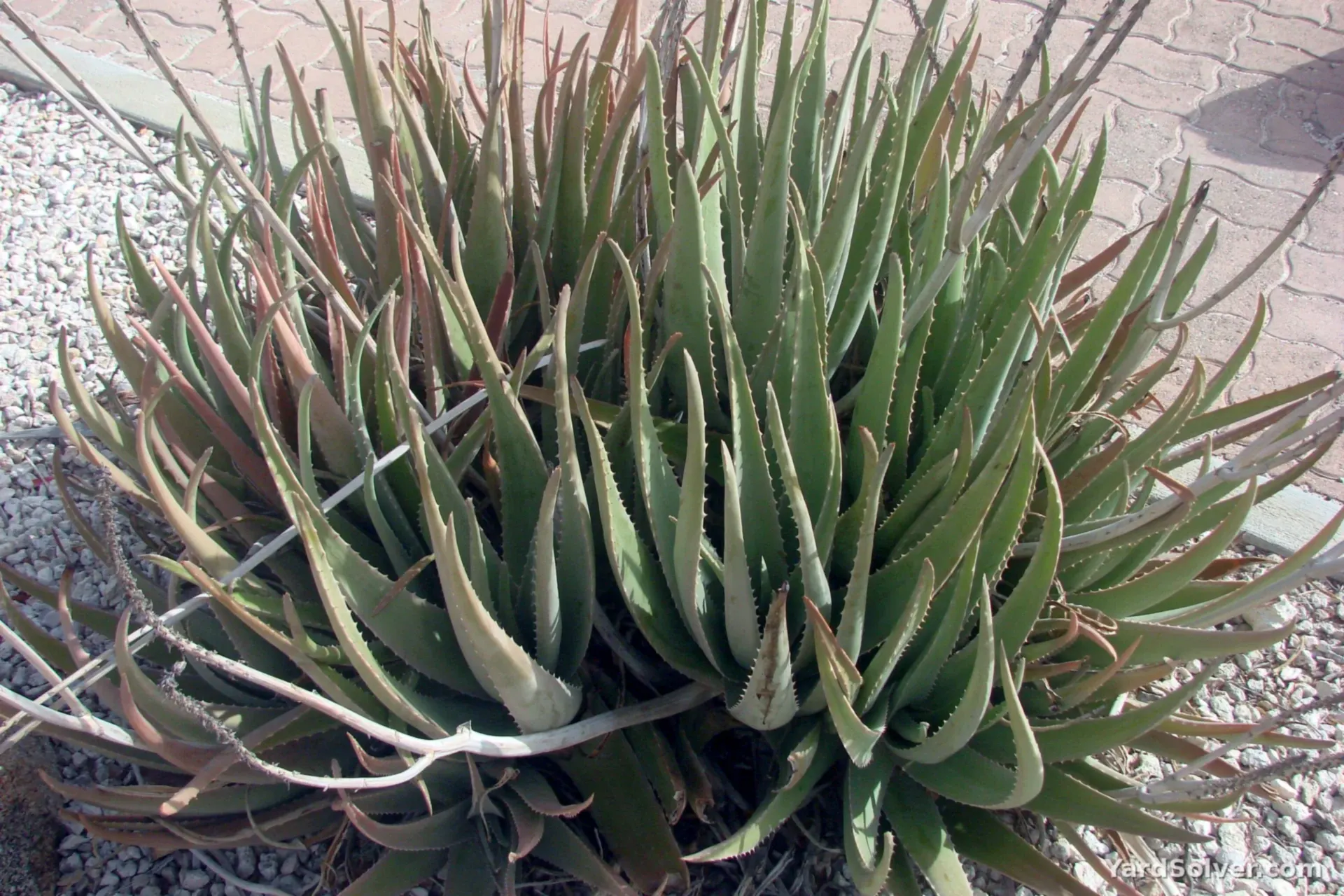
A healthy aloe produces pups — miniature rosettes that sprout around the mother plant. A pup about 3–4 inches tall, ideally with a few roots of its own, is the easiest start in all of houseplant growing: twist it gently away from the mother, let the broken base dry in open air for a day or two until it skins over, then pot it as in Step 3. Buying instead? Choose a plant with firm, plump, upward-curving leaves and a dry, clean base. Walk away from anything with soft translucent leaves, black patches at the crown, or soil that smells sour — that plant is already rotting. Aloe also grows from seed, but slowly; a pup gives you a harvest-size plant years sooner.
Step 2 — Mix gritty soil, and pick a pot that drains
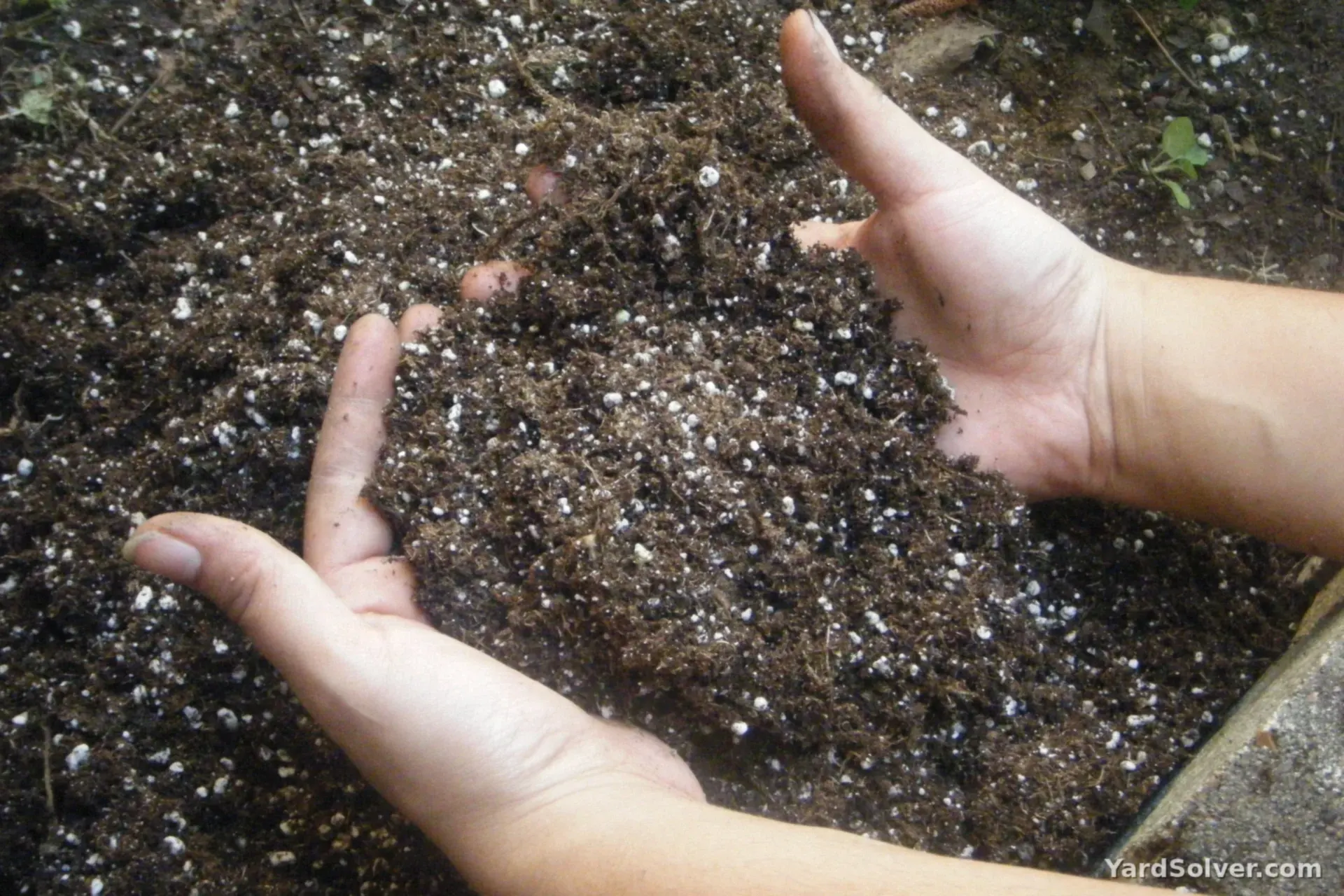
Aloe comes from dry, rocky ground, and its roots expect air between waterings. Regular potting soil holds water like a sponge — exactly wrong. Use a cactus-and-succulent mix as sold, or make your own: half ordinary potting mix, half grit in the form of coarse sand, perlite or fine pumice. Working a bigger batch for several pots or a succulent bed? The Raised Bed Soil Calculator totals the volumes for you. The pot matters as much as the mix: it must have a drainage hole — no exceptions, no decorative pot without one — and terracotta suits aloe best because its porous walls let the soil dry evenly. Size modestly: a pot about 2 inches wider than the rosette. A huge pot holds a reservoir of wet soil the small root ball cannot use, and that reservoir is where rot starts.
Step 3 — Plant at crown level, then wait to water
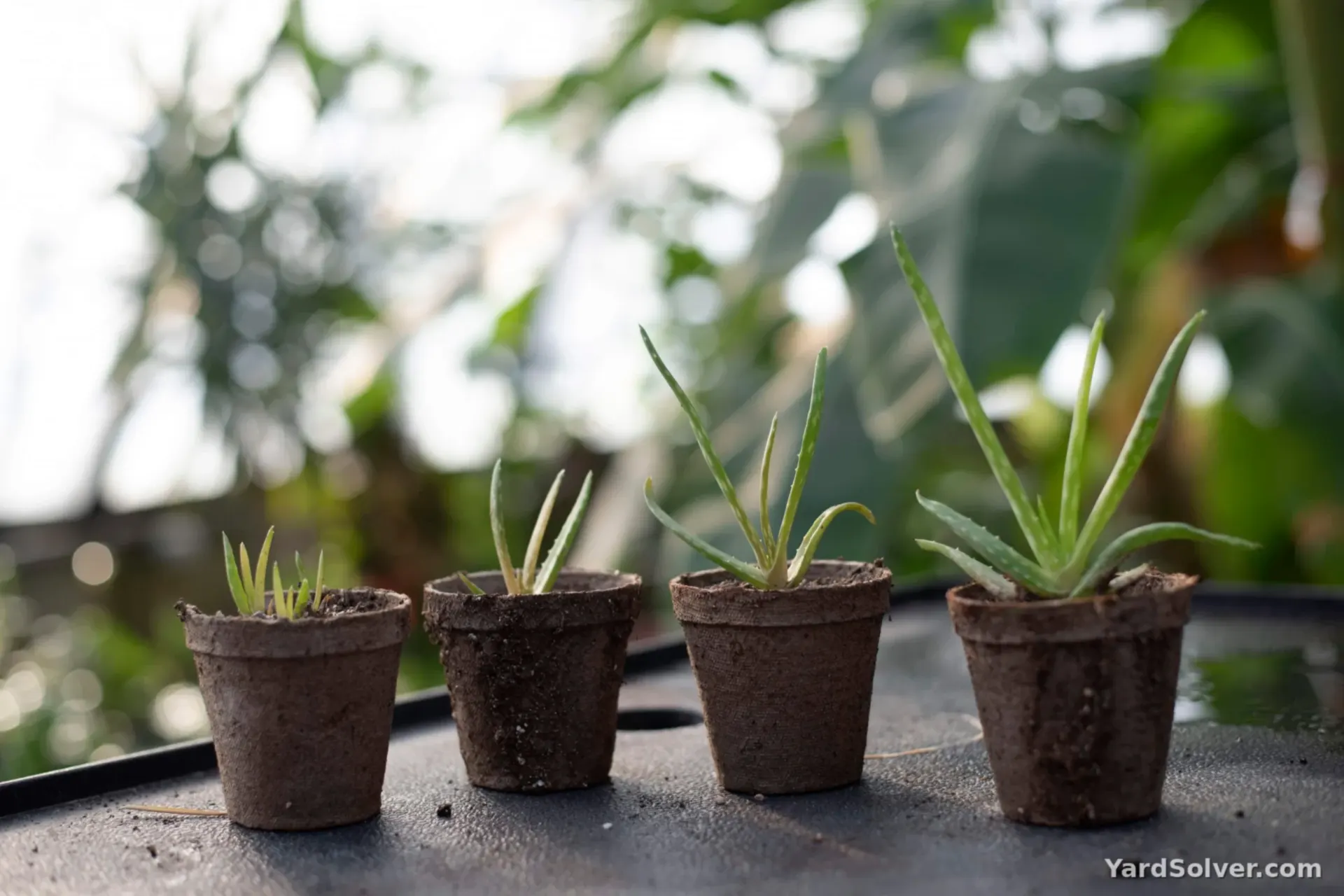
Set the plant so the crown — the point where leaves meet roots — sits exactly at the soil surface. Spread the roots, firm the mix around them, and leave the lowest leaves resting just above the soil, never under it. A thin top dressing of small stones or coarse grit keeps the leaf bases dry and the look clean. Then do the counter-intuitive part: do not water for about a week. Roots broken during planting heal first in dry soil; watering immediately invites rot into every small wound. Place the pot where it gets bright light — a south or east windowsill indoors, or full sun outdoors in frost-free zones — and turn it a quarter-turn weekly so the rosette grows straight instead of leaning to the light. Planning a whole shelf or bed of succulents? Lay it out once in the Garden Planner before you buy a single pot.
Step 4 — Water by soak-and-dry, feed almost never
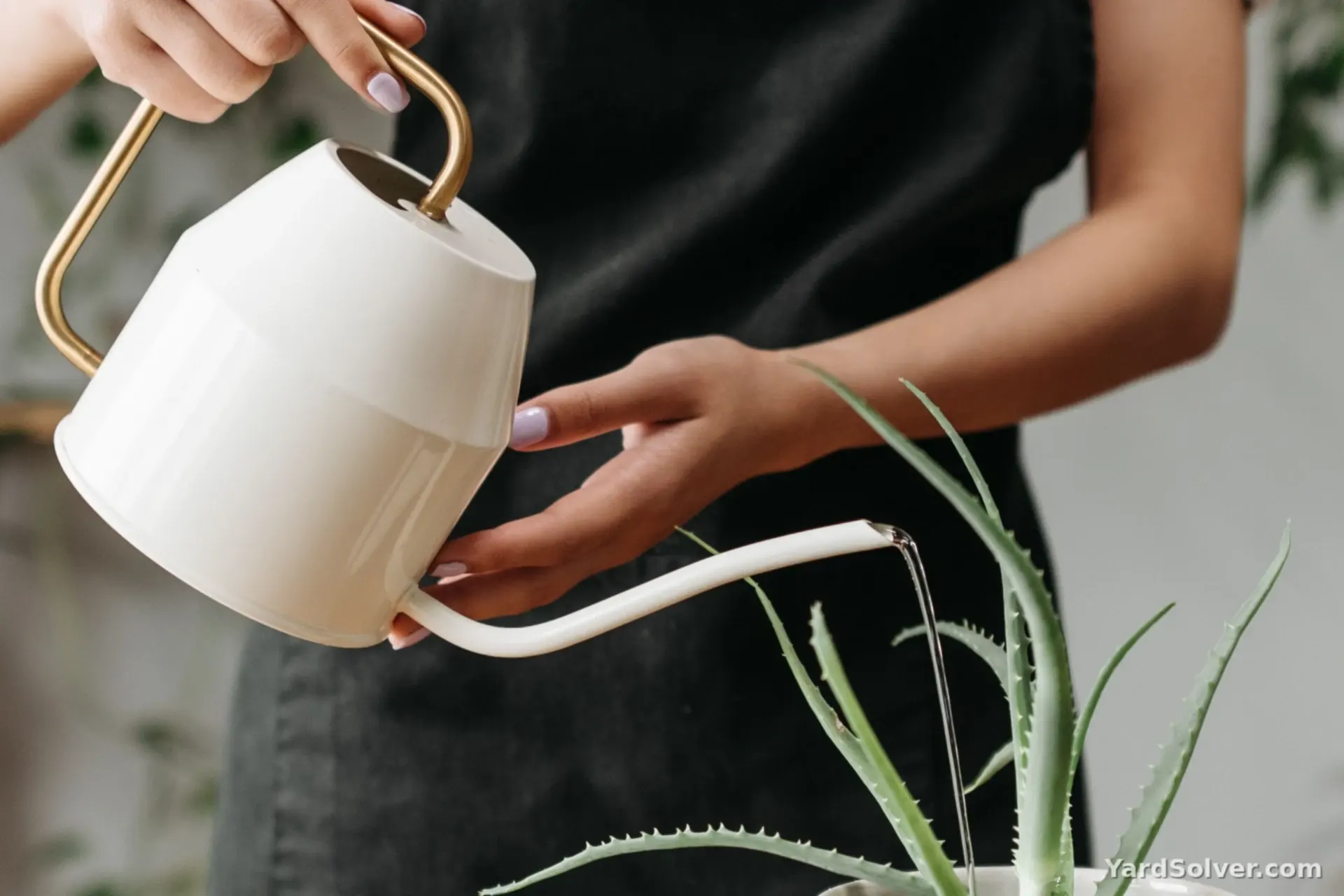
Forget schedules. Aloe wants the desert pattern: a rare downpour, then a long dry spell. When the soil is dry all the way down — push a finger or a wooden skewer to the bottom to be sure — water deeply at the soil until it runs from the drainage hole, then empty the saucer. Never water into the rosette, and never mist: water sitting in the leaf crown is rot's open door. Indoors this works out to roughly every 3 weeks in the growing season and once a month or less in winter; outdoors in summer heat, every 1–2 weeks. The leaves themselves are your gauge: plump and firm means wait; slightly thin and curling inward means water now. Feeding is almost an afterthought — a half-strength balanced feed once or twice in spring is plenty, and the Fertilizer Calculator keeps the dose honest. More fertilizer does not make more aloe; it makes soft, floppy growth that rots easily.
Step 5 — Harvest leaves, separate pups, repeat for decades
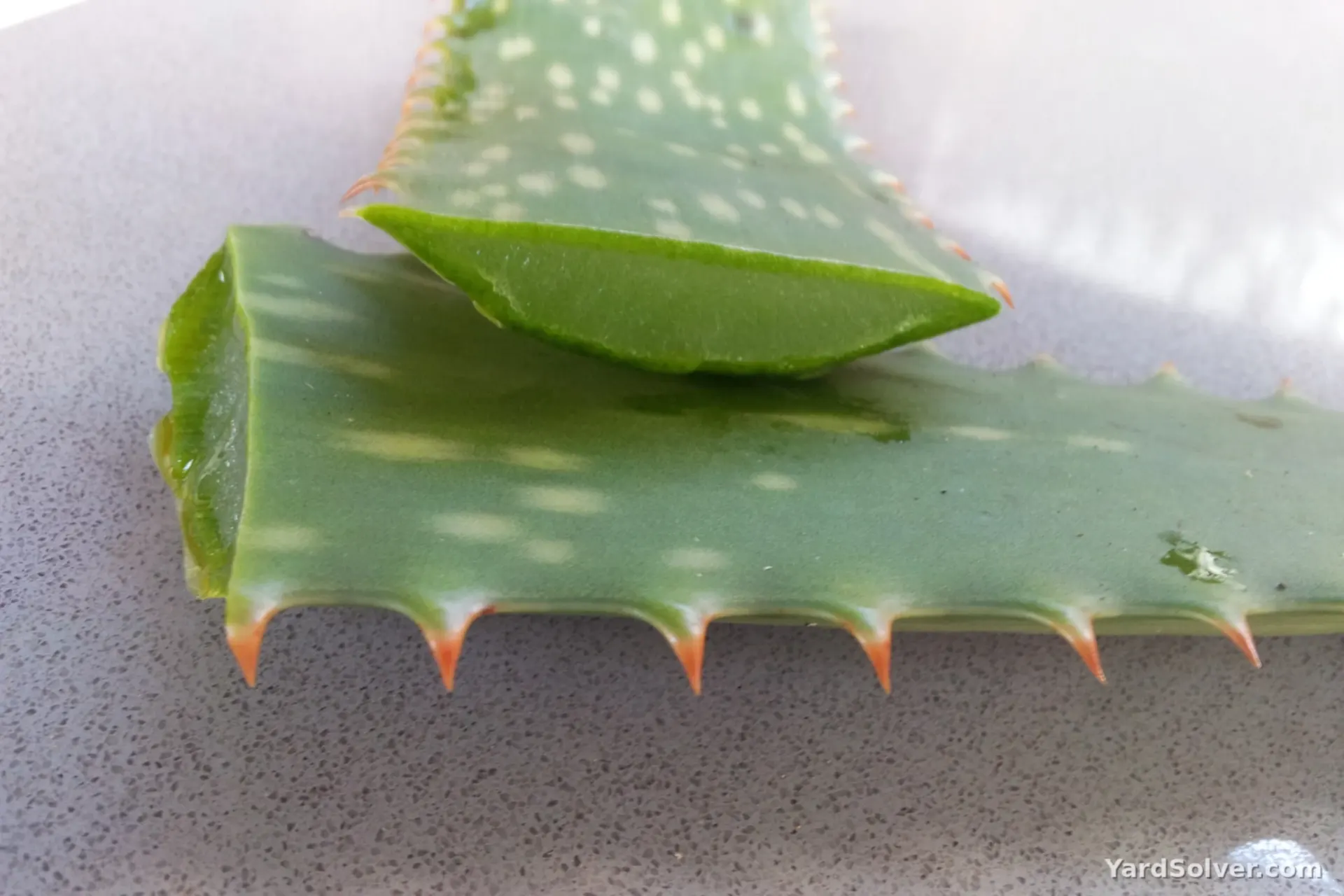
Harvest only from a mature plant, and take the outermost, lowest leaves first — they are the oldest and richest in gel. Cut cleanly at the base with a sharp knife, never tear, and never take more than a third of the plant at once. The cut leaf keeps a few days wrapped in the fridge. A happy aloe answers good care with pups every year: when a pup reaches 3–4 inches, ease it out as in Step 1 and you have another plant — the reason one aloe so often becomes a windowsill of them, and the easiest plant gift there is. Repot every 2–3 years, or when roots circle the drainage hole, one pot size up. And guard the one hard limit: frost. A single freezing night kills aloe outright, so pot-grown plants come indoors well before the first frost warning — if a surprise frost catches any plant outdoors, frost protection triage is worth the attempt, but for aloe, prevention is the whole game. Its toughest indoor companion is the snake plant — see How to Grow Snake Plants Indoors for the matching routine.
Keep going
The at-a-glance version, with light and water needs: Aloe Vera — Plant Library.
Leaves turning yellow? Why Is My Aloe Vera Turning Yellow? matches the pattern — soft at the bottom, bleached on top, spotted underneath — to its cause and fix.
More unkillable-houseplant guides: Grow Snake Plants Indoors · Grow Microgreens Indoors · Grow Herbs Indoors in Winter.
Questions people ask
Why are my aloe vera leaves turning brown and mushy?
Almost always too much water. Aloe stores water in its leaves and rots from the base when the soil stays wet. Let the soil dry completely between waterings, make sure the pot drains freely, and never let the plant sit in a saucer of water. A mushy, translucent leaf is already lost — remove it and check the crown for rot.
How often should I water aloe vera?
By the soak-and-dry rule, not the calendar: water deeply until it runs from the drainage hole, then wait until the soil is dry all the way down before watering again. Indoors that is roughly every 3 weeks in summer and even less in winter. In hot outdoor weather, about every 1–2 weeks.
Can aloe vera grow outdoors?
Yes, year-round outdoors only in frost-free climates (about USDA zones 9–11). Aloe is killed by frost. Everywhere else, grow it in a pot: outside in full sun for summer, then bring it indoors to a bright windowsill before the first frost.
Comments & ratings
No comments yet.
Be the first to share your experience.