
Guides · Plant problems · Published November 1, 2026
How to Get Rid of Weeds Naturally
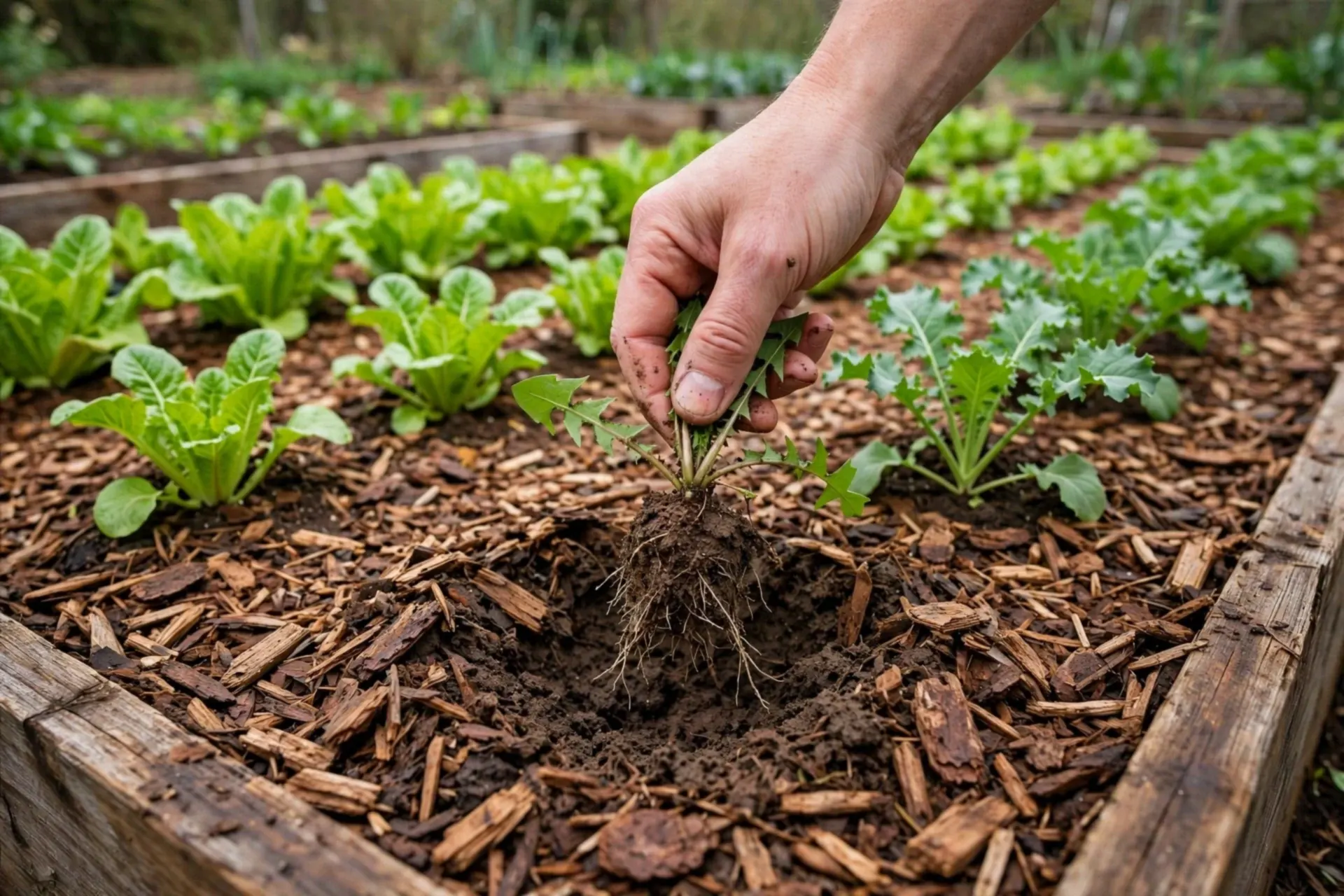
“Naturally” weeds-control advice usually fails on one point: it treats a dandelion and a patch of chickweed as the same enemy. They are not. Annual weeds live fast and die by the thousand at the seedling stage; perennial weeds store food in deep roots and laugh at a surface hoeing. Match the method to the weed — pulling, hoeing, mulching, smothering — and finish with the one prevention rule that shrinks the whole job every single year.
First, know which weed war you are in
- Annual weeds (chickweed, purslane, crabgrass, lambsquarters): live one season, spread only by seed — the war is won by never letting them flower
- Perennial weeds (dandelion, thistle, bindweed, quackgrass): regrow from roots and rhizomes — the war is won by exhausting or removing the root
- The golden rule of both wars: one weed allowed to seed undoes a month of work — “one year's seeding is seven years' weeding” is literal arithmetic
Step 1 — Pull after rain, roots and all
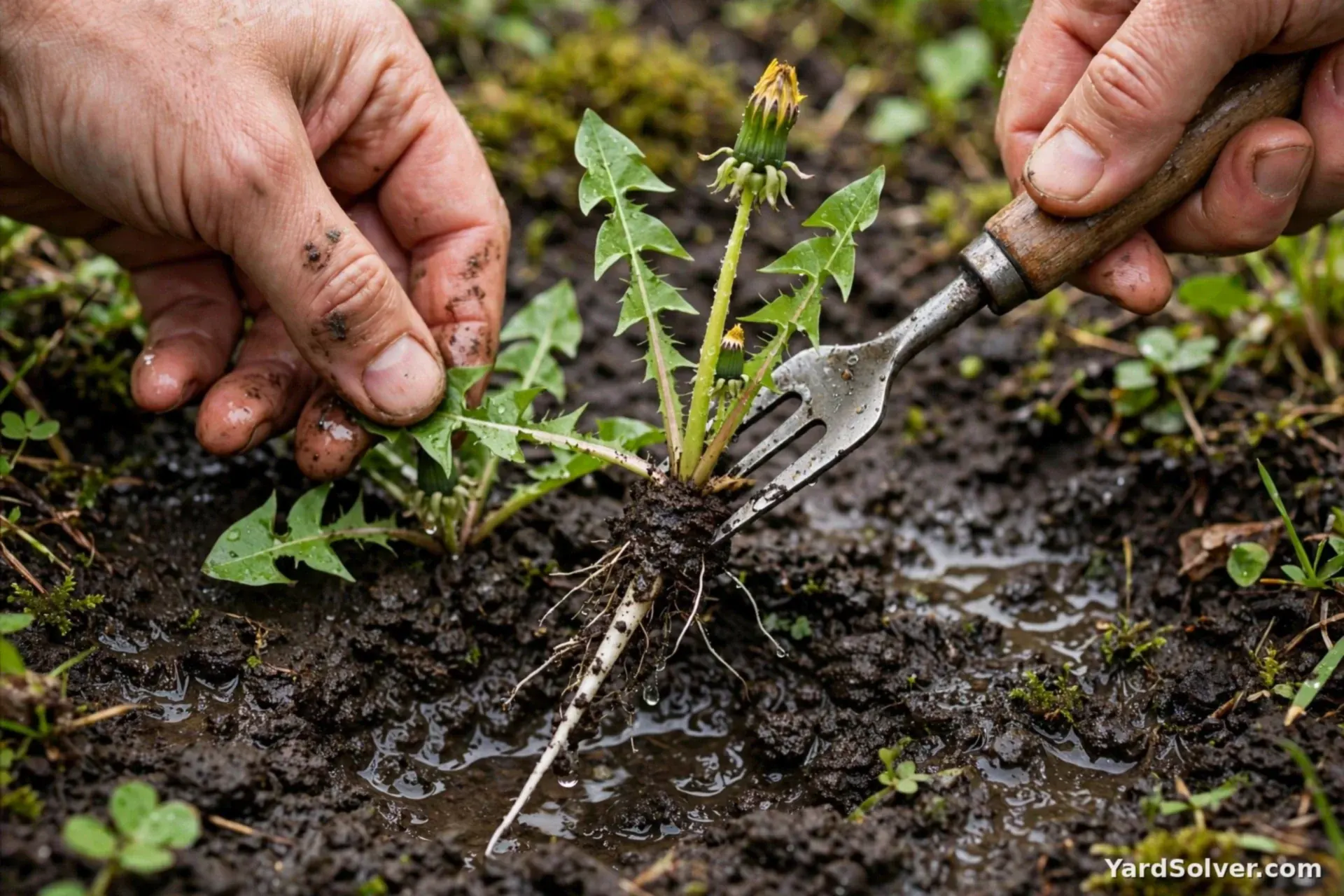
Hand-pulling is the precision weapon, and timing makes it three times as effective: pull the day after rain (or a deep watering), when soil releases roots instead of snapping them. For taprooted perennials — dandelion, dock, thistle — slide a forked dandelion weeder or an old knife down beside the root, lever, and ease the whole root out; a dandelion snapped at the crown regrows from the stub within weeks. Work bed by bed rather than wandering: a finished bed stays finished, and the visible progress keeps you going. Gloves on for thistles, and everything pulled before it flowers goes in the bin, not the cold compost.
Step 2 — Hoe shallow, on a dry sunny day
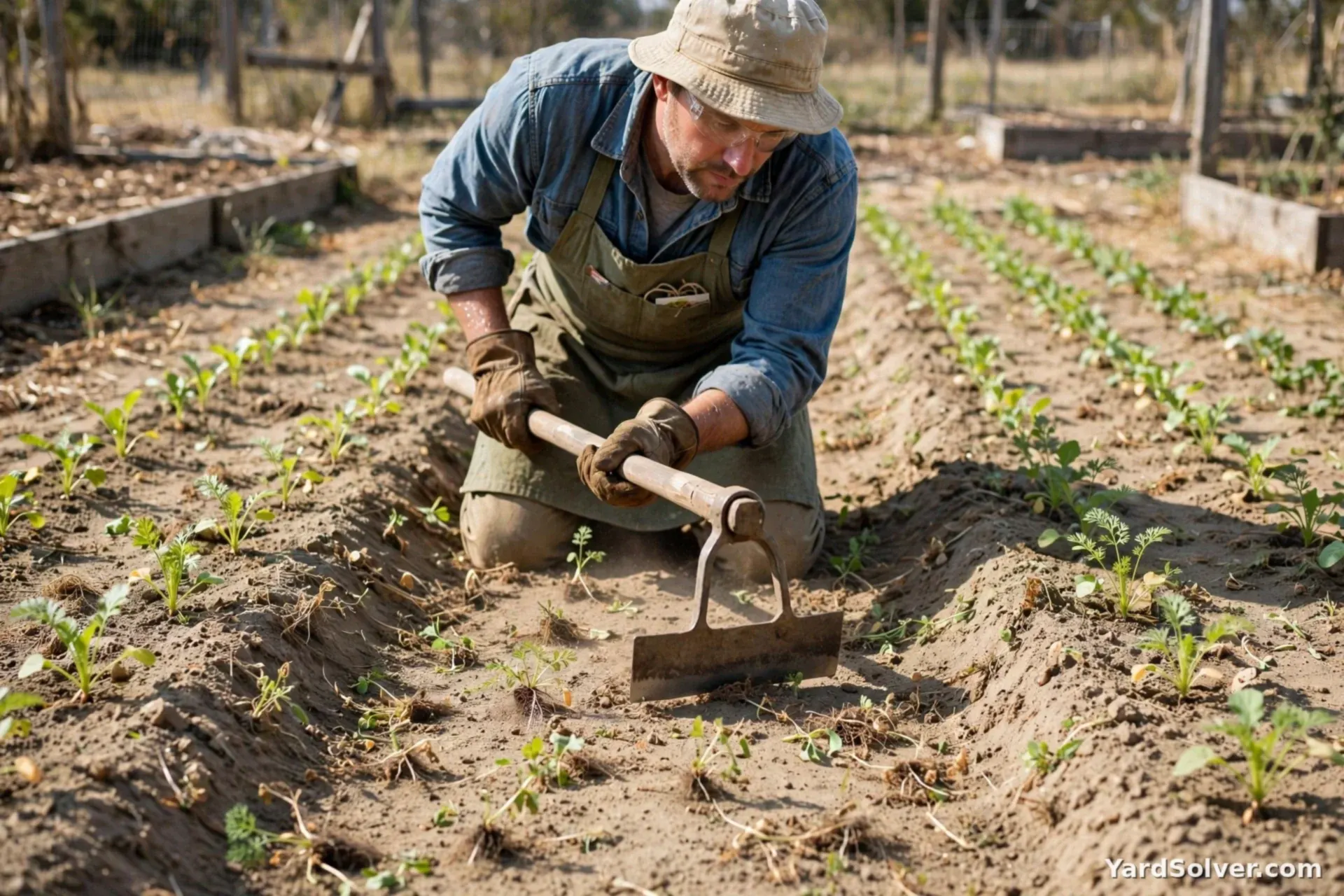
For the seedling hordes — the green haze that appears a week after rain — a hoe is worth fifty fingers. Use a stirrup (oscillating) or Dutch hoe skimmed just under the surface, on a dry, sunny morning: severed seedlings wilt dead by lunch. The discipline is depth: hoe deep and you churn up fresh weed seed and chop perennial roots into multiplying pieces. Little and often — ten minutes weekly through spring — keeps every annual weed dying at the thread stage, which is exactly the war annuals lose. Around established plants this pairs with the close-quarters pulling of step 1.
Step 3 — Mulch deep enough to matter
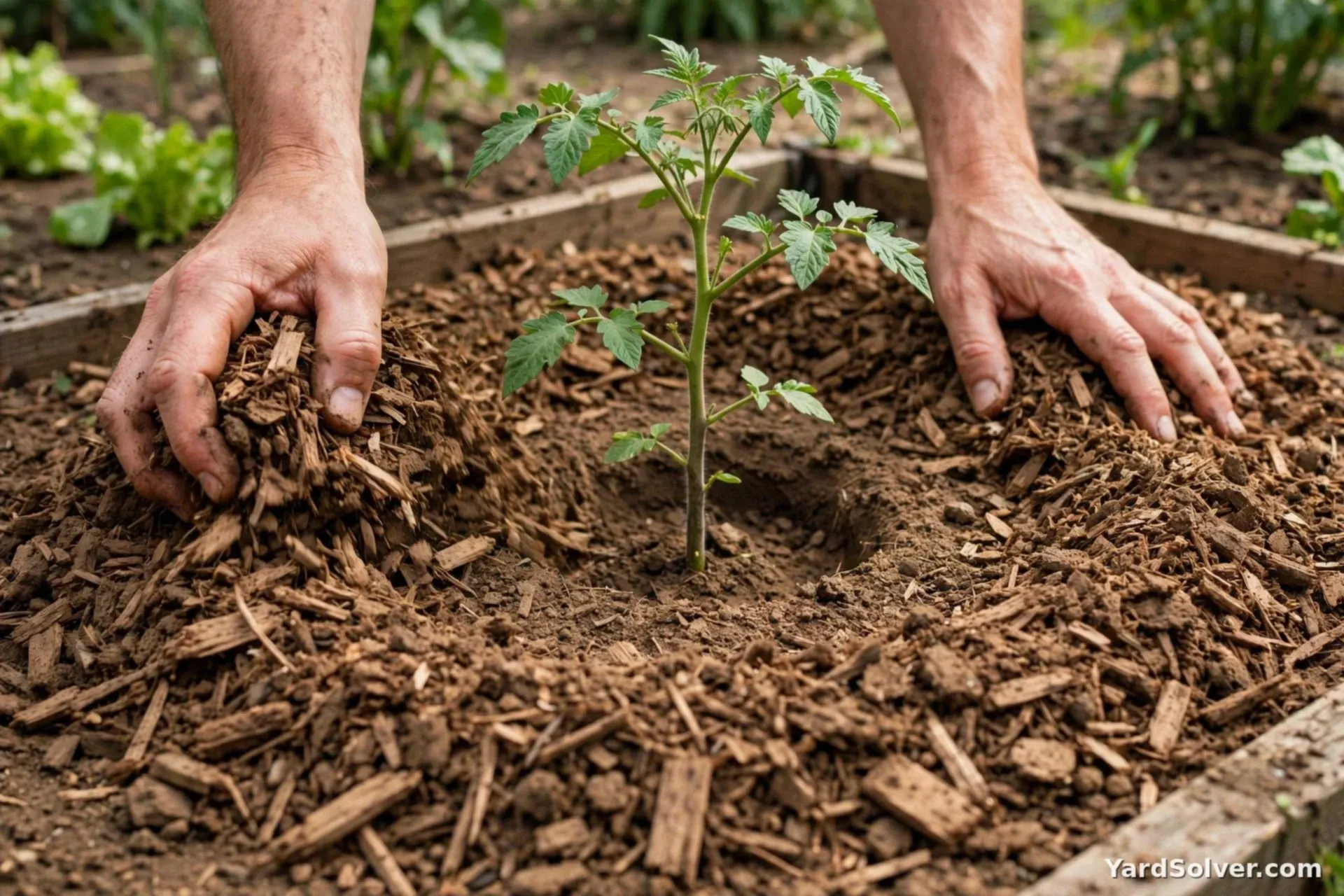
Mulch is prevention at scale: most annual weed seeds need light or near-surface warmth to germinate, and 2–4 inches (5–10 cm) of wood chips, bark, straw or shredded leaves switches both off. Weeds that do push through are few and pull easily from the loose layer. Two refinements decide success: keep mulch a few inches off stems and trunks (a damp collar rots bark), and top up yearly as it settles and composts into the soil — which is the feature, not a bug. The Mulch Calculator gives the exact bag or yard count for your bed sizes, and the edges of beds benefit from the same thinking as the deer-resistant borders in How to Keep Deer Out of the Garden: deny the problem its easy entry.
Step 4 — Smother what you cannot pull
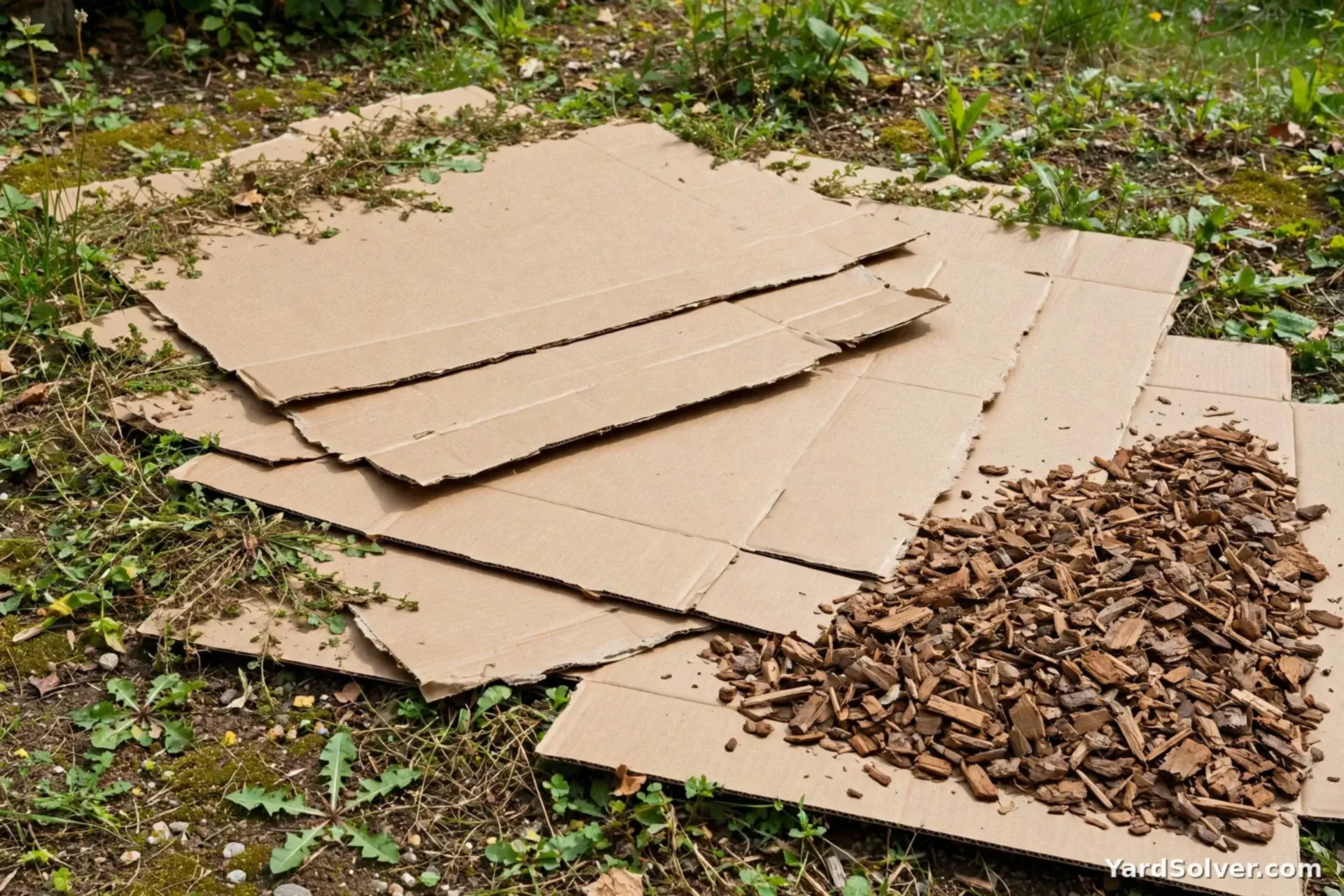
For a bed or patch too overrun to weed — or ground being prepared for next season — smothering does the work while you do none. Mow or trample the growth flat, lay overlapping cardboard (tape and labels removed) two layers thick, wet it, and cover with mulch. Perennial roots spend their reserves pushing shoots that find darkness, and most give up within one growing season; then plant straight through the rotted cardboard. Landscape fabric is the permanent-looking cousin, but be honest about its record: weeds seed into the mulch on top of it within a few years and tree roots tangle into it — cardboard that rots away is usually the better tool.
Step 5 — Spot-treat the cracks, starve the cycle
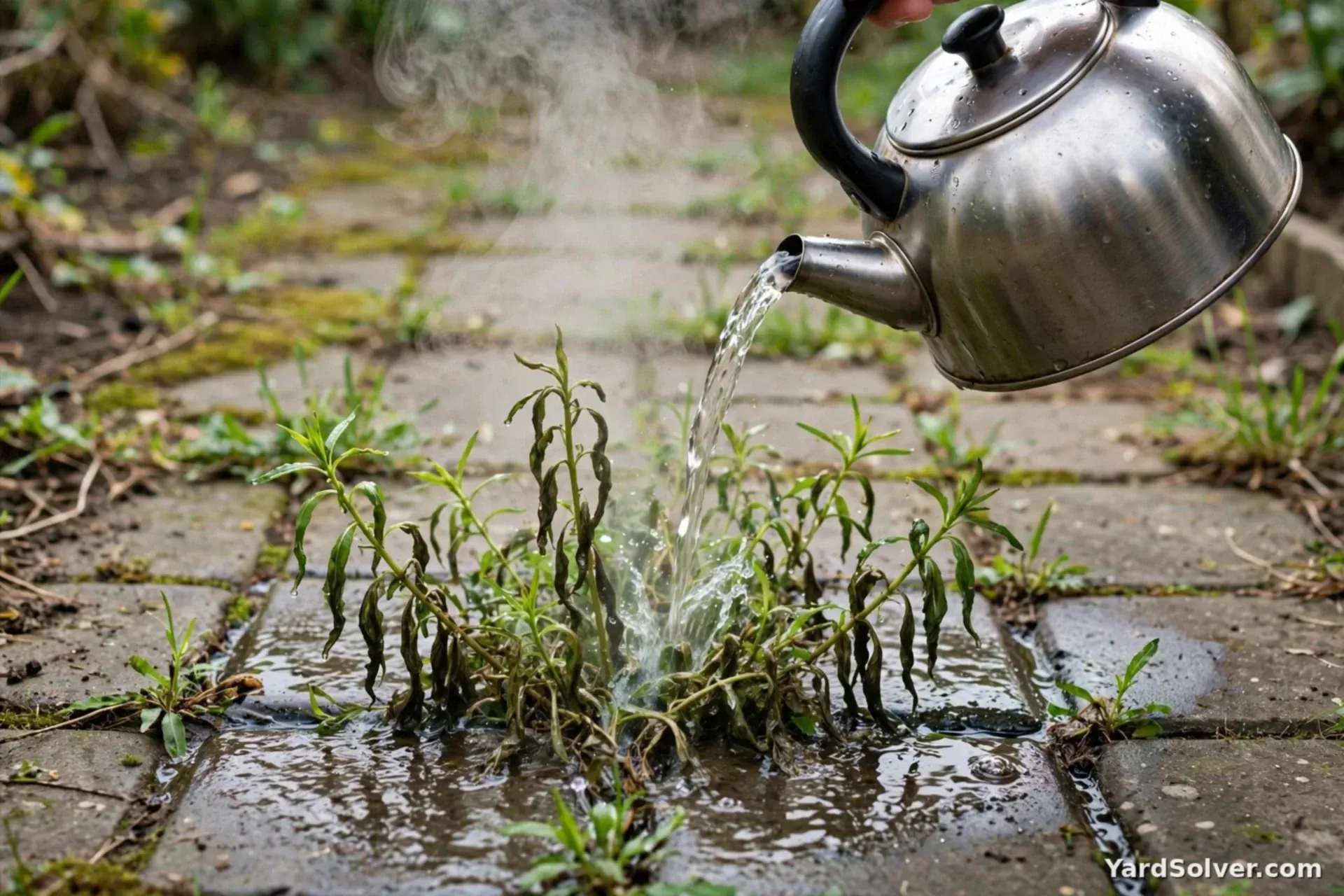
For weeds in paving, gravel and driveways — where pulling leaves roots in the joints — a kettle of boiling water cooks the crown on contact; repeat on regrowth until the root's reserves are gone. Flame weeders do the same job faster on large paved areas (never near mulch, dry grass or in fire season). Skip the salt and vinegar folklore on soil you ever want to plant: salt poisons the bed itself, and vinegar burns tops while perennial roots shrug. Then the cycle-breaker that outweighs every tool in this guide: never let a weed set seed in your garden. Five minutes with a bucket catching seed heads each week of summer prevents thousands of next year's weeds — pair it with the spring soil routine in How to Prepare Garden Soil in Spring and each year genuinely gets easier.
Keep going
What is growing in your lawn rather than your beds? The lawn rescue runs through How to Overseed Your Lawn — thick grass is the lawn's own mulch.
Pulled weeds with no seed heads are compost gold — the system is in How to Start Composting for Beginners.
Questions people ask
Does vinegar kill weeds permanently?
Vinegar burns the foliage it touches, which can kill a young annual outright — but perennial roots survive and reshoot, and repeated use acidifies and harms the soil life you are gardening with. It is a top-burner for paving cracks at best, not a root killer and not a soil-friendly strategy.
Will mulch stop all weeds?
No — it stops most weed seeds from germinating, which is the bulk of the problem, but wind-blown seed lands on top of mulch too and perennial roots can push through from below. Expect an 80–90% reduction and easy pulling for the rest, not a weed-free guarantee.
Is it safe to compost the weeds I pull?
Only the safe half: leafy annual weeds pulled before seeding compost fine. Anything with seed heads, and any perennial root (bindweed, quackgrass, dandelion roots), goes in the municipal green bin or the garbage — a home pile rarely gets hot enough to kill them, and you would be spreading them with every load of finished compost.
Comments & ratings
No comments yet.
Be the first to share your experience.