
Guides · Plant problems · Published November 1, 2026
How to Keep Deer Out of the Garden
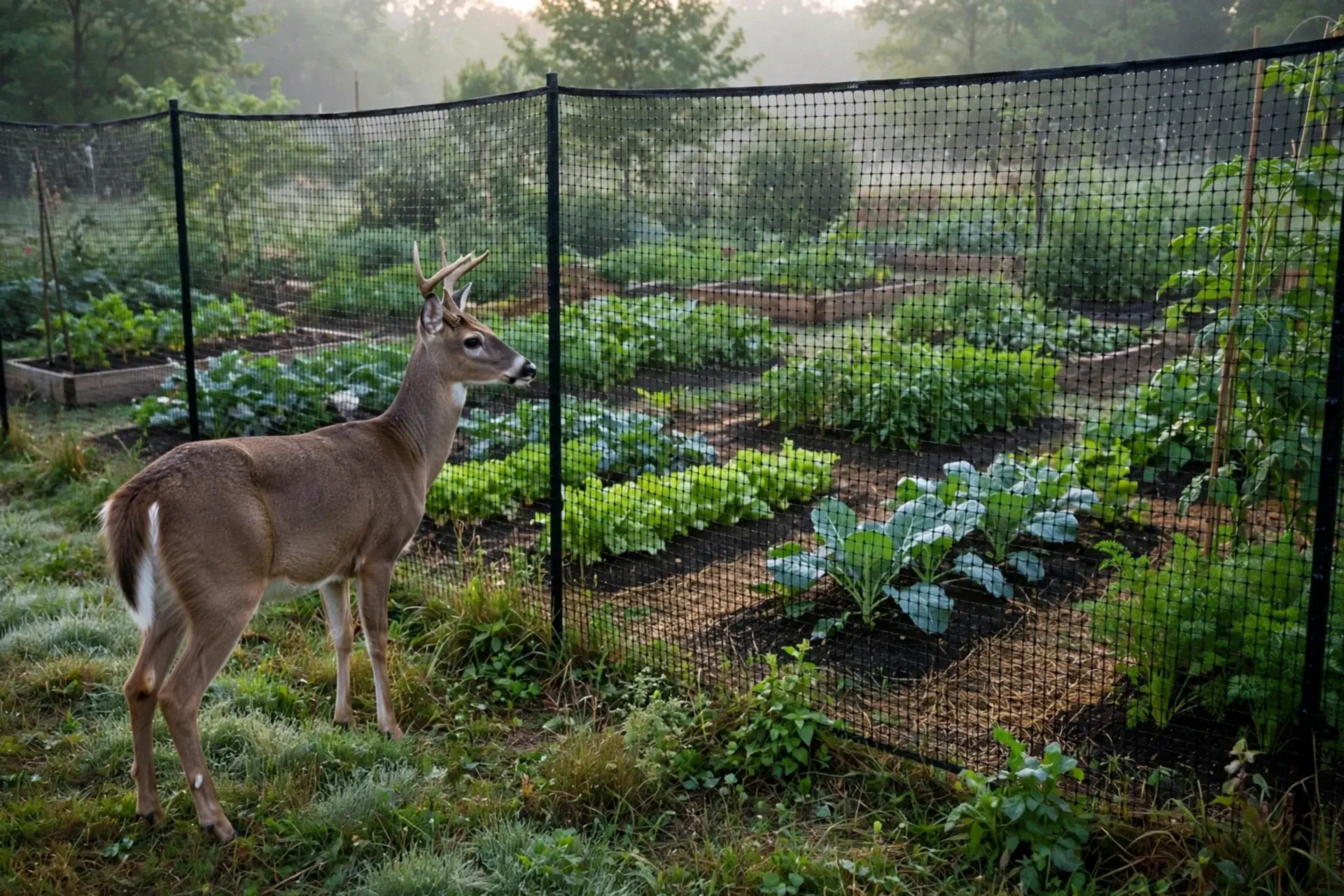
Deer are the garden pest with no small solution: one deer eats 5–10 pounds of vegetation a day, they return nightly to anything they liked, and they teach their fawns your address. Repellent sprays and gadgets genuinely help — but only the honest ranking below will save you money: a real barrier is the only permanent fix, and everything else is about making your garden the least attractive stop on the nightly round.
First, confirm it is deer (not rabbits)
- Torn, ragged bites on stems and leaves, often 1.5–5 feet (0.5–1.5 m) up — deer have no upper front teeth, so they rip rather than snip
- Clean 45° cuts low down mean rabbits instead; the fixes overlap but fencing heights differ
- Hoofprints (two-pointed, heart-shaped) and pellet droppings near the damage confirm it
- Hosts stripped overnight: hostas, daylilies, tulips, beans, peas and fruit are the classic first targets
Step 1 — Fence it properly — the only sure fix
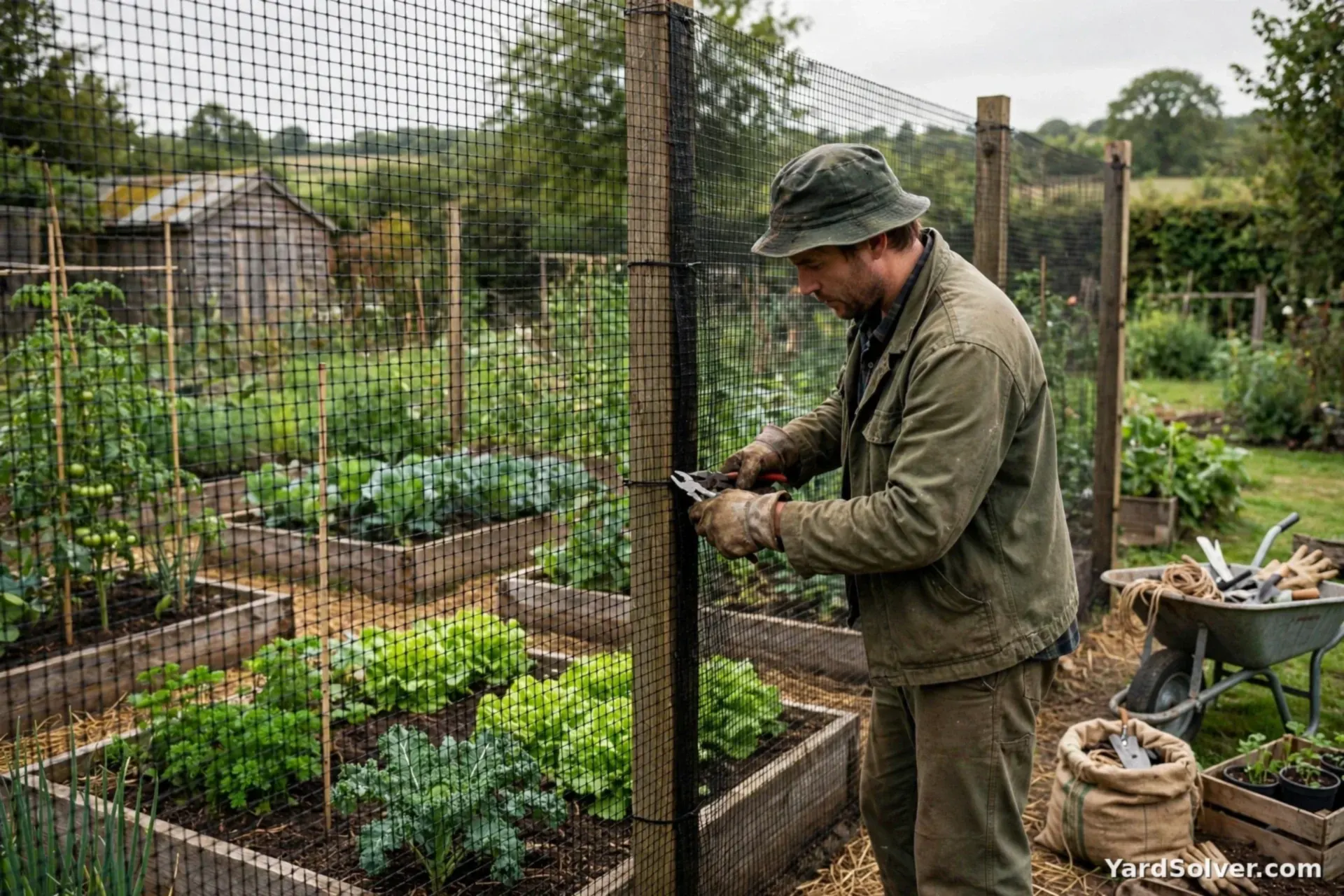
A white-tailed deer can clear 7 feet (2.1 m) from a standing start, so a serious deer fence is 7–8 feet (2.1–2.4 m) tall — or it cheats physics instead: two lower fences spaced about 3 feet (1 m) apart, or a single fence leaning outward at 45°, both defeat a deer's poor depth perception of width. Black mesh netting fencing is the budget version and works well because deer cannot judge it. Whatever you choose, the details decide: pulled tight, pinned at the ground with no crawl-under gaps, and a gate you actually close. For a small plot, fencing just the vegetable garden — not the whole yard — keeps the cost sane. It is the same exclusion logic as the covers in How to Protect Plants From Frost: a barrier the problem cannot cross beats every spray.
Step 2 — Net or cage the highest-value plants
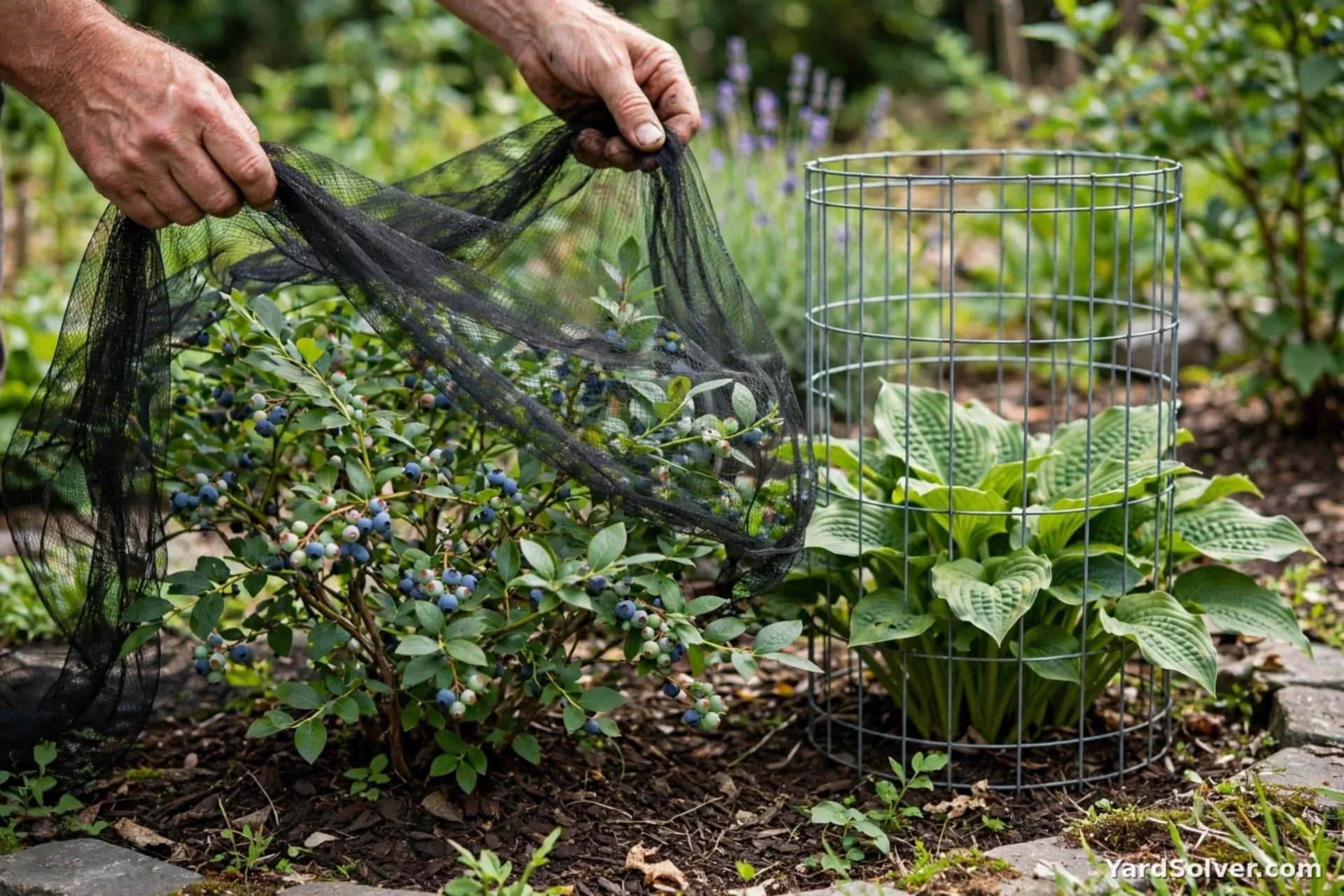
If a full fence is out, protect the plants deer travel for: young fruit trees, hostas, daylilies, tulips and the bean row. Cylinders of welded wire mesh or hardware cloth, 4–5 feet (1.2–1.5 m) tall and staked firmly, guard individual trees and shrubs through their vulnerable years. Draped bird netting over berry bushes and low beds works too — keep it taut and lifted off the foliage on hoops or stakes, because loose netting tangles birds and deer alike. Rotate this protection to whatever is budding, flowering or ripening, since deer pressure follows the menu.
Step 3 — Use repellents on rotation, and reapply

Repellents work by taste or by smell (egg solids, putrescent proteins, predator urine, strong soaps and spice sprays all have their fans), and every gardener swears by a different one — because deer adapt to any single stimulus. The pattern that holds up: rotate two different repellents every few weeks, apply before damage starts in spring rather than after, coat the plants deer actually eat (not edible parts close to harvest, per label), and reapply after rain and to new growth. Expect repellents to cut damage, not end it — they are pressure management for gardens where fencing truly is impossible, and they fail first in hard winters when hungry deer stop being picky.
Step 4 — Add motion, light and unpredictability
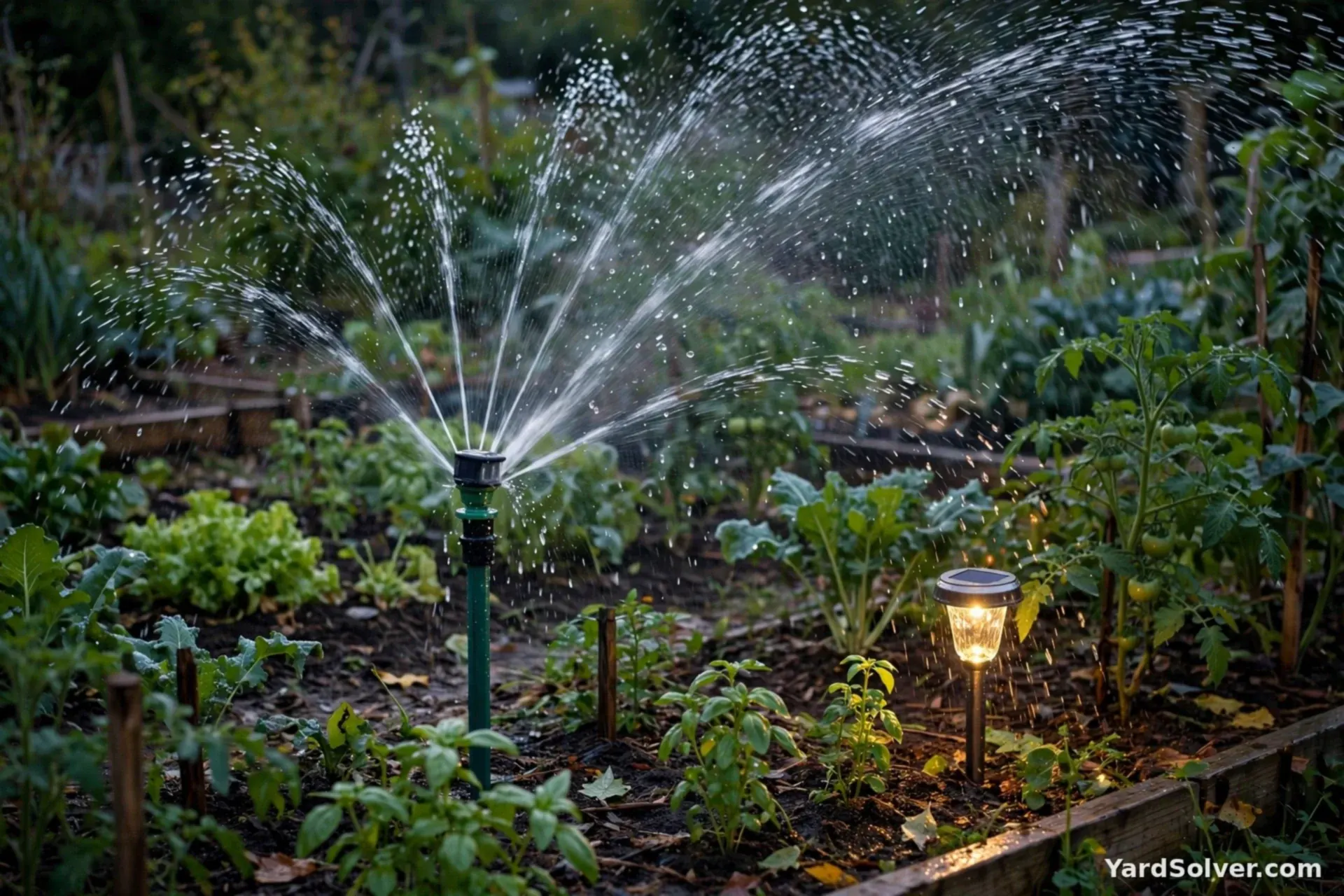
Motion-activated sprinklers are the strongest of the gadget class: a burst of water startles deer and trains them that this garden bites back — many gardeners rate them next to fencing for small plots. Solar flashing lights, radios and hanging reflective tape work for a week or a month, then become furniture. The rule for all of it: move and vary the deterrents before the deer finish learning them, and do not waste startle devices on a garden deer already treat as a nightly buffet — reset their expectations with a fence or netting first, then let the gadgets defend the line.
Step 5 — Plant the edges with what deer avoid
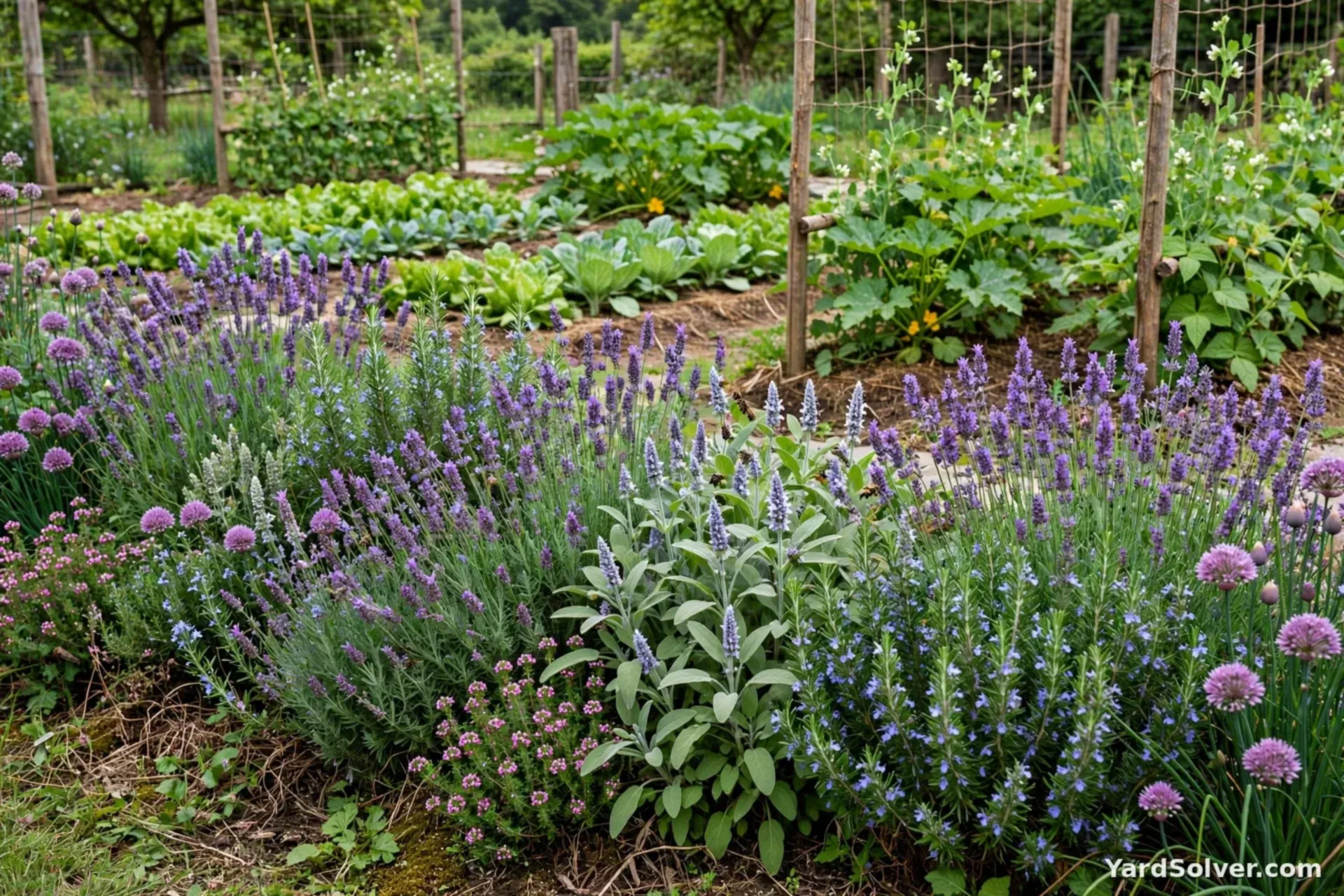
No plant is truly deer-proof — a hungry deer eats almost anything — but deer have consistent dislikes: strong scents (lavender, sage, rosemary, mint, catmint), fuzzy or leathery leaves (lamb's ear, pulmonaria), bitterness and toxins (daffodils, alliums, foxglove), and prickles. Planting those as the border and interplanted among the favourites lowers the garden's overall appeal and gives browsing deer a mouthful of “not worth it” at the perimeter. Keep the true delicacies — hostas, tulips, beans — deepest inside the fence or netting, and harvest vegetables promptly: a ripe bean row left hanging is an invitation printed in deer. The aromatic planting overlaps happily with the predator-friendly planting in Companion Planting Basics.
Keep going
Smaller thieves at work instead? The hole-by-hole diagnosis is in What Is Eating My Plant Leaves? and the six-legged version in How to Get Rid of Aphids.
Planning a new bed in deer country? Start from the resistant end of the Plant Library and fence the rest.
Questions people ask
Do soap bars, human hair and coffee grounds keep deer away?
Briefly, sometimes, locally — these home remedies work as mild scent repellents, and deer habituate to all of them within days to weeks. They are not harmful as one layer in a rotation, but no study or experienced gardener ranks them anywhere near fencing, netting or a motion sprinkler for real protection.
Will deer jump a 6-foot fence?
Yes, easily, if they want what is inside — a motivated deer clears 7 feet from standing. A 6-foot fence deters casual browsing in low-pressure areas and works better doubled or angled, but in established deer territory plan on 7–8 feet or a double fence.
Are deer-resistant plants really safe?
Deer-resistant means “usually left until last,” never “never eaten.” Fawns taste everything, and in late winter or drought deer eat plants they ignore all summer. Use resistant planting to lower pressure around the edges, and still protect the plants you cannot afford to lose.
Comments & ratings
No comments yet.
Be the first to share your experience.