
Guides · Snake Plants · Published November 8, 2026
How to Grow Snake Plants Indoors: The Complete Beginner's Guide
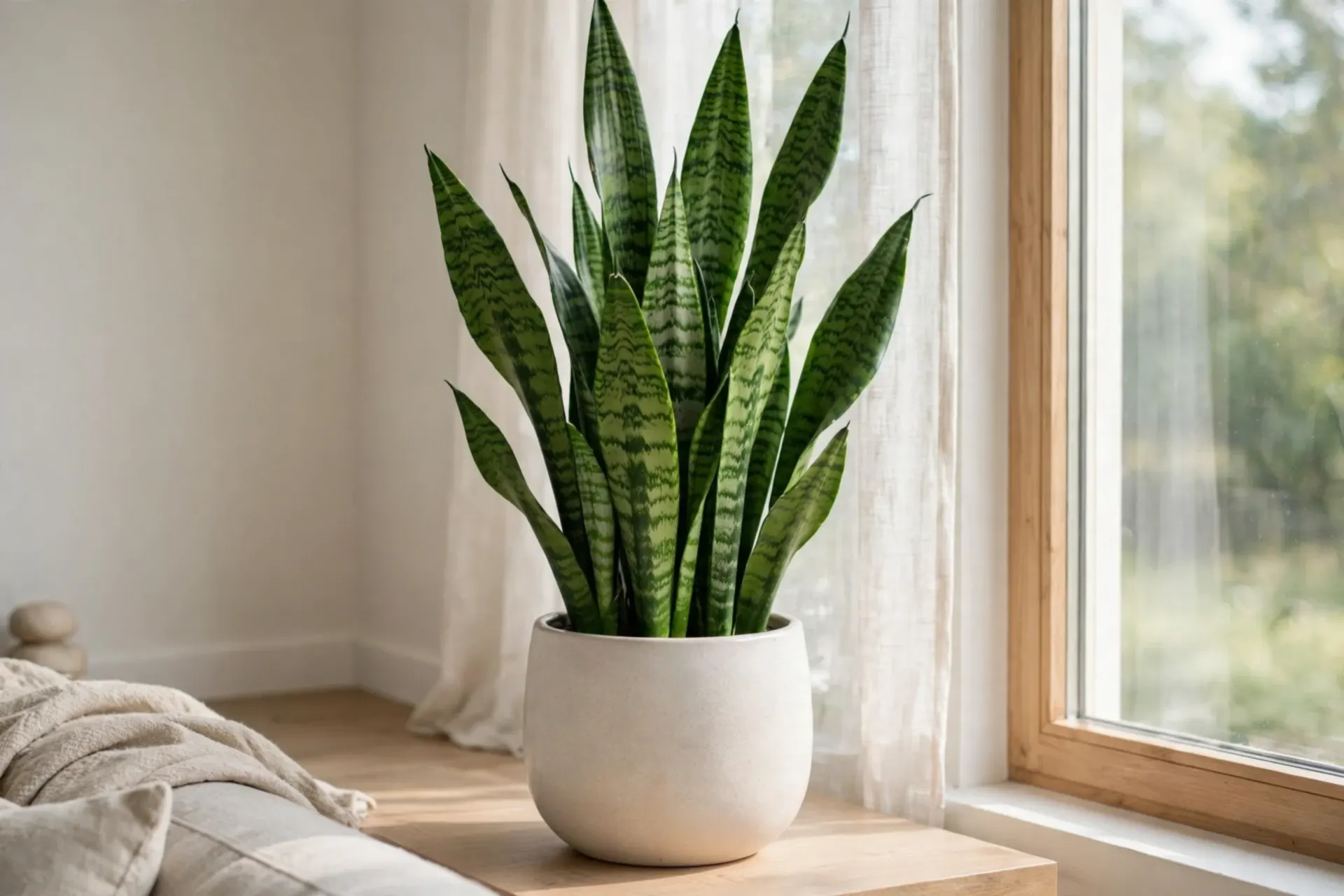
The snake plant is sold as the houseplant you cannot kill — and indoors, almost nobody kills it with neglect. They kill it with the watering can. This is a plant built for dry shade in rocky ground, storing water in thick leaves and a fat underground rhizome, and the whole indoor routine follows from that: gritty soil, a snug heavy pot, the brightest light you have, and water measured in weeks, not days. For the one-screen version — light, water and care at a glance — see the Snake Plant plant page; this is the deep guide it points to.
The snake plant routine at a glance
- Start from a division: a pup or a sliced section of rhizome is a free, ready-grown plant
- Gritty soil, snug heavy pot: free-draining mix, and weight low down — this plant is top-heavy
- Bright indirect light: it tolerates low light, but it grows where the light is
- Water rarely: every 2–6 weeks by dryness, less in winter, never into the rosette
- Divide to multiply: division keeps the stripes; repot only when the pot starts to bulge
Step 1 — Start with a division, a pup, or a firm nursery plant
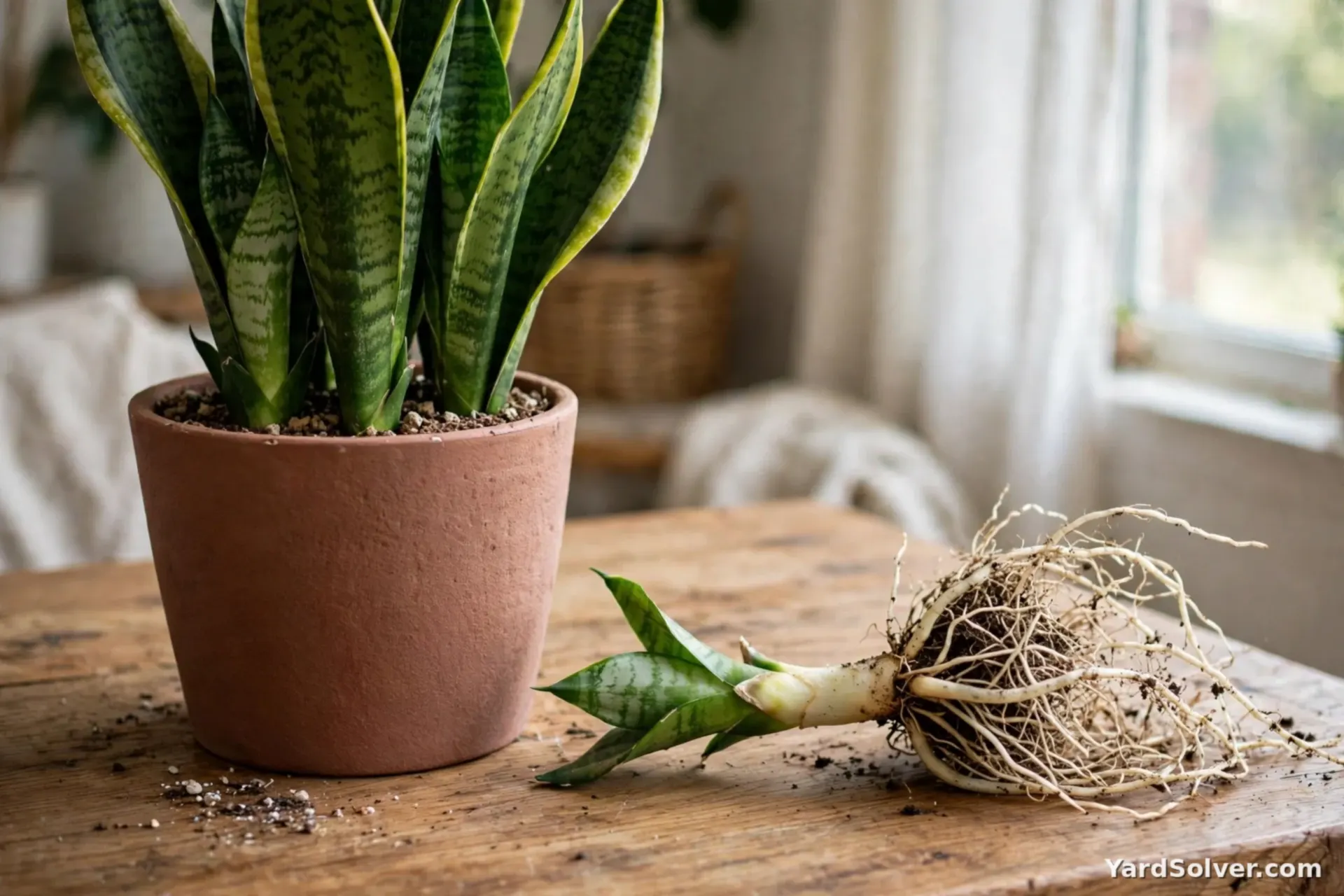
A mature snake plant spreads by a thick underground stem — a rhizome — and throws up new fans of leaves (pups) beside itself. If you know anyone with a big plant, a division is the best start there is: tip the plant out, cut or snap a pup away with a piece of rhizome and some roots attached, and pot it as in Step 2. Buying instead? Judge the plant by its leaves and its base. Leaves should be firm, stiff and upright, the base solid where they meet the soil. Walk away from anything with soft, leaning or yellowing leaves, a mushy base, or soil that is wet and sour-smelling — rot starts at the base long before it shows at the top. A plant that feels rocky-firm in a slightly small pot is a better buy than a lush one swimming in soggy compost.
Step 2 — Pot it in gritty soil, snug and heavy
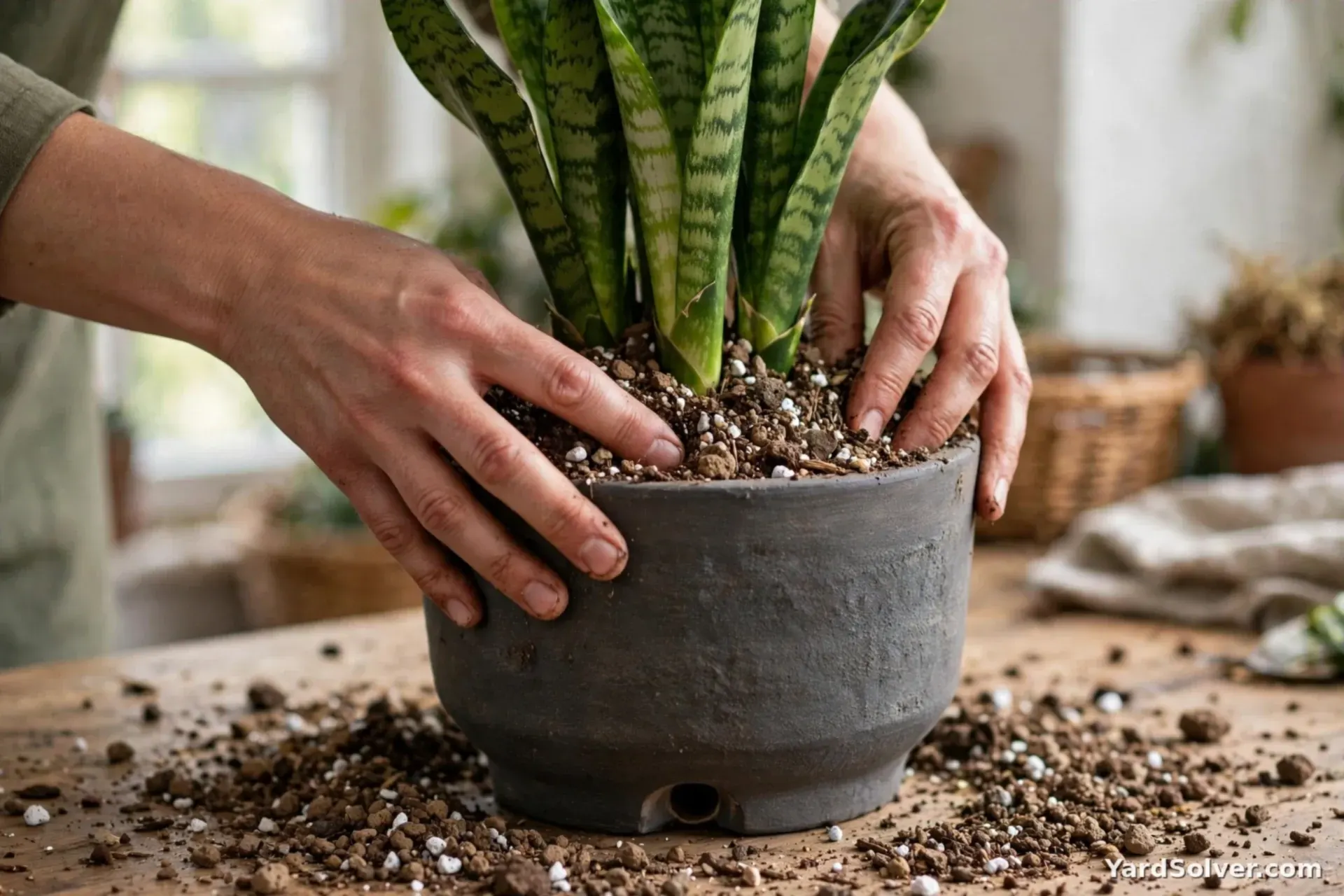
Snake plant roots rot in soil that stays wet, so the mix must drain like gravel, not hold water like a sponge. Use a cactus-and-succulent mix as sold, or blend your own: half ordinary potting mix, half grit — coarse sand, perlite or fine pumice. Mixing a batch for several pots or a whole shelf? The Raised Bed Soil Calculator totals the volumes for you. Choose a snug pot — roughly an inch or two wider than the root ball, never a cavern of wet soil around small roots — and make it a heavy one. A tall snake plant is top-heavy and will tip a light plastic pot clean off the shelf; terracotta or ceramic gives it ballast, and terracotta's porous walls also help the mix dry evenly. The pot must have a drainage hole — no exceptions. Set the rhizome just below the surface, firm the mix around it, and wait a few days before the first watering so any broken roots skin over first.
Step 3 — Give it bright indirect light (low light is survival, not growth)
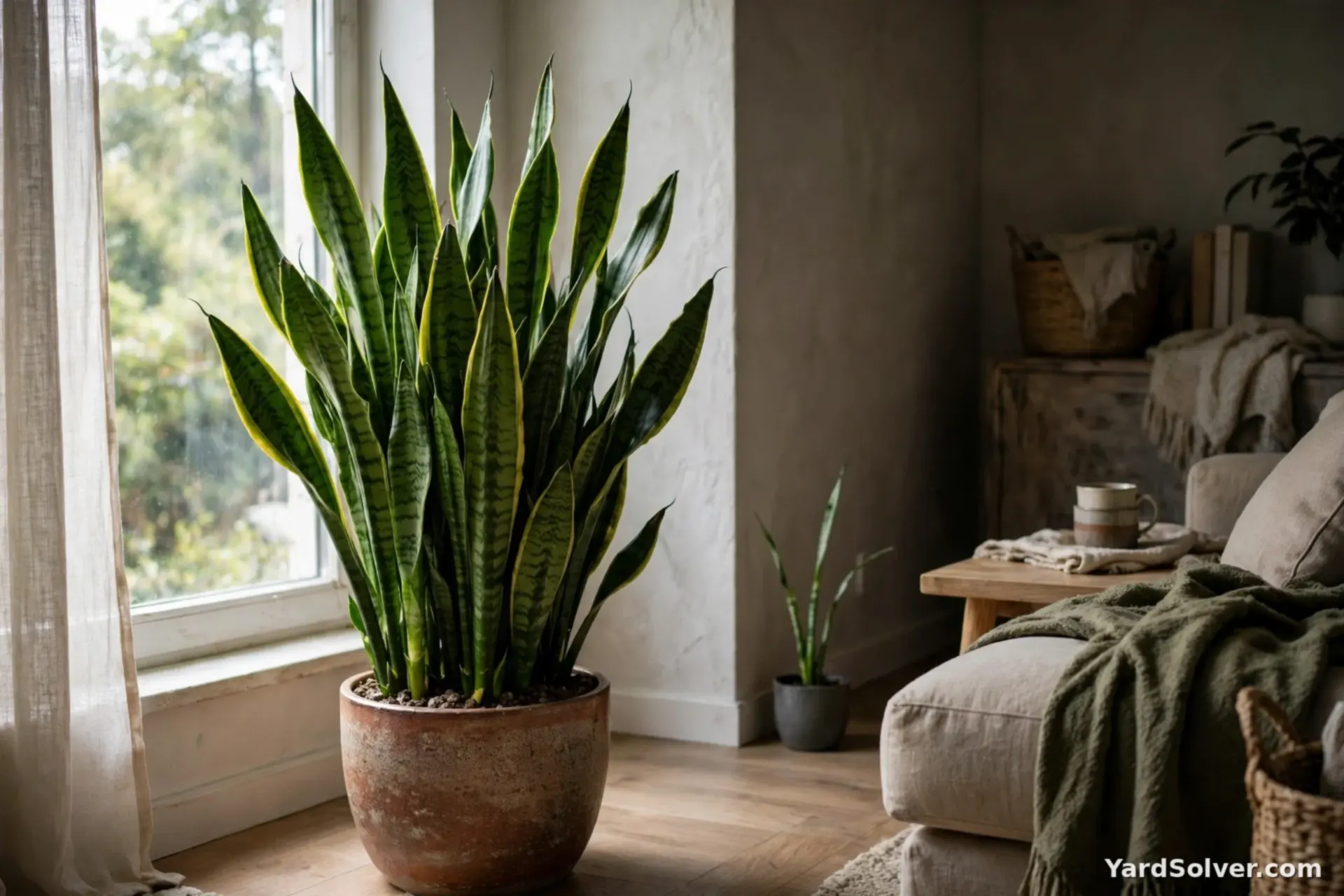
The snake plant's famous tolerance is real — it will survive in a dim hallway where almost nothing else lives — but surviving is all it does there. In low light it barely grows, throws few new leaves, and stretches pale and floppy. For a plant that actually grows, give it bright indirect light: a few feet from a bright window, or an east windowsill, is the sweet spot, and it will also take some gentle morning sun. One caution at the other extreme: harsh midday sun blasting through glass can scorch pale, papery patches onto leaves that were raised in shade — move a plant into strong sun gradually over a week or two. Turn the pot a quarter-turn now and then so all sides get light and the fan grows upright instead of leaning. Grouping several houseplants on one shelf? Lay the shelf out in the Garden Planner once, tallest at the back, before you start buying pots.
Step 4 — Water rarely, and never into the rosette
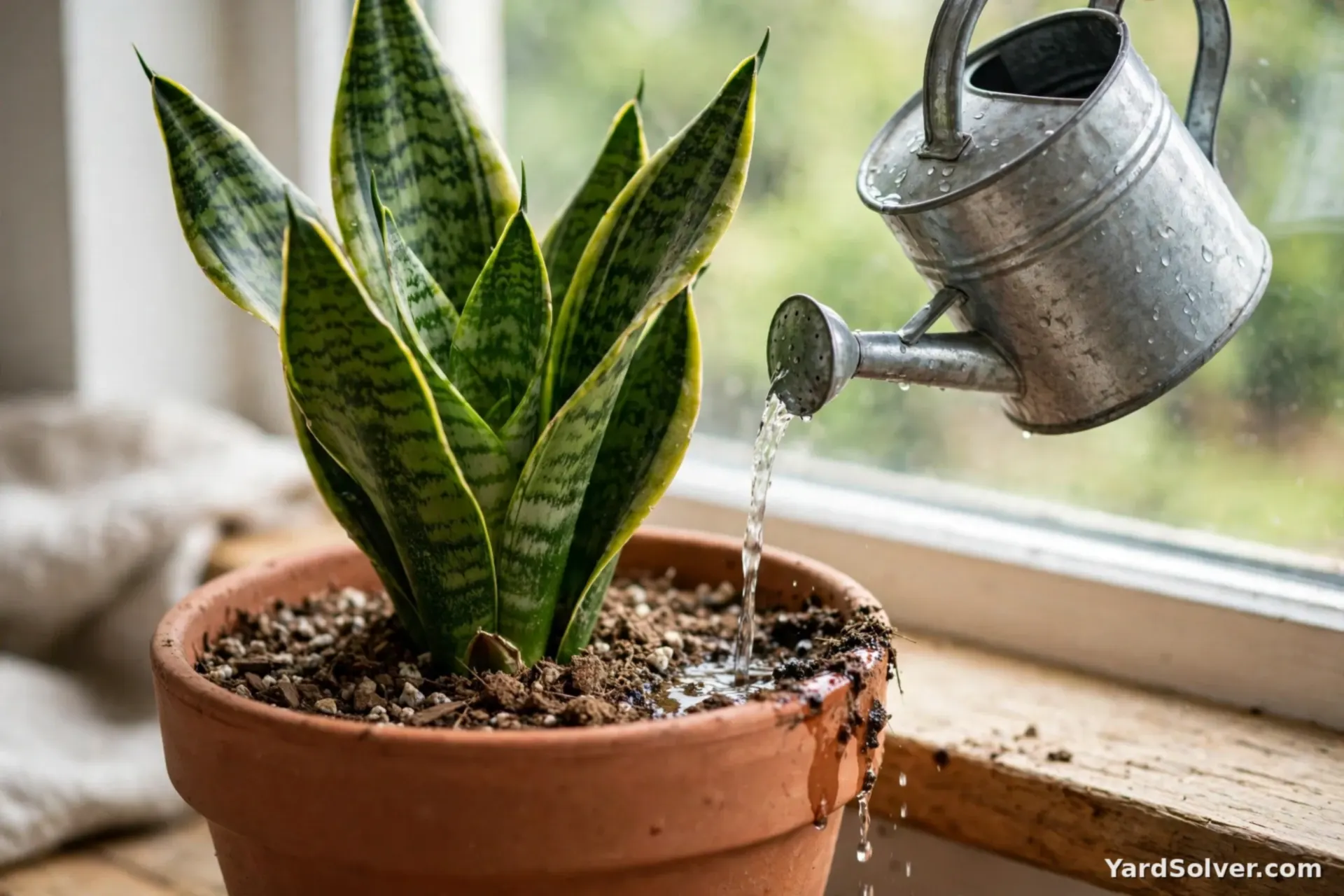
More snake plants die of kindness than of thirst, so water by dryness, never by habit. In a bright room that means roughly every 2–6 weeks: push a finger or wooden skewer into the mix — if it is not dry most of the way down, wait. In winter, and in low light, water less still; a cool, dim plant may need a drink only every couple of months. When you do water, water at the soil edge, thoroughly enough that a little runs from the drainage hole, then empty the saucer. Never pour water into the centre of the leaf rosette: water pooled where the leaves meet is rot's open door, the indoor version of the crown rot that kills its cousin in How to Grow Aloe Vera. Underwatering, by contrast, is easy to forgive — a thirsty snake plant just pauses, and perks up at the next drink. If you are choosing between watering today and next week, choose next week.
Step 5 — Propagate by division, and repot only when forced
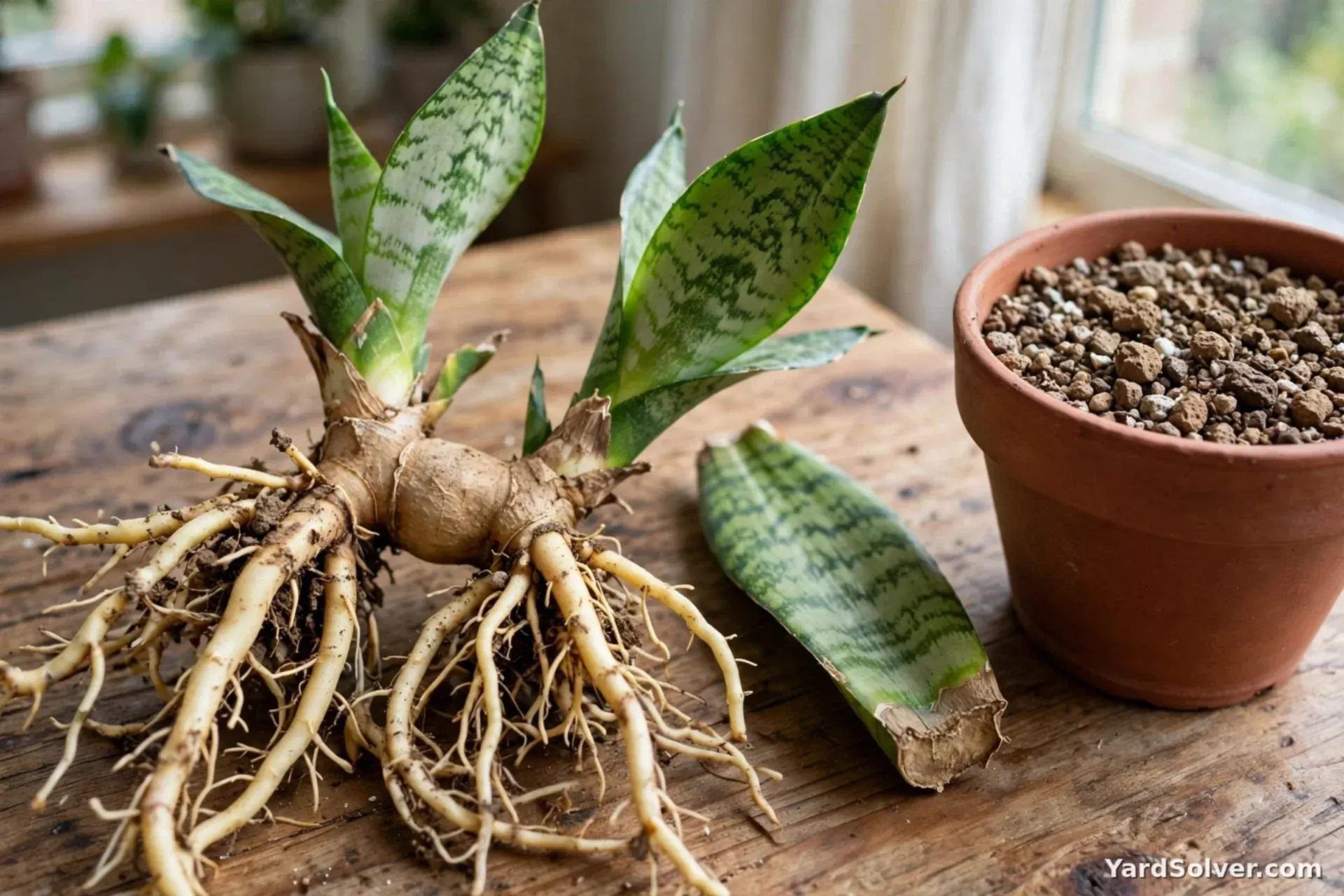
Division is the method to trust. Tip the plant out, find the rhizome, and cut through it with a clean knife so each piece carries roots and at least one fan of leaves. Let the cut surfaces dry in open air for a day until they skin over, then pot each piece as in Step 2. A division is a clone: a striped mother gives striped pups, which is why this is the only reliable way to multiply a variegated plant. Leaf cuttings are the slow road: cut a healthy leaf into 2–3 inch sections, let the cuts callus for a few days, and press the bottom end (the end that pointed down on the plant) into gritty mix. They root over months, not weeks — and the pups that eventually rise are usually plain green, the variegation lost. Keep both routes in perspective: this plant asks so little that dividing one clump every few years furnishes a whole house. Repot only when the plant forces the issue — a pot that bulges, cracks, or gets lifted by the rhizome — and then go just one size up. Its closest companion on the shelf is the aloe on the next windowsill: the Aloe Vera plant page covers the matching routine at a glance.
Keep going
The at-a-glance version, with light and water needs: Snake Plant — Plant Library.
The deep-dives: the watering schedule by season and pot size · propagation, three ways · repotting, rarely and one size up.
More unkillable-houseplant guides: Grow Aloe Vera · Grow Microgreens Indoors · Grow Herbs Indoors in Winter.
Questions people ask
Why are my snake plant's leaves falling over and mushy at the base?
That is overwatering rot — the number one killer of snake plants. The thick leaves and rhizome store water, so wet soil rots them from the base up. A mushy leaf cannot be saved: cut it away at the base, let the soil dry completely, and water far less often. If the base of the whole plant is soft, unpot it, cut away every rotten part back to firm tissue, let the cuts dry for a day, and repot into fresh gritty mix.
How fast does a snake plant grow?
Slowly — that is normal. Expect a few new leaves a year in low light and noticeably more in bright indirect light, where a happy plant can add several inches of height in a growing season. It will never be a fast plant; if yours has not grown at all in a year, more light — not more water or fertilizer — is almost always the answer.
Is a snake plant safe around pets?
Honestly, no — not entirely. Snake plant leaves contain saponins and are mildly toxic if eaten, typically causing nausea, vomiting or diarrhoea in cats and dogs. Most pets ignore the tough, upright leaves, but keep the plant out of reach of pets and small children who chew plants, and call a vet if a pet eats a good amount of leaf.
Comments & ratings
No comments yet.
Be the first to share your experience.