
Guides · Seed starting · Published November 1, 2026
How to Grow Onions From Seed (Start in Winter)
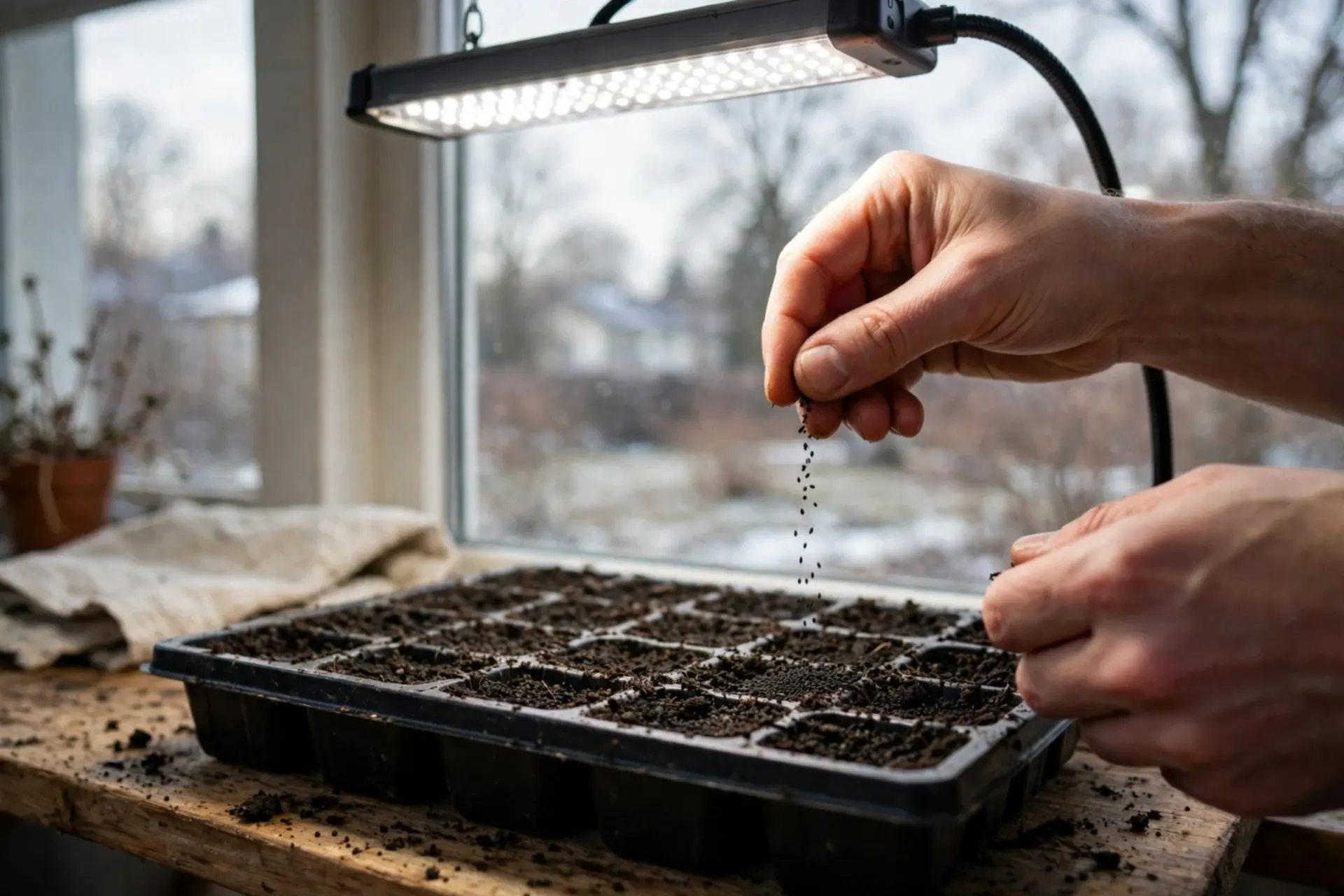
Onions are the crop that punishes late starters: from seed they need the longest indoor head start of any common vegetable — eight to ten weeks — because bulb size is decided by how much leaf the plant builds before summer day length tells it to stop. The second deciding fact is invisible on the seed packet's front: onions bulb in response to day length, and the variety must match your latitude. Get those two right and seed-grown onions out-store and out-size most sets.
First decision: match the onion to your daylight
- Long-day onions bulb when days reach roughly 14–16 hours — the types for northern regions and Canada
- Short-day onions bulb at roughly 10–12 hours of daylight — bred for southern winters and mild climates
- Day-neutral (intermediate) types sit between, the flexible choice for mid-latitudes
- The classic failure: a short-day variety planted in the north bulbs tiny and early; a long-day type in the deep south may never bulb properly at all
- Seed vs sets, honestly: sets (mini bulbs) are easier and fine — but seed offers far more varieties, no bolting-prone large sets, and cheaper plants by the hundred
Step 1 — Sow in late winter, earlier than feels reasonable
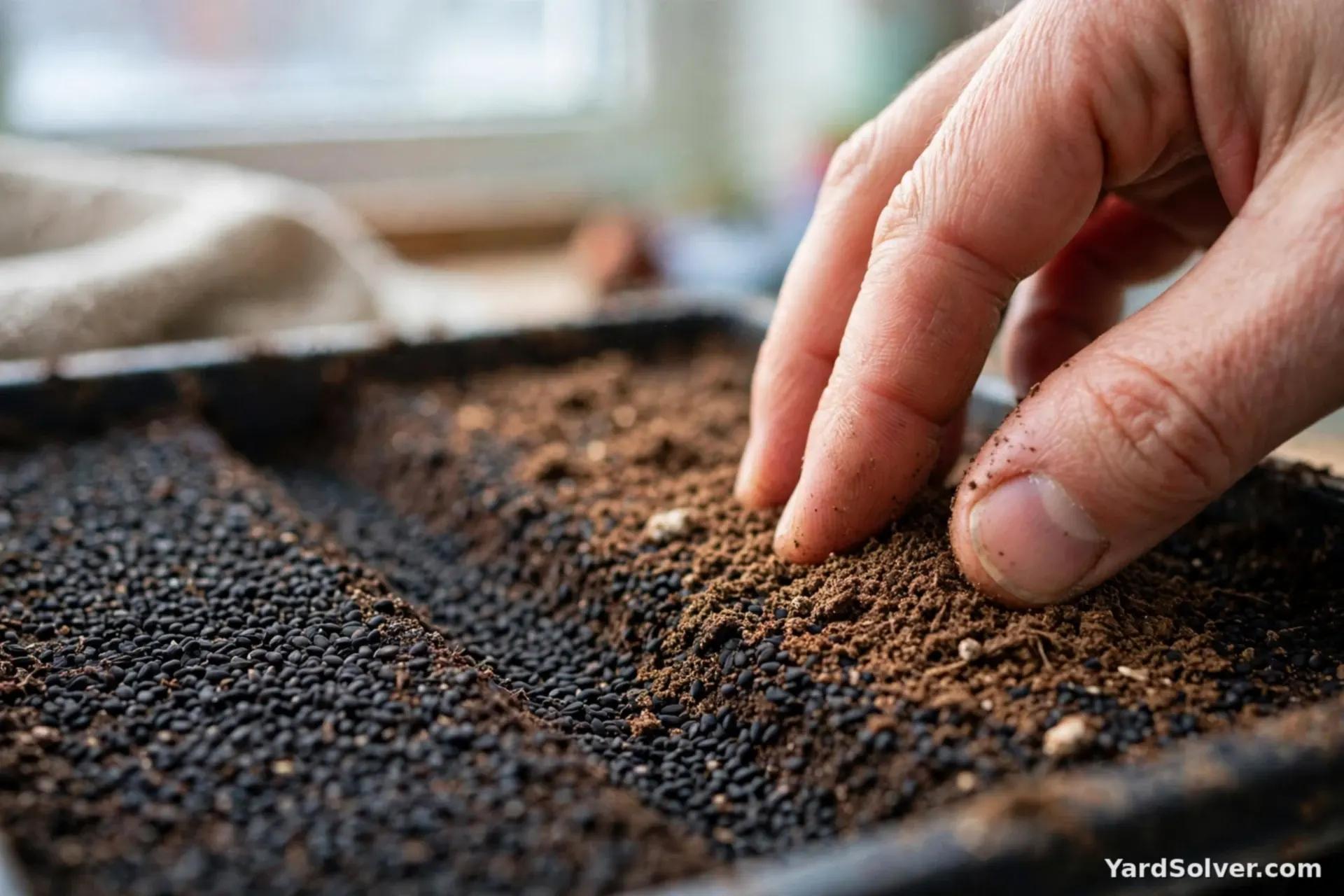
Count back 8–10 weeks from your last frost date using the Planting Calendar — for many northern gardens that means sowing in February. Sow in a tray or wide pot of seed mix, about 6 mm (1/4 inch) deep, fairly thickly: onion seedlings transplant happily from a crowd. The timing logic in When to Start Seeds Indoors applies with onions at the very early end of it.
Step 2 — Grow them cool and bright, and give them haircuts
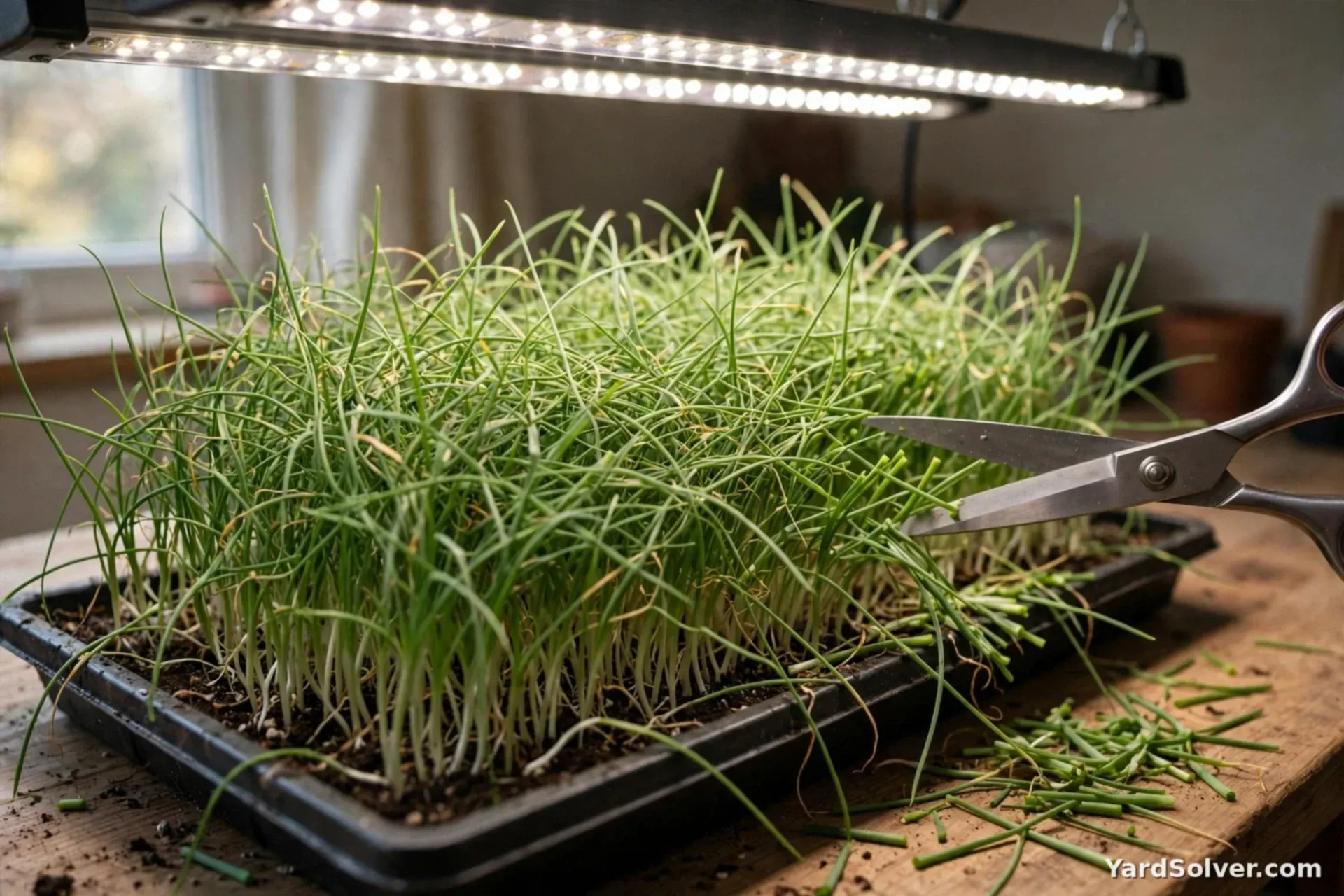
Onion seedlings are thin green threads for weeks — that is normal, not failure. Give them your brightest close light and ordinary-cool room conditions. When the tops flop and tangle at around 10–13 cm, trim them back to about 8 cm with scissors — the famous onion haircut: it keeps light and air reaching every seedling and the trimmings go in a salad. Repeat as needed. Thin or weak feed at this stage is unnecessary; steady moisture is the thing.
Step 3 — Harden off and transplant shallow
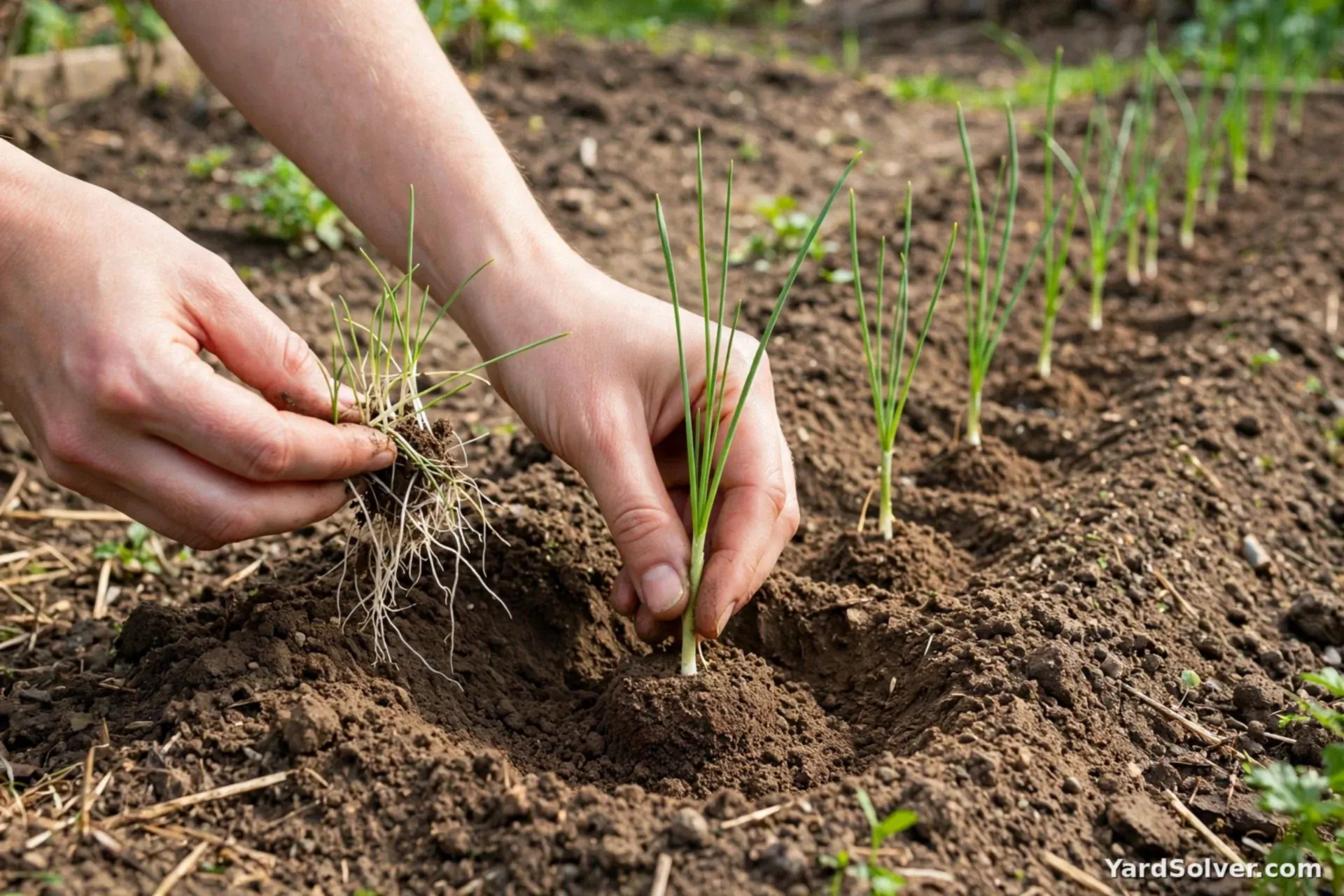
After the last hard frost, harden the seedlings off for a week, then tease the crowd apart and set them out at final spacing — roughly 10–15 cm apart for full-size bulbs (bed quantities from the Plant Spacing Calculator). Plant them shallow, just deep enough to stand: buried necks make thick-necked bulbs that store badly. Water them in well; those thread roots establish quickly in cool spring soil.
Step 4 — Grow the leaf factory, then let it bulb
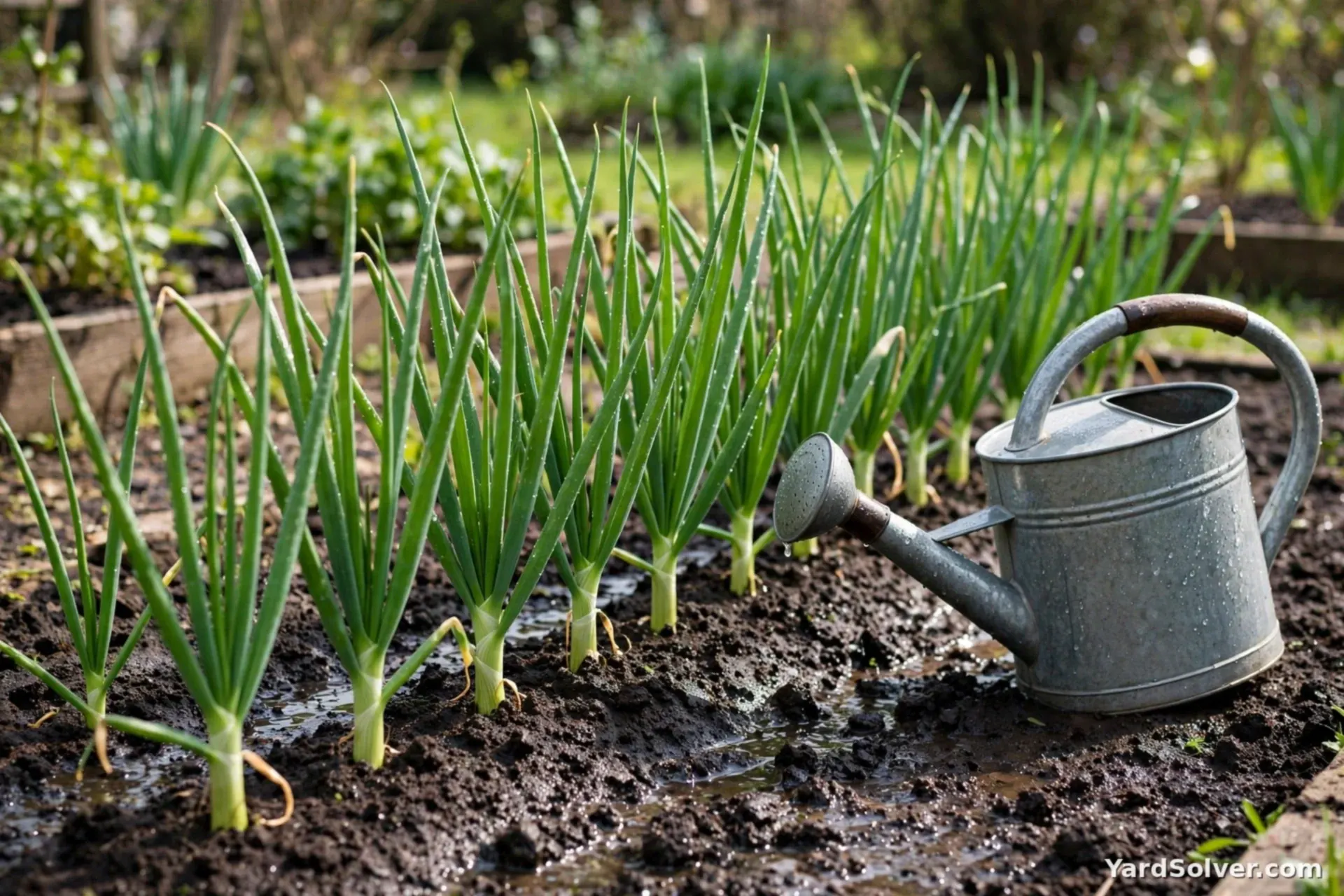
Bulb size is leaf size: every green leaf becomes one ring of the bulb, so the spring job is simply maximum healthy leaf — even water, weeds kept off (onion roots are shallow and hate competition), and a modest nitrogen feed early in the season. As day length triggers bulbing, new leaf growth stops and the plant pours itself into the bulb; ease off feeding and keep water steady while bulbs swell.
Step 5 — Harvest when the tops fall, and cure properly
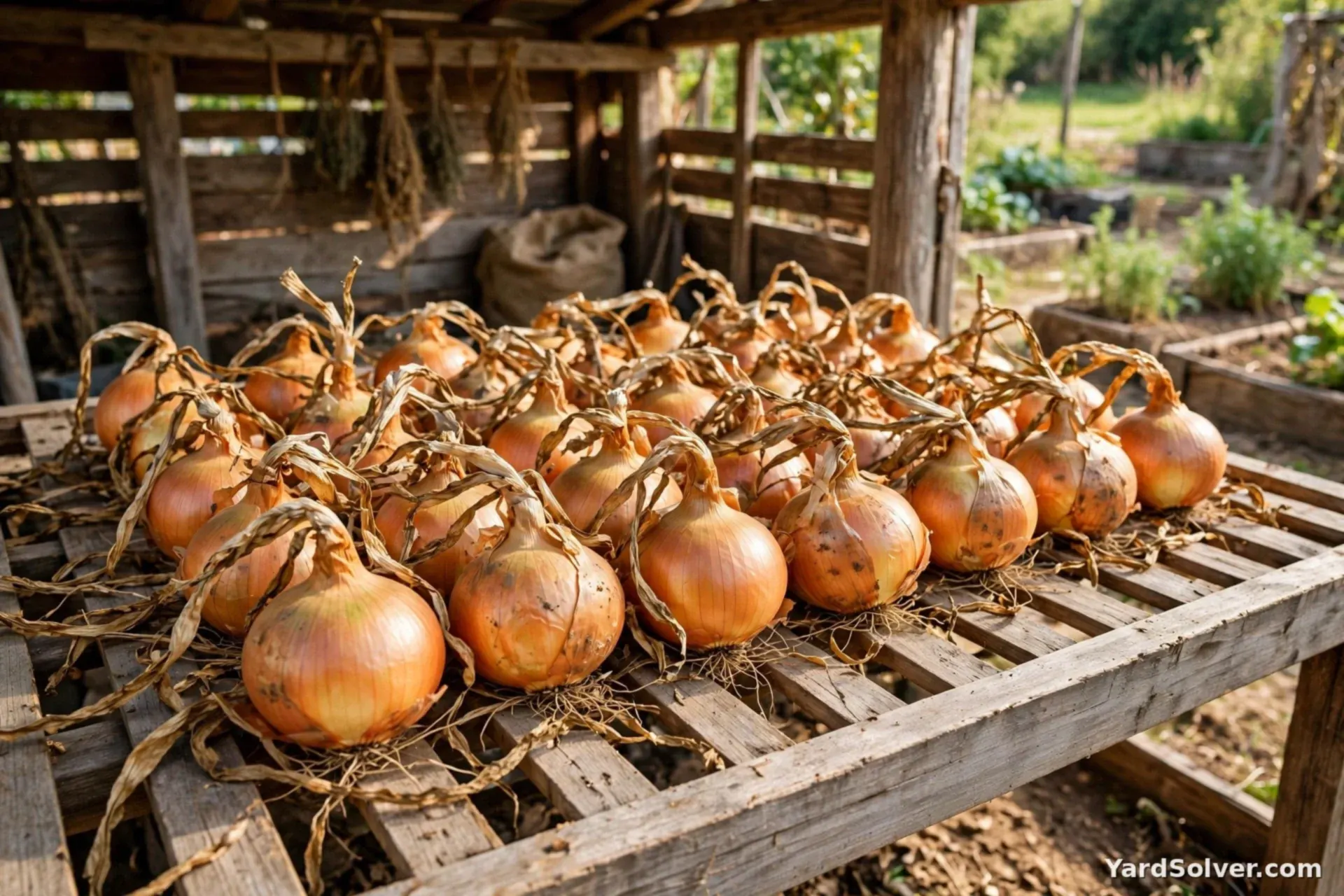
When roughly half the tops have flopped over naturally, the crop is ready: lift the bulbs on a dry day and cure them — spread in a single layer somewhere warm, dry and airy for two to three weeks until the necks are papery and tight. Only then trim and store them cool and dry. Bulbs with thick, soft necks get eaten first; properly cured, thin-necked ones keep for months. The autumn routine that follows is part of Putting Your Garden to Bed.
Keep going
The seed-starting series: When to Start Seeds Indoors · Why Are My Seedlings Leggy? · How to Start Tomato Seeds Indoors. Onion sets and bulb data are in the Plant Library.
Questions people ask
Is it worth growing onions from seed instead of sets?
For choice and storage, yes: seed gives you the varieties bred for your day length and region, avoids the bolting that plagues larger sets, and costs far less per plant. For convenience, sets still win — they skip the long indoor stage entirely. Many gardeners do both: sets for early green onions, seed for the storing crop.
Why are my onion seedlings so thin? Did I do something wrong?
Almost certainly not — onion seedlings are naturally thread-thin for their first weeks, like green hair. With bright light, steady moisture and the occasional trim to about 8 cm, they thicken steadily. Judge them at transplanting time, when a healthy seedling is about pencil-thickness at the base, not in week two.
When exactly do onions start making bulbs?
When day length reaches the trigger for their type — roughly 14–16 hours for long-day varieties, 10–12 for short-day. That is why variety-to-latitude matching matters so much, and why the plant's job before that date is simply to grow as many healthy leaves as possible: each leaf becomes one ring of the final bulb.
Comments & ratings
No comments yet.
Be the first to share your experience.