
Guides · Soil & feeding · Published November 6, 2026
How to Fix Clay Soil (Without Making It Worse)
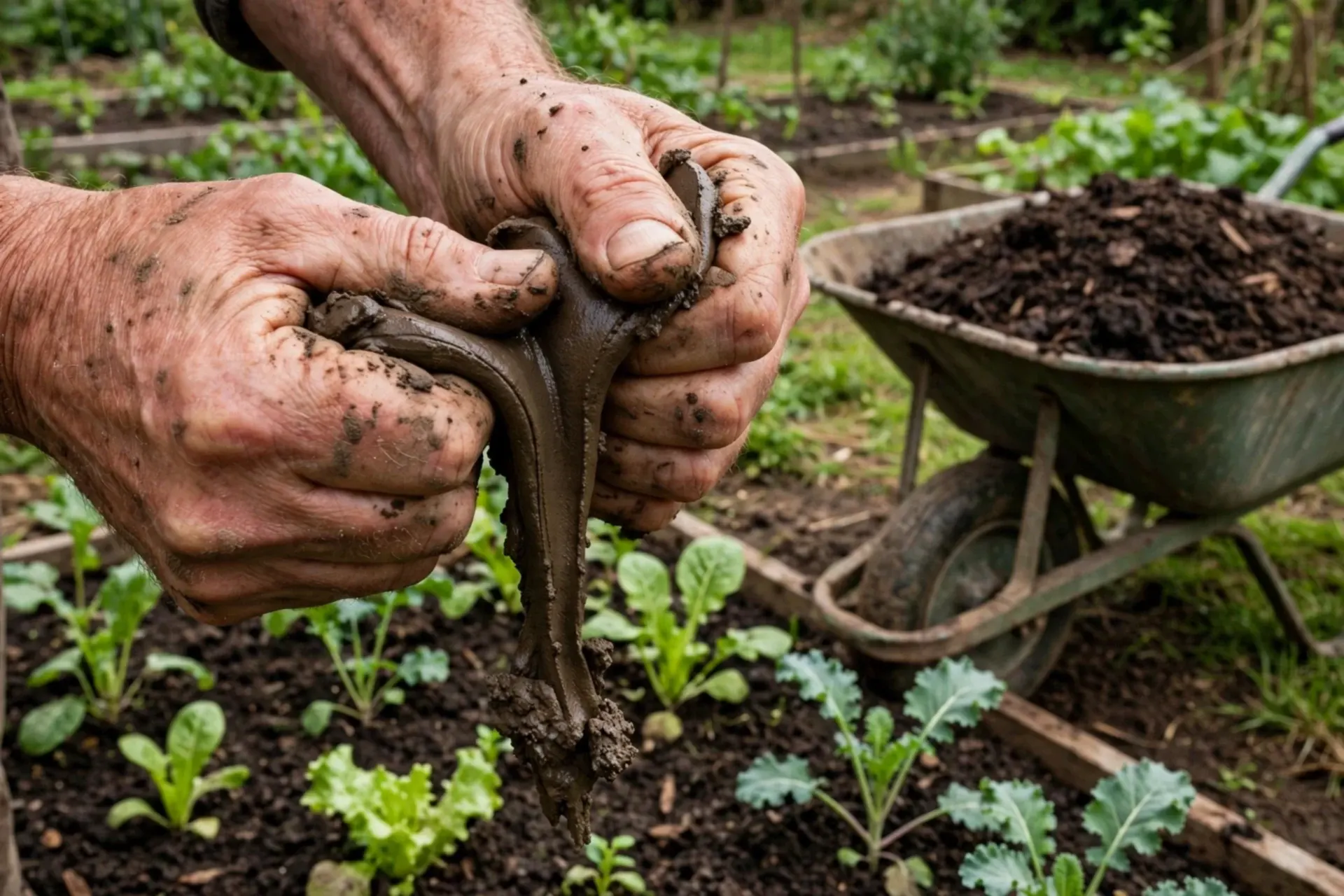
Clay soil has a PR problem it only half deserves. It holds nutrients better than any other soil and stores water through dry spells — its real fault is structure: the particles are so fine they pack into a airless slab that is sticky when wet and brick-hard when dry. The fix is well established and not expensive, but two of the most famous clay "cures" — sand and gypsum — usually make things worse. This guide runs the honest sequence: prove it is clay, test before you spend, then fix it with the one amendment that works, at the amount that works.
Clay soil, in one honest card
- The one real fix: organic matter — compost, leaf mould, aged manure — added every year, not once
- Never add sand: clay clings to sand grains and sets harder; Oregon State University Extension says no amount of added sand changes clay's texture
- Gypsum is not a clay cure: it only helps sodic (high-sodium) soils, which a soil test must confirm first
- Timing beats effort: clay worked while wet is clay damaged — the squeeze test below tells you when it is safe to dig
- It stays clay: you are improving structure, not changing particle size — plan on an annual rhythm, not a cure
Step 1 — Prove it is clay before you treat it
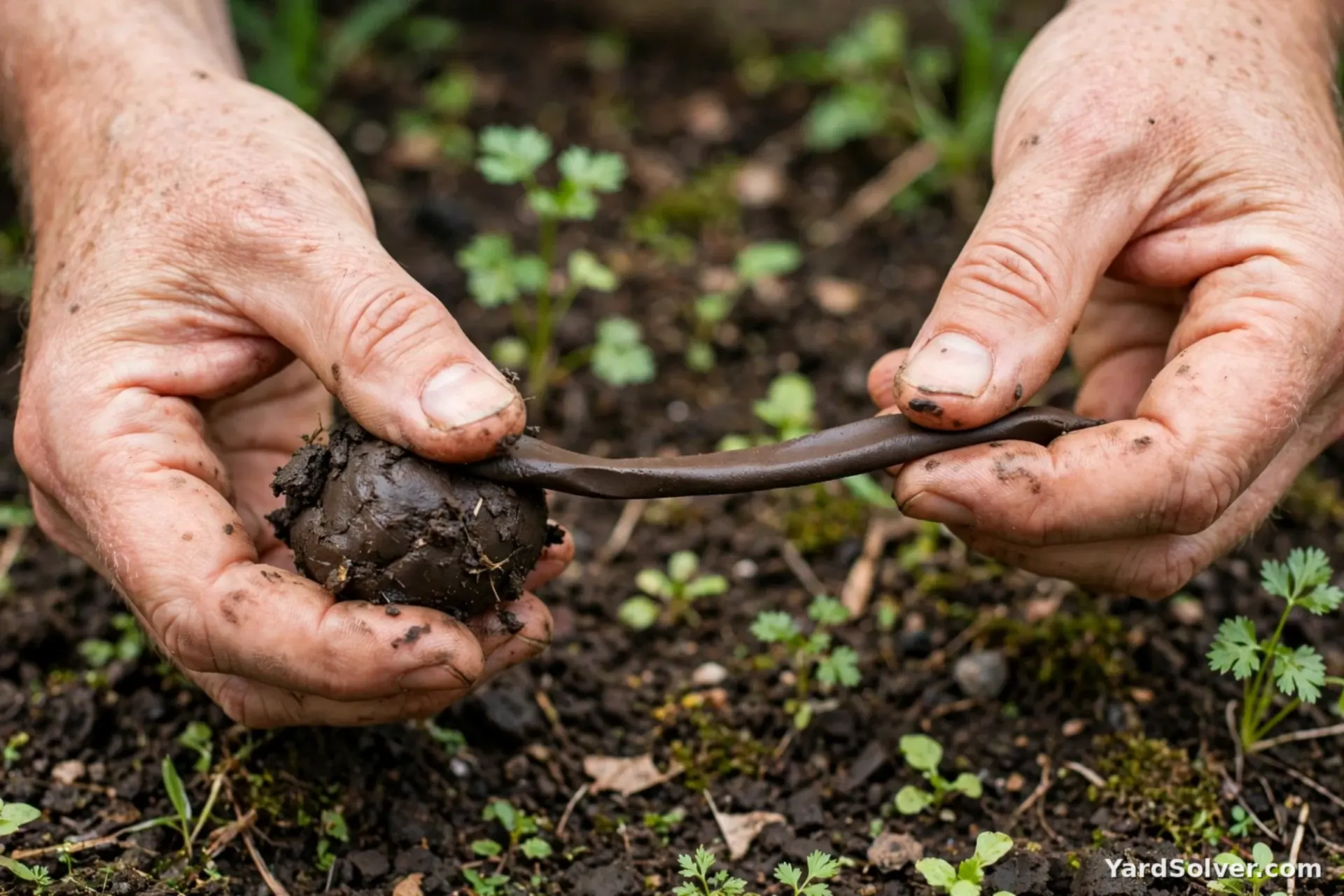
Two free tests, five minutes. The ribbon test: moisten a small ball of soil and press it out into a ribbon between thumb and forefinger. If it forms a ribbon longer than about 5 cm (2 inches) before breaking under its own weight, you have high clay content; a ribbon under 2.5 cm says clay is not your main problem. The drainage test: dig a hole about 30 cm (12 inches) deep and wide, fill it with water, let it drain completely, then fill it again and measure how far the level drops in an hour. A drop of roughly 2.5–7.5 cm (1–3 inches) per hour is workable drainage; slower than that, poor drainage is the thing your amendments have to solve. Run both tests in the bed that struggles most, not the bed that behaves.
Step 2 — Test the soil before you buy a single bag
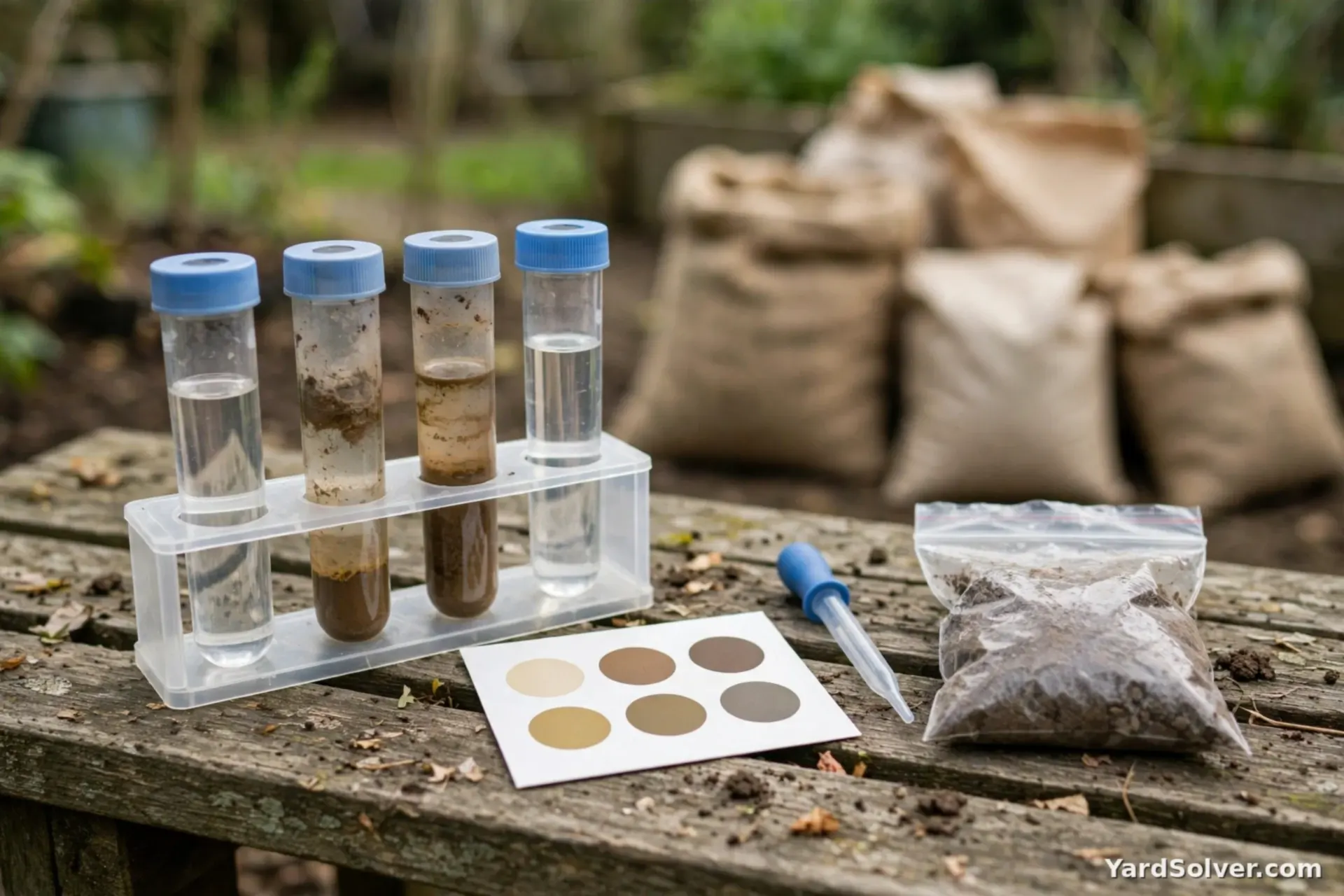
A lab test settles three things this guide cannot guess for you: your pH, your organic matter percentage, and whether your clay is sodic (the only case where gypsum earns its keep). Below roughly 3% organic matter, compost is your highest-value spend, ahead of everything else on the shelf. Our soil testing guide covers sampling properly — 8 to 10 spots mixed in a bucket — because one scoop from one corner produces one corner's answer. With the report in hand, use the Fertilizer Calculator to turn any per-area rate the report names into the actual amount for your bed.
Step 3 — Wait for the right day: the squeeze test
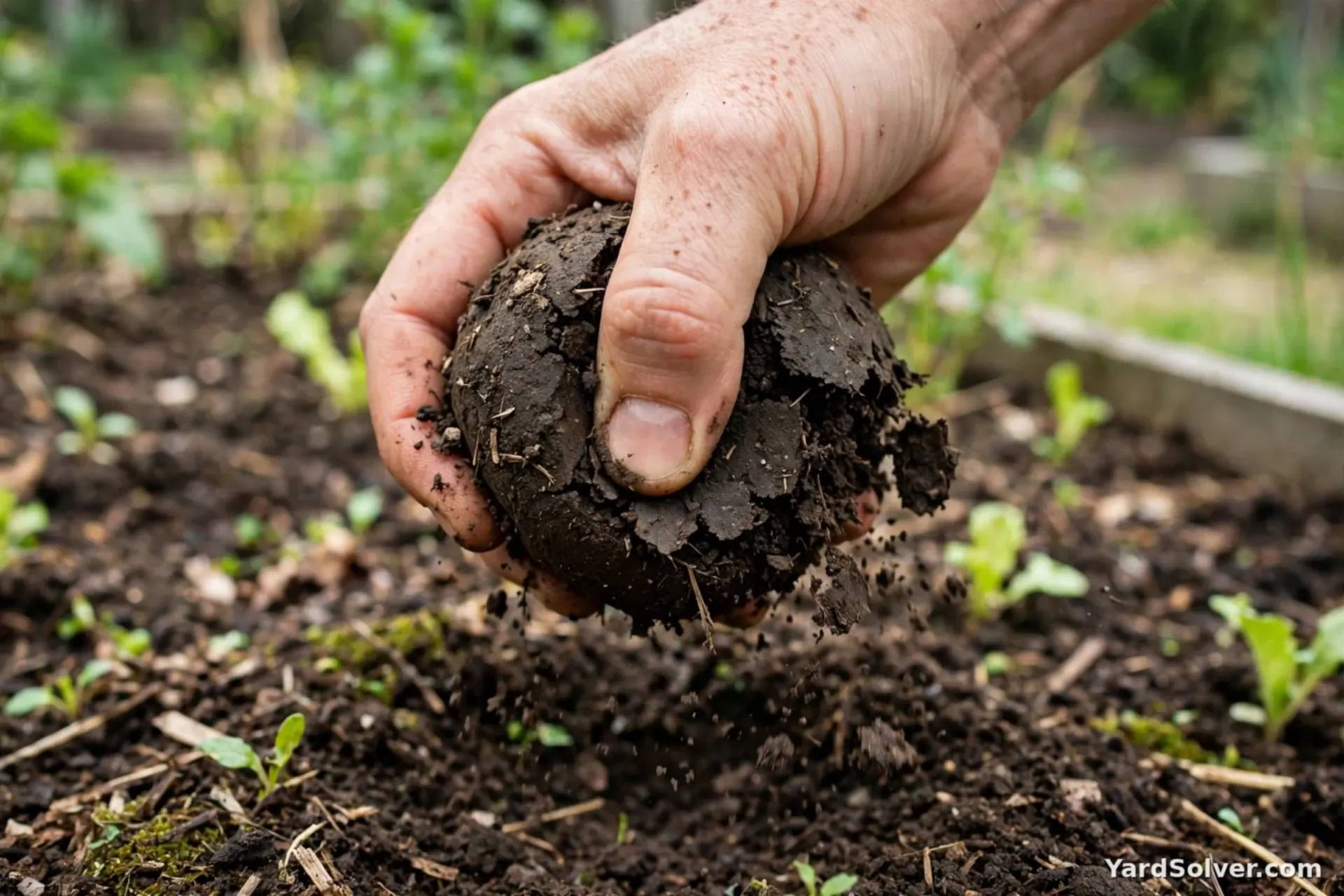
Clay has a narrow workable window between soup and brick, and digging outside it destroys the very structure you are trying to build. Squeeze a handful from spade depth: if it forms a ball that crumbles when you poke it, dig away. If it stays slick, shiny and putty-like, walk away and wait — every spadeful turned in that state smears into a hard pan as it dries. Fall is the kindest season for clay work: the soil is usually at its most workable, and the amendments you add get a winter of freeze, thaw and worm traffic before spring planting. Spring clay work is fine too, on the right day — the squeeze test, not the calendar, has the final say.
Step 4 — Add organic matter: the amounts that actually work
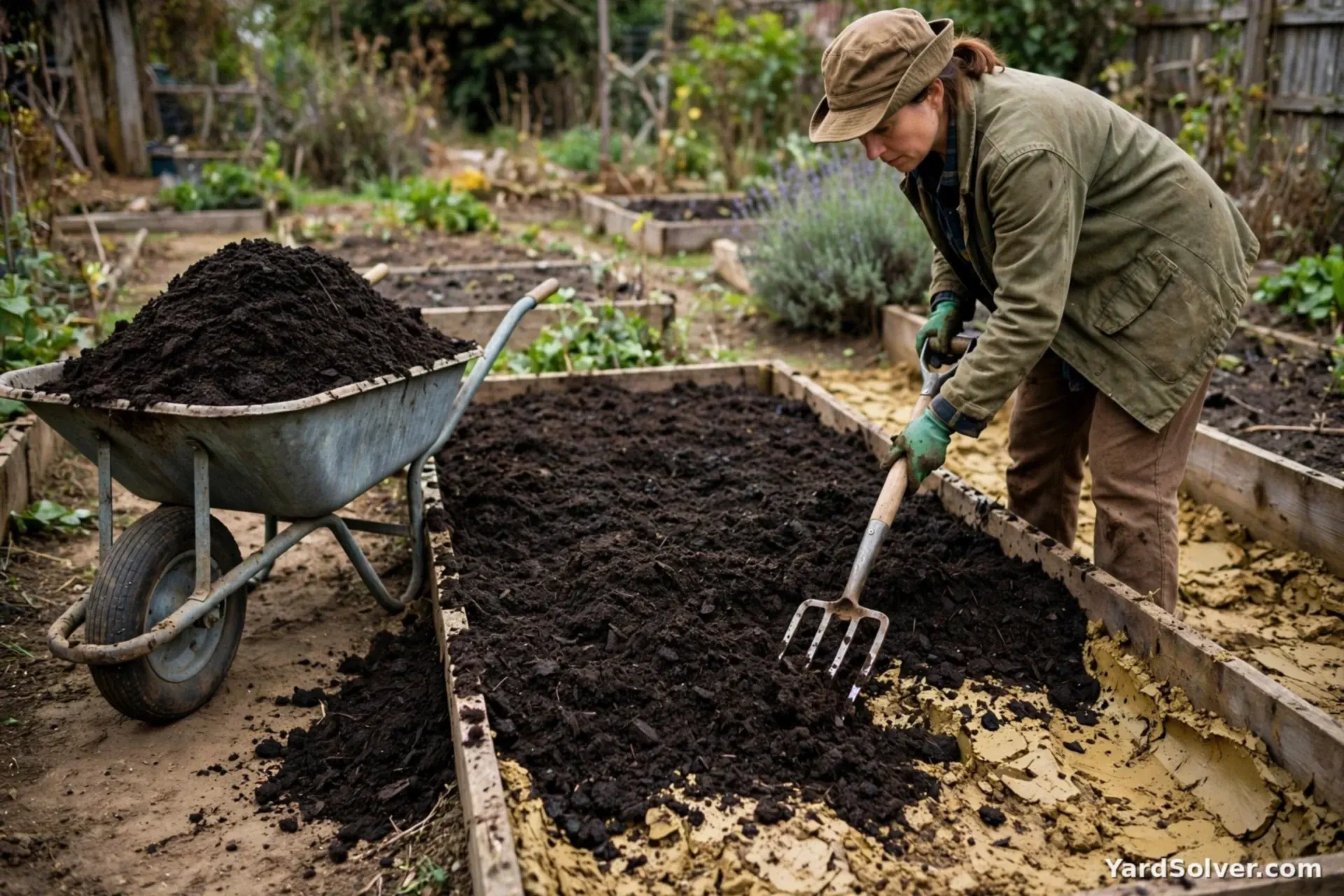
Here is the dose, because "add compost" without a number is how clay stays clay. On an established bed, spread 5–7.5 cm (2–3 inches) of finished compost, leaf mould or aged manure on the surface and let worms and weather work it down — Oregon State University Extension specifically recommends surface application over digging in for clay. On a brand-new bed you get one justified exception: spread the same layer and fork it into the top 15–25 cm (6–10 inches) once, to jump-start structure where roots will actually grow, then switch to surface-only in later years. Budget the amount honestly: 7.5 cm over a 3 × 1.2 m bed (about 40 sq ft) is roughly 0.28 cubic metres — run your own beds through the Compost Calculator rather than discovering the shortfall with the wheelbarrow half empty. Finished compost beats fresh manure here: fresh material can tie up nitrogen while it breaks down and can carry weed seed, while finished compost feeds the soil food web that glues clay particles into crumbs.
Step 5 — Put roots and worms on the payroll
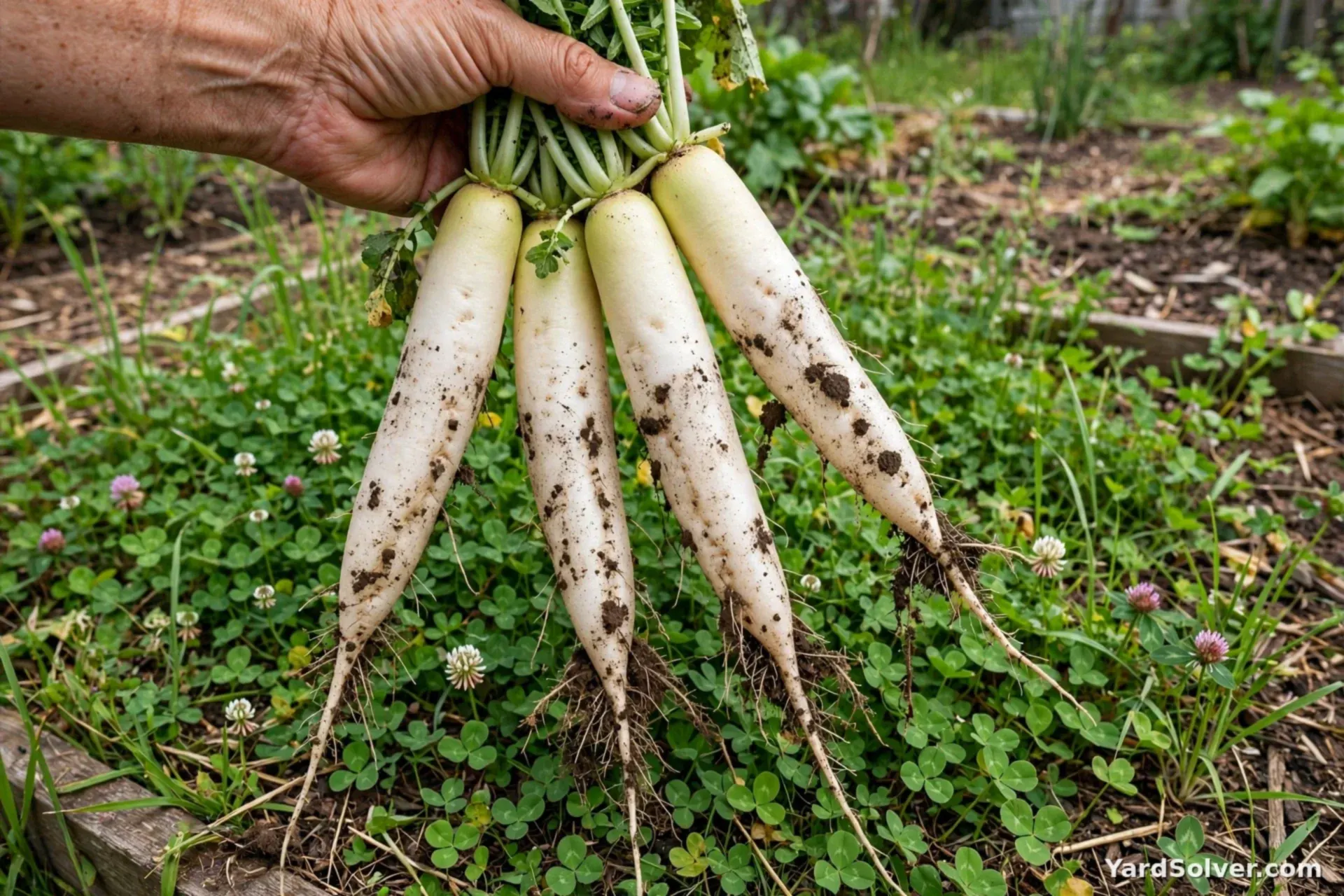
Between crops, living roots are the cheapest clay tool you own. Daikon radish drives a taproot down through compacted layers and leaves a drainage channel when it rots in place; annual ryegrass and clover build a fibrous root mat that pries particles apart and adds organic matter exactly where it is needed. Sow a cover crop on any bed that would otherwise sit bare from fall to spring, and let it die back or cut it before it flowers. Put the sowing date in the Garden Planner alongside your vegetable successions, because the cover crop is a crop — the one that grows next year's soil. And whatever you plant, repeat Step 4 every year: extension guidance is unambiguous that additions must be at least annual to hold the gains, because microbes spend organic matter continuously.
Step 6 — Protect the gains (and know when to go up instead)
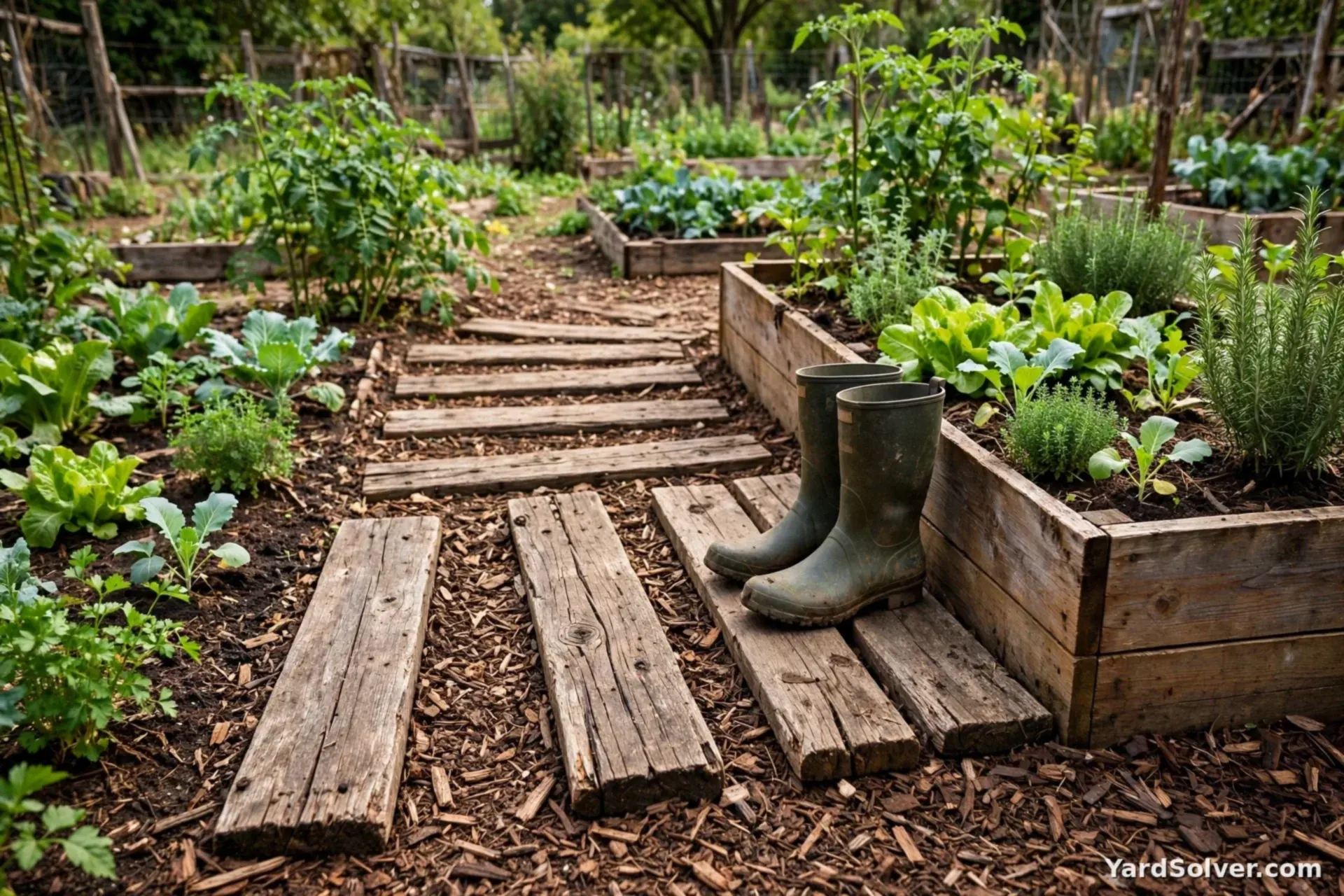
Clay compacts under feet faster than it improves under compost, so the rules are physical: never walk on a wet bed, work from boards or paths, and keep a surface mulch on so rain impact does not seal the top into a crust. If one patch stays waterlogged through all of this — the corner where every path drains to — stop fighting it at ground level: a raised bed over the worst clay is not surrender, it is the standard extension answer, and the Raised Bed Soil Calculator sizes the fill while How to Build a Raised Bed covers the build. Clay also tells on itself through crops: carrots fork and stunt in heavy, stony clay, which is why forked carrots are often a soil-structure report, not a seed report.
Keep going
Start with the numbers: How to Test Your Garden Soil · How to Prepare Garden Soil in Spring · How to Refresh Raised Bed Soil in Spring. Plan the whole season — cover crops included — in the Garden Planner.
Water pooling on your clay instead of soaking in? Give it an exit: Soggy Yard? How to Fix Drainage With a French Drain.
Questions people ask
Can I just add sand to clay soil to loosen it?
No. Oregon State University Extension is blunt about it: no amount of sand added to clay soil will change its texture, because the fine clay particles cling to the sand grains and can set into something closer to concrete. To change texture with sand you would need sand to make up more than half the mix, which means replacing your soil, not amending it. Organic matter is the fix.
Does gypsum fix clay soil?
Only in one specific case: sodic soil, where excess sodium is what is holding the clay particles in a dispersed, structureless state — a soil test has to confirm that first. On ordinary garden clay, university extension services (Washington State, Minnesota) do not recommend gypsum as a structure fix; it adds calcium your soil may already have plenty of. Organic matter beats it in every non-sodic case.
How long does it take to fix clay soil?
Workability improves within one season of adding organic matter, but the soil remains clay forever — what changes is its structure, not its particle size. Extension guidance is that additions must be at least annual to hold the improvement, and a bed fed 2–3 inches of compost every year digs noticeably easier by year two or three. It is a rhythm, not a one-weekend cure.
Comments & ratings
No comments yet.
Be the first to share your experience.