
Plant Library · Fruit & Melons
🫐 How to Grow Blueberry
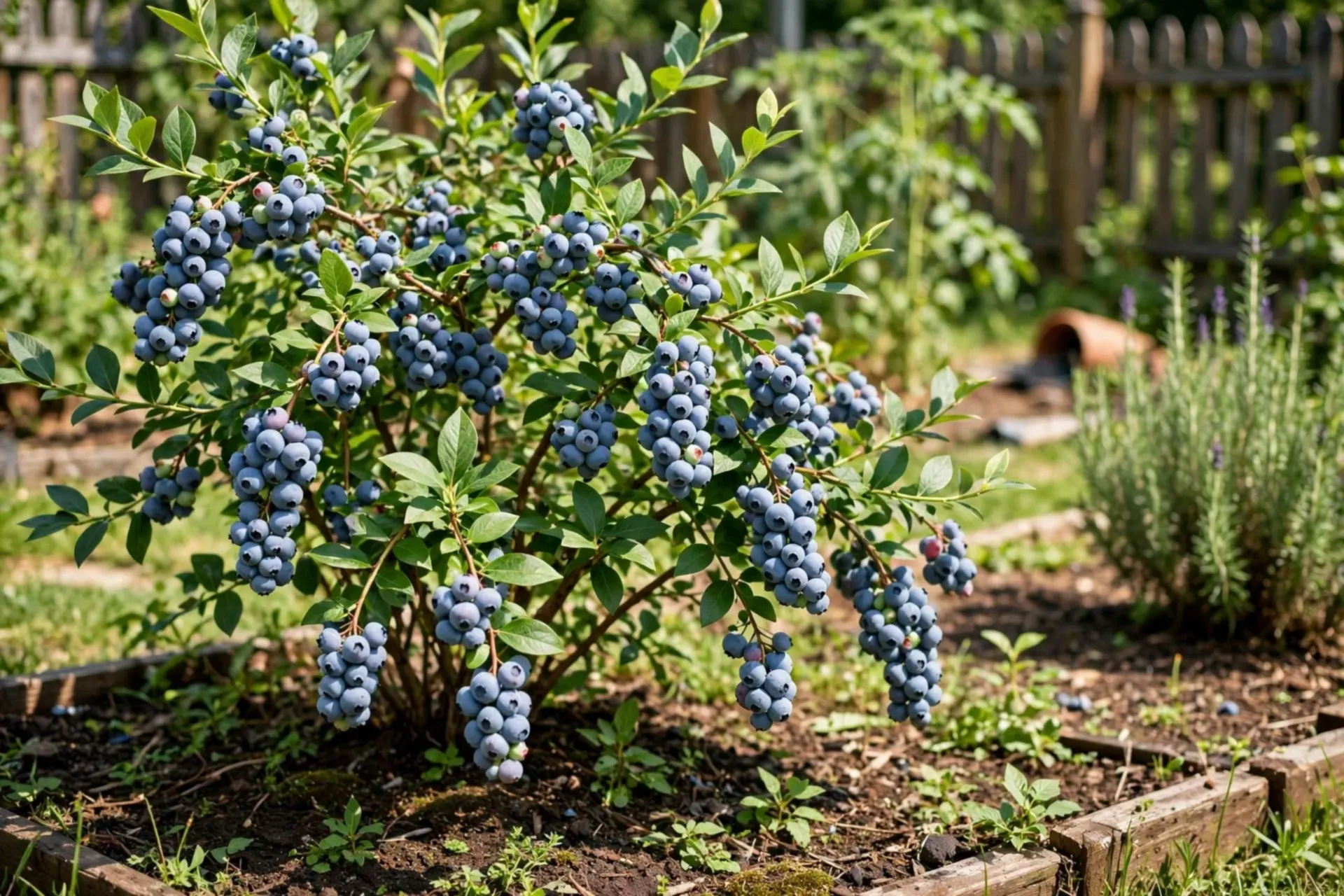
A long-lived perennial shrub planted in spring — it must have acidic soil (pH about 4.5–5.5) or it will not thrive. Blueberries are a long-lived perennial shrub: plant in spring in full sun and acidic soil (pH about 4.5 to 5.5), expect light crops from year 3 and full crops from about year 5 or 6.
Grow Blueberry with us — step by step
Everything for this plant is written step by step below — what to do, and exactly when. Read it through first if you like: you can grow it entirely on your own with that guide. Or start with us here — tell us your planting day and we lay out your personal schedule on this page, every next step on its own day, counted from your planting date. No guessing, no forgetting.
Step 1 — today: Start your Blueberry today — sow As in the pot in deep, spaced 48–60 in apart — and water in well.
Blueberry at a glance
Spacing: 48–60 in · Seed depth: As in the pot in
Sun: Full sun
Water: Regular; rainwater suits it well
Harvest: Light crops from year 3; full crops from year 5–6
Timing counts from your average last spring frost — get your own dates in the Planting Calendar. Guidance follows standard extension-service practice for Canada and the US.
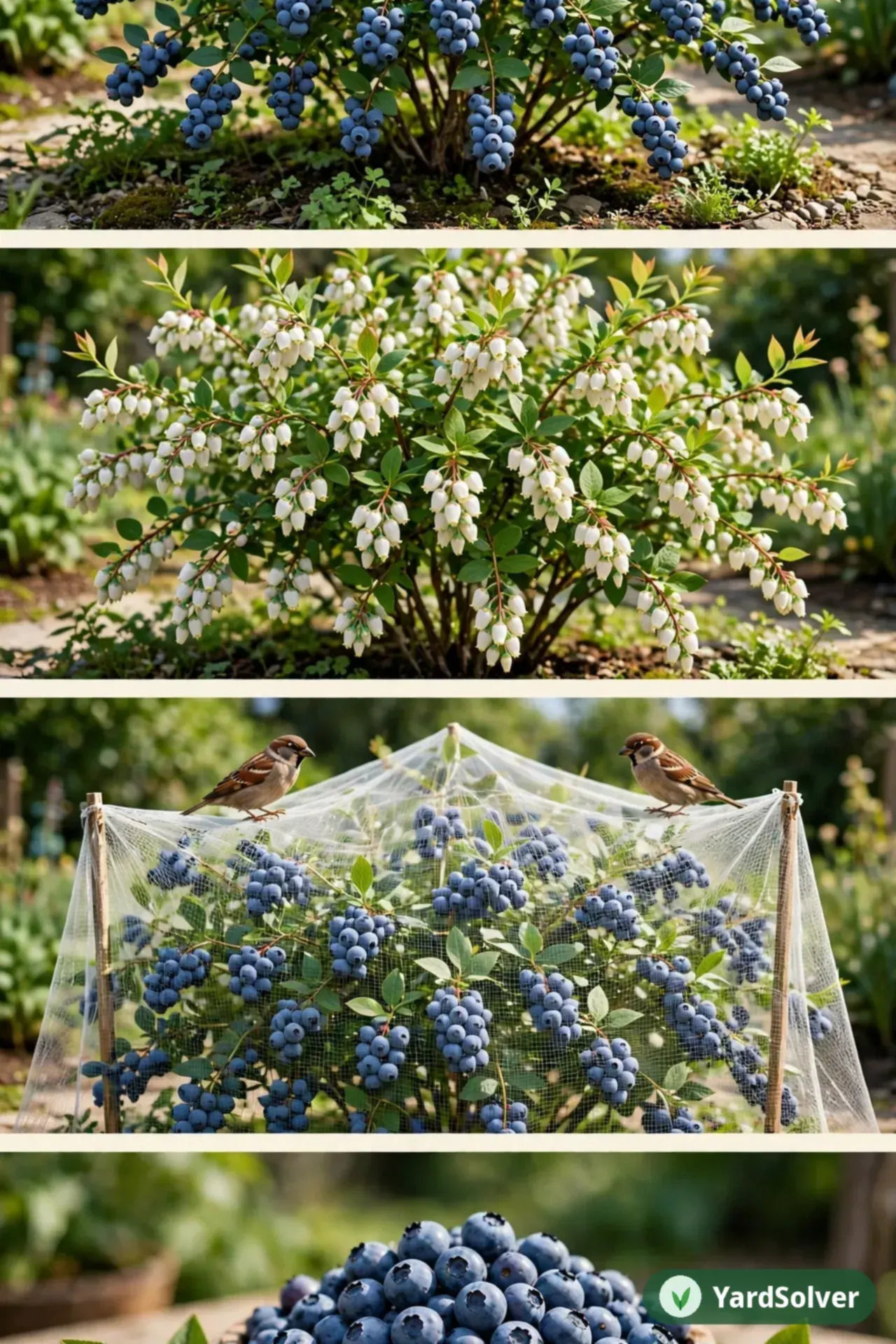
How to plant and grow blueberry, step by step
Step 1 — Time it right
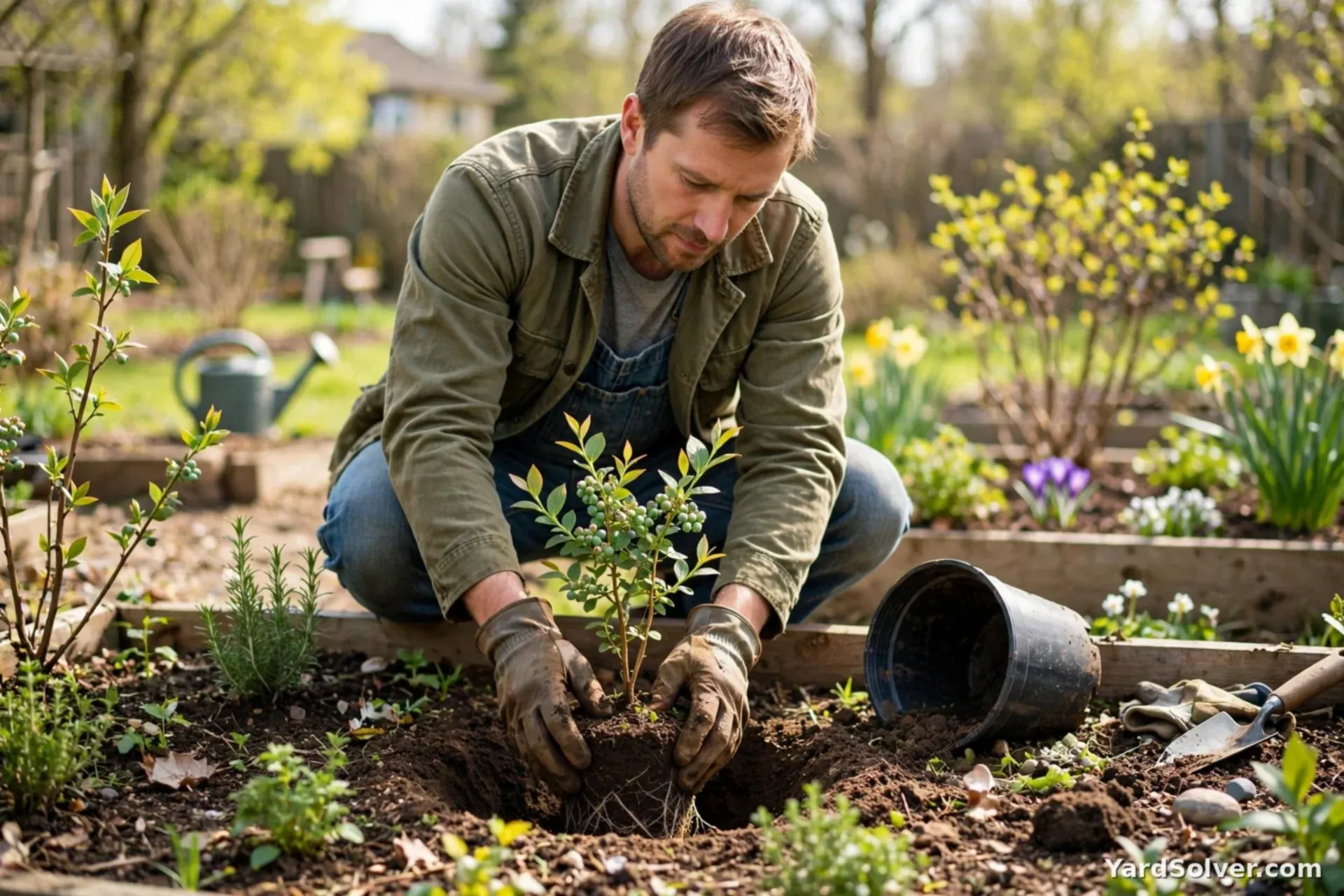
. All dates count from your average last spring frost — the Planting Calendar turns them into real dates for your garden. Blueberries are a long-lived perennial shrub: plant in spring in full sun and acidic soil (pH about 4.5 to 5.5), expect light crops from year 3 and full crops from about year 5 or 6.
Step 2 — Prepare the spot
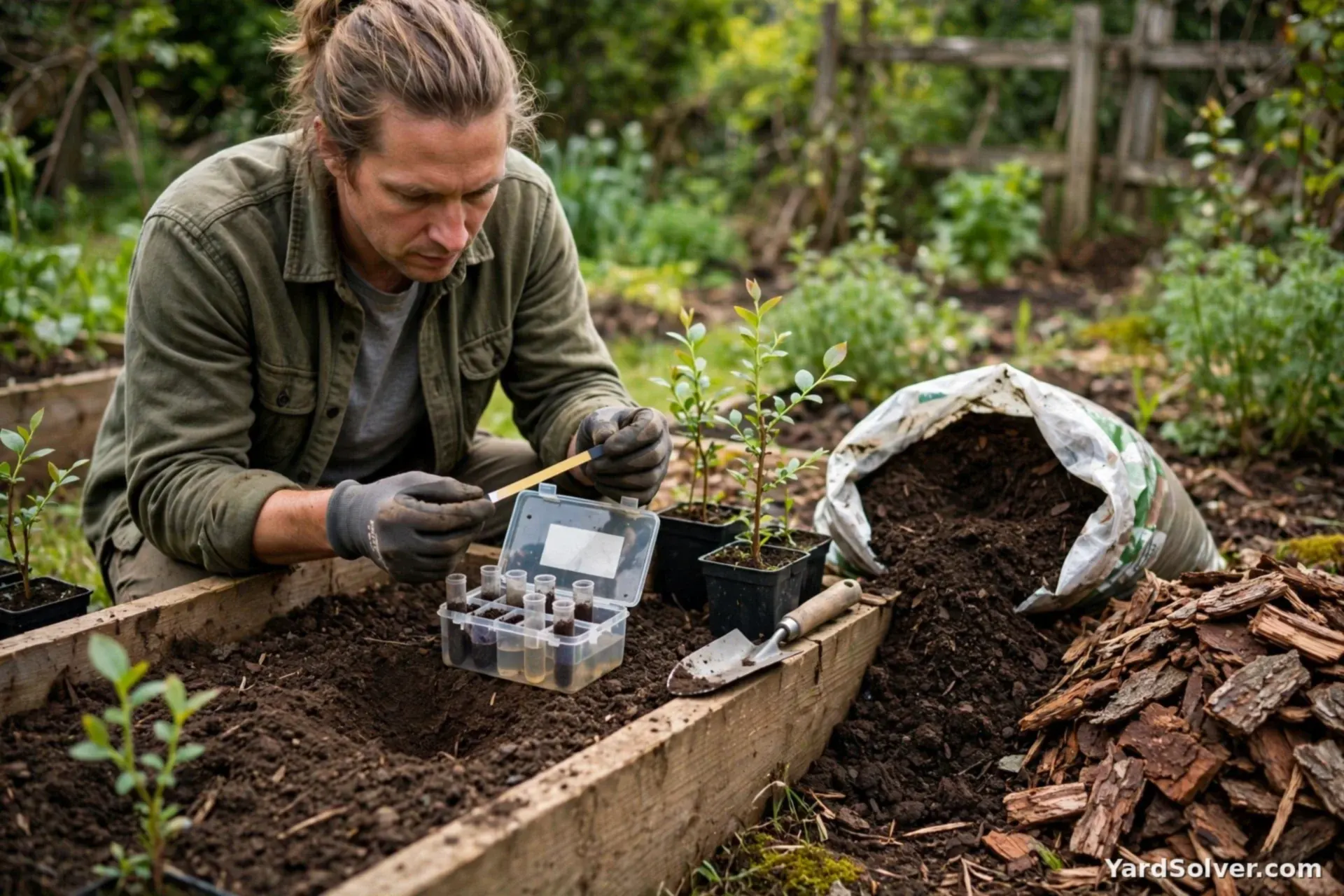
Sun: Full sun. Rich, well-drained soil with compost, and a mulch to hold moisture. Blueberries are the exception: they need acidic soil (about pH 4.5–5.5) — test before planting. Work out how much you need with the Garden Mix Calculator or the Raised Bed Soil Calculator.
Step 3 — Plant out
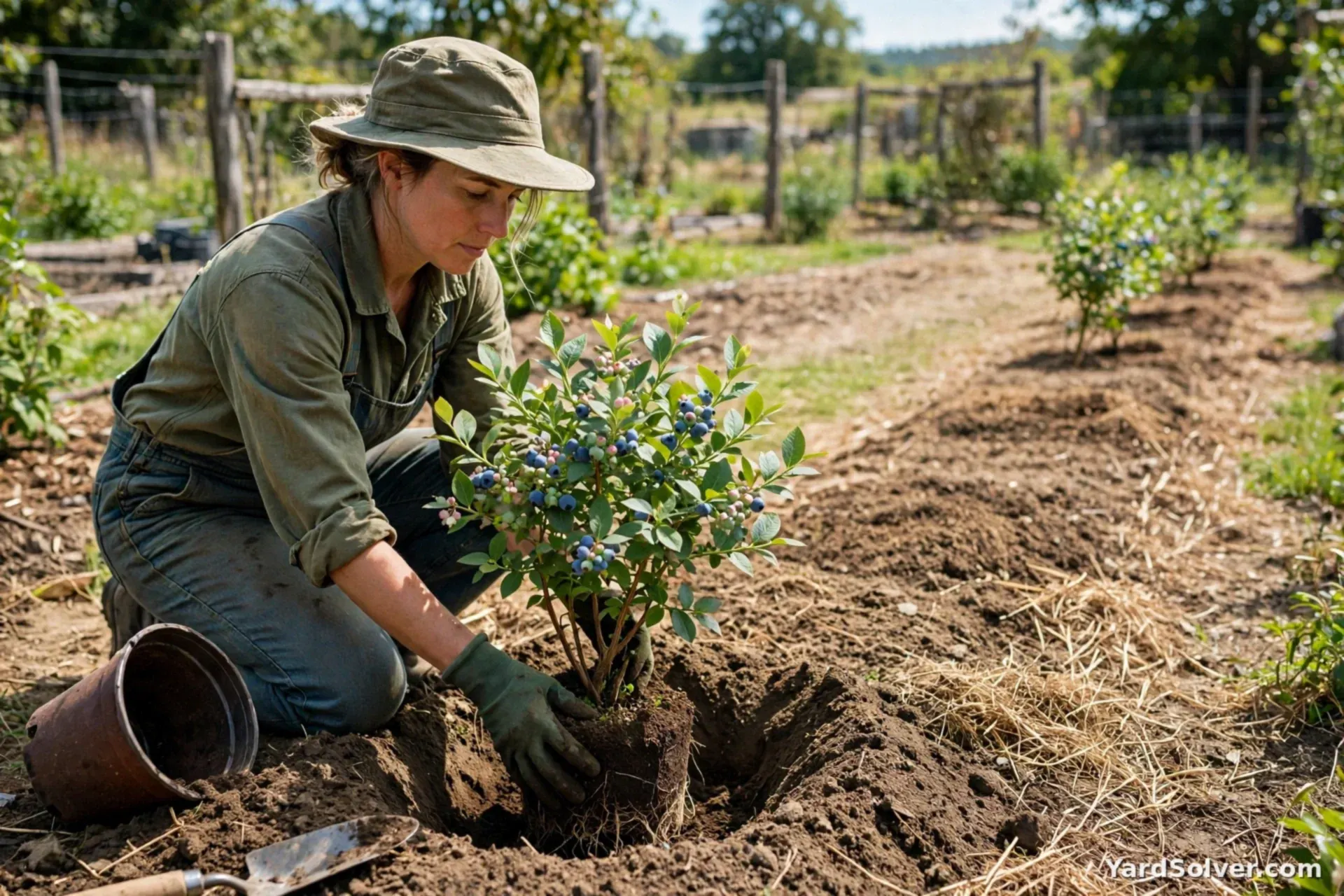
Start indoors None at As in the pot in deep, or sow outdoors None; plants finish spaced 48–60 in apart. Harden off indoor-started plants before they move out for good.
Step 4 — Water and feed
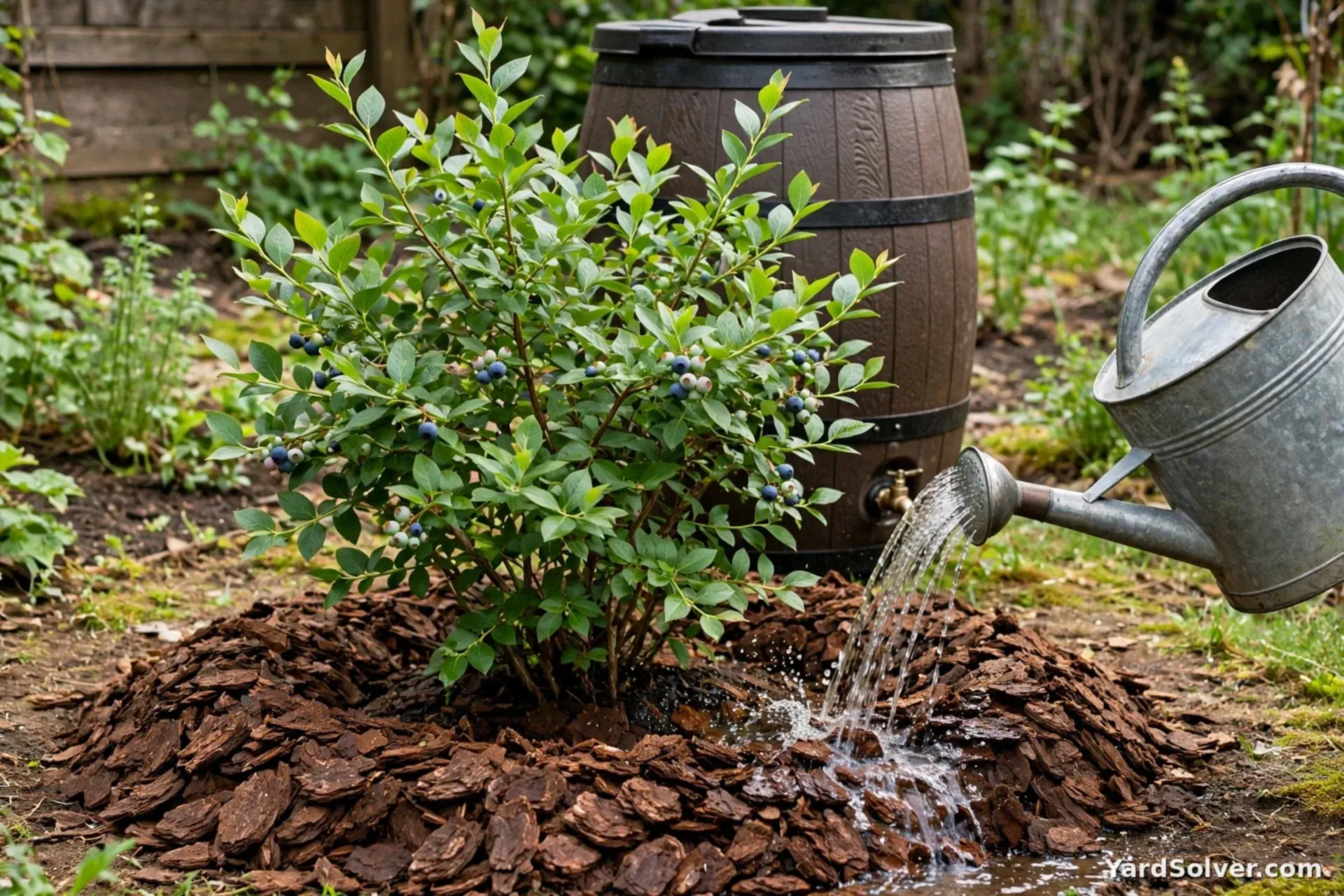
Water: Regular; rainwater suits it well. The Fertilizer Calculator turns a bed size into the right amount.
Step 5 — Care and the problems to watch for
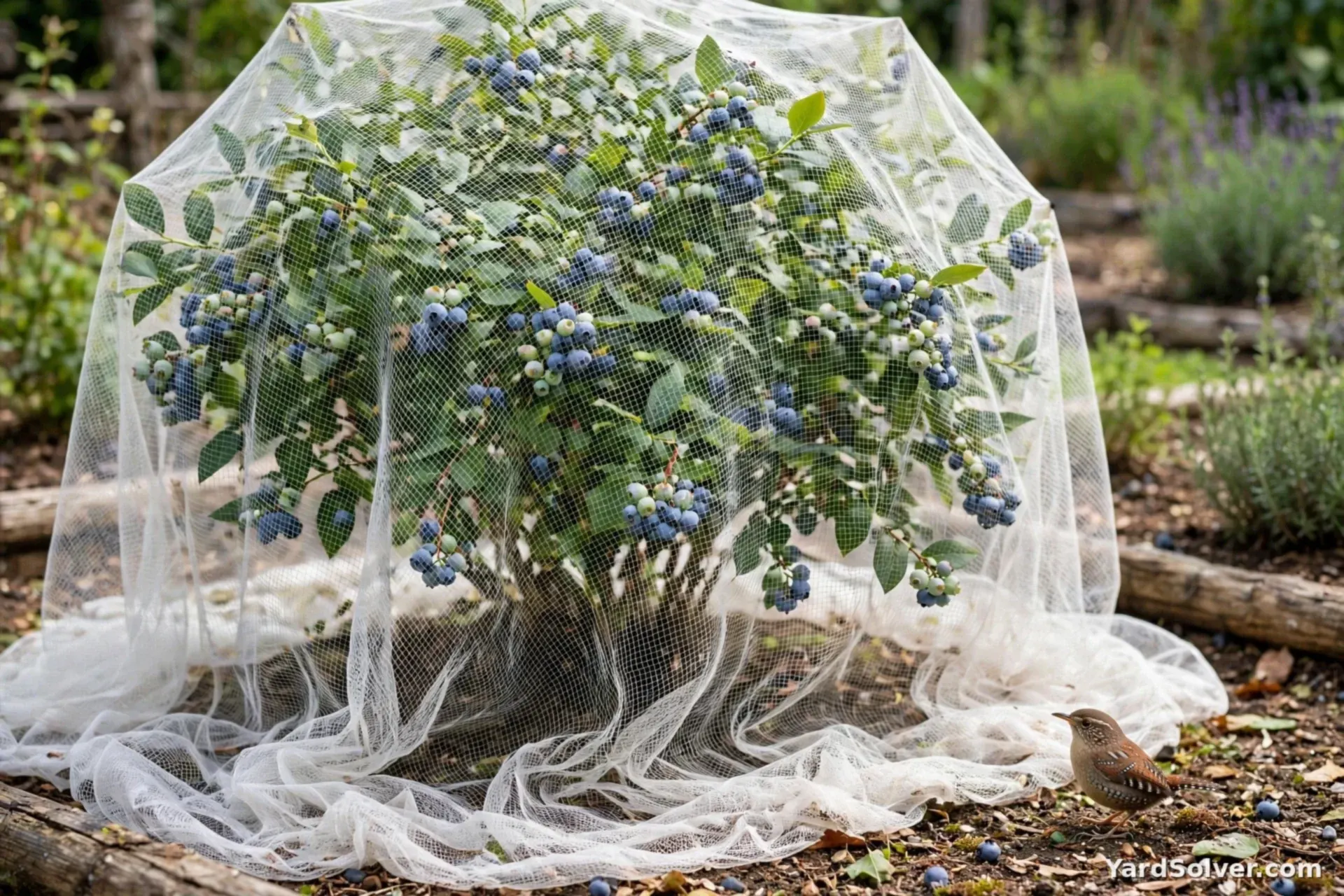
- Birds — netting is essential once berries colour.
- Wrong soil — blueberries sulk in alkaline soil; test and keep soil acidic.
- Mummy berry or twig dieback — prune out dead wood in winter.
Take care: Blueberries must have acidic soil (pH about 4.5 to 5.5) — in ordinary garden soil the leaves turn yellow and the bush sulks, so test and amend the soil first. Birds love ripe blueberries as much as people do — cover bushes with netting if you want the harvest yourself. A new bush needs patience: it puts its first years into roots and branches before cropping heavily.
Step 6 — Harvest
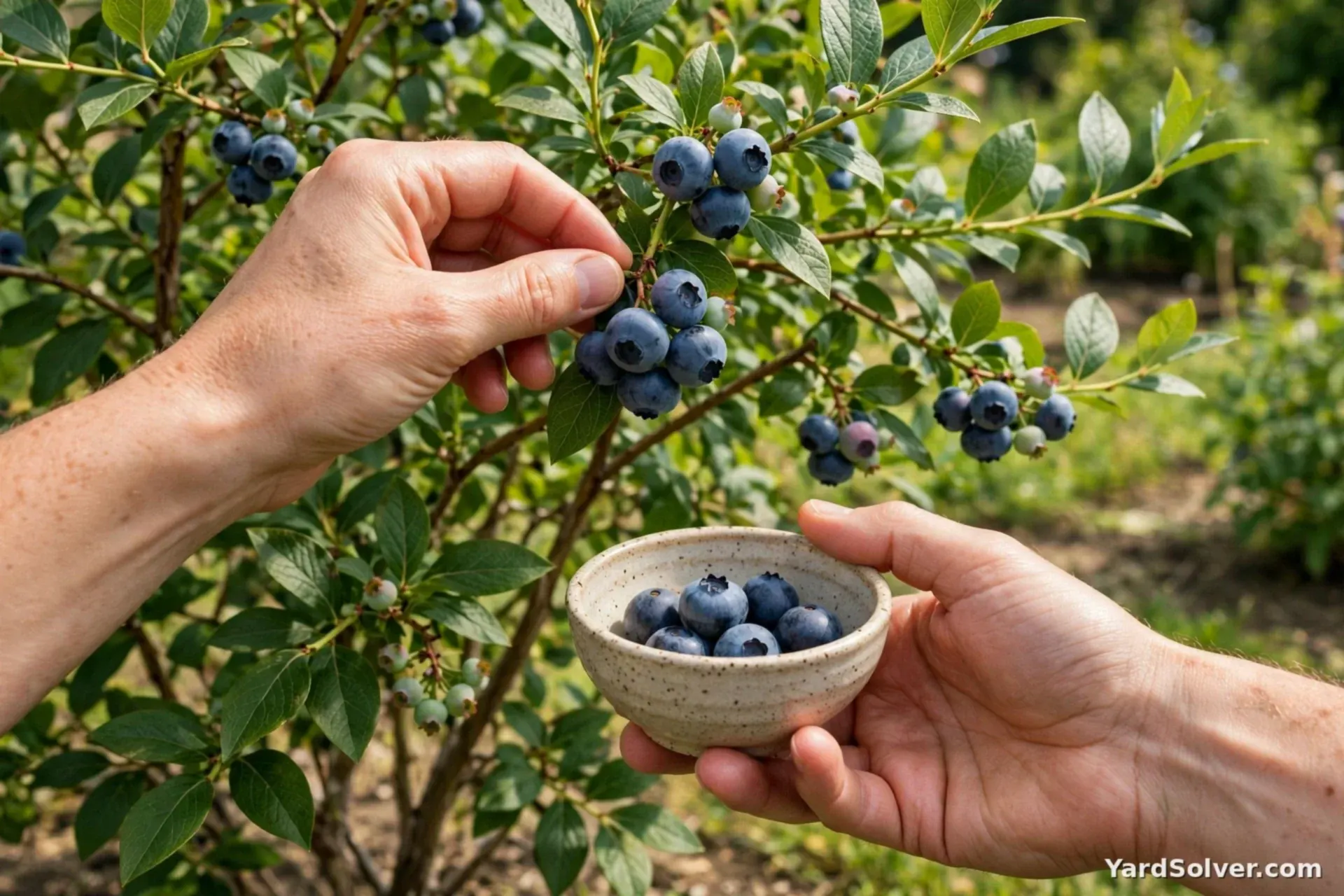
Ready in: Light crops from year 3; full crops from year 5–6.
📅 Your personal Blueberry schedule
Counted from your planting day — not a generic calendar. Day 0 is the day the seed went in the ground or the young plant went out.
Varieties worth growing
| Variety | Colour | Why gardeners like it |
|---|---|---|
| Bluecrop | Mid-blue | The most planted northern highbush of all — reliable, heavy crops year after year |
| Duke | Light blue | An early-season type with firm berries and heavy yields |
| Patriot | Deep blue | Bred for cold winters and tolerant of wetter soil than most |
| Pink Lemonade | Pink | A novelty that ripens pink instead of blue — sweet, and fun for kids |
| Jelly Bean | Deep blue | A dwarf bush made for pots and small gardens, with a long picking season |
Good for you — and take care
Benefits
- Famous for natural antioxidants — the anthocyanins that give the berries their deep blue colour
- Provides vitamin C and vitamin K
- Provides fibre for good digestion
- A source of manganese, a mineral the body uses in small amounts
- Sweet and low in calories, so they are an easy healthy snack
Take care
- Blueberries must have acidic soil (pH about 4.5 to 5.5) — in ordinary garden soil the leaves turn yellow and the bush sulks, so test and amend the soil first
- Birds love ripe blueberries as much as people do — cover bushes with netting if you want the harvest yourself
- A new bush needs patience: it puts its first years into roots and branches before cropping heavily
A little history — and one good fact
Blueberries are true North Americans — Indigenous peoples gathered wild blueberries for thousands of years and dried them for winter food. The plump bush blueberry in gardens today is surprisingly new: it was only bred in the early 1900s, when Elizabeth White and botanist Frederick Coville worked out how to farm it in New Jersey. Wild lowbush blueberries are still harvested in Maine and eastern Canada.
Fun fact: Native peoples called blueberries 'star berries', because the blossom end of each berry forms a perfect five-pointed star.
Keep going
Guides: How to Protect Plants from Frost · Putting Your Garden to Bed · How to Prepare Garden Soil in Spring
Calculators: Plant Spacing Calculator · Seed Calculator · Fertilizer Calculator · Garden Mix Calculator
More fruit & melons: Muskmelon (Cantaloupe) · Watermelon · Strawberry · Saskatoon Berry · Cranberry
← Back to the Plant Library · Get your personal planting dates
Questions people ask
When do I plant blueberry?
Count from your average last spring frost: see the season guide on this page. Blueberries are a long-lived perennial shrub: plant in spring in full sun and acidic soil (pH about 4.5 to 5.5), expect light crops from year 3 and full crops from about year 5 or 6.
How far apart do I space blueberry?
Space plants 48–60 in apart, with seed sown As in the pot in deep. Sun: full sun.
When is blueberry ready to harvest?
Light crops from year 3; full crops from year 5–6. A long-lived perennial shrub planted in spring — it must have acidic soil (pH about 4.5–5.5) or it will not thrive.