
Guides · Snake Plant · Published November 9, 2026
How to Propagate a Snake Plant: Division, Leaf Cuttings & Water
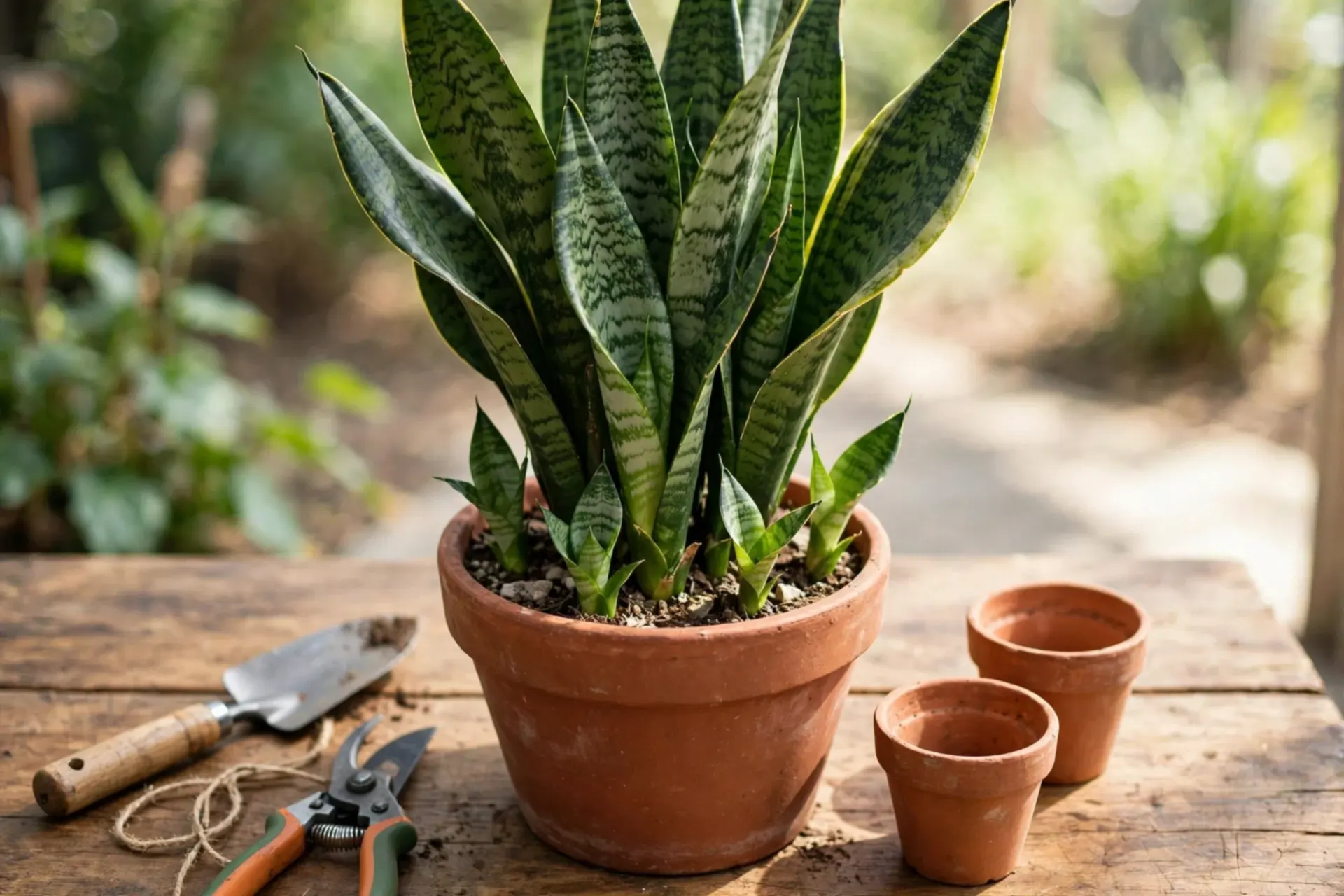
A snake plant is one of the easiest houseplants to multiply — it literally makes spare plants at its own base — but it is also one of the slowest, and each method trades speed for reliability in a different way. This guide covers all three honestly: division for instant, true-to-type plants; leaf cuttings in soil for the best rooting odds; leaf cuttings in water for the pleasure of watching. It pairs with the Snake Plant plant page, where the mother plant's own care schedule lives. One warning before anything else, because it changes which method you should choose — if your plant has yellow edges, read Step 4 before you cut anything.
🎬 Watch: 1 Plant Becomes 6
Prefer to watch it happen? In this short animated story, Dan shows Lily all three methods from this page — division, cuttings, and water.
The 3 methods compared
| Method | Time to a growing plant | Typical success | Best for |
|---|---|---|---|
| Division (separating pups) | Immediate — already a plant | Almost every time | Variegated plants; anyone in a hurry |
| Leaf cuttings in soil | Roots 4–8 weeks; pups 2–4 months | Good — most cuttings take | Multiplying plain-green plants; rescuing a broken leaf |
| Leaf cuttings in water | Roots 4–8 weeks; pups after potting | Moderate — some cuttings rot | Watching the roots grow; beginners who like to see progress |
Success figures are the ranges commonly reported across grower guides — your real variables are warmth, a healthy mother leaf, and letting cuts callus before they touch soil or water.
Step 1 — Method 1: division, the reliable one
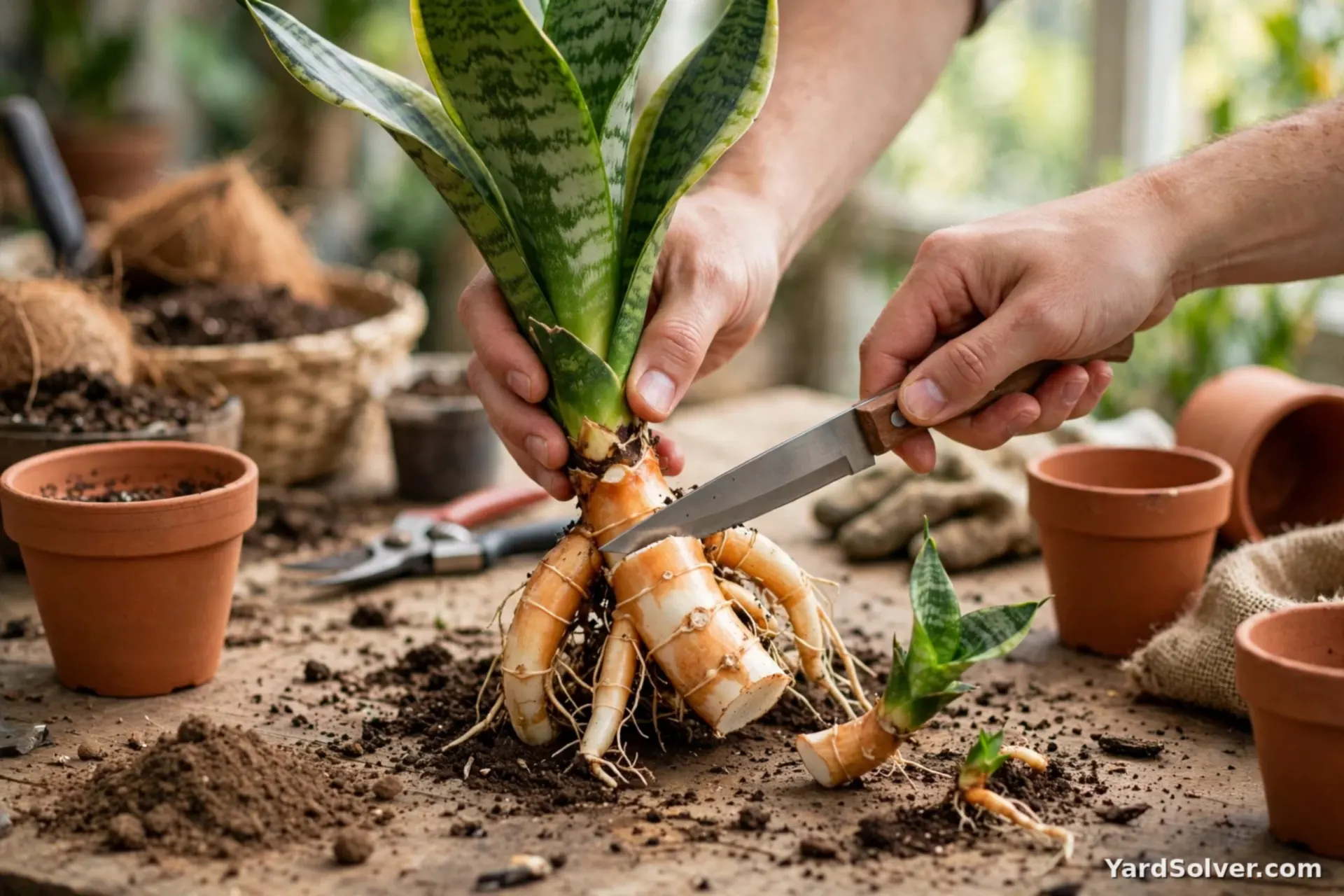
Snake plants spread by a thick underground stem called a rhizome, and the "pups" beside the mother plant are new rosettes growing off it. To divide: water the plant a day ahead so the mix is workable, slide it out of its pot, and shake the mix away from the rhizome so you can see where pup meets mother. Cut through the rhizome with a clean, sharp knife, keeping a good set of roots on every piece — a pup with three or more leaves and its own roots is the surest start. Let the cuts air-dry for a few hours, then pot each division into gritty, free-draining mix in a pot just big enough for it. Wait about a week before the first watering so the cut rhizome seals instead of rotting, then care for it like the mother. Division is also the moment a crowded plant gets relief — if the pot itself is the problem, How to Repot a Snake Plant covers the signs and the technique.
Step 2 — Method 2: leaf cuttings in soil
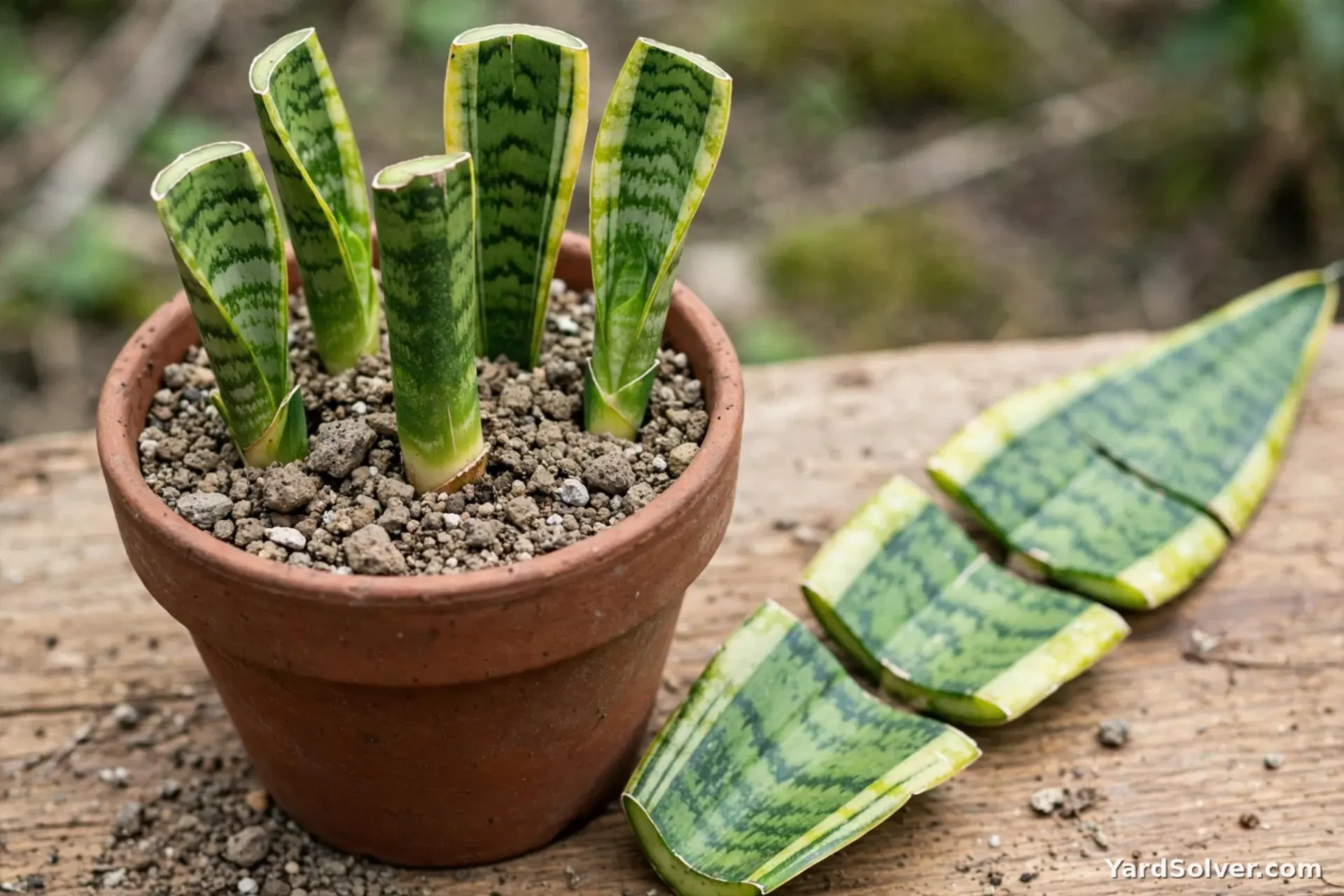
Choose a healthy, firm leaf and cut it off at the base with a clean knife. Cut it into sections about 2–3 inches long — and this is the step everyone skips and regrets: notch or mark the bottom end of every section (a small V cut works), because a section planted upside down will sit there forever and never root. Lay the sections on paper for 1–2 days until the cut ends dry and callus — this one pause prevents most rot. Then stand them, bottom end down, about half an inch deep in gritty mix (half regular potting mix, half perlite or coarse sand), water once lightly, and afterwards keep the mix barely moist — think wrung-out sponge, never wet. Stand the pot somewhere warm and bright but out of direct sun. In 4–8 weeks roots form underground; the first pup — a small upright spear beside the cutting — usually appears at 2–4 months. The old leaf section often stays standing beside its pups for a long time before it fades; that is normal.
Step 3 — Method 3: leaf cuttings in water
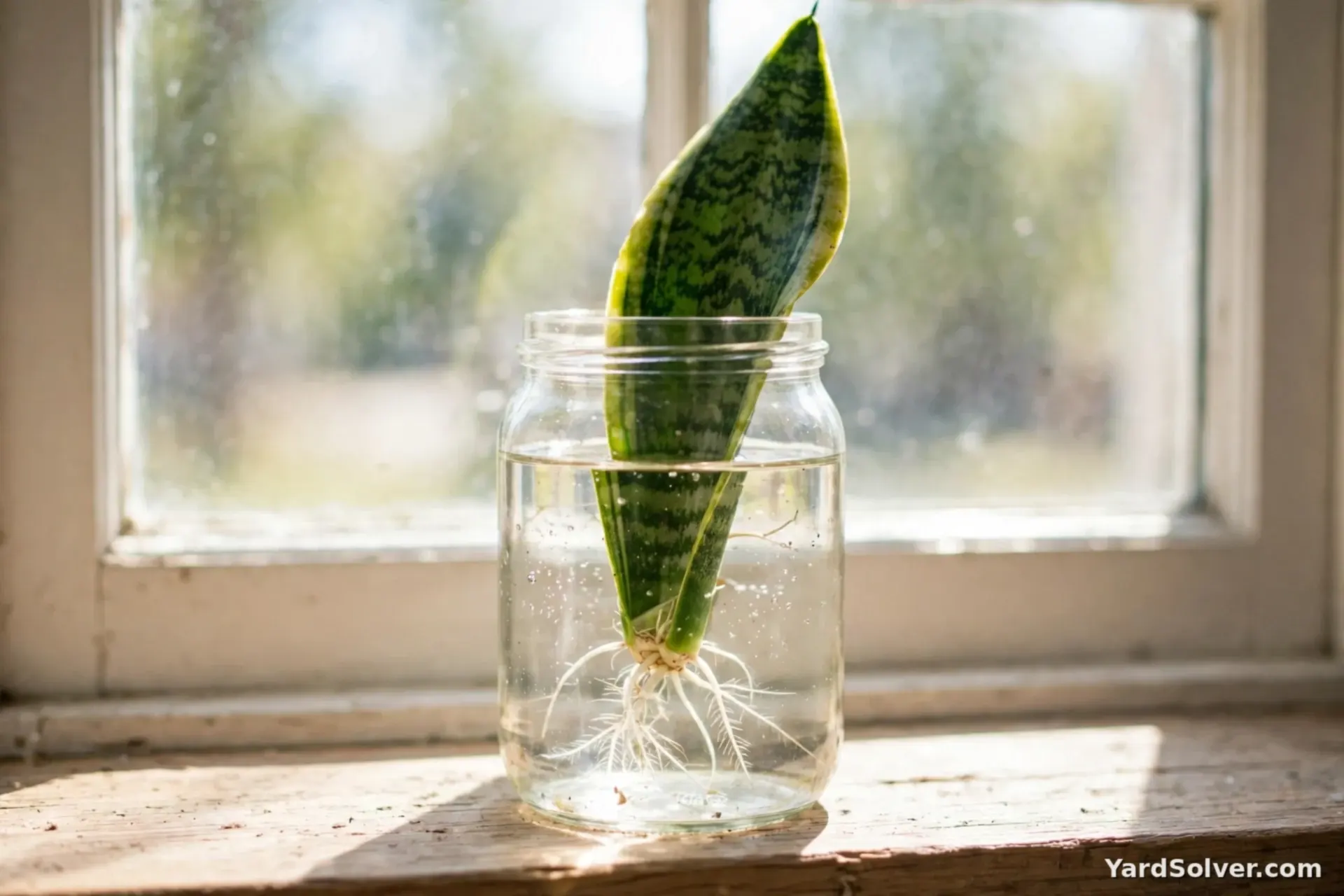
Prepare the cutting exactly as for soil — healthy leaf, marked bottom end, a day or two to callus — then stand it in a jar with just the bottom 1–2 inches in water. Bright indirect light, a warm room, and fresh water every week (stale water is where the rot starts). Roots emerge from the base in roughly 4–8 weeks, slower in a cold room; this is normal for a plant that does everything slowly. When the roots are an inch or two long and a pup is forming, pot the cutting into gritty mix and keep it a touch moister than usual for the first fortnight while it adjusts from water roots to soil. Honest trade-off: water propagation fails more often than soil — some cuttings simply melt — so if a particular leaf matters to you, root it in soil, or split the batch and try both.
Step 4 — The variegation warning (read before cutting a yellow-edged plant)
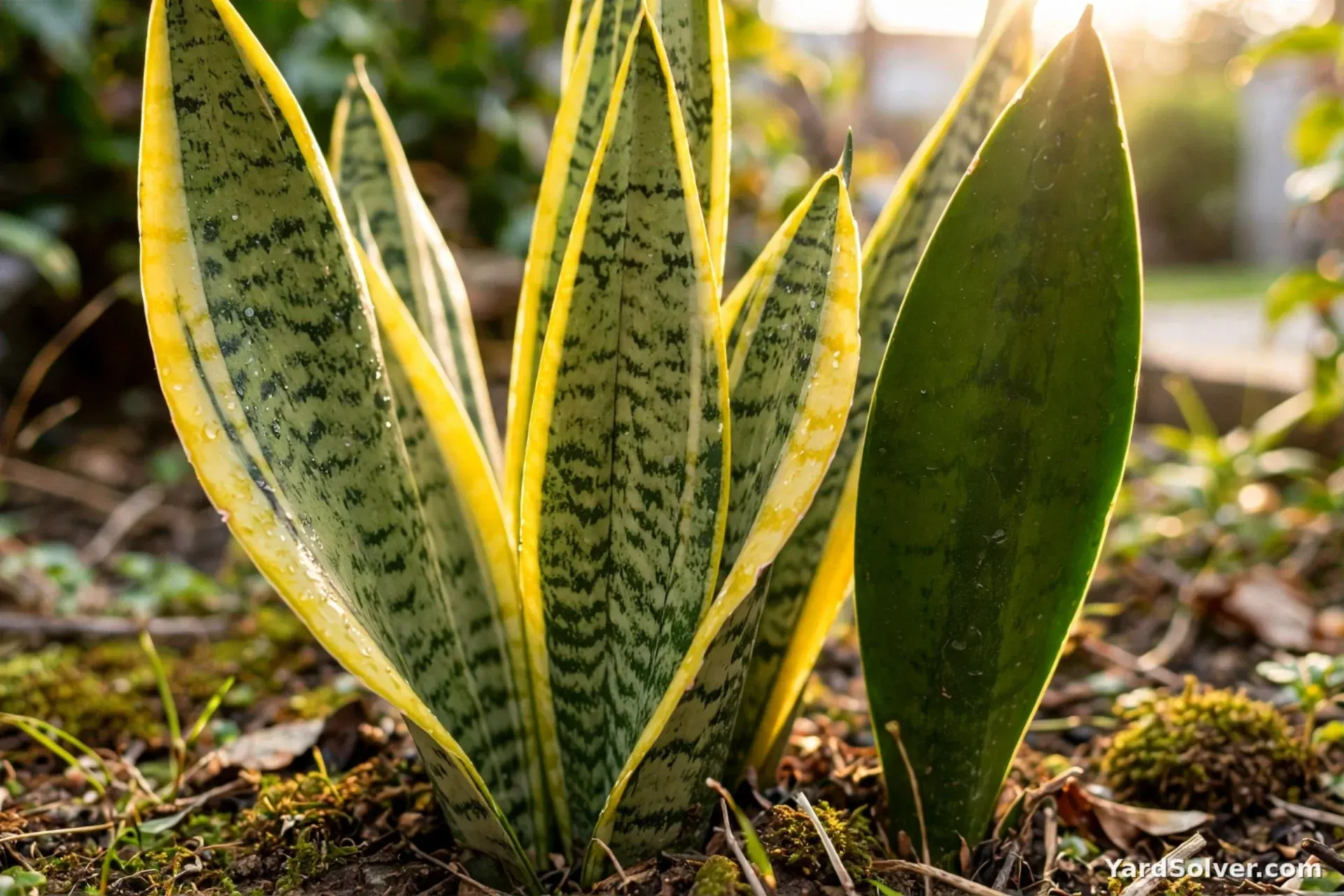
Here is the fact most propagation guides bury at the end: a leaf cutting of a variegated snake plant grows up plain green. Cultivars like Laurentii carry their yellow edges as a chimera — a pattern held in the growing point, not evenly through the leaf tissue — and a pup grown from a leaf section reverts to the plain green species form. The new plant is perfectly healthy; it just will not have the edges you loved. So: plain-green plant — cuttings are fine. Yellow-edged, silver or otherwise patterned plant — divide it (Step 1), because a division carries the rhizome and the pattern with it. If you have already rooted cuttings of a variegated plant, no harm done — you have free green snake plants, and the mother can still be divided later.
Step 5 — Aftercare: potting up and the first months
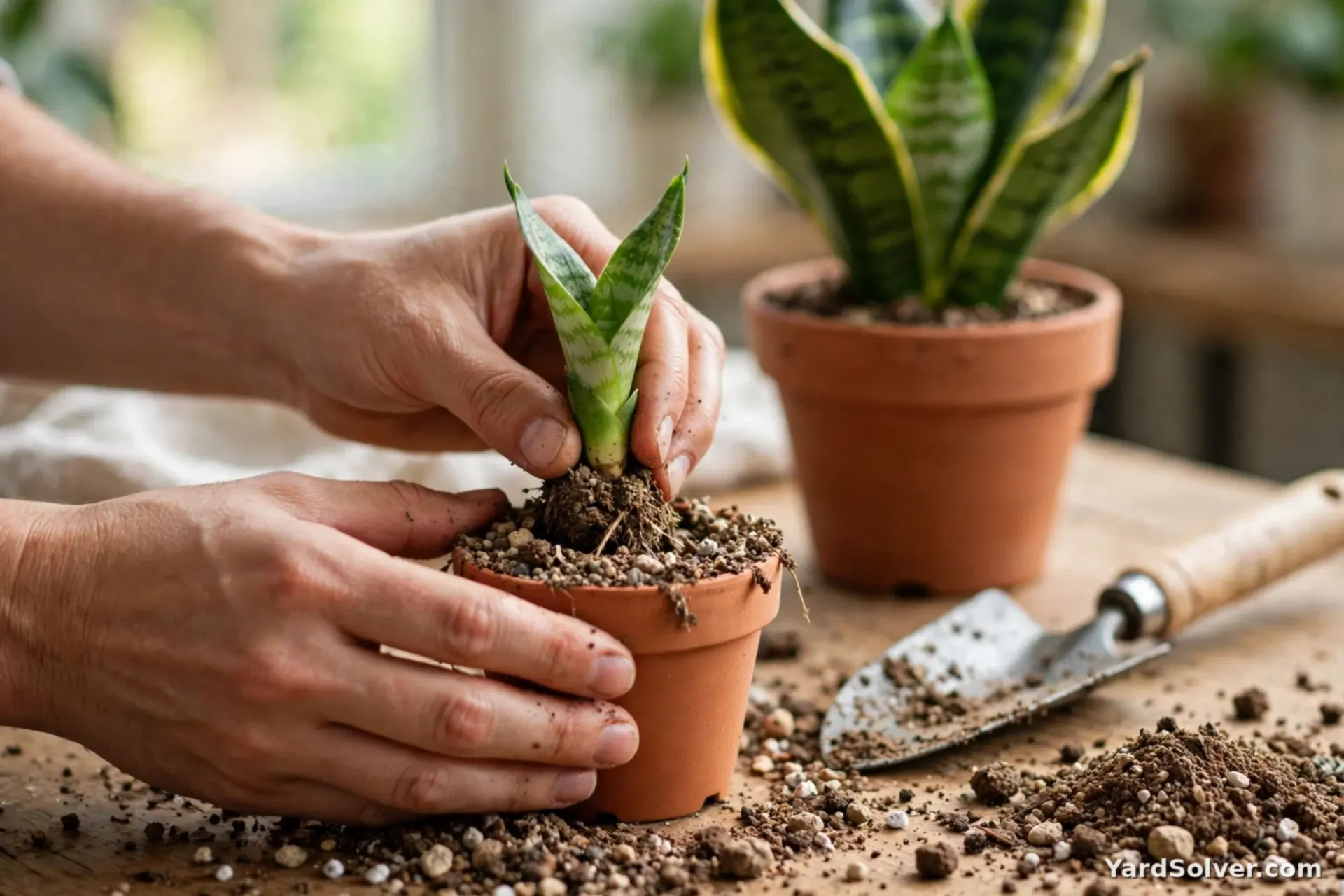
Pot divisions and rooted cuttings into small pots — a young snake plant in an oversized pot sits in more wet mix than its roots can drink, which is how rescues turn into funerals. Working out how many pups fit a shared pot or a shelf row? The Plant Spacing Calculator turns lengths into plant counts without the guesswork. Keep new plants in bright indirect light, water sparingly on the rhythm in How Often to Water a Snake Plant, and do not feed for the first couple of months — fresh mix carries enough. Expect slow, then sudden: cuttings may show nothing for weeks and then push a pup that grows visibly week to week.
Problems, pests & diseases — diagnosis and fixes
Propagation failures have their own short list of causes:
- Cutting turns soft and translucent from the base up: rot, almost always because the cut end went into soil or water before it callused, or the mix stayed wet. Fix: cut back to firm tissue, re-callus for two days, restart in barely moist mix. One rescue per cutting is realistic.
- No roots after 8 weeks: usually cold, darkness, or an upside-down section. Fix: check the marked end is down, move somewhere warmer (21–24°C) and brighter, and give it another month before judging — this plant roots on its own timetable.
- White cottony fluff on the mother plant or divisions: mealybugs travel happily to fresh divisions. Fix: alcohol-dab every cluster and quarantine new divisions from the mother for a few weeks until both are clean.
- Pups emerge plain green from a variegated leaf: not a disease — genetics (Step 4). Fix: none for that cutting; divide the mother for true-to-type plants.
- Mother plant flopped or base went soft after division: the rhizome cut was watered too soon. Fix: follow the rescue protocol in Why Is My Snake Plant Dying? — dry, cut back to firm tissue, repot dry.
Keep going
The mother plant's full profile and personal schedule: Snake Plant — Plant Library.
Keep them alive afterwards: How Often to Water a Snake Plant · How to Repot a Snake Plant.
The same trick, much faster, on a trailing plant: How to Propagate Pothos.
🌱 Stay with us — we'll remind you
Cuttings root on a timescale of weeks and months — exactly the kind that gets forgotten on a windowsill. Start the mother plant with us and its page keeps the schedule with you:
- Open the Snake Plant page and press "Start Snake Plant with me": Snake Plant — Plant Library.
- Step 1 — set your start date. Tell the page the day you divided or took your cuttings. Your plant and its start date are saved on this device straight away.
- Step 2 — take your schedule home. The page turns that date into your personal care schedule and keeps it in front of you, so the root checks at 4–8 weeks and the first pups at 2–4 months never slip past.
- Step 3 — add your email to be first in line. Email reminders switch on with the new YardSolver accounts; the email you save with your plant today is first in line, and from your start date the reminders follow your plant's own schedule.
Free, and no account is needed today. Your email is for your plant reminders only — one purpose, and every message carries an easy stop.
Questions people ask
What is the easiest way to propagate a snake plant?
Division. Separate a pup with its own roots and a piece of rhizome and it is a complete plant from day one — and the only method that keeps a variegated plant's yellow edges.
How long do snake plant cuttings take to root?
Roots in 4–8 weeks in warm conditions; the first pup at 2–4 months. Divisions skip the wait entirely.
Why did my snake plant cutting turn plain green?
Leaf cuttings of variegated cultivars grow from plain leaf tissue, so the pups lose the yellow edge. It is genetics, not your mistake — divide the mother for true-to-type plants.
Can I propagate a snake plant leaf in water?
Yes. Callus the cut end for a day or two first, stand the bottom 1–2 inches in water, change it weekly, and pot up when roots are an inch or two long.
Comments & ratings
No comments yet.
Be the first to share your experience.