
Guides · Snake Plant · Published November 9, 2026
How to Repot a Snake Plant: Rarely, One Size Up, and Don't Water After
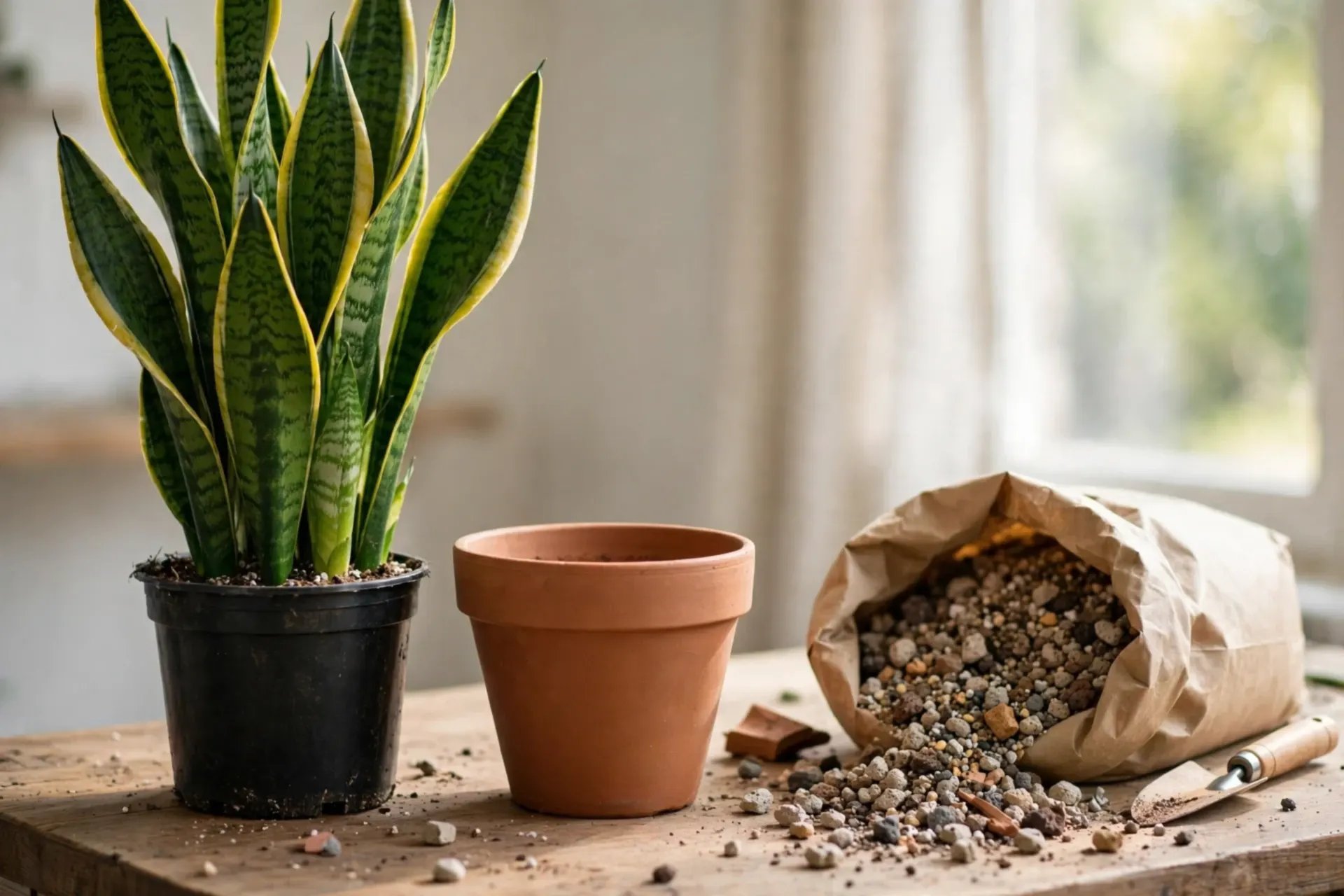
Every instinct that serves other houseplants betrays this one. Snake plants like being rootbound; garden authorities from the RHS to the New York Botanical Garden advise repotting them only when the roots have completely filled the container, and even then the move is a modest one — one size up, gritty mix, and the counter-intuitive finishing touch this plant is famous for: no water afterwards. This guide gives the honest signs that yours actually needs it, the timing, and the step-by-step, as the repotting companion to the Snake Plant plant page.
🎬 Watch: Repotting — One Size Up, and Don't Water After
Prefer to watch it happen? In this short animated story, Dan walks Lily through the whole repot — signs, timing, and the finishing rule.
Step 1 — Does yours even need it? The 5 rootbound signs
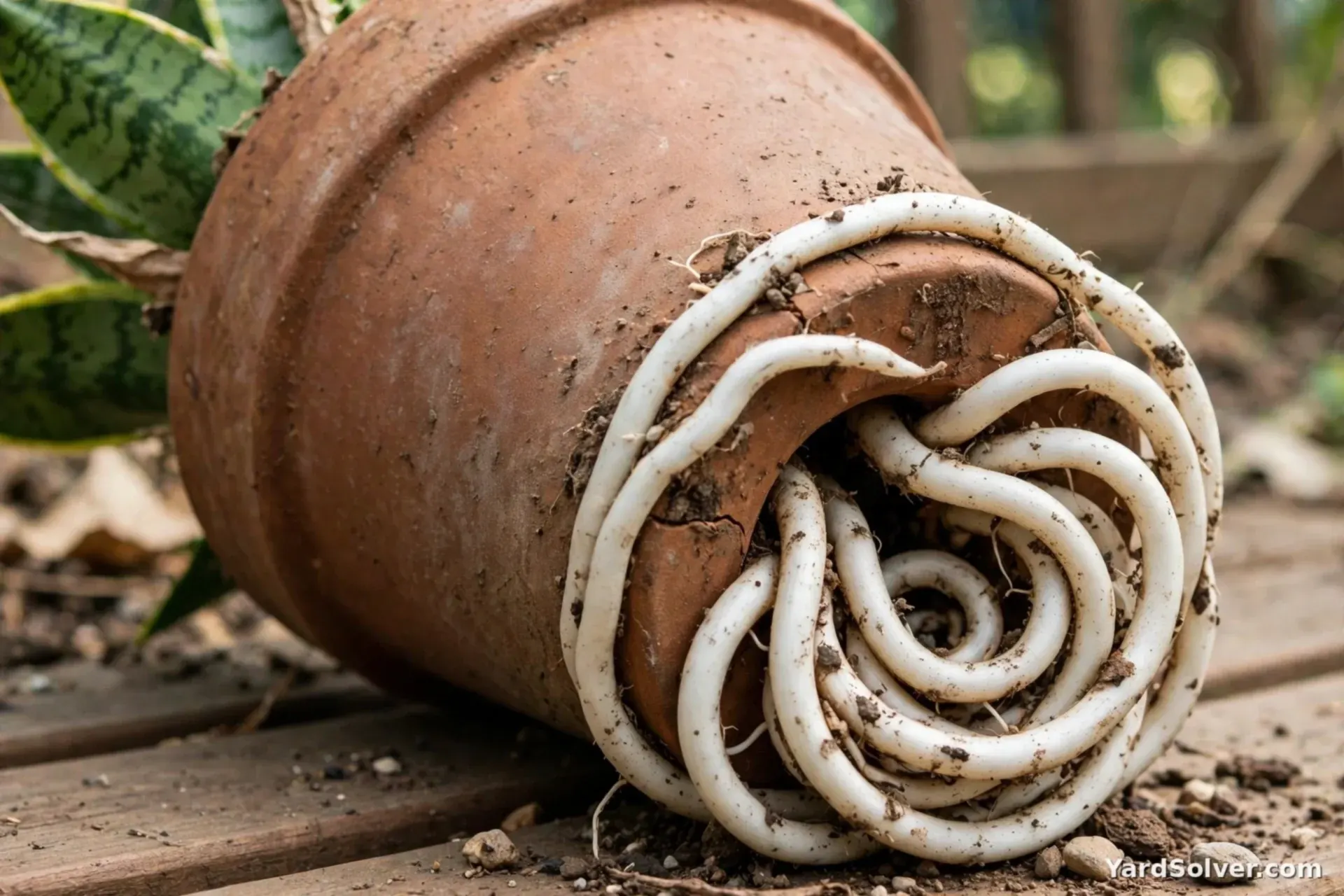
Check for these before you buy a single bag of mix:
- Roots out of the drainage holes — thick roots escaping or winding underneath the pot.
- Roots circling on the surface or lifting the plant — the root ball visibly raising itself as it runs out of room.
- The pot is cracking, bulging or deforming — snake plant rhizomes are strong enough to split plastic and even crack clay; a distorted pot is a certain sign.
- Water runs straight through — the mix is now mostly roots, so a watering passes through in seconds without soaking in, and the plant dries out oddly fast.
- Growth has stalled — no new leaves or pups in a growing season despite decent light, in a plant that used to grow.
One sign on its own can wait until spring. Two or three together mean it is time. And if none are present, close this page with a clear conscience — an unnecessary repot disturbs a plant that was perfectly content, which is also why "hasn't been repotted in years" appears nowhere on the list.
Step 2 — When: spring, and every 2–5 years
Repot in spring or early summer, when the plant is starting its growing season and can repair the inevitable root damage with new growth. Avoid winter repots unless the pot has actually split — a resting plant in cold, damp fresh mix is the rot scenario this whole guide exists to prevent. For most snake plants the rhythm works out to every 2–5 years: fast-growing young plants at the short end, mature plants in big pots at the long end. If the pot has cracked mid-winter, the exception applies — a split pot cannot hold mix or water properly, so repot anyway and be extra strict about the no-water week in Step 5.
Step 3 — Pot and mix: 1–2 inches up, gritty throughout
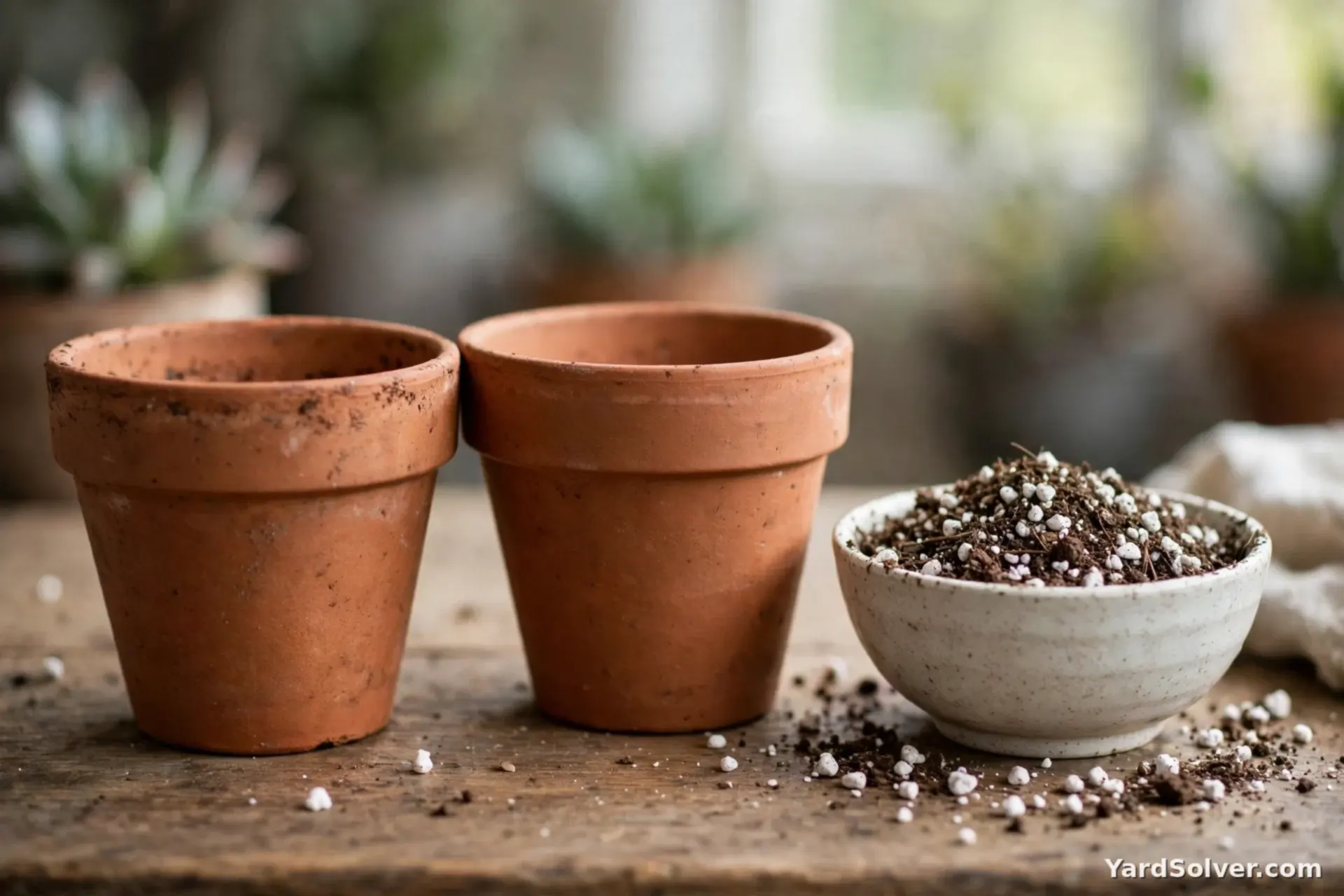
Choose a pot 1–2 inches wider than the current one, with drainage holes — terracotta earns its keep here twice over, because its weight steadies a top-heavy plant and its porous walls dry the mix faster. The oversized-pot mistake is the most common repotting error with this plant: a sea of unused mix holds water the roots never reach, and sitting wet mix is where rot begins. For the mix itself, think grit: a cactus/succulent mix as sold, or regular potting mix cut with about a third perlite or coarse grit. Mixing a bigger batch for several pots? The Garden Mix Calculator works out the proportions and volumes so the bucket matches the recipe instead of the other way round.
Step 4 — The repot, step by step
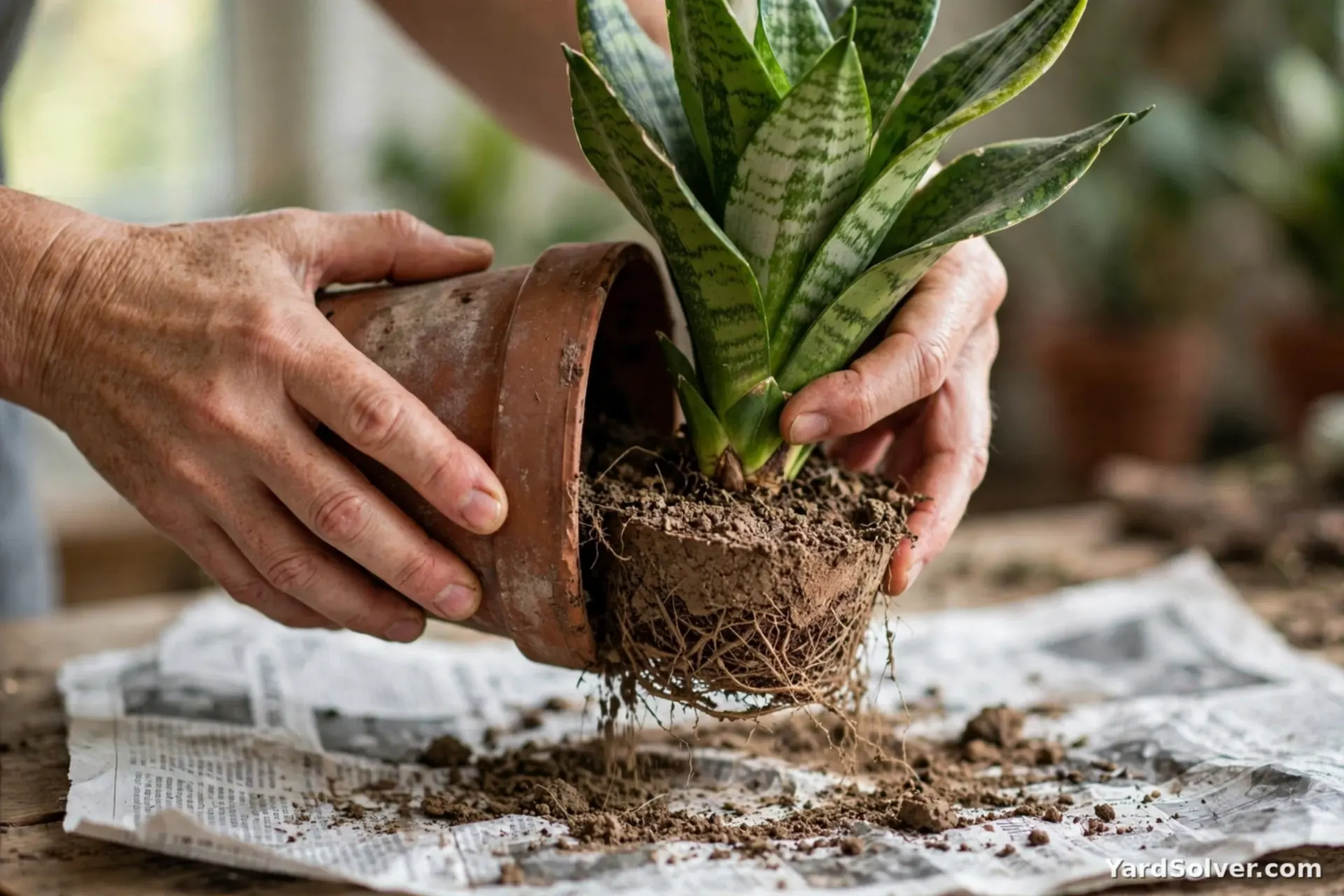
- Start dry. Let the mix dry out before repotting day — dry roots flex instead of snapping, and dry mix shakes off cleanly.
- Unpot. Tip the pot on its side, squeeze or roll a flexible pot to loosen it, and ease the plant out supporting the base of the leaves and the root ball — never pull by the leaf tips, which tear out of the rhizome. A plastic pot that will not let go can simply be cut away; a cracked pot was going in the bin anyway.
- Loosen and look. Shake off the old mix and work the circling outer roots loose with your fingers — then do the root check in Step 5 while everything is visible.
- Set the depth. Put a layer of mix in the new pot, set the plant so the rhizome sits at the same depth as before (burying the leaf bases invites rot), and fill around it, firming gently as you go.
- Top up and tidy. Leave the mix surface about an inch below the rim so watering stays in the pot, and brush stray grit off the leaves.
Repotting day is also division day, if the plant has pups you want to separate — the two jobs share the same unpotting, and How to Propagate Snake Plants covers the rhizome cut. Do one combined operation rather than disturbing the plant twice.
Step 5 — The root check: healthy vs rot
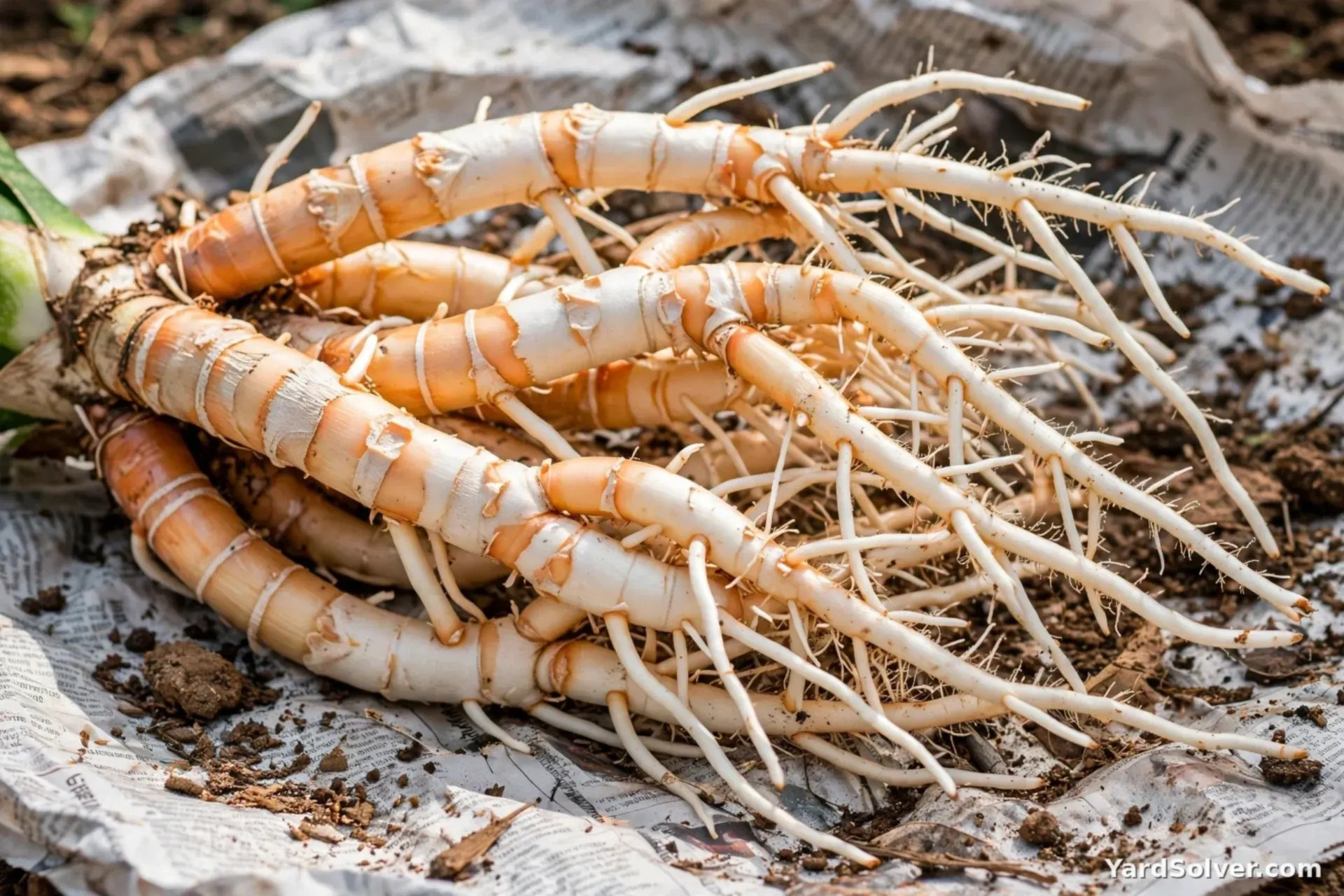
Healthy snake plant roots and rhizomes are thick, firm and white to pale orange — the rhizome looks almost like a pale carrot. Trim only roots that are clearly dead: dry and papery, or the opposite problem — brown, translucent and mushy. If the mush is extensive, stop: that is no longer a repot, it is the rescue in Why Is My Snake Plant Dying?, with its cut-callus-repot-dry protocol. A routine repot with healthy roots needs no cutting at all — the less surgery, the faster the plant settles.
Step 6 — The 5–7 day no-water rule, and aftercare
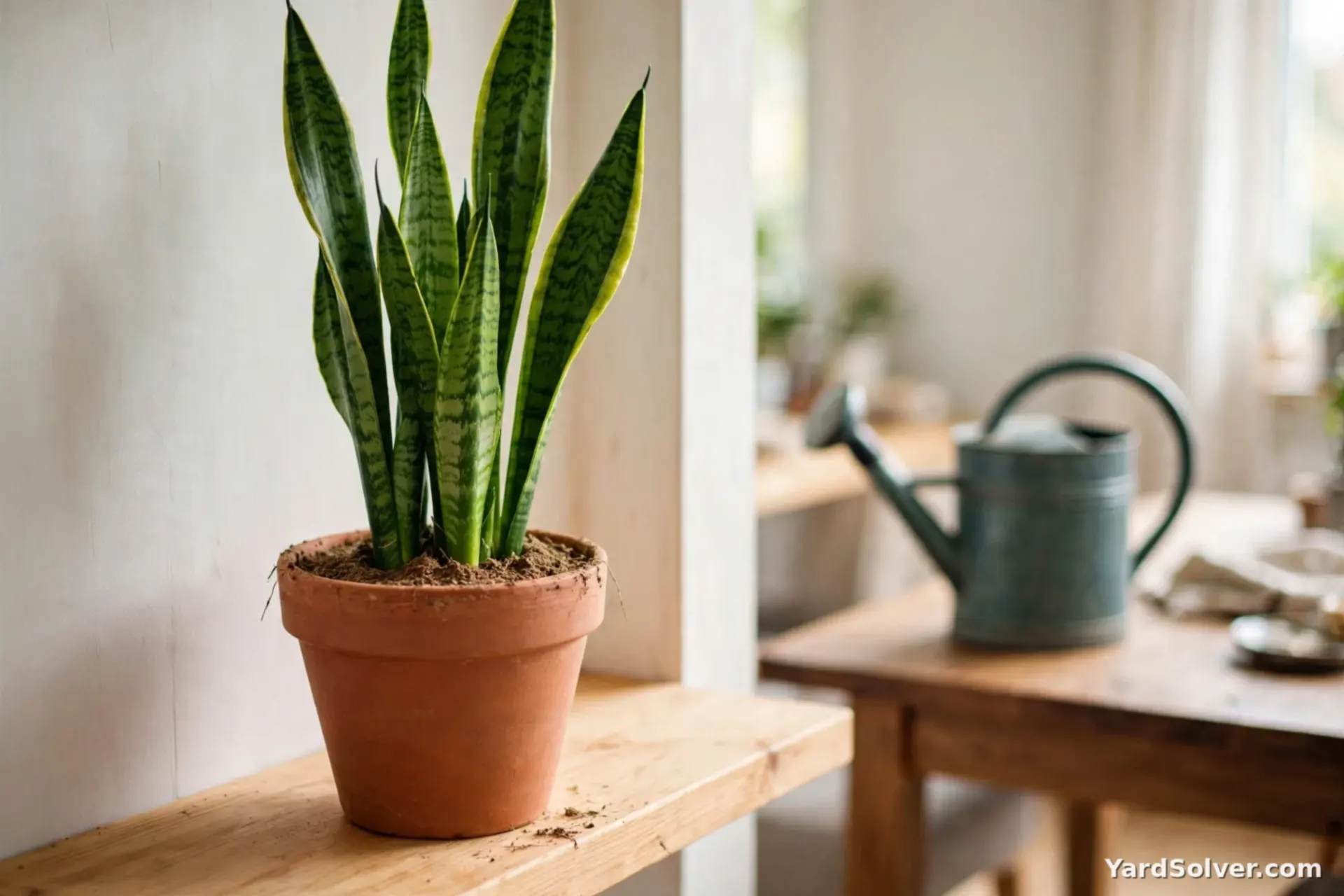
Here is the step that separates this plant from every other repotting guide you have read: do not water the plant in. Repotting bruises and snaps fine roots, and water finds every wound. Give it 5–7 dry days in bright indirect light for the roots to seal and settle, then a first modest watering, and afterwards the ordinary rhythm from How Often to Water a Snake Plant. Expect no visible growth for a few weeks — the plant is rebuilding underground first — and do not feed for the first month or two. A tall plant may wobble slightly in fresh mix until roots grip; a temporary stake or a heavy terracotta pot solves it honestly.
Problems, pests & diseases — diagnosis and fixes
Repotting exposes problems that were hidden in the old pot. What to do with each discovery:
- Brown, mushy roots found mid-repot: rot was already underway. Fix: switch to the rescue protocol — cut to firm tissue, callus 24–48 hours, repot dry, no water for 7–10 days (full protocol).
- White cottony fluff in the crown or on the rhizome: mealybugs, revealed by the unpotting. Fix: alcohol-dab every cluster before the plant goes into fresh mix — repotting a buggy plant into clean soil wastes the clean soil.
- The plant declines a week or two after a textbook repot: almost always watered too soon, or potted up too far. Fix: check the base for softness; if firm, simply dry it out and wait — if soft, it is the rescue again.
- Fungus gnats rising from the fresh mix: the new mix was rich or stayed damp. Fix: let the surface dry fully between waterings (your no-water week already starts this), and the colony starves out.
- Leaf bases rotting at the new soil line: the plant was set too deep. Fix: lift it so the rhizome crowns at the surface and leaf bases sit in air, and cut away any leaf that has gone soft.
Keep going
The plant's own page and personal schedule: Snake Plant — Plant Library.
The rest of the snake plant cluster: How Often to Water · How to Propagate · Why Is My Snake Plant Dying?
🌱 Stay with us — we'll remind you
The repot is not finished on repotting day: the first watering waits 5–7 days, and the plant then settles on its normal rhythm. Start your snake plant with us and its page keeps the schedule with you:
- Open the Snake Plant page and press "Start Snake Plant with me": Snake Plant — Plant Library.
- Step 1 — set your start date. Tell the page the day you repotted. Your plant and its start date are saved on this device straight away.
- Step 2 — take your schedule home. The page turns that date into your personal care schedule and keeps it in front of you, so the no-water week is held and the day the first drink is due stays in sight.
- Step 3 — add your email to be first in line. Email reminders switch on with the new YardSolver accounts; the email you save with your plant today is first in line, and from your start date the reminders follow your plant's own schedule.
Free, and no account is needed today. Your email is for your plant reminders only — one purpose, and every message carries an easy stop.
Questions people ask
How do I know if my snake plant needs repotting?
Two or three of the five signs together — roots out of the holes, roots lifting the plant, a cracking or bulging pot, water running straight through, stalled growth — in spring, means it is time. Snake plants like being snug, so one sign alone can wait.
What size pot should I move a snake plant up to?
One size up: about 1–2 inches wider, with drainage holes. A much bigger pot holds wet mix the roots cannot reach, which is the main route to rot after a repot.
Should I water a snake plant after repotting?
No — wait 5–7 days. Broken roots plus wet soil is how rot starts, and the leaves store more than enough water for the wait.
What soil is best for repotting a snake plant?
A gritty, free-draining mix: cactus/succulent mix, or potting mix cut with about a third perlite or coarse grit. It should let water run through in seconds.
Comments & ratings
No comments yet.
Be the first to share your experience.