
Guides · Snake Plant · Published November 9, 2026
How Often to Water a Snake Plant: The Schedule by Season, Light & Pot Size
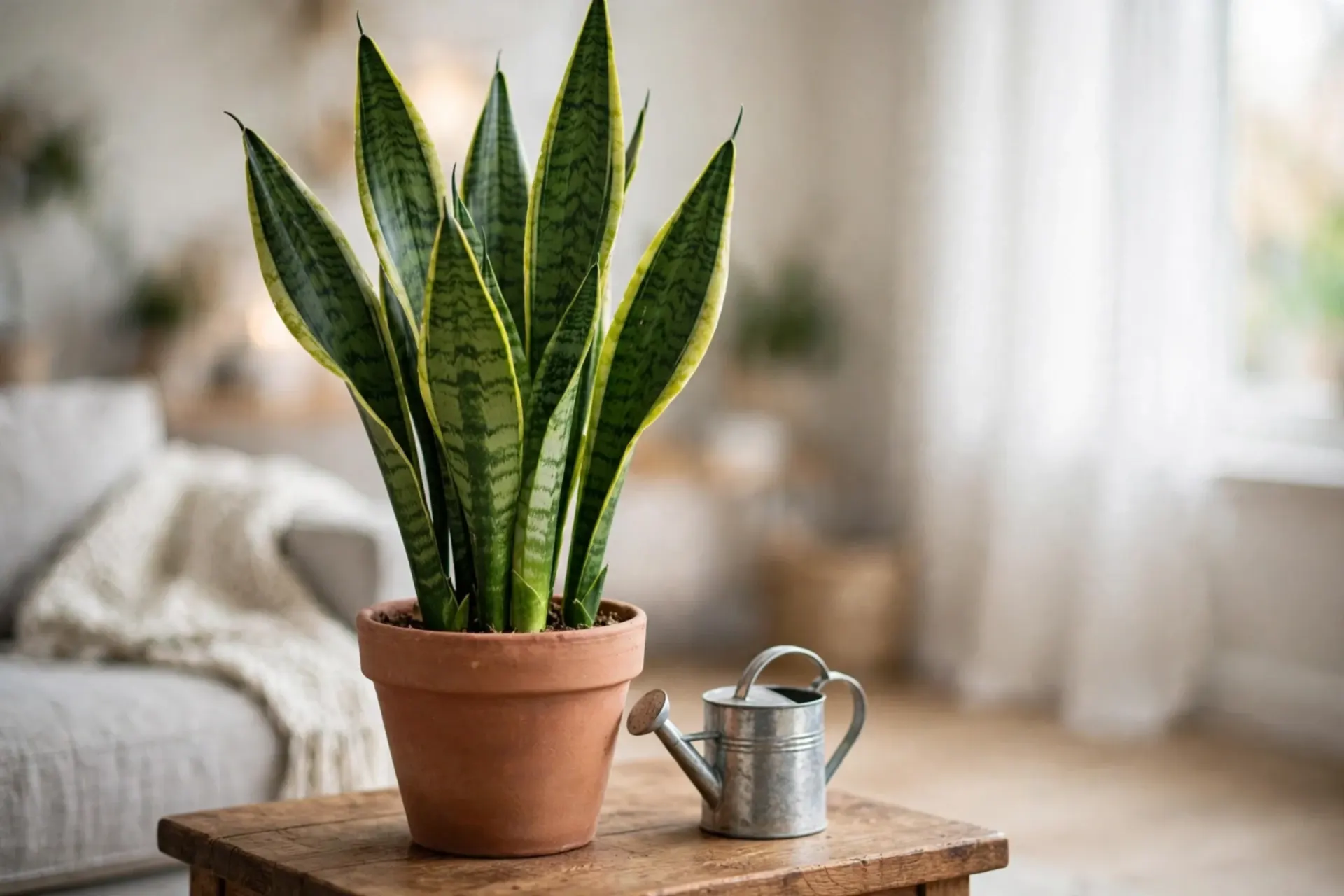
Ask ten snake plant owners how often they water and you will get ten different answers — because the honest answer is a schedule, not a number. A small pot under bright summer light dries out in a fortnight; a big pot in a dim winter corner can sit happily for two months. This page gives you the whole schedule in one table, the three dryness tests that overrule it, and the per-pot amounts to pour when the day comes. It is the watering companion to the Snake Plant plant page, where you can set your own plant's personal schedule and reminders.
🎬 Watch: The Watering Schedule Nobody Tells You
Prefer to watch it happen? In this short animated story, Dan shows Lily the schedule from this page — and the dryness tests that overrule it.
The 10-second answer
- Water only when the soil is completely dry — top to bottom, not just at the surface
- Growing season: every 2–4 weeks for most pots; winter: every 4–8 weeks
- When you water, soak it properly until water runs from the drainage holes — then empty the saucer
- The calendar proposes, the dryness test decides: if the mix is still damp on watering day, skip it
Step 1 — Start from the schedule: season × light × pot size
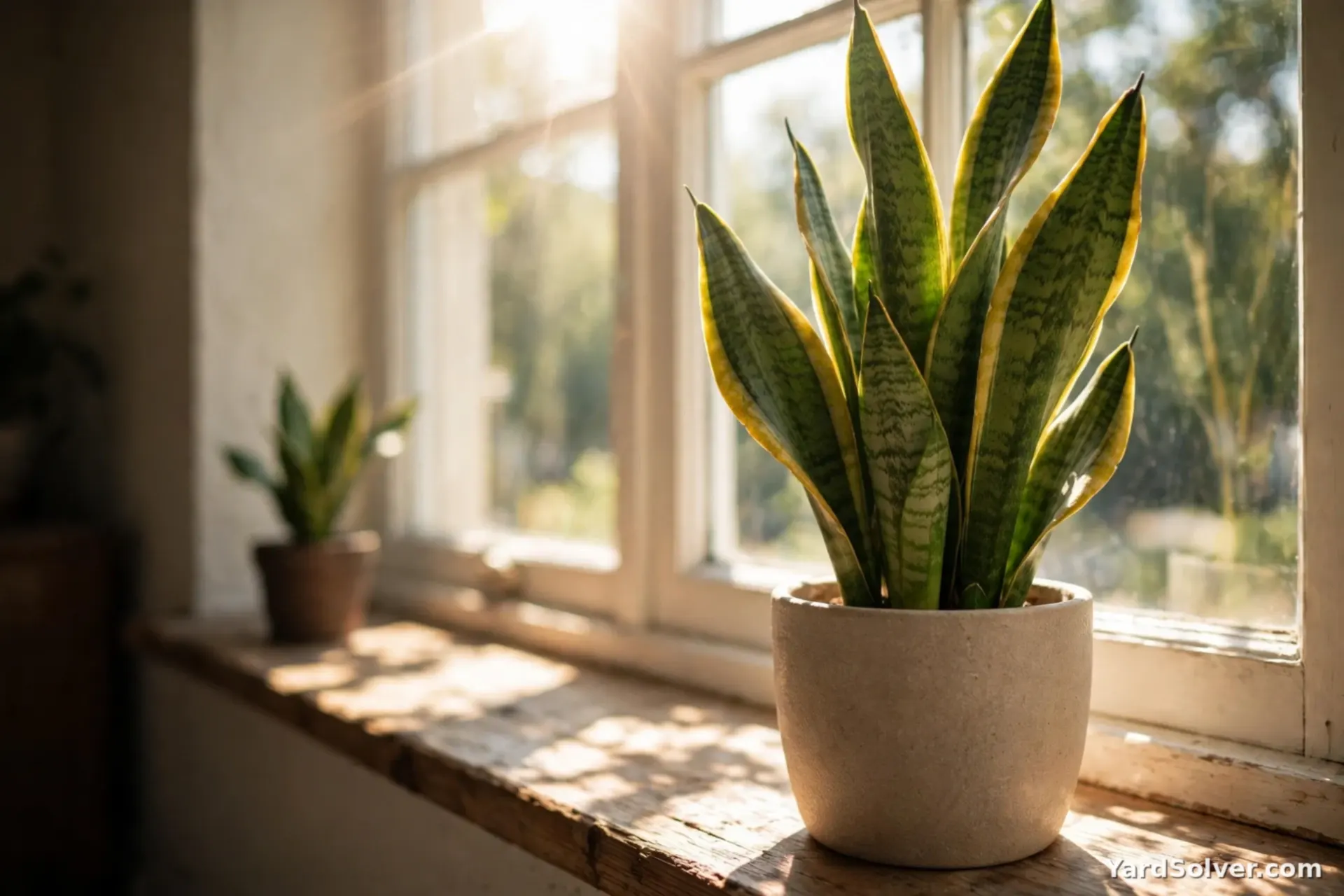
Three things decide how fast a snake plant uses its water. Season: in spring and summer the plant is growing, light is strong and rooms are warm, so the mix dries quickly; in autumn and winter growth nearly stops and the same pot can take twice as long to dry. Light: a plant in bright light photosynthesises and transpires far more than one in a low-light corner — low light is the hidden reason "every two weeks" advice kills plants in dim rooms. Pot size: a large pot holds far more mix, and more mix holds far more water, so big pots dry much more slowly than small ones — the classic trap, because the plant looks the same size thirsty or not. Find your row, and treat the interval as your earliest watering day, never an appointment:
| Season & light | Small pot (up to 6 in) | Medium pot (8–10 in) | Large pot (12 in +) |
|---|---|---|---|
| Spring / summer · bright light | Every 2–3 weeks | Every 3–4 weeks | Every 4–5 weeks |
| Spring / summer · low light | Every 3–4 weeks | Every 4–5 weeks | Every 5–6 weeks |
| Autumn / winter · bright light | Every 3–4 weeks | Every 4–6 weeks | Every 6–8 weeks |
| Autumn / winter · low light | Every 4–6 weeks | Every 6–8 weeks | Every 8 weeks or more |
Terracotta dries faster than plastic or glazed ceramic — shift one column earlier for terracotta, one later for plastic. A pot standing in a warm, heated room in winter behaves more like spring than the calendar suggests.
Step 2 — Confirm with the 3 dryness tests
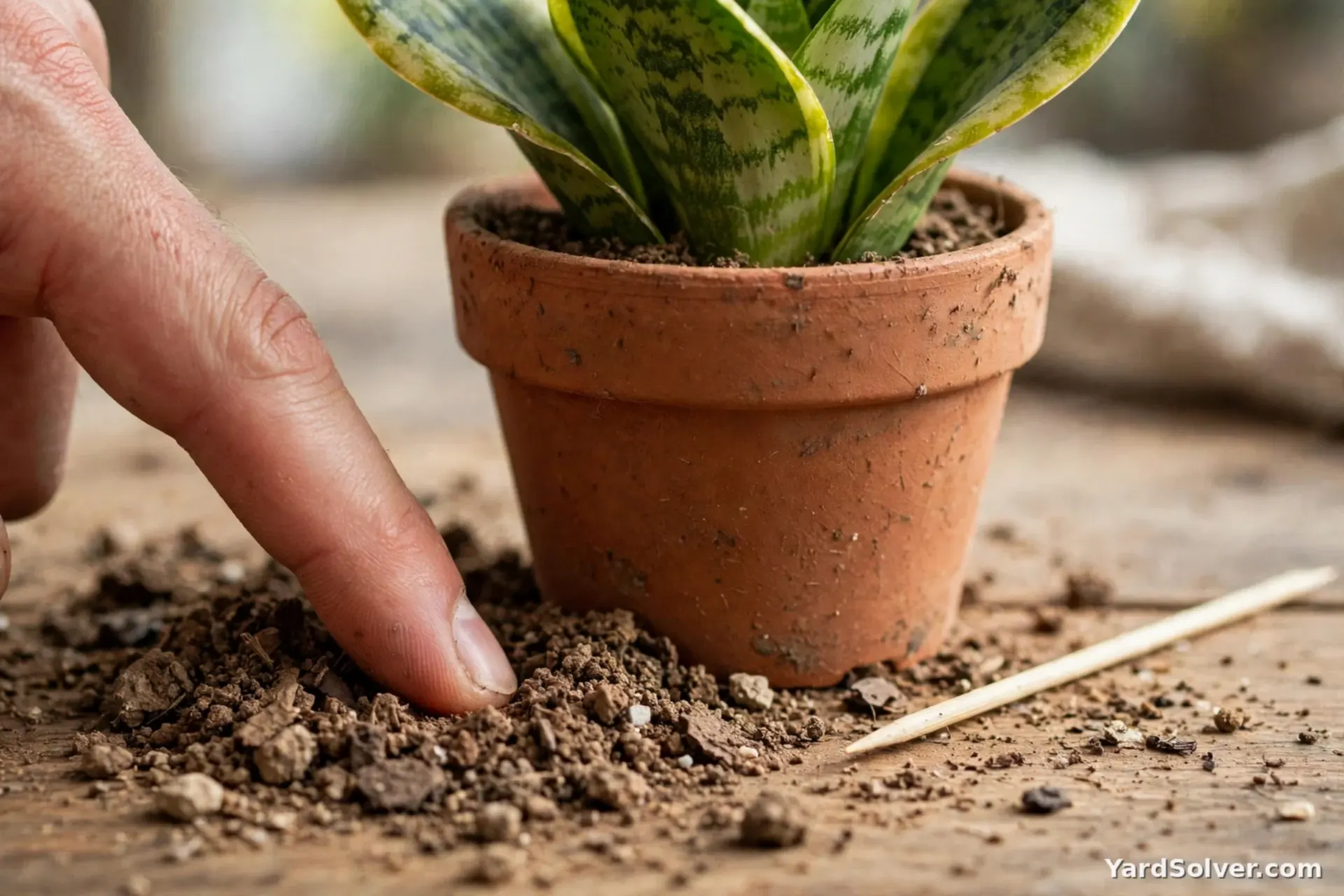
The schedule tells you when to check; these tests tell you whether to water. 1. The finger test: push a finger 2 inches into the mix. For most houseplants that is deep enough — for a snake plant it is only the start, because the surface dries long before the bottom does. 2. The lift test: pick the pot up. A freshly watered pot is heavy; a dry one is surprisingly light. After a few waterings your hands learn the difference better than any gadget. 3. The skewer test — the decider: push a wooden skewer or chopstick right to the bottom of the pot, leave it ten seconds, and pull it out. Damp mix sticks and darkens the wood; a dry pot leaves the skewer clean. Snake plants store water in those thick leaves and are built for drought, so the rule is simple: if in doubt, wait another week. No snake plant ever died from one extra dry week; thousands die from one unnecessary watering.
Step 3 — How much water, when the day comes
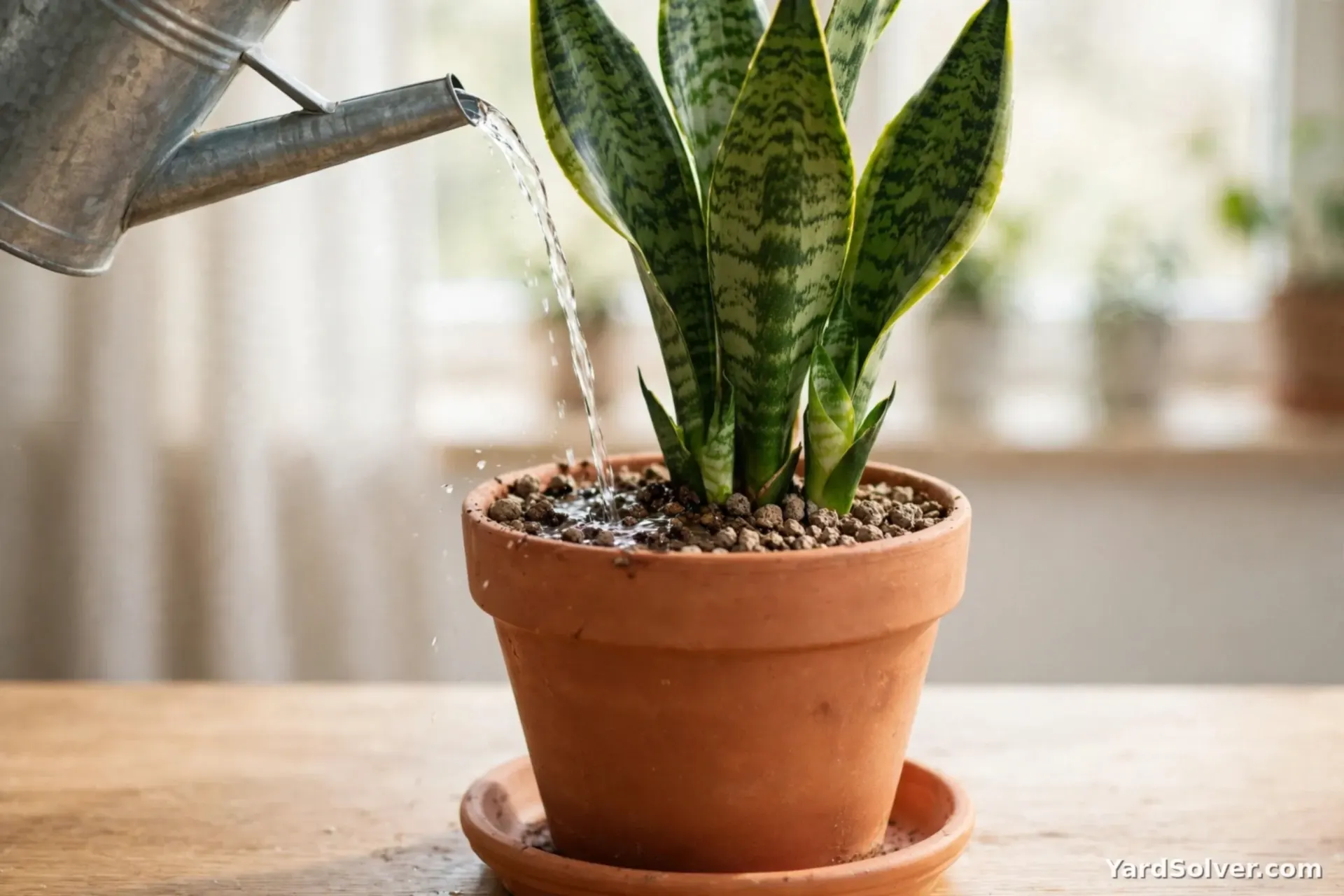
When the tests say dry, water like the desert rain this plant evolved with: rarely, but thoroughly. Pour slowly over the whole surface until water runs freely from the drainage holes — as a rough guide, about 250 ml for a small pot, 500 ml for a medium, and up to a litre for a large one — then let it drain for ten minutes and empty the saucer. A pot left standing in its own runoff is a pot being watered all week. Aim at the soil, not the leaves: water sitting in the leaf crown and between the leaves invites rot. The worst pattern of all is the little-and-often dribble — it never reaches the roots, keeps the surface damp for fungus gnats, and trains shallow roots. Deep and rare beats small and often, every time.
Step 4 — Winter and summer adjustments
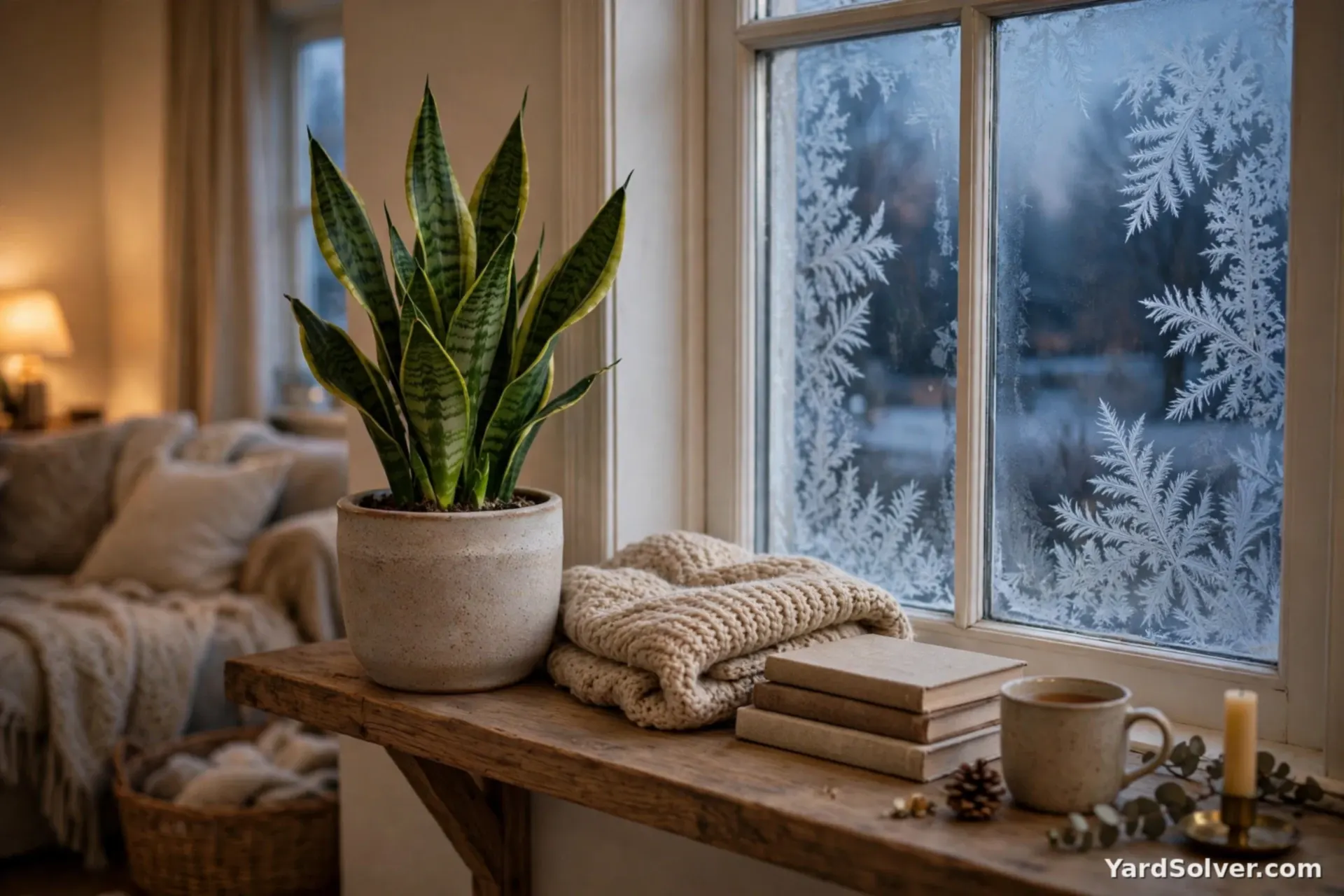
Summer is the growing season: light is strong, the plant pushes new leaves, and even a big pot may need its drink at the early end of the table. Watch for the mix pulling slightly away from the pot's edge — a reliable sign it is thoroughly dry. Winter flips everything: growth stops, light is weak, and cold mix dries slowly, so stretch intervals without guilt — for many indoor plants, once a month or less is right. Two winter traps catch people out. A pot on a cold windowsill sits in chilled, wet mix, which rots roots faster than any other combination; move the plant back from the glass. And a pot beside a heating vent dries its surface fast while the bottom stays damp — trust the skewer, not the surface. Going away? A snake plant is the easiest plant in the house to leave: water it before you go and it will wait patiently — the general routine for the rest of your plants is in How to Water Plants While on Vacation.
Problems, pests & diseases — diagnosis and fixes
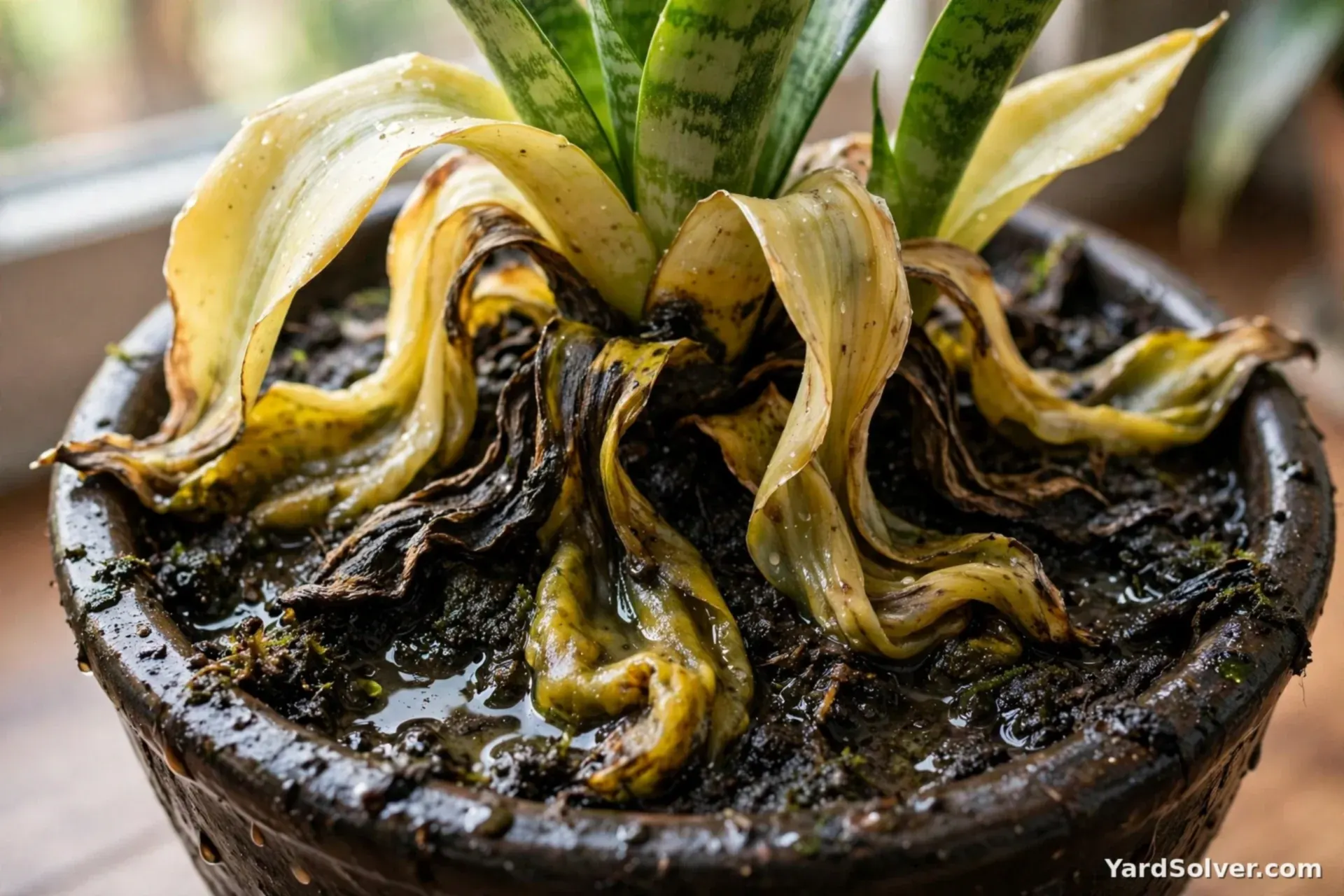
Nearly every snake plant problem traces back to water, but not all of them. Match the symptom first:
- Soft, mushy, yellowing leaves at the base; the plant wobbles or topples: root and base rot from soil that stayed wet. Fix: unpot, cut away everything soft back to firm tissue, let cuts dry a day or two, repot into dry gritty mix and wait a week before watering — the full protocol is in Why Is My Snake Plant Dying?
- White cottony fluff in the leaf joints and along the midrib: mealybugs, sheltering where the leaves meet. Fix: dab each cluster with a cotton bud dipped in rubbing alcohol, wipe leaves clean, and repeat weekly for a month — they hide deep in the crown.
- Fine webbing under leaves, leaves looking dusty, speckled or faded: spider mites, worst in warm, dry indoor air. Fix: shower the plant thoroughly (they hate water), wipe both sides of every leaf, and repeat every few days until no new speckling appears.
- Brown or black spots on leaves, sometimes with a yellow halo, spreading after wet weather or wet leaves: fungal leaf spot. Fix: remove badly hit leaves, water at the base only, improve air flow, and never mist this plant.
- Tiny black flies hovering over the pot: fungus gnats — annoying to you, mostly harmless to the plant, but a certain sign the surface stays damp. Fix: let the top inch dry fully between waterings (your schedule above already does this) and the colony fades.
Keep going
Your plant's own page, with its personal schedule and watering reminders: Snake Plant — Plant Library.
Already soft at the base? Why Is My Snake Plant Dying? — the rescue · Overwatered Plant Rescue.
Multiply it instead: How to Propagate Snake Plants · How to Repot a Snake Plant.
🌱 Stay with us — we'll remind you
A watering schedule only works if someone remembers it — so don't rely on memory. Start your snake plant with us and its page keeps the schedule with you:
- Open the Snake Plant page and press "Start Snake Plant with me": Snake Plant — Plant Library.
- Step 1 — set your start date. Tell the page the day you got (or last watered) your plant. Your plant and its start date are saved on this device straight away.
- Step 2 — take your schedule home. The page works out your personal watering rhythm from that date and keeps that rhythm in front of you, counted from your plant — not from a generic calendar.
- Step 3 — add your email to be first in line. Email reminders switch on with the new YardSolver accounts; the email you save with your plant today is first in line, and from your start date the reminders follow your plant's own schedule.
Free, and no account is needed today. Your email is for your plant reminders only — one purpose, and every message carries an easy stop.
Questions people ask
How often should I water my snake plant?
Every 2–4 weeks in the growing season and every 4–8 weeks in winter as a starting point — but only when the soil has dried out completely. Season, light and pot size move the interval a lot, and the dryness test always overrules the calendar.
How do I know when my snake plant needs water?
Push a finger 2 inches in, lift the pot to feel its weight, and best of all push a wooden skewer to the bottom — if it comes out clean and dry, water; if damp mix clings to it, wait.
How much water does a snake plant need each time?
Water thoroughly until it runs from the drainage holes — roughly 250 ml for a small pot, 500 ml for a medium and up to a litre for a large one — then empty the saucer.
Can you overwater a snake plant just once?
One deep drink in a free-draining pot does no harm. The damage comes from watering again before the mix dries, or leaving the pot standing in a full saucer — repeated soggy soil is what rots the roots.
Comments & ratings
No comments yet.
Be the first to share your experience.