
Guides · Plant problems · Published November 3, 2026
Neem Oil Spray: How to Mix It, When to Spray, What It Actually Controls
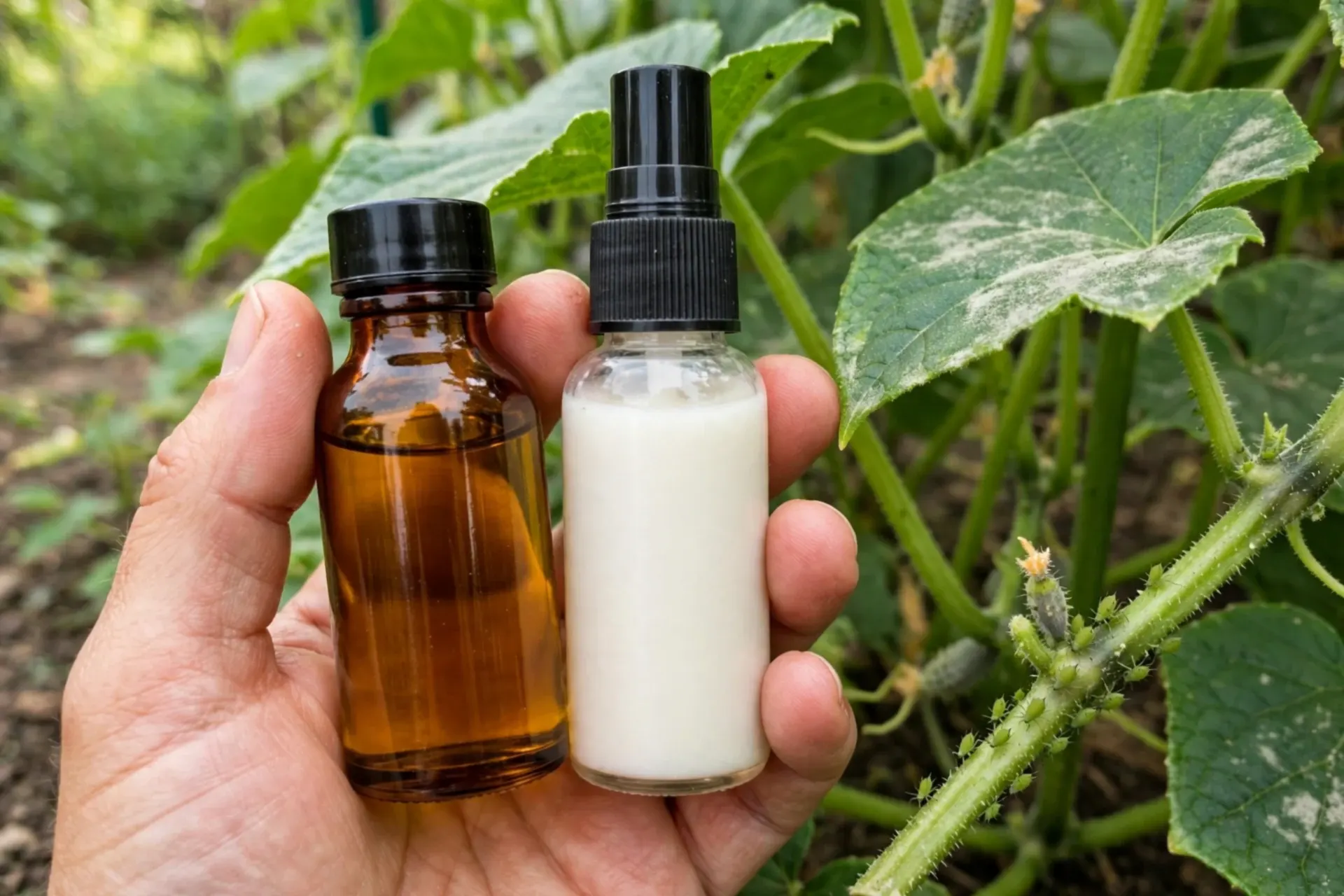
Neem oil is the most over-promised spray in the garden. It is sold as a cure for every insect and fungus, mixed wrong by most first-time users (oil and water have opinions about mixing), and then abandoned as useless when the pests are still there the next morning. The truth in the middle is more useful: neem is a genuinely good, slow, specific tool — a feeding-stopper and growth-disruptor that protects plants over weeks, not a knockdown spray that rescues them in an hour. This page covers how it actually works, the emulsifier step that makes the mix possible, exact ratios, the evening-only rules that keep bees safe, and a plain list of what neem does not do.
Neem in one honest paragraph
- What it is: oil pressed from neem tree seeds; its key compound, azadirachtin, stops insects feeding and disrupts their growth and breeding
- How it works: slowly, over days — pests eat treated leaves, lose their appetite and fail to mature; it is not a contact knockdown
- The mixing secret: oil never blends with water alone — a little castile soap emulsifies it, and the bottle needs shaking as you spray
- The mix: 1 tablespoon of neem oil per 1 gallon (about 4 litres) of water, emulsified first; use it within hours
- The rules: evening only, never on open blooms, never in midday heat, test-spray first
- The limits: no instant kill, weak on heavy infestations, no help at all against some problems — see Step 5
Step 1 — Understand how neem actually works
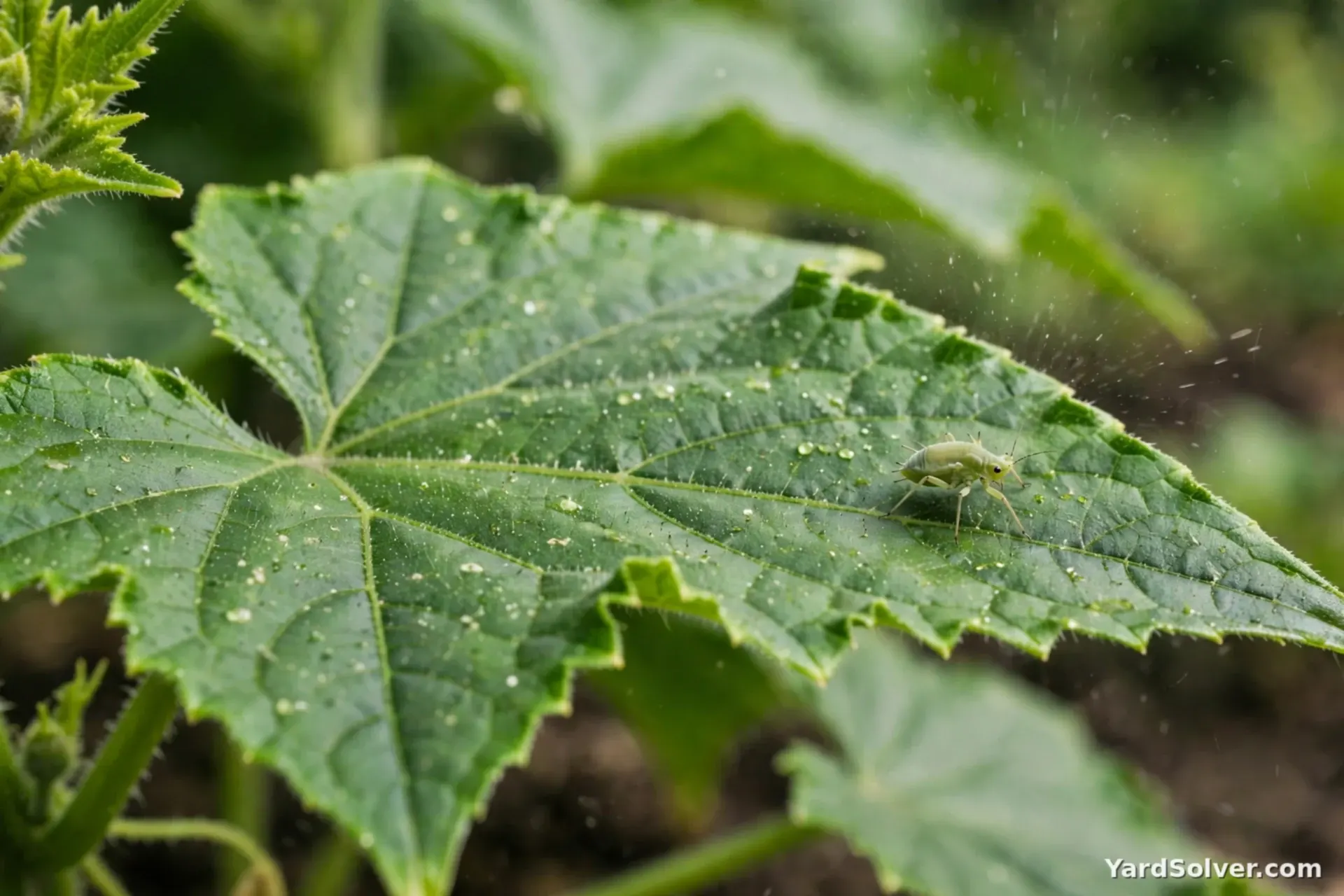
Azadirachtin, the compound that makes neem worth spraying, works like a hormone saboteur. An insect that eats a treated leaf gets a powerful "stop eating" signal, and young insects exposed to it fail to moult into their next stage — no next stage, no adults, no next generation of eggs. Some insects are also repelled by the taste and smell and simply leave. Notice what is missing from that list: instant death. A sprayed aphid may sit on the leaf for a day before it stops feeding and dies, which is why gardeners who expect pyrethrum-style knockdown conclude the bottle is fake. Neem's real job is population control across a fortnight — it is the spray you use to stop a building problem becoming a season-long one, inside the wider system our organic pest control guide lays out. It also earns a second, smaller reputation as a fungicide: a neem coating can suppress powdery mildew spores on the leaf surface, which is genuinely useful — but it prevents spread far better than it cures an established infection, a distinction Step 5 keeps honest.
Step 2 — Choose the right neem (cold-pressed beats clarified)
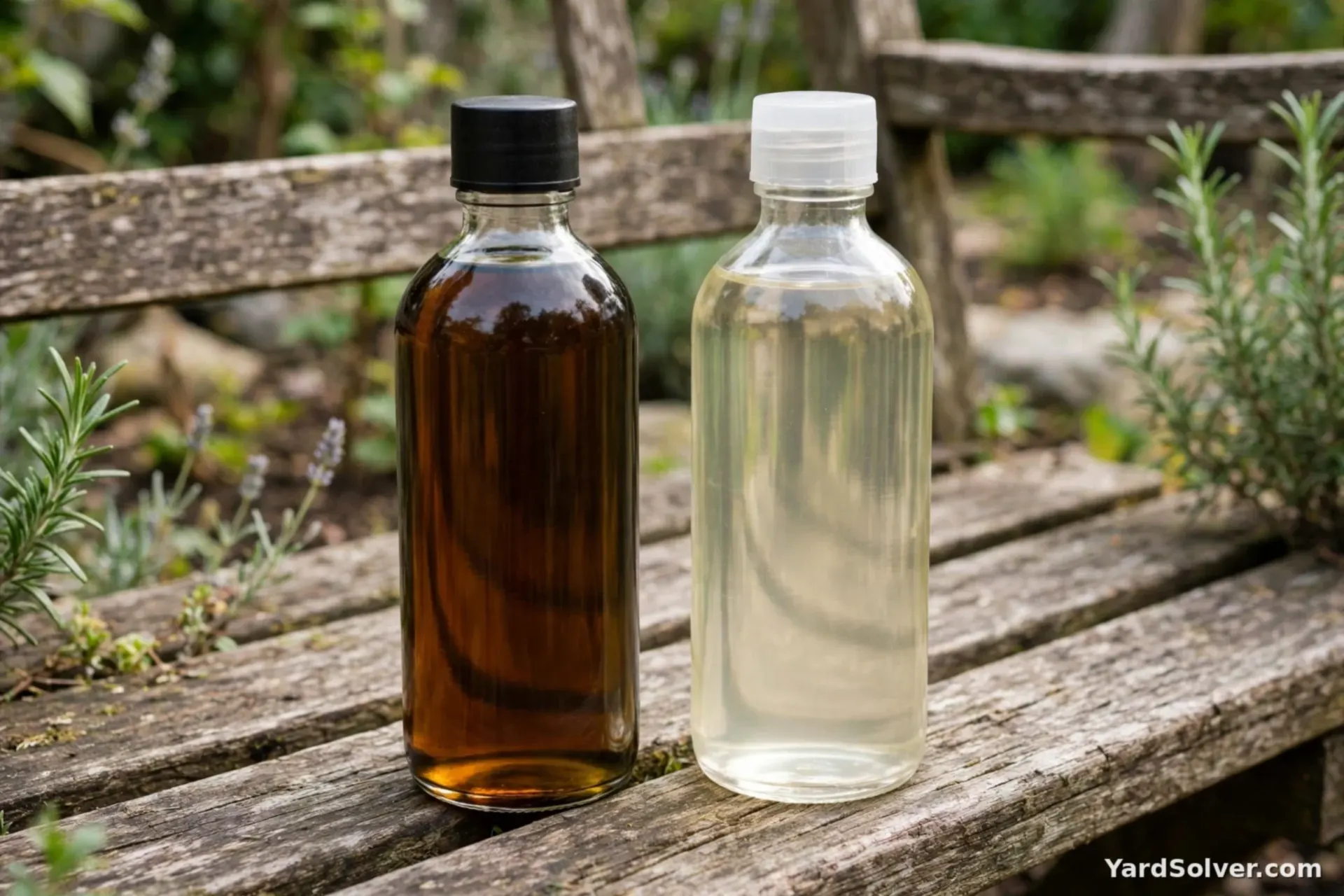
Two different products share the neem name. Cold-pressed neem oil is the seed oil with its azadirachtin still in it — this is the one that disrupts feeding and growth, and the one this recipe means. Clarified hydrophobic extract of neem oil has had the azadirachtin removed during processing; what remains works mainly as a smothering oil on contact, much like a plain horticultural oil — not useless, but not the systemic slow control you are paying for. Read the ingredient panel before you buy, and store the bottle cool and dark, since azadirachtin breaks down in heat and light over the season. One more honesty note while you are reading labels: neem is a real pesticide, plant-derived or not. That is not a reason to fear it — its record on people and pets is good when used as directed — but it is a reason the label directions, local rules and harvest intervals rule, exactly as they do for any synthetic product. "Natural" describes where it came from, not a licence to spray carelessly.
Step 3 — Mix it: emulsify first, use it the same day
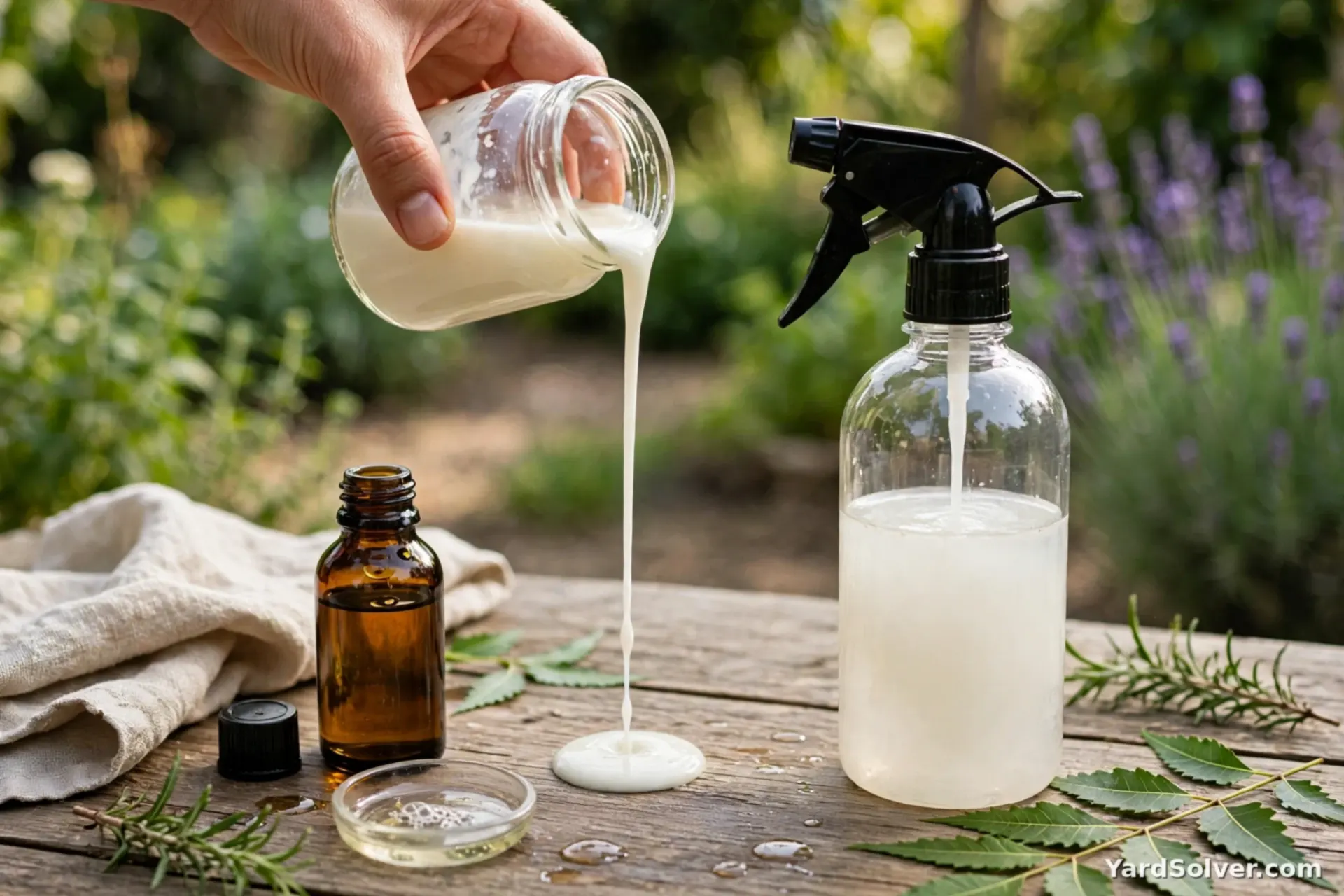
The recipe: 1 tablespoon (15 ml) of cold-pressed neem oil per 1 gallon (about 4 litres) of water — for a single quart spray bottle, that is 1 teaspoon of oil. The order of operations is the whole craft. First, stir the neem oil together with a small amount of pure castile soap — roughly a quarter teaspoon for the quart bottle, a teaspoon for the gallon — in a jar until the mixture turns milky and uniform; the soap is the emulsifier that lets oil disperse through water instead of floating on it. Then add that to water that is warm, not hot, and shake hard. Skip the emulsifier and you get the classic failure: water beading with blobs of raw oil, which under-doses most of the plant and can scorch the spots where pure oil lands. Two deadlines apply to the finished mix: use it within about 8 hours, because azadirachtin degrades once diluted, and keep shaking the bottle every minute or so while you spray, because the emulsion is already trying to separate. Our insecticidal soap recipe covers why the emulsifier must be real castile soap and never dish detergent — the same leaf-burn warning applies here, doubled, because detergent plus oil is worse than either alone.
Step 4 — Spray at dusk, coat the undersides, never the blooms

Timing protects two things at once. Spray in the evening: it keeps the oil off active bees (the absolute rule is never spray open blooms, and never a plant while bees are working it — wet neem can harm them, as our pollinator guide explains), and it keeps oil-coated leaves out of fierce midday sun, which is when leaf burn happens. Never spray a plant that is wilted, drought-stressed or suffering in a heatwave, and test-spray a leaf and wait a day on any plant you have not treated before — oil sprays of every kind can mark sensitive foliage. Coverage matters as much as timing: coat the undersides of the leaves and the stems where aphids, whitefly and young caterpillars feed — the classic jobs on cucumbers and zucchini, where neem also backs up mildew prevention between the airflow habits in How to Get Rid of Powdery Mildew. Aim at the infested plant, not the bed, the path and the flower border: a targeted spray at dusk is the entire bee-safety system, and it works.
Step 5 — Repeat fortnightly, and keep the limits in plain sight

Because azadirachtin breaks down in sunlight within days, one spray is a gesture; the schedule is the treatment. Reapply every 7 to 14 days while the problem persists, and after heavy rain, judging by the weekly leaf check rather than the calendar alone. Now the limits, plainly. Neem will not knock down a heavy infestation today — a plant drowning in aphids needs the water blast, hand removal and soap first. It does not kill on contact, cure advanced fungal disease, touch pests it never reaches inside curled leaves and buds, or substitute for the spacing that stops half of these problems starting — run your beds through the Plant Spacing Calculator before blaming the spray shelf. And when a crop is lost despite honest work, the grown-up move is in the Succession Sowing Calculator: pull it, and sow the next round into the gap rather than spraying a corpse all summer. Neem used with its limits understood — right product, emulsified, at dusk, off the blooms, on repeat — is a genuinely useful spray. Neem used as a miracle is a disappointment you paid for.
Keep going
Before you mix anything, the Plant Doctor can match the signs on your plant to the likely problem in two taps. The other half of the spray shelf: How to Make Insecticidal Soap Spray · The system: Organic Pest Control · The mildew pairing: How to Get Rid of Powdery Mildew.
Protect the workforce: Native Plants for Pollinators.
Questions people ask
Why won't my neem oil mix with water?
Because oil and water never mix on their own — the neem beads up and floats, so the plant gets plain water in some spots and burning blobs of pure oil in others. The fix is an emulsifier: blend the neem oil with a small amount of pure castile soap first, until it turns milky, then stir that into the water. Keep shaking the bottle as you spray, because the mix starts separating again within minutes.
Is neem oil safe for bees?
Only when it never touches them. Wet neem sprayed directly onto bees or onto open flowers can harm pollinators, which is why the rules are absolute: spray in the evening when bees have gone home, target the affected foliage, and never spray blooms. Once the application has dried, the risk to visiting bees drops a great deal — the danger window is the spraying itself and the hours while it stays wet.
How long does neem take to work?
Days, not minutes — and that is normal, not a failed bottle. Neem's active ingredient, azadirachtin, mainly stops insects feeding and disrupts their growth and egg-laying rather than knocking them down on contact. Expect feeding damage to slow within a day or two and numbers to fall over a week or more of repeat applications every 7 to 14 days. If you need a pest dead today, that is a different tool's job.
Comments & ratings
No comments yet.
Be the first to share your experience.