
Guides · Plant problems · Published November 3, 2026
How to Make Insecticidal Soap Spray (That Won't Burn Your Plants)
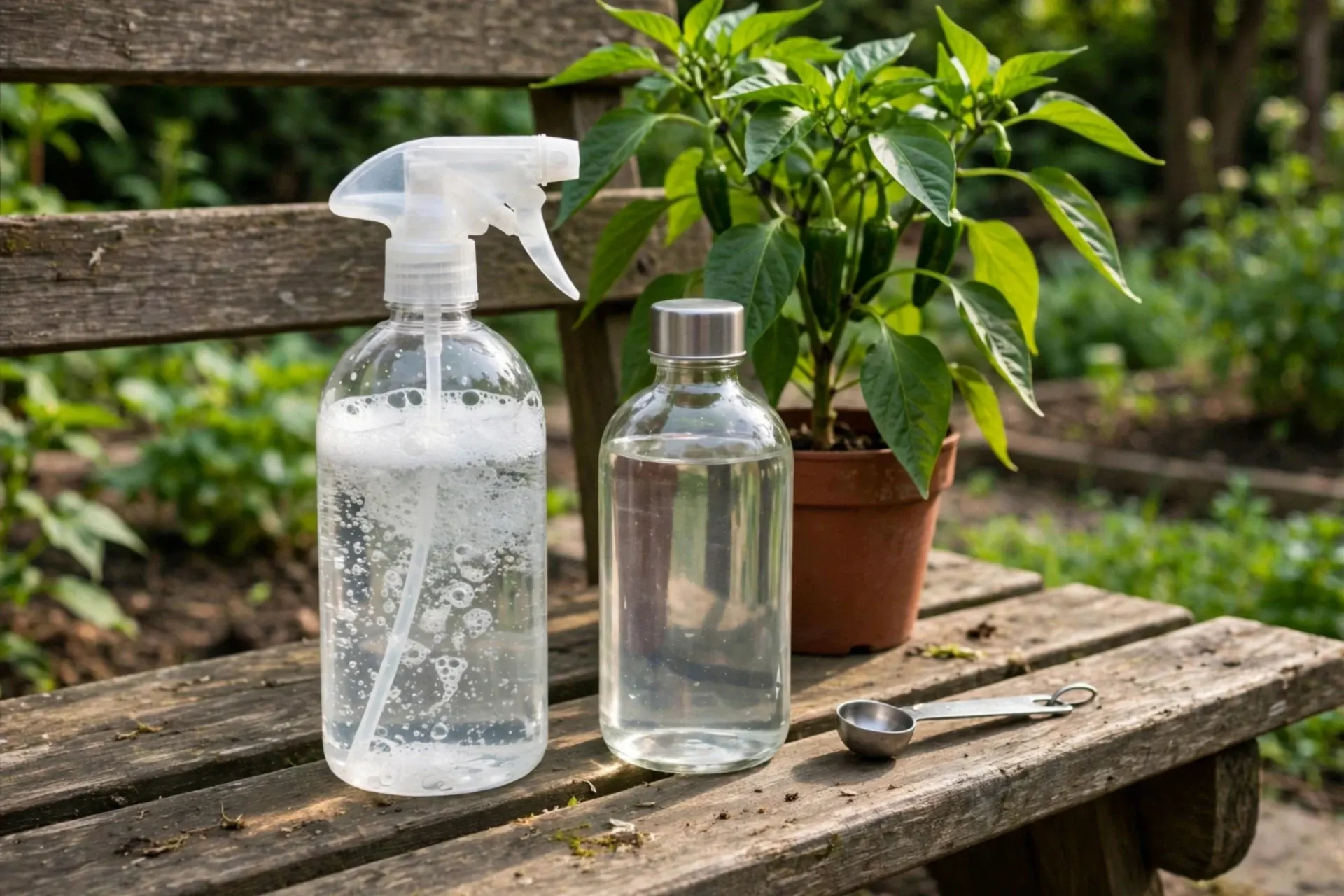
Insecticidal soap is the gentlest spray in the garden: it kills the soft-bodied insects it touches, then stops working the moment it dries, leaving nothing behind to harm the plant, the bees that arrive later, or you. But the internet's favourite version of this recipe contains a trap, and it burns more plants than the aphids ever would. So this page starts with the warning, then gives the recipe properly — the right soap, the right strength, the test-spray routine that makes leaf burn a choice rather than an accident, and an honest account of what this spray can and cannot do.
The recipe, and the rule that protects your plants
- The warning first: dish detergent is NOT insecticidal soap — degreasers and fragrances strip leaf wax and scorch foliage
- The right soap: pure liquid castile soap — real soap, plant oils, nothing added
- The mix: 1 tablespoon of castile soap per 1 quart (about 1 litre) of water — roughly a 1.5% solution; weaker for tender plants
- The kill is contact-only: it must wet the insect itself; dried spray does nothing, which is also why it is safe
- The routine: test-spray, wait 24–48 hours, then spray to coat — and repeat every 4 to 7 days
- The limits: soft-bodied pests only; beetles, caterpillars and eggs shrug it off
Step 1 — Get the right soap (and keep the dish liquid in the kitchen)
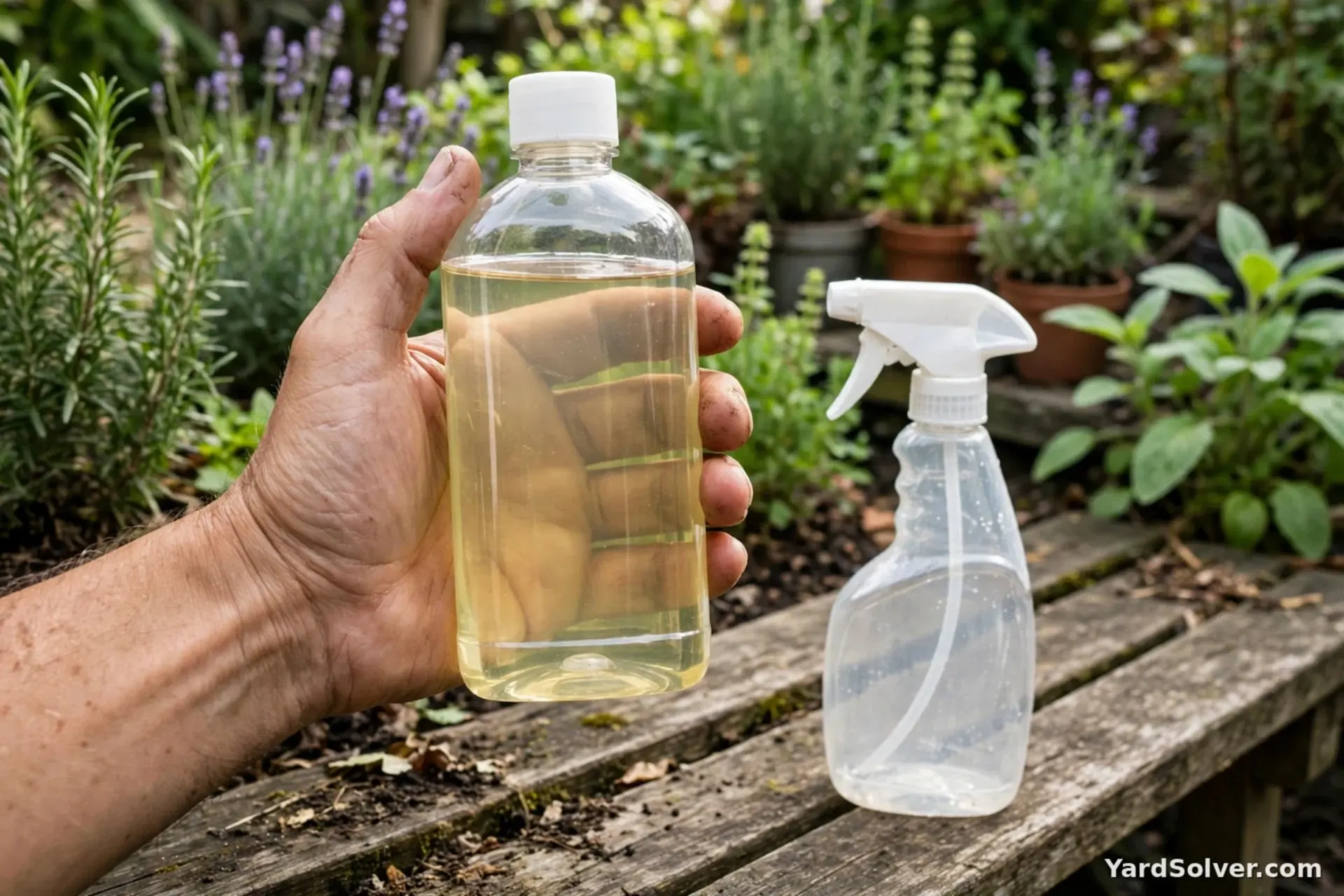
Here is the distinction the whole recipe turns on. True soap is made by reacting plant or animal oils with an alkali, and insecticidal soaps use the potassium form of those fatty acids — they disrupt the cell membranes of soft-bodied insects on contact, then break down quickly and harmlessly. Dish "soap" is usually a detergent: synthetic surfactants plus degreasers, solvents, fragrances and sometimes antibacterial agents, engineered to strip grease off plates. Sprayed on a plant, it strips the leaf's own protective wax coating the same way, and the sun then scorches the exposed tissue — brown edges, bleached patches, dropped leaves, sometimes a dead seedling. The fix is simple: buy a pure liquid castile soap — the ingredient list should read as saponified plant oils and little else, unscented, with no "antibacterial", "degreaser" or detergent claims — or buy a commercial insecticidal soap, which is the same chemistry quality-controlled, and follow its label. Our organic pest control guide places this spray in its proper slot: the last step of the system, after identification, prevention, barriers and hand removal have done their work.
Step 2 — Mix it at the right strength
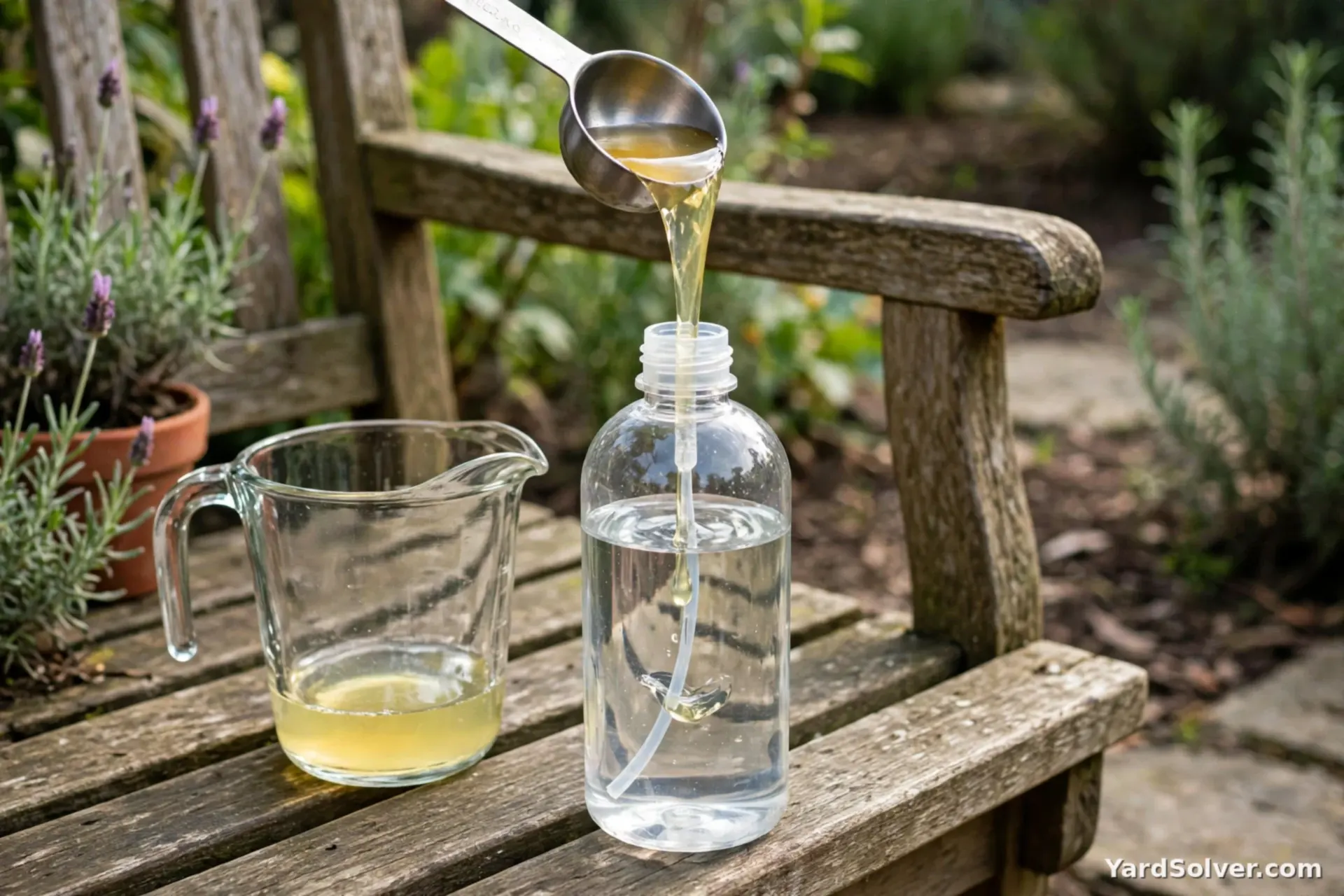
The standard working mix is 1 tablespoon (15 ml) of pure castile soap per 1 quart (roughly 1 litre) of water — about a 1.5% solution, inside the 1–2% band that insecticidal soap products themselves use. For tender growth, seedlings and plants you have never sprayed before, start at half strength (2 teaspoons per quart) and step up only if the pests demand it. Two mixing details matter more than they sound. Use soft water if you can — in hard water the soap reacts with the minerals and can leave a white scum that reduces its effect; rainwater or distilled water avoids the problem entirely. And mix only what you will use that day: the solution loses strength in storage, separates, and an unlabelled bottle of anything is a household hazard, so make it fresh, label it, and pour out what is left when you finish. Add the soap to the water (not the other way round, unless you want a bottle of foam), shake gently, and keep shaking occasionally as you spray.
Step 3 — Test-spray and wait: the step that prevents every burn story
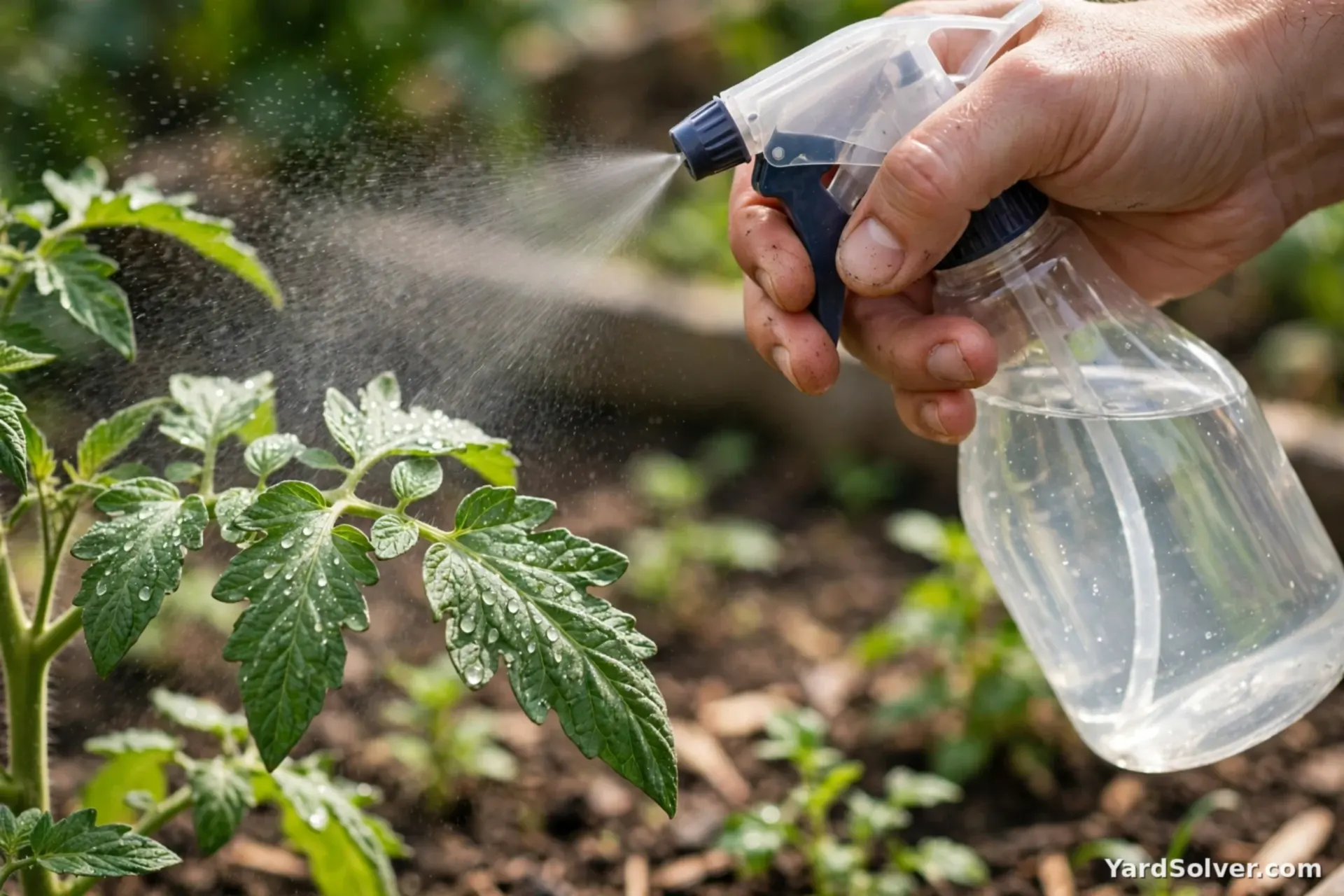
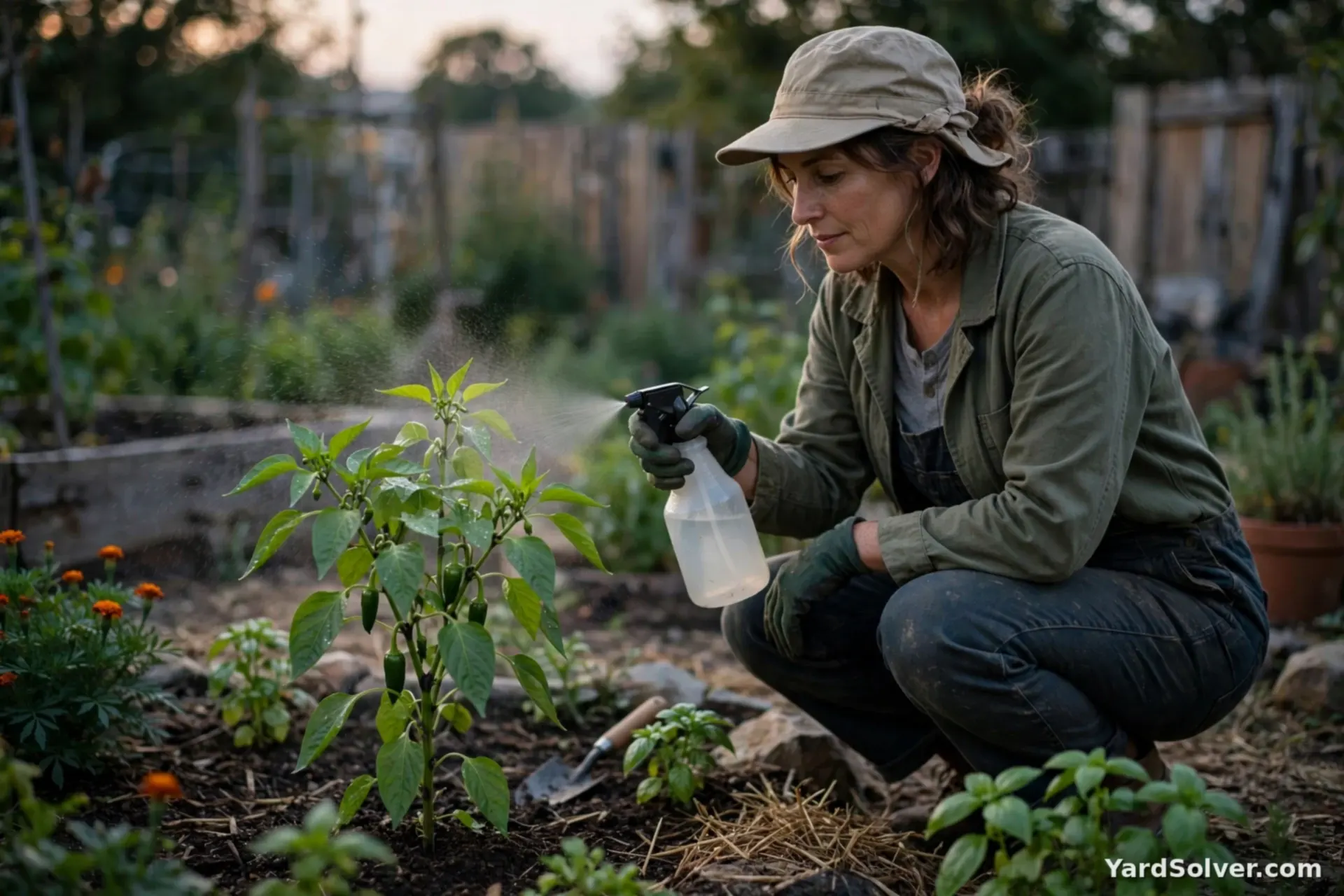
Even the right soap at the right strength is wrong for a few plants. Ferns, impatiens, many succulents, hairy-leaved plants and young seedlings can mark or scorch, and stressed, drought-thirsty plants of any kind are far more vulnerable than watered ones. So before the first full treatment of any plant, spray a small patch — one leaf, top and underside — and wait 24 to 48 hours. If the test leaf looks unchanged, proceed. If it shows browning, bleaching or curling, dilute the mix by half and test again; if it still marks, that plant gets the water-and-hand-removal treatment instead. Two timing rules ride along with the test: spray in the cool of the morning or the evening, never in hot midday sun and never on a plant wilting from thirst, because spray on hot, dry foliage is where most remaining burn cases come from. This is cheap insurance — the pests are not going anywhere in one day, but a scorched canopy takes a month to grow back.
Step 4 — Spray to coat: it only works where it touches
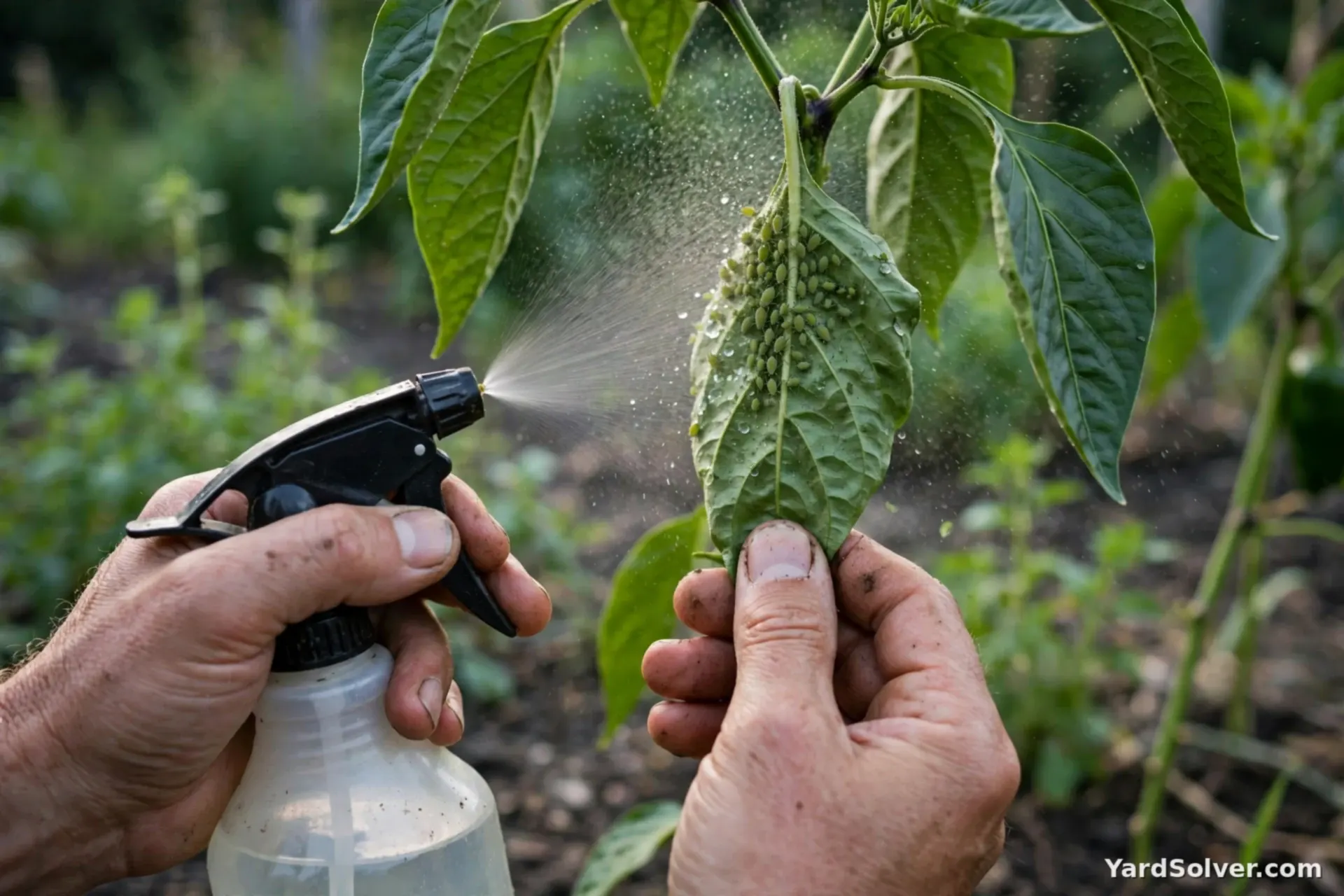
Because the kill is purely by contact, technique is the whole game: the spray must physically wet the insect. Work slowly and aim where pests actually live — the undersides of leaves, the leaf joints, the growing tips and along the stems — until the surfaces are dripping. A light mist drifting over the top of the plant looks industrious and kills almost nothing. This is the spray that finishes the job on the classic targets: the aphid colonies on tomatoes and peppers (see How to Get Rid of Aphids for the water-blast first stage), spider mites webbing in leaf joints, mealybugs in their cotton, and whitefly clouds that settle back onto the leaf you just coated. Hold the nozzle close, keep the bottle shaken, and accept wet sleeves as the sign you are doing it right. Beneficial insects present at spraying time can be hit too — the honest mitigation is timing: spray when bees have gone home, aim only at infested growth, and remember the spray is harmless to anything that arrives after it dries.
Step 5 — Repeat on schedule, and know exactly where the limits are
One application never finishes the job, for a simple reason: soap does not kill eggs, and it does not reach every sheltered crawler. The hatchlings emerge over the following days, so schedule repeat applications every 4 to 7 days, two or three rounds, and judge success by the weekly check — falling numbers, no new colonies — rather than by the satisfying sight of day one. The other limit is the pest list itself. Soap cannot penetrate the hard shell of beetles or of adult scale insects, does nothing useful to caterpillars, and will not rescue a plant whose real problem is disease — indoor clouds of fungus gnats, for instance, call for drier soil first and soap only for the foliage pests riding along. Help the spray succeed with the boring fundamentals around it: space plants so air moves and colonies stay visible — the Plant Spacing Calculator turns that into numbers — and feed recovered plants steadily rather than richly, since the soft, over-fed growth pests love is exactly what the Fertilizer Calculator exists to prevent. Used this way — right soap, right strength, test first, coat thoroughly, repeat on schedule — insecticidal soap is what it promises to be: the mildest effective spray in the shed.
Keep going
Not sure a spray is even the right tool yet? The Plant Doctor matches the signs on your plant to the likely problem first. The system this spray belongs to: Organic Pest Control · Its most common job: How to Get Rid of Aphids · Indoors: Winter Houseplant Pests.
Questions people ask
Can I use dish soap instead of castile soap?
No — this is the mistake that burns more leaves than the pests do. Most dish liquids are detergents, not soap: they contain degreasers, solvents and fragrances designed to strip oil, and they strip the protective wax off leaves the same way, causing scorched patches and dropped leaves. Use a pure castile soap — a real soap made from plant oils, with no detergent, scent or antibacterial additives — or a labelled insecticidal soap product.
Does insecticidal soap kill pests after it dries?
No. Insecticidal soap works only while it is wet and actually touching the insect — it breaks down the outer cell membranes of soft-bodied pests, and once the spray has dried it has no killing power left and leaves no protective residue. That limitation is also its virtue: it is why the spray is gentle on the plant, on you, and on beneficial insects that arrive afterwards. Coverage and repeat applications do all the work.
Which pests does it work on — and which does it not?
It works on soft-bodied insects it directly coats: aphids, whitefly, spider mites, mealybugs, young scale crawlers and thrips. It does little or nothing to hard-shelled beetles, adult scale under its shell, caterpillars, or eggs of any kind — which is why heavy problems still need the full routine of hand removal, barriers and repeats described in our organic pest control guide, with soap as one tool among several.
Comments & ratings
No comments yet.
Be the first to share your experience.