
Guides · Houseplants · Published November 10, 2026
Poinsettia After Christmas: Keep It Alive and Rebloom It
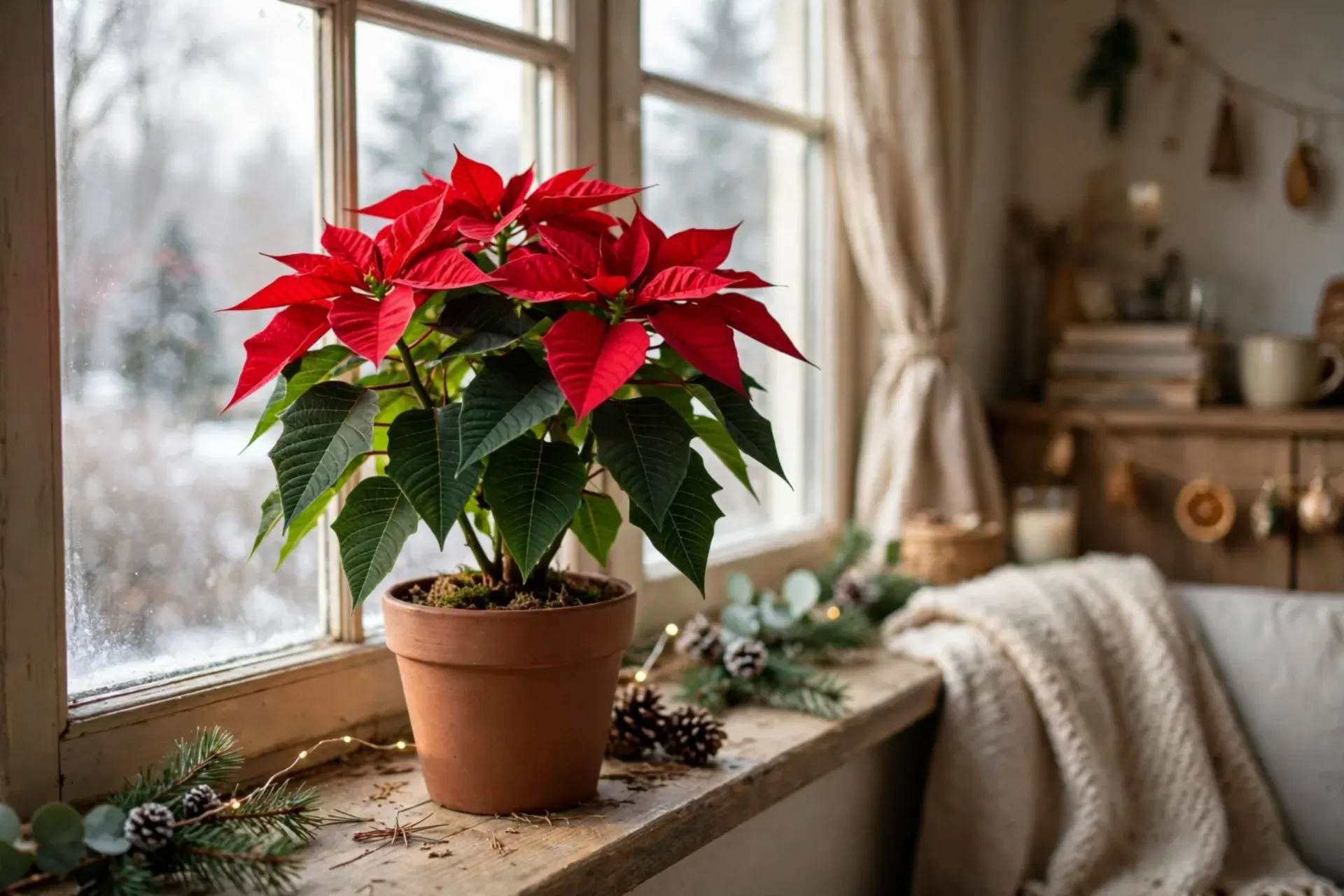
Millions of poinsettias go in the bin in January, and nearly all of them were healthy plants. A poinsettia is not a cut flower — it is a small shrub from Mexico that can live for years. Keeping it is easy. Getting the red back next Christmas takes one trick, done on time: long, unbroken nights in the fall. Here is the whole year, month by month.
The year at a glance
| When | The job |
|---|---|
| January–February | Bright window, steady watering, away from heat vents and cold drafts |
| Late March–April | Cut all stems back to 4–6 inches; fresh shoots follow |
| May | Repot one size up; move outside once nights stay warm, shade first |
| Summer | Pinch the tips once or twice for a bushy plant — last pinch by mid-August |
| Mid-September | Bring it back in before nights drop below about 50°F |
| October 1 – mid-November | 14 hours of total darkness every night, bright days — 8 to 10 weeks |
| Late November–December | The bracts colour up; enjoy a plant you did not have to buy again |
Miss a step and the plant still lives — it just may stay green next Christmas. The October darkness is the one step that cannot be skipped or faked.
Step 1 — Get it through winter without drama
Take the foil wrap off the pot or poke holes in it — poinsettias hate sitting in water. Give the plant your brightest window, keep the soil evenly moist (water when the top inch is dry), and keep it away from heating vents, radiators and doors that blast cold air. Room warmth of about 60–70°F suits it. Leaves may thin out as winter goes on; that is normal. And one myth to retire: the sap can irritate skin and stomachs a little, but this is not a deadly plant — just keep it away from pets that like to chew.
Step 2 — The spring cut-back (this is the brave part)
In late March or April, cut every stem back to 4–6 inches tall. It looks brutal, and it is the making of the plant: fresh shoots break from the stubs and grow a full, bushy shape instead of a tall, bare one. Keep it in bright light and water as the new growth starts. If the plant is tight in its pot, May is the moment to repot one size up with fresh mix.
Step 3 — A summer outside, with pinching
Once nights are reliably warm, the plant can summer outside — start it in shade for a week so the leaves do not scorch, then give it bright light with some morning sun. Pinch the soft tip off each shoot once in early summer, and again around mid-July if it is growing strongly, to keep it compact and full of stems. Last pinch by mid-August — after that, every tip you remove is colour you lose. Feed lightly through summer with a balanced houseplant feed; for exact amounts per pot size, the Fertilizer Calculator keeps it honest.
Step 4 — Bring it in before the cold does
Bring the plant back inside in mid-September, before nights drop below about 50°F — a chilly night will not kill it, but it sets it back. Check it over for whitefly and other pests before it rejoins your houseplants, and give it your brightest window again. The indoor cluster it joins matters here — plants like the Peace Lily and Spider Plant share the same bright-window, steady-water routine all winter.
Step 5 — The long nights: how the red comes back
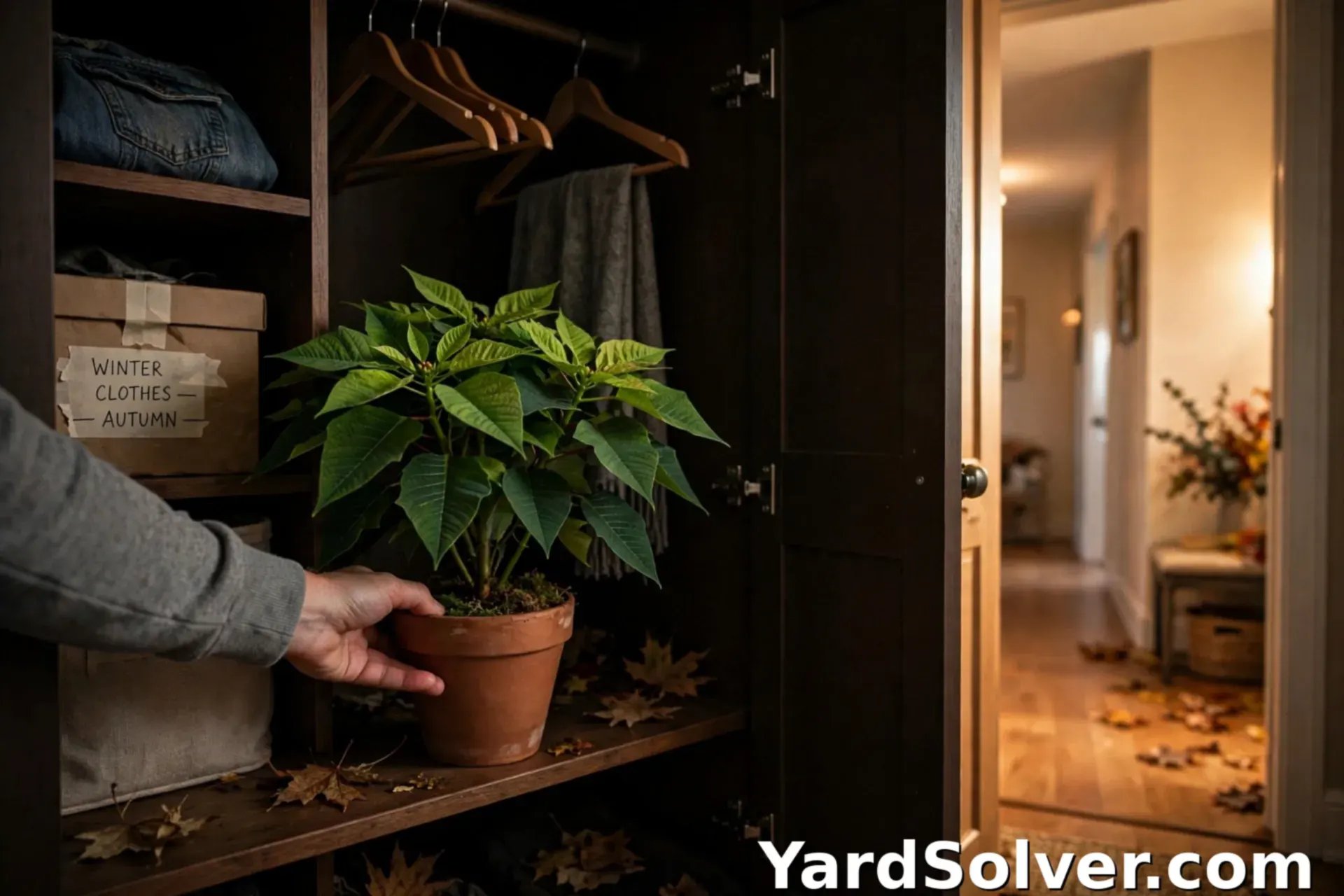
From October 1, the plant needs 14 hours of unbroken darkness every night — say 5 p.m. to 7 a.m. — and bright light all day. A spare-room closet, or a big cardboard box over the plant, does the job. The darkness must be total: a street light through a curtain or a lamp switched on in the room can delay the colour. Keep nights a little cool, around 60–65°F, and keep the routine up for 8–10 weeks. In late November the top leaves — the bracts — start to blush, and by December the plant is red again. Once the colour is well developed, the strict routine can relax. Put the October 1 start date in the Garden Planner now; the whole trick fails simply by starting two weeks late.
Keep going
The other holiday plant with a darkness trick: Christmas Cactus Not Blooming — same idea, cooler nights.
Winter is when houseplant pests move in: Winter Houseplant Pests shows how to spot and clear them.
Questions people ask
Why did my poinsettia drop all its leaves in January?
Usually the room, not the plant. Blasts of hot dry air from a heating vent, a cold draft from a door, or soil that dried out hard will all strip a poinsettia in days. Move it to bright light away from vents, water it well, and wait — a bare-looking plant with firm stems often leafs out again from spring growth. The March cut-back gives it a clean restart either way.
Are poinsettias poisonous to cats and dogs?
Not in the way the old story claims. The milky sap is a mild irritant — a pet that chews the leaves may drool, lick its lips, or be sick once, but poinsettias are not the deadly plant of legend. Keep the plant out of a keen chewer's reach to be sensible, and do not panic over one nibbled leaf.
Are the red parts flowers?
No — the red parts are bracts, which are leaves that change colour. The real flowers are the tiny yellow buds in the very centre. This is why the long-nights trick works: the plant reads the dark hours and colours its bracts, the same signal that tells it to flower.
Comments & ratings
No comments yet.
Be the first to share your experience.