
Plant Library · Houseplants
🌸 How to Grow Peace Lily
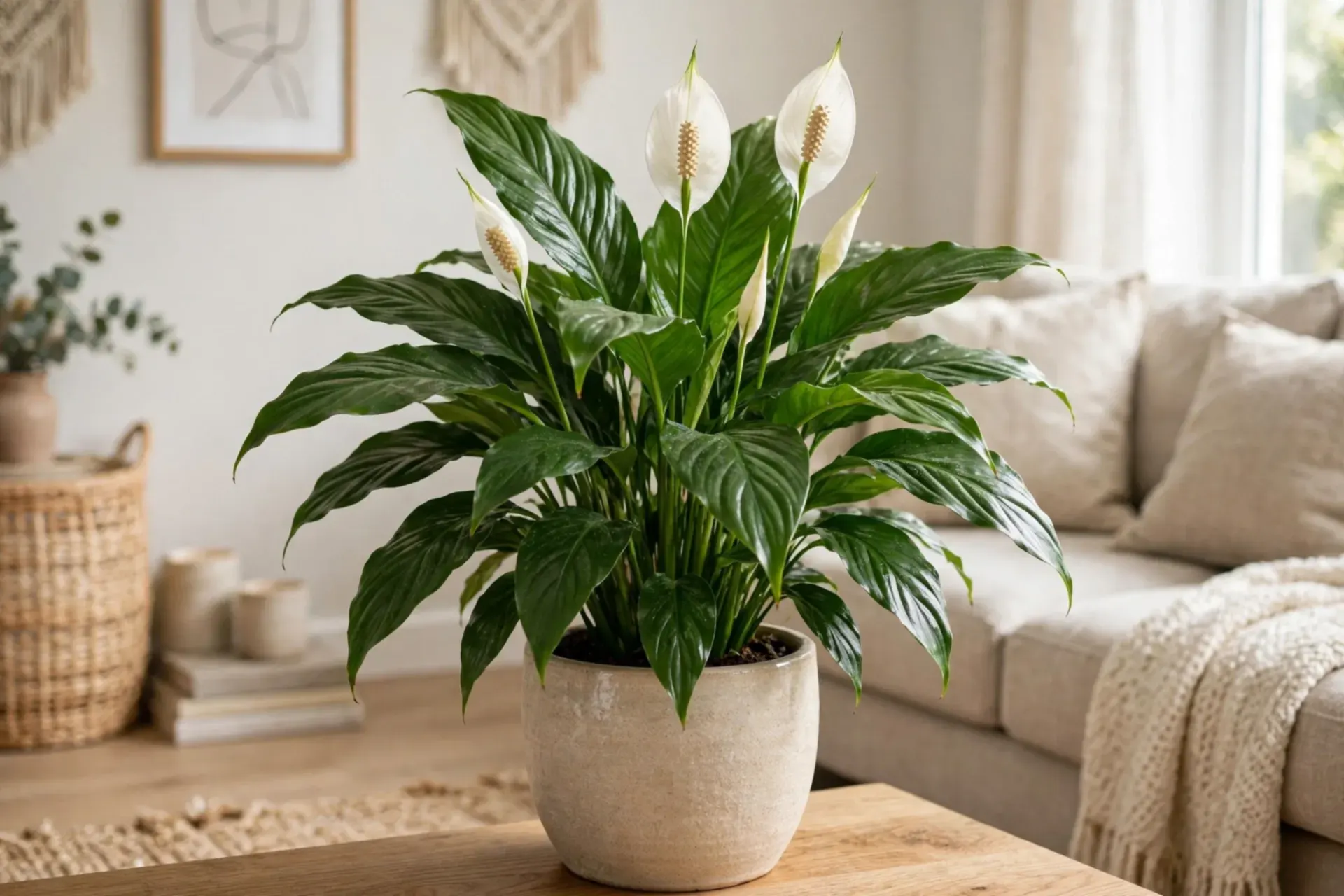
The plant that tells you when it is thirsty — a peace lily droops dramatically when it needs water, then stands back up within hours of a drink, which makes it one of the easiest houseplants to read. Give it bright indirect light, evenly moist mix and a light monthly feed in the growing season, and it repays you with white spathes above glossy leaves for much of the year.
Grow Peace Lily with us — step by step
Everything for this plant is written step by step below — what to do, and exactly when. Read it through first if you like: you can grow it entirely on your own with that guide. Or start with us here — tell us your planting day and we lay out your personal schedule on this page, every next step on its own day, counted from your planting date. No guessing, no forgetting.
Step 1 — today: Settle your Peace Lily into its spot today: bright indirect light with no direct sun, a pot with drainage, and one good watering to settle the mix around the roots.
Peace Lily at a glance
Spacing: — (pot) · Propagation: Division, not seed
Sun: Bright indirect light; tolerates medium light but blooms less
Water: About weekly — it droops dramatically when thirsty, then recovers
Harvest: Grown for foliage and white spathes — no harvest
Timing counts from your average last spring frost — get your own dates in the Planting Calendar. Guidance follows standard extension-service practice for Canada and the US.
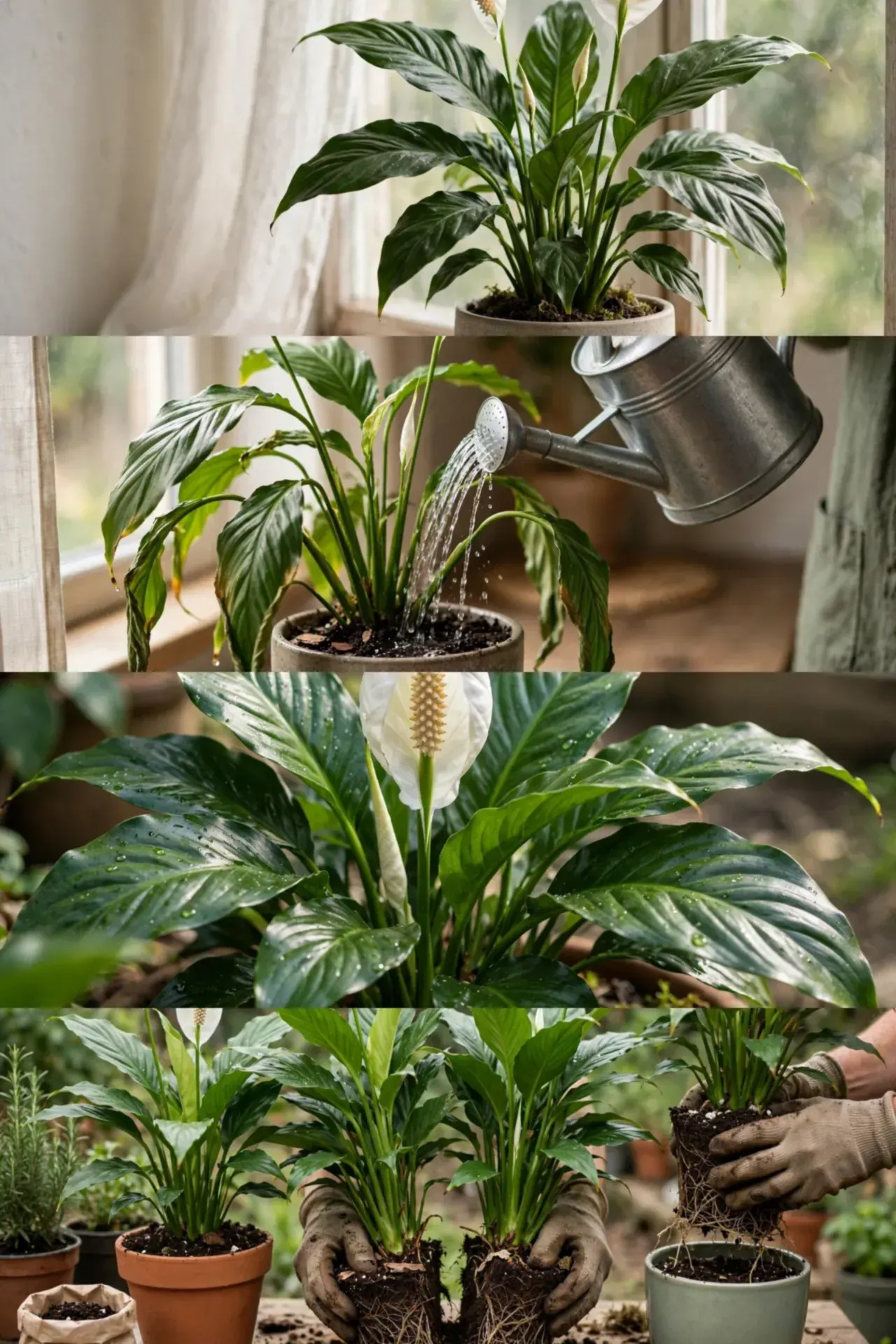
How to plant and grow peace lily, step by step
Step 1 — Choose its spot
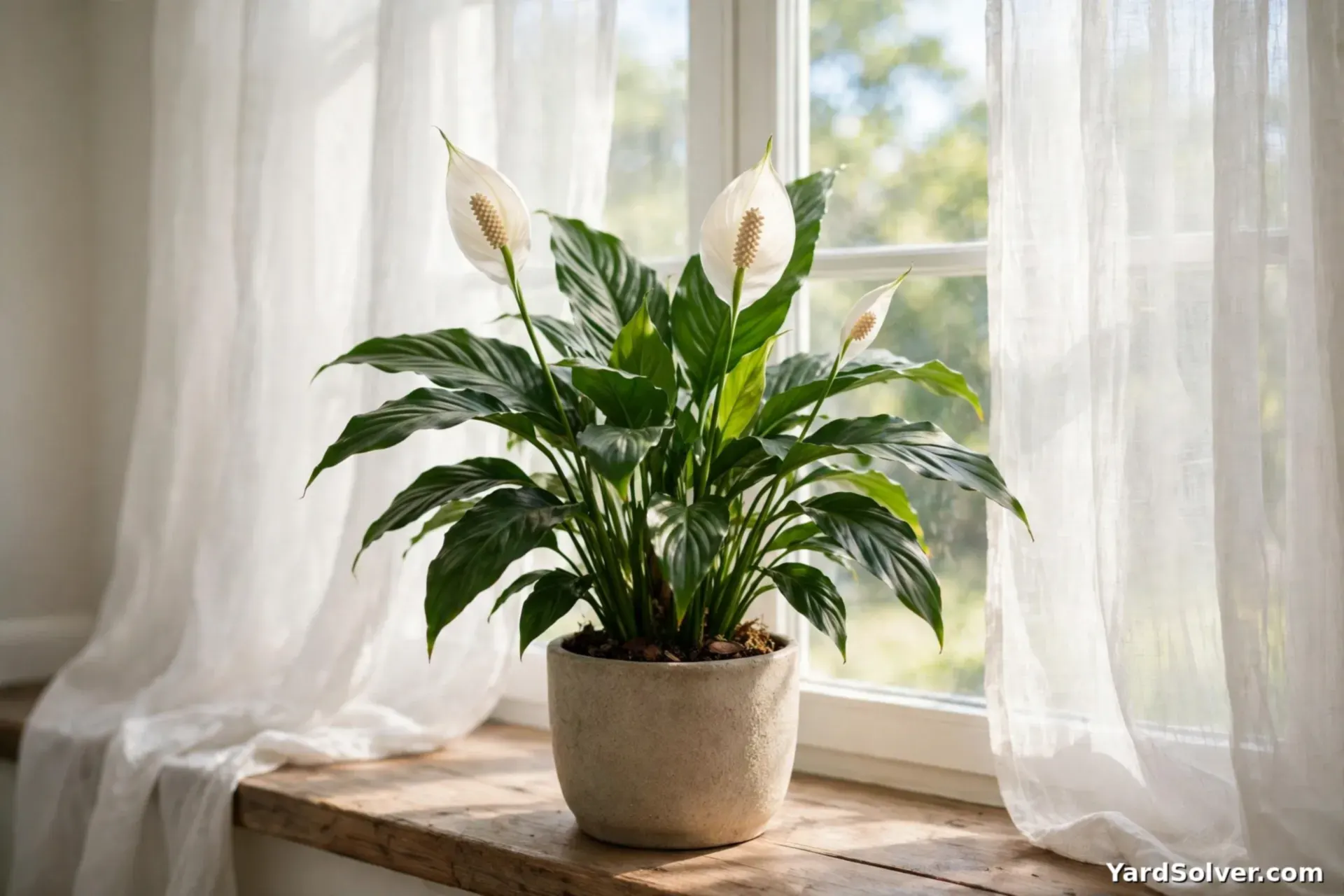
Bright indirect light suits a peace lily best — close to a bright window with the sun softened by a sheer curtain or a step back from the glass. It tolerates medium light and dim corners, which is why it survives in offices, but it blooms less there and new spathes open green instead of white. Direct sun is the one thing it cannot take: even an hour of midday sun through glass scorches pale, papery patches into the leaves that never heal. If your only window is dim, the honest trade is a leafy plant with few flowers; if you want blooms, light is the lever.
Step 2 — Pot it in a moisture-retentive but drained mix
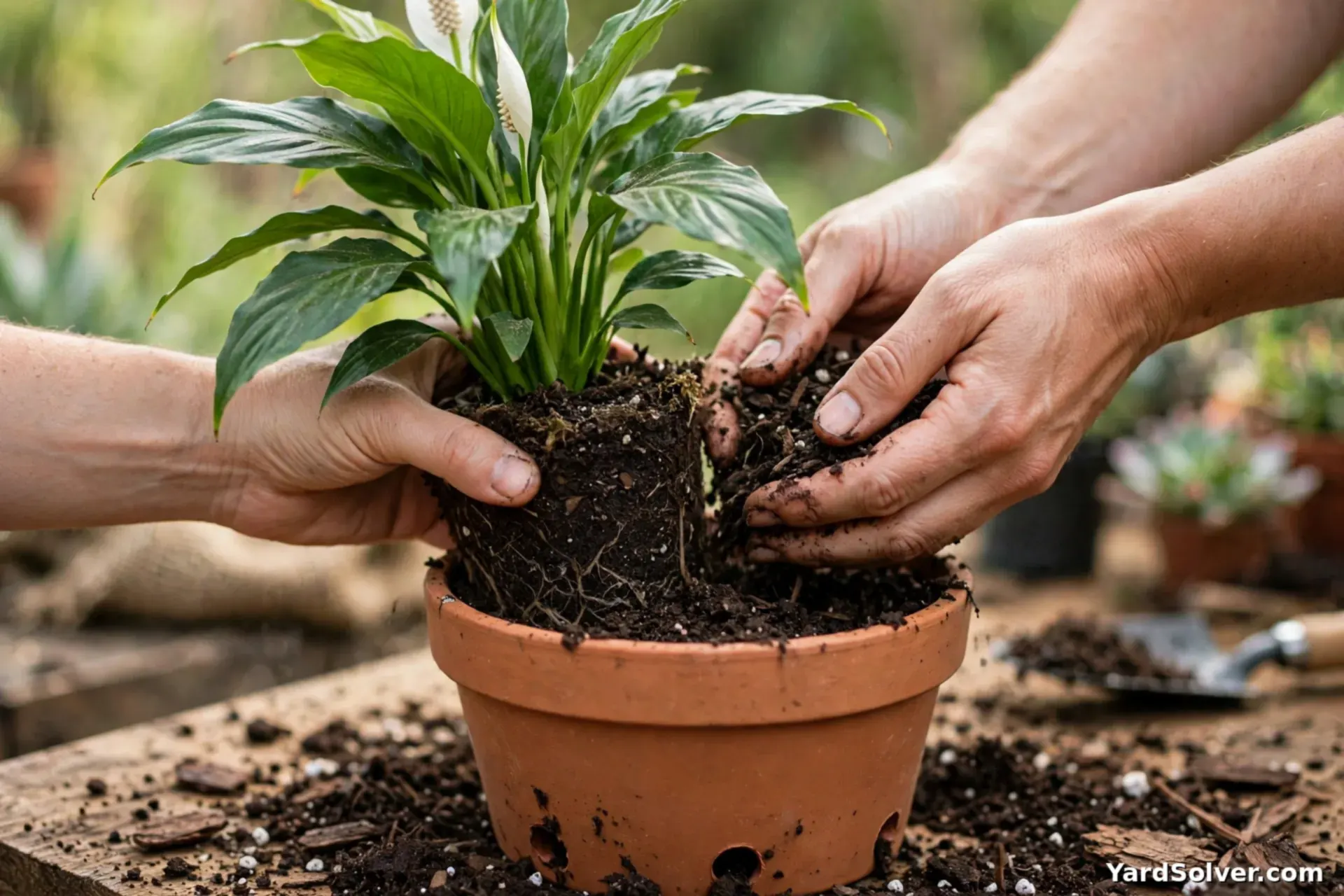
A peace lily wants the middle road: a mix that holds moisture evenly yet still drains, in a pot with drainage holes. Ordinary houseplant potting mix with a handful of perlite stirred through is right; heavy garden soil in a pot without holes is the root-rot recipe. Choose a pot only 1–2 inches wider than the root ball — a much bigger pot holds more water than the roots can use and stays soggy. Repot in spring when roots circle the bottom or the plant dries out within a day or two of watering.
Step 3 — Water when it just starts to droop
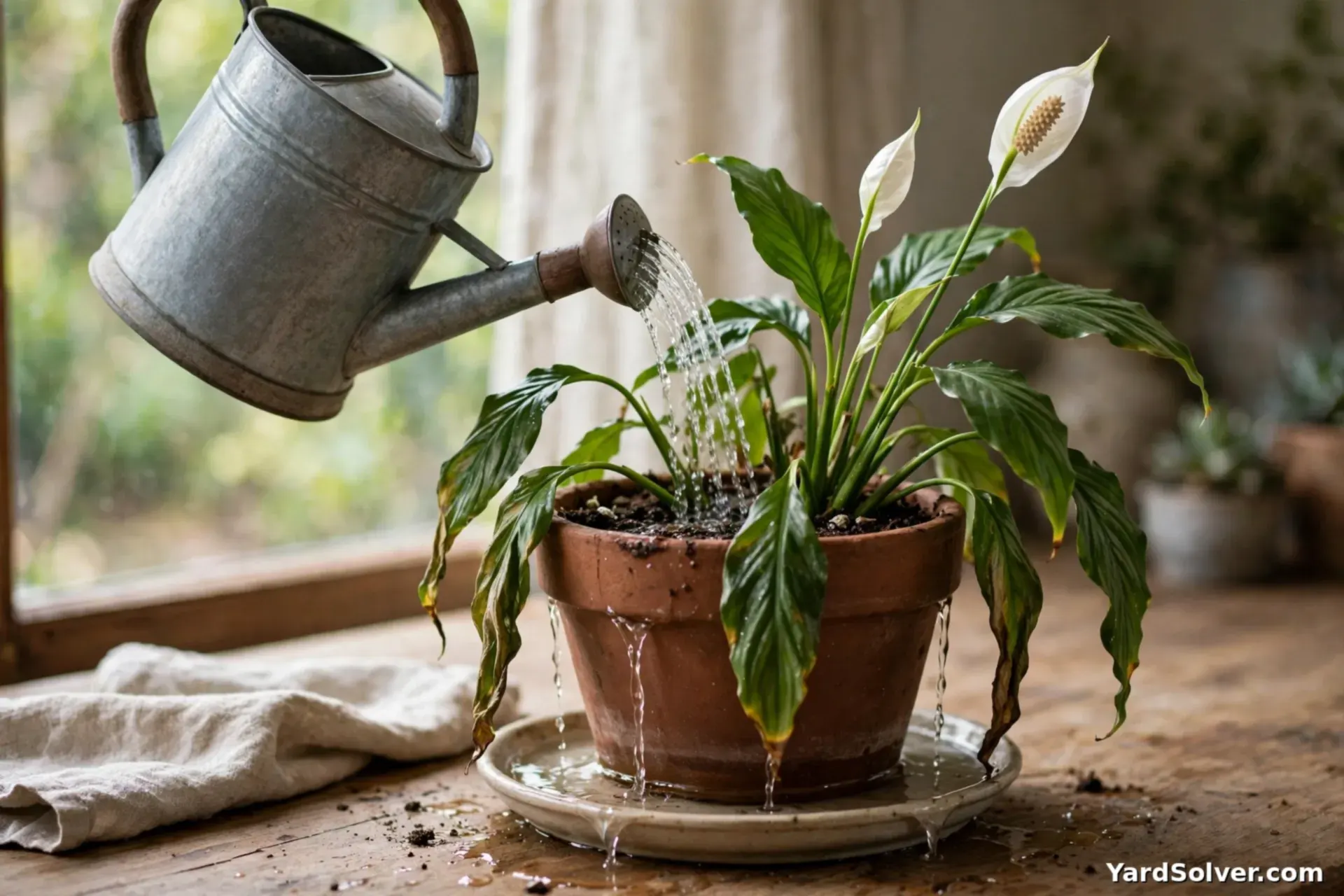
This plant comes with its own watering alarm: when the mix dries, the leaves droop. Water at the first hint of droop — about weekly in most rooms — thoroughly until it runs from the drainage holes, then empty the saucer, and the plant stands back up within hours. Do not let it faint flat every time: repeated full collapse stresses the plant and browns leaf edges, so the rhythm to learn is droop-just-starting, not droop-finished. Brown leaf tips are the other common complaint — they usually trace to salts and fluoride building up in the mix, so flush the pot with plain water every couple of months, and use rain or distilled water if tips keep browning.
Step 4 — Feed lightly for blooms
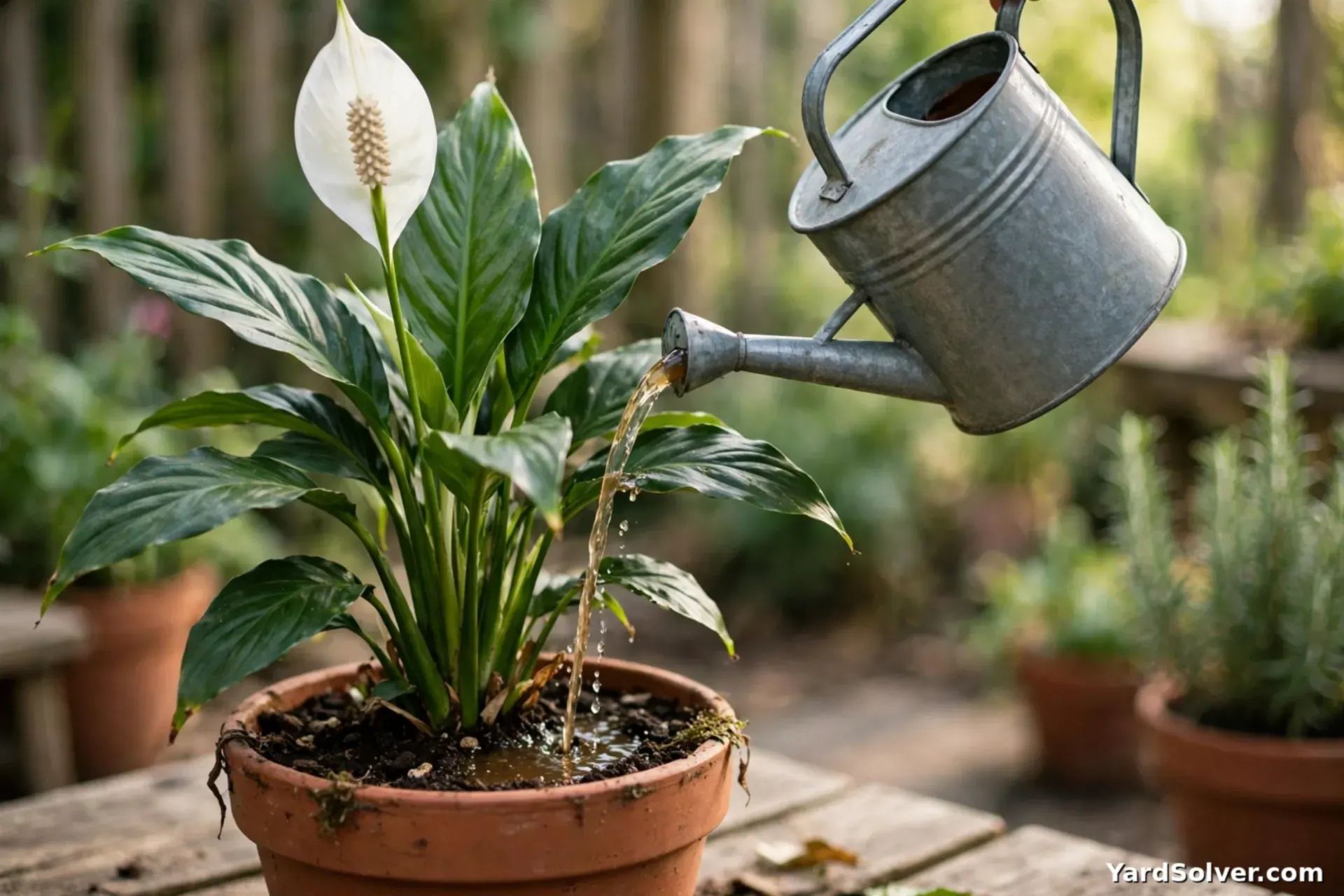
Peace lilies are light feeders, but a plant asked to flower for months needs some food: give a balanced houseplant feed once a month through spring and summer, at half the strength the label suggests, and stop over winter. Too much feed is worse than too little — it builds the salts that brown the leaf tips and pushes green, leafy growth instead of blooms. The Fertilizer Calculator works out amounts by the NPK method if you are mixing your own. A plant in good light that still will not bloom is usually a plant that has not been fed, or one that is pot-bound and ready to divide (Step 5).
Step 5 — Divide crowded clumps and remove spent spathes
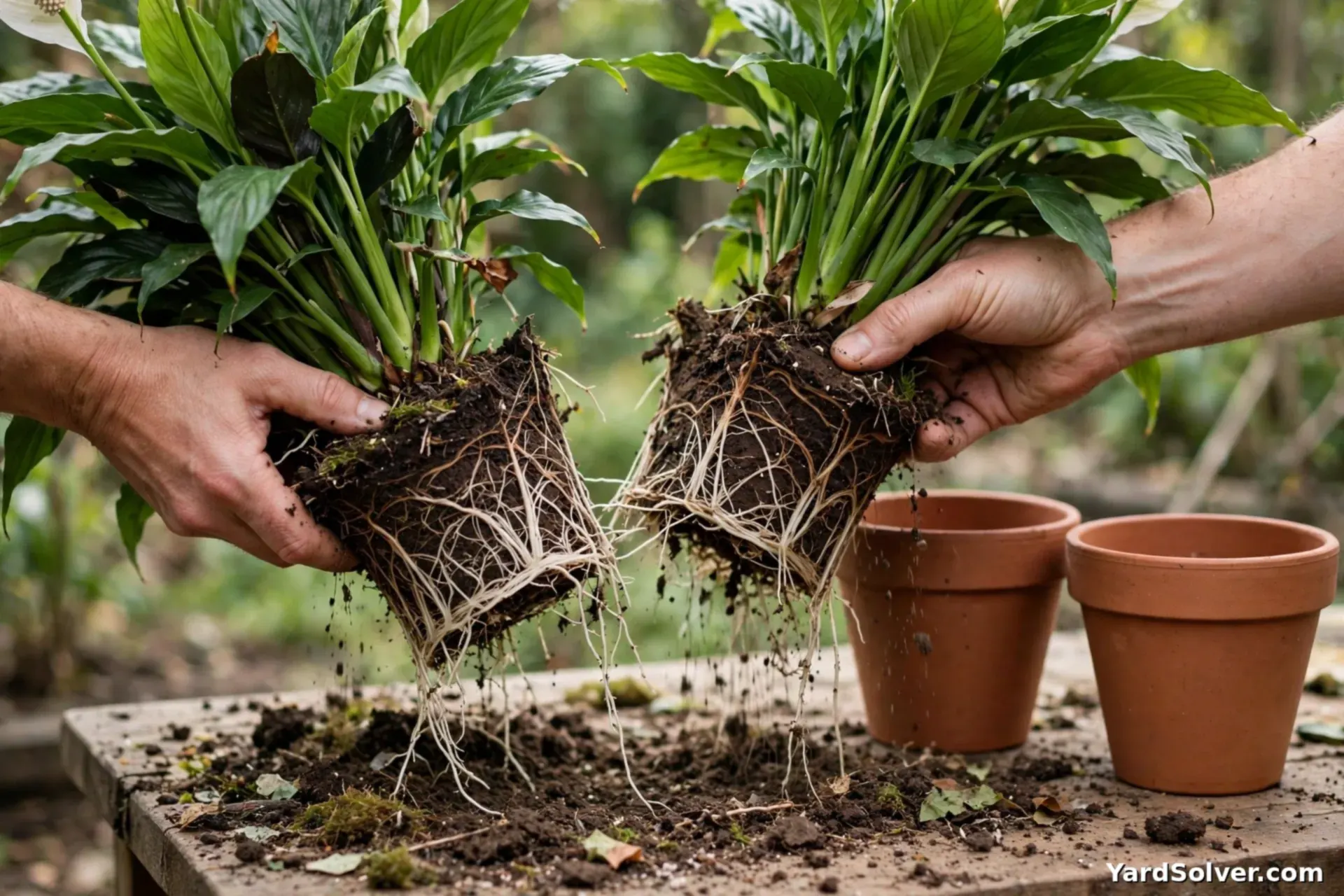
After a year or two the clump crowds its pot, flowering drops off and leaves come out smaller — that is the cue to divide in spring. Tip the plant out, tease or cut the root ball into sections, each with leaves and roots of its own, and pot each piece at the same depth in fresh mix; water in and keep the divisions in bright indirect light while they settle. All season, cut each spathe off at the base of its stalk once it turns green and then brown — a finished spathe never turns white again, and removing it sends the plant's energy into the next one.
Step 6 — Watch for the usual problems
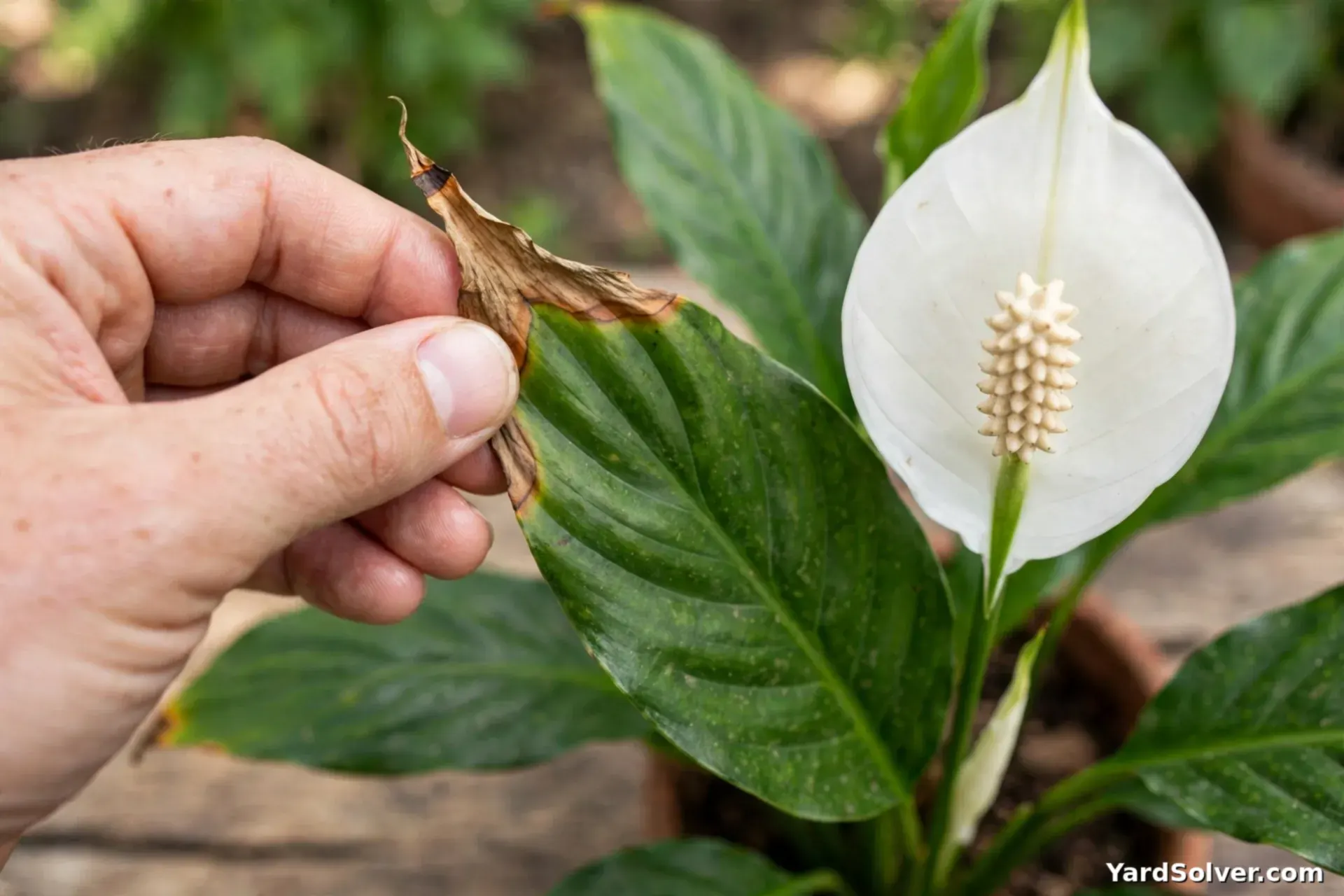
- Green spathes — too little light, or simply an ageing bloom; move brighter and cut finished spathes off.
- Brown leaf tips — salts and fluoride in the mix; flush with plain water and feed lighter.
- A droop that does not recover after watering — the roots, not the water, are the problem; the full diagnosis list follows.
Problems, pests & diseases — diagnosis and fixes
- Brown, crispy leaf tips and edges: fertiliser salts and fluoride/chlorine in tap water building up in the mix. Fix: flush the pot slowly with plain water until it runs clear, feed at half strength or less, and switch to rain or distilled water if tips keep browning on new leaves.
- Flowers opening green, or staying green: not enough light, or a spathe that is simply ageing. Fix: move gradually into brighter indirect light and feed lightly in the growing season; cut off spathes that have finished — they never whiten again.
- No blooms for months on a healthy-looking plant: usually light first, then food, then crowding. Fix: brighter indirect light, a light monthly feed in spring and summer, and divide the clump if the pot is packed solid with roots.
- Plant collapses and does not recover after watering, mix smells sour, stems soft at the base: root rot from chronically wet mix. Fix: unpot, cut roots back to firm white tissue, repot into fresh free-draining mix in a pot with drainage, and water once lightly — the general protocol is in the Overwatered Plant Rescue guide.
- Tiny black flies hovering over the pot: fungus gnats, breeding in mix that stays wet at the surface. Fix: let the top inch dry between waterings, trap adults with sticky cards, and follow the How to Get Rid of Fungus Gnats guide for the larvae.
- Whole plant yellowing, oldest leaves first, in a pot that stays wet: overwatering — the opposite face of the thirsty droop. Fix: check the mix before watering again, empty any standing water, and return to the Step 3 rhythm of watering at the first hint of droop.
📅 Your personal Peace Lily schedule
Stay with us — we'll remind you. The procedure is the button above: press "🌱 Start Peace Lily with me", set your start date and, if you like, add your email. Your plant and its start date are saved on this device straight away, the schedule below is yours to print or download as calendar reminders (.ics), and email reminders switch on with the new YardSolver accounts — the email you save today is first in line, and from your start date the reminders follow your plant's own schedule. Free, no account needed today; your email is for your plant reminders only, with an easy stop in every message.
Peace Lily is a houseplant that lives indoors year-round — it is famous for telling you when it is thirsty: the leaves droop, you water, and within hours it stands up again. Its care runs on that droop-and-recover rhythm and on light, not on days since planting, so it gets care tips instead of date reminders.
Varieties worth growing
| Variety | Colour | Why gardeners like it |
|---|---|---|
| 'Mauna Loa' | White | The classic houseplant form — reliable white spathes on a medium plant that suits most rooms |
| 'Sensation' | White | The giant of the family — very large leaves and spathes, a floor-plant statement that needs real space |
| 'Domino' | White | Variegated leaves splashed and streaked with white, so it earns its place even when not in bloom |
| 'Petite' | White | A compact form for shelves and desks, with smaller leaves and frequent small spathes |
| 'Clevelandii' | White | A free-flowering form with long, elegant spathes held well above the foliage |
Good for you — and take care
Benefits
- One of the few houseplants that flowers reliably indoors in ordinary room light — no greenhouse needed
- It tells you when it is thirsty by drooping, then recovers within hours — watering guesswork removed
- Lush, glossy foliage that fills a shady corner where most flowering plants refuse to bloom
- Easy to divide in spring, so one crowded plant becomes several free plants
Take care
- Poisonous if eaten — the leaves contain calcium oxalate crystals that irritate the mouth and stomach; keep it out of reach of pets and small children
- Fertiliser salts brown the leaf tips: feed lightly, flush the pot every couple of months, and use rain or distilled water if tips keep browning
- The spathes shed a fine pollen dust as they age — wipe leaves with a damp cloth so the plant can breathe and look its best
A little history — and one good fact
Peace lilies (Spathiphyllum) grow in the shaded understory of rainforests in tropical Central and South America, where they root in damp leaf litter beneath the canopy — which is why they accept the indirect light and steady moisture of a living room so well. Victorian growers brought them indoors, and the white spathe, held like a small flag of surrender or peace above the leaves, gave the plant its common name.
Fun fact: The white “flower” is not a petal at all — it is a spathe, a modified leaf, wrapped around a knobbly spike (the spadix) that carries the true, tiny flowers.
Keep going
Guides: Overwatered Plant Rescue · How to Get Rid of Fungus Gnats · How Often to Water a Snake Plant · Poinsettia After Christmas
Calculators: Fertilizer Calculator · All calculators
More houseplants: Philodendron · ZZ Plant · Monstera
← Back to the Plant Library · Get your personal planting dates
Questions people ask
Why are my peace lily flowers green?
Usually light, plus age. The white spathes need bright indirect light to form white — in dim corners new blooms open green, and every spathe also fades to green as it ages before it browns. Move the plant gradually into brighter indirect light, feed lightly in spring and summer, and cut off spathes that have finished; fresh blooms in better light come back white.
How often do I water a peace lily?
About weekly — water when the leaves just begin to droop, then water thoroughly until it drains and empty the saucer. A peace lily that has only just started to wilt recovers within hours of watering. Letting it faint flat every time stresses the plant, so aim for the first hint of droop, not the full collapse.
Is a peace lily poisonous to cats?
Yes. Peace lily leaves contain calcium oxalate crystals that irritate the mouth and stomach if chewed, for cats, dogs and people alike. It is an irritant rather than a true lily — it is not one of the lilies that cause kidney failure in cats — but keep it where pets cannot chew the leaves.