
Plant Library · Vegetables
🎃 How to Grow Bottle Gourd
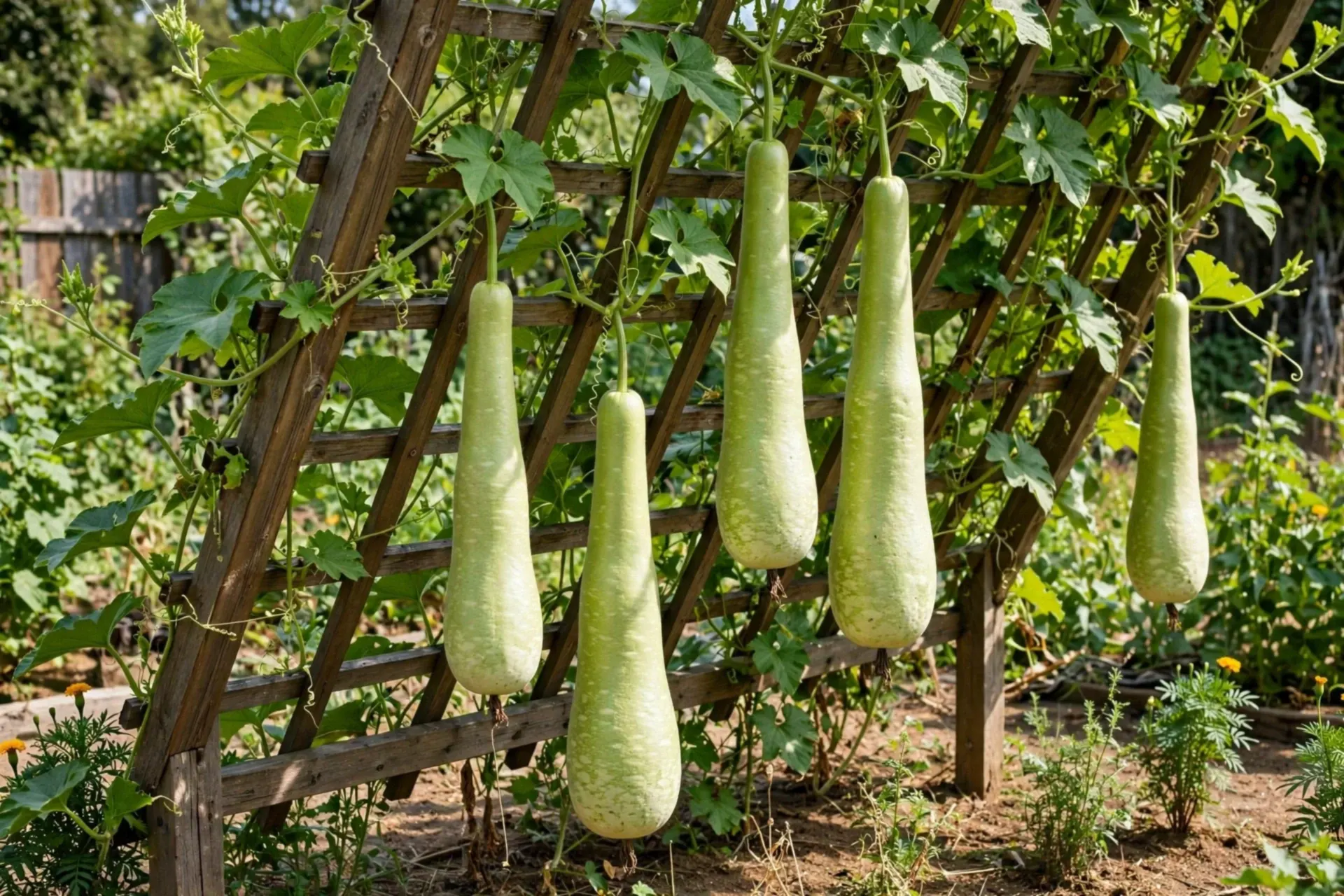
One plant, two harvests: pick young bottle gourds soft for the pot, or leave fruit on the vine all season to dry into hard-shelled bottles and bowls — either way it needs a long, hot season and plenty of room. Bottle gourd is one of humanity's oldest crops — grown not just as a vegetable, picked young and tender, but as a container: fruit left to ripen and dry turns into lightweight, watertight bottles, bowls and dippers. The vine is huge and tropical: give it a strong trellis or the corner of the garden, and the longest, hottest season you can.
Grow Bottle Gourd with us — step by step
Everything for this plant is written step by step below — what to do, and exactly when. Read it through first if you like: you can grow it entirely on your own with that guide. Or start with us here — tell us your planting day and we lay out your personal schedule on this page, every next step on its own day, counted from your planting date. No guessing, no forgetting.
Step 1 — today: Sow Bottle Gourd seed today where the vine will grow — beside its trellis or at the garden's edge — 1 in deep, and water in well. Soak the seed overnight first for a faster start.
Bottle Gourd at a glance
Sow indoors: 3 weeks before last frost
Sow outdoors: 1 week after last frost
Spacing: 36–48 in · Seed depth: 1 in
Sun: Full sun
Water: Deep weekly watering at the base
Harvest: 60–75 days for young eating gourds; hard shells at 90–120 days
Timing counts from your average last spring frost — get your own dates in the Planting Calendar. Guidance follows standard extension-service practice for Canada and the US.
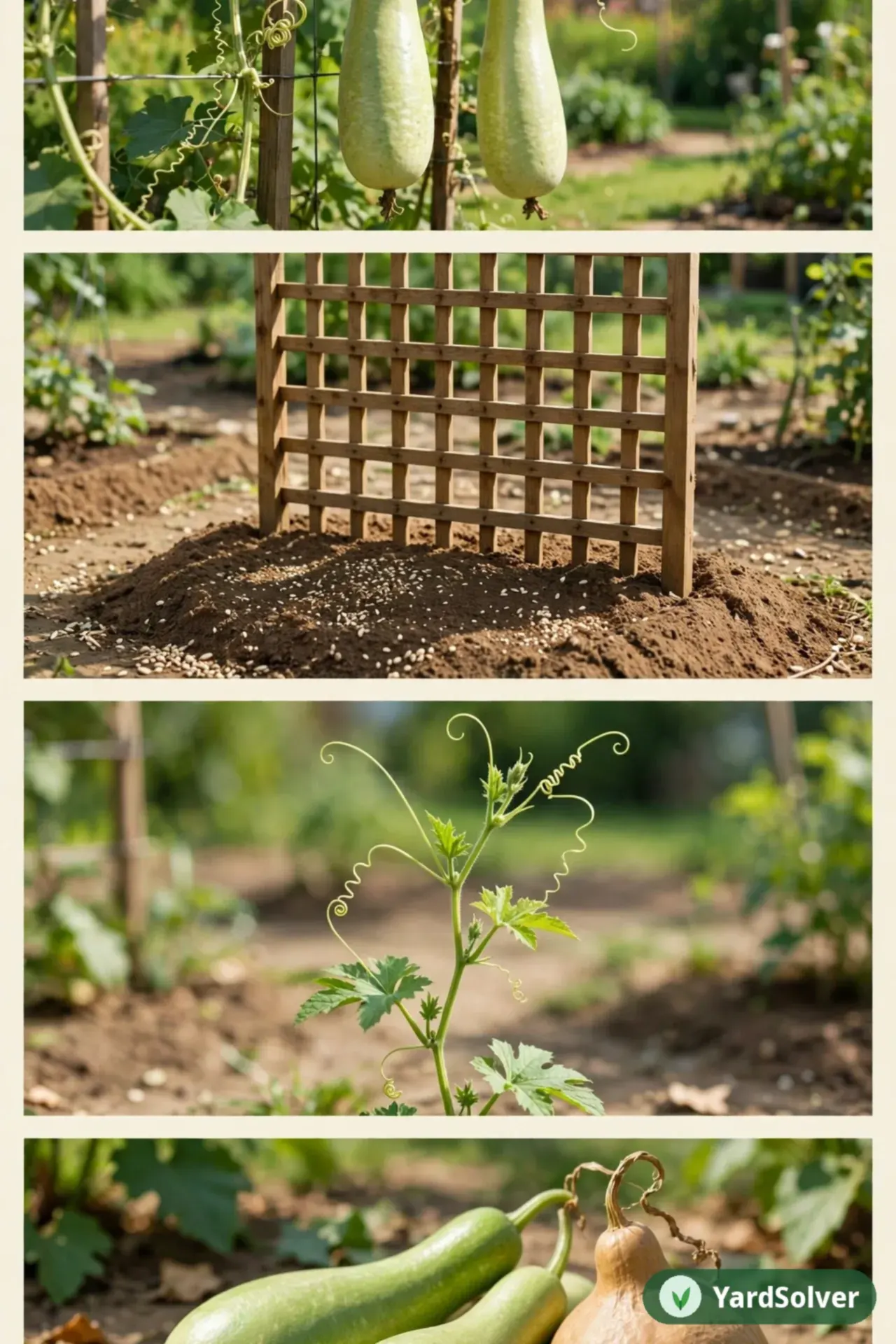
How to plant and grow bottle gourd, step by step
Step 1 — Time it right
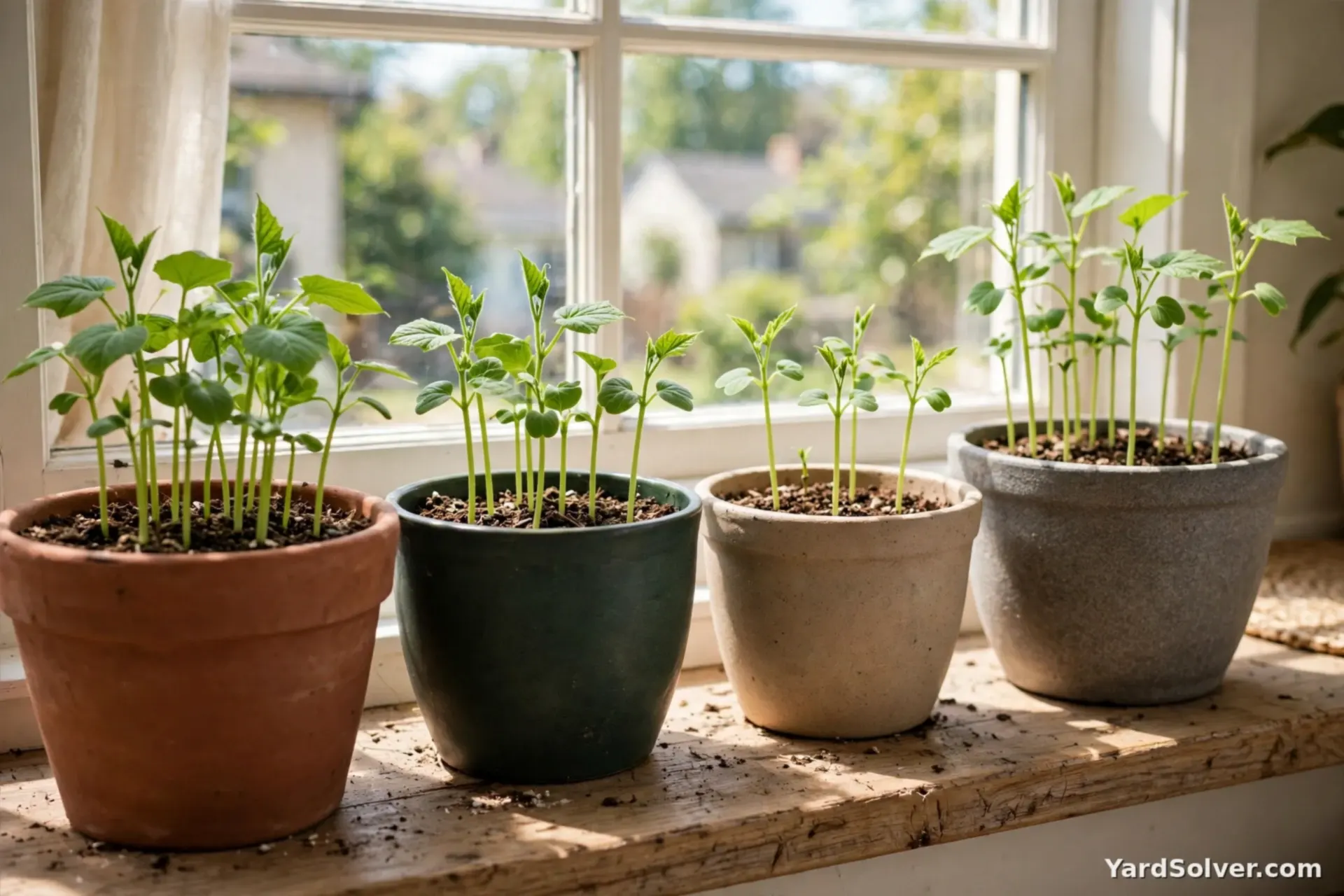
Sow indoors: 3 weeks before last frost; Sow outdoors: 1 week after last frost. All dates count from your average last spring frost — the Planting Calendar turns them into real dates for your garden. Bottle gourd is one of humanity's oldest crops — grown not just as a vegetable, picked young and tender, but as a container: fruit left to ripen and dry turns into lightweight, watertight bottles, bowls and dippers. The vine is huge and tropical: give it a strong trellis or the corner of the garden, and the longest, hottest season you can.
Step 2 — Prepare the spot
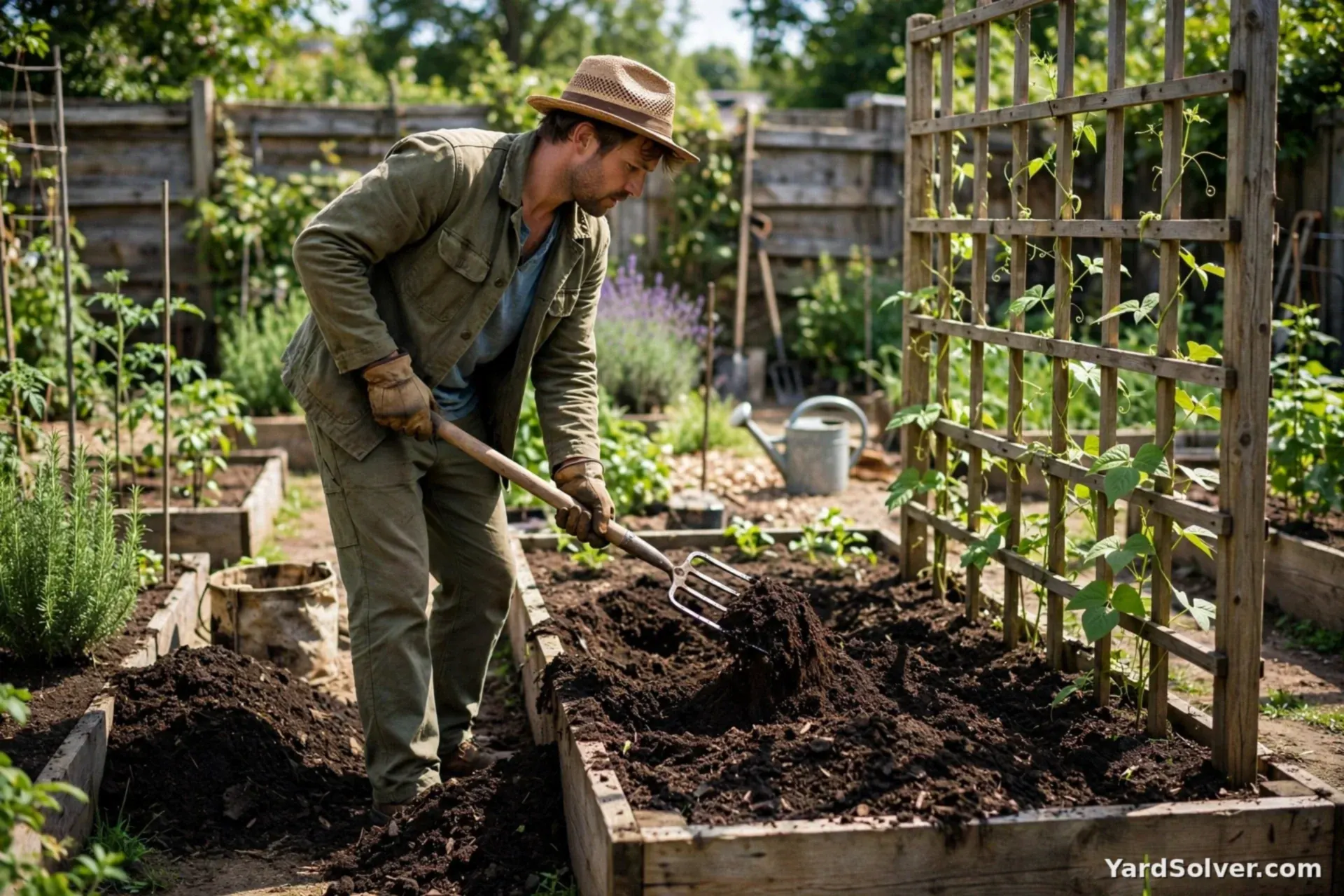
Sun: Full sun. Deep, rich soil in full sun with room to roam — work in compost or manure before sowing, and choose the trellis or fence line before the vine chooses for you. Work out how much you need with the Garden Mix Calculator or the Raised Bed Soil Calculator.
Step 3 — Sow and plant out
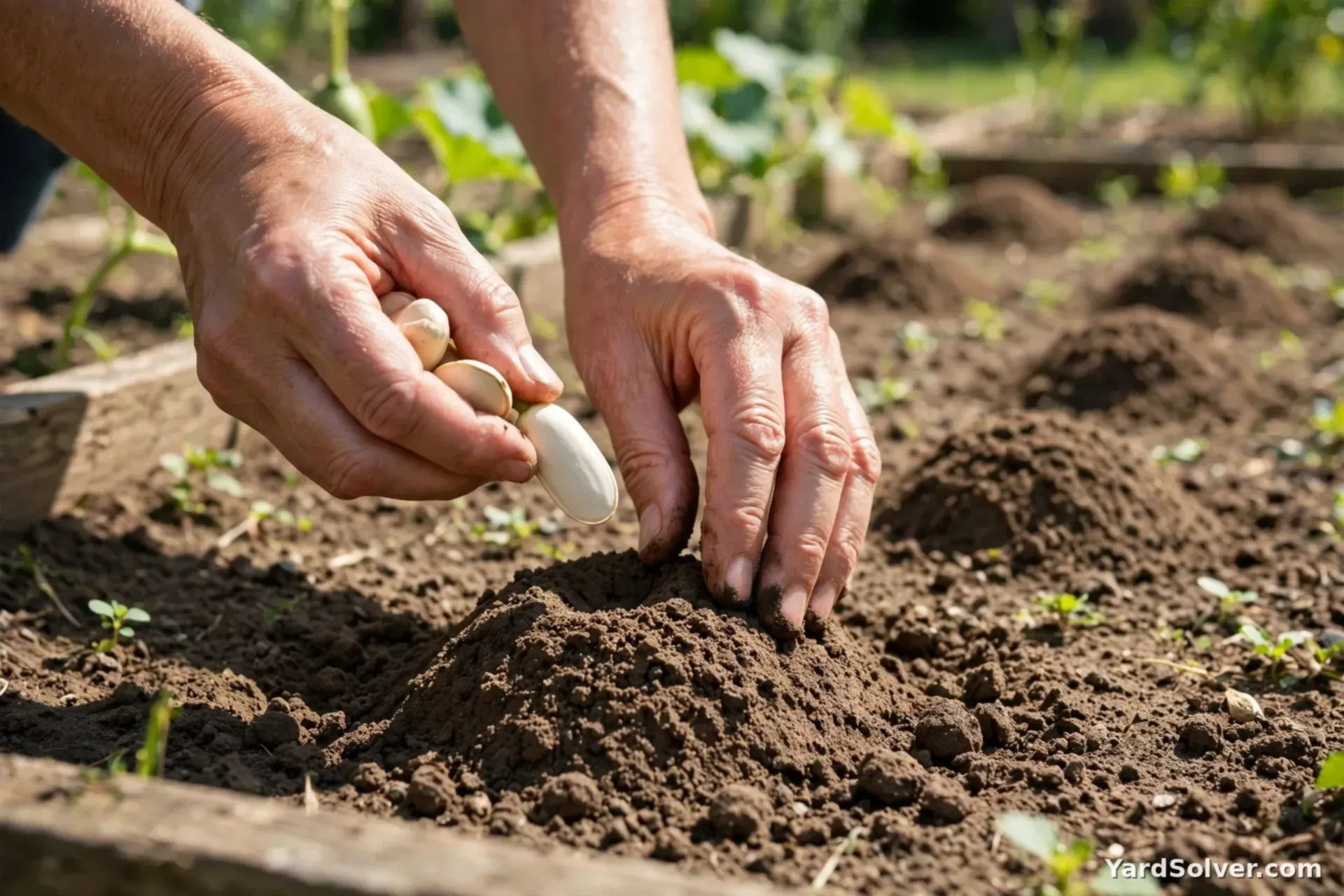
Sow directly where it will grow, 1 week after last frost, 1 in deep and 36–48 in apart — soak seed overnight or nick the coat to speed sprouting. The Seed Calculator works out how much seed a bed needs. In short-season gardens, start seed indoors 3 weeks before last frost in large pots and transplant gently, roots undisturbed.
Step 4 — Water and feed
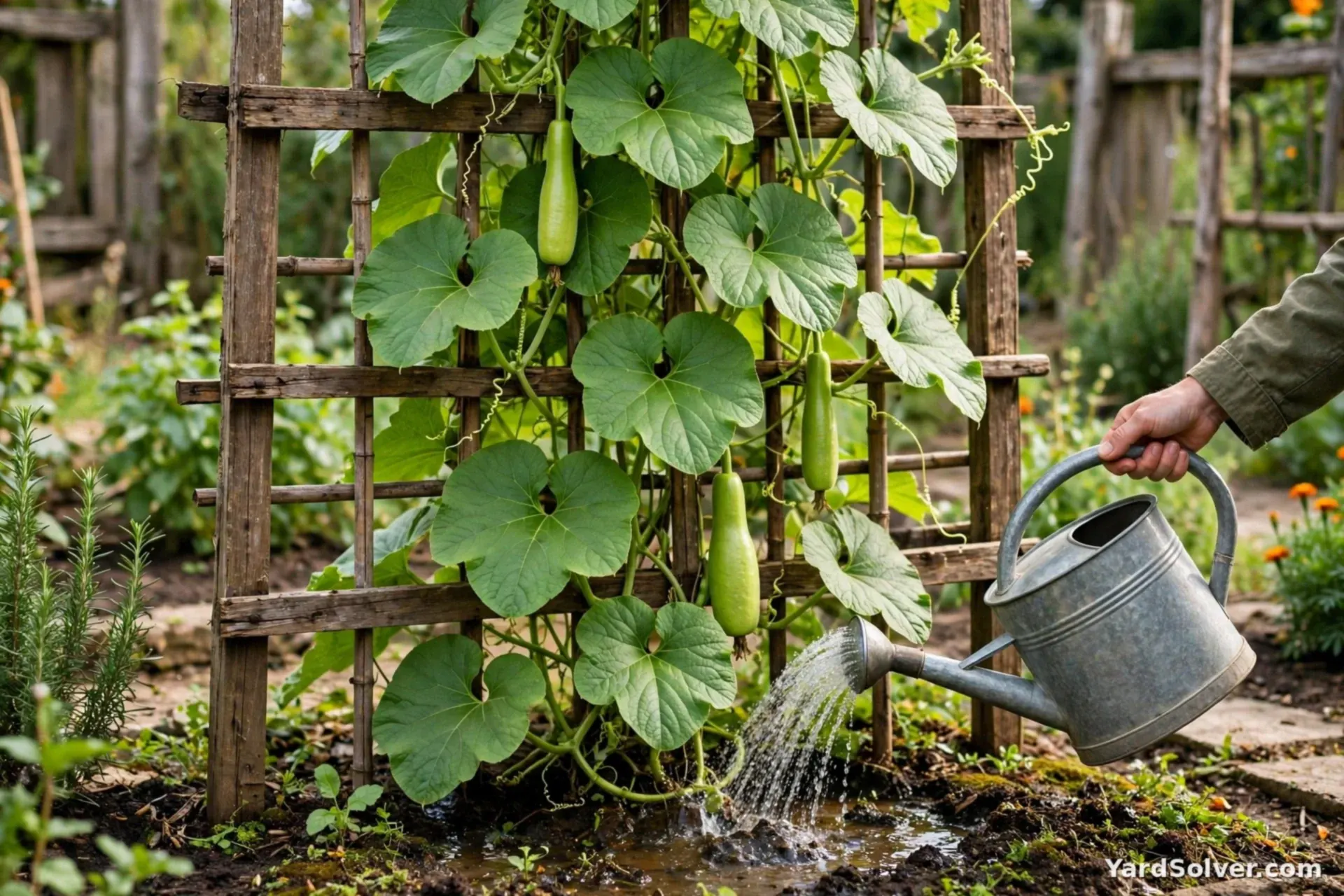
Water: Deep weekly watering at the base. The Fertilizer Calculator turns a bed size into the right amount.
Step 5 — Care and the problems to watch for
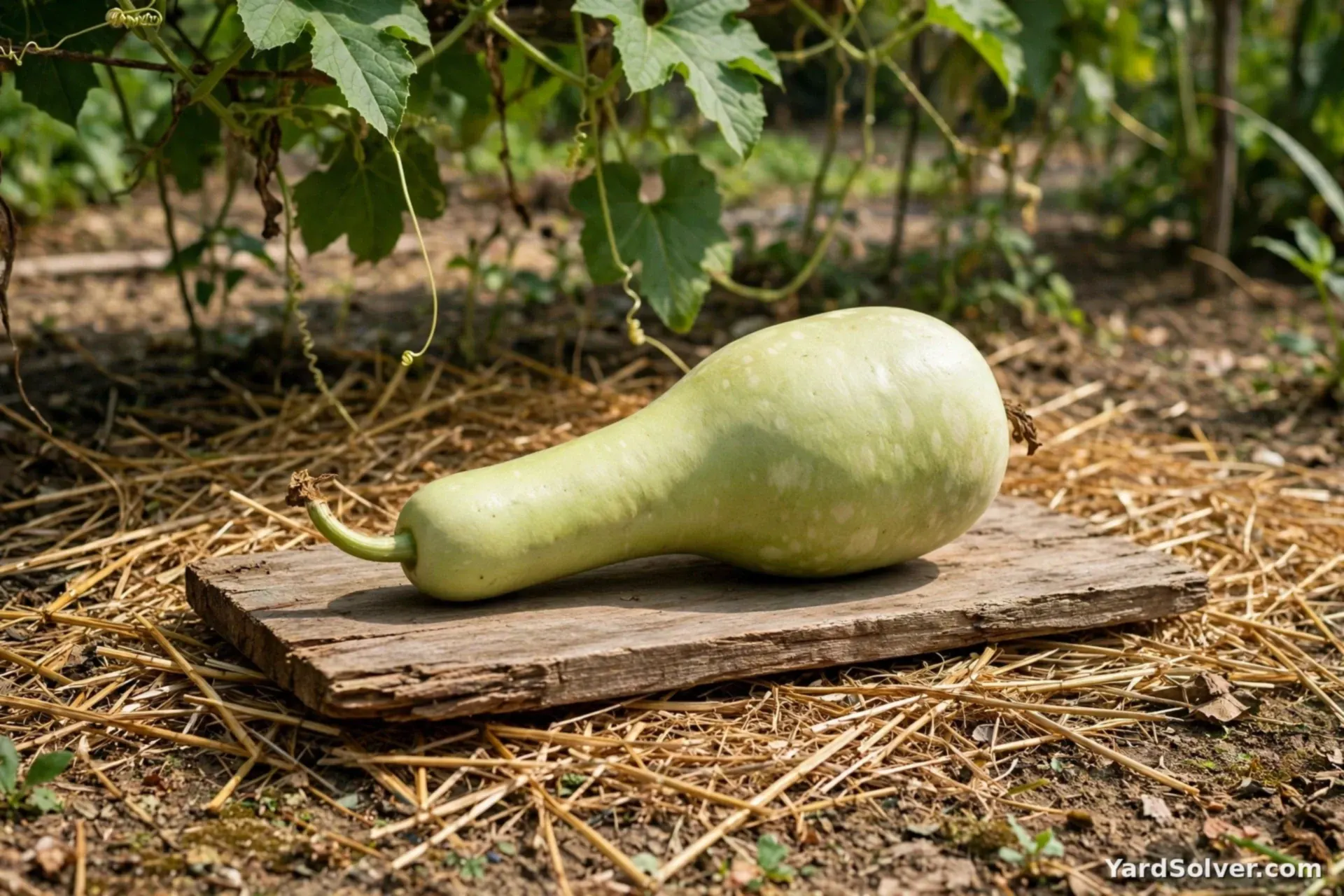
- Fruit rotting where it touches soil — train vines up, or slip a board or straw under resting fruit.
- Many flowers, no fruit — female flowers open at night and need moths or hand-pollination; move pollen with a soft brush in the evening.
- Powdery mildew on the big leaves late in the season — mostly cosmetic on a vigorous vine; water at the base, not over the leaves.
Take care: Only eat bottle gourd while it is young and mild — if a piece tastes bitter, spit it out and do not eat the rest; bitterness in cucurbits is a warning sign.
Step 6 — Harvest
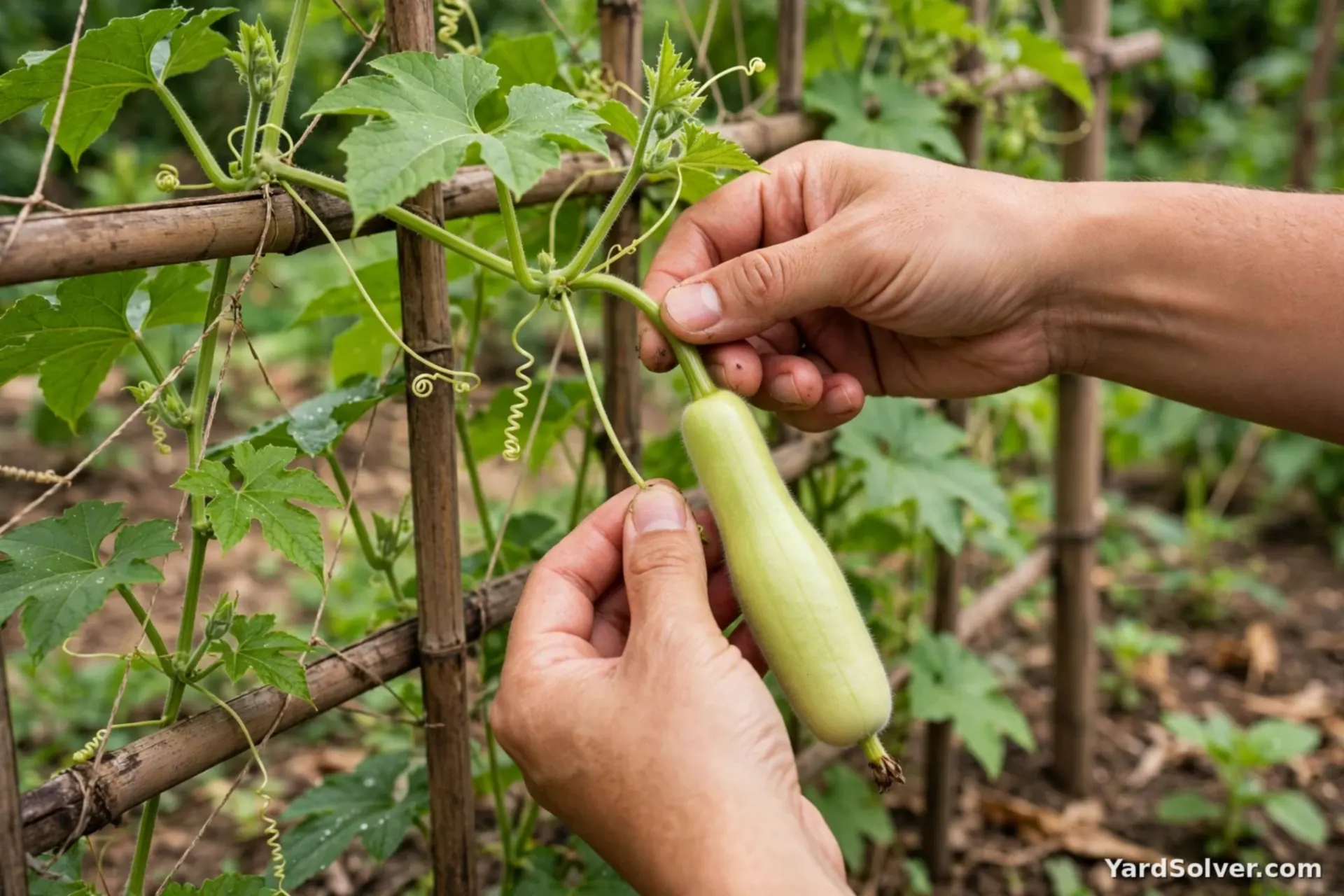
Ready in: 60–75 days for young eating gourds; hard shells at 90–120 days. Eating gourds are picked from about day 60 while tender; craft gourds stay on the vine until the stem browns and the shell hardens, then dry for weeks in an airy place.
📅 Your personal Bottle Gourd schedule
Counted from your planting day — not a generic calendar. Day 0 is the day the seed went in the ground or the young plant went out.
Varieties worth growing
| Variety | Colour | Why gardeners like it |
|---|---|---|
| Lauki (Indian Long) | Pale green | The classic eating type — long, smooth fruit picked young for curries and soups |
| Opo (Chinese Long) | Pale green | A long, mild eating gourd — the opo squash of Chinese and Filipino kitchens |
| Birdhouse | Tan shell when dry | Grown for crafts — dipper and birdhouse shapes that dry hard and light |
| Bushel | Tan shell when dry | Huge round gourds that dry into bowls and storage pots |
| Cucuzzi | Pale green | An Italian serpent-type eating gourd — very long and tender young |
Good for you — and take care
Benefits
- Provides vitamin C and small amounts of B vitamins
- Very low in calories — mostly water when young
- A source of fibre that supports good digestion
- Mild and easy to digest when young — a traditional invalid food in several cuisines
- Dried shells replace plastic bottles and bowls in the garden shed
Take care
- If bottle gourd tastes bitter, do not eat it — bitter cucurbit juice can be genuinely harmful
- Eat only young, tender fruit; old fruit is for drying, not the pot
- Wash fruit well; the young skin is often lightly fuzzy
A little history — and one good fact
Bottle gourd may be the first plant humans ever truly farmed — grown in Africa over 10,000 years ago and carried, perhaps even by ocean currents, to Asia and the Americas long before Columbus. Dried gourds served as bottles, floats, bowls, spoons and musical instruments on every continent.
Fun fact: Bottle gourd is one of the few crops found in ancient sites in both the Old World and the Americas — its hard, floating fruit can survive months at sea.
Keep going
Guides: How to Grow Cucumbers Vertically · How to Get Rid of Powdery Mildew · Putting Your Garden to Bed
Calculators: Plant Spacing Calculator · Seed Calculator · Fertilizer Calculator · Garden Mix Calculator
More vegetables: Zucchini · Cucumber · Chayote
← Back to the Plant Library · Get your personal planting dates
Questions people ask
When do I plant bottle gourd?
Count from your average last spring frost: sow indoors 3 weeks before last frost; sow outdoors 1 week after last frost. Bottle gourd is one of humanity's oldest crops — grown not just as a vegetable, picked young and tender, but as a container: fruit left to ripen and dry turns into lightweight, watertight bottles, bowls and dippers. The vine is huge and tropical: give it a strong trellis or the corner of the garden, and the longest, hottest season you can.
How far apart do I space bottle gourd?
Space plants 36–48 in apart, with seed sown 1 in deep. Sun: full sun.
When is bottle gourd ready to harvest?
60–75 days for young eating gourds; hard shells at 90–120 days. One plant, two harvests: pick young bottle gourds soft for the pot, or leave fruit on the vine all season to dry into hard-shelled bottles and bowls — either way it needs a long, hot season and plenty of room.