
Plant Library · Vegetables
🌿 How to Grow Chayote
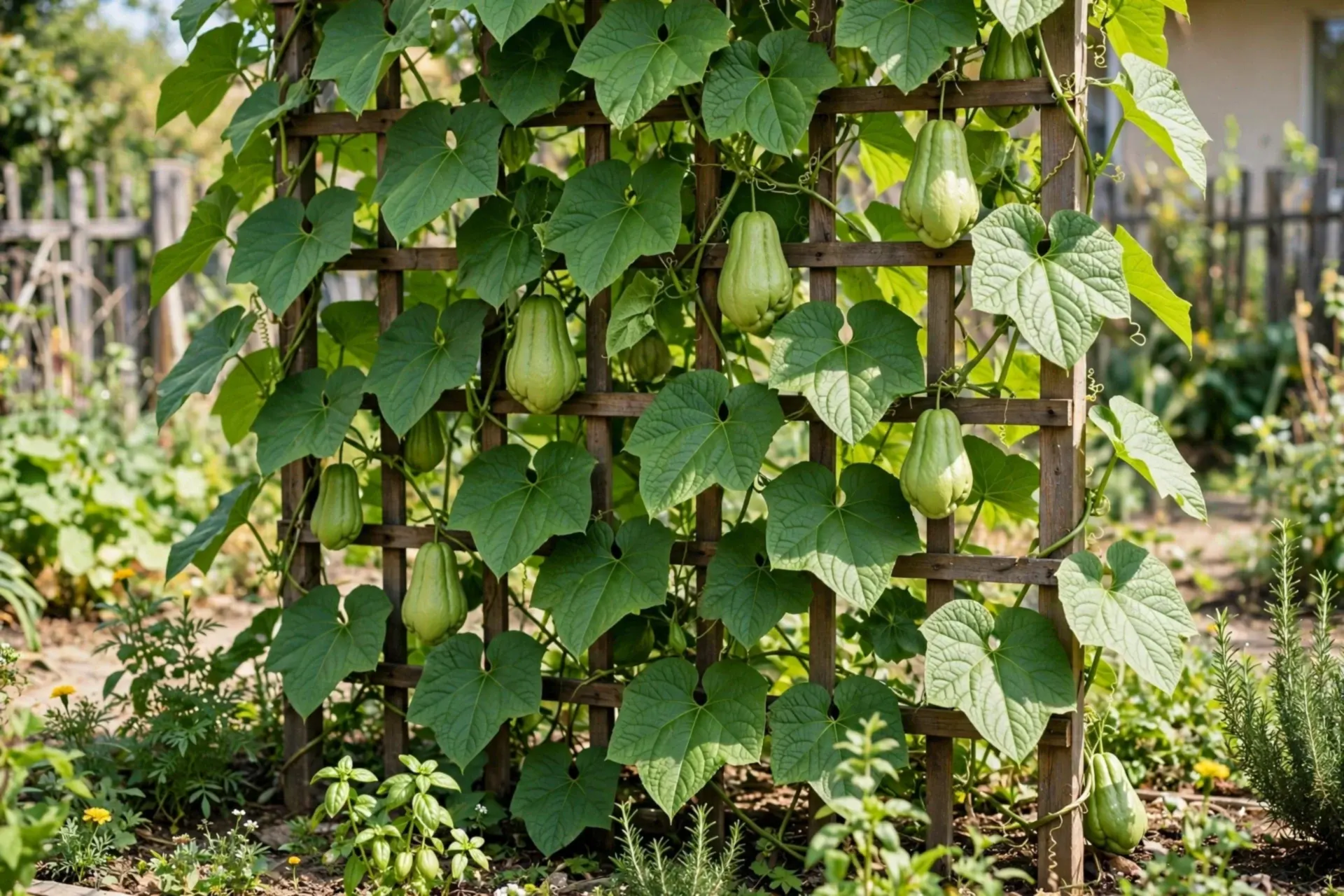
A tropical perennial vine grown from a whole sprouted fruit, not seed: it needs 4–5 months of warm, frost-free weather and a strong trellis — in cooler gardens it is a fun experiment for the longest-season spot only. Chayote breaks every rule on this page: you do not sow a seed at all — you plant a whole fruit, which sprouts a vine from its broad end. It is a tropical perennial that needs a long, hot, frost-free season (120–150 days) and something strong to climb. In warm gardens one plant is generous; in cool gardens, grow it as a hopeful experiment in your hottest corner.
Grow Chayote with us — step by step
Everything for this plant is written step by step below — what to do, and exactly when. Read it through first if you like: you can grow it entirely on your own with that guide. Or start with us here — tell us your planting day and we lay out your personal schedule on this page, every next step on its own day, counted from your planting date. No guessing, no forgetting.
Step 1 — today: Plant your sprouted Chayote fruit today on its side at the foot of a strong trellis, covered with 2–3 in of soil, sprout pointing up, and water in well. One plant per trellis — it will cover the rest itself.
Chayote at a glance
Sow indoors: 8 weeks before last frost
Move outside: 3 weeks after last frost
Spacing: 48–60 in · Seed depth: 2–3 (whole fruit) in
Sun: Full sun
Water: Deep and regular — a big, thirsty vine
Harvest: 120–150 days after transplant, where the season allows
One fruit = one plant: the whole fruit is planted and sprouts from within — there is no separate seed to extract
Frost: strictly frost-tender — even a light frost kills the vine
Timing counts from your average last spring frost — get your own dates in the Planting Calendar. Guidance follows standard extension-service practice for Canada and the US.
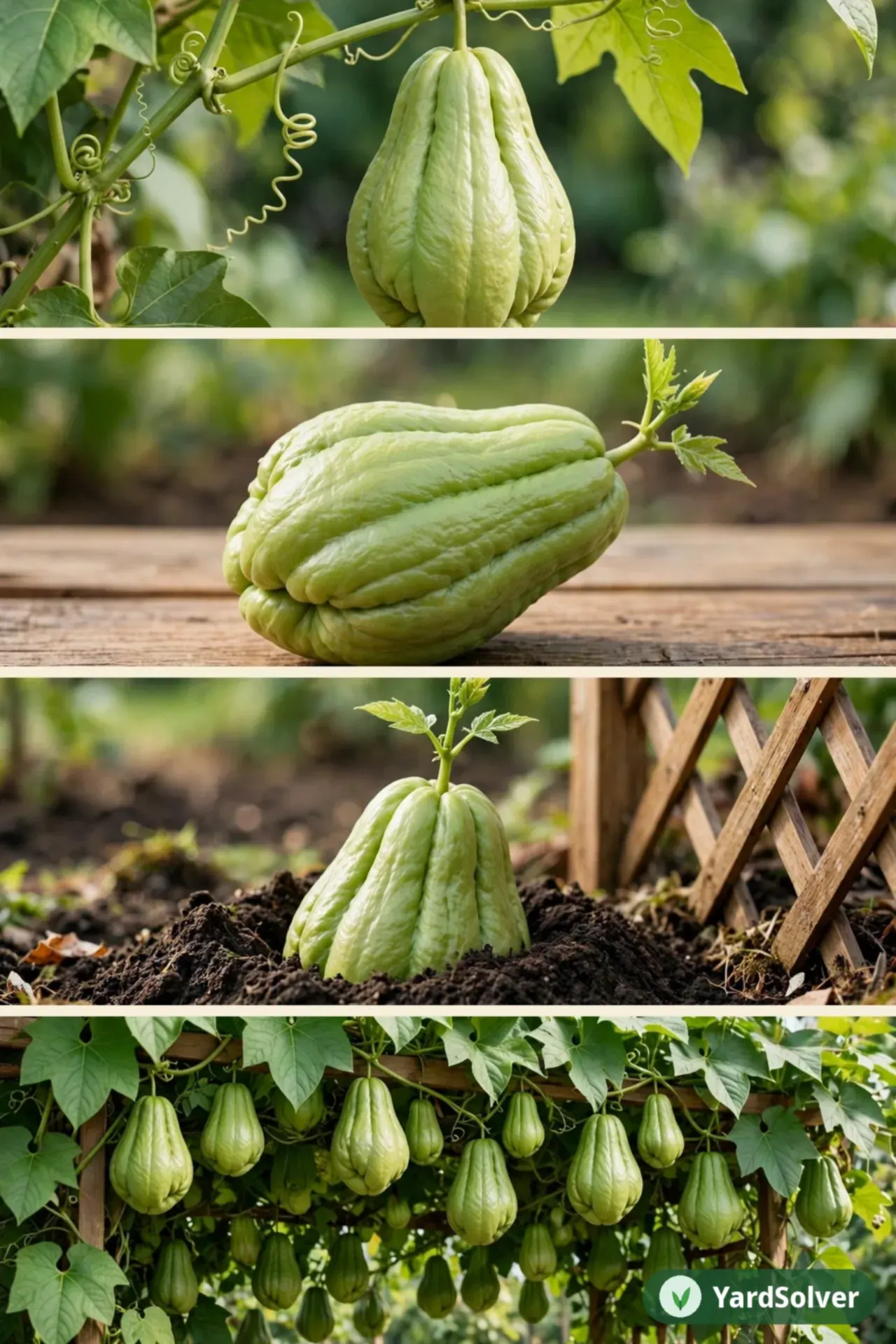
How to plant and grow chayote, step by step
Step 1 — Time it right
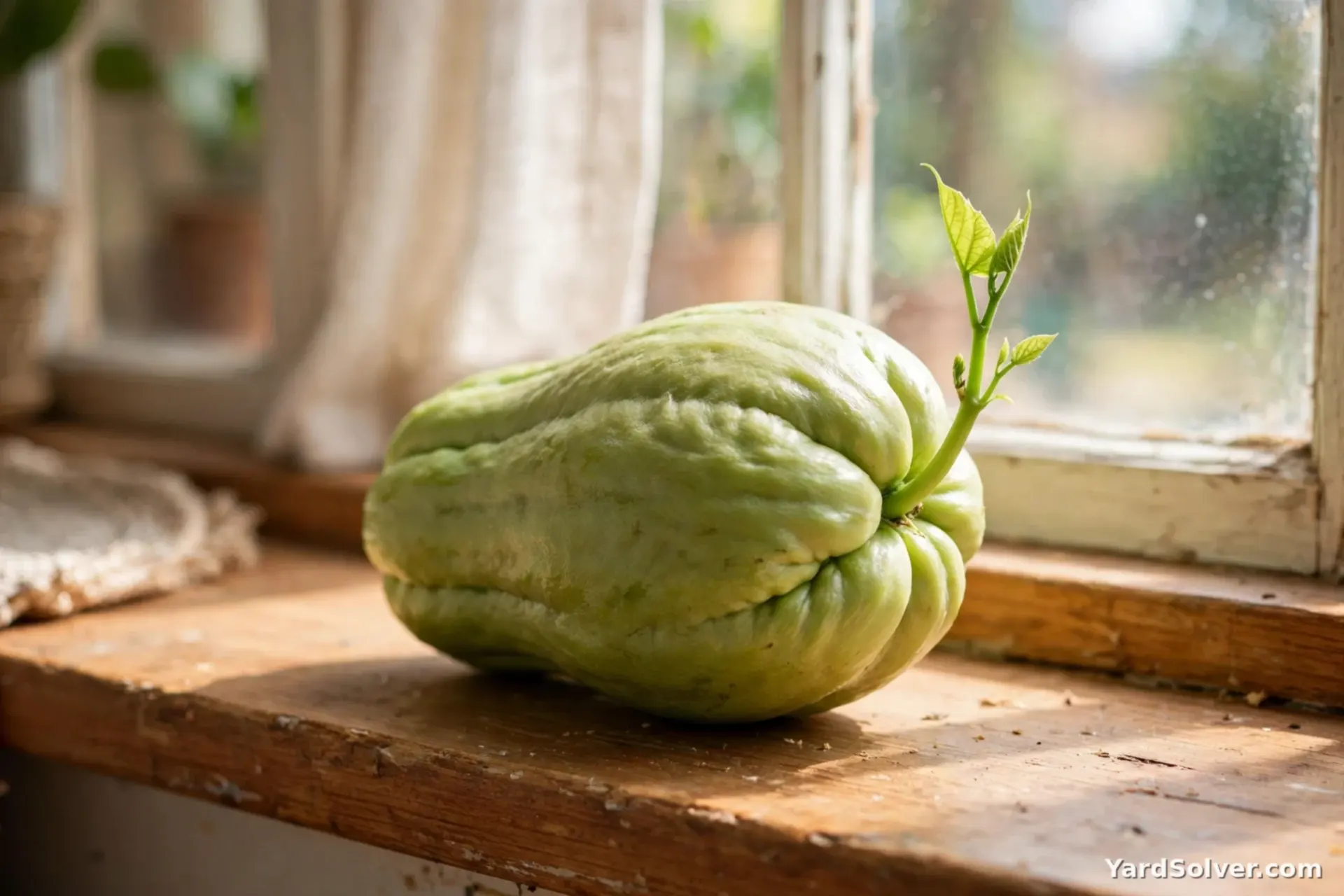
Sow indoors: 8 weeks before last frost; Move outside: 3 weeks after last frost. All dates count from your average last spring frost — the Planting Calendar turns them into real dates for your garden. Chayote breaks every rule on this page: you do not sow a seed at all — you plant a whole fruit, which sprouts a vine from its broad end. It is a tropical perennial that needs a long, hot, frost-free season (120–150 days) and something strong to climb. In warm gardens one plant is generous; in cool gardens, grow it as a hopeful experiment in your hottest corner.
Step 2 — Prepare the spot
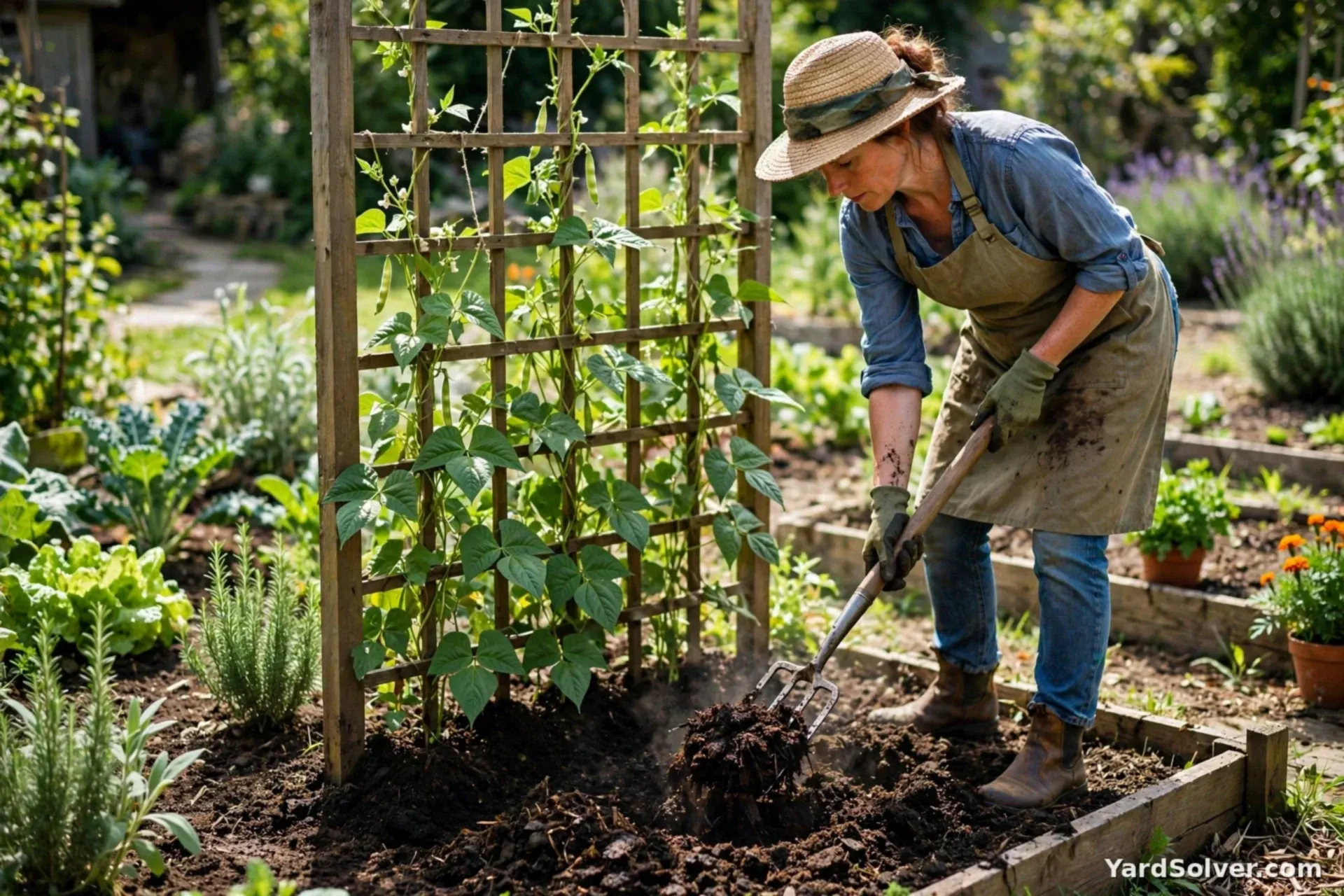
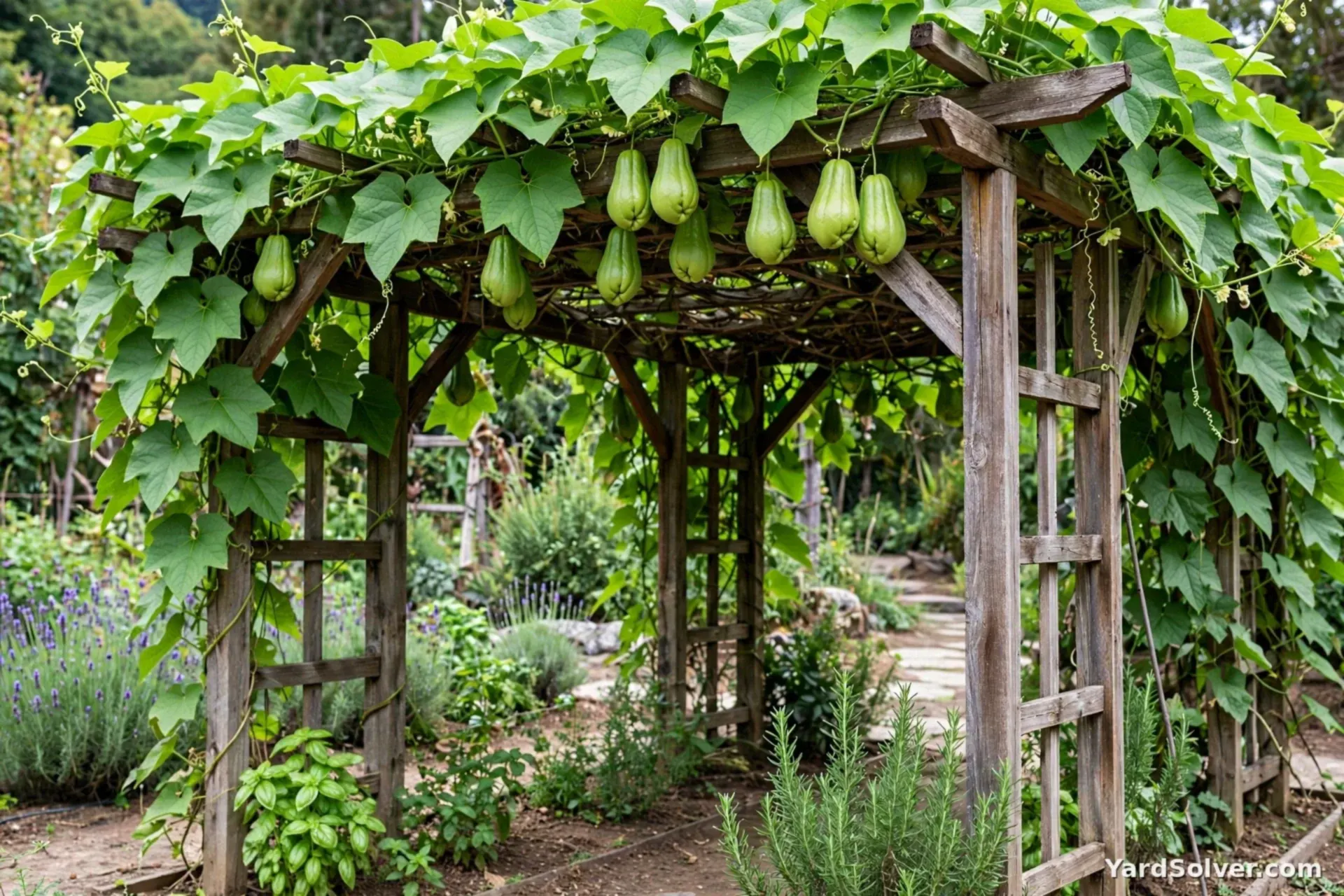
Sun: Full sun. Deep, rich soil at the foot of the strongest support you have — a fence, arbor or dead tree: work in plenty of compost and manure, because one vine can cover 30 feet of trellis in a season. Work out how much you need with the Garden Mix Calculator or the Raised Bed Soil Calculator.
Step 3 — Sow and plant out
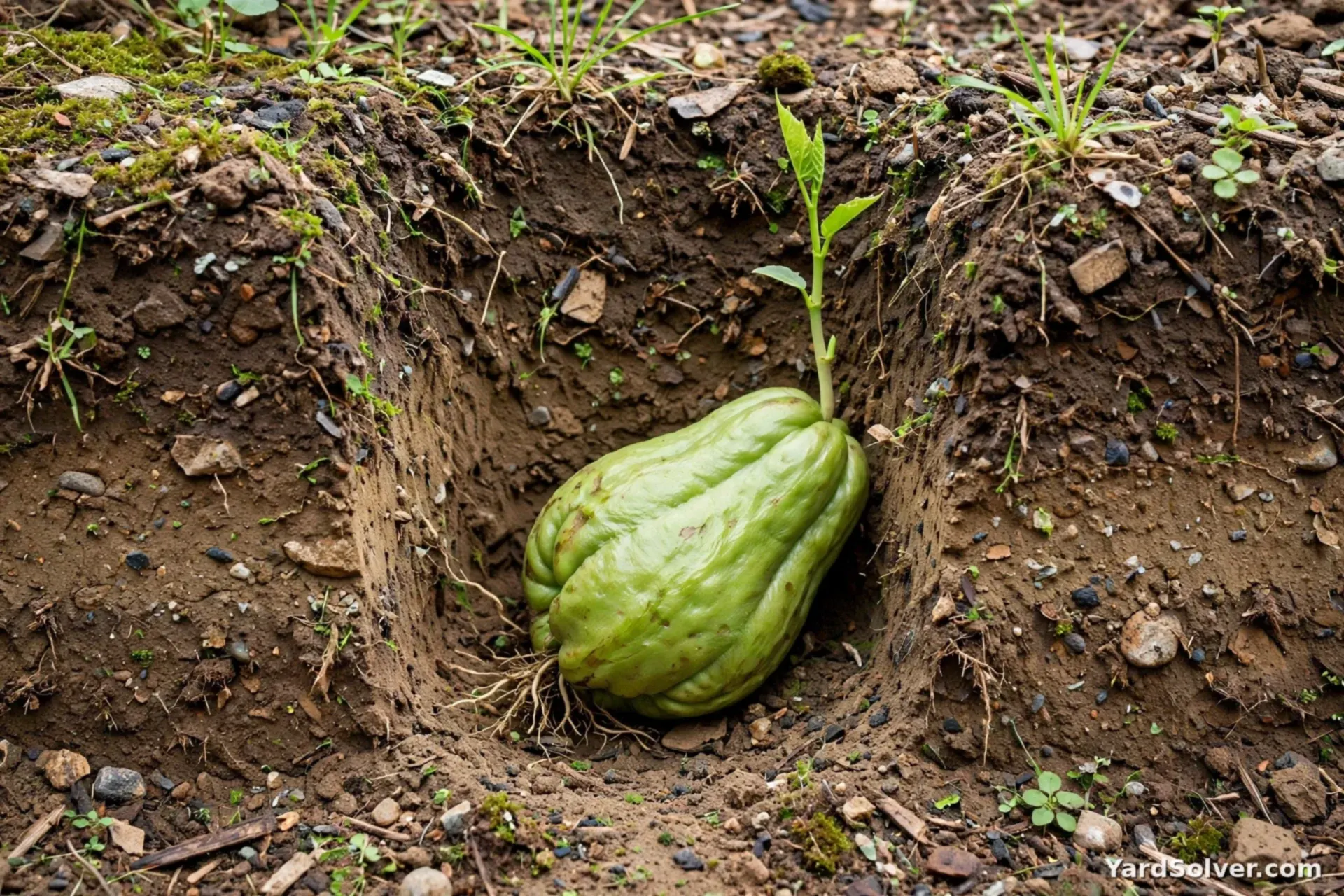
In late winter, set a whole store-bought chayote fruit on a warm windowsill — in about 8 weeks it sprouts from the broad end. Plant the whole sprouted fruit outside 3 weeks after last frost, on its side with the sprout up, under 2–3 in of soil, spaced 48–60 in from anything else and right at the trellis base. Do not try to separate the sprout from the fruit — the fruit feeds it.
Step 4 — Water and feed
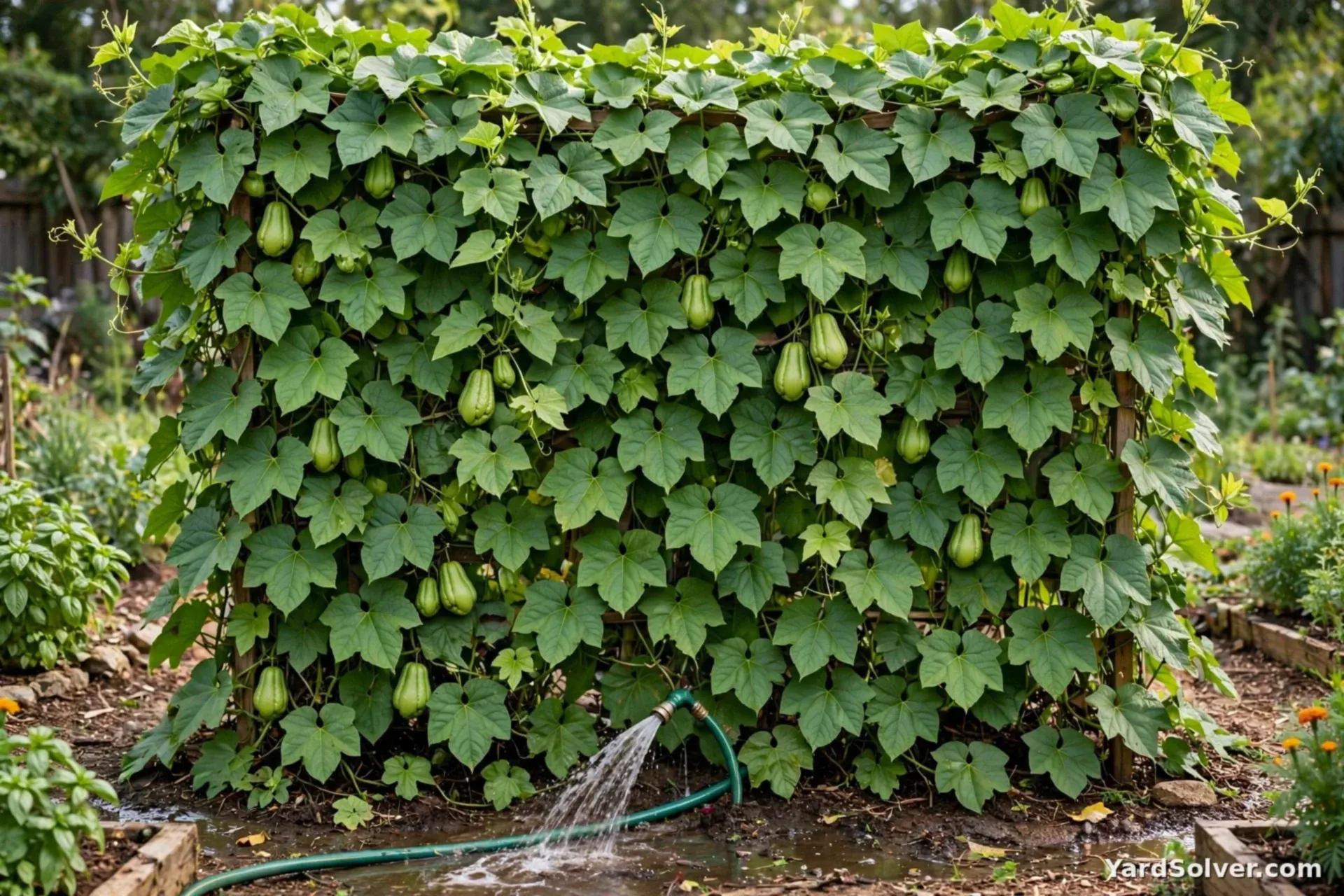
Water: Deep and regular — a big, thirsty vine. The Fertilizer Calculator turns a bed size into the right amount.
Step 5 — Care and the problems to watch for
- Lots of vine, no fruit — the season is too short or nights too cool; chayote flowers as days shorten, so fruit needs a long, warm fall.
- Fruit only at the top of the trellis — normal: the vine fruits where it can spread in sun; train some stems lower.
- Wilting at midday — the huge leaf area drinks fast; water deeply at the base in the morning during hot spells.
Take care: Handle spiny varieties with gloves — some chayote fruits are covered in soft spines; smooth types are easier for beginners.
Step 6 — Harvest
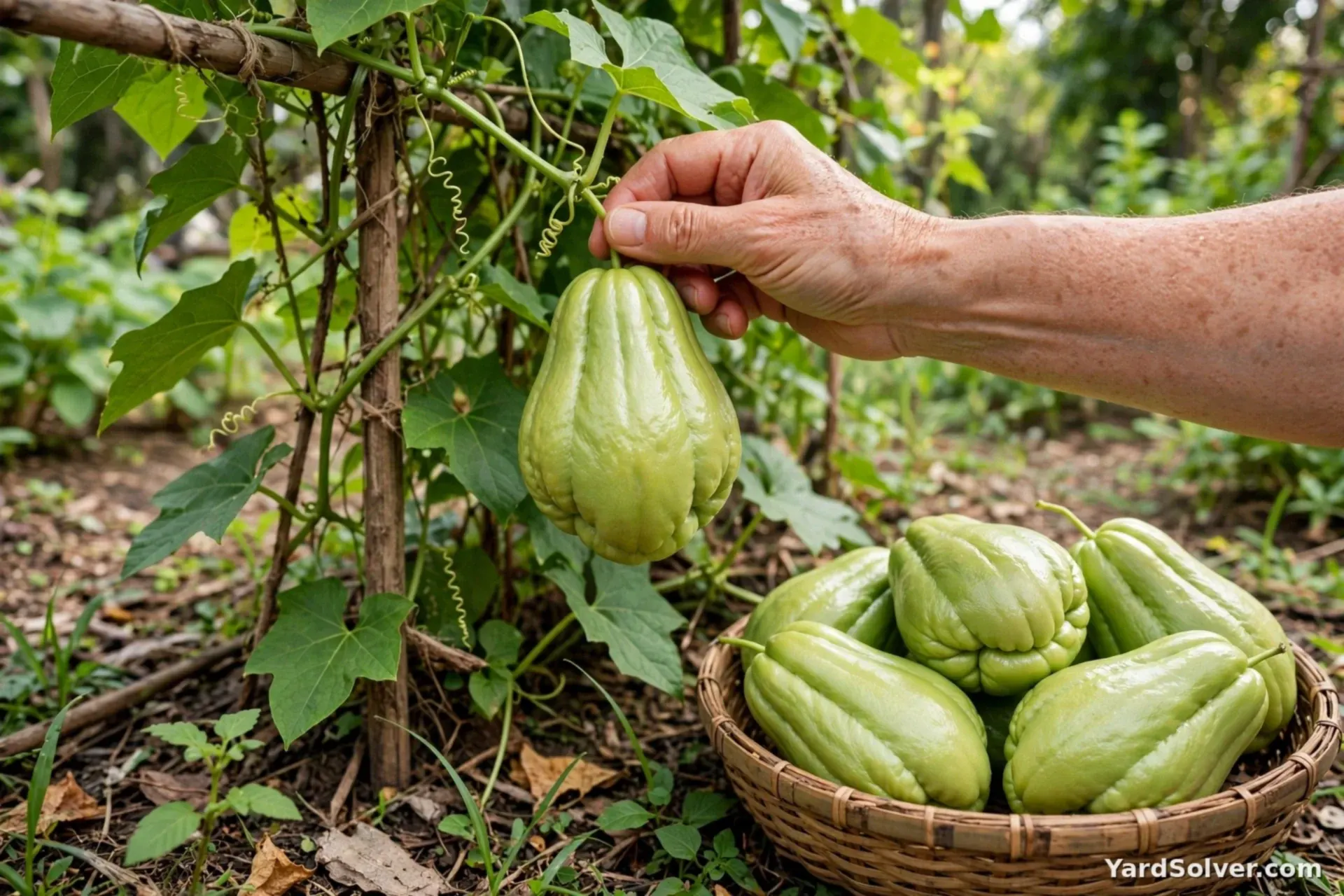
Ready in: 120–150 days after transplant, where the season allows. Pick fruit from about day 120 in a long season, when the skin is firm and glossy; in frost-free gardens the vine lives on and fruits for years.
📅 Your personal Chayote schedule
Counted from your planting day — not a generic calendar. Day 0 is the day the seed went in the ground or the young plant went out.
Varieties worth growing
| Variety | Colour | Why gardeners like it |
|---|---|---|
| Smooth Green (Florida type) | Pale green | The common smooth-skinned chayote — easiest to handle and peel |
| Spiny | Green, spined | The traditional type in much of Latin America — rich flavour, needs gloves |
| White Chayote | Creamy white | A milder, paler fruit grown in parts of Mexico |
| Perulero | Yellow-green | A Guatemalan type with small, very flavourful fruit |
| Mirliton (Louisiana) | Green | The heirloom mirliton of New Orleans gardens — smooth and pear-shaped |
Good for you — and take care
Benefits
- Provides folate and vitamin C
- Very low in calories — mostly water and fibre
- A source of potassium
- The young shoots and leaves are also eaten in many cuisines
- One plant in a warm garden can give dozens of fruit
Take care
- Wear gloves with spiny varieties
- In cool gardens, expect leaves and shoots more than fruit — judge the crop by your season, not the plant
- The whole fruit, including its single soft seed, is edible when cooked
A little history — and one good fact
Chayote was domesticated in Mexico and Central America — its name comes from the Nahuatl word chayutli — and Spanish ships carried it around the tropical world, where it naturalised everywhere from Louisiana (mirliton) to Réunion (chouchou) and Australia (choko).
Fun fact: During the Second World War in Australia, tinned pears were sometimes mostly choko — the great choko-hoax legend still circulates today.
Keep going
Guides: How to Protect Plants from Frost · When to Start Seeds Indoors · How to Set Up Drip Irrigation
Calculators: Plant Spacing Calculator · Seed Calculator · Fertilizer Calculator · Garden Mix Calculator
More vegetables: Cucumber · Zucchini · Bottle Gourd
← Back to the Plant Library · Get your personal planting dates
Questions people ask
When do I plant chayote?
Count from your average last spring frost: sow indoors 8 weeks before last frost; move outside 3 weeks after last frost. Chayote breaks every rule on this page: you do not sow a seed at all — you plant a whole fruit, which sprouts a vine from its broad end. It is a tropical perennial that needs a long, hot, frost-free season (120–150 days) and something strong to climb. In warm gardens one plant is generous; in cool gardens, grow it as a hopeful experiment in your hottest corner.
How far apart do I space chayote?
Space plants 48–60 in apart, with seed sown 2–3 (whole fruit) in deep. Sun: full sun.
When is chayote ready to harvest?
120–150 days after transplant, where the season allows. A tropical perennial vine grown from a whole sprouted fruit, not seed: it needs 4–5 months of warm, frost-free weather and a strong trellis — in cooler gardens it is a fun experiment for the longest-season spot only.