
Plant Library · Vegetables
🥬 How to Grow Cabbage
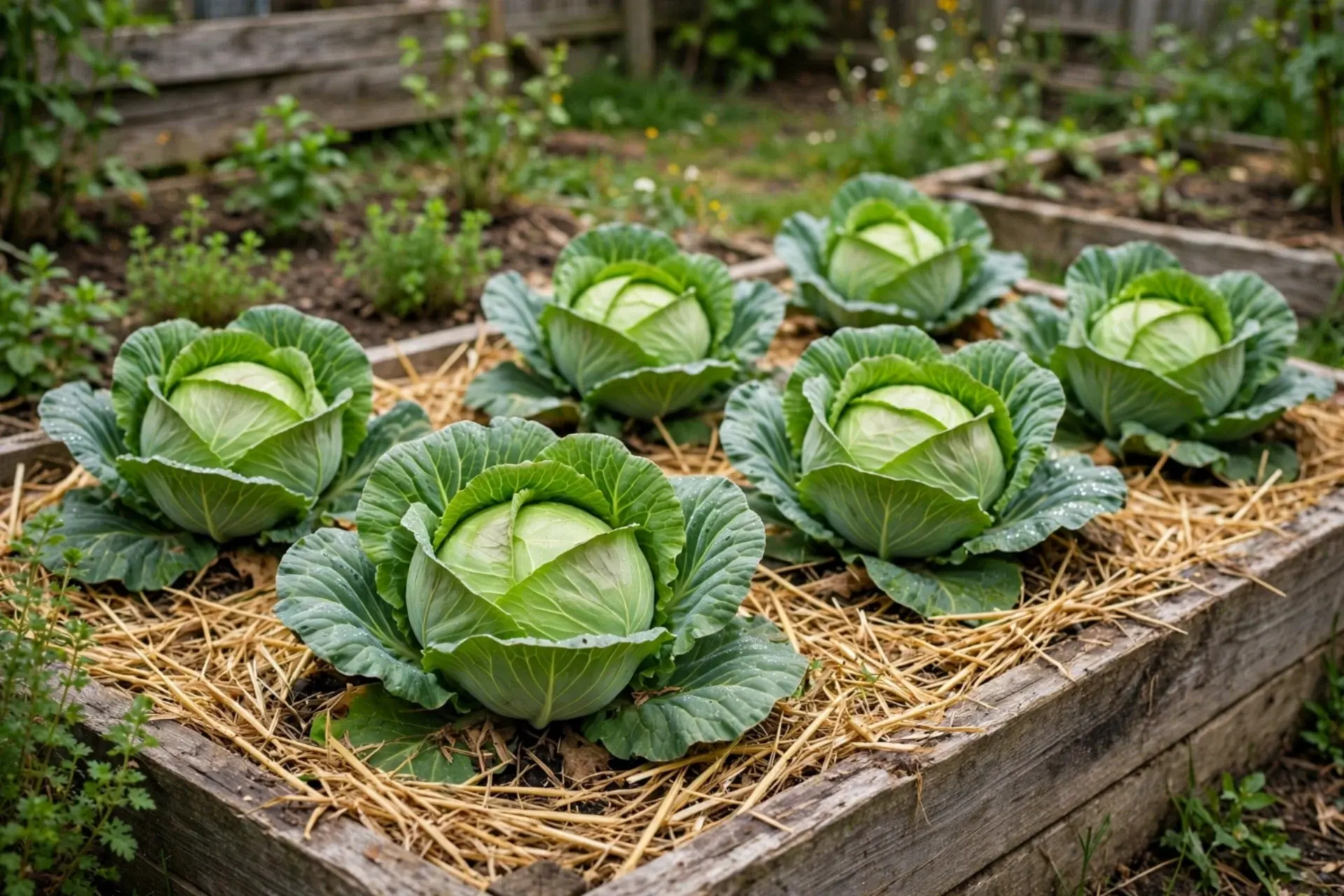
Frost-tolerant; a fall crop sown in summer often tastes sweetest. Cabbage is a cool-season, frost-tolerant crop: start indoors about 7 weeks before your last frost and transplant about 2 weeks before it — a fall crop touched by light frost often tastes sweetest.
Grow Cabbage with us — step by step
Everything for this plant is written step by step below — what to do, and exactly when. Read it through first if you like: you can grow it entirely on your own with that guide. Or start with us here — tell us your planting day and we lay out your personal schedule on this page, every next step on its own day, counted from your planting date. No guessing, no forgetting.
Step 1 — today: Plant out your young Cabbage plants today (hardened off first), spaced 18–24 in apart, and water them in deeply. Starting from seed instead? Sow indoors now, 1/4 in deep, and this same schedule counts from transplant day.
Cabbage at a glance
Sow indoors: 7 weeks before last frost
Move outside: 2 weeks before last frost
Spacing: 18–24 in · Seed depth: 1/4 in
Sun: Full sun
Water: Regular
Harvest: 70–90 days after transplant
Timing counts from your average last spring frost — get your own dates in the Planting Calendar. Guidance follows standard extension-service practice for Canada and the US.
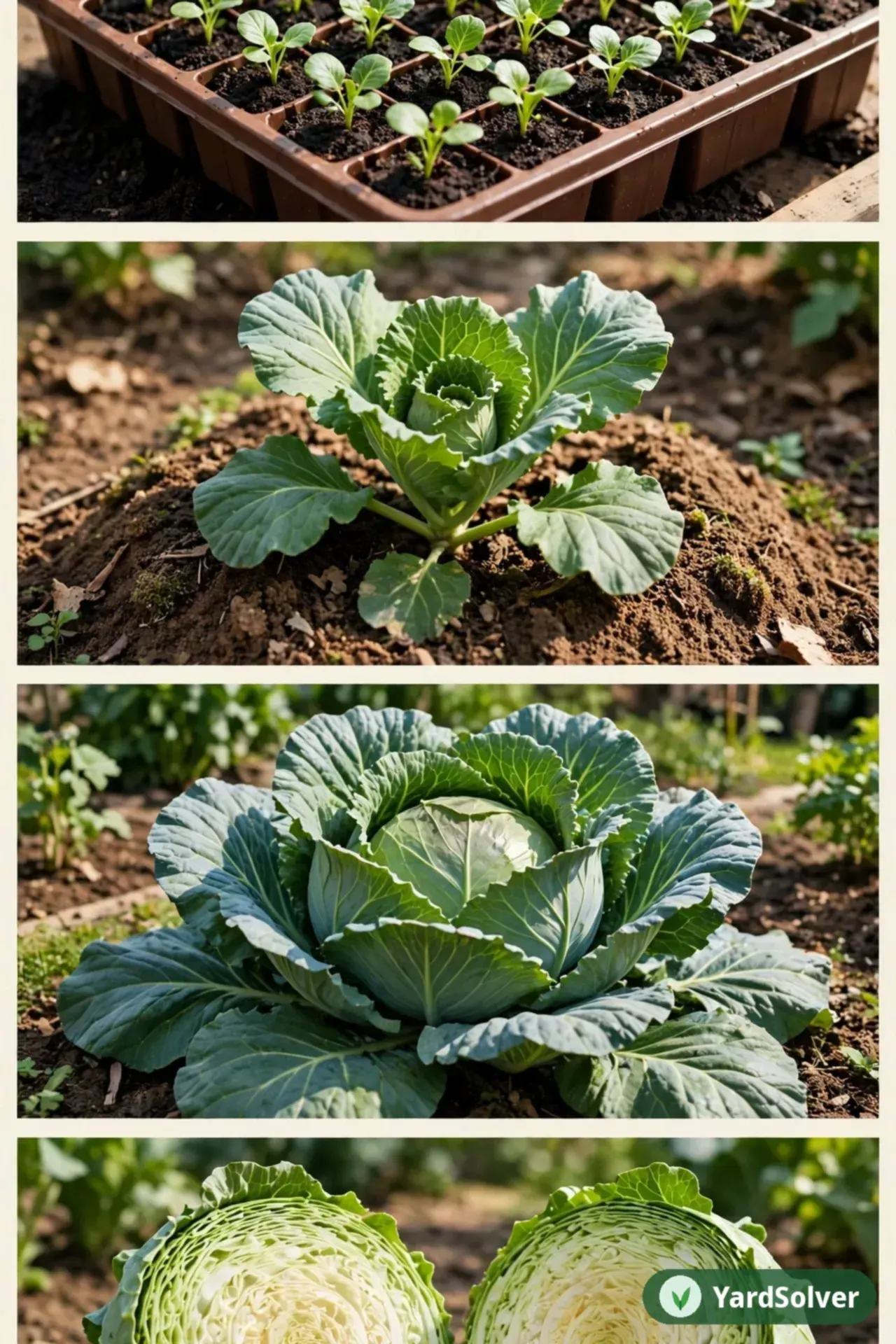
How to plant and grow cabbage, step by step
Step 1 — Time it right
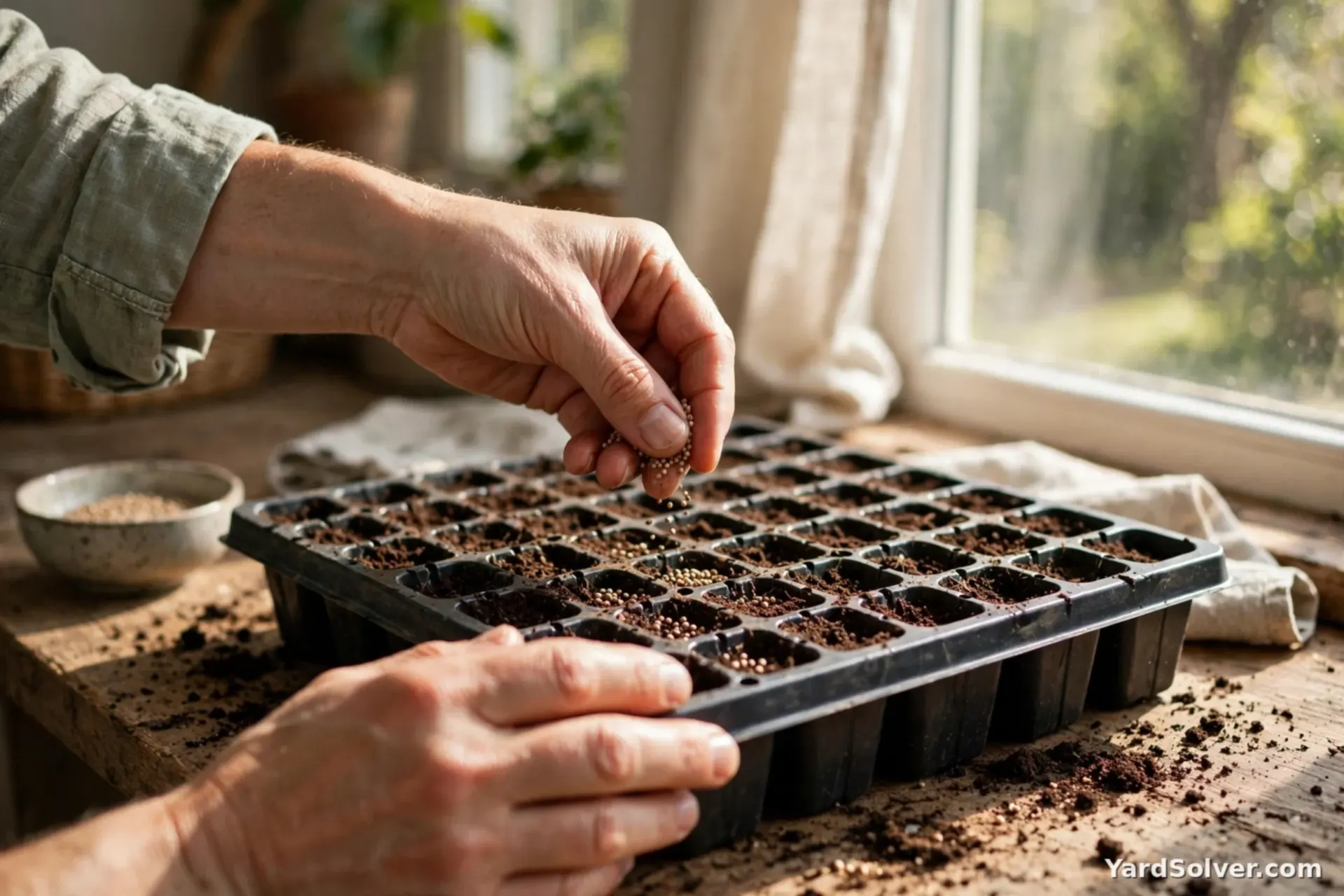
Sow indoors: 7 weeks before last frost; Move outside: 2 weeks before last frost. All dates count from your average last spring frost — the Planting Calendar turns them into real dates for your garden. Cabbage is a cool-season, frost-tolerant crop: start indoors about 7 weeks before your last frost and transplant about 2 weeks before it — a fall crop touched by light frost often tastes sweetest.
Step 2 — Prepare the spot
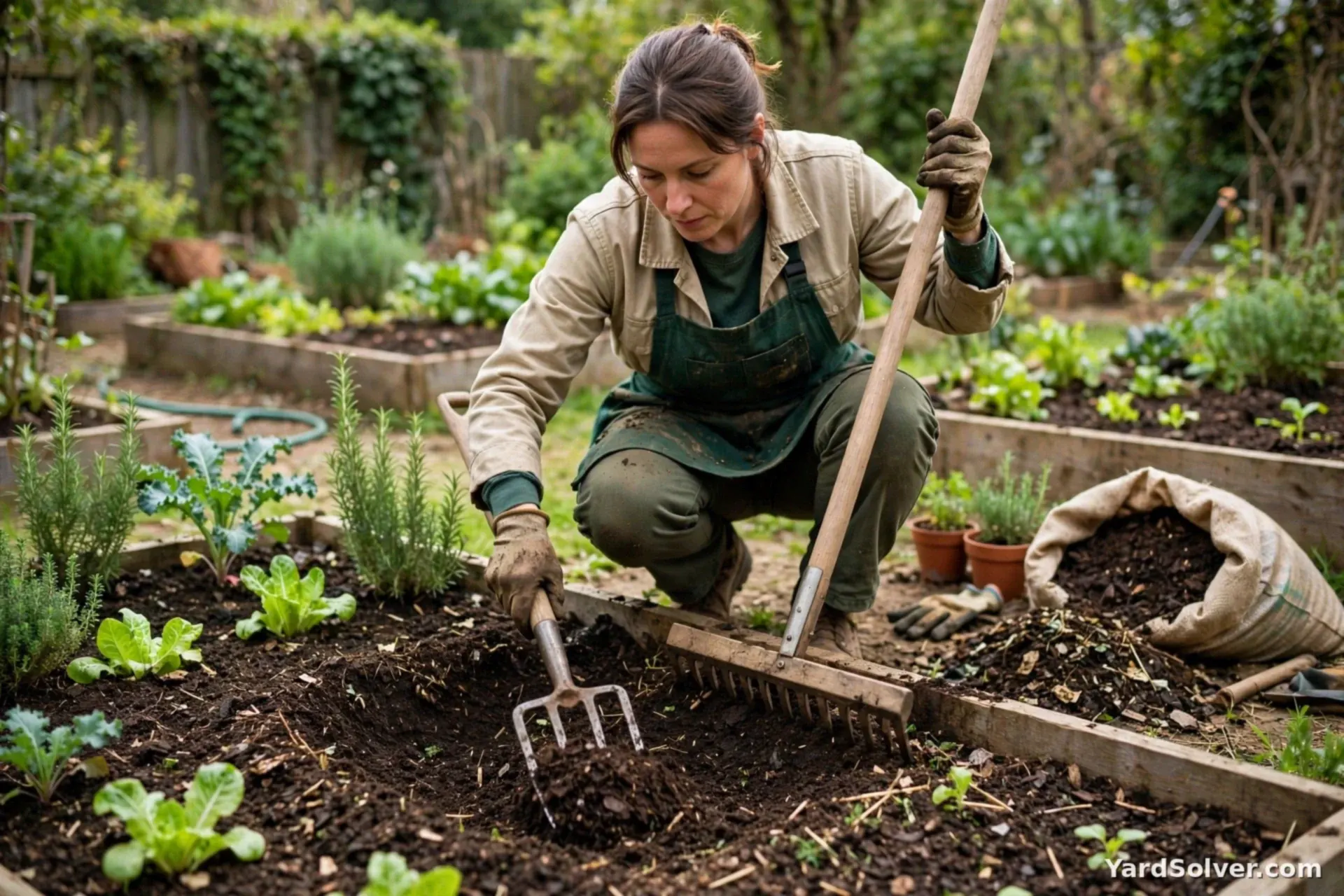
Sun: Full sun. Firm, rich soil with plenty of compost worked in before planting. Brassicas are hungry: a bed that grew legumes or was manured last season suits them well. Work out how much you need with the Garden Mix Calculator or the Raised Bed Soil Calculator.
Step 3 — Sow and plant out
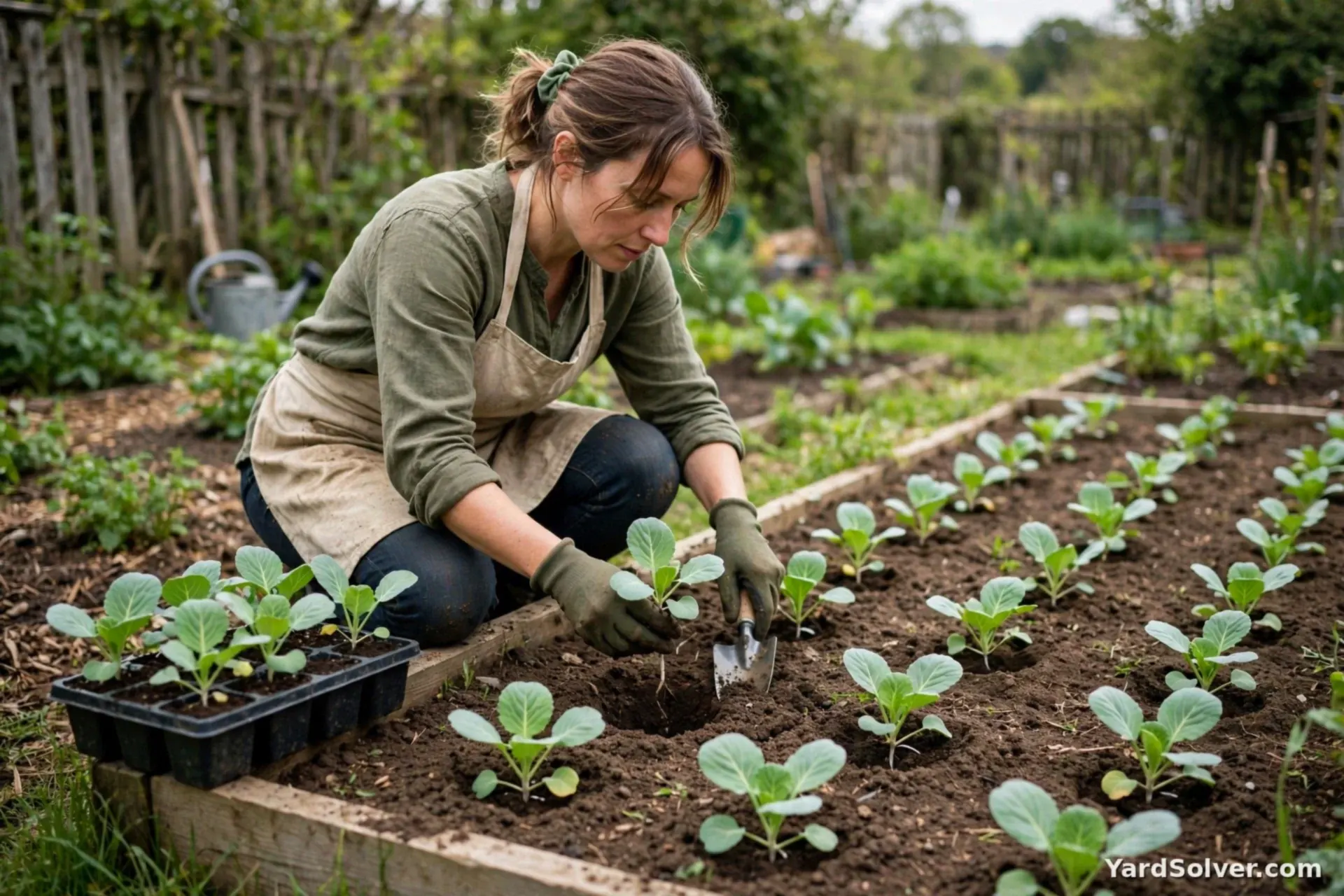
Start seed indoors 7 weeks before last frost, sowing 1/4 in deep. Grow seedlings on in strong light, then harden them off over 7–10 days (see How to Harden Off Seedlings) and move them outside 2 weeks before last frost, spaced 18–24 in apart. The Plant Spacing Calculator turns that spacing into plants-per-bed.
Step 4 — Water and feed
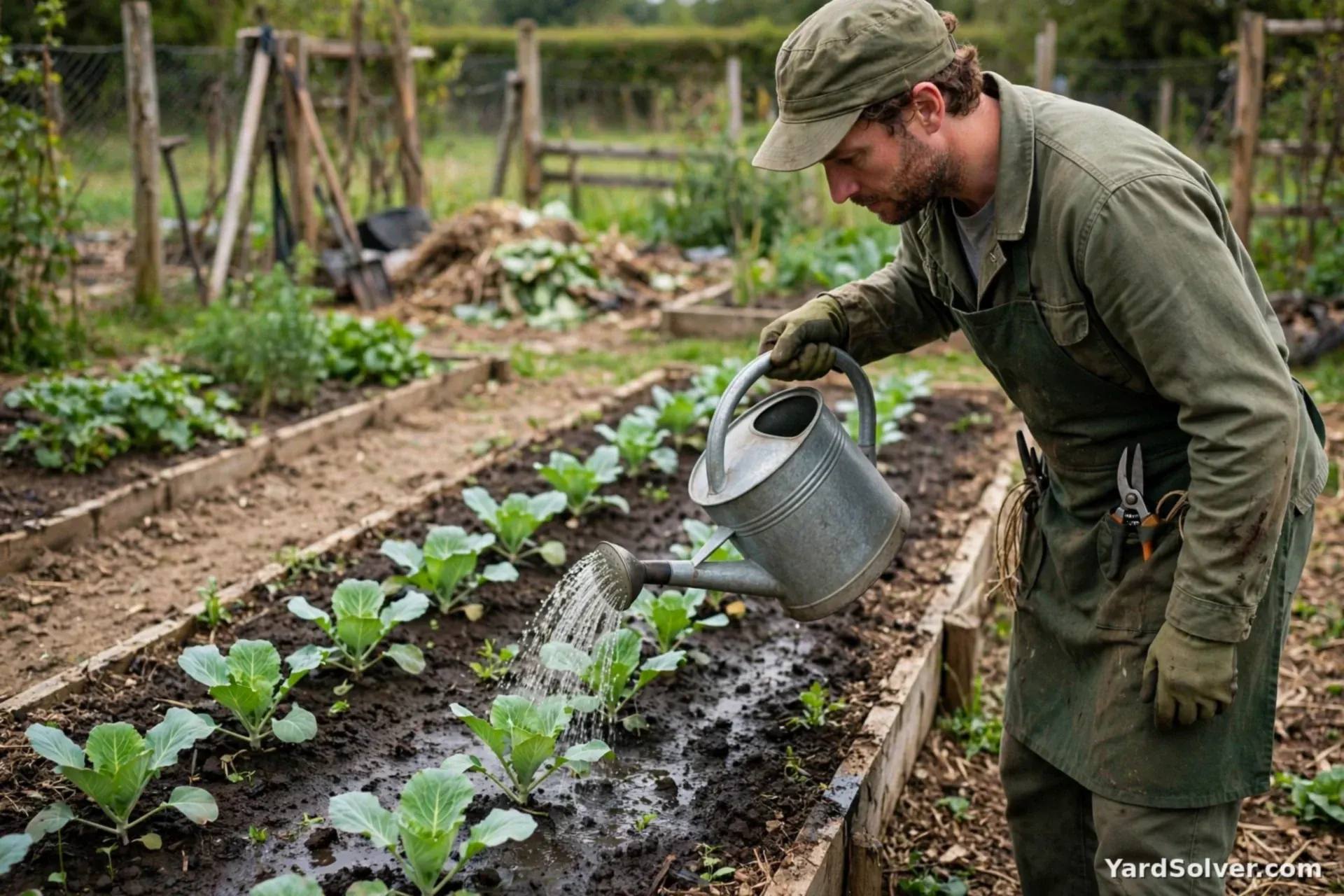
Water: Regular. First feed: around day 25 — Cabbage is a hungry, leafy crop — feed about three to four weeks after transplanting. The Fertilizer Calculator turns a bed size into the right amount.
Step 5 — Care and the problems to watch for
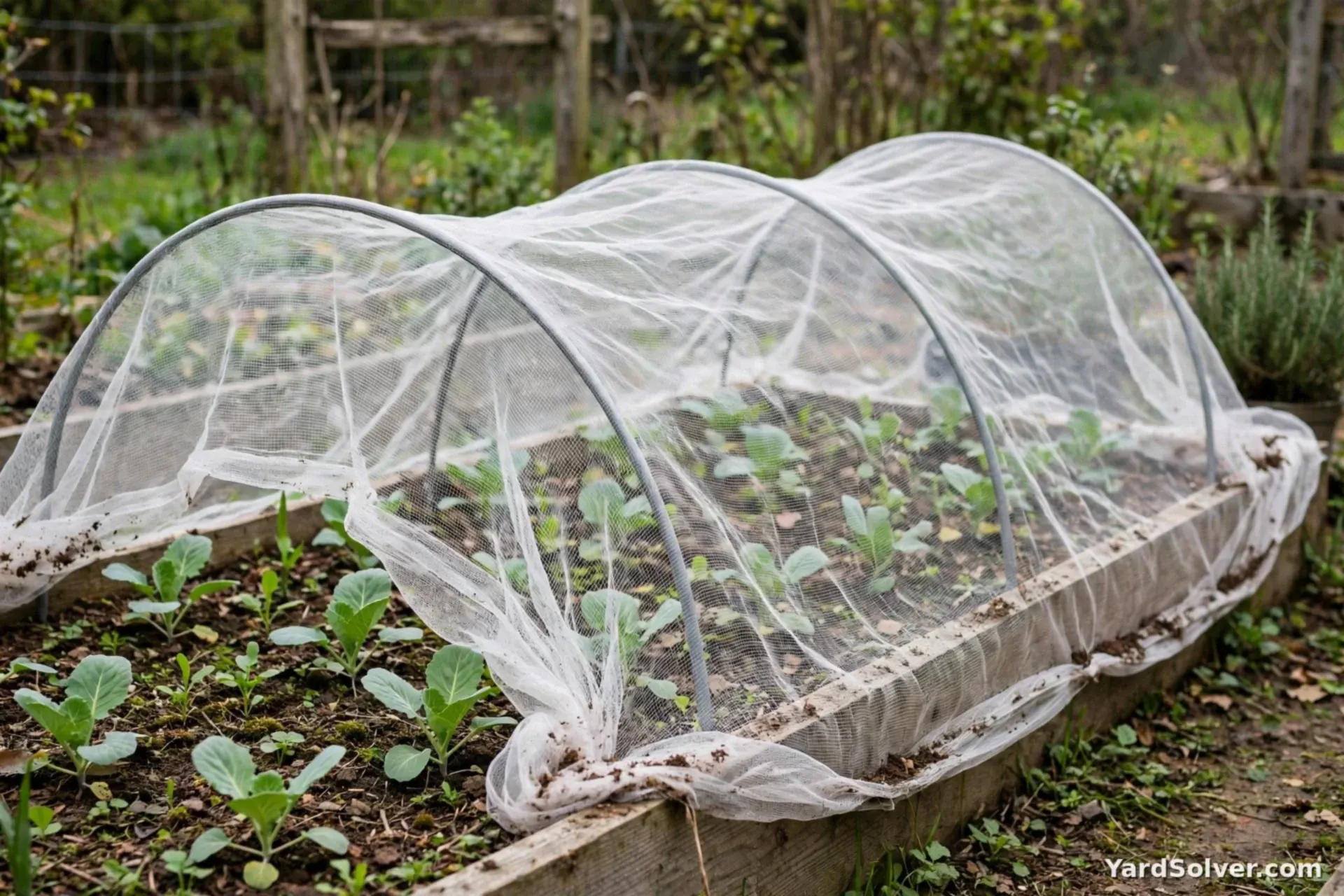
- Cabbage white caterpillars — net the crop from planting day.
- Clubroot — swollen roots and stunted plants in acidic soil; lime the bed if it tests sour.
- Splitting heads after heavy rain — harvest promptly once heads are firm.
Take care: Cabbage can cause gas or bloating in some people. Some people with thyroid concerns are advised not to eat very large amounts of raw cabbage — normal cooked servings are the usual pattern.
Step 6 — Harvest
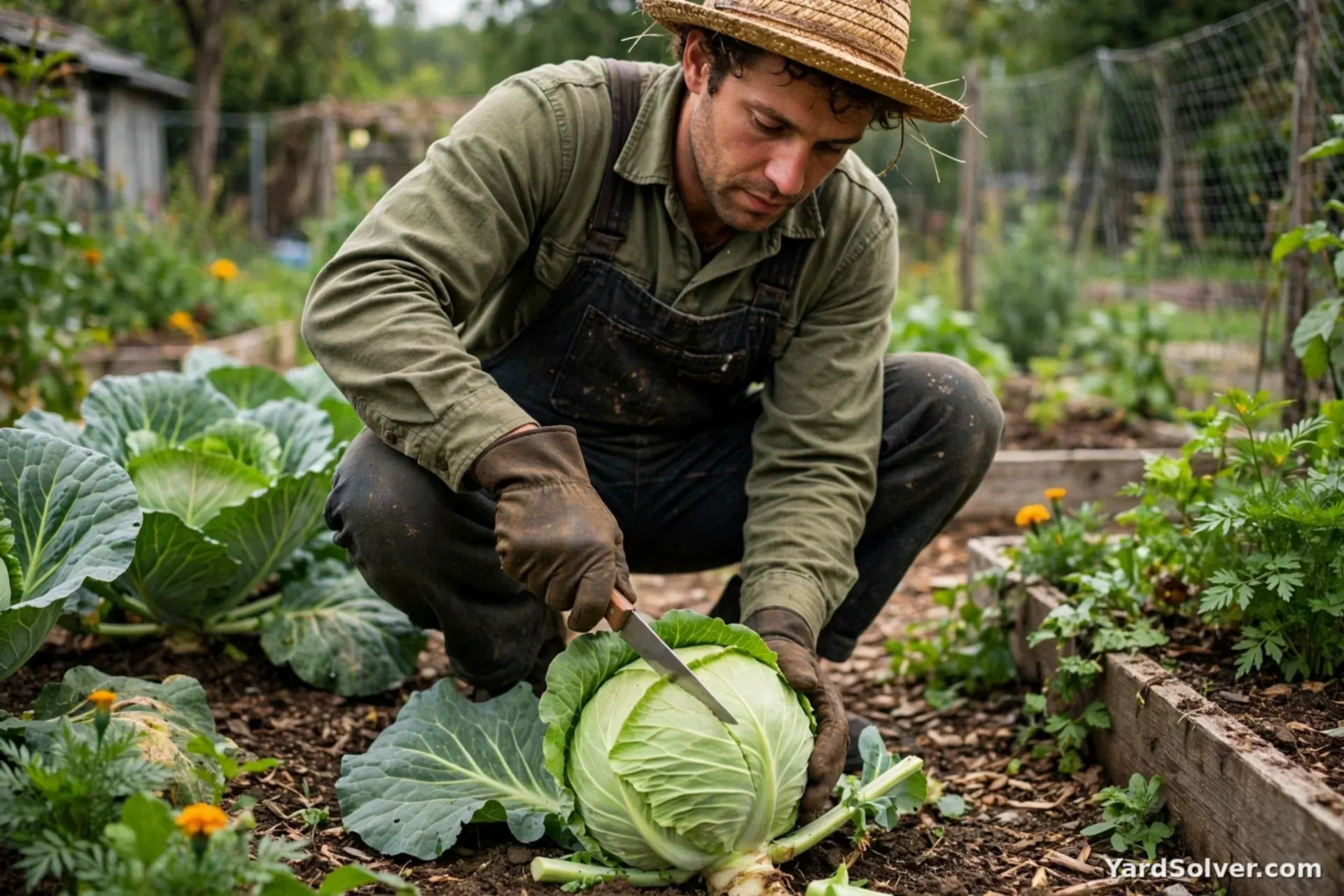
Ready in: 70–90 days after transplant. Harvest runs from about day 70 to 90 after transplant — cut heads when they feel firm and solid.
📅 Your personal Cabbage schedule
Counted from your planting day — not a generic calendar. Day 0 is the day the seed went in the ground or the young plant went out.
Varieties worth growing
| Variety | Colour | Why gardeners like it |
|---|---|---|
| Golden Acre | Green | An early type with small, round heads — good for small gardens |
| Copenhagen Market | Green | A classic mid-season cabbage with firm heads for slaw and cooking |
| January King | Purple-green | A very hardy winter cabbage whose leaves blush purple in the cold |
| Red Acre | Deep red-purple | A compact red cabbage that adds colour to salads and pickles |
| Savoy Perfection | Green | Crinkly, tender savoy leaves — the cook's favourite for wraps and soups |
Good for you — and take care
Benefits
- A good source of vitamin C, especially eaten raw or lightly cooked
- Provides vitamin K for healthy blood and bones
- High in fibre and very low in calories
- Provides folate and vitamin B6
- Fermented cabbage (like sauerkraut) also provides useful bacteria from fermentation
Take care
- Cabbage can cause gas or bloating in some people
- Some people with thyroid concerns are advised not to eat very large amounts of raw cabbage — normal cooked servings are the usual pattern
A little history — and one good fact
Cabbage was bred from wild cabbage, a tough plant that still grows on sea cliffs around Europe. People have grown it for thousands of years because it is hardy, feeds a family from one head, and stores for months. Fermented cabbage dishes — like sauerkraut in Europe and kimchi in Korea — became staples wherever winters are long.
Fun fact: Cabbage, kale, broccoli, cauliflower and Brussels sprouts are all the same species — one wild plant bred over centuries into very different vegetables.
Keep going
Guides: When to Start Seeds Indoors · How to Prepare Garden Soil in Spring · How to Harden Off Seedlings
Calculators: Plant Spacing Calculator · Seed Calculator · Fertilizer Calculator · Garden Mix Calculator
More vegetables: Bok Choy · Pepper · Cucumber
← Back to the Plant Library · Get your personal planting dates
Questions people ask
When do I plant cabbage?
Count from your average last spring frost: sow indoors 7 weeks before last frost; move outside 2 weeks before last frost. Cabbage is a cool-season, frost-tolerant crop: start indoors about 7 weeks before your last frost and transplant about 2 weeks before it — a fall crop touched by light frost often tastes sweetest.
How far apart do I space cabbage?
Space plants 18–24 in apart, with seed sown 1/4 in deep. Sun: full sun.
When is cabbage ready to harvest?
70–90 days after transplant. Frost-tolerant; a fall crop sown in summer often tastes sweetest.