
Plant Library · Fruits
🐉 How to Grow Dragon Fruit
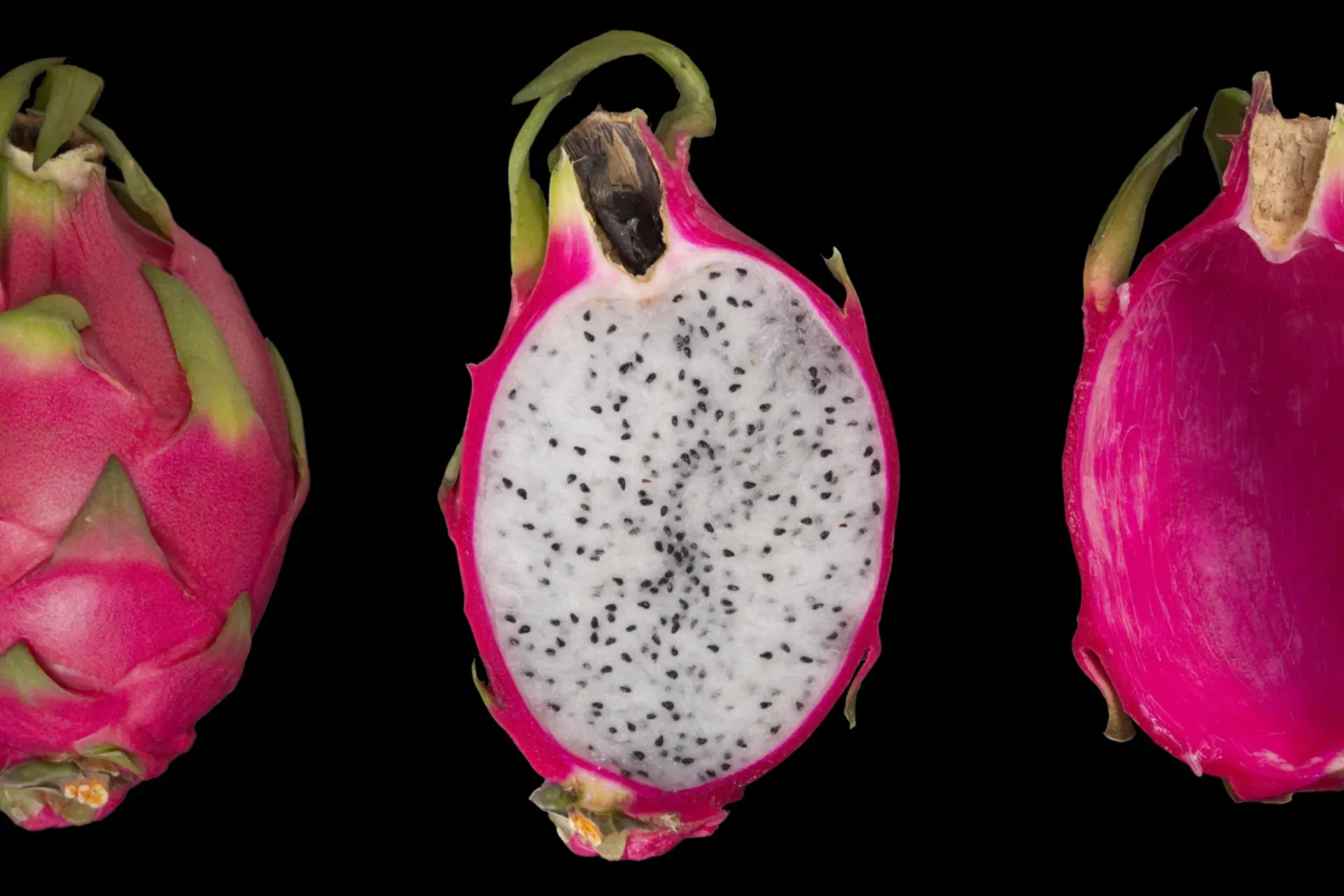
Dragon fruit grows on a climbing cactus that needs something serious to climb — a heavy post with a support at the top, 6–10 ft per plant — and warm zones (10–11) or a big pot you shelter in winter. The payoff is fast for a tropical fruit: cuttings fruit in 12–18 months. The huge, fragrant flowers open for one night only, and the fruit that follows is as dramatic as the flower.
Grow Dragon Fruit with us — step by step
Everything for this plant is written step by step below — what to do, and exactly when. Read it through first if you like: you can grow it entirely on your own with that guide. Or start with us here — tell us your planting day and we lay out your personal schedule on this page, every next step on its own day, counted from your planting date. No guessing, no forgetting.
Step 1 — today: Plant your Dragon Fruit today: build a heavy post with a top support, plant at its base in very well-drained soil, and tie the stems up as they climb. Full sun.
Dragon Fruit at a glance
Spacing: 6–10 ft on a post in · Seed depth: As in the pot
Sun: Full sun
Water: Moderate — cactus: do not overwater
Harvest: Fruit in 12–18 months from cuttings
Timing counts from your average last spring frost — get your own dates in the Planting Calendar. Guidance follows standard extension-service practice for Canada and the US.
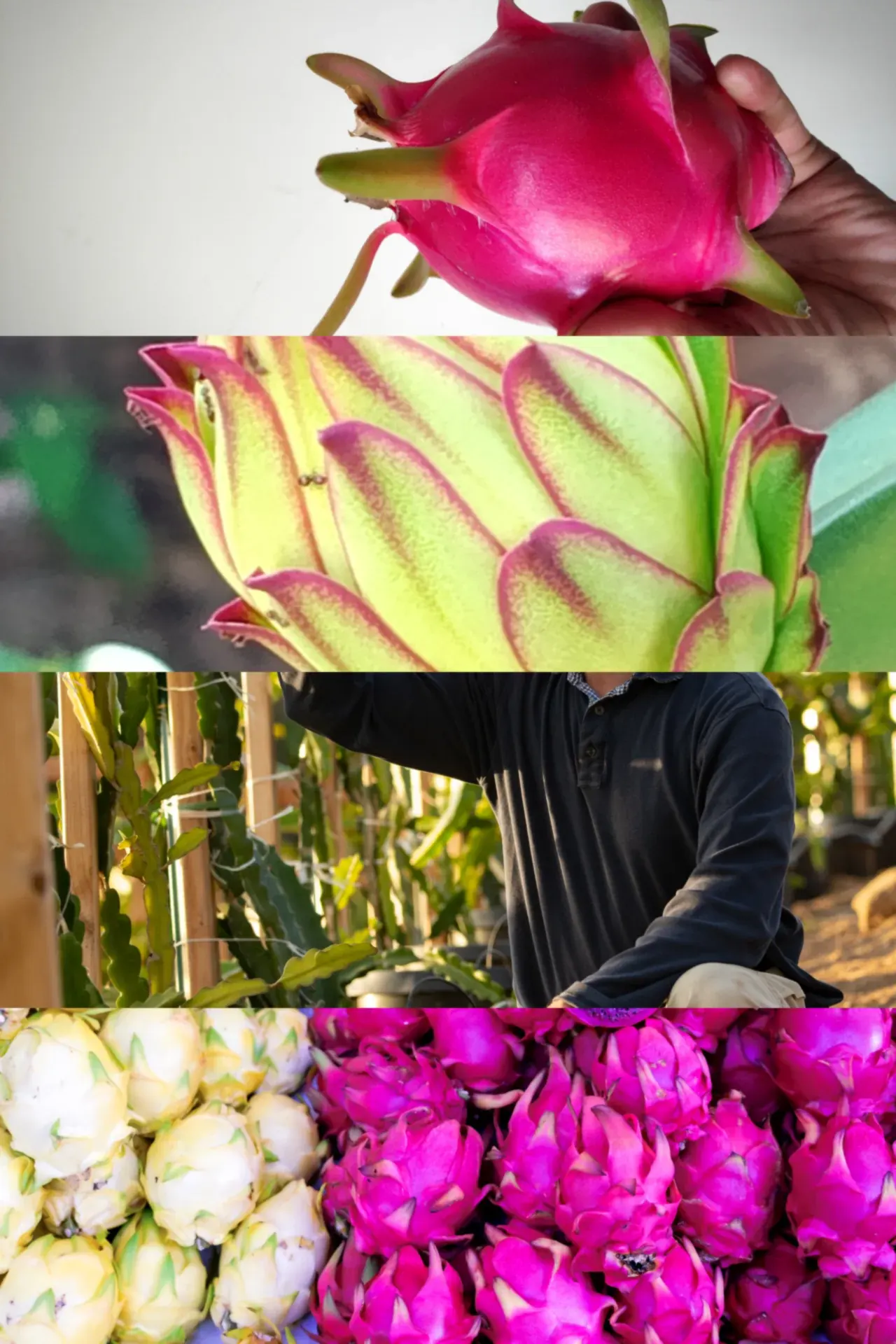
How to plant and grow dragon fruit, step by step
Step 1 — Time it right
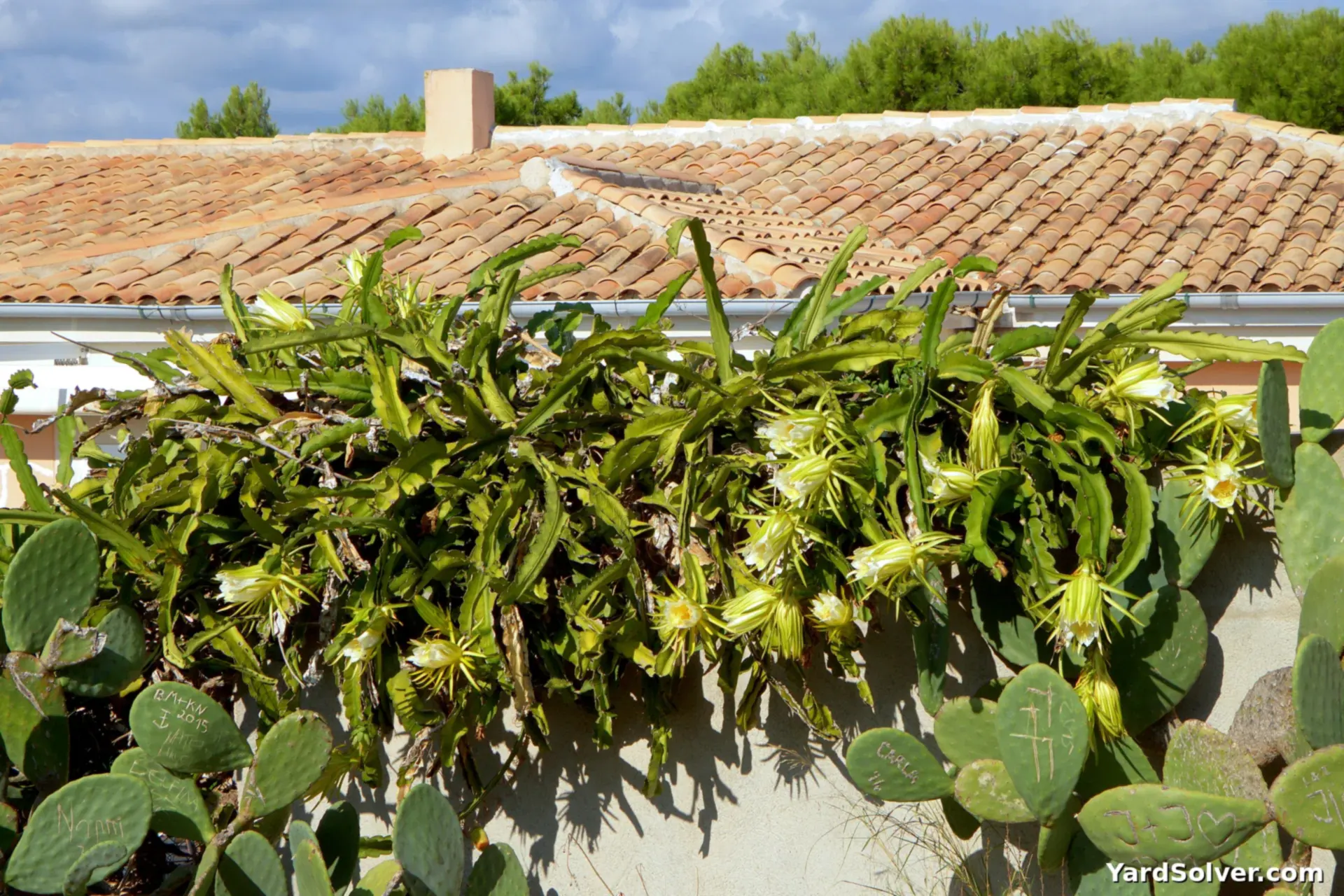
Plant cuttings or plants in spring, after frost danger passes — in the ground in zones 10–11, or in a large pot elsewhere.
Step 2 — Prepare the spot
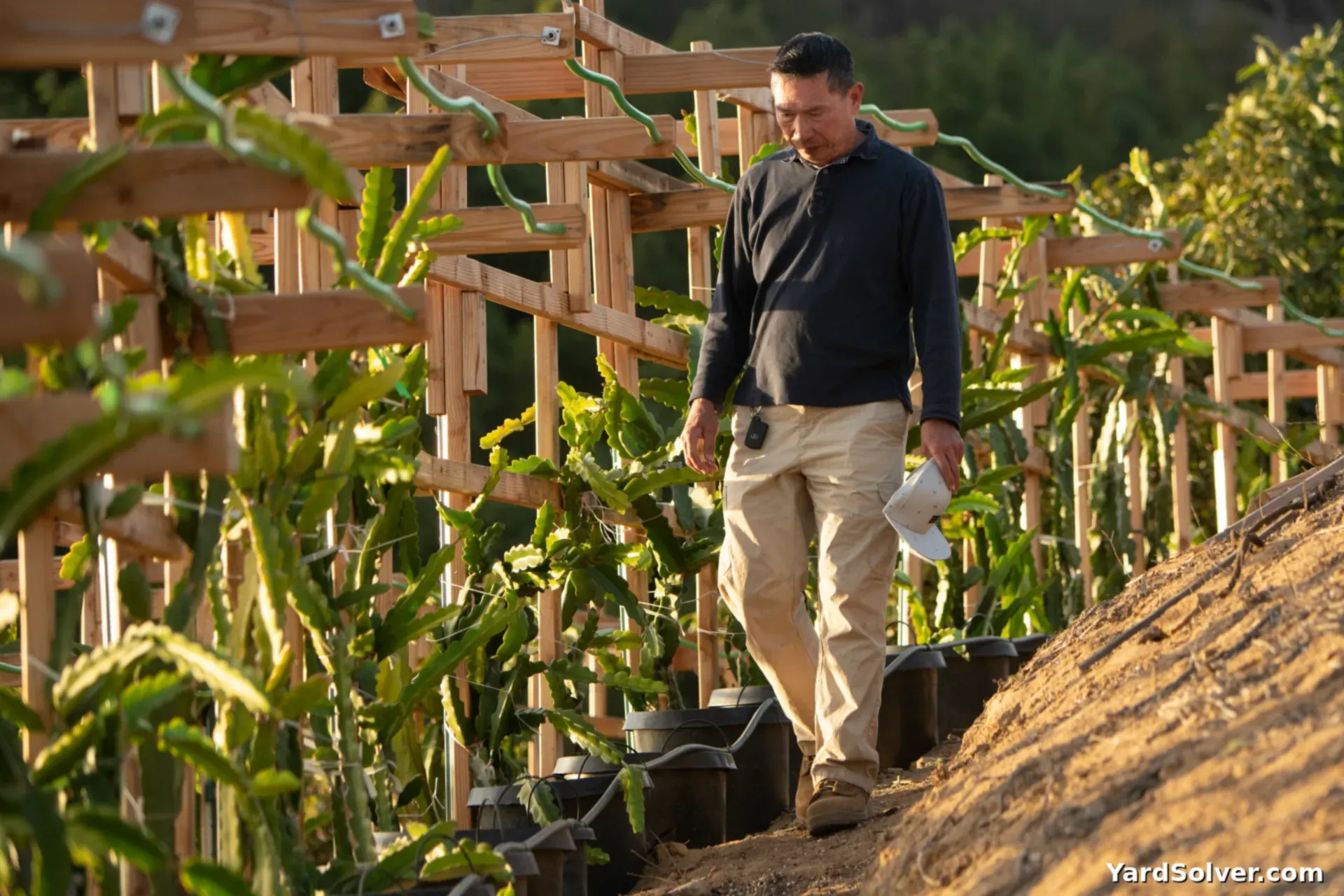
Sun: Full sun. Very well-drained, sandy, cactus-type soil in full sun. Dragon fruit is a cactus: wet feet rot it faster than anything. Work out how much you need with the Garden Mix Calculator or the Raised Bed Soil Calculator.
Step 3 — Plant it
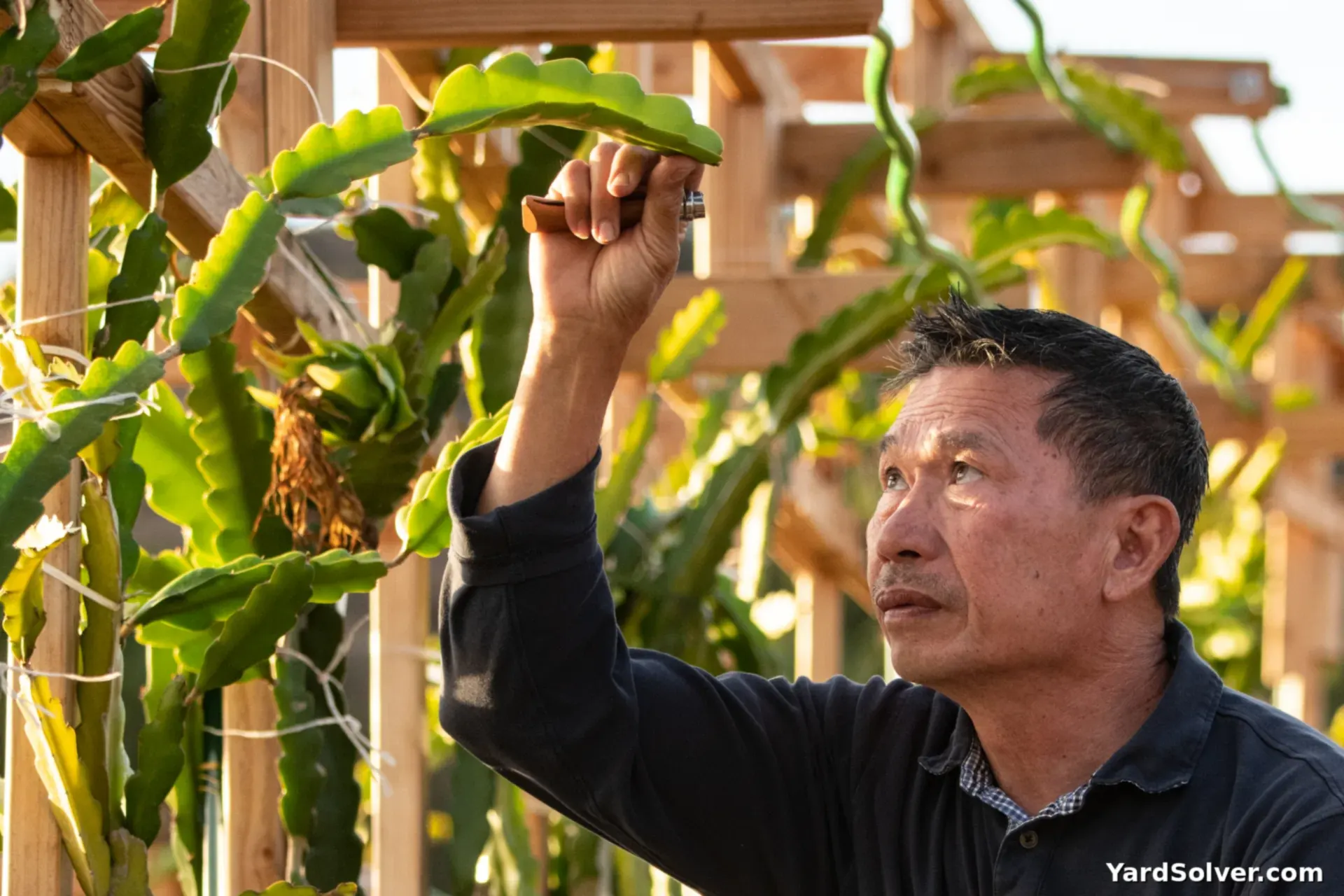
Build the post first — a sturdy post with a top support. Plant at its base, tie the stems up as they climb, and let them spill over the top, where they fruit. The Plant Spacing Calculator turns that spacing into plants-per-row.
Step 4 — Water and feed
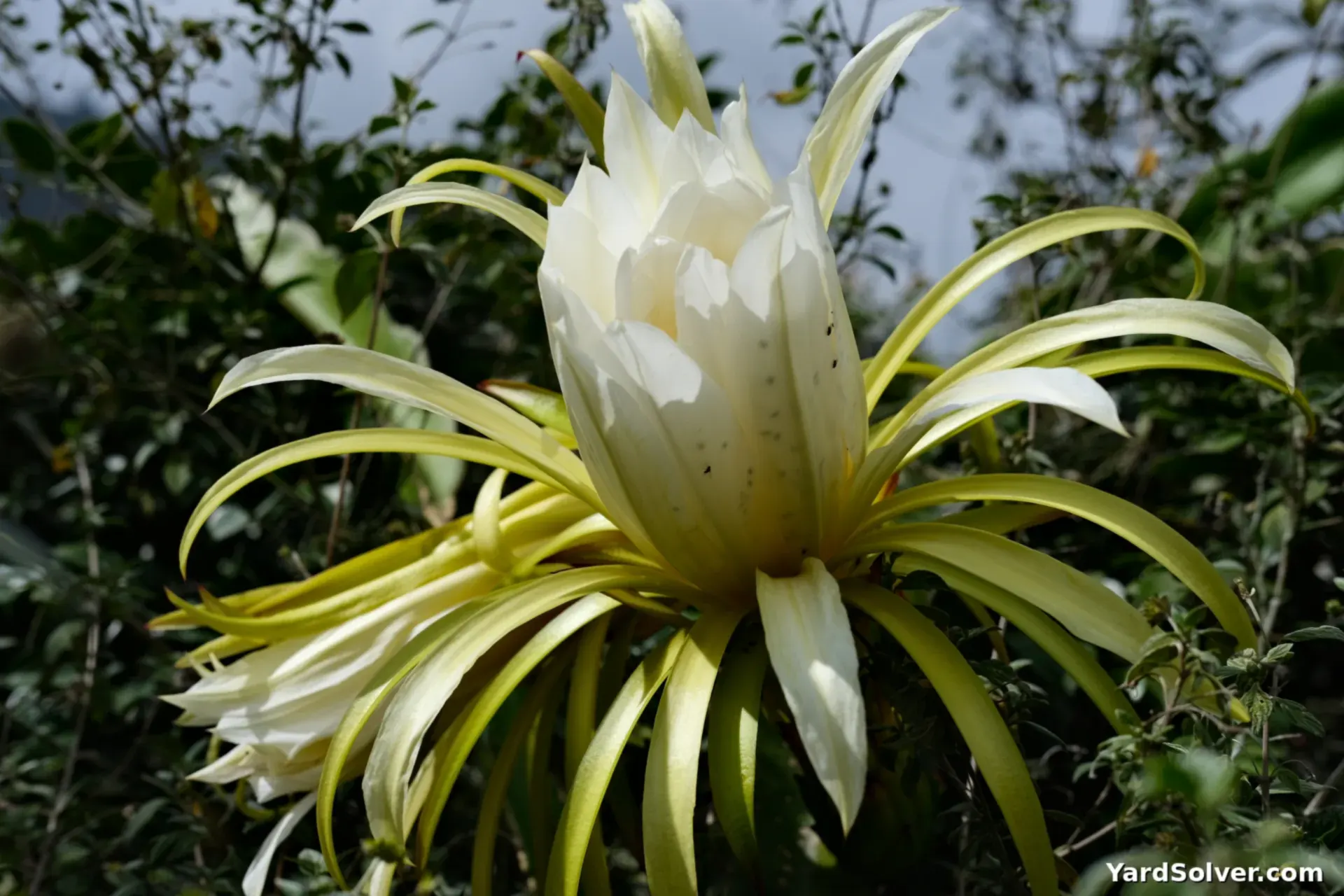
Water: Moderate — cactus: do not overwater. Feed monthly through the growing season with a balanced fertilizer — a fruiting cactus is hungrier than a desert one. The Fertilizer Calculator turns a bed size into the right amount.
Step 5 — Care and the problems to watch for
Rot — overwatering and poor drainage are the number one killers; water like a cactus, not a tomato. Sunburn — in extreme heat the stems scorch; light afternoon shade in desert zones helps. No fruit — hand-pollinate the night flowers, or keep a second variety; some types need cross-pollination.
Step 6 — Harvest
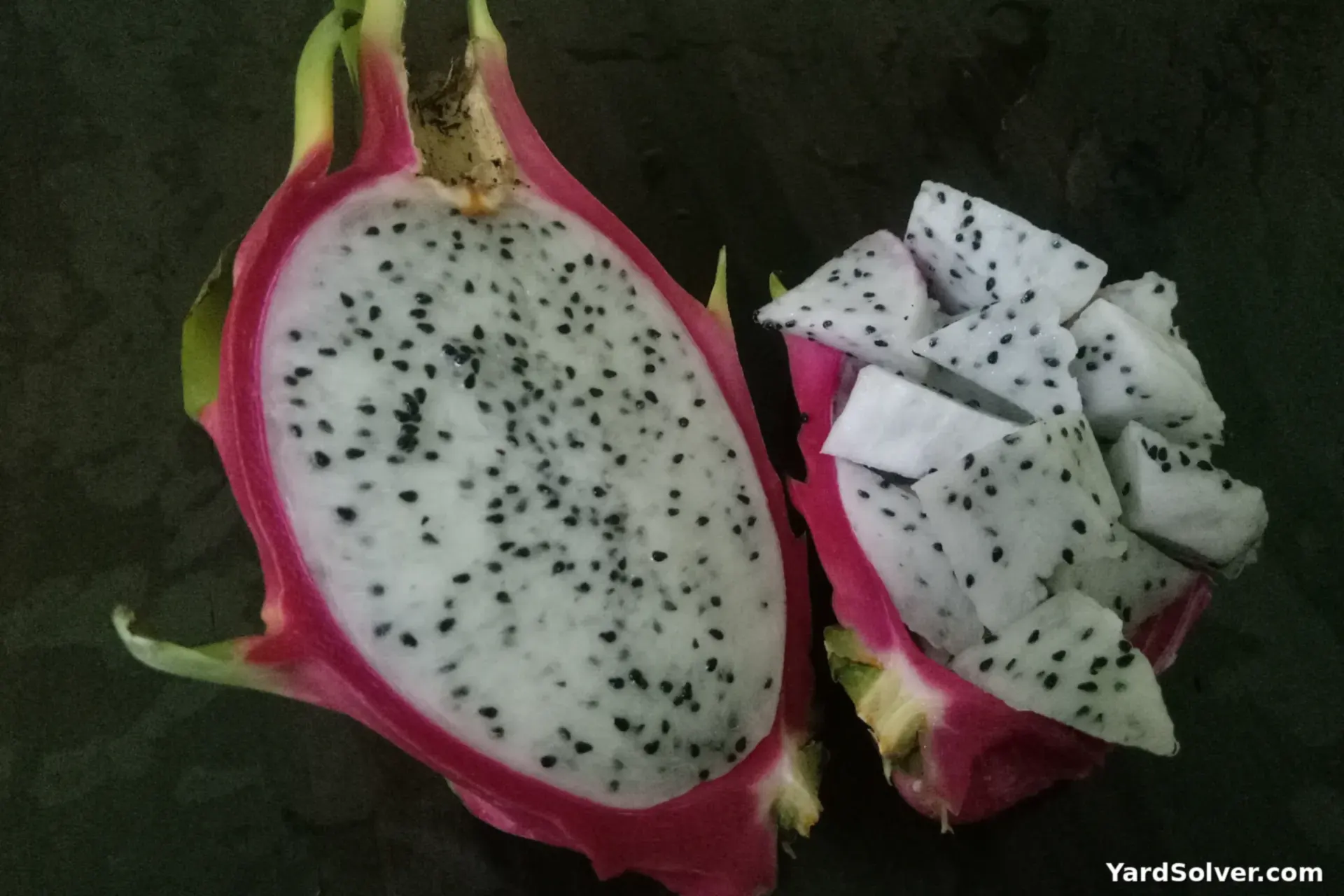
Fruit in 12–18 months from cuttings. Pick 30–40 days after flowering, when the skin is fully coloured and the scales begin to dry at the tips.
📅 Your personal Dragon Fruit schedule
Counted from your planting day — not a generic calendar. Day 0 is the day the seed went in the ground or the young plant went out.
Varieties worth growing
| Variety | Colour | Why gardeners like it |
|---|---|---|
| Halley's Comet | Pink skin, pink flesh | A sweet, self-fertile type — good for beginners |
| Vietnamese White | Pink skin, white flesh | The classic commercial type — needs a pollinator for best crops |
| American Beauty | Pink skin, magenta flesh | Self-fertile and richly flavoured |
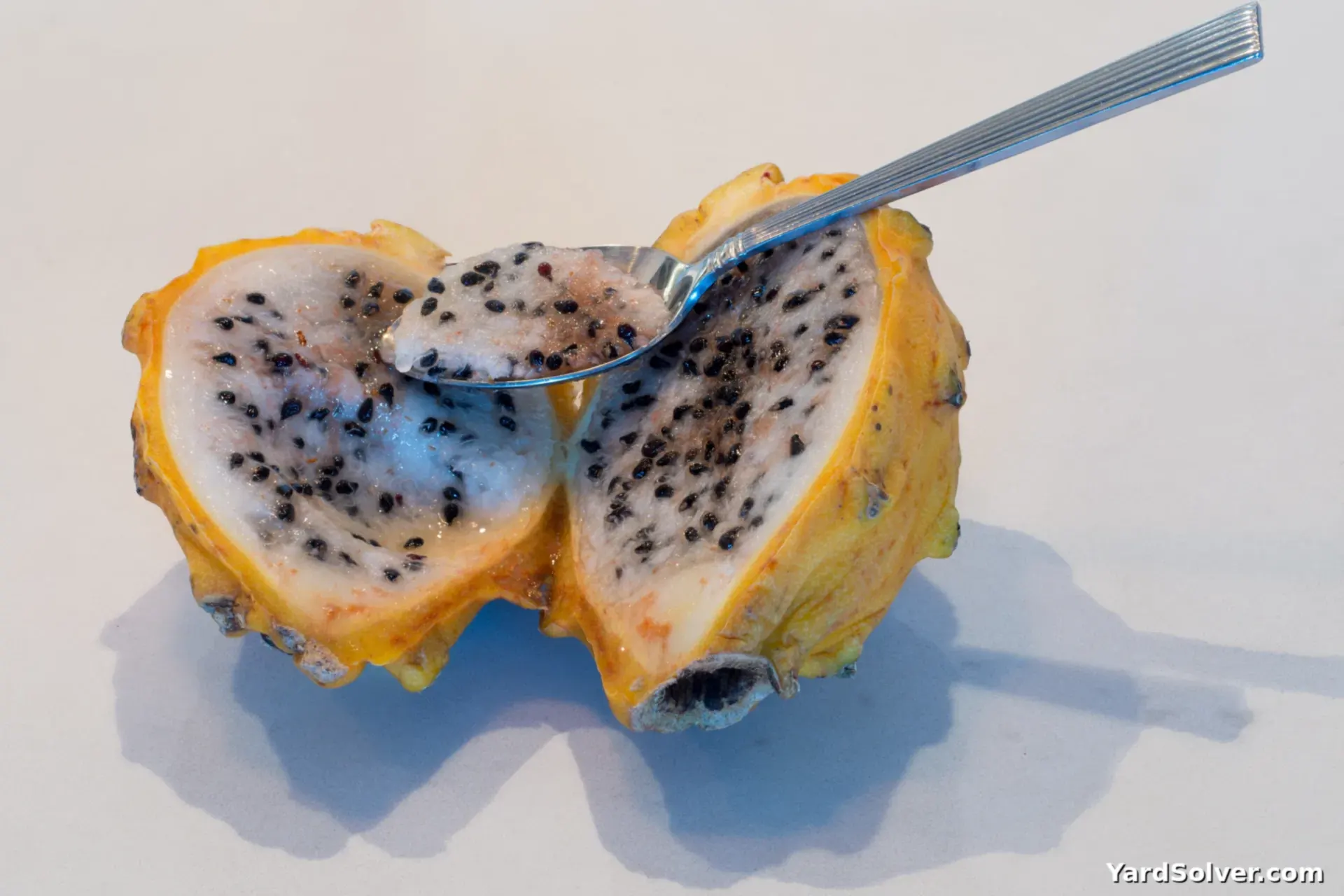
| Yellow Pitaya | Yellow skin, white flesh | The sweetest of all — slower and spikier |
Good for you — and take care
Benefits
- Fruits fast — 12–18 months from a cutting
- The night flowers are spectacular
- Rich in fibre, vitamin C and antioxidants
- Grows in a pot where winters are cold
Take care
- Give it a heavy post — a fruiting plant is heavy and a flimsy support will fall.
- The flowers open for one night — hand-pollinate with a brush if fruit set is poor.
- Water sparingly: it is a cactus first and a fruit plant second.
Problems to watch for
- Rot — overwatering and poor drainage are the number one killers; water like a cactus, not a tomato.
- Sunburn — in extreme heat the stems scorch; light afternoon shade in desert zones helps.
- No fruit — hand-pollinate the night flowers, or keep a second variety; some types need cross-pollination.
A little history — and one good fact
Dragon fruit — pitaya — comes from Central America, where the climbing cacti grow wild in forests. French growers carried it to Vietnam in the 1800s, and Vietnam made it famous: the name dragon fruit comes from its scaly, flame-like skin.
Fun fact: A dragon fruit flower blooms for a single night — it opens after dark, is pollinated by bats and moths, and is finished by sunrise.
Keep going
Guides: How to Harden Off Seedlings · How to Read a Seed Packet
Calculators: Plant Spacing Calculator · Seed Calculator · Fertilizer Calculator · Garden Mix Calculator
Plan it: Garden Planner · Planting Calendar · Companion Planting Chart · Seed Box
More tropical fruit: Passion Fruit · Avocado
← Back to the Plant Library · Get your personal planting dates
Questions people ask
When do I plant dragon fruit?
Plant cuttings or plants in spring, after frost danger passes — in the ground in zones 10–11, or in a large pot.
How far apart do I space dragon fruit?
One plant per heavy post, posts 6–10 ft apart. Sun: full sun.
When will my dragon fruit fruit?
Fruit in 12–18 months from cuttings. The flowers open for one night only — hand-pollinate if fruit set is poor.