
Plant Library · Fruit & Melons
🥑 How to Grow Avocado
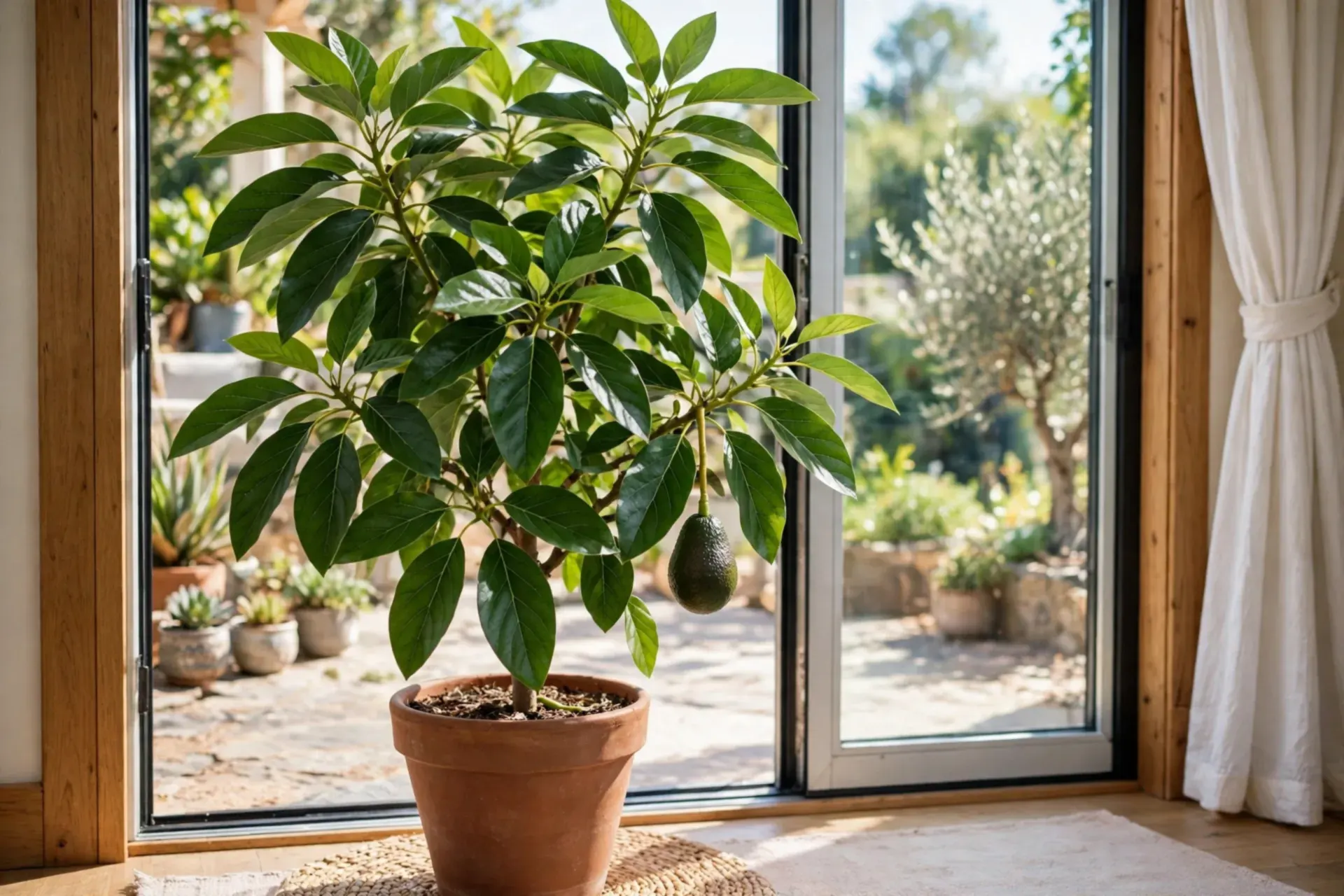
Buy a grafted tree if you want fruit — a pit is a fun project, not an orchard plan. Avocados are subtropical trees that grow outdoors year-round only in zones 9–11; everywhere else they live as potted trees that summer on the patio and winter in your brightest room — and even in a big pot, a grafted tree can fruit.
Grow Avocado with us — step by step
Everything for this plant is written step by step below — what to do, and exactly when. Read it through first if you like: you can grow it entirely on your own with that guide. Or start with us here — tell us your planting day and we lay out your personal schedule on this page, every next step on its own day, counted from your planting date. No guessing, no forgetting.
Step 1 — today: Plant your grafted Avocado tree today at the same depth it was in its pot, with the graft union above the soil, in the grittiest free-draining mix you can make, and water it in once. Starting a pit instead? Wash it, set it broad-end down in soil or suspended over water, and keep it warm and bright.
Avocado at a glance
Spacing: — (large pot) or 180–240 in apart in the ground · Planting depth: Same depth as in its pot, graft above soil
Sun: Full sun outdoors; brightest light indoors
Water: Even moisture with sharp drainage — wet feet kill avocados
Harvest: Fruit 3–6 years after planting a grafted tree; seed-grown trees take 5–13 years and may not match the parent
Timing counts from your average last spring frost — get your own dates in the Planting Calendar. Guidance follows standard extension-service practice for Canada and the US.
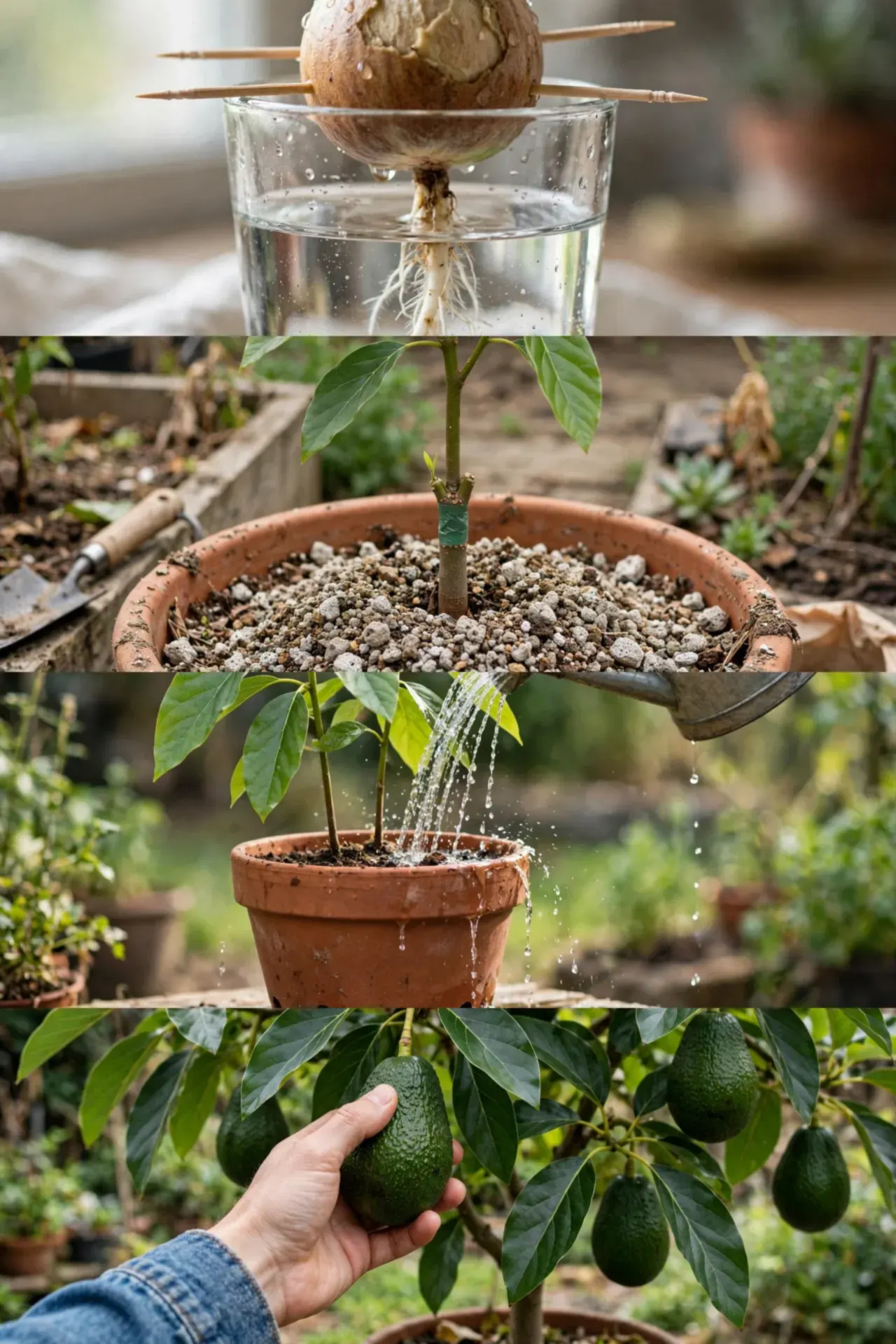
How to plant and grow avocado, step by step
Step 1 — Choose a grafted tree — or start a pit
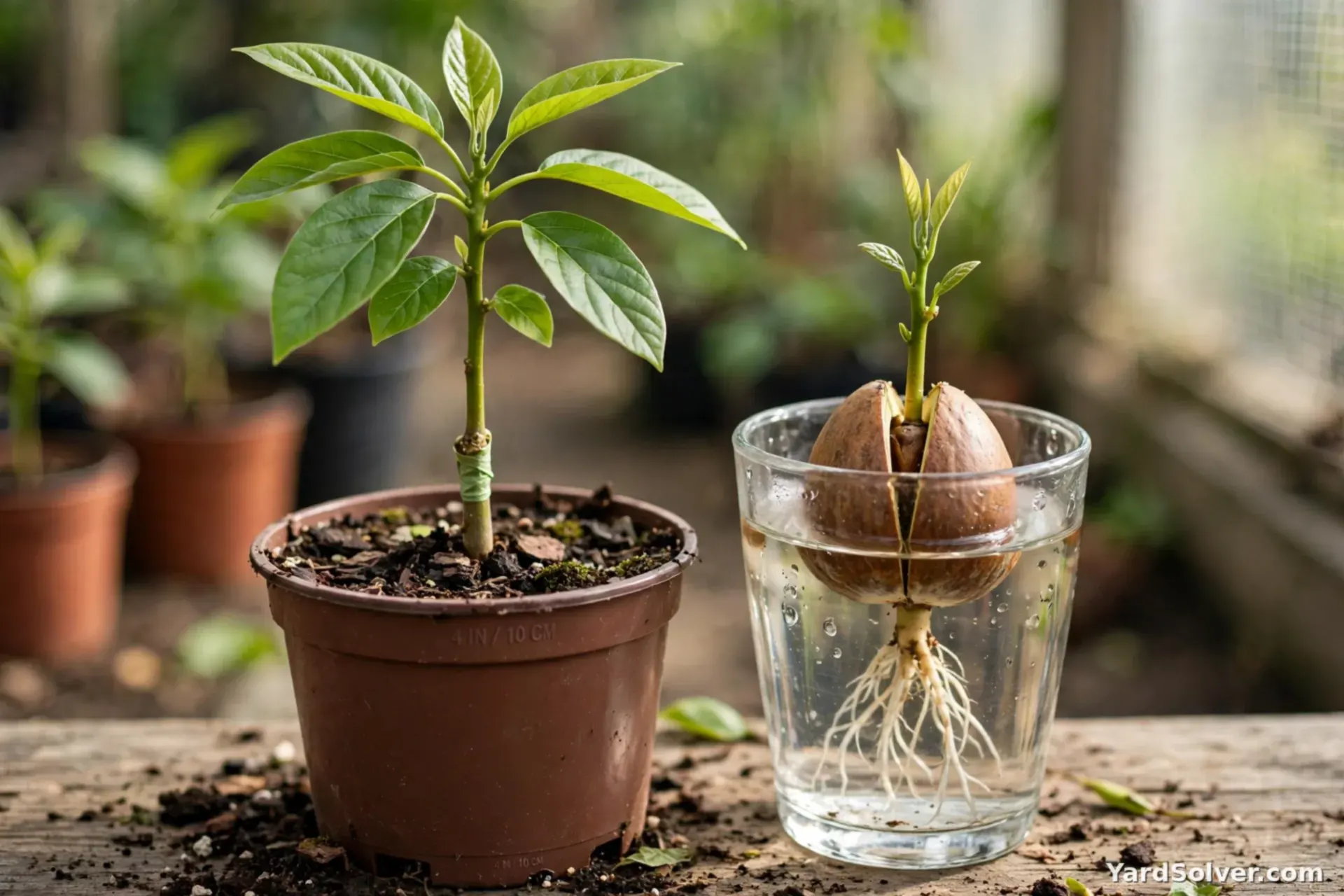
Be honest about timescales before you start. A grafted tree — a known variety such as ‘Hass’ joined onto a seedling rootstock — fruits in 3–6 years and gives you fruit true to the variety. A tree grown from a supermarket pit takes 5–13 years to fruit, if it fruits at all, and the fruit usually does not match the parent. Grow the pit for the fun of it, by all means — but if fruit is the goal, the grafted tree is the plan. Outdoors year-round is for zones 9–11 only.
Step 2 — Prepare the spot — drainage above all
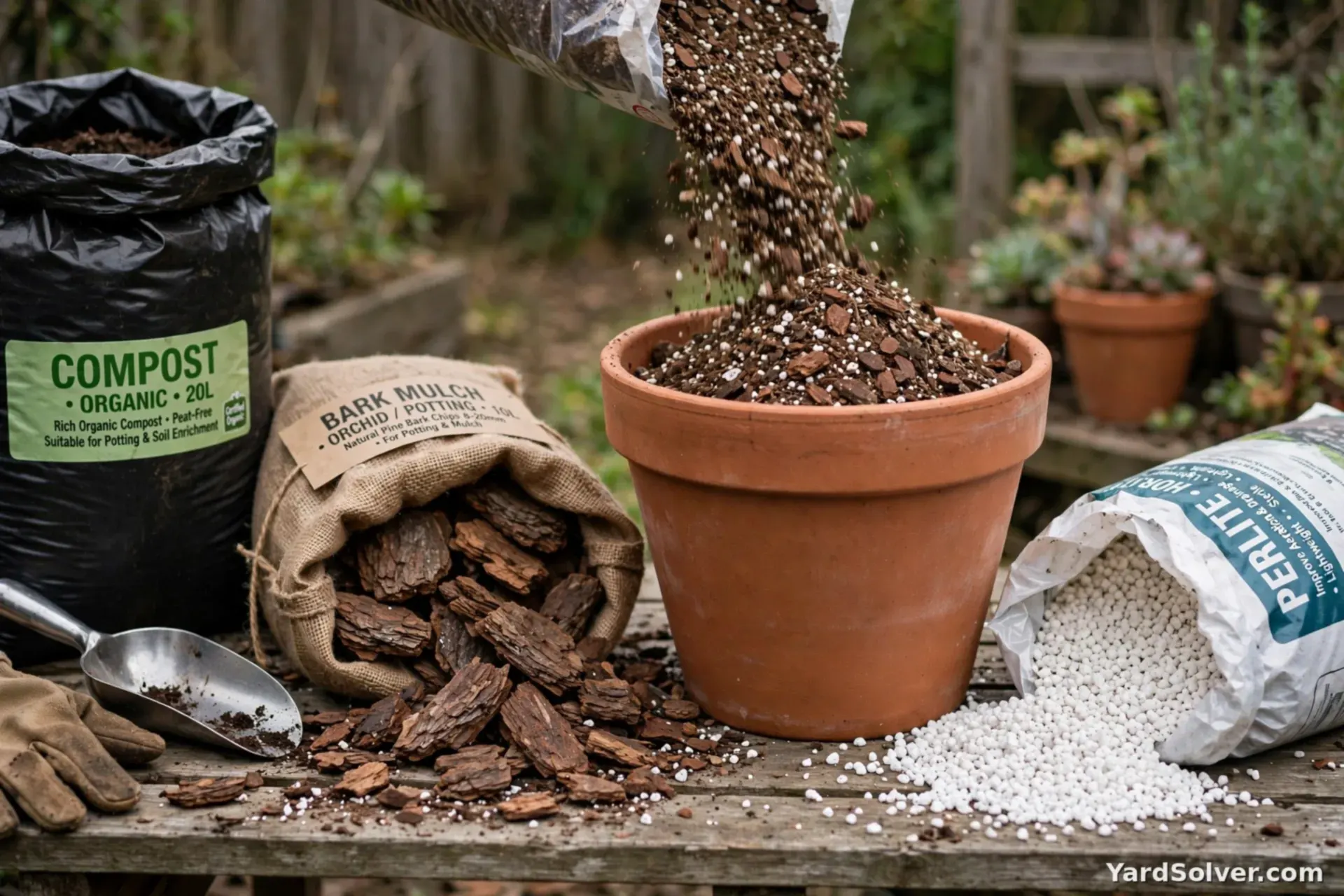
Avocados die of wet roots more than anything else, so build the mix for drainage: potting mix with a generous third of bark chunks and perlite or coarse grit stirred through. In a pot, choose the largest you can move — a tree that summers outside has to come in for winter — with big drainage holes. In the ground (zones 9–11), plant on a slight mound in the sunniest, most sheltered spot, spaced 180–240 in from other trees: a mature avocado is a large tree. Work out soil volumes with the Garden Mix Calculator.
Step 3 — Plant it — graft above the soil
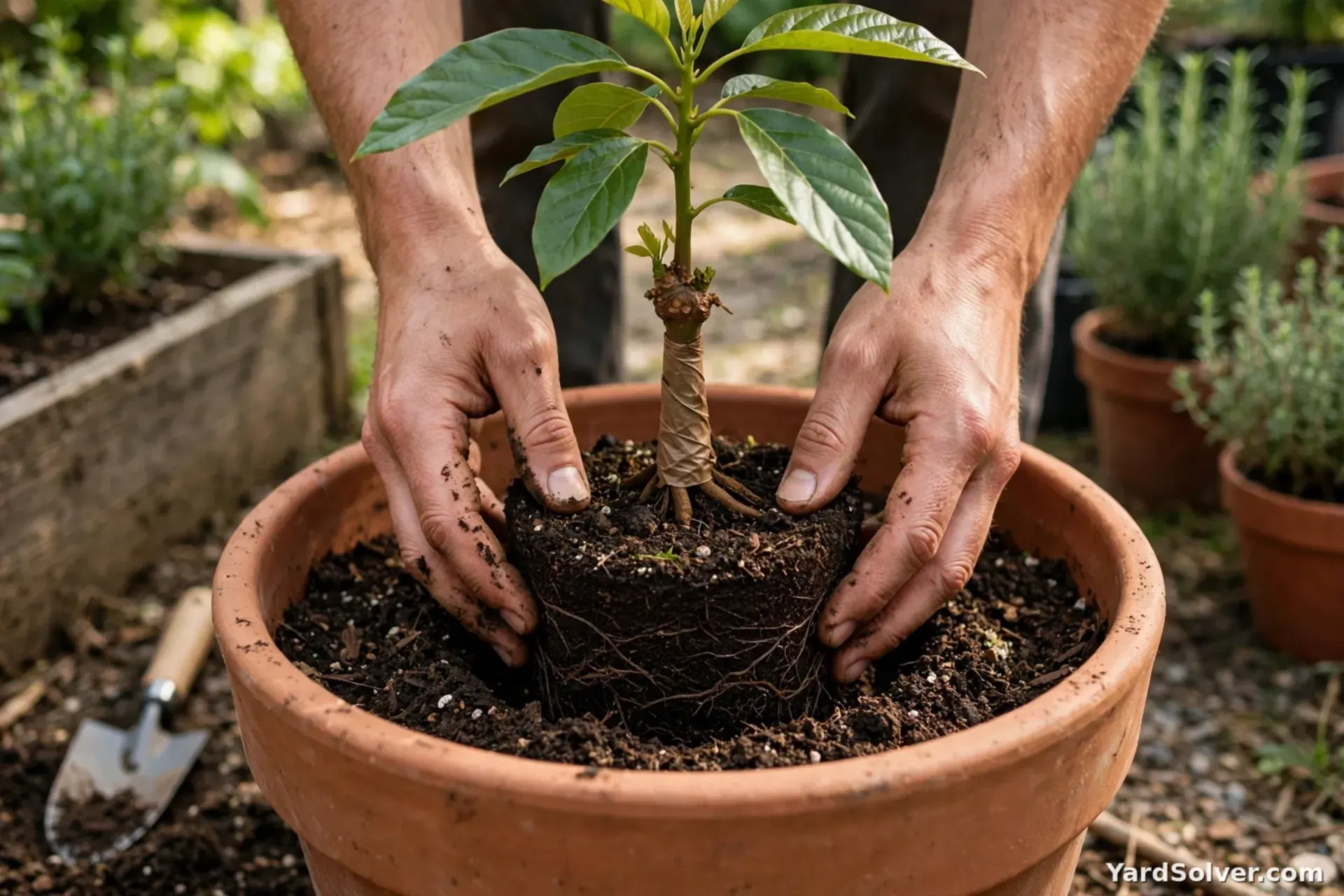
Set the tree at the same depth it grew in its nursery pot, with the graft union — the knobbly join low on the trunk — clearly above the soil. A buried graft lets the fruiting variety root for itself and can lose the rootstock’s disease resistance. Firm the mix around the root ball, water once deeply to settle it, and mulch the surface, keeping mulch off the trunk. For a pit: plant it broad-end down with the top third above the soil, or start it over water and pot it up once roots and a stem appear.
Step 4 — Water and feed
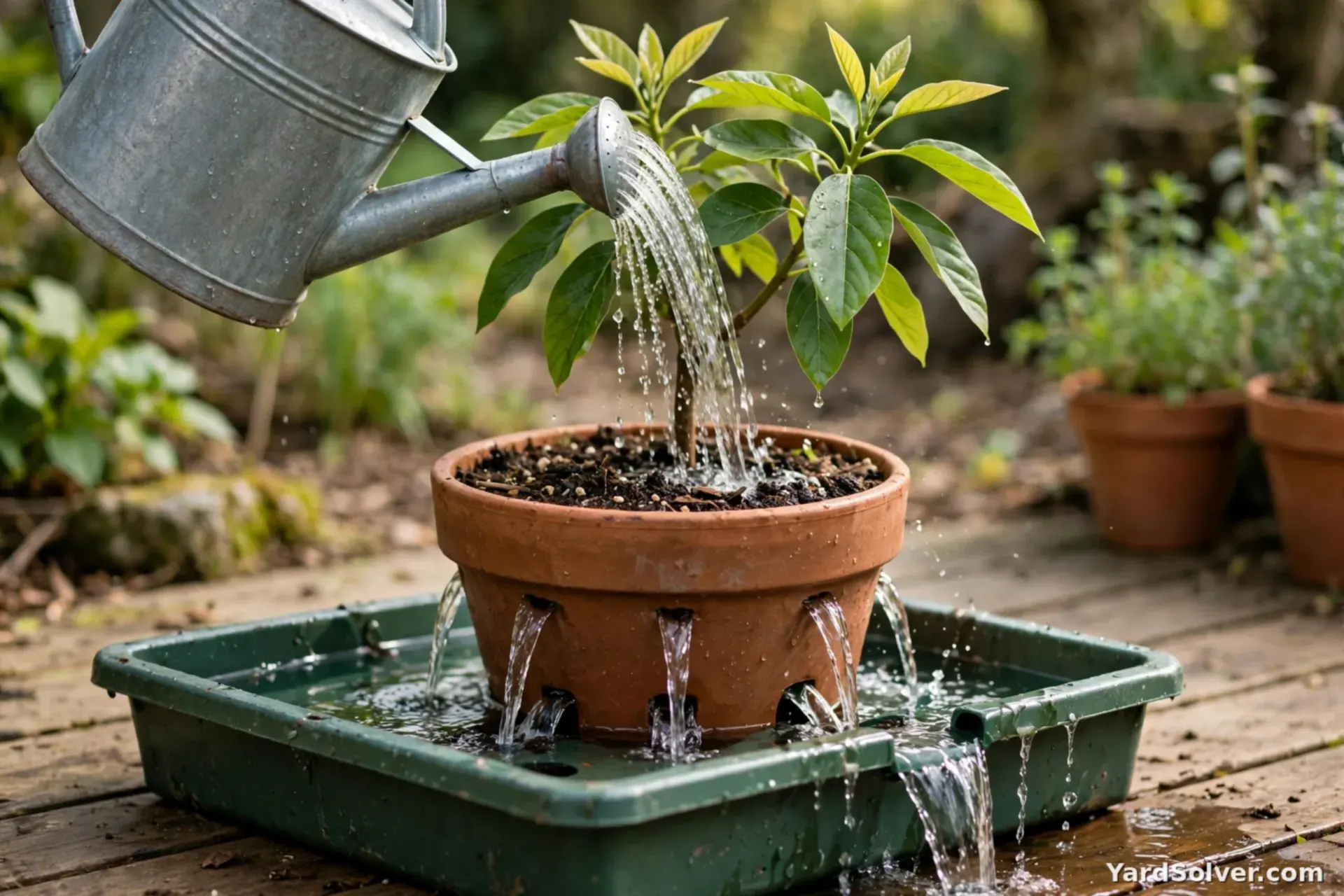
Water: even moisture with sharp drainage — wet feet kill avocados. Water when the top couple of inches have dried, then water thoroughly and empty the saucer. Avocados are salt-sensitive: fertilizer and tap-water salts build up in pots and burn the leaf tips, so every month or two, flush the pot with plain water until it runs clear from the base. Feed in spring and summer with a balanced feed at label strength — the Fertilizer Calculator keeps the dose honest — and stop over winter.
Step 5 — Care and problems
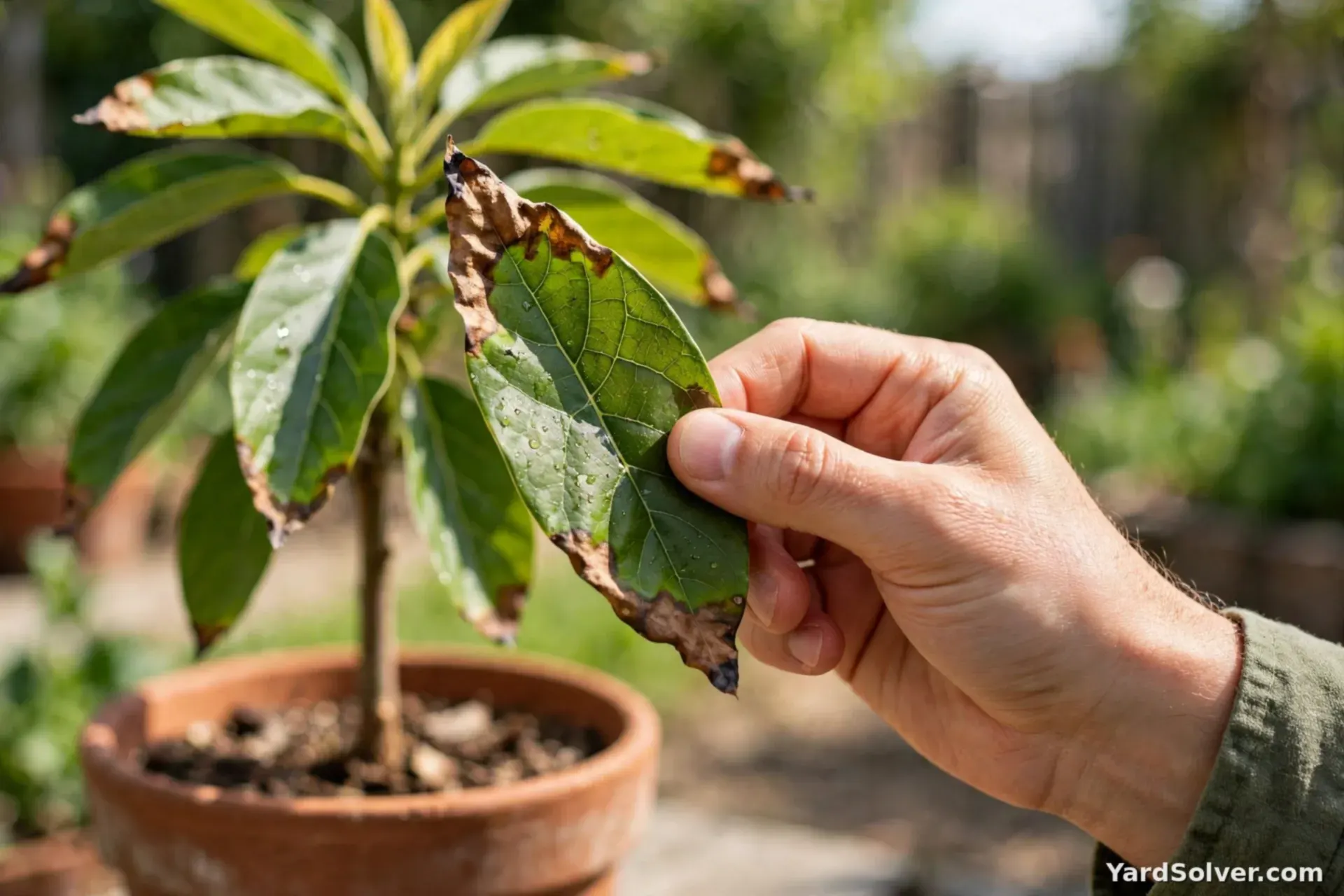
Three troubles account for nearly every sick avocado. Root rot is the killer — it starts in soggy mix, so drainage and restraint with the watering can are the whole defence. Salt burn shows as brown leaf tips and edges; flush the pot and ease off the feed. Cold damage blackens leaves and young shoots overnight — a potted tree comes in well before frost, and an outdoor tree in a marginal zone gets a fleece cover on cold nights.
- Root rot — wilting in wet mix, black soft roots; drainage first, always.
- Salt burn — brown tips and leaf edges on potted trees; flush with plain water.
- Cold damage — blackened leaves after a frosty night; protect or bring in before it happens.
Take care: avocado leaves, bark and pits contain persin, which is toxic to birds and livestock and can upset dogs and cats — keep prunings, fallen leaves and pits away from animals.
Step 6 — Fruit and harvest
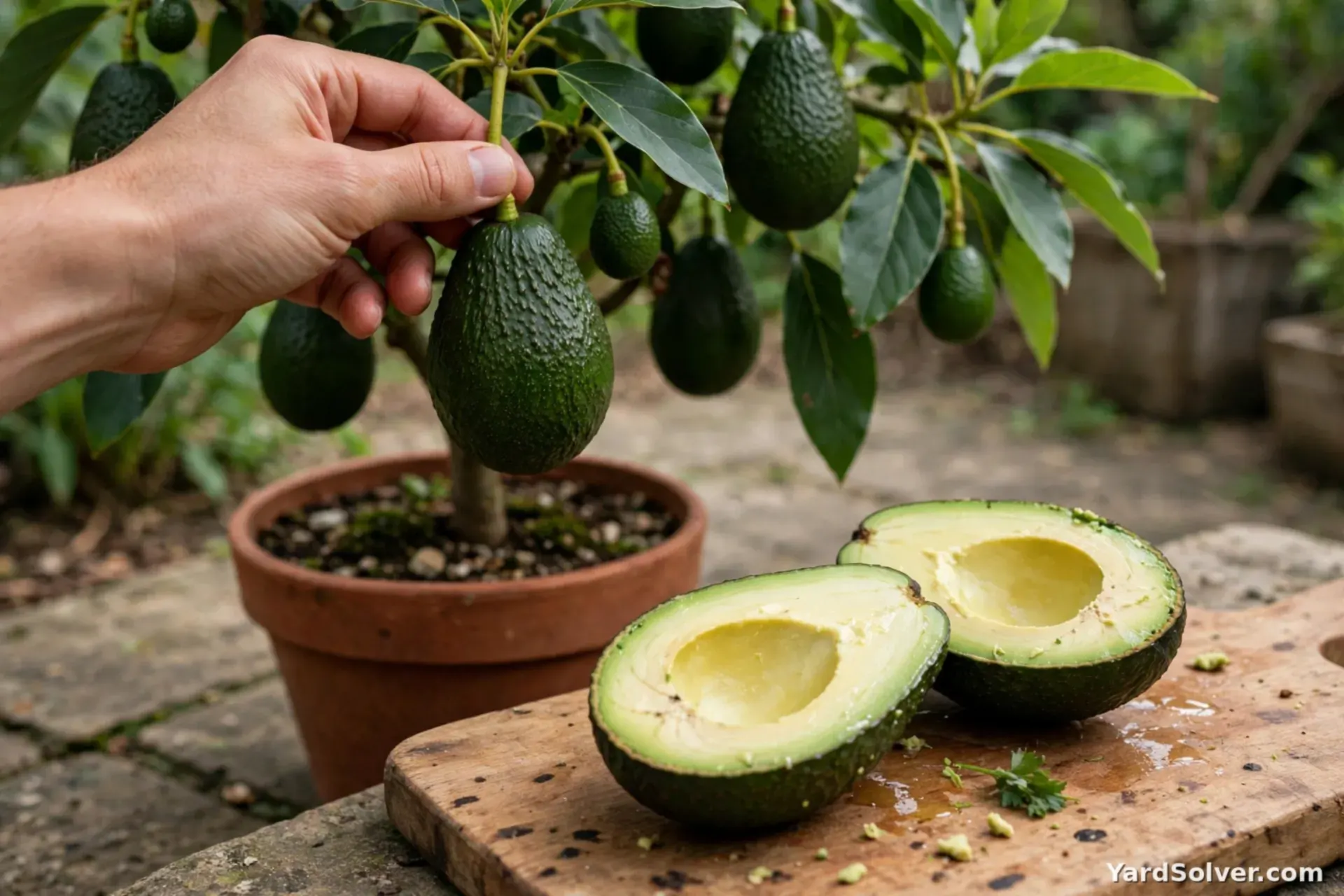
Ready in: 3–6 years from a grafted tree. Here is the part that surprises everyone: avocados do not ripen on the tree — they mature, then hang there for months staying hard until picked. Judge maturity by size and variety (and by one test fruit: pick it, and if it softens evenly indoors in a week or so without shrivelling, the rest are ready). Ripen picked fruit at room temperature; a paper bag with a banana speeds it along. Young trees drop many small fruitlets in early summer — that thinning is normal, not a failure.
Problems, pests & diseases — diagnosis and fixes
- Whole tree wilting although the mix is wet, roots black and soft, leaves dropping: Phytophthora root rot — the number one avocado killer, and it starts in soggy mix. Fix: unpot, cut roots back to firm white tissue, repot into fresh gritty mix in a clean pot with drainage, and water once lightly; badly rotted trees rarely recover, so prevention (drainage, restraint) is the real fix.
- Brown, scorched leaf tips and edges, worst on older leaves of a potted tree: salt burn from fertilizer and water salts building up in the pot. Fix: flush the pot slowly with plain water until it runs clear, resume feeding at half strength, and repeat the flush every month or two.
- Pale or white blistered patches on the young trunk, cracking bark on the sun side: sunburn — young avocado bark burns easily. Fix: shade the trunk for its first summers outdoors, or whitewash it with diluted white latex paint as orchards do; damaged bark does not heal, but the tree grows past it.
- Blackened leaves and soft black shoot tips after a cold night: cold damage. Fix: wait until spring before pruning — apparently dead wood often hides live buds — then cut back to green wood; move pots in before frost and cover outdoor trees on cold nights.
- Dark sunken spots on fruit, sometimes with cracking: anthracnose, a fungal disease that shows as fruit ripens. Fix: pick and bin affected fruit, keep fallen fruit cleaned up, improve airflow, and avoid wetting the canopy when you water.
- Many tiny fruitlets dropping in early summer: usually normal self-thinning — a tree keeps only the fruit it can carry. Fix: none needed if the tree looks healthy; if drop comes with wilting or yellowing, check watering stress (too wet or too dry) instead.
📅 Your personal Avocado schedule
Avocado care is seasonal, not day-counted — feed in spring and summer, keep the water steady, and protect the tree from frost. The dated checks below cover the settling-in month, the pinch point for pit-grown plants, and a feed-and-light check.
Varieties worth growing
| Variety | Colour | Why gardeners like it |
|---|---|---|
| Hass | Dark green, ripening near-black | The famous creamy supermarket avocado — a grafted tree is how you get the real thing at home |
| Fuerte | Smooth green | A green-skinned classic with rich, buttery flesh, ripening through winter |
| Bacon | Smooth green | One of the hardier types, marginal in zone 8b with protection — thin skin and a mild flavour |
| Mexicola | Small, dark purple-black | Among the hardiest avocados of all, with anise-scented leaves and small, rich fruit |
| Wurtz | Green | A true dwarf (also sold as ‘Little Cado’) that stays small enough for pots — the patio pick |
Good for you — and take care
Benefits
- The flesh is rich in monounsaturated fats, the same family of fats as olive oil
- Provides potassium and fibre in good amounts
- A source of vitamin E, vitamin K and folate
- A handsome, glossy evergreen tree even in the years before it fruits
- Fruit picked from your own tree ripens with no food miles attached
Take care
- Leaves, bark and the pit contain persin, toxic to pets — birds and livestock especially — so keep prunings and pits away from animals
- Unripe fruit and the pit are not for eating by people or pets; eat the flesh ripe
- In the ground an avocado becomes a large tree (often 30 ft or more) — plant it where it has room, or keep it in a pot
A little history — and one good fact
Avocados come from the highlands of south-central Mexico, where they were grown for thousands of years before Spanish conquistadors recorded them; the name traces back through Spanish aguacate to the Nahuatl word āhuacatl. The variety that fills the world’s shops is a single lucky seedling: postman Rudolph Hass planted the seed in California in 1926, patented the tree in 1935, and every ‘Hass’ tree since descends from that one mother tree.
Fun fact: An avocado ripens only after it is picked — left on the tree, a mature fruit can hang for months without softening, which is why growers call the tree its own warehouse.
Keep going
Guides: Companion Planting Chart · How to Get Rid of Aphids · How to Get Rid of Powdery Mildew
Calculators: Plant Spacing Calculator · Mulch Calculator · Fertilizer Calculator
More fruit & melons: Blackberry · Lemon Tree · Fig Tree · Grapefruit Tree · Kumquat Tree
← Back to the Plant Library · Get your personal planting dates
Questions people ask
When do I plant an avocado?
Plant a grafted tree in spring, after the last frost if it will spend summer outdoors — outdoors year-round only works in zones 9–11. Everywhere else, plant into a large pot that summers outside and winters in your brightest room.
How far apart do I space avocado trees?
In the ground, space trees 180–240 in apart — they become large trees. In a pot, one tree to a large pot, planted at the same depth it was in its nursery pot with the graft union above the soil. Sun: full sun outdoors; brightest light indoors.
When will my avocado tree fruit?
Fruit 3–6 years after planting a grafted tree; seed-grown trees take 5–13 years and may not match the parent. Pick fruit mature and ripen it indoors — avocados do not ripen on the tree.