
Plant Library · Vegetables
🥗 How to Grow Endive
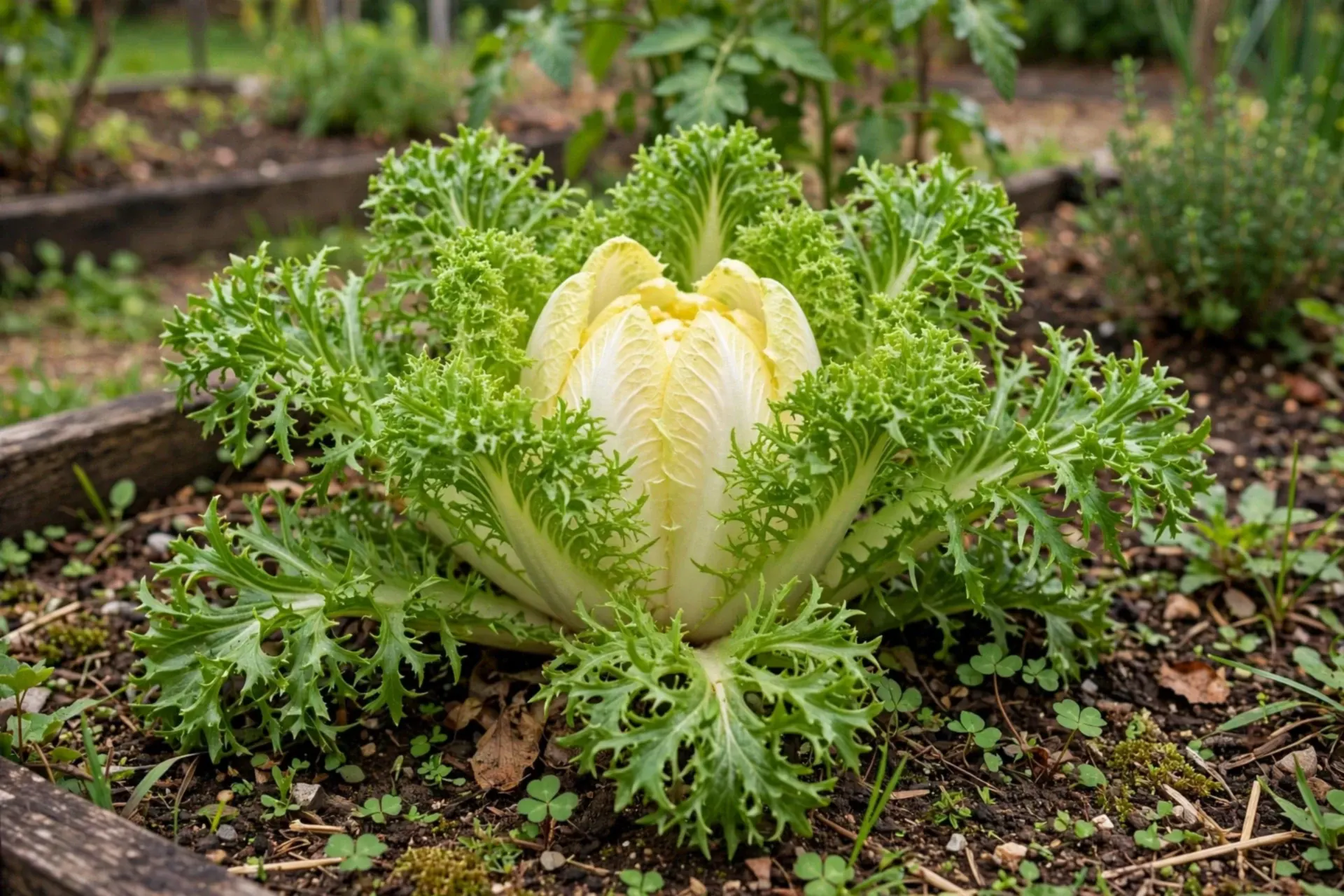
A salad green from the chicory family — this page covers curly endive, broad-leaved escarole and their chicory cousins: cool-weather crops whose hearts are often blanched pale and mild. Endive belongs to the chicory family, and this page covers its two garden forms — curly endive (frisée) and broad-leaved escarole — plus family habits shared with radicchio and witloof chicory. Grow it like a cool-season lettuce: sow for spring and late-summer crops, keep it watered, and blanch the hearts if you want them pale and mild.
Grow Endive with us — step by step
Everything for this plant is written step by step below — what to do, and exactly when. Read it through first if you like: you can grow it entirely on your own with that guide. Or start with us here — tell us your planting day and we lay out your personal schedule on this page, every next step on its own day, counted from your planting date. No guessing, no forgetting.
Step 1 — today: Plant out your young Endive plants today, spaced 8–12 in apart, and water them in well. Starting from seed outdoors instead? Sow 1/4 in deep where they will grow, and this schedule counts from that day.
Endive at a glance
Sow indoors: 6 weeks before last frost
Move outside: 2 weeks before last frost
Sow outdoors: 2 weeks before last frost
Spacing: 8–12 in · Seed depth: 1/4 in
Sun: Full sun to part shade
Water: Keep evenly moist — dry spells make the leaves bitter and tough
Harvest: 60–80 days
Timing counts from your average last spring frost — get your own dates in the Planting Calendar. Guidance follows standard extension-service practice for Canada and the US.
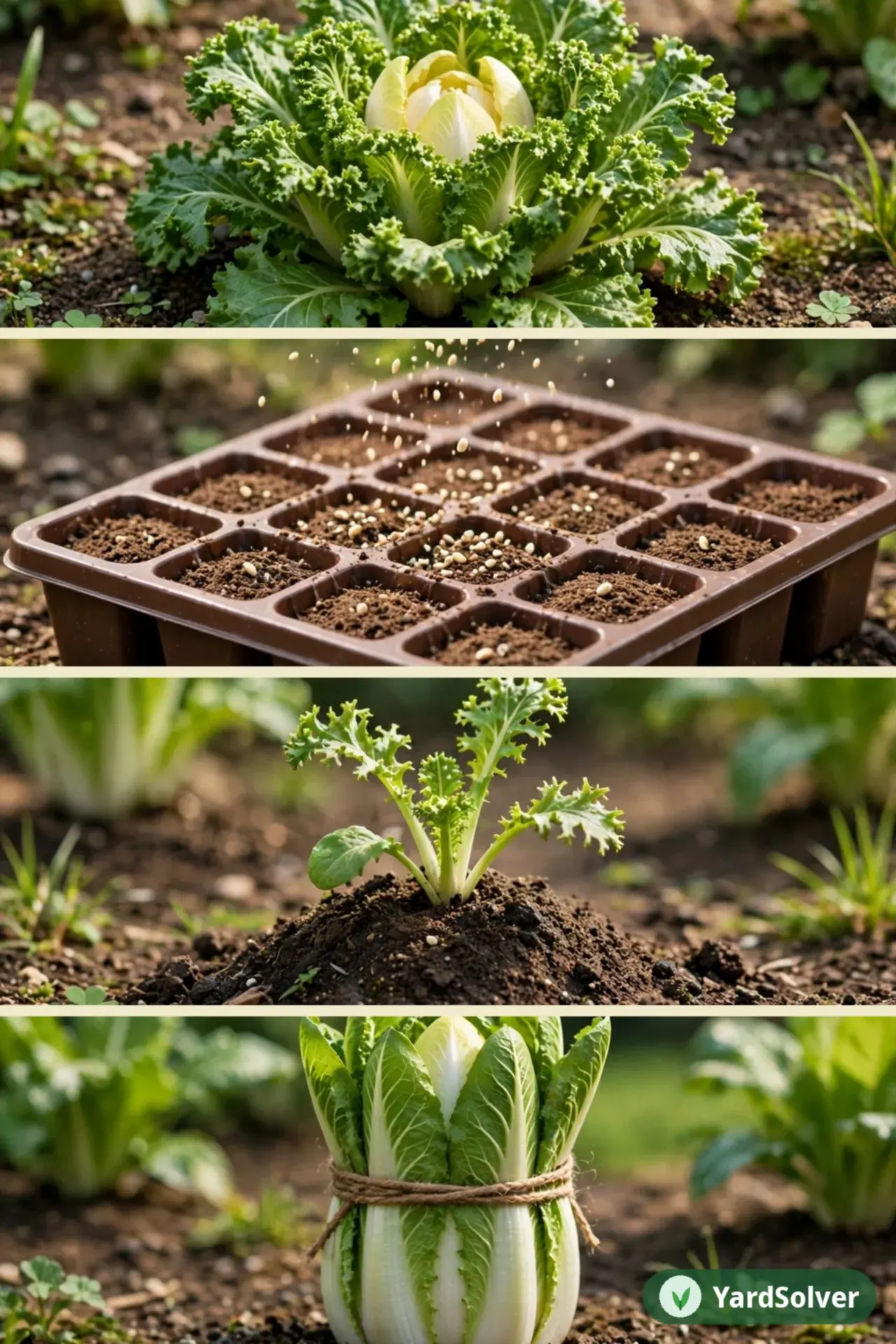
How to plant and grow endive, step by step
Step 1 — Time it right
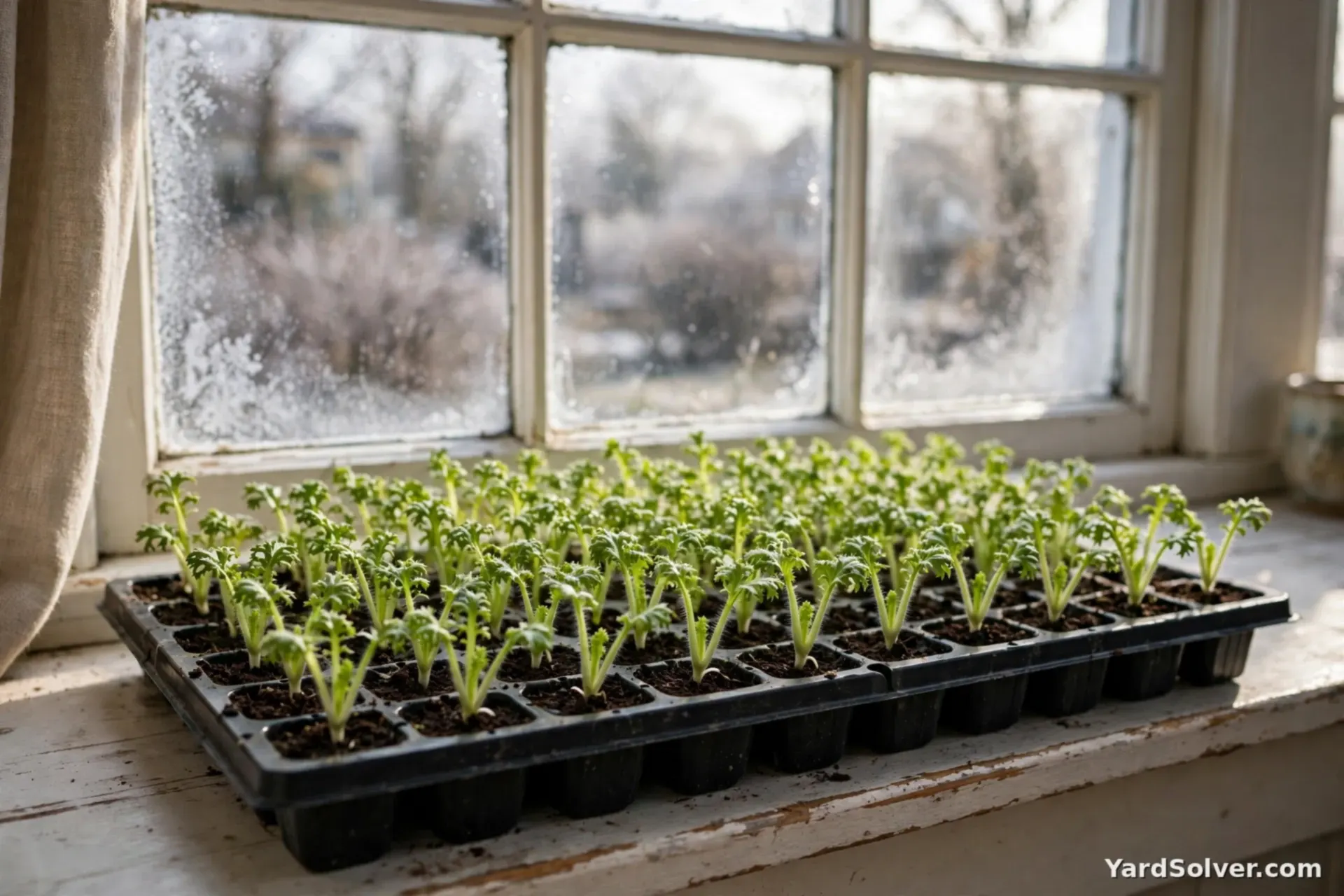
Sow indoors: 6 weeks before last frost; Move outside: 2 weeks before last frost; Sow outdoors: 2 weeks before last frost. All dates count from your average last spring frost — the Planting Calendar turns them into real dates for your garden. Endive belongs to the chicory family, and this page covers its two garden forms — curly endive (frisée) and broad-leaved escarole — plus family habits shared with radicchio and witloof chicory. Grow it like a cool-season lettuce: sow for spring and late-summer crops, keep it watered, and blanch the hearts if you want them pale and mild.
Step 2 — Prepare the spot

Sun: Full sun to part shade. Rich, moisture-holding soil — work in compost before planting, because endive that grows fast in damp ground stays tender and sweet. Work out how much you need with the Garden Mix Calculator or the Raised Bed Soil Calculator.
Step 3 — Sow and plant out

Start seed indoors 6 weeks before last frost, sowing 1/4 in deep, or sow directly outside 2 weeks before last frost where the plants will grow. Harden indoor seedlings off over 7–10 days (see How to Harden Off Seedlings) and move them outside 2 weeks before last frost, spaced 8–12 in apart. The Plant Spacing Calculator turns that spacing into plants-per-bed.
Step 4 — Water and feed

Water: Keep evenly moist — dry spells make the leaves bitter and tough. First feed: around day 30 — A nitrogen feed about a month in keeps the rosettes growing fast — fast growth is what keeps endive tender rather than tough. The Fertilizer Calculator turns a bed size into the right amount.
Step 5 — Care and the problems to watch for
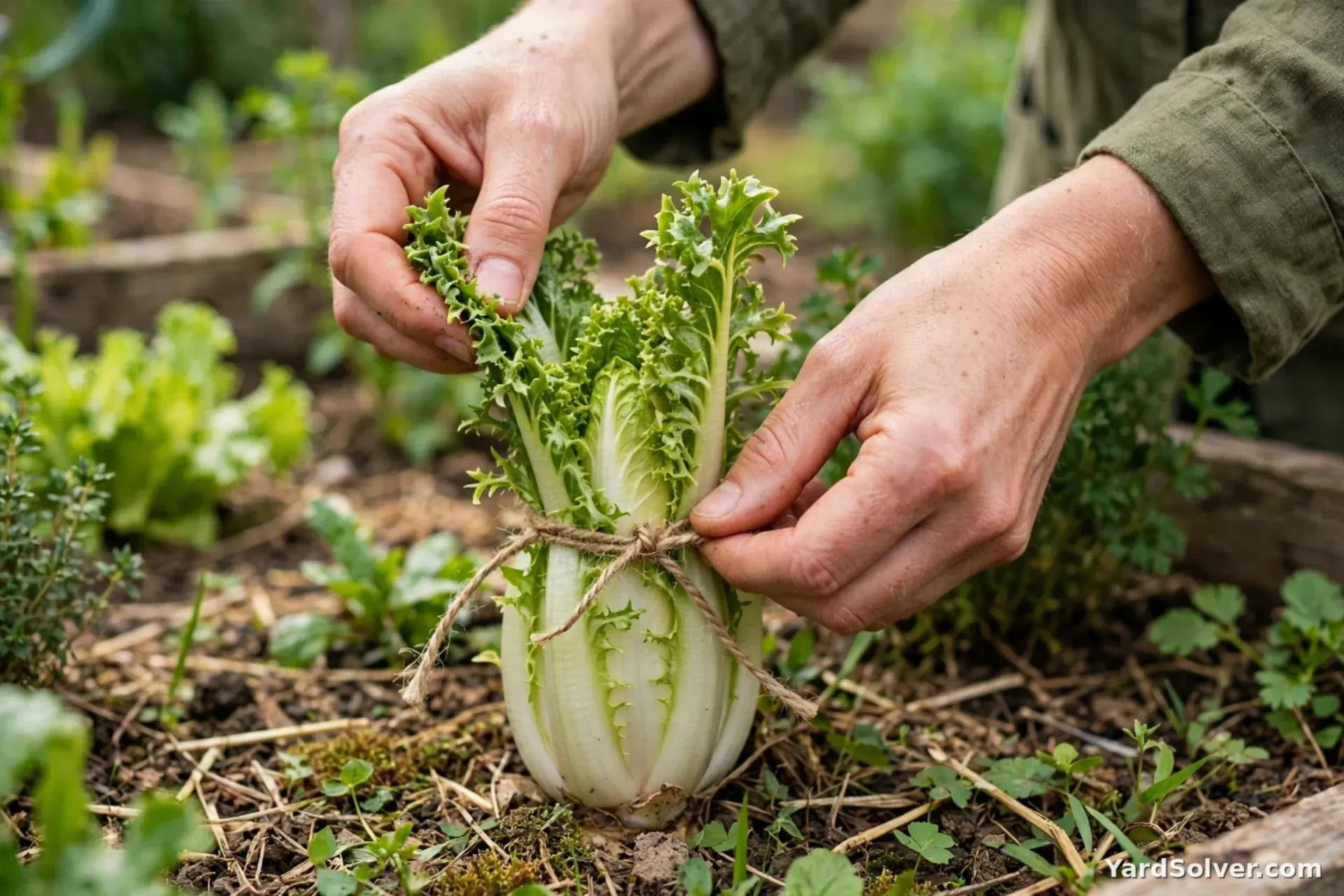
- Bitterness — hot, dry weather is the cause; grow endive in the cool ends of the season, water well, and blanch hearts before cutting.
- Bolting — long hot days send plants to seed; late-summer sowings for fall are the most reliable in warm gardens.
- Slugs — they shelter in the tight hearts; check under outer leaves and use your usual slug defences.
Take care: Wash endive leaf by leaf — grit and the odd slug hide deep in the heart.
Step 6 — Harvest
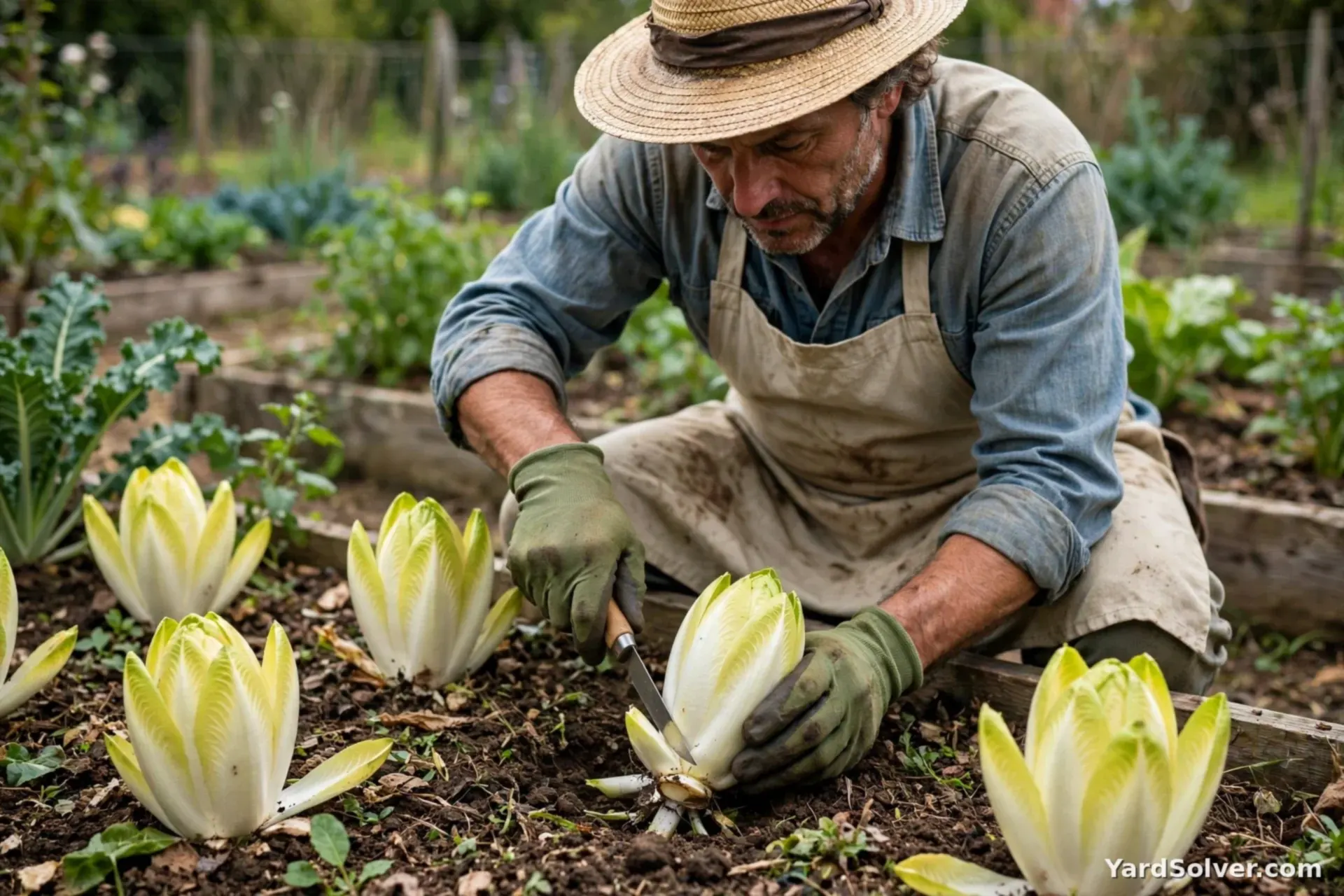
Ready in: 60–80 days. Cut whole heads from about day 60 once the heart is firm; unblanched heads are perfectly good — just stronger-flavoured.
📅 Your personal Endive schedule
Counted from your planting day — not a generic calendar. Day 0 is the day the seed went in the ground or the young plant went out.
Varieties worth growing
| Variety | Colour | Why gardeners like it |
|---|---|---|
| Frisée (Curly Endive) | Pale green, frilled | The classic curly endive — lacy leaves that blanch to a pale, mild heart |
| Escarole Natacha | Broad green | Broad, lettuce-like leaves — the mildest endive, good cooked or raw |
| Radicchio Rosso di Chioggia | Red and white | Endive's chicory cousin — round red heads that colour up as nights cool |
| Sugarloaf Chicory | Pale green | A tall chicory that forms a romaine-like head; sweet for a chicory |
| Witloof (Belgian Endive) | Creamy white | Grown in two stages — roots in summer, then forced in darkness for pale chicons |
Good for you — and take care
Benefits
- Provides vitamin A and folate
- A source of fibre that supports good digestion
- Contains inulin, a fibre that feeds good gut bacteria
- Very low in calories
- The bitter compounds in chicory-family greens are the same ones traditional cooks valued as a spring tonic
Take care
- The bitter flavour is natural — blanching the heart, not breeding, is what makes it mild
- Wash thoroughly leaf by leaf before eating
- People allergic to ragweed sometimes react to chicory-family plants — try a small serving first
A little history — and one good fact
Endives and chicories have been grown around the Mediterranean since Egyptian and Roman times — among the oldest salad crops we have. Belgian endive was a happy accident: in the 1850s a Belgian farmer found chicory roots stored in a dark cellar had sprouted pale, tender chicons, and a new vegetable was born.
Fun fact: Chicory and endive are close enough cousins that gardeners argue about their names — even seed catalogues mix them up.
Keep going
Guides: Why Is My Lettuce Bolting? · How to Stop Slugs Eating Plants · Best Vegetables for a Small Garden
Calculators: Plant Spacing Calculator · Seed Calculator · Fertilizer Calculator · Garden Mix Calculator
More vegetables: Lettuce · Arugula · Fennel
← Back to the Plant Library · Get your personal planting dates
Questions people ask
When do I plant endive?
Count from your average last spring frost: sow indoors 6 weeks before last frost; move outside 2 weeks before last frost; sow outdoors 2 weeks before last frost. Endive belongs to the chicory family, and this page covers its two garden forms — curly endive (frisée) and broad-leaved escarole — plus family habits shared with radicchio and witloof chicory. Grow it like a cool-season lettuce: sow for spring and late-summer crops, keep it watered, and blanch the hearts if you want them pale and mild.
How far apart do I space endive?
Space plants 8–12 in apart, with seed sown 1/4 in deep. Sun: full sun to part shade.
When is endive ready to harvest?
60–80 days. A salad green from the chicory family — this page covers curly endive, broad-leaved escarole and their chicory cousins: cool-weather crops whose hearts are often blanched pale and mild.