
Guides · Indoor growing · Published November 3, 2026
Indoor Hydroponics for Beginners
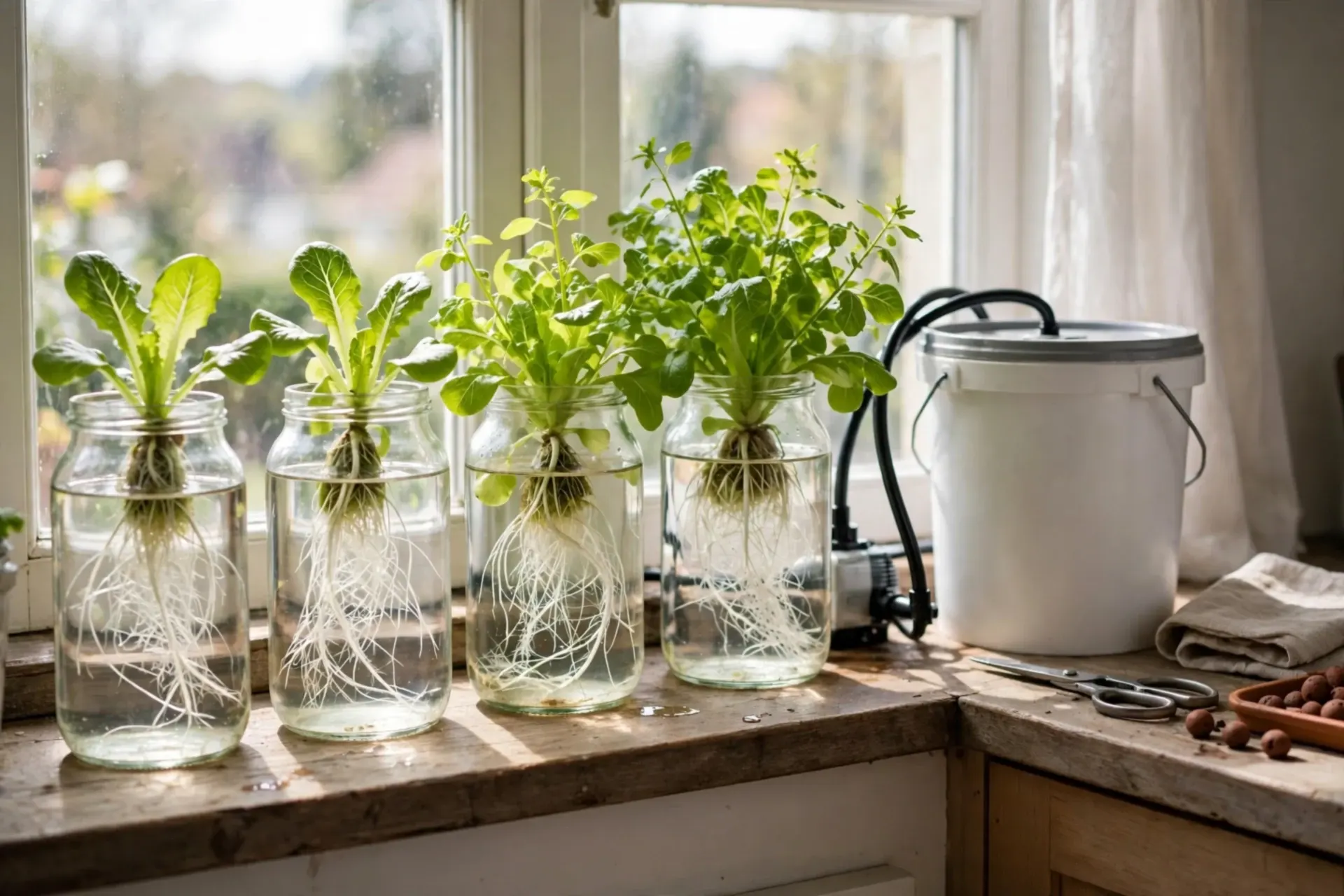
Hydroponics means growing plants with roots in water instead of soil. Around it sits an industry of towers, apps and glowing cabinets a beginner does not need. This guide strips it back: what is actually happening, three systems simple enough for a windowsill, what grows well, what it honestly costs next to soil, and the classic failures of month one.
The whole idea on one card
- Soil is a middleman: roots want water, dissolved minerals and oxygen — soil just stores and delivers them
- You become the soil: a measured nutrient solution replaces the pantry, and you manage it
- Light is the ceiling: indoors, light — not the system — decides how well things grow
- Best at leafy and fast: lettuce, herbs and greens are the natural hydroponic crops; fruiting giants are the advanced class
Step 1 — Understand what the plant actually needs
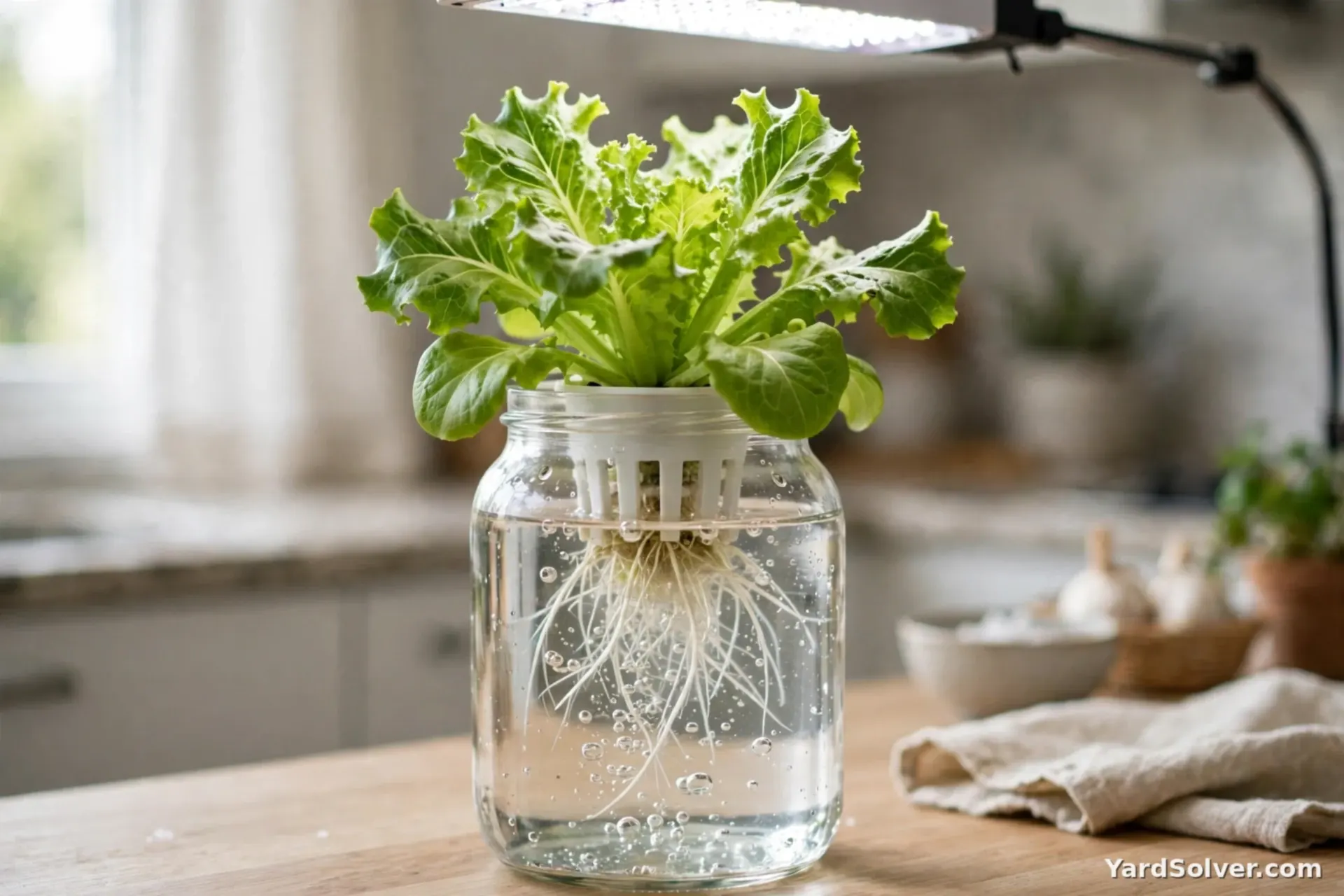
A root is not eating soil — it drinks water with minerals dissolved in it, and breathes oxygen from air pockets between crumbs. Hydroponics hands it those three things directly: water, a nutrient solution (minerals dissolved at a measured strength), and oxygen, which still water holds only in small amounts. That last point shapes every system below — most of their cleverness is oxygen delivery. Light does the actual growing, which is why indoor setups live or die by their lamp — see Why Are My Seedlings Leggy?.
Step 2 — Pick the simplest system: Kratky, wick or DWC
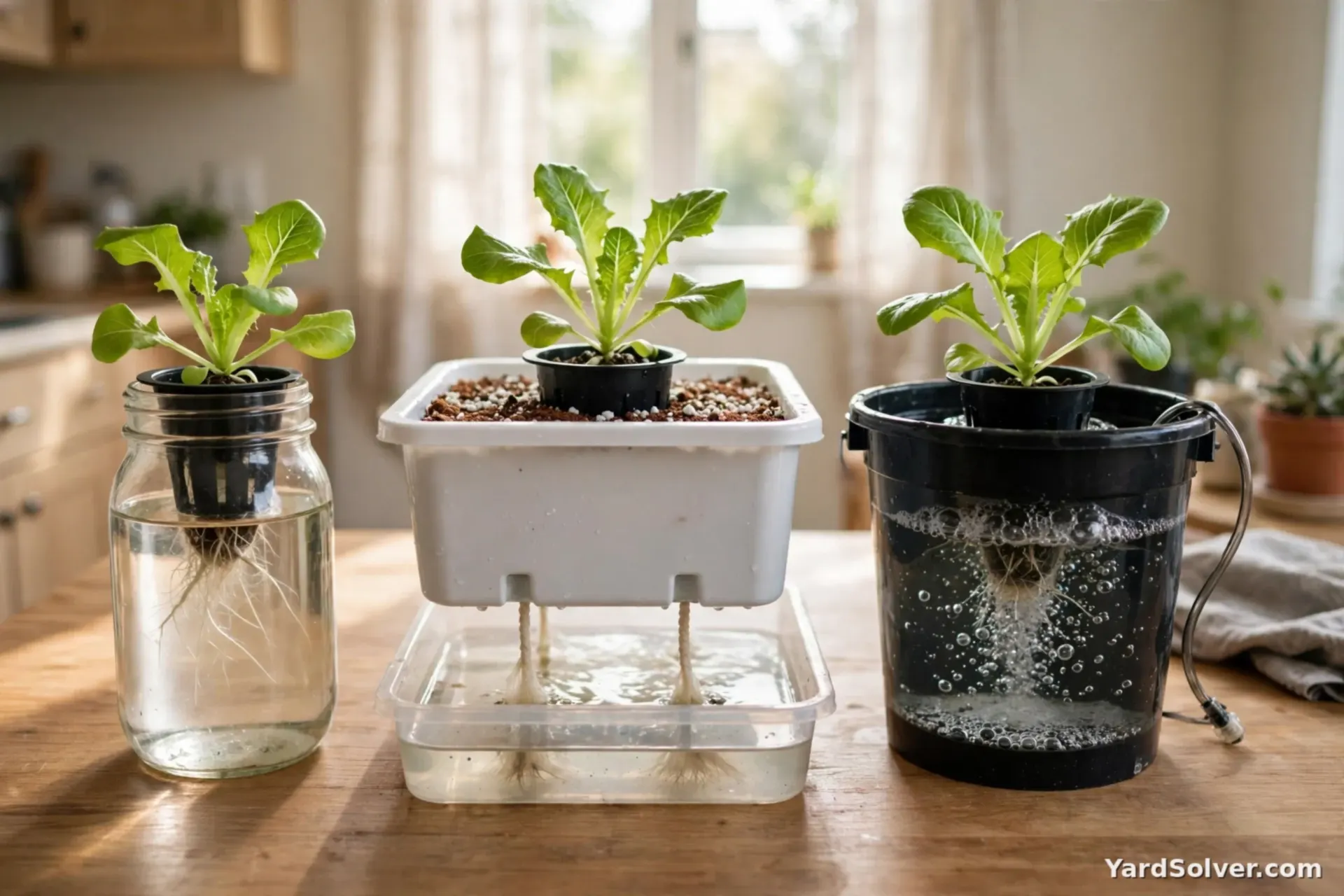
Kratky: a jar of nutrient solution, the plant in a small net cup at the top, roots dangling into the liquid. No pump, no electricity, nothing to break. As the plant drinks, the falling level leaves an air gap that feeds the upper roots. A lettuce in a jar teaches the whole idea for almost no money. Wick: a cord pulls solution from a reservoir up into a pot of perlite or coir by capillary action — gentle, silent, suited to small herbs, not thirsty plants. DWC (deep water culture): a bucket of solution with an aquarium air pump bubbling through it, so the roots sit in oxygen-rich water. It grows fastest of the three — and is the first that plugs into the wall.
Step 3 — Grow what hydroponics is genuinely good at
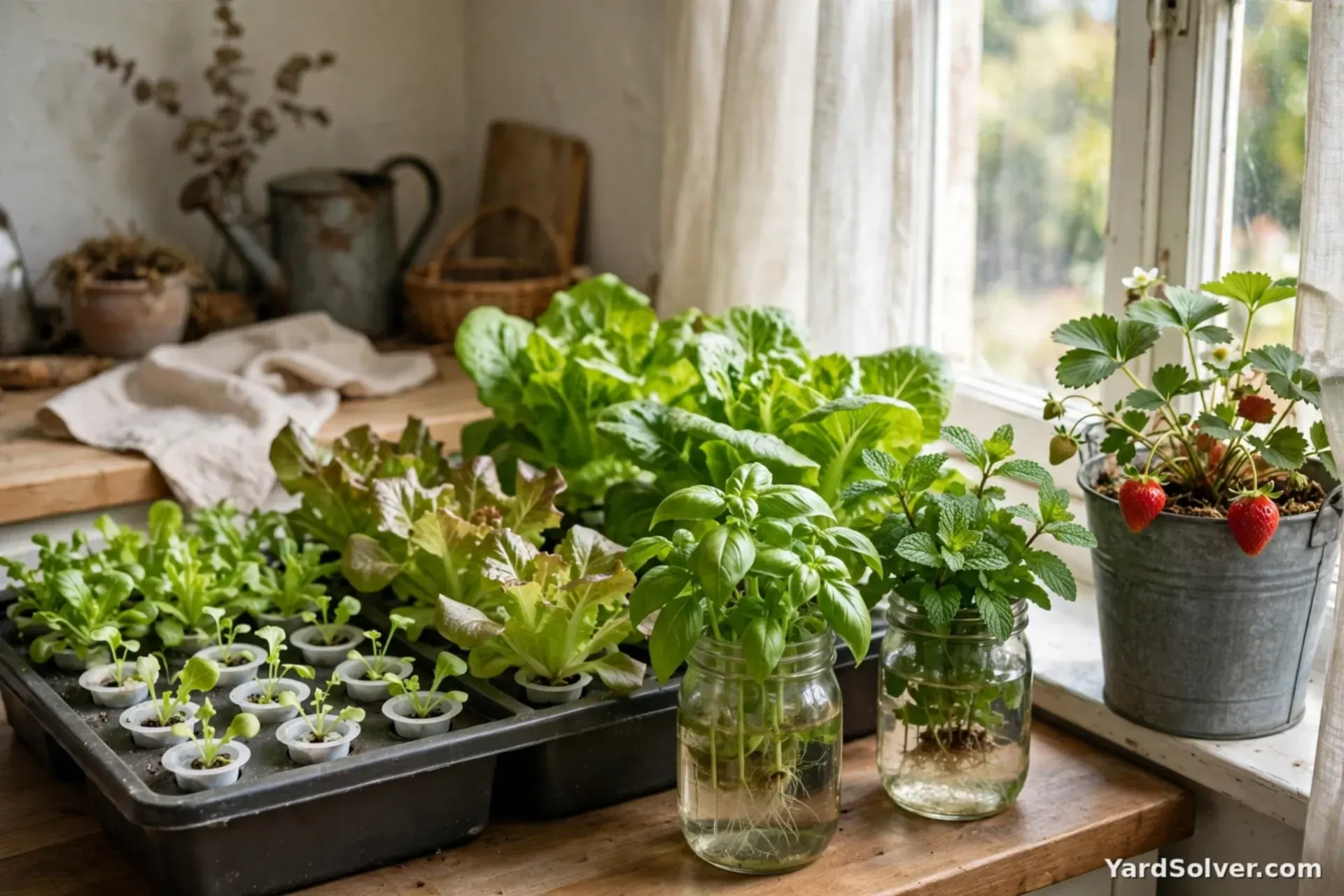
Leafy crops are the natural fit: lettuce and salad leaves, and herbs like basil, mint and cilantro, grow quickly, stay compact, and are harvested a leaf at a time — the stars of Grow Herbs Indoors in Winter, minus the soil. Strawberries are the popular step up. Fruiting crops — tomatoes, peppers, cucumbers — are possible but advanced: big, thirsty plants demanding strong light and constant solution management. The simpler indoor cousin: How to Grow Microgreens Indoors needs no system at all, just a tray.
Step 4 — Light and solution: the two running costs
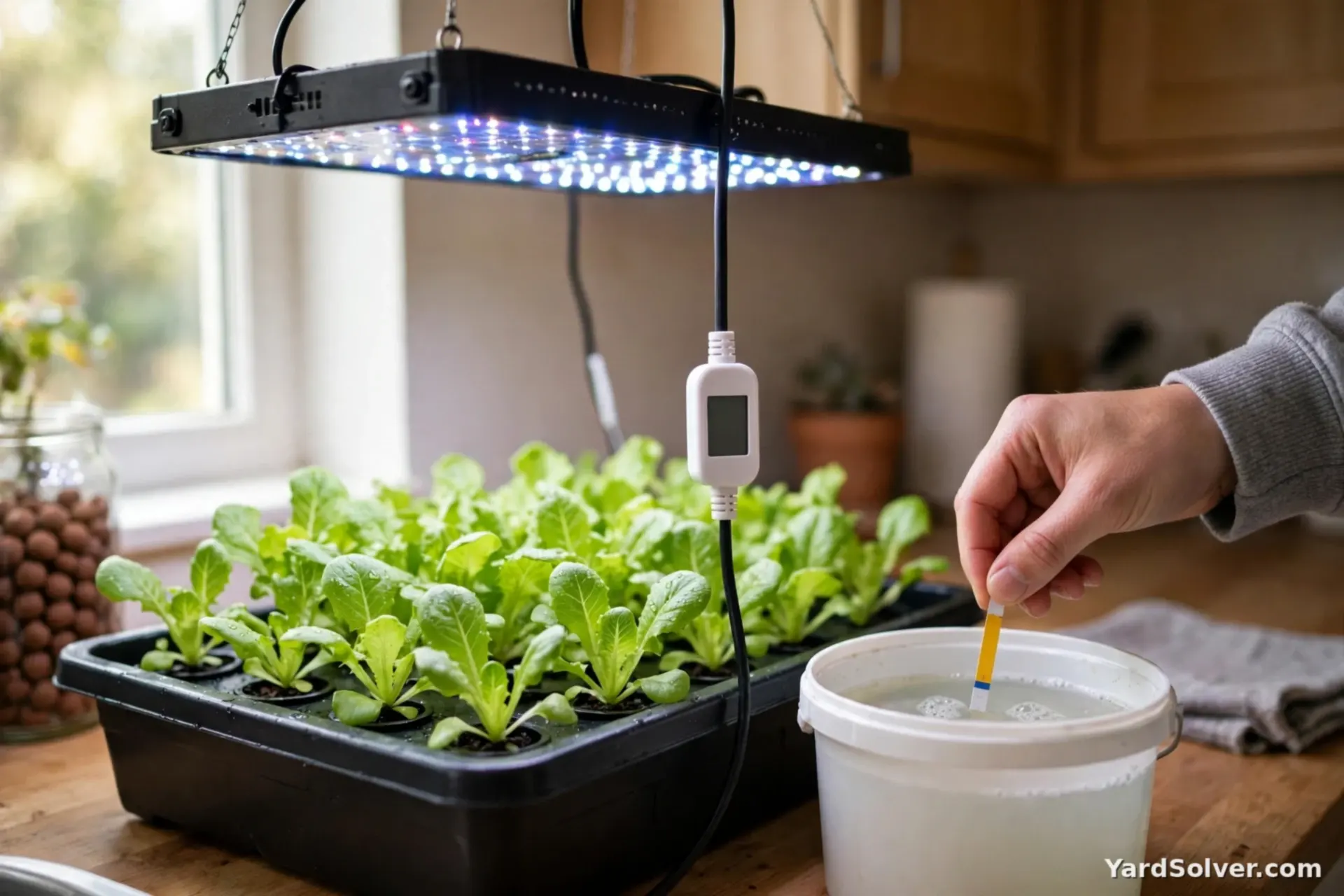
Here is the honest cost picture. A Kratky jar costs almost nothing to start and nothing to run. A lit DWC setup is different money: the light is usually the single biggest purchase, most growers run it roughly 12–16 hours a day — a permanent running cost next to a soil pot in free sunshine. The solution is cheap but asks for attention: its pH drifts as the plant feeds unevenly, and roots absorb minerals only inside a middle band — roughly pH 5.5–6.5 for most leafy crops. Outside it, a plant can starve in a bucket full of food. Small systems get fresh solution every week or two, quietly resetting strength and pH; a test strip or pen tells you where you stand.
Step 5 — Expect the classic failures — and know who should skip it
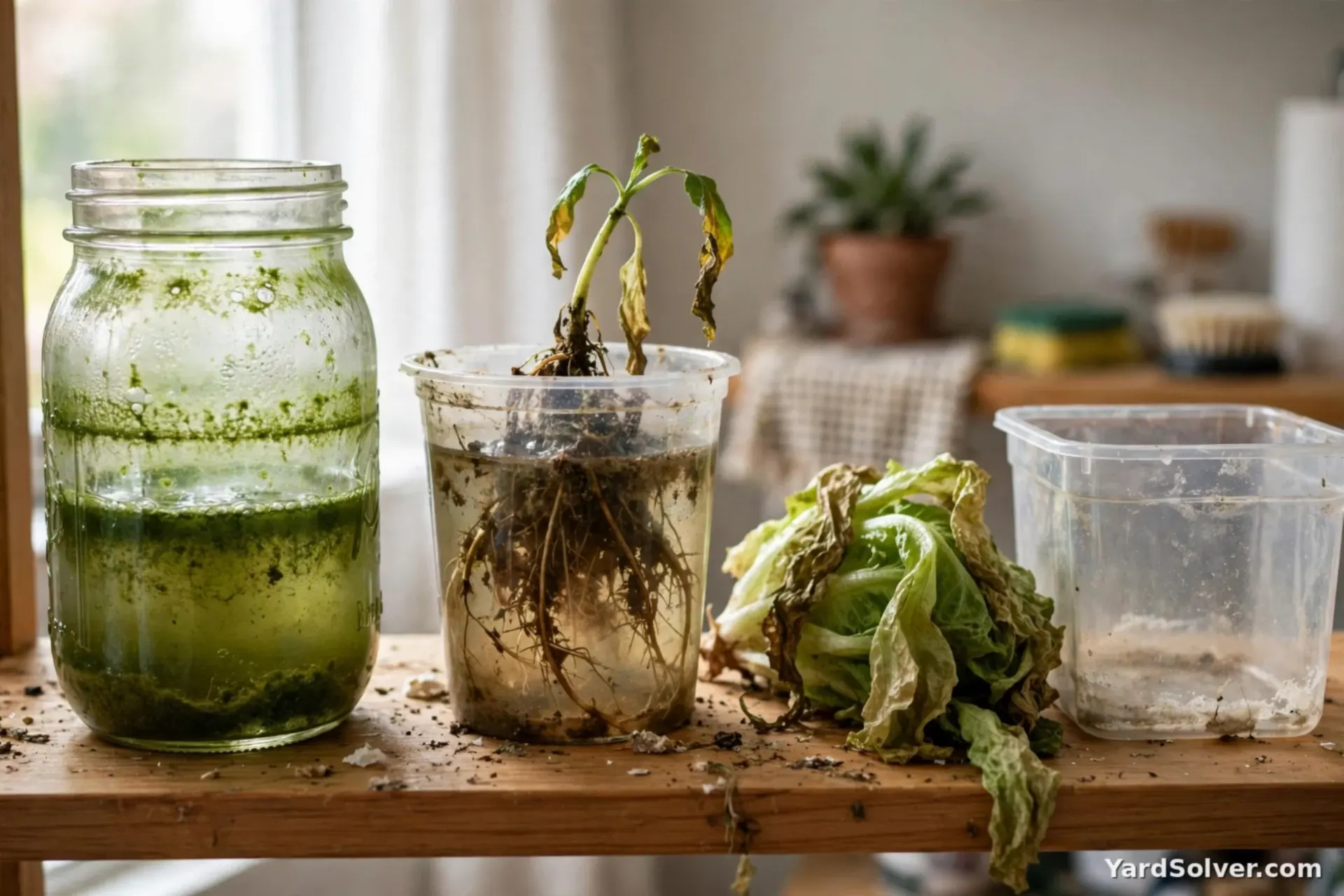
Three failures greet almost every beginner, and all three are preventable. Algae: green slime wherever light reaches wet surfaces — wrap jars and cover reservoirs so the water lives in the dark. Root rot: healthy roots are white; brown, slimy, smelly roots mean warm water starved of oxygen — keep reservoirs cool, shaded and (in DWC) bubbling. pH drift: the silent one above, caught by testing rather than guessing. The fungus gnats of soil growing will move into damp corners here too. Who should not bother: anyone hoping for cheaper tomatoes than the garden grows, anyone with no bright window or shelf for a light, and anyone who travels for weeks — a soil pot forgives a fortnight; a small hydro system mostly does not. The right reasons: fast greens, a tidy windowsill, salads in midwinter.
Keep going
The soil route to the same harvest: Grow Herbs Indoors in Winter.
Even simpler indoor growing: How to Grow Microgreens Indoors.
Questions people ask
Do I need a pump for hydroponics?
No — Kratky jars and wick systems run with no pump and no electricity at all. A small air pump enters only with a DWC bucket, where its bubbles keep the roots supplied with oxygen.
Does hydroponic growing work out cheaper than soil?
For a jar on the windowsill, yes — it costs almost nothing to try. For a lit indoor setup, no: the light is a real upfront cost and the electricity is ongoing, while a pot of soil in the sun costs very little. Hydroponics earns its money in speed, tidiness and winter growing, not in beating soil on price.
Does hydroponic lettuce taste different?
Mostly like what it is: very fresh lettuce picked minutes before eating — the same advantage soil-grown home lettuce has. The plant takes up the same minerals in both systems; variety and freshness matter far more than the method.
Comments & ratings
No comments yet.
Be the first to share your experience.