
Plant Library · Herbs
🌿 How to Grow Basil
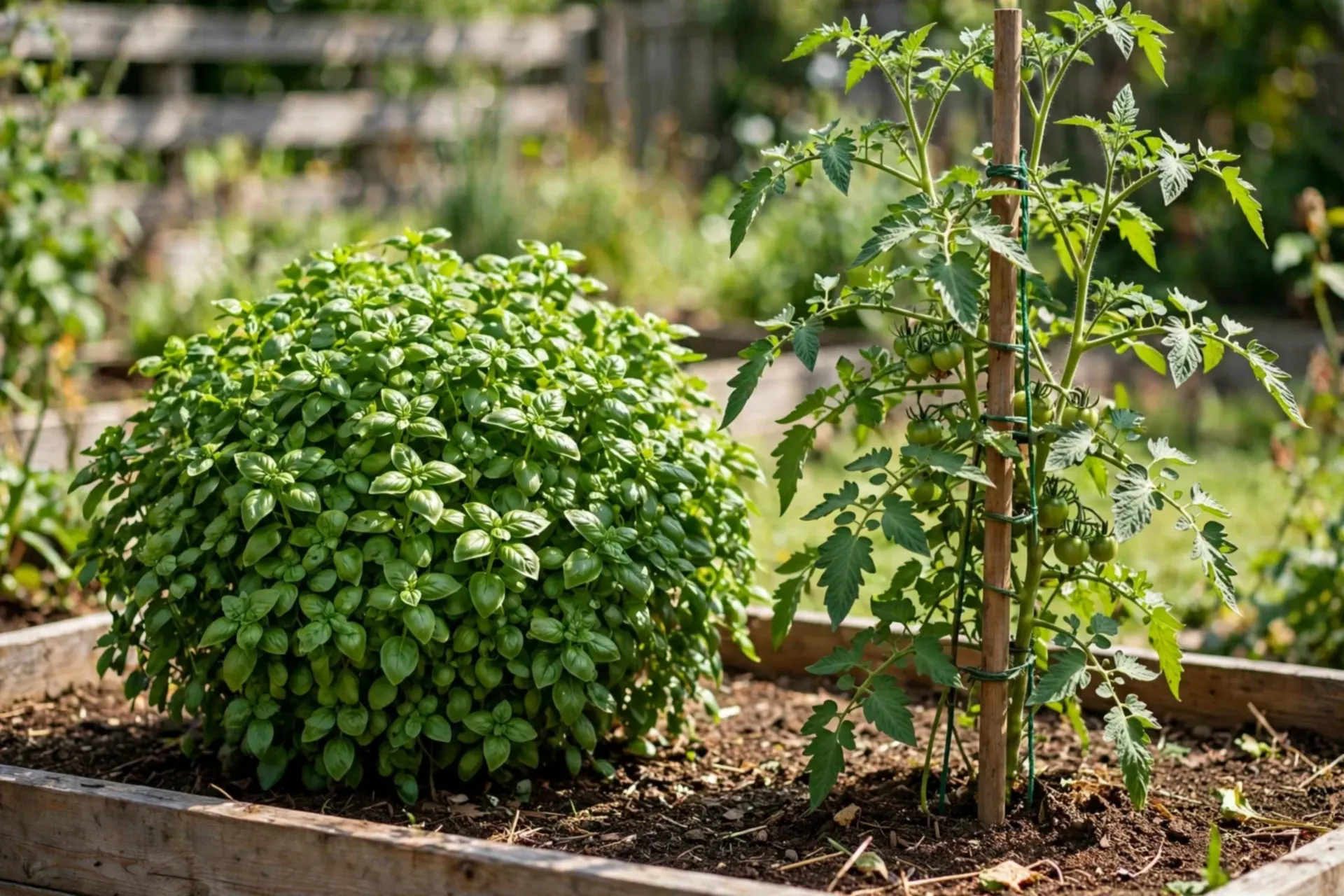
Hates cold more than tomatoes do — move out only into warm weather, and pinch tips to keep it bushy. Basil is a warm-season herb that hates cold: start indoors about 6 weeks before your last frost and move plants out a couple of weeks after it, only once the nights are warm.
Grow Basil with us — step by step
Everything for this plant is written step by step below — what to do, and exactly when. Read it through first if you like: you can grow it entirely on your own with that guide. Or start with us here — tell us your planting day and we lay out your personal schedule on this page, every next step on its own day, counted from your planting date. No guessing, no forgetting.
Step 1 — today: Plant out your young Basil plants today (hardened off first), spaced 8–12 in apart, and water them in deeply. Starting from seed instead? Sow indoors now, 1/4 in deep, and this same schedule counts from transplant day.
Basil at a glance
Sow indoors: 6 weeks before last frost
Move outside: 2 weeks after last frost
Sow outdoors: 2 weeks after last frost
Spacing: 8–12 in · Seed depth: 1/4 in
Sun: Full sun
Water: Regular; water at the base
Harvest: Leaves from about 60–75 days, picked all season
Timing counts from your average last spring frost — get your own dates in the Planting Calendar. Guidance follows standard extension-service practice for Canada and the US.
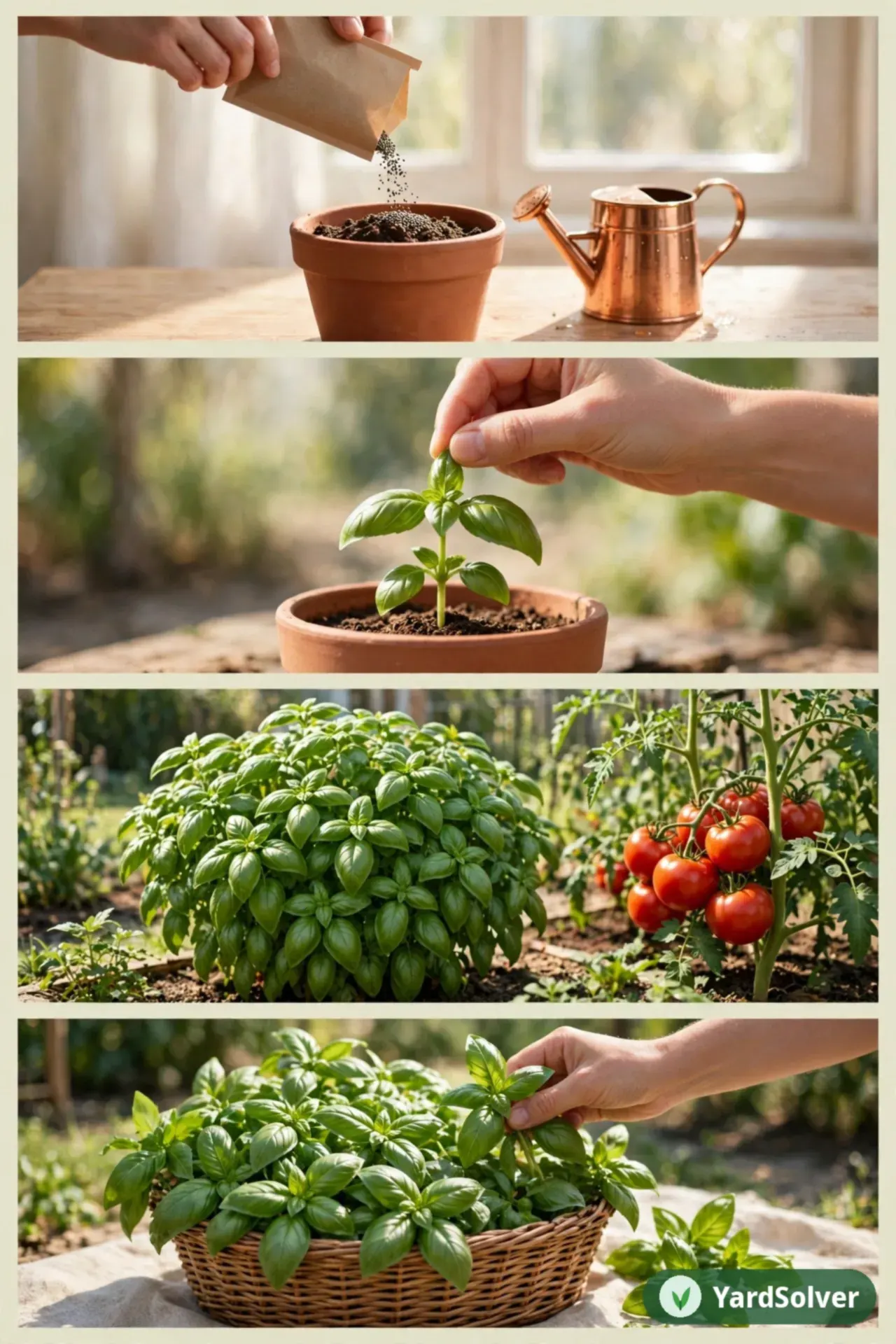
How to plant and grow basil, step by step
Step 1 — Time it right
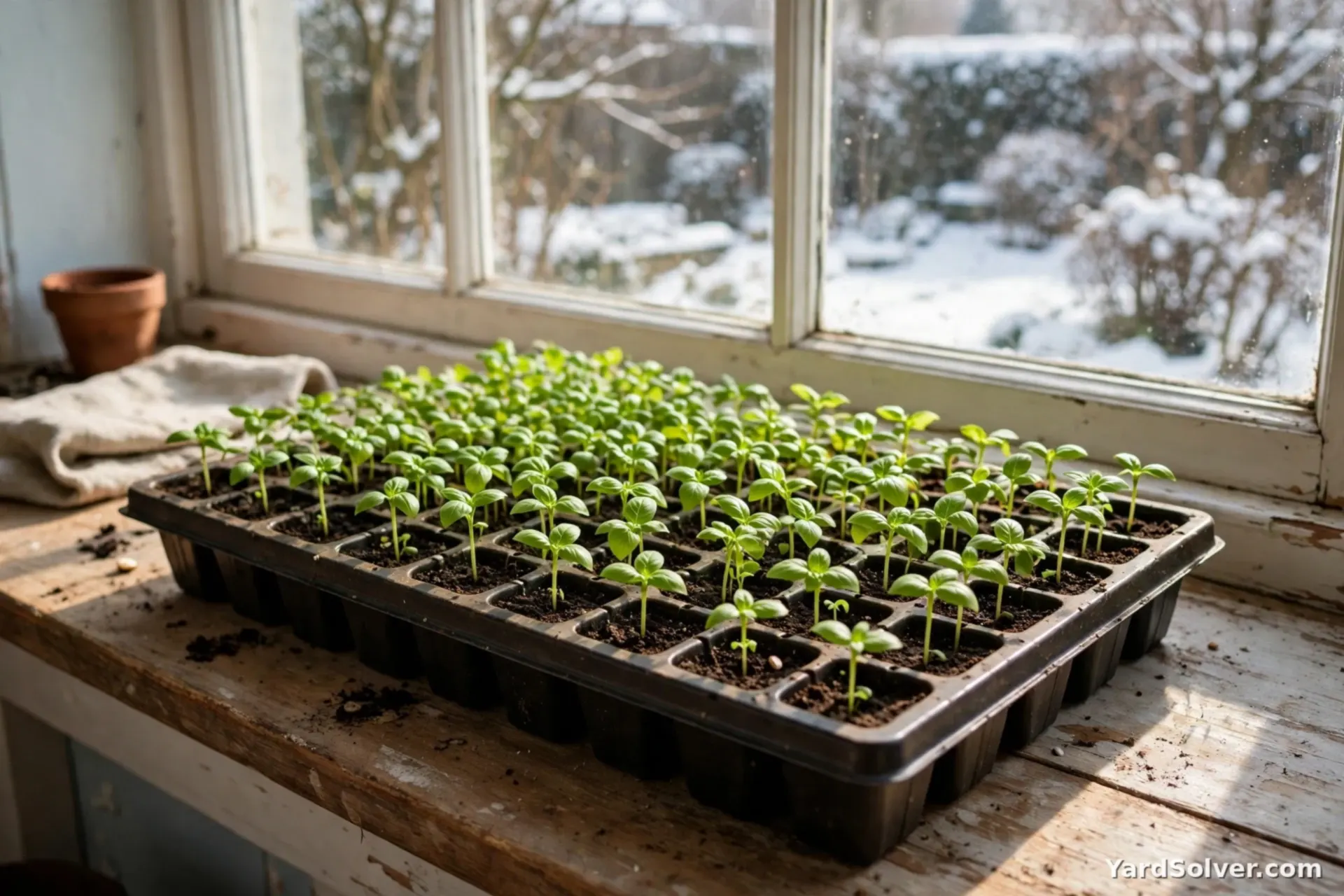
Sow indoors: 6 weeks before last frost; Move outside: 2 weeks after last frost; Sow outdoors: 2 weeks after last frost. All dates count from your average last spring frost — the Planting Calendar turns them into real dates for your garden. Basil is a warm-season herb that hates cold: start indoors about 6 weeks before your last frost and move plants out a couple of weeks after it, only once the nights are warm.
Step 2 — Prepare the spot
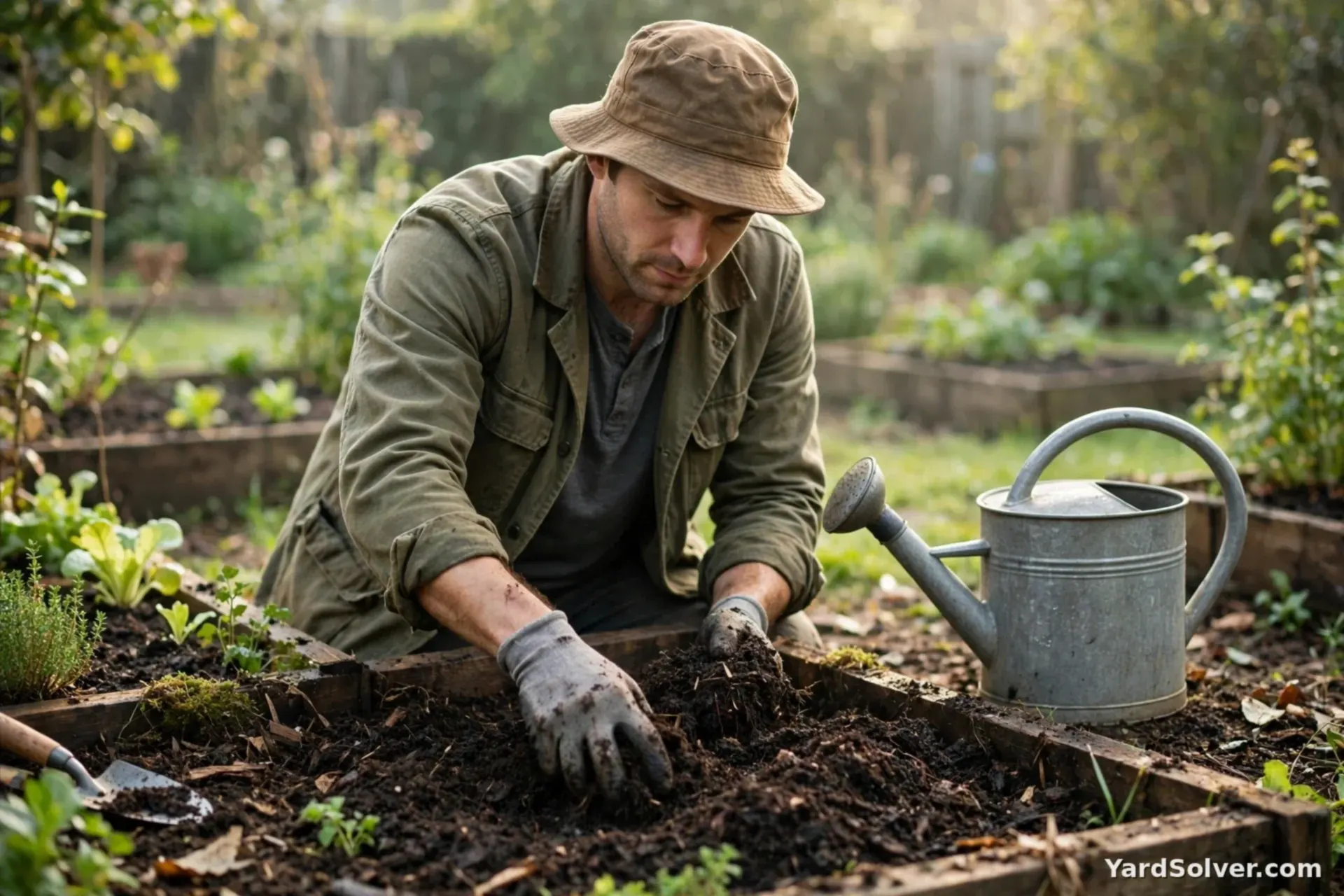
Sun: Full sun. Moist, compost-rich soil in a spot with morning sun. Soft herbs grow fast and are picked often, so keep the water coming. Work out how much you need with the Garden Mix Calculator or the Raised Bed Soil Calculator.
Step 3 — Sow and plant out
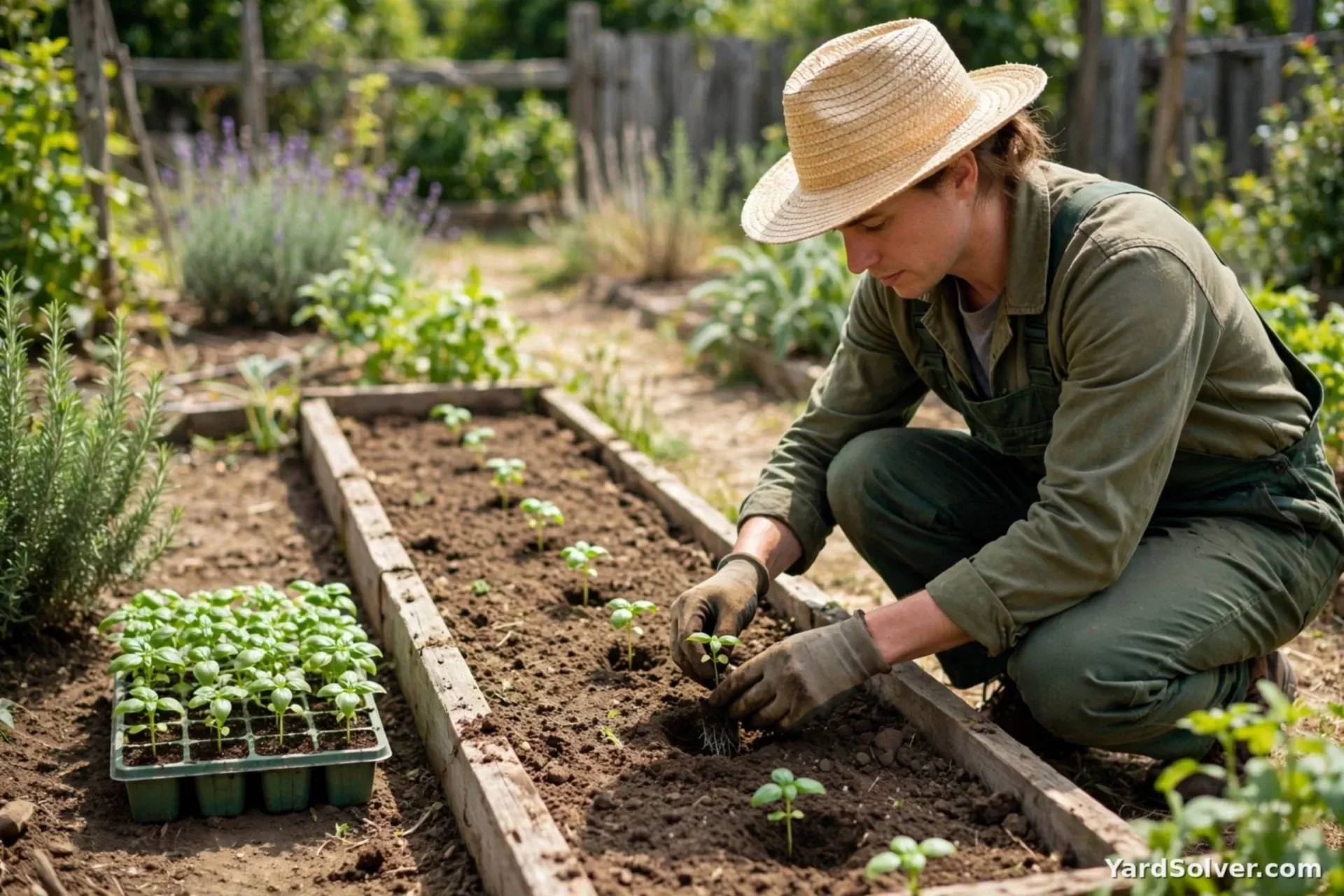
Start indoors 6 weeks before last frost at 1/4 in deep, or sow outdoors 2 weeks after last frost; plants finish spaced 8–12 in apart. Harden off indoor-started plants before they move out for good.
Step 4 — Water and feed
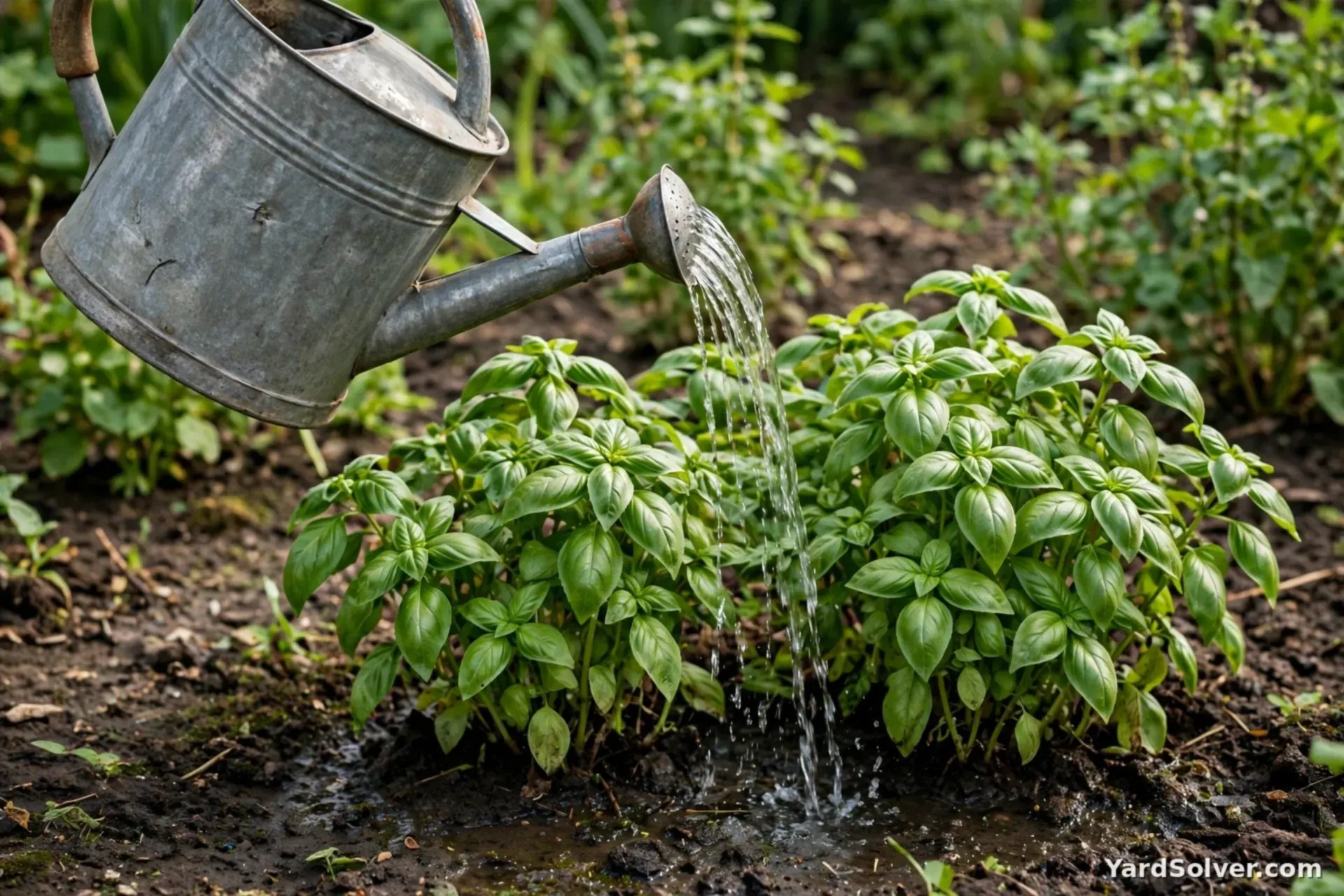
Water: Regular; water at the base. The Fertilizer Calculator turns a bed size into the right amount.
Step 5 — Care and the problems to watch for
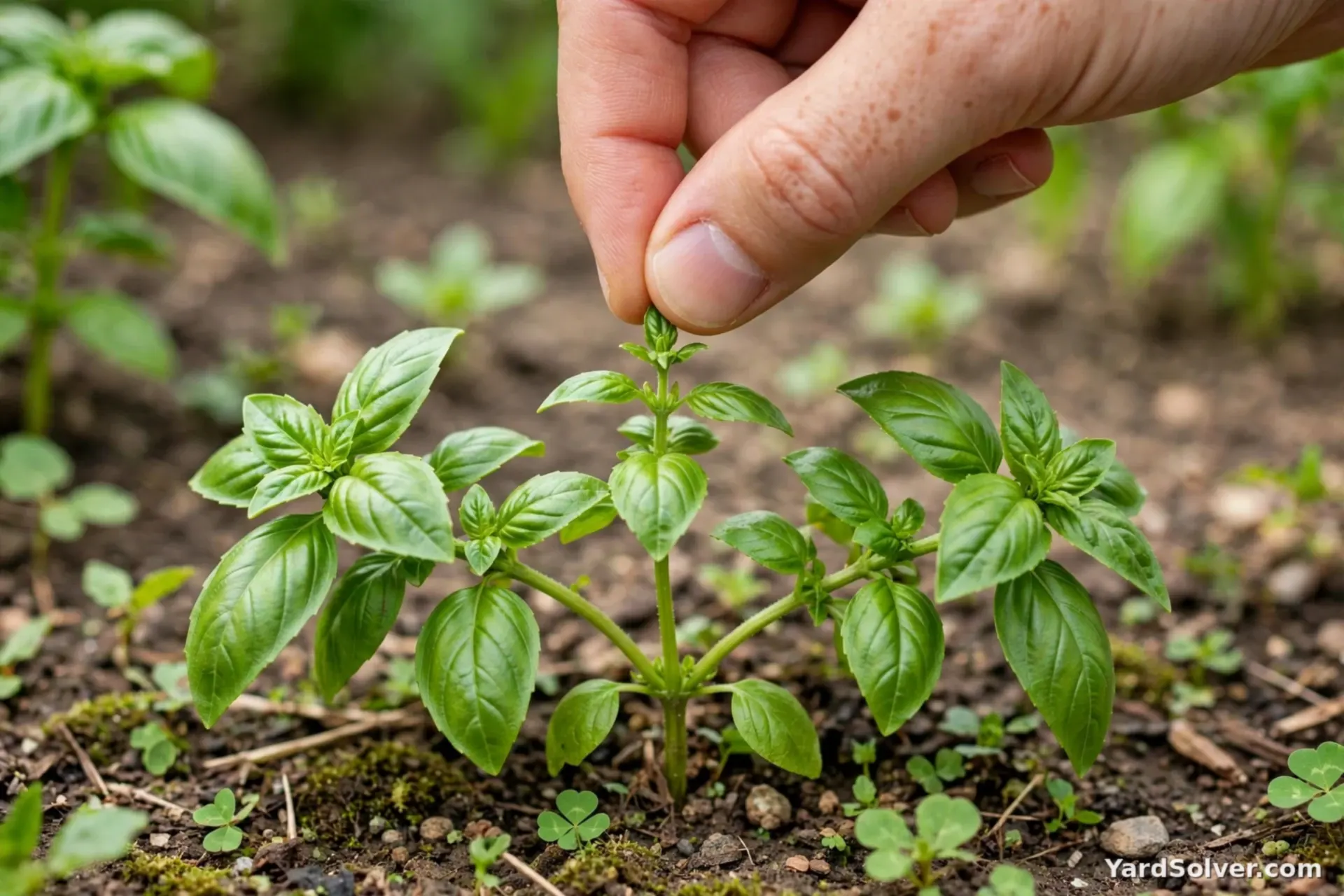
- Downy mildew — yellowing leaves with grey fuzz beneath; water at the base and buy resistant varieties.
- Fusarium wilt — sudden wilting; remove affected plants.
- Aphids on tender tips — pinch out and rinse.
Take care: A few people are allergic to herbs in the mint family, basil included. Basil essential oil is far stronger than the leaf and is not a food — do not swallow it.
Step 6 — Harvest
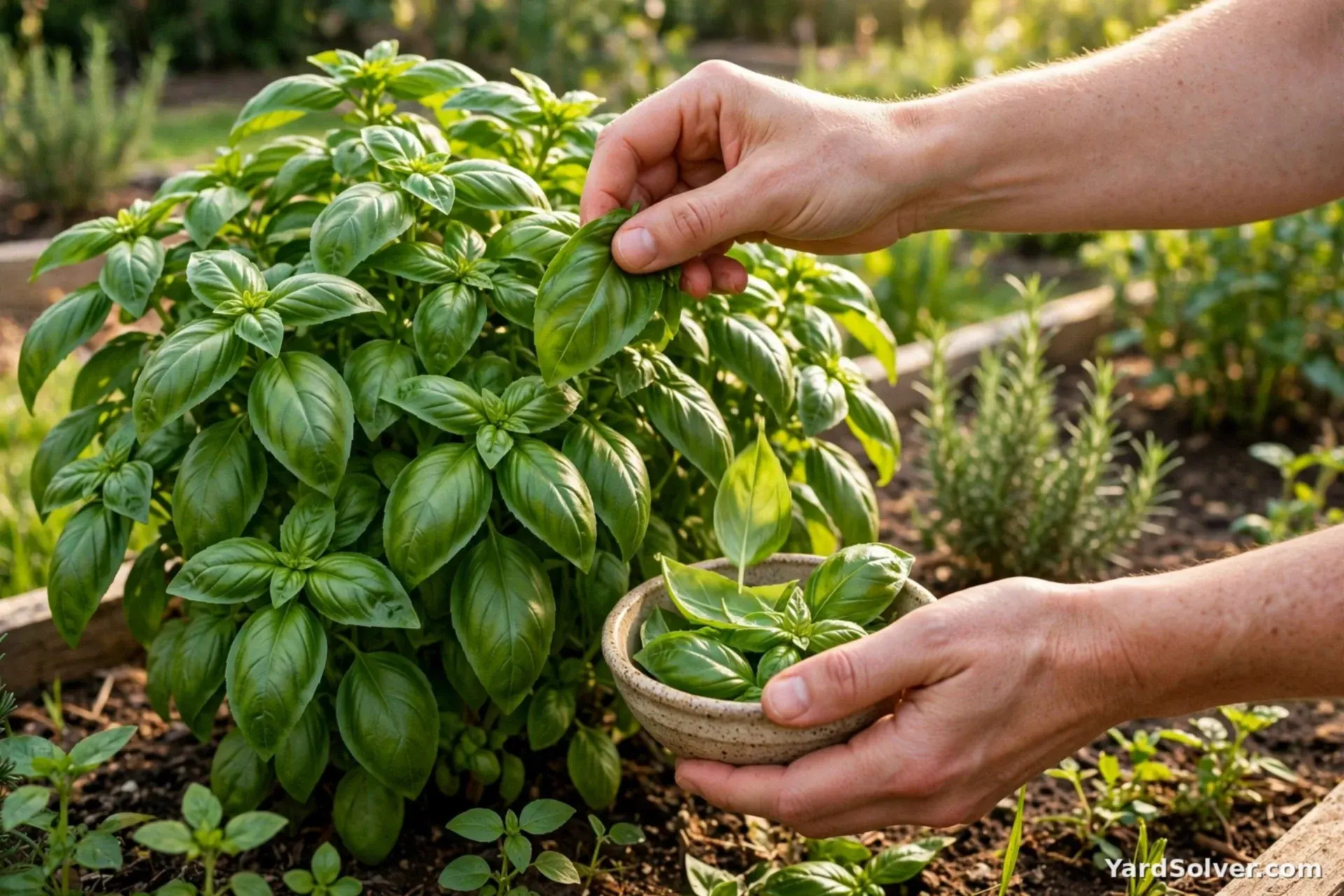
Ready in: Leaves from about 60–75 days, picked all season. Leaves can be picked from about day 60 to 75 onward — harvest little and often, always from the top.
📅 Your personal Basil schedule
Counted from your planting day — not a generic calendar. Day 0 is the day the seed went in the ground or the young plant went out.
Varieties worth growing
| Variety | Colour | Why gardeners like it |
|---|---|---|
| Genovese | Bright green | The classic Italian basil for pesto, with large, soft, sweet leaves |
| Thai Sweet | Green with purple stems and flowers | An anise-liquorice flavour made for Thai curries and stir-fries |
| Lemon | Pale green | Citrus-scented leaves that are lovely with fish and in drinks |
| Purple Ruffles | Deep purple | Showy ruffled leaves for salads and garnish — slower growing than green types |
| Greek (Spicy Globe) | Green | A tidy mound of tiny leaves, made for pots and window boxes |
Good for you — and take care
Benefits
- Provides vitamin K for healthy blood and bones
- A source of vitamin A for healthy eyes
- Contains the natural aromatic oils that give basil its scent and flavour
- Adds big flavour with almost no calories
- Provides small amounts of iron and calcium
Take care
- A few people are allergic to herbs in the mint family, basil included
- Basil essential oil is far stronger than the leaf and is not a food — do not swallow it
A little history — and one good fact
Basil comes from the warm parts of Asia, especially around India, where its relatives have been grown for thousands of years. It travelled west along trade routes to the Mediterranean and became a signature herb of Italian cooking. Today it is grown in gardens and on windowsills all over the world.
Fun fact: Basil belongs to the mint family — look closely and you will see its stems are square, just like mint's.
Keep going
Guides: Grow Herbs Indoors in Winter · When to Start Seeds Indoors · How to Harden Off Seedlings
Calculators: Plant Spacing Calculator · Seed Calculator · Garden Mix Calculator
More herbs: Cilantro · Parsley · Dill
← Back to the Plant Library · Get your personal planting dates
Questions people ask
When do I plant basil?
Count from your average last spring frost: sow indoors 6 weeks before last frost; move outside 2 weeks after last frost; sow outdoors 2 weeks after last frost. Basil is a warm-season herb that hates cold: start indoors about 6 weeks before your last frost and move plants out a couple of weeks after it, only once the nights are warm.
How far apart do I space basil?
Space plants 8–12 in apart, with seed sown 1/4 in deep. Sun: full sun.
When is basil ready to harvest?
Leaves from about 60–75 days, picked all season. Hates cold more than tomatoes do — move out only into warm weather, and pinch tips to keep it bushy.