
Plant Library · Vegetables
🌿 How to Grow Asparagus
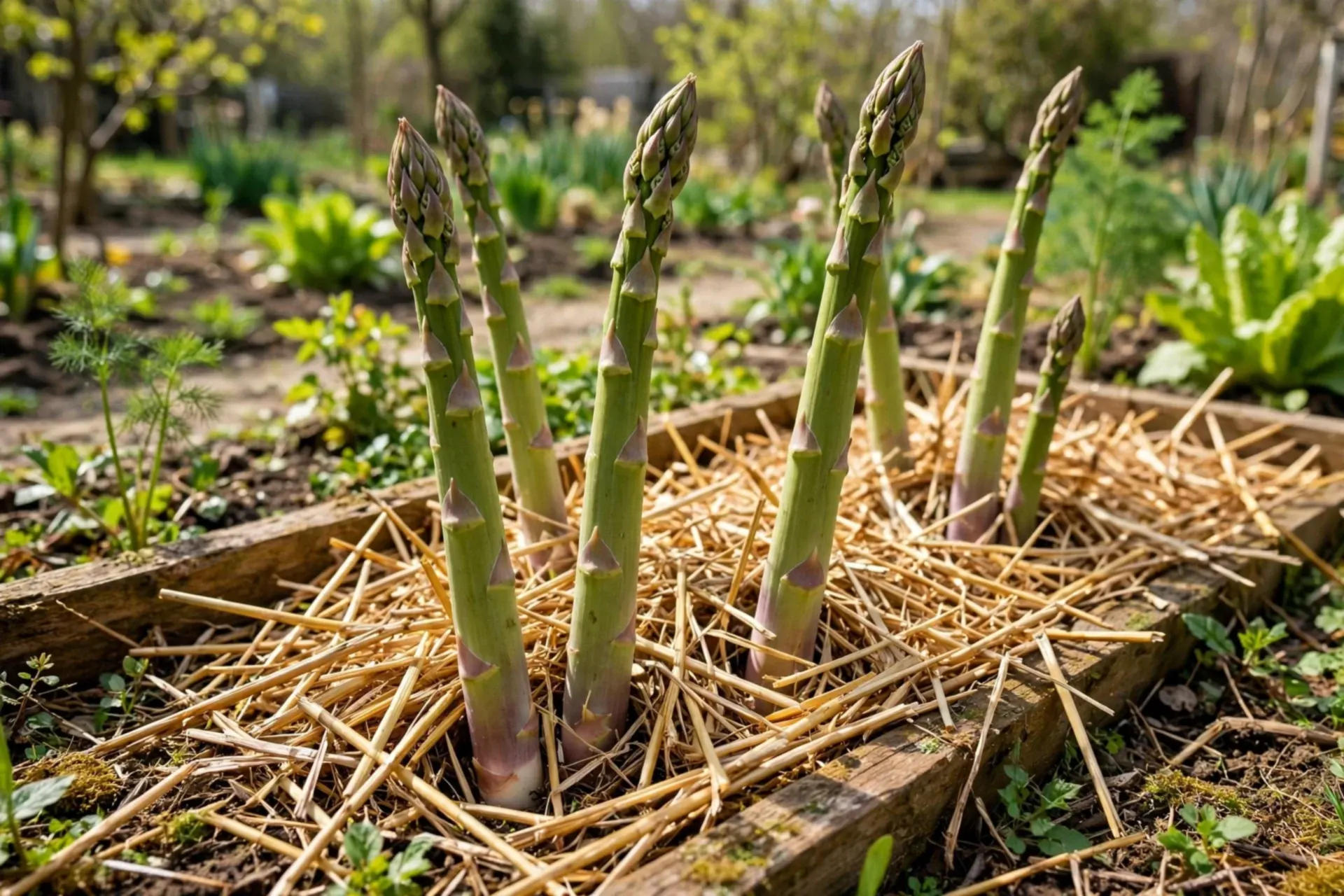
A perennial bed that can crop for 15–20 years: plant crowns once, let them build strength for two springs, then harvest for years. Asparagus is a perennial grown from crowns — one-year-old roots — planted in early spring about 3 weeks before your last frost, as soon as the soil can be worked. The bed is permanent, so preparing it well once pays off for years.
Grow Asparagus with us — step by step
Everything for this plant is written step by step below — what to do, and exactly when. Read it through first if you like: you can grow it entirely on your own with that guide. Or start with us here — tell us your planting day and we lay out your personal schedule on this page, every next step on its own day, counted from your planting date. No guessing, no forgetting.
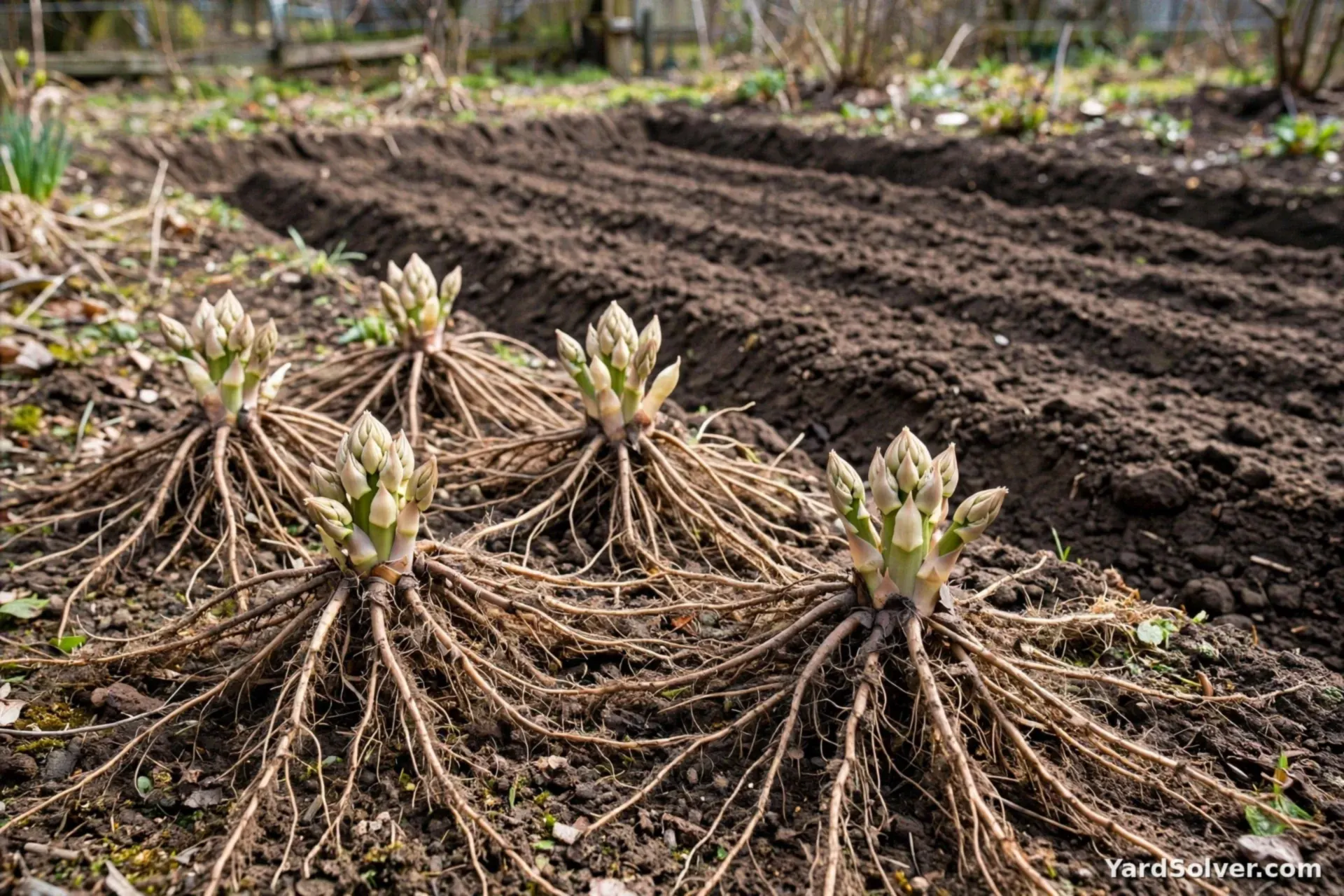
Step 1 — today: Plant your Asparagus crowns today: spread the roots over a low ridge in a trench about 8 in deep, spaced 12–18 in apart, cover with 2 in of soil, and water in well. Fill the trench in gradually as the shoots grow.
Asparagus at a glance
Sow outdoors: 3 weeks before last frost
Spacing: 12–18 in · Seed depth: 6–8 (crowns) in
Sun: Full sun
Water: Regular while spears and ferns grow
Harvest: A light pick in the second spring; full harvests from year 3
Timing counts from your average last spring frost — get your own dates in the Planting Calendar. Guidance follows standard extension-service practice for Canada and the US.
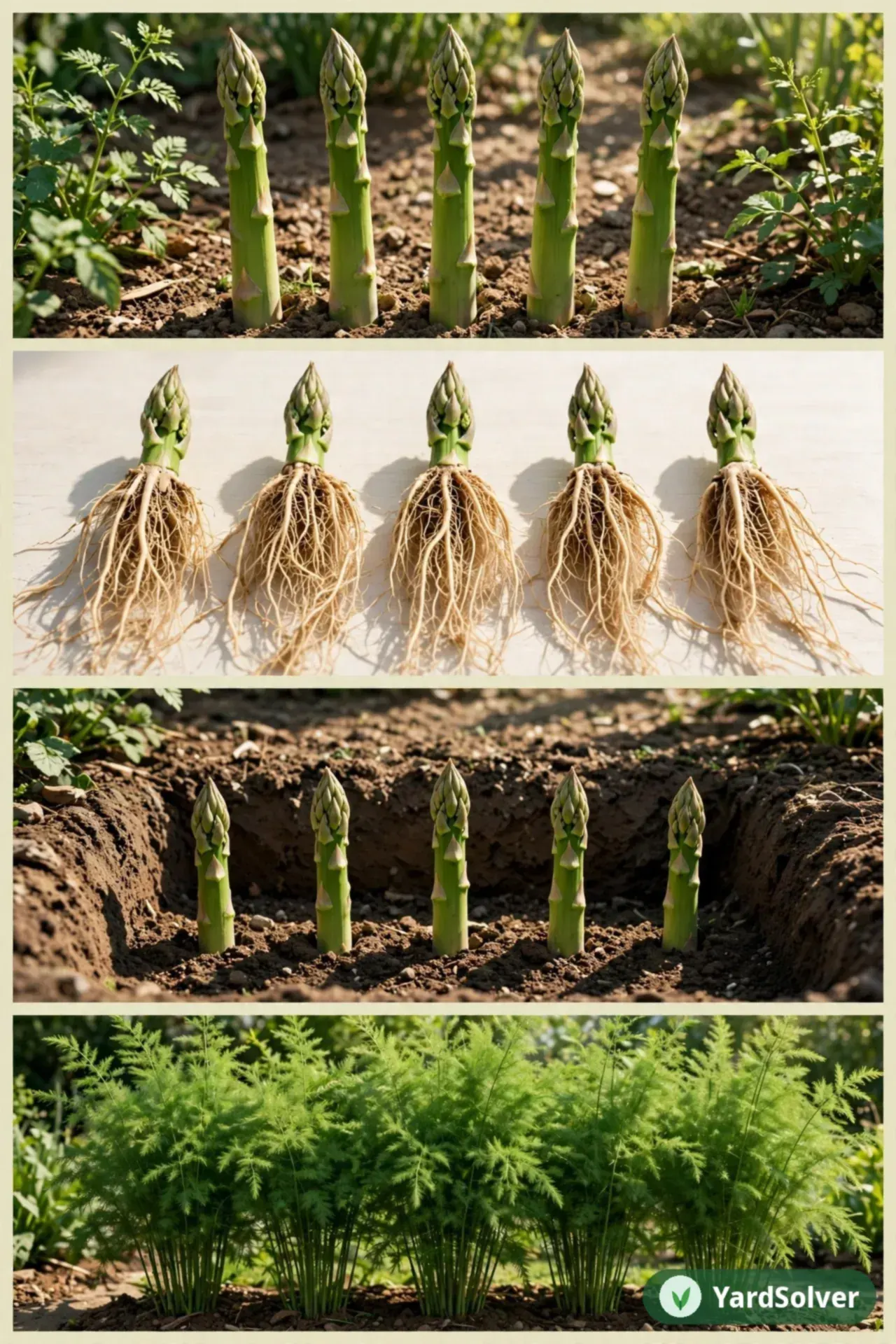
How to plant and grow asparagus, step by step
Step 1 — Time it right
Sow outdoors: 3 weeks before last frost. All dates count from your average last spring frost — the Planting Calendar turns them into real dates for your garden. Asparagus is a perennial grown from crowns — one-year-old roots — planted in early spring about 3 weeks before your last frost, as soon as the soil can be worked. The bed is permanent, so preparing it well once pays off for years.
Step 2 — Prepare the spot
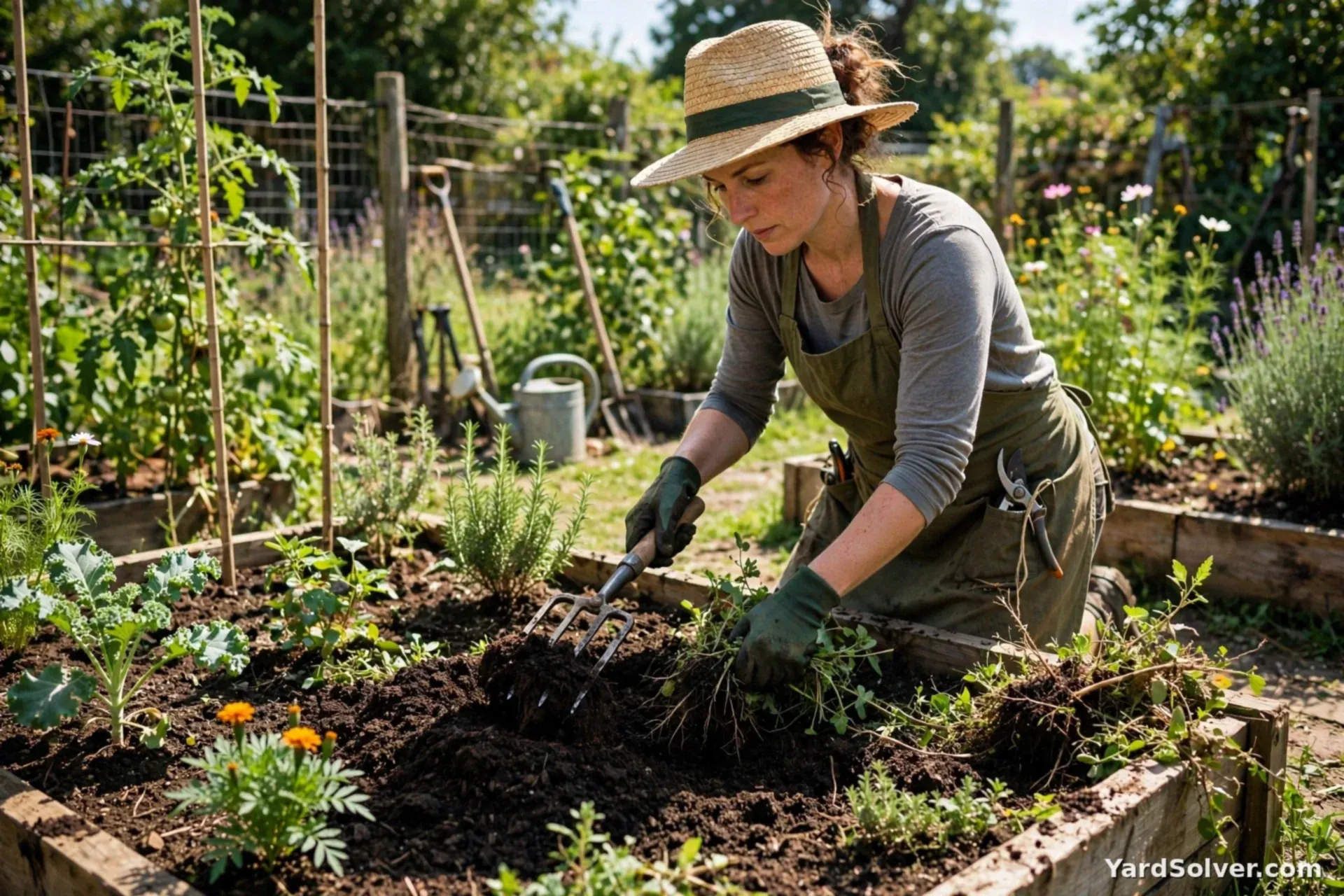
Sun: Full sun. Deep, rich, well-drained soil — asparagus crowns rot in ground that stays wet. This bed is permanent, so weed it thoroughly before planting and work in plenty of compost or well-rotted manure. Work out how much you need with the Garden Mix Calculator or the Raised Bed Soil Calculator.
Step 3 — Sow and plant out
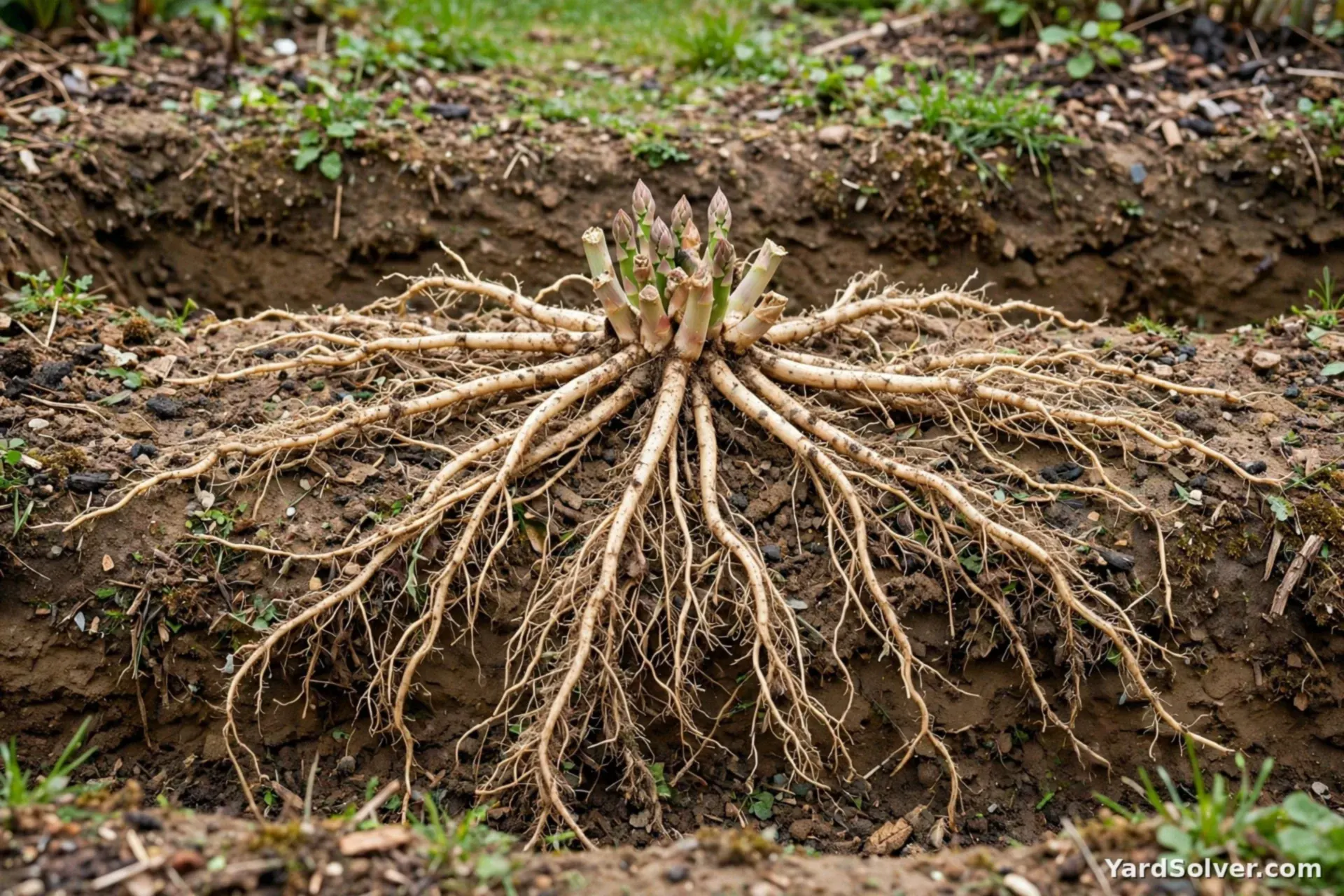
Plant crowns in early spring, about 3 weeks before last frost, as soon as the soil can be worked. Dig a trench about 8 in deep and 12 in wide, mound a low ridge along its centre, spread the roots of each crown over the ridge like a spider, and cover with 2 in of soil. Fill the trench in gradually as shoots grow, and finish spaced 12–18 in apart in rows about 3 ft apart.
Step 4 — Water and feed
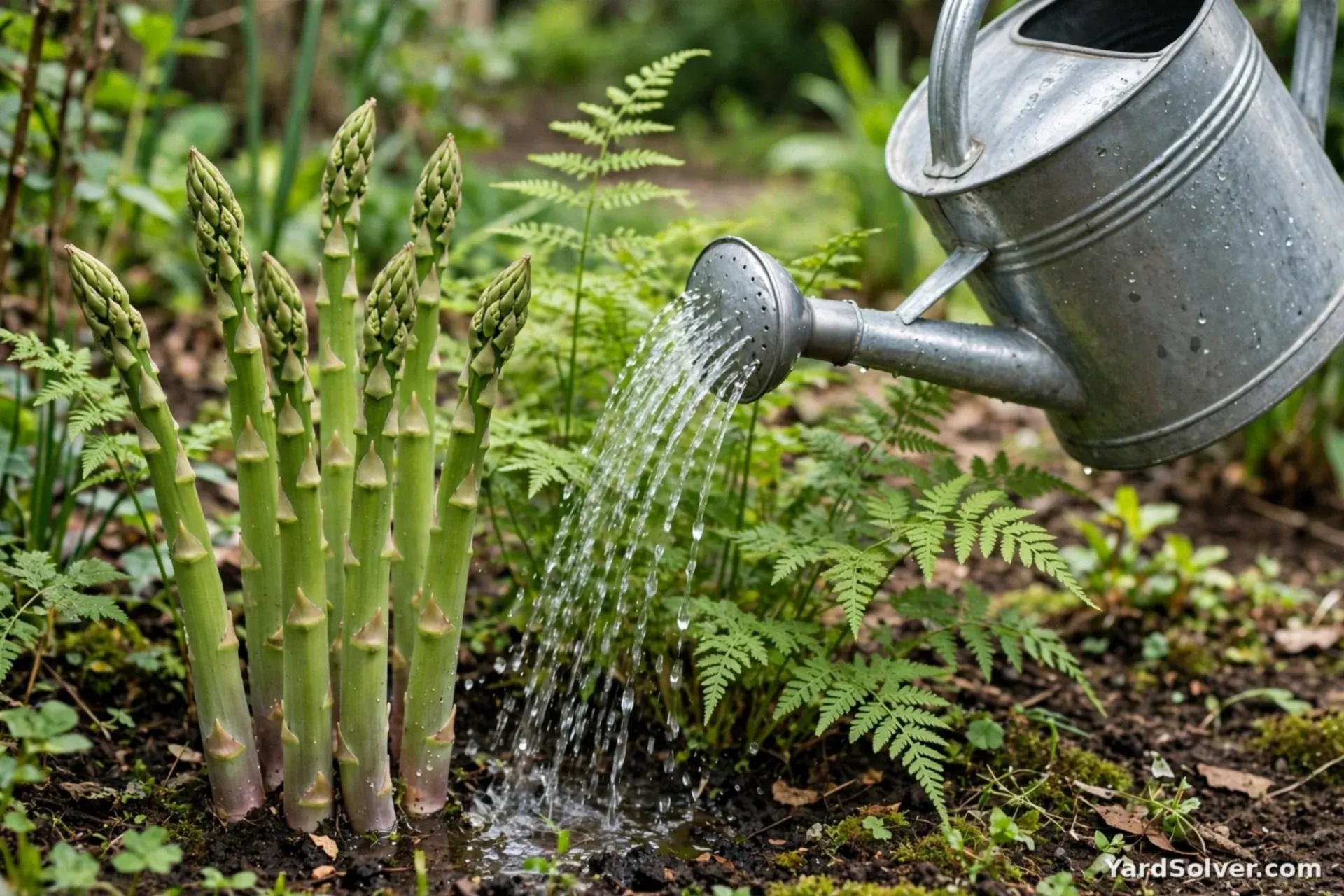
Water: Regular while spears and ferns grow. The Fertilizer Calculator turns a bed size into the right amount.
Step 5 — Care and the problems to watch for
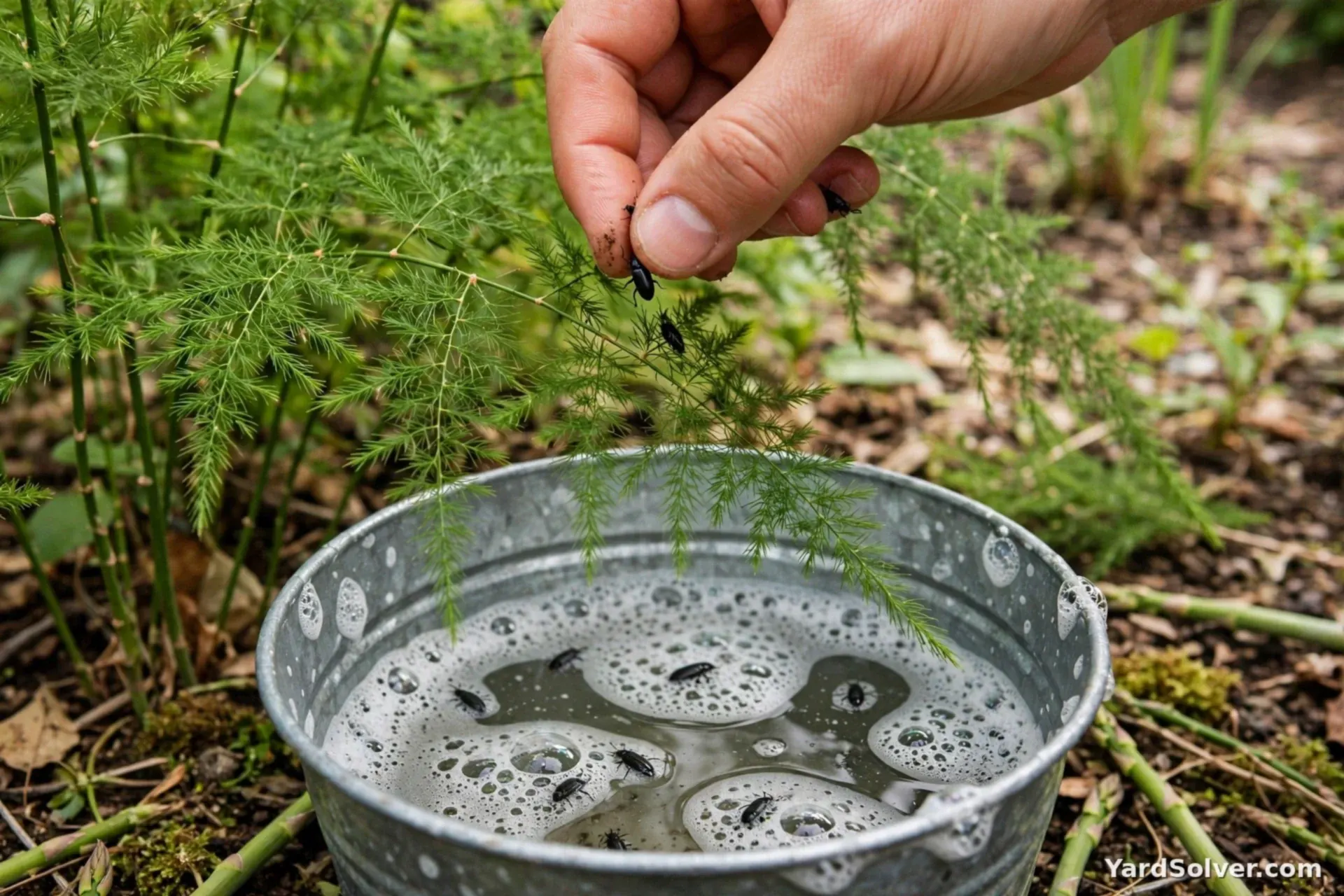
- Asparagus beetle — small black or spotted beetles and their grubs strip the ferns; pick them off into soapy water.
- Thin, spindly spears — the crowns are hungry, crowded, or were picked too hard too young; feed in spring and let young beds rest.
- Crown rot — crowns soften in ground that stays wet; plant in the best-drained spot you have.
Take care: Asparagus is a gentle diuretic — it makes most people need the bathroom more, and it famously makes urine smell odd for a few hours; both are normal and harmless.
Step 6 — Harvest
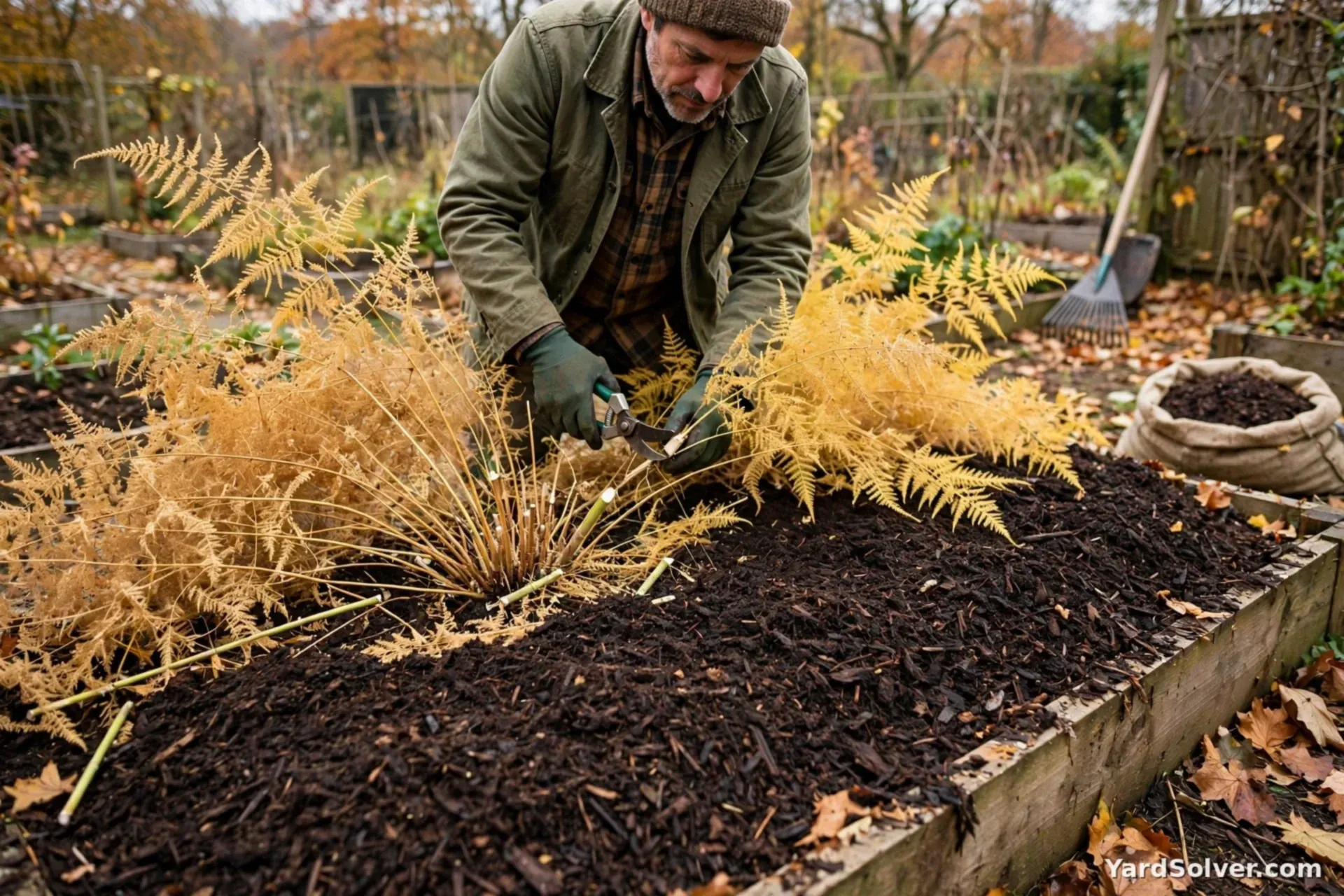
Ready in: A light pick in the second spring; full harvests from year 3. Once the ferns have turned yellow in fall, cut them down, clear the bed, and spread a 2–4 in mulch of compost — the crowns rest until spring.
📅 Your personal Asparagus schedule
Counted from your planting day — not a generic calendar. Day 0 is the day the seed went in the ground or the young plant went out.
Varieties worth growing
| Variety | Colour | Why gardeners like it |
|---|---|---|
| Mary Washington | Green | The classic heirloom — dependable spears and good rust resistance |
| Jersey Knight | Green | Mostly male plants, so energy goes into spears, not seed — heavy yields |
| Purple Passion | Purple | Sweeter and more tender than green types — turns green when cooked |
| Gijnlim | Green | An early, high-yielding variety that suits cooler gardens |
| UC 157 | Green | Bred for warm climates with mild winters |
Good for you — and take care
Benefits
- Provides folate, important for growing bodies
- A source of vitamins C and K
- Contains inulin, a fibre that feeds good gut bacteria
- Low in calories
- Traditionally valued as a gentle diuretic
Take care
- Makes urine smell odd for a few hours in most people — completely harmless
- People with gout are sometimes advised to go easy on asparagus, as it contains purines
- Let young beds rest — picking hard in the first two years weakens the crowns for years
A little history — and one good fact
Asparagus has been eaten around the Mediterranean for over 2,000 years — the Greeks and Romans prized it, and Roman gardeners grew it in raised beds not so different from ours. It reached North America with early settlers and has been a spring ritual ever since.
Fun fact: In warm weather a spear can grow about 15 cm (6 in) in a single day — keen growers check the bed morning and evening.
Keep going
Guides: How to Prepare Garden Soil in Spring · How to Start Composting for Beginners · Putting Your Garden to Bed
Calculators: Plant Spacing Calculator · Seed Calculator · Fertilizer Calculator · Garden Mix Calculator
More vegetables: Leeks · Onion · Garlic
← Back to the Plant Library · Get your personal planting dates
Questions people ask
When do I plant asparagus?
Count from your average last spring frost: sow outdoors 3 weeks before last frost. Asparagus is a perennial grown from crowns — one-year-old roots — planted in early spring about 3 weeks before your last frost, as soon as the soil can be worked. The bed is permanent, so preparing it well once pays off for years.
How far apart do I space asparagus?
Space plants 12–18 in apart, with seed sown 6–8 (crowns) in deep. Sun: full sun.
When is asparagus ready to harvest?
A light pick in the second spring; full harvests from year 3. A perennial bed that can crop for 15–20 years: plant crowns once, let them build strength for two springs, then harvest for years.