
Plant Library · Vegetables
🧅 How to Grow Leeks
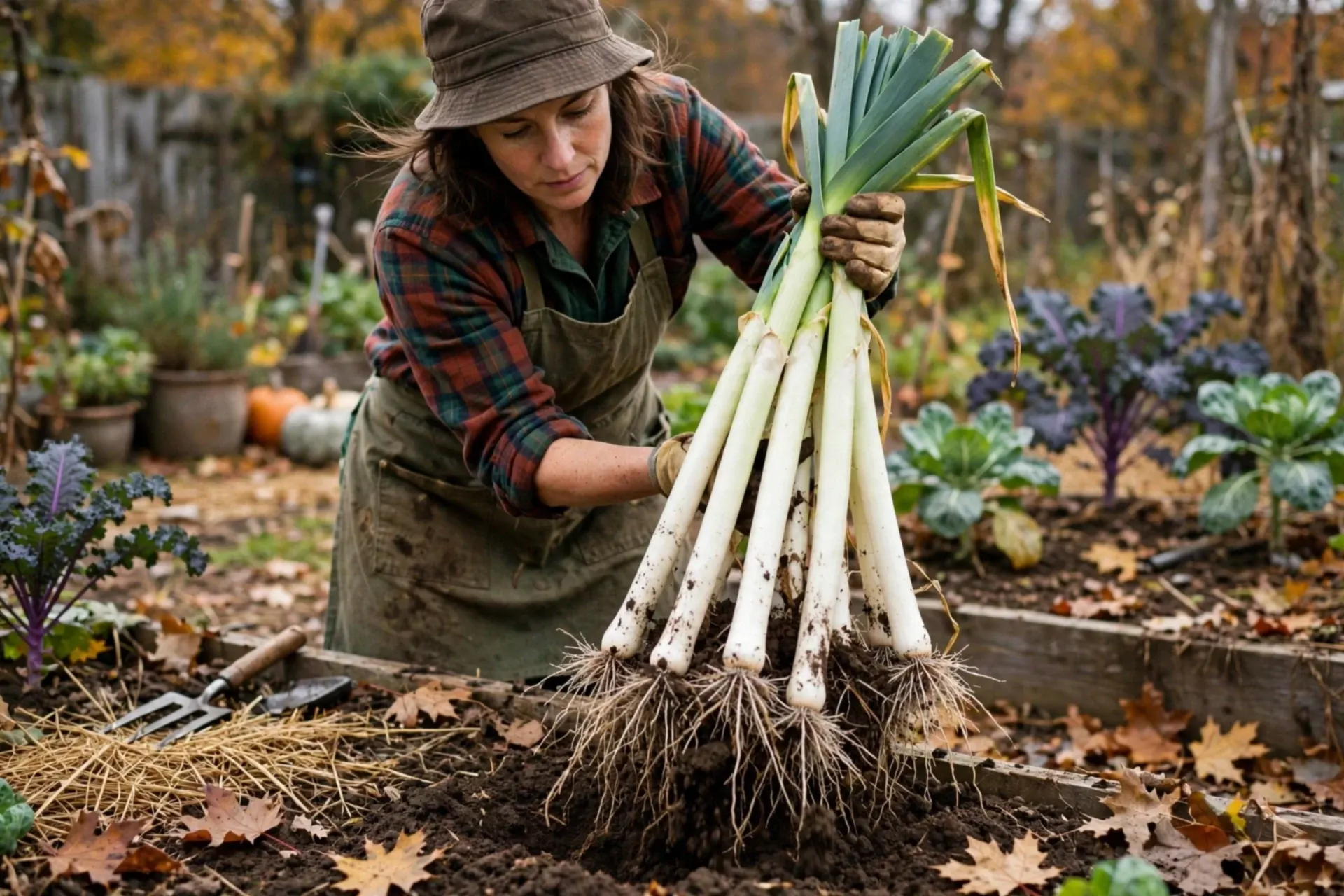
Transplant pencil-thick seedlings into deep holes and water in — the soil blanches the stems. Leeks are a slow, steady crop: sow indoors about 10 weeks before your last frost and transplant the pencil-thick seedlings around your frost date into deep holes, watering them in so the soil blanches the stems as they grow.
Grow Leeks with us — step by step
Everything for this plant is written step by step below — what to do, and exactly when. Read it through first if you like: you can grow it entirely on your own with that guide. Or start with us here — tell us your planting day and we lay out your personal schedule on this page, every next step on its own day, counted from your planting date. No guessing, no forgetting.
Step 1 — today: Plant out your young Leeks plants today (hardened off first), spaced 6 in apart, and water them in deeply. Starting from seed instead? Sow indoors now, 1/4 in deep, and this same schedule counts from transplant day.
Leeks at a glance
Sow indoors: 10 weeks before last frost
Move outside: at last frost
Spacing: 6 in · Seed depth: 1/4 in
Sun: Full sun
Water: Regular and deep
Harvest: 100–120 days
Timing counts from your average last spring frost — get your own dates in the Planting Calendar. Guidance follows standard extension-service practice for Canada and the US.
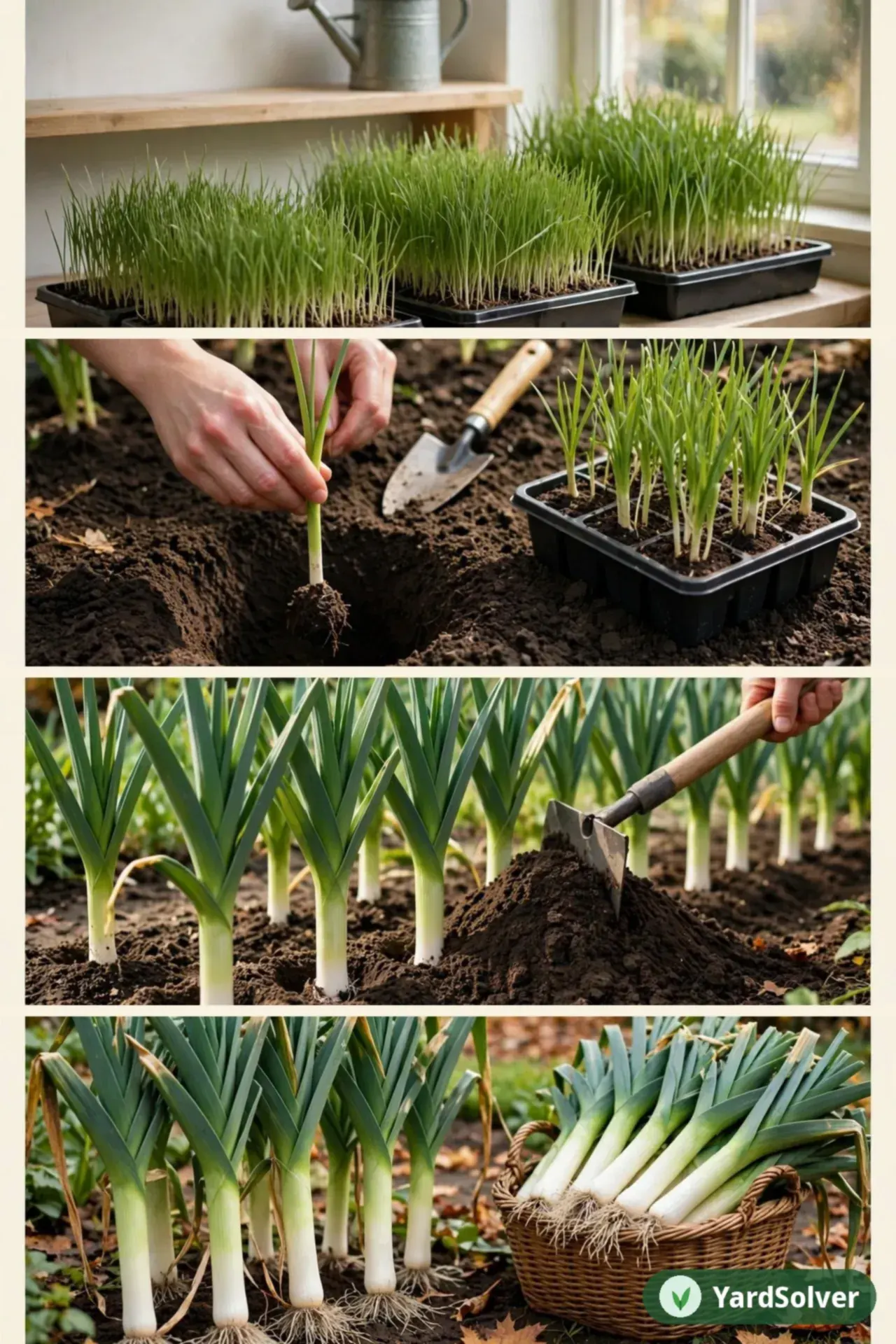
How to plant and grow leeks, step by step
Step 1 — Time it right
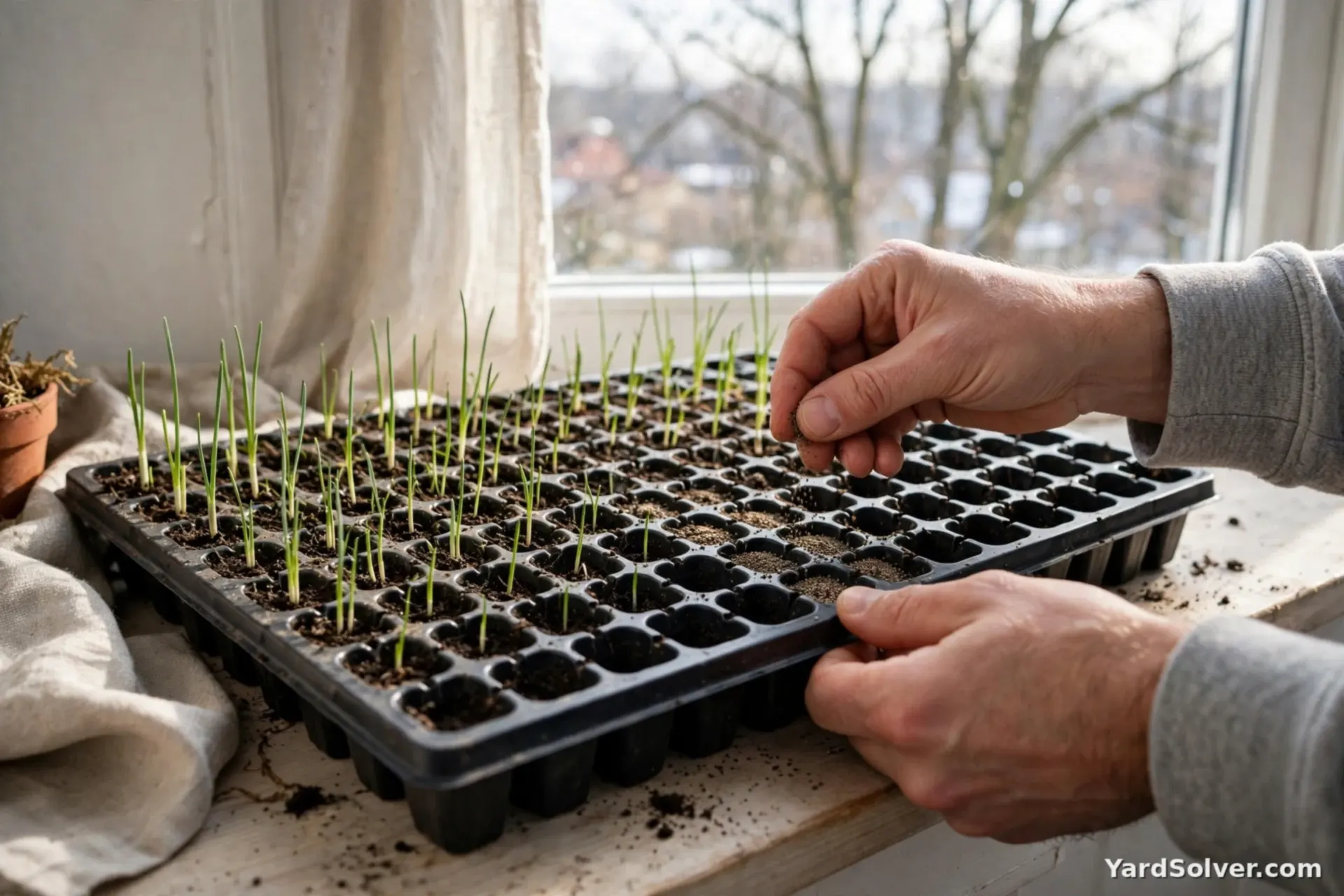
Sow indoors: 10 weeks before last frost; Move outside: at last frost. All dates count from your average last spring frost — the Planting Calendar turns them into real dates for your garden. Leeks are a slow, steady crop: sow indoors about 10 weeks before your last frost and transplant the pencil-thick seedlings around your frost date into deep holes, watering them in so the soil blanches the stems as they grow.
Step 2 — Prepare the spot
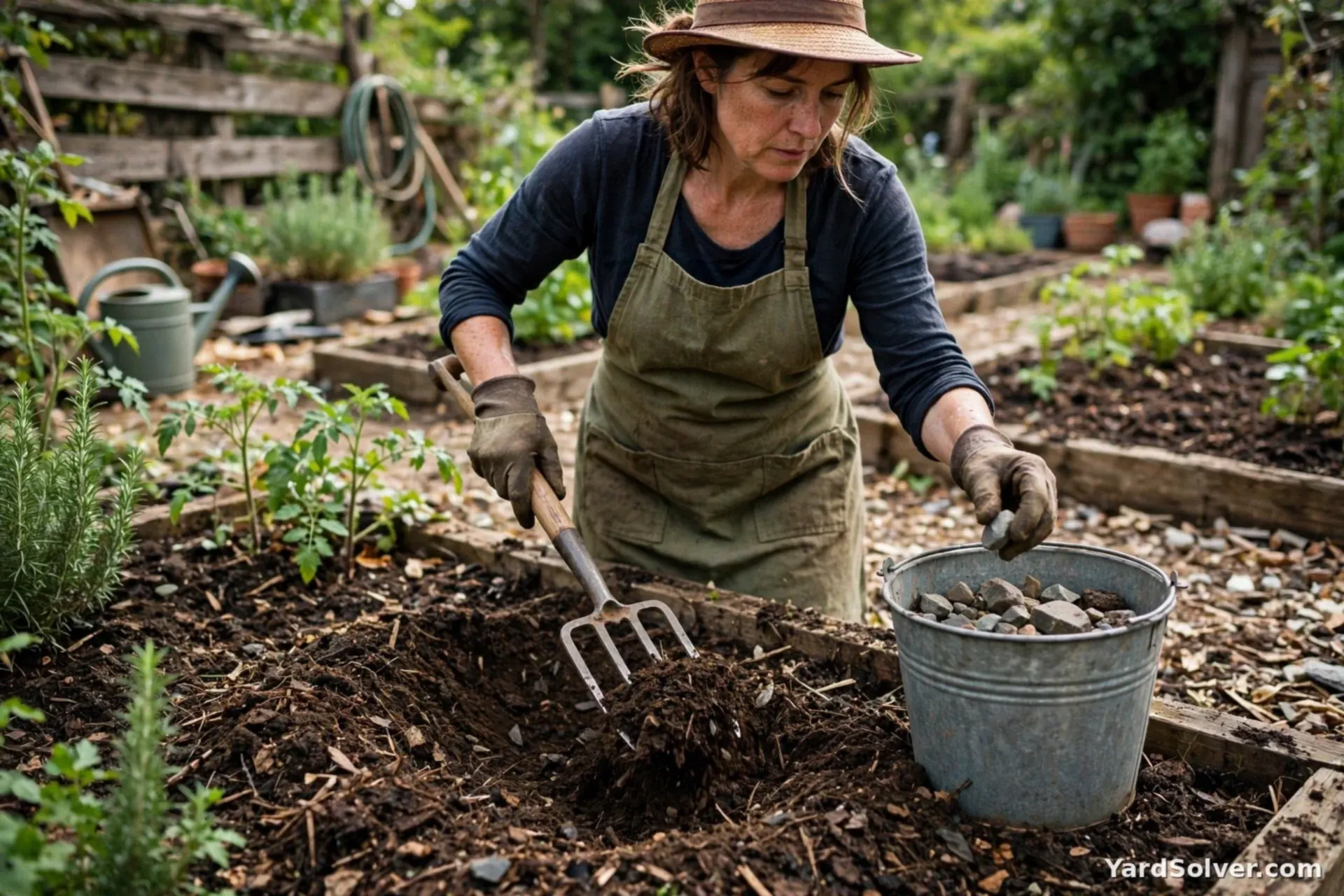
Sun: Full sun. Loose, stone-free soil is the whole secret for root crops — dig it over, pick out stones, and work in compost (never fresh manure, which forks roots). Depth and drainage matter more than feeding. Work out how much you need with the Garden Mix Calculator or the Raised Bed Soil Calculator.
Step 3 — Sow and plant out
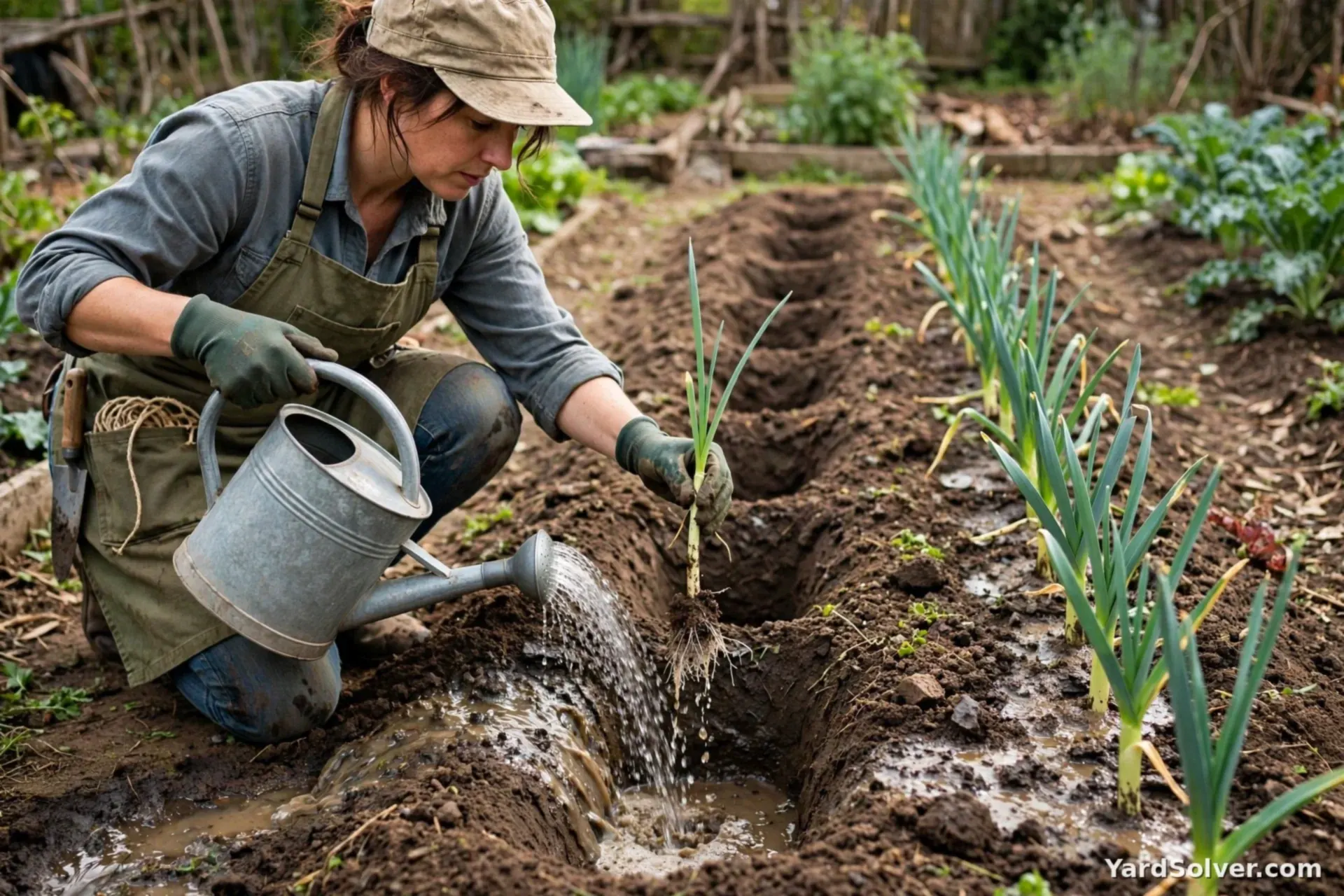
Start seed indoors 10 weeks before last frost, sowing 1/4 in deep. Grow seedlings on in strong light, then harden them off over 7–10 days (see How to Harden Off Seedlings) and move them outside at last frost, spaced 6 in apart. The Plant Spacing Calculator turns that spacing into plants-per-bed.
Step 4 — Water and feed
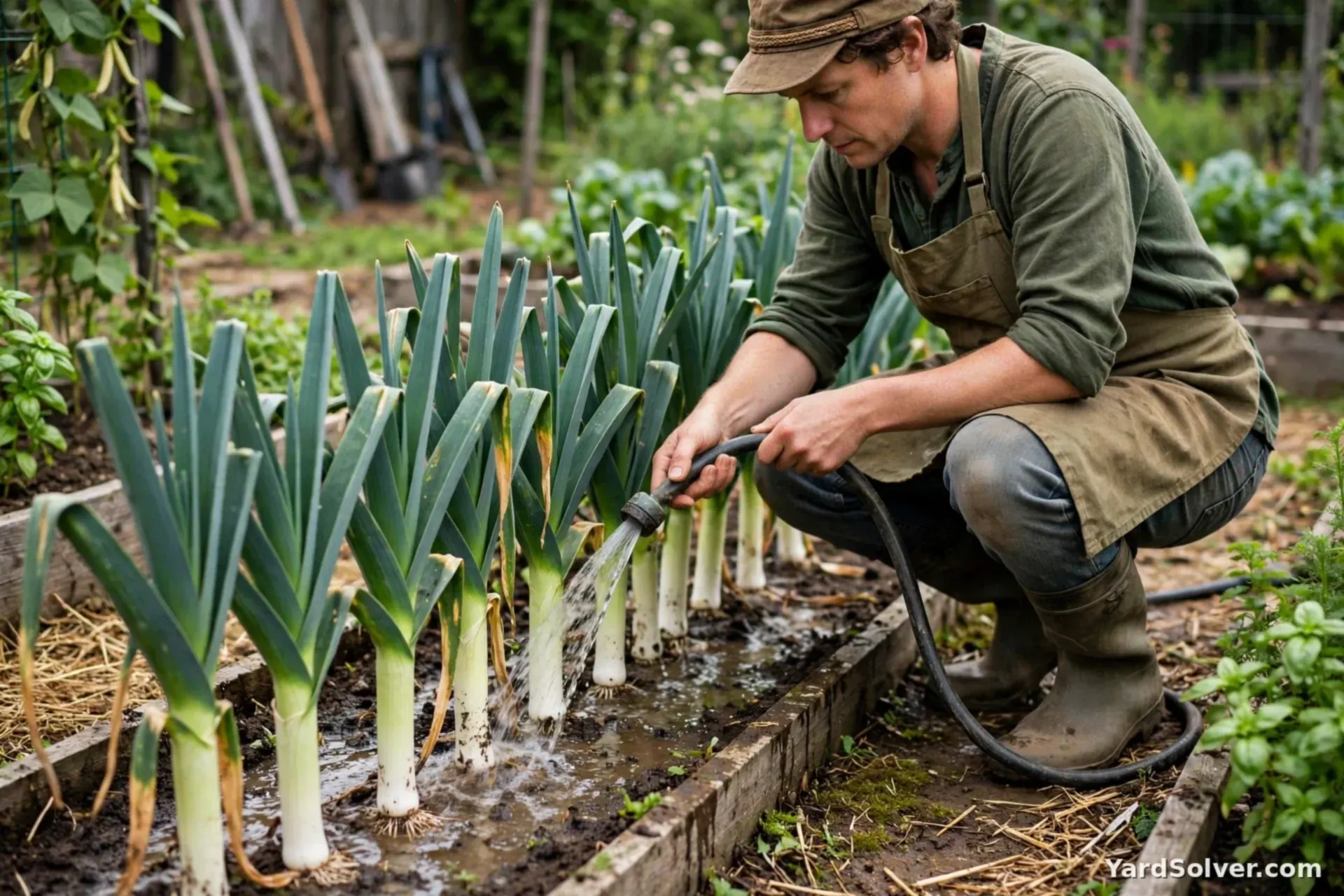
Water: Regular and deep. The Fertilizer Calculator turns a bed size into the right amount.
Step 5 — Care and the problems to watch for
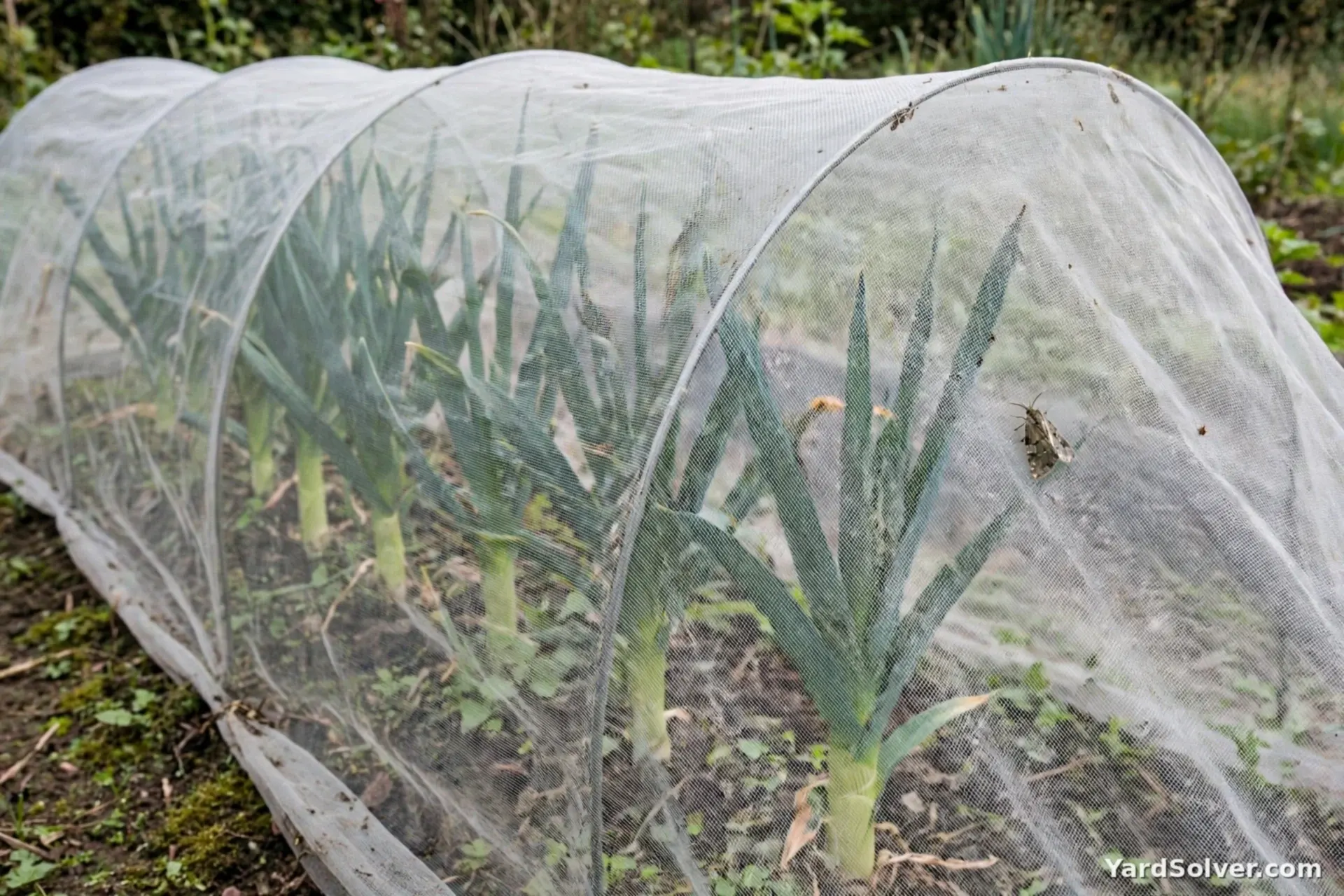
- Leek moth / allium leaf miner — newer pests in some regions; mesh from planting is the reliable defence.
- Rust — orange pustules on leaves; space for airflow and remove badly hit leaves.
- Thin stems — leeks need a long season and steady feeding.
Take care: Leeks can cause gas or bloating in some people, like their onion cousins. Keep leeks away from dogs and cats — leeks are in the onion family, which is poisonous to them.
Step 6 — Harvest
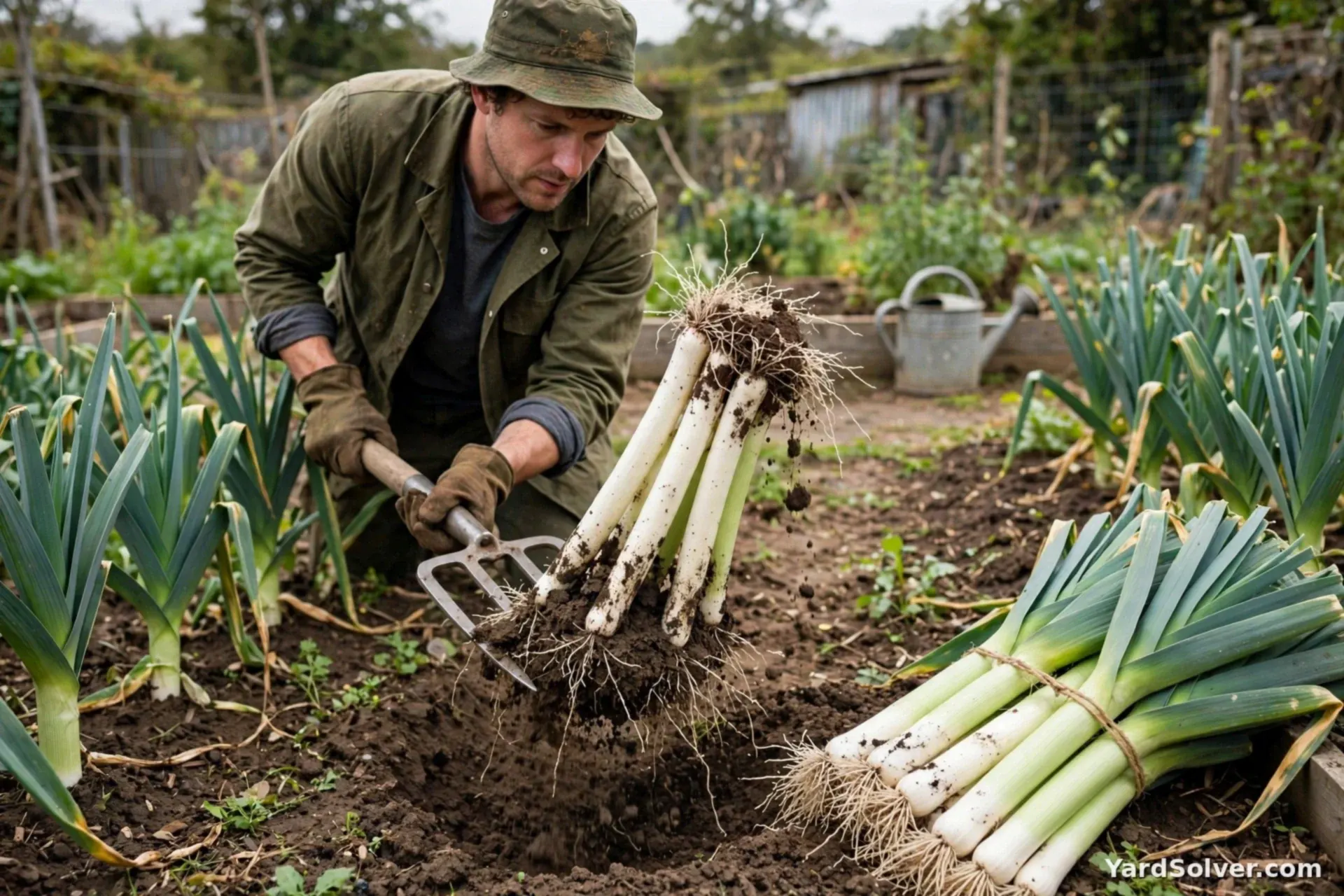
Ready in: 100–120 days. Harvest runs from about day 100 to 120 — lift with a fork as you need them; they stand well in the ground.
📅 Your personal Leeks schedule
Counted from your planting day — not a generic calendar. Day 0 is the day the seed went in the ground or the young plant went out.
Varieties worth growing
| Variety | Colour | Why gardeners like it |
|---|---|---|
| King Richard | White with blue-green tops | An early type that makes extra-long white stems by late summer |
| Musselburgh | White with dark green tops | A very hardy Scottish heirloom that stands through winter |
| Blue Solaise | White with blue-purple leaves | A French type whose leaves turn violet-blue in cold weather |
| American Flag | White with green tops | A long-grown, dependable type with thick, mild stems |
| Giant Musselburgh | White with dark tops | Extra-thick stems for soups and winter harvesting |
Good for you — and take care
Benefits
- Provides vitamin K and vitamin A
- Provides folate and manganese
- Contains fibre, including the kind that feeds good gut bacteria
- Provides natural antioxidants, like its onion and garlic cousins
- Mild and sweet, adding flavour with few calories
Take care
- Leeks can cause gas or bloating in some people, like their onion cousins
- Keep leeks away from dogs and cats — leeks are in the onion family, which is poisonous to them
A little history — and one good fact
Leeks come from the Mediterranean and Near East and have been eaten since the time of ancient Egypt. The Romans loved them — the emperor Nero was said to eat leeks regularly, believing they helped his voice. Hardy and happy in cold weather, leeks became a backbone of winter soups across Europe, especially in Wales and Scotland.
Fun fact: The leek is the national emblem of Wales, worn proudly on St David's Day — legend ties it to a battle long ago where Welsh soldiers wore leeks so they could tell friend from foe.
Keep going
Guides: When to Start Seeds Indoors · How to Prepare Garden Soil in Spring · How to Harden Off Seedlings
Calculators: Plant Spacing Calculator · Seed Calculator · Garden Mix Calculator
More vegetables: Tomato · Pepper · Cucumber
← Back to the Plant Library · Get your personal planting dates
Questions people ask
When do I plant leeks?
Count from your average last spring frost: sow indoors 10 weeks before last frost; move outside at last frost. Leeks are a slow, steady crop: sow indoors about 10 weeks before your last frost and transplant the pencil-thick seedlings around your frost date into deep holes, watering them in so the soil blanches the stems as they grow.
How far apart do I space leeks?
Space plants 6 in apart, with seed sown 1/4 in deep. Sun: full sun.
When is leeks ready to harvest?
100–120 days. Transplant pencil-thick seedlings into deep holes and water in — the soil blanches the stems.